Jump to Content
Metabolic Biomarker Testing Market - Size, Share, Industry Trends, and Forecasts (2025-2032)
Metabolic Biomarker Testing Market Size:
Metabolic Biomarker Testing Market size is estimated to reach over USD 6,058.12 Million by 2032 from a value of USD 3,422.31 Million in 2024 and is projected to grow by USD 3,614.58 Million in 2025, growing at a CAGR of 7.4% from 2025 to 2032.
Metabolic Biomarker Testing Market Scope & Overview:
Metabolic biomarker testing involves analyzing biological markers to assess metabolic activity and identify potential health issues. These biomarkers offer valuable insights into conditions such as diabetes, cardiovascular diseases, and metabolic disorders. The testing process is characterized by its ability to provide accurate and early detection of metabolic diseases, enabling personalized treatment plans. Benefits include enhanced disease management, improved diagnostic accuracy, and better patient outcomes.
Metabolic biomarker tests find applications in clinical diagnostics, research, and preventive healthcare. They serve healthcare providers, hospitals, research institutions, and pharmaceutical companies by supporting disease monitoring and drug development. This testing is essential for advancing precision medicine and improving patient care in various healthcare sectors.
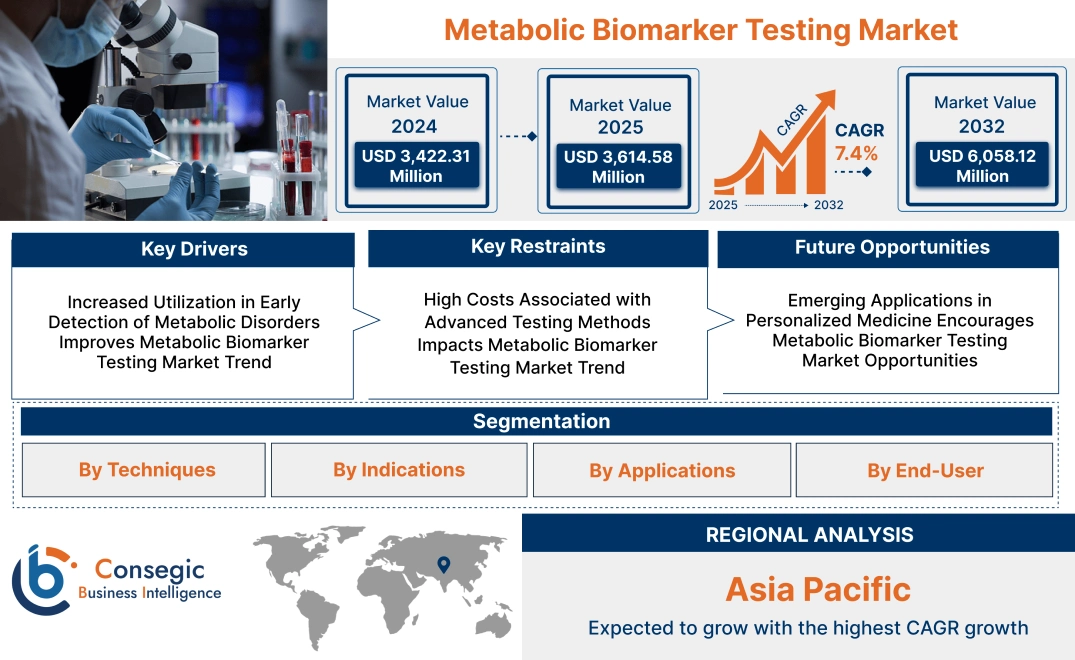
Metabolic Biomarker Testing Market Dynamics - (DRO) :
Key Drivers:
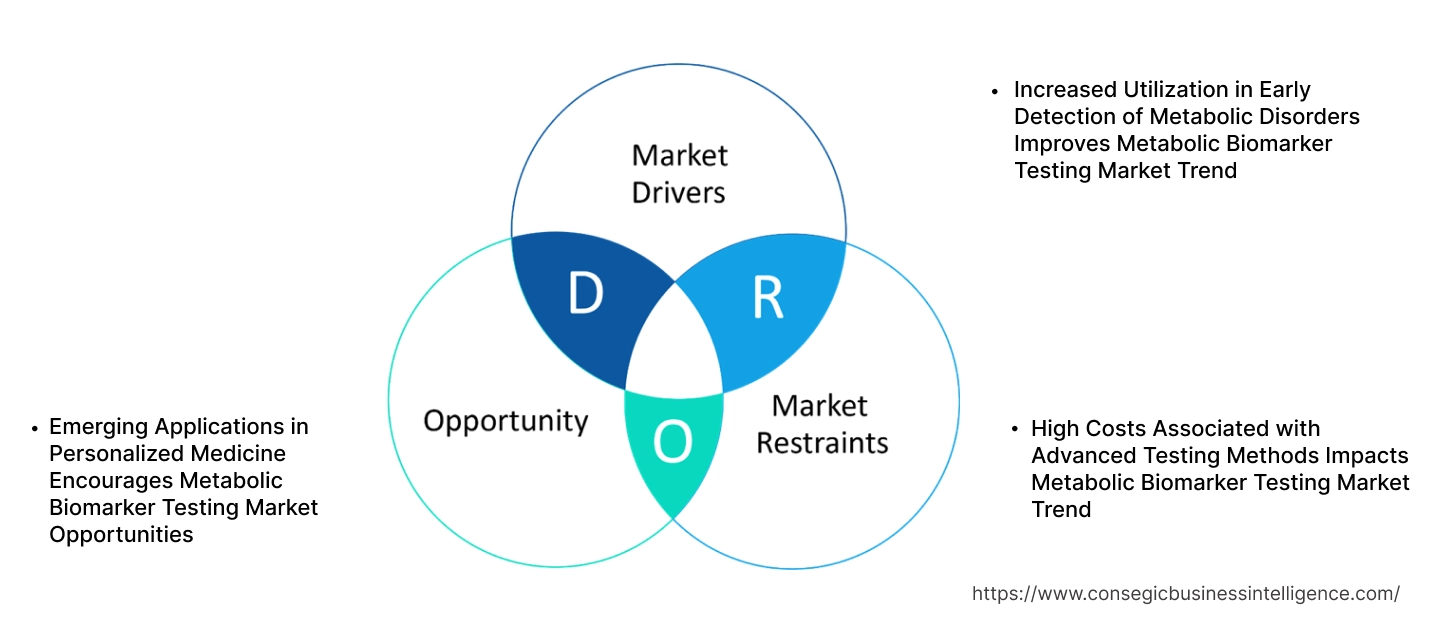
Increased Utilization in Early Detection of Metabolic Disorders Improves Metabolic Biomarker Testing Market Trend
Metabolic biomarker testing plays a crucial role in the early diagnosis of metabolic disorders, including diabetes and inborn errors of metabolism. These tests measure specific biomarkers in blood or urine, such as glucose, ketones, or lactate, providing critical insights into the patient’s metabolic state. Early detection facilitates timely intervention, reducing complications and improving patient outcomes. For example, newborn screening programs for inborn errors of metabolism, including phenylketonuria (PKU), leverage biomarker testing for rapid and accurate results.
Thus, the growing emphasis on early detection of metabolic disorders significantly enhances the adoption of metabolic biomarker testing.
Key Restraints:
High Costs Associated with Advanced Testing Methods Impacts Metabolic Biomarker Testing Market Trend
Advanced metabolic biomarker testing techniques, including mass spectrometry and nuclear magnetic resonance spectroscopy, are associated with high costs. These expenses arise from specialized equipment, reagents, and the need for skilled professionals to operate and interpret results. The financial burden makes these tests less accessible in low- and middle-income regions, limiting their adoption. For instance, comprehensive metabolic profiling for complex diseases is often restricted to well-funded research institutions or private healthcare facilities.
Therefore, the substantial costs linked to advanced testing methods pose a significant challenge to the widespread adoption of metabolic biomarker testing.
Future Opportunities :
Emerging Applications in Personalized Medicine Encourages Metabolic Biomarker Testing Market Opportunities
Personalized medicine is expected to create new avenues for metabolic biomarker testing. These tests enable clinicians to identify unique metabolic profiles, tailoring treatments based on individual patient characteristics. For instance, metabolomics-based biomarker testing is being explored to optimize drug efficacy and minimize adverse effects in diseases such as cancer and cardiovascular conditions. As precision medicine continues to advance, integrating metabolic biomarker testing into routine clinical practice will become increasingly prevalent.
Therefore, the expanding role of personalized medicine presents a promising opportunity for the metabolic biomarker testing market growth in the future.
Metabolic Biomarker Testing Market Segmental Analysis :
By Techniques:
Based on techniques, the metabolic biomarker testing market is segmented into Separation Techniques and Detection Techniques.
The Liquid Chromatography segment accounted for the largest revenue in metabolic biomarker testing market share in 2024.
- Liquid Chromatography includes High-Performance Liquid Chromatography (HPLC), Ultra-Performance Liquid Chromatography (UPLC), Gas Chromatography, and Capillary Chromatography.
- HPLC and UPLC are widely adopted in biomarker testing due to their precision, efficiency, and capability to separate complex biological samples.
- Gas Chromatography is extensively used for volatile compound analysis, while Capillary Chromatography provides high resolution for small-scale biomarker detection.
- These techniques are critical in diagnosing diseases, analyzing metabolic pathways, and identifying biomarkers for targeted therapies.
- The integration of Liquid Chromatography with mass spectrometry further enhances its applicability in metabolic biomarker testing.
- Therefore, according to metabolic biomarker testing market analysis, liquid Chromatography, particularly HPLC and UPLC, has become a cornerstone in metabolic biomarker testing, contributing to its large market share in 2024.
The Mass Spectrometry segment is anticipated to register the fastest CAGR during the forecast period.
- Mass Spectrometry provides unparalleled sensitivity and accuracy in detecting minute quantities of biomarkers in complex biological matrices.
- Coupled with advanced data analysis, this technique is crucial for personalized medicine and drug discovery applications.
- Its integration with separation techniques, like chromatography, enhances its capabilities for comprehensive metabolic profiling.
- The continuous advancements in mass spectrometry technology, such as improved resolution and speed, further accelerate its adoption in the market.
- Mass Spectrometry is increasingly used for large-scale biomarker studies, driving its rapid metabolic biomarker testing market growth.
- Thus, according to metabolic biomarker testing market analysis, mass Spectrometry's advanced features and integration with other technologies position it as the fastest-growing segment in metabolic biomarker testing.
By Indications:
Based on indications, the market is segmented into Cancer, Cardiovascular Disorders, Neurological Disorders, Inborn Errors of Metabolism and Others.
The Cancer segment accounted for the largest revenue in metabolic biomarker testing market share in 2024.
- Cancer biomarkers are pivotal in early detection, diagnosis, and monitoring therapeutic responses.
- Biomarker testing facilitates precision oncology by enabling personalized treatments based on tumor characteristics.
- Rising prevalence of cancer and increased adoption of liquid biopsy techniques are driving this segment's trend.
- Advances in liquid biopsy and non-invasive diagnostic technologies are expanding the potential of cancer biomarker testing.
- Early-stage cancer detection and targeted therapies are expected to further boost the segment's trend.
- The Cancer segment leads in revenue due to its extensive application in precision oncology and advancements in biomarker-based diagnostic techniques.
The Neurological Disorders segment is anticipated to register the fastest CAGR during the forecast period.
- Biomarker testing in neurological disorders aids in early diagnosis and monitoring of conditions such as Alzheimer’s, Parkinson’s, and multiple sclerosis.
- Advancements in neuroimaging biomarkers and blood-based biomarker identification are enhancing diagnostic accuracy and treatment efficacy.
- The growing need for early intervention and personalized treatment strategies in neurology fuels the metabolic biomarker testing market expansion.
- Increasing research on neurodegenerative diseases and their biomarkers is expected to drive further trend in this area.
- The segment is also benefiting from innovations in genetic biomarkers for neurological conditions.
- The Neurological Disorders segment's rapid trend is attributed to the increasing need for effective diagnostic tools and therapeutic monitoring solutions.
By Application:
Based on applications, the market is segmented into Drug Discovery or Drug Assessment, Nutrigenomics, Toxicology Testing,Personalized Medicine,Functional Genomics, and Others.
The Drug Discovery or Drug Assessment segment accounted for the largest revenue share in 2024.
- Biomarker testing accelerates the drug discovery process by identifying potential therapeutic targets and monitoring drug efficacy.
- It reduces development costs and improves the success rate of clinical trials by enabling stratified patient selection.
- Pharmaceutical companies are increasingly adopting biomarker-based approaches for novel drug development.
- The integration of biomarkers in clinical trials helps optimize drug development and regulatory approval processes.
- Biomarkers are also essential in identifying patients who will respond best to specific treatments.
- Drug Discovery or Drug Assessment dominates the market due to its integral role in enhancing drug development processes and clinical outcomes.
The Personalized Medicine segment is anticipated to register the fastest CAGR during the forecast period.
- Personalized medicine leverages biomarkers to tailor treatments to individual genetic, environmental, and lifestyle factors.
- This approach is gaining traction across oncology, cardiology, and neurology for its potential to improve treatment outcomes.
- Personalized medicine is increasingly applied to a wide range of conditions, from cancer to rare genetic disorders.
- Technological advancements in biomarker identification and patient-specific treatment plans are accelerating growth in this segment.
- The trend toward precision healthcare and individualized therapies is driving the adoption of biomarker-based approaches in medicine.
- The growing emphasis on individualized treatment regimens propels the Personalized Medicine segment as the fastest-growing application in the market.
By End User:
Based on end user, the market is segmented into Pharmaceutical & Biotechnology Companies, Diagnostic Tool Companies, Healthcare IT/Big Data Companiesm, Clinical Laboratories, and Others.
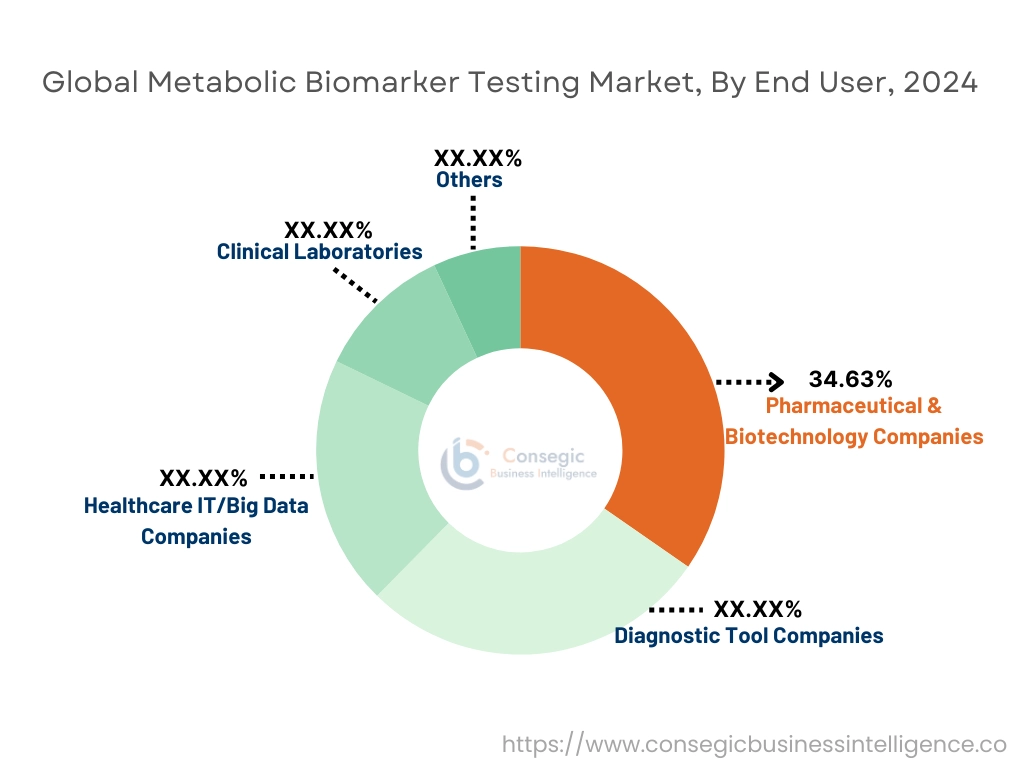
The Pharmaceutical & Biotechnology Companies segment accounted for the largest revenue share by 34.63% in 2024.
- These companies are key consumers of biomarker testing for drug discovery, clinical trials, and product validation.
- Strategic collaborations with research institutions and adoption of advanced biomarker technologies are fueling growth in this segment.
- Pharmaceutical companies utilize biomarkers for the development of new therapies and diagnostic tools, driving their market share.
- The increasing trend for targeted therapies and companion diagnostics is further boosting the role of pharmaceutical companies in the biomarker testing market.
- Biotechnology firms are leveraging biomarkers for advancements in gene therapies and biologics.
- The Pharmaceutical & Biotechnology Companies segment leads the market, driven by its extensive application in research, development, and commercialization of therapies, further driving the metabolic biomarker testing market opportunities.
The Diagnostic Tool Companies segment is anticipated to register the fastest CAGR during the forecast period.
- These companies focus on developing innovative diagnostic kits and platforms for rapid, accurate biomarker analysis.
- Technological advancements in lab-on-a-chip devices and point-of-care testing are expanding their market presence.
- The metabolic biomarker testing market demand for cost-effective, accessible diagnostic tools is fueling innovation in the diagnostic tool industry.
- Integration of biomarker analysis into diagnostic devices is enhancing patient care by enabling earlier detection and more precise monitoring.
- The increasing prevalence of chronic diseases and the need for faster diagnostics are pushing the growth of this segment.
- Diagnostic Tool Companies' focus on innovation and rapid diagnostic solutions positions them as the fastest-growing end-user segment in the market.
Regional Analysis:
The regional segment includes North America, Europe, Asia Pacific, Middle East and Africa, and Latin America.
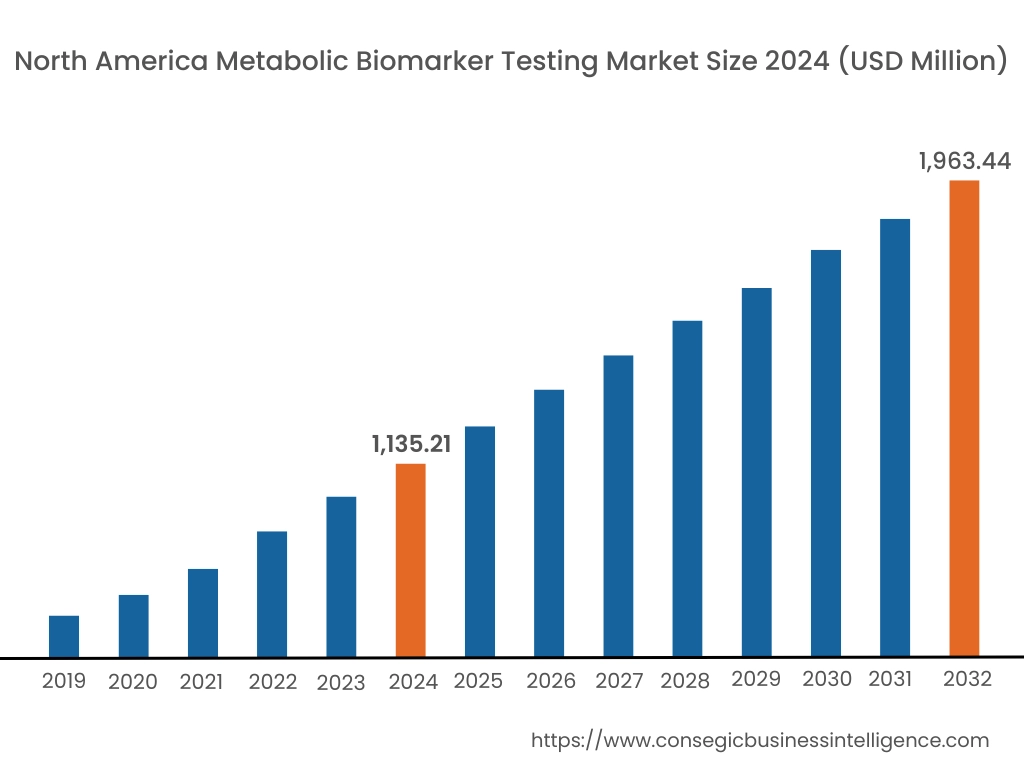
In 2024, North America was valued at USD 1,135.21 Million and is expected to reach USD 1,963.44 Million in 2032. In North America, the U.S. accounted for the highest share of 71.60% during the base year of 2024.
North America dominates the metabolic biomarker testing market due to advanced healthcare infrastructure and high adoption of innovative diagnostic technologies. The United States, in particular, is a key player, with significant investments in research and development. The presence of leading market players and healthcare providers contributes to the metabolic biomarker testing market expansion. The increasing prevalence of metabolic disorders, such as obesity, diabetes, and cardiovascular diseases, boosts the metabolic biomarker testing market demand for accurate testing solutions. Furthermore, government funding and initiatives to promote early detection of metabolic conditions enhance market growth in this region.

In Asia Pacific, the market is experiencing the fastest growth with a CAGR of 7.8% over the forecast period.
The Asia-Pacific region is experiencing rapid expansion in the metabolic biomarker testing market. Increasing awareness about chronic diseases, along with improving healthcare infrastructure, fuels market demand. Countries like China, India, and Japan are at the forefront, benefiting from growing healthcare investments and rising adoption of advanced diagnostic techniques. However, challenges related to limited access to high-quality healthcare and diagnostic tools in rural areas of developing countries may hinder the market's full potential. As healthcare access improves and the demand for personalized medicine rises, the market is expected to expand significantly.
Europe is a well-established market for metabolic biomarker testing, with robust healthcare systems and a high focus on research and development. The United Kingdom, Germany, and France are among the leading countries in Europe for testing and diagnostics. Strong government regulations, along with advancements in precision medicine, are driving the growth of this market. The region's focus on chronic disease management and preventive healthcare further supports the increased demand for metabolic biomarker testing. However, the high cost of testing and regional disparities in healthcare access may limit market reach in some areas.
The Middle East and Africa (MEA) region presents a growing market for metabolic biomarker testing, driven by improving healthcare infrastructure and rising awareness about metabolic diseases. Countries like Saudi Arabia, the UAE, and South Africa are leading the market due to government investments in healthcare and diagnostic technologies. However, challenges such as limited access to advanced testing methods, especially in rural areas, and relatively high testing costs remain significant barriers. As healthcare systems develop and more local laboratories adopt advanced testing technologies, the market is expected to expand in the region.
The metabolic biomarker testing market in Latin America is evolving, with increasing demand for advanced diagnostic solutions driven by rising awareness of metabolic disorders. Brazil and Mexico are the largest markets in the region, supported by improvements in healthcare access and rising middle-class populations. However, high testing costs and limited access to specialized diagnostic facilities in some areas remain key challenges. As local healthcare systems advance and the focus on preventive care increases, the market for metabolic biomarker testing is expected to see significant expansion in the coming years.
Top Key Players and Market Share Insights:
The Global Metabolic Biomarker Testing Market is highly competitive with major players providing products and services to the national and international markets. Key players are adopting several strategies in research and development (R&D), product innovation, and end-user launches to hold a strong position in the Global Metabolic Biomarker Testing Market. Key players in the Metabolic Biomarker Testing industry include-
- Abbott Laboratories (United States)
- Thermo Fisher Scientific Inc. (United States)
- Agilent Technologies, Inc. (United States)
- Danaher Corporation (United States)
- Illumina, Inc. (United States)
- Siemens Healthineers (Germany)
- Roche Diagnostics (Switzerland)
- GE Healthcare (United States)
- PerkinElmer Inc. (United States)
- Bio-Rad Laboratories, Inc. (United States)
Recent Industry Developments :
Product launches:
In October 2023, Metabolon, Inc. introduced two new Discovery Panels aimed at enhancing research into liver fibrosis and kidney function:
- Liver Fibrosis Discovery Panel: This panel analyzes 105 metabolites across various biological processes linked to liver fibrosis, providing researchers with deeper insights into disease mechanisms, personalized medicine, and drug discovery.
- Kidney Function Discovery Panel: This panel examines 84 metabolites associated with biochemical processes affecting kidney function, assisting researchers in differentiating the diverse spectrum of kidney disease.
Partnerships & Collaborations:
- In January 2024, Bioniq, a leader in personalized supplement solutions, announced a strategic partnership with meta[bolic], a hybrid healthcare company combining Digital Therapeutics with human-centric clinical care. This collaboration focuses on redefining healthcare services in the GCC region, particularly in metabolic health, chronic disease management, preventive health, and longevity. Bioniq will provide tailored micronutrition to members of meta[bolic]'s platforms, GluCare.Health and Zone.Health, integrating personalized supplementation into their care models.
Metabolic Biomarker Testing Market Report Insights :
| Report Attributes | Report Details |
| Study Timeline | 2019-2032 |
| Market Size in 2032 | USD 6,058.12 Million |
| CAGR (2025-2032) | 7.4% |
| By Techniques |
|
| By Indications |
|
| By Application |
|
| By End-User |
|
| By Region |
|
| Key Players |
|
| North America | U.S. Canada Mexico |
| Europe | U.K. Germany France Spain Italy Russia Benelux Rest of Europe |
| APAC | China South Korea Japan India Australia ASEAN Rest of Asia-Pacific |
| Middle East and Africa | GCC Turkey South Africa Rest of MEA |
| LATAM | Brazil Argentina Chile Rest of LATAM |
| Report Coverage |
|
Key Questions Answered in the Report
How big is the Metabolic Biomarker Testing Market? −
In 2024, the Metabolic Biomarker Testing Market was USD 3,422.31 million.
What will be the potential market valuation for the Metabolic Biomarker Testing Market by 2032? +
In 2032, the market size of Metabolic Biomarker Testing Market is expected to reach USD 6,058.12 million.
What are the segments covered in the Metabolic Biomarker Testing Market report? +
The techniques, indications, applications, and end-user are the segments covered in this report.
Who are the major players in the Metabolic Biomarker Testing Market? +
Abbott Laboratories (United States), Thermo Fisher Scientific Inc. (United States), Siemens Healthineers (Germany), Roche Diagnostics (Switzerland), GE Healthcare (United States), PerkinElmer Inc. (United States), Bio-Rad Laboratories, Inc. (United States), Agilent Technologies, Inc. (United States), Danaher Corporation (United States), Illumina, Inc. (United States) are the major players in the Metabolic Biomarker Testing market.
Overview
Reputation & Certifications


Our Services
- Market Intelligence & Forecasting
- Custom Research Solutions
- Market Entry Strategy
- Competitive Intelligence
- Customer Insights
- Industry Innovation Analysis
- Investment Advisory