Jump to Content
Necrotising Enterocolitis Market - Size, Share, Industry Trends, and Forecasts (2025 - 2032)
Necrotising Enterocolitis Market Size:
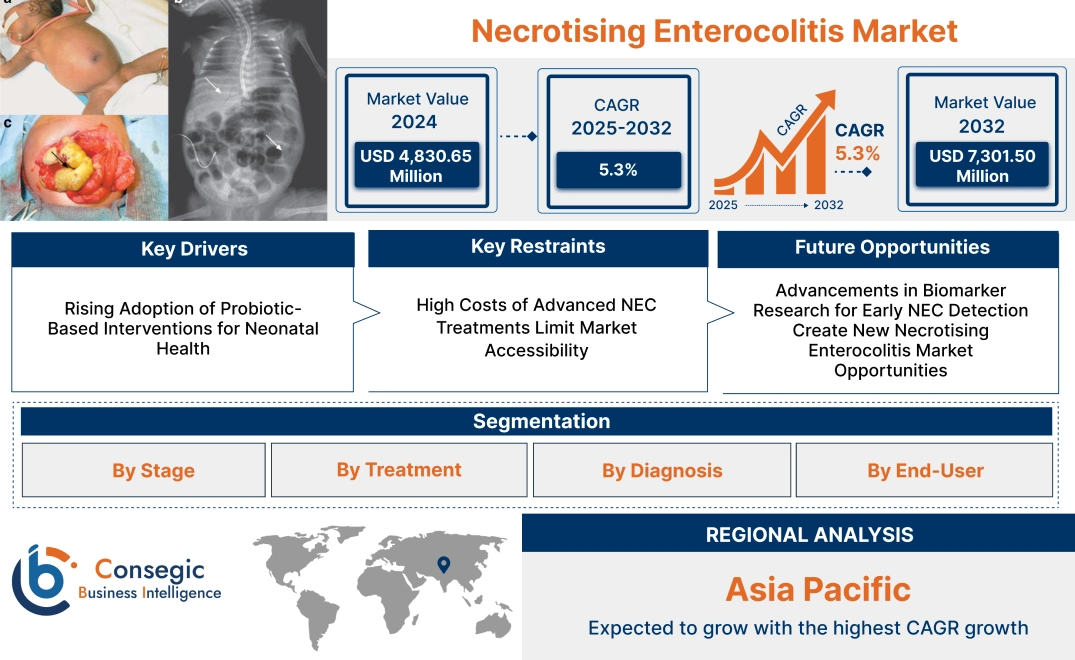
Necrotising Enterocolitis Market size is estimated to reach over USD 7,301.50 Million by 2032 from a value of USD 4,830.65 Million in 2024 and is projected to grow by USD 5,000.60 Million in 2025, growing at a CAGR of 5.3 % from 2025 to 2032.
Necrotising Enterocolitis Market Scope & Overview:
Necrotizing enterocolitis (NEC) is a severe gastrointestinal condition primarily affecting premature infants, characterized by inflammation and necrosis of the intestinal tissue. Early diagnosis and effective treatment are critical to managing this life-threatening condition and reducing associated complications. Key products in this market include diagnostic tools, nutritional support products, and therapeutic interventions. These offerings feature precision diagnostics, advanced nutritional formulations, and innovative treatment options tailored to neonatal care.
The benefits include improved survival rates, reduced long-term health complications, and enhanced overall infant health outcomes. Comprehensive care strategies also focus on preventing recurrence and promoting optimal growth and development. Applications of these products are concentrated in neonatal intensive care units and pediatric healthcare facilities. End-use industries include hospitals, diagnostic centers, research institutions, and healthcare product manufacturers dedicated to advancing neonatal care solutions.
Necrotising Enterocolitis Market Dynamics - (DRO) :
Key Drivers:
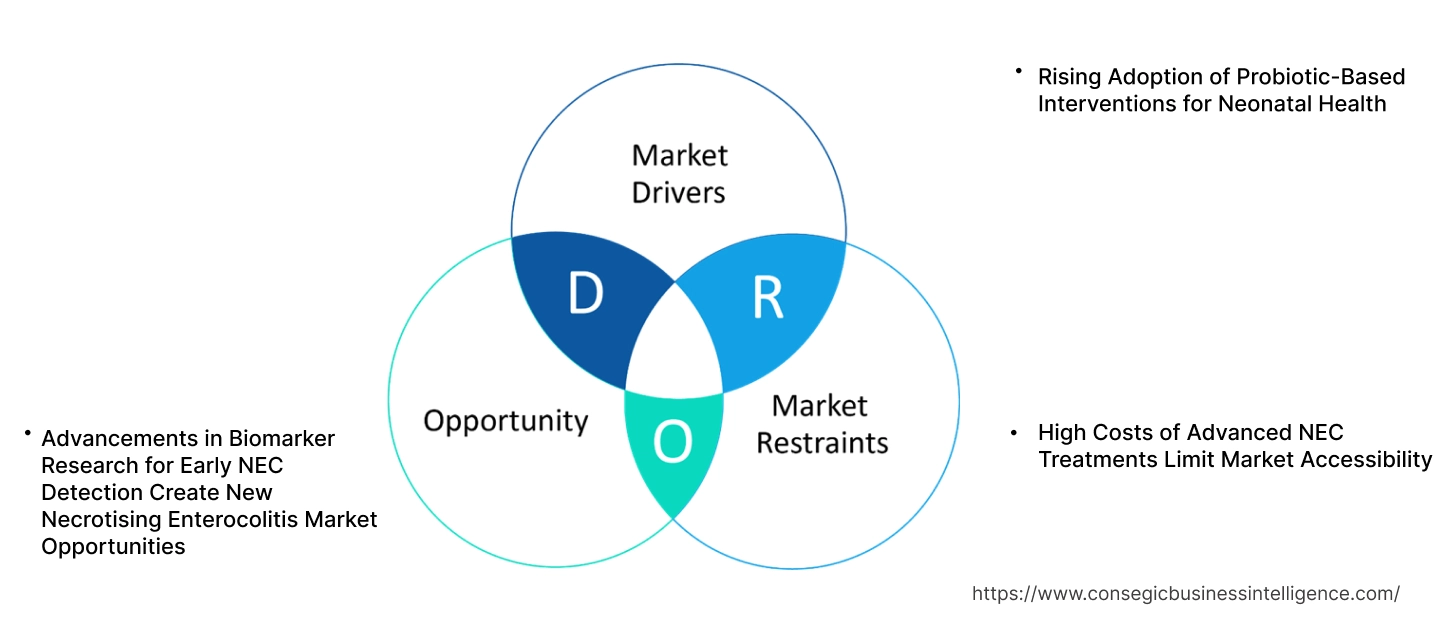
Rising Adoption of Probiotic-Based Interventions for Neonatal Health
Probiotic-based interventions have emerged as a preventive strategy for managing necrotizing enterocolitis (NEC) in preterm infants. These products help in stabilizing gut microbiota, reducing inflammation, and enhancing intestinal barrier function, which are critical in preventing NEC. Hospitals and neonatal care units are increasingly adopting probiotics as part of their neonatal care protocols to lower the incidence of this life-threatening condition. For instance, research has demonstrated the efficacy of specific probiotic strains in significantly reducing the risk of NEC in extremely low-birth-weight infants.
Therefore, the increasing use of probiotics as a targeted preventive measure supports the necrotizing enterocolitis market expansion.
Key Restraints:
High Costs of Advanced NEC Treatments Limit Market Accessibility
The treatment of necrotizing enterocolitis, especially severe cases, often requires advanced surgical procedures and specialized medical care, which come with high costs. This financial burden is particularly challenging for healthcare systems in low- and middle-income countries, where access to resources and funding is limited. Additionally, the expenses associated with prolonged hospital stays and intensive care further restrict the adoption of effective NEC treatment options. The lack of insurance coverage for advanced interventions compounds the issue, leaving many families unable to afford necessary care.
These cost-related barriers significantly limit the adoption of advanced NEC treatments, hindering necrotising enterocolitis market growth.
Future Opportunities :
Advancements in Biomarker Research for Early NEC Detection Create New Necrotising Enterocolitis Market Opportunities
Future advancements in biomarker research are expected to improve early detection and diagnosis of necrotizing enterocolitis. Biomarkers offer the potential to identify at-risk neonates before clinical symptoms appear, enabling timely intervention and reducing disease progression. Ongoing studies focus on identifying and validating biomarkers related to gut permeability, inflammation, and microbial dysbiosis. For instance, developments in non-invasive testing methods, such as stool-based biomarker assays, show promise for widespread clinical application.
The incorporation of biomarker-based diagnostics in neonatal care protocols is anticipated to transform NEC management, presenting significant opportunities for necrotising enterocolitis market expansion.
Necrotising Enterocolitis Market Segmental Analysis :
By Stage:
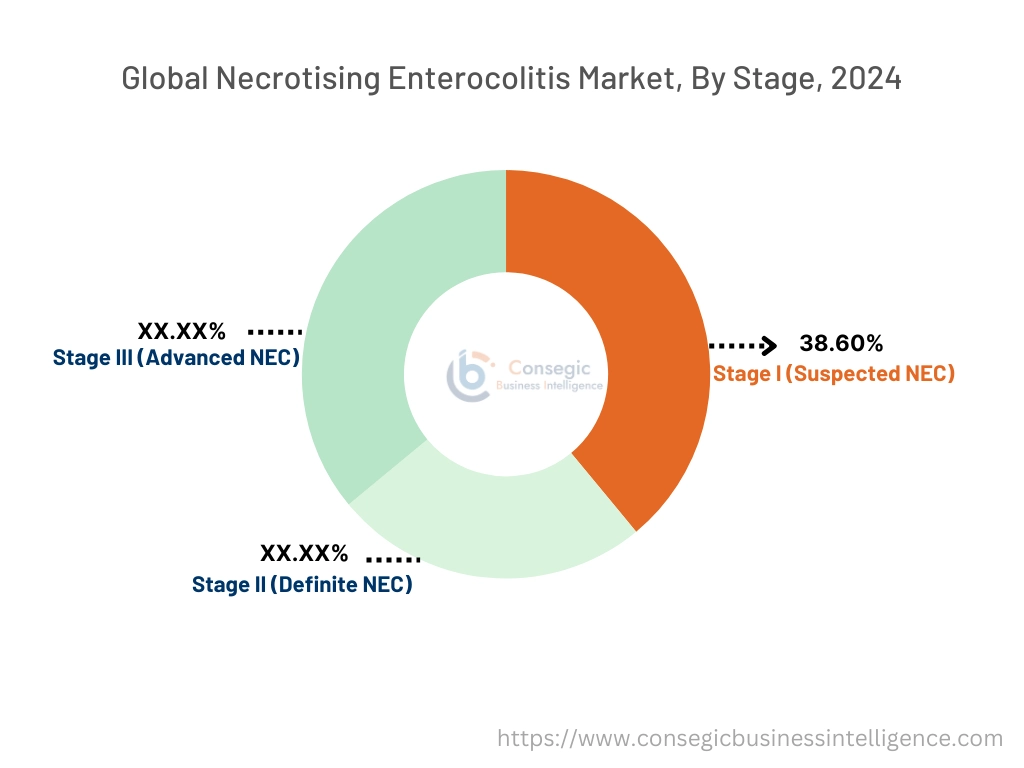
Based on stage, the market is segmented into Stage I (Suspected NEC), Stage II (Definite NEC), and Stage III (Advanced NEC).
Stage I (Suspected NEC) accounted for the largest revenue of 38.60% in necrotising enterocolitis market share in 2024.
- Stage I involves early signs and symptoms such as abdominal distension and feeding intolerance, prompting preventive and diagnostic measures.
- This stage primarily focuses on non-invasive treatments and supportive care to avoid disease progression.
- Increased awareness among healthcare providers for early diagnosis contributes to its significant share.
- Adoption of advanced monitoring systems for neonatal care enhances the management of Stage I NEC cases.
- Preventive approaches, such as administering breast milk and probiotics, reduce disease severity and aid necrotising enterocolitis market growth.
- Therefore, according to necrotising enterocolitis market analysis, emphasis on early diagnosis and intervention positions Stage I as the largest revenue contributor in the NEC market.
Stage III (Advanced NEC) is anticipated to register the fastest CAGR during the forecast period.
- Stage III involves severe intestinal necrosis, requiring immediate surgical interventions such as bowel resection or drainage.
- Advancements in surgical techniques and post-operative care improve survival rates, driving market expansion.
- Increased prevalence of premature births and low birth weight infants contributes to the higher incidence of Stage III NEC.
- Adoption of multidisciplinary care teams, including neonatologists and pediatric surgeons, ensures comprehensive treatment for advanced cases.
- Availability of specialized neonatal intensive care units (NICUs) enhances the management of Stage III NEC.
- Thus, according to necrotising enterocolitis market analysis, rising demand for advanced surgical treatments and specialized care contributes to the rapid necrotising enterocolitis market trend of the Stage III segment.
By Treatment:
Based on treatment, the market is segmented into medications and surgery. The medications segment is further divided into antibiotics, analgesics, and probiotics. The surgery segment includes bowel resection and drainage procedures.
The medication segment accounted for the largest revenue necrotising enterocolitis market share in 2024.
- Medications like antibiotics are essential to manage infections and prevent complications.
- Probiotics support gut health and reduce the risk of NEC in high-risk neonates, improving clinical outcomes.
- Increased availability of neonatal formulations tailored for premature infants bolsters the adoption of this segment.
- Development of targeted therapies and nutritional supplements enhances the effectiveness of medication-based treatments.
- The ease of administration and lower cost compared to surgical options contribute to its dominance.
- Therefore, according to market analysis, reliance on medications for effective and non-invasive management establishes it as the largest revenue contributor.
The surgery segment is anticipated to register the fastest CAGR during the forecast period.
- Surgical interventions, such as bowel resection, are necessary for advanced cases to remove necrotic tissue and prevent sepsis.
- Technological advancements, including minimally invasive and robotic-assisted surgeries, enhance procedural outcomes.
- Improved post-operative care in NICUs ensures faster recovery, increasing the demand for surgical treatments.
- The development of precision surgical tools for neonates supports the segment’s growth.
- Rising investments in neonatal healthcare infrastructure further boost the adoption of surgical procedures.
- Therefore, according to market analysis, innovations in surgical techniques and improved outcomes drive the rapid necrotising enterocolitis market trend of the surgery segment.
By Diagnosis:
Based on diagnosis, the market is segmented into laboratory tests and imaging techniques. Laboratory tests include blood and stool tests, while imaging techniques consist of X-rays, ultrasound, and CT scans.
The imaging techniques segment accounted for the largest revenue share in 2024.
- X-rays are the most widely used diagnostic tool for detecting pneumatosis intestinalis, a hallmark of NEC.
- Ultrasound provides detailed imaging for early detection and monitoring of disease progression.
- Continuous advancements in imaging technology improve accuracy and reduce the need for invasive procedures.
- Integration of AI-based diagnostic tools aids in quicker interpretation of imaging results, enhancing efficiency.
- Increased adoption of point-of-care imaging in NICUs supports the trend of this segment.
- Therefore, according to market analysis, critical role of imaging in accurate diagnosis and disease monitoring establishes it as the largest revenue contributor.
The laboratory tests segment is anticipated to register the fastest CAGR during the forecast period.
- Blood tests help identify markers such as elevated C-reactive protein levels and thrombocytopenia for early detection of NEC.
- Stool tests detect occult blood and changes in gut microbiota, offering non-invasive diagnostic options.
- Development of rapid diagnostic kits for NEC improves turnaround time and supports widespread adoption.
- Increased focus on biomarker research drives innovation in laboratory testing methods.
- Enhanced collaboration between diagnostic companies and healthcare providers accelerates the uptake of laboratory tests.
- Therefore, according to market analysis, the demand for non-invasive and rapid diagnostic methods propels the trend of the laboratory tests segment.
By End-User:
Based on end-user, the market is segmented into hospitals, neonatal intensive care units (NICUs), and specialty clinics.
Hospitals accounted for the largest revenue share in 2024.
- Hospitals serve as primary treatment centers equipped with advanced diagnostic and therapeutic facilities.
- Availability of multidisciplinary care teams ensures comprehensive management of NEC cases.
- Increased government funding for public hospitals enhances infrastructure and accessibility.
- Collaboration with pharmaceutical companies facilitates the availability of essential medications.
- Integration of electronic medical records improves patient management and follow-up care.
- Therefore, according to market analysis, comprehensive care capabilities of hospitals establish them as the leading revenue generator in the NEC market.
Neonatal Intensive Care Units (NICUs) are anticipated to register the fastest CAGR during the forecast period.
- NICUs provide specialized care for premature and low-birth-weight infants, who are at high risk for NEC.
- Increased investments in NICU infrastructure, including state-of-the-art equipment and trained staff, boost market trend.
- Adoption of advanced monitoring systems for early detection of NEC enhances patient outcomes.
- Collaboration with research institutions promotes innovation in NEC management protocols.
- Rising awareness among parents and caregivers about the importance of NICU care drives segment growth.
- Therefore, according to market analysis, specialized focus and advancements in NICU care contribute to its rapid trend in the NEC market.
Regional Analysis:
The regional segment includes North America, Europe, Asia Pacific, Middle East and Africa, and Latin America.
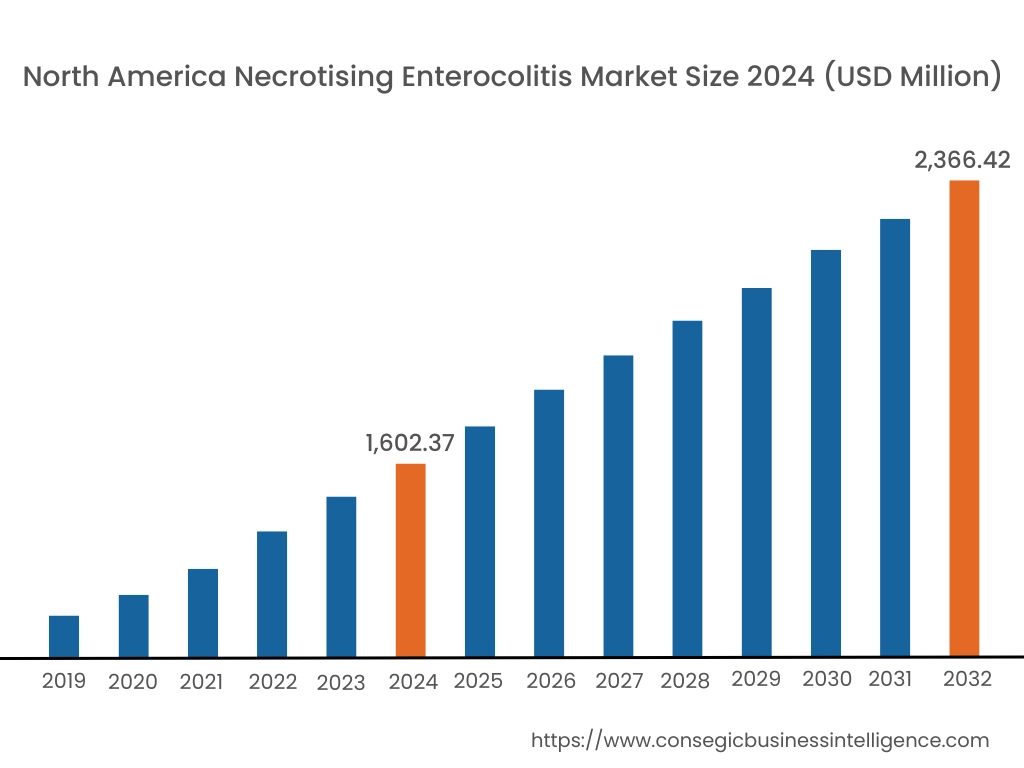
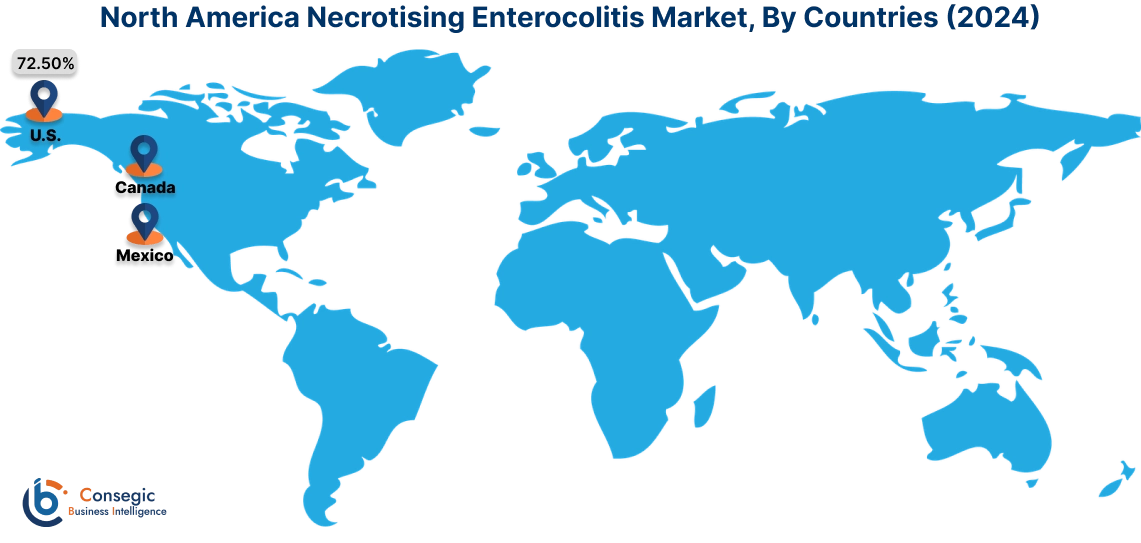
In 2024, North America was valued at USD 1,602.37 Million and is expected to reach USD 2,366.42 Million in 2032. In North America, the U.S. accounted for the highest share of 72.50% during the base year of 2024. North America’s growth is primarily driven by advanced healthcare infrastructure and increasing neonatal care standards. The high incidence of NEC in preterm infants and the growing demand for effective treatments and diagnostic solutions contribute to the market’s robust performance. The United States, in particular, leads the region due to its well-established healthcare system and increasing focus on neonatal health. Research and development activities related to new treatments for NEC, alongside government funding for neonatal health, support market trend.
In Asia Pacific, the market is experiencing the fastest growth with a CAGR of 5.7% over the forecast period. The Asia-Pacific region presents a rapidly developing market for NEC treatments, driven by improving healthcare infrastructure and a growing awareness of neonatal health issues. Countries such as China, India, and Japan are witnessing a rise in preterm births, leading to an increased number of NEC cases. The region's growing healthcare investments, combined with expanding access to advanced medical technologies, facilitate market progress. However, challenges such as limited awareness and healthcare disparities in rural areas may slow growth in certain countries. Overall, Asia-Pacific is expected to witness significant progress in NEC market development.
In Europe, the NEC market benefits from high healthcare standards and increasing awareness of neonatal health, particularly in countries like Germany, France, and the UK. The prevalence of preterm births, coupled with improvements in neonatal care, results in a stable demand for NEC-related treatments. European healthcare systems emphasize early diagnosis and intervention, further supporting the market’s expansion. Regulatory frameworks in the region ensure the availability of safe and effective treatments. However, variations in healthcare access between countries may create regional disparities in market performance.
The Middle East and Africa region exhibits a mixed performance in the NEC market. In the Middle East, countries such as the UAE and Saudi Arabia benefit from rapid advancements in healthcare infrastructure and rising awareness of neonatal health. These factors contribute to a steady increase in demand for NEC treatments and diagnostic solutions. In sub-Saharan Africa, however, the market faces challenges due to limited healthcare resources, lower awareness, and a lack of specialized neonatal care in many regions. Despite these challenges, efforts from international health organizations to improve neonatal care and healthcare accessibility may foster growth in the long term.
Latin America shows moderate development in the NEC market, with countries like Brazil and Mexico contributing to demand. The increasing incidence of preterm births, along with rising healthcare spending, fuels market expansion. However, disparities in healthcare access between urban and rural areas, combined with varying levels of awareness about NEC, may limit market progress in certain regions. Healthcare reforms in countries like Brazil, which focus on improving neonatal care, present opportunities for market trend. Additionally, increased government and private sector investments in the region's healthcare infrastructure are likely to enhance the availability of treatments and diagnostic solutions for NEC.
Top Key Players and Market Share Insights:
The Global Necrotising Enterocolitis Market is highly competitive with major players providing FWA to the national and international markets. Key players are adopting several strategies in research and development (R&D), product innovation, and end-user launches to hold a strong position in the Global Necrotising Enterocolitis Market. Key players in the Necrotising Enterocolitis industry include-
- Abbott Laboratories (United States)
- Nestlé S.A. (Switzerland)
- Baxter International Inc. (United States)
- Royal Philips N.V. (Netherlands)
- GE Healthcare (United States)
- Danone S.A. (France)
- Mead Johnson Nutrition Company (United States)
- Fresenius Kabi AG (Germany)
- Prolacta Bioscience, Inc. (United States)
- Hollister Incorporated (United States)
Necrotising Enterocolitis Market Report Insights :
| Report Attributes | Report Details |
| Study Timeline | 2019-2032 |
| Market Size in 2032 | USD 7,301.50 Million |
| CAGR (2025-2032) | 5.3% |
| By Stage |
|
| By Treatment |
|
| By Diagnosis |
|
| By End-User |
|
| By Region |
|
| Key Players |
|
| North America | U.S. Canada Mexico |
| Europe | U.K. Germany France Spain Italy Russia Benelux Rest of Europe |
| APAC | China South Korea Japan India Australia ASEAN Rest of Asia-Pacific |
| Middle East and Africa | GCC Turkey South Africa Rest of MEA |
| LATAM | Brazil Argentina Chile Rest of LATAM |
| Report Coverage |
|
Key Questions Answered in the Report
How big is the Necrotising Enterocolitis Market? −
In 2024, the Necrotising Enterocolitis Market was USD 4,830.65 million.
What will be the potential market valuation for the Necrotising Enterocolitis Market by 2032? +
In 2032, the market size of Necrotising Enterocolitis Market is expected to reach USD 7,301.50 million.
What are the segments covered in the Necrotising Enterocolitis Market report? +
The stage, treatment, diagnosis, and end-user are the segments covered in this report.
Who are the major players in the Necrotising Enterocolitis Market? +
Abbott Laboratories (United States), Nestlé S.A. (Switzerland), Danone S.A. (France), Mead Johnson Nutrition Company (United States), Fresenius Kabi AG (Germany), Prolacta Bioscience, Inc. (United States), Hollister Incorporated (United States), Baxter International Inc. (United States), Royal Philips N.V. (Netherlands), GE Healthcare (United States) are the major players in the Necrotising Enterocolitis market.
Overview
Reputation & Certifications


Our Services
- Market Intelligence & Forecasting
- Custom Research Solutions
- Market Entry Strategy
- Competitive Intelligence
- Customer Insights
- Industry Innovation Analysis
- Investment Advisory