Jump to Content
Sorbic Acid Market - Size, Share, Industry Trends, and Forecasts (2025-2032)
Sorbic Acid Market Size:
The Sorbic Acid Market size is growing with a CAGR of 5.4% during the forecast period (2025-2032), and the market is projected to be valued at USD 475.62 Million by 2032 from USD 312.93 Million in 2024. Additionally, the market value for 2025 attributes to USD 328.77 Million.
Sorbic Acid Market Scope & Overview:
Sorbic acid is an organic compound with the chemical formula C6H8O2. Structurally, it is an unsaturated six-carbon fatty acid, exhibiting compositional similarities to those found in consumable fats and oils. This compound exhibits broad-spectrum antimicrobial activity against yeasts and molds. Hence, it serves as a common preservative and additive employed to inhibit yeast and mold proliferation in food, cosmetics, pharmaceuticals, animal feed, and many other products. This compound is developed in different types of grades including food, industrial, and pharmaceutical. Each grade is developed with different purities. Growing preference for convenience foods and emphasis on extended product shelf life are a few of the factors fueling the market.
How is AI Transforming the Sorbic Acid Market?
AI is increasingly being used in the sorbic acid market, particularly for optimizing production and quality control, predicting demand and supply chain management, accelerating R&D for new applications, and allowing real-time monitoring for efficiency and safety. AI-powered systems can analyze vast manufacturing datasets to identify inefficiencies and suggest adjustments, which leads to higher yields and less waste. Moreover, AI-powered systems help in improving the precision of quality control processes and streamlining production lines, thereby enhancing product consistency and reducing human error. Therefore, the aforementioned factors are expected to positively impact the market growth in upcoming years.

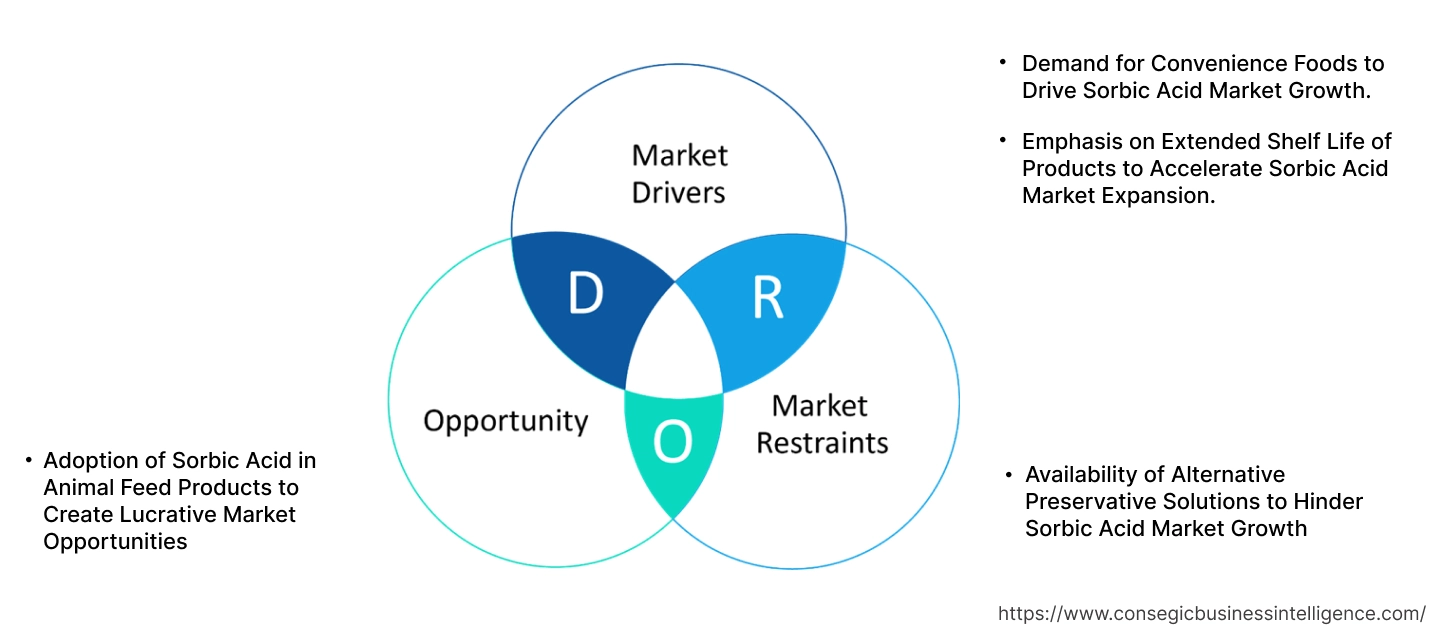
Sorbic Acid Market Dynamics - (DRO) :
Key Drivers:
Demand for Convenience Foods to Drive Sorbic Acid Market Growth.
Modern lifestyles and busy schedules are resulting in the consumption of ready-to-eat meals, pre-packaged snacks, and other convenience foods. The significant rise in the consumption of such convenience food products requires extended shelf life to maintain freshness and prevent spoilage during storage and distribution.
- For instance, according to the data published by ADM, it is stated that the total sales volume of the ready-to-eat meal in U.S. increased by 10.6% in 2022 from 2021.
Sorbic acid effectively inhibits proliferation of mold and yeast, making it a crucial ingredient in convenience food products. Thus, the rise in necessity of convenience factors in foods products is contributing to the upward trajectory of the market.
Emphasis on Extended Shelf Life of Products to Accelerate Sorbic Acid Market Expansion.
Improper storage, inadequate transport, and ineffective & perishable packaging are the prominent factors that contribute to the growing spoilage of products. The growing awareness related to product spoilage in cosmetics, pharmaceuticals, food & beverages is increasing the necessity for the utilization of effective preservatives. Sorbic acid serves as highly effective preservative that works as biocide to control proliferation of microorganisms.
- For instance, according to the analysis published by WasteManaged Limited, substantial portion of the UK's food waste, around 270,000 tons annually, originates from the retail sector.
Extended shelf life allows retailers to minimize spoilage, reduce inventory losses, and optimize supply chain management. Thus, due to the above-mentioned factors, the growing necessity for extended product shelf life is contributing to sorbic acid market expansion.
Key Restraints:
Availability of Alternative Preservative Solutions to Hinder Sorbic Acid Market Growth
The sorbic acid market demand faces constraints due to the availability and competitiveness of alternative preservative solutions including both natural and synthetic preservatives. Few of these alternative preservatives are benzoic acid, sodium benzoate, natamycin, natural preservatives amongst others. These alternatives offer different applications such as an increase in performance, environmental compliance, cost effectiveness amongst others. In addition to this, manufacturers are also focusing on tailored specific requirements for application, sensitivity in price, as well as environment regulations. These factors combined are also leading manufacturers to opt for these alternatives. Thus, growing commercialization of these substitutes presents pricing pressure for manufacturers of this preservative further creating negative impact on the market revenue.
Future Opportunities :
Adoption of Sorbic Acid in Animal Feed Products to Create Lucrative Market Opportunities
The rise in use of sorbic acid in animal feed products is creating potential for market revenue over the forecast period. It effectively inhibits mold and yeast growth in animal feed that prevents spoilage and maintains nutritional value. This is crucial for ensuring the quality and safety of feed, which directly impacts animal health and productivity. Extending the shelf life of animal feed products reduces waste and improves storage and distribution efficiency. This is particularly important for large-scale livestock operations and animal feed manufacturers. Additionally, the significant revenue of animal feed production creates a high requirement for the utilization of this preservative compound.
- For instance, according to the data published by International Feed Industry Federation in 2023, it is stated that animal feed manufacturing at commercial level generates an estimated annual revenue of about USD 400 billion.
Thus, the use of this preservative solution for animal feed products is creating lucrative sorbic acid market opportunities over the forecast period.
Sorbic Acid Market Segmental Analysis :
By Grade:
Based on Grade, the market is categorized into food grade, pharmaceutical grade, and industrial grade.
Trends in the Grade:
- Emphasis on stringent quality control and traceability to ensure food safety and regulatory compliance is rising.
- The growing focus on clean-label products and the use of safe preservatives is positively impacting the market.
The food grade segment accounted for the largest market share in 2024.
- Food grade compound is produced specifically with high purity for use as food additive and preservative in food and beverage applications.
- It is developed to adhere to stringent quality and purity standards that ensure food safety.
- Several factors are supporting the upward trajectory of the segment. Necessity for extended shelf life, prevention of mold and yeast proliferation, and the increasing consumption of processed foods are some of the key factors.
- For instance, as per analysis published by the Environmental Protection Agency the retail and distribution sector in Ireland accounted for approximately 90,000 tons of food waste in 2022.
- As a result, the aforementioned factors and trends support segment trajectory in the overall sorbic acid market trend.
The industrial grade segment is expected to grow at the fastest CAGR in the forecast period.
- The need for industrial grade is expected to grow due to their role as cross linker chemical reagent and in-can preservative in several industrial applications such as paints & coatings and homecare products.
- Industrial grade compound presents lower purity level compared to other grades. In addition to this, it is a more environmentally friendly alternative to traditional chemicals.
- The high adoption of this grade within the market is attributed to cost-effectiveness and its wide application range in home care formulations such as fabric conditioners, manual dishwashing liquids and all-purpose cleaner.
- Collectively, the aforementioned factors and trends are expected to support the segment revenue in the upcoming years in the overall sorbic acid market demand.
By End Use:
Based on end use, the market is categorized into food and beverage, cosmetics and personal care, consumer goods, pharmaceuticals, animal feed, and others
Trends in the End Use:
- The trend of convenience foods and ready-to-eat meals is positively impacting the necessity for preservatives.
- Increased awareness of hygiene drives the use of preservatives in cleaning products and other household items.
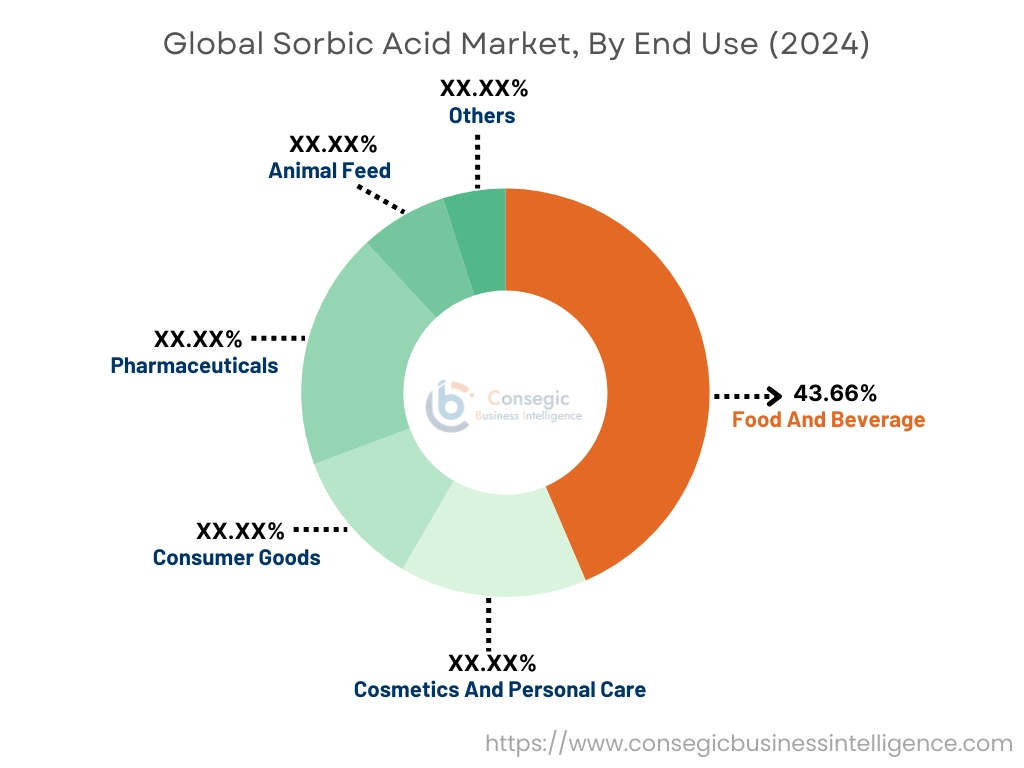
The food and beverage segment accounted for the largest market share of 43.66% in 2024
- The food and beverage segment is the dominating end use sector in the market due to the need for preservatives in various products such as dairy products, baked goods, confectionery products, beverages, processed meat, salad dressings and sauces amongst others.
- Incorporation of this preservative compound supports extended shelf life and prevents spoilage.
- Increase in preference for processed food and beverages along with stringent food safety regulations mandating effective preservatives is further boosting the need for the compound.
- As a result, due to the above-mentioned factors, the share of segment is largest in the overall sorbic acid market trend.
The consumer goods segment is expected to grow at the fastest CAGR in the forecast period.
- Consumer goods encompass a wide range of products, including household cleaning products, certain packaging materials, and other items where preservation is crucial.
- This preservative compound is used for fabric conditioners, dishwashing liquids and cleaners among others.
- Consumer goods present a significant growth rate in upcoming years, as the consumer demand for products with extended shelf life and enhanced hygiene is increasing.
- Additionally, the consumer inclination towards awareness of hygiene is further boosting the need for this compound in homecare products.
- For instance, according to an article published in Times of India, the home care products market has grown by around 27% CAGR from 2015 to 2023.
- Henceforth, considering the aforementioned factors segment is expected to gain the fastest growth rate.
Regional Analysis:
The regions covered are North America, Europe, Asia Pacific, the Middle East and Africa, and Latin America.
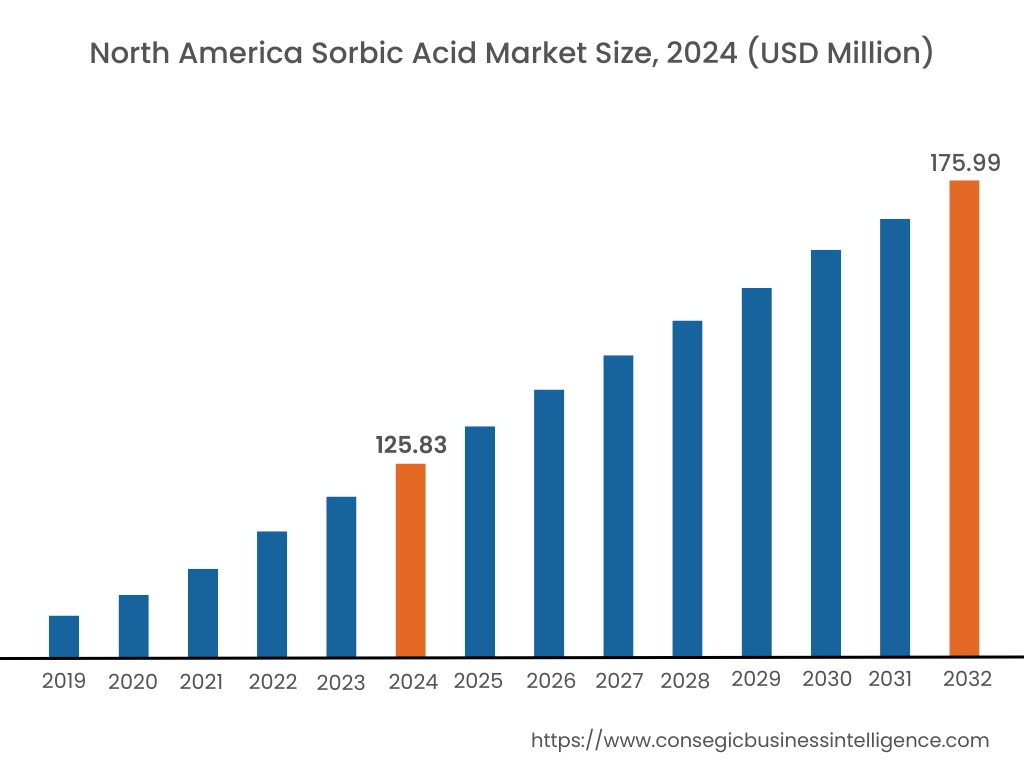
In 2024, North America accounted for the highest Sorbic Acid market share at 40.21% and was valued at USD 125.83 Million and is expected to reach USD 175.99 Million in 2032. In North America, the U.S. accounted for the largest share of 74.21% during the base year of 2024. The rising emphasis on convenience food and beverage products serves as the key factors that are leading to the upward market trajectory in North America. The growth in busy lifestyle is creating the adoption of ready-to-eat meals, pre-packaged meals, and other convenient food products.
- For instance, according to the survey results published by the fifth annual US Snack Index, the average American citizen have only 52 minutes per day for the preparation, consumption, and enjoyment of meals, with a third of consumers reporting a time allocation of less than 30 minutes.
In addition to this, as the awareness of food safety and need for extended shelf life increases there is a greater need for effective preservative solutions for convenience food and beverages. Therefore, as per market analysis, the increased need for ready to consume food and beverages results in requirement the compound as an effective preservative solution in North America.

In Asia Pacific the sorbic acid market analysis is experiencing the fastest growth with a CAGR of 7.3% over the forecast period. The significant growth of the animal feed sector serves as a prominent factor creating sorbic acid market opportunities across the Asia Pacific. To meet the growing demand for meat, livestock industries are expanding rapidly, leading to increased necessity for animal feed. In addition to this, the rising trend of pet ownership is boosting the necessity for commercial pet foods. As a result, key players are focusing on developing preservatives that cater to the requirements of animal feed and pet food products supporting the sorbic acid market share across the Asia Pacific region.
Europe is actively working to reduce food waste, and extending shelf life through preservatives is a key strategy. European countries present some of the strictest food safety regulations across the globe. This drives the necessity for reliable preservatives to ensure compliance. Hence, stringent regulations and consumer preferences are promoting European companies to adopt high-quality sorbic acid that meets strict regulatory standards of food and beverage, pharmaceuticals, and cosmetics and personal care industries. Collectively, as per analysis, increasing focus on extending product shelf life and reducing spoilage creates market demand across Europe.
The high demand from the pharmaceutical sector serves a key role fueling the sorbic acid market analysis in Latin America. Healthcare infrastructure is expanding across the region to improve access to pharmaceuticals. This creates the need for high-quality preservatives in pharmaceutical production. This compound is used in preventing microbial contamination in drug formulations such as including liquids, creams, ointments, and syrups. Moreover, the growing focus on local pharmaceutical production and the increasing number of pharmaceutical companies in Latin America contribute to this market revenue.
Middle East and African market are characterized by the expanding personal care cosmetics sector driving the high adoption of sorbic acid. As economies in the MEA region grow, disposable incomes are increasing. This is resulting in greater spending on personal care and cosmetic products. Consumers in the MEA region are increasingly influenced by global beauty trends. There is a growing awareness of personal grooming and hygiene. This compound is used as a preservative in a wide range of cosmetic and personal care products to prevent microbial contamination and extending shelf life.
Top Key Players and Market Share Insights:
The global Sorbic Acid Market is highly competitive with major players providing products to the national and international markets. Key players are adopting several strategies in research and development (R&D) and product innovation to hold a strong position in the global Sorbic Acid market. Key players in the Sorbic Acid industry include-
- Celanese Corporation (U.S.)
- Azelis (Belgium)
- Catalynt (U.S.)
- Merck KGaA (Germany)
- Glentham Life Sciences Limited (United Kingdom)
- APAC Chemical Corportation (U.S.)
- DOLCHEM (Canada)
- SimSon Pharma Limited (India)
- Wanglong Tech Co.,Ltd (China)
- Foodchem International Corporation (China)
Sorbic Acid Market Report Insights :
| Report Attributes | Report Details |
| Study Timeline | 2019-2032 |
| Market Size in 2032 | USD 475.62 Million |
| CAGR (2025-2032) | 5.4% |
| By Grade |
|
| By End Use |
|
| By Region |
|
| Key Players |
|
| North America | U.S. Canada Mexico |
| Europe | U.K. Germany France Spain Italy Russia Benelux Rest of Europe |
| APAC | China South Korea Japan India Australia ASEAN Rest of Asia-Pacific |
| Middle East and Africa | GCC Turkey South Africa Rest of MEA |
| LATAM | Brazil Argentina Chile Rest of LATAM |
| Report Coverage |
|
Key Questions Answered in the Report
How big is the Sorbic Acid market? −
In 2024, the Sorbic Acid market is USD 312.93 Million.
Which is the fastest-growing region in the Sorbic Acid market? +
Asia Pacific is the fastest-growing region in the Sorbic Acid market.
What specific segmentation details are covered in the Sorbic Acid market? +
By Grade and End Use segmentation details are covered in the Sorbic Acid market.
Who are the major players in the Sorbic Acid market? +
Celanese Corporation (U.S.), Azelis (Belgium), Catalynt (U.S.) are some of the major players in the market.
Overview
Reputation & Certifications


Our Services
- Market Intelligence & Forecasting
- Custom Research Solutions
- Market Entry Strategy
- Competitive Intelligence
- Customer Insights
- Industry Innovation Analysis
- Investment Advisory