Jump to Content
Wiper Systems Market - Size, Share, Industry Trends, and Forecasts (2025-2032)
Wiper Systems Market Size:
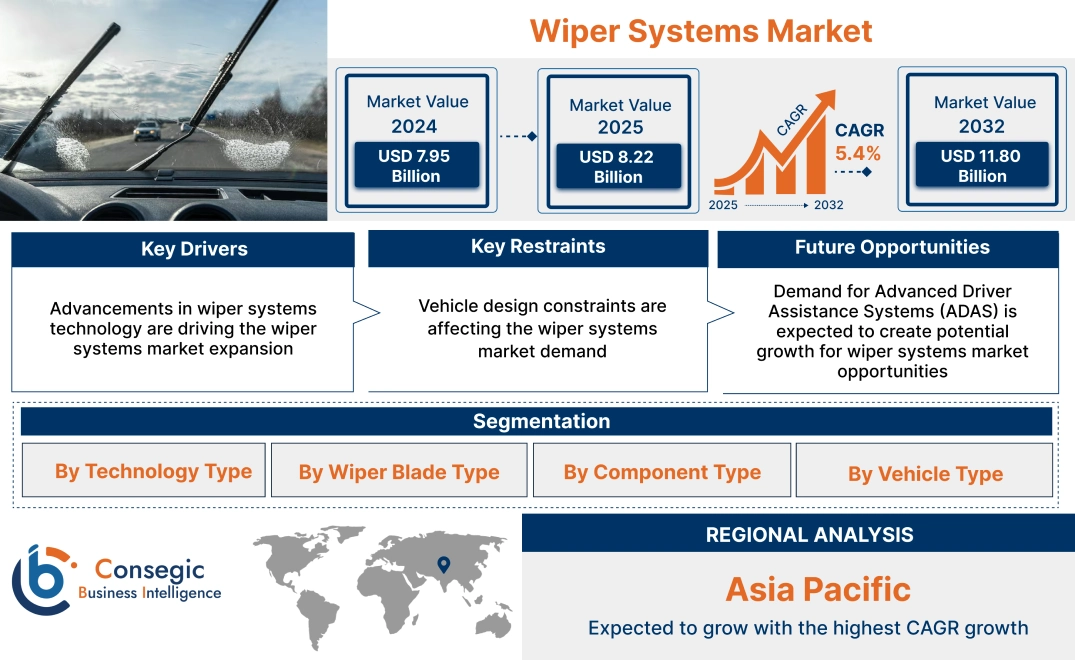
Wiper Systems Market Size is estimated to reach over USD 11.80 Billion by 2032 from a value of USD 7.95 Billion in 2024 and is projected to grow by USD 8.22 Billion in 2025, growing at a CAGR of 5.4% from 2025 to 2032.
Wiper Systems Market Scope & Overview:
Wiper systems comprise wiper blades, arms, motors, and control units, which are integral to maintaining a clear windshield by efficiently removing rain, snow, dirt, and debris. It encompasses a wide range of applications, such as removing debris, water, and snow across different vehicle types, such as passenger cars, commercial vehicles, and off-road vehicles. The growing emphasis on vehicle safety, along with technological advancements in wiper system design and functionality, is driving innovation and adoption in the market.
Wiper Systems Market Dynamics - (DRO) :
Key Drivers:
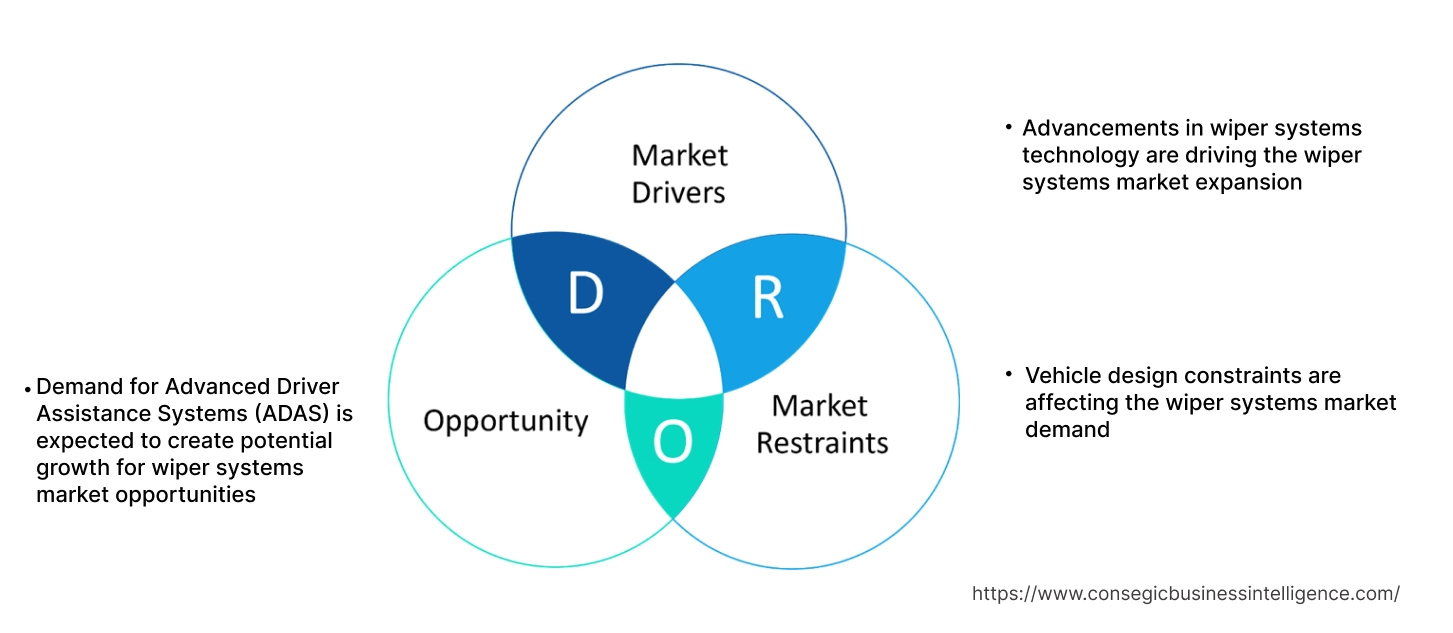
Advancements in wiper systems technology are driving the wiper systems market expansion
The advancements in the wiper systems technology have revolutionized the automotive industry, enhancing safety, convenience, and comfort for drivers. The significant advancements including the emergence of advanced algorithms and sensor data to adjust wiper speed and pressure based on road conditions are driving the market growth. Adaptive wiper systems can dynamically optimize wiping performance, providing smoother and more efficient operation while minimizing noise and wear on wiper components. By continuously adapting to changing driving conditions, these systems improve windshield cleaning effectiveness and extend the lifespan of wiper blades, motors, and other components. Moreover, key innovations by key manufacturers in wiper systems are further driving the market growth.
- For instance, in October 2024, Ford Motor Company filed a patent for an adaptive cruise control system that makes adjustments based on wiper speed that will be used in Ford vehicles.
Thus, according to the wiper systems market analysis, advancements in wiper technology are driving the wiper systems market size and trends.
Key Restraints:
Vehicle design constraints are affecting the wiper systems market demand
Vehicle design constraints pose significant restraints for manufacturers, which impacts the integration and performance of wiper systems. One major constraint is the trend towards sleeker vehicle profiles and aerodynamic designs, which result in reduced space for wiper system components and limited mounting options on windshields. As vehicles adopt curved and contoured windshield shapes to improve aerodynamic efficiency and reduce drag, traditional wiper systems may struggle to maintain consistent contact and coverage across the entire windshield surface, leading to reduced wiping effectiveness and potential visibility issues.
Therefore, the above-mentioned factors are hampering the wiper systems market size.
Future Opportunities:
Demand for Advanced Driver Assistance Systems (ADAS) is expected to create potential growth for wiper systems market opportunities
ADAS technologies, such as collision avoidance systems, lane departure warning systems, and adaptive cruise control, rely on clear visibility to function effectively and enhance driving safety. As a result, these systems play a crucial role in supporting ADAS functionalities by ensuring optimal windshield clarity and sensor performance. Manufacturers are developing advanced systems with features such as rain-sensing capabilities, adaptive wiping algorithms, and predictive maintenance alerts to enhance compatibility with ADAS systems and improve driving safety. These technologies enable wiper designs to operate autonomously and optimize wiping performance based on real-time sensor data, reducing driver workload and improving driving comfort.
- For instance, in 2023, Robert Bosch GmbH launched advanced wiper solutions and systems that focus on enhancing driver visibility, specifically designed for electric vehicles. This development aligns with the growing demand for sustainable and efficient automotive components.
Thus, based on the above factors and analysis, the growing need for ADAS is expected to play a crucial role in shaping the future of the wiper systems market opportunities and trends.
Wiper Systems Market Segmental Analysis :
By Technology Type:
Based on technology type, the wiper systems market is segmented into rain-sensing and conventional.
Trends in technology type:
- The growing popularity of electric vehicles (EVs) and autonomous vehicles (AVs) is driving the wiper system growth, as these vehicles require specialized wiper solutions to meet operational challenges.
- The growing emphasis on vehicle safety, along with technological advancements in wiper solutions and functionality, is driving innovation and adoption in the market.
The conventional segment accounted for the largest revenue share in the year 2024.
- Traditional wiper systems are manually operated and rely on the driver to control the wipers through a switch. These systems are typically more affordable and common in older vehicle models or basic trims.
- Traditional systems are widely used across various vehicle types, including passenger cars and commercial vehicles, offering reliable performance at an affordable cost. They provide essential visibility and safety for drivers by effectively clearing rain, snow, dirt, and debris from the windshield during inclement weather conditions or driving scenarios.
- These factors are driving the wiper systems market growth and trends.
The rain-sensing segment is anticipated to register the fastest CAGR during the forecast period.
- Rain-sensing systems represent a more advanced and automated solution for windshield cleaning, integrating sensors and control units to detect rainfall and adjust wiper speed accordingly.
- These systems utilize optical sensors, moisture-sensitive technologies, or infrared sensors to monitor the presence and intensity of raindrops on the windshield, enabling automatic activation and adjustment of wiper speed in real time.
- Rain-sensing systems offer enhanced convenience, comfort, and safety for drivers by providing optimal visibility without the need for manual intervention. They are particularly popular in premium passenger cars and high-end commercial vehicles, where driver comfort and luxury features are prioritized.
- For instance, in June 2021, Valeo announced the collaboration with Navya, to expand their industrial and technological collaboration in the area of autonomous shuttles. With this partnership, Valeo will provide Navya with rain sensors that will enable vehicles to perceive their surroundings closely.
- These factors and trends in the rain-sensing segment would further create the need for wiper solutions and systems during the forecast period.
By Wiper Blade Type:
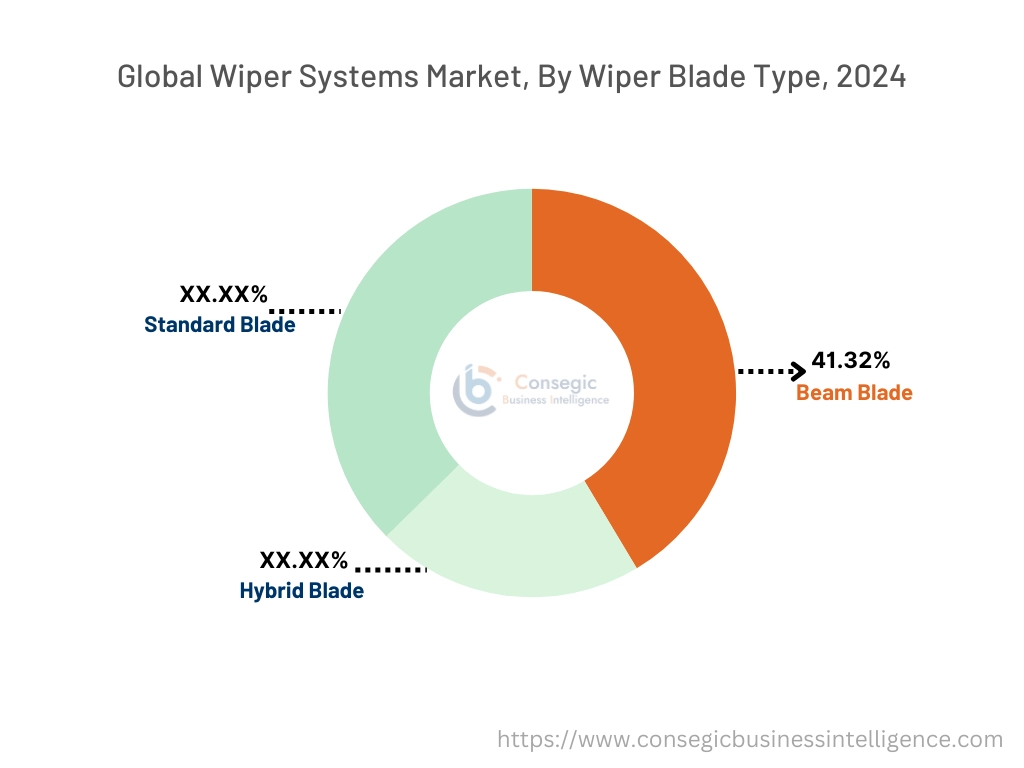
Based on the wiper blade type, the market is segmented into standard blade, beam blade, and hybrid blade.
Trends in wiper blade type:
- Standard wipers are the traditional, frame-based blades that consist of a metal frame with a rubber element to wipe the windshield. These are cost-effective and widely used, but they may not offer as smooth a wipe as other types.
- Hybrid wipers combine the benefits of standard and beam wipers, featuring a sleek design and improved performance, which provide enhanced durability and efficiency without sacrificing cost.
The beam blade segment accounted for the largest revenue share of 41.32% in the year 2024.
- Beam Wipers are the most modern type of wiper blade, designed without a metal frame. They feature a flexible, single-piece structure that ensures even pressure across the blade for consistent contact with the windshield.
- This design provides superior wiping performance, especially in harsh weather conditions like rain, snow, or ice, and is often quieter and more durable than traditional wipers.
- Beam blades are favoured for their sleek appearance, high performance, and longer lifespan, an ideal option for premium and newer vehicles.
- These factors are expected to drive the wiper systems market trends and share during the forecast period.
The hybrid blade segment is anticipated to register the fastest CAGR during the forecast period.
- Hybrid wipers combine the features of traditional and beam wipers. They have a metal frame like standard wipers, but the blade is designed with a more streamlined, aerodynamic shape to improve performance.
- Hybrid blades provide better coverage and a more even wipe, which reduces the risk of streaking and increases the longevity of the blade.
- They are favoured for their balance of performance and cost-effectiveness, providing superior performance compared to standard wipers without the higher price tag of beam wipers.
- These factors, such as the balance of performance and cost-effectiveness of hybrid wipers, are driving the wiper systems market growth.
By Component Type:
Based on component type, the market is segmented into windshield wiper, wiper motor, and rain sensor.
Trends in component type:
- Sensors and automation are used in advanced wiper components to optimize performance dependent on environmental conditions, which lead to the market’s significant growth.
- Components are vital for enhancing road safety in diverse driving scenarios and are utilized in several types of vehicles, such as trucks, cars, train locomotives, and aircraft.
The rain sensor segment accounted for the largest revenue share in the year 2024 and it is expected to register the highest CAGR during the forecast period.
- The rain sensor detects the presence and intensity of rain on the windshield and automatically adjusts the speed of the wipers accordingly.
- This sensor enhances convenience and safety by ensuring that the wipers work without the driver having to manually adjust them.
- Rain sensors are increasingly used in modern vehicles due to their ability to respond to changing weather conditions, improving driver comfort and visibility during rainfall.
- For instance, in July 2023, Valeo expanded its manufacturing capability in Sanand, Gujarat, to develop ultrasonic and rain sensors. With this expansion, the annual production capacity will increase from three million to seven million units.
- As rain sensing technology advances, rain sensors are becoming more accurate and responsive, helping to drive the market growth in this segment.
- As per analysis, these factors will further supplement the wiper systems market trends during the forecast period.
By Vehicle Type:
Based on the vehicle type, the wiper systems market is segmented into passenger vehicle and commercial vehicle.
Trends in the vehicle type:
- The integration of connectivity and telematics capabilities in passenger and commercial vehicles into their wiper solutions enables remote monitoring, diagnostics, and predictive maintenance, enhancing fleet management and vehicle servicing processes.
- Commercial vehicles require wiper solutions that can handle larger windshields and more demanding environments. These vehicles often more robust systems, as fleet operators prioritize safety and driver visibility.
The passenger segment accounted for the largest revenue in the year 2024 and it is expected to register the highest CAGR during the forecast period.
- Passenger cars such as sedans, hatchbacks, and SUVs are designed for personal transportation and are commonly used for commuting, leisure travel, and family outings.
- Wiper systems for passenger cars are essential for maintaining clear visibility and safety for drivers and passengers, particularly during adverse weather conditions such as rain, snow, and fog.
- As consumers prioritize comfort, convenience, and safety features in their vehicles, these systems play a crucial role in enhancing the overall driving experience and ensuring driver confidence on the road.
- As per analysis of the passenger car segment, the mentioned points are driving the trends in the global market.
Regional Analysis:
The regions covered are North America, Europe, Asia Pacific, the Middle East and Africa, and Latin America.
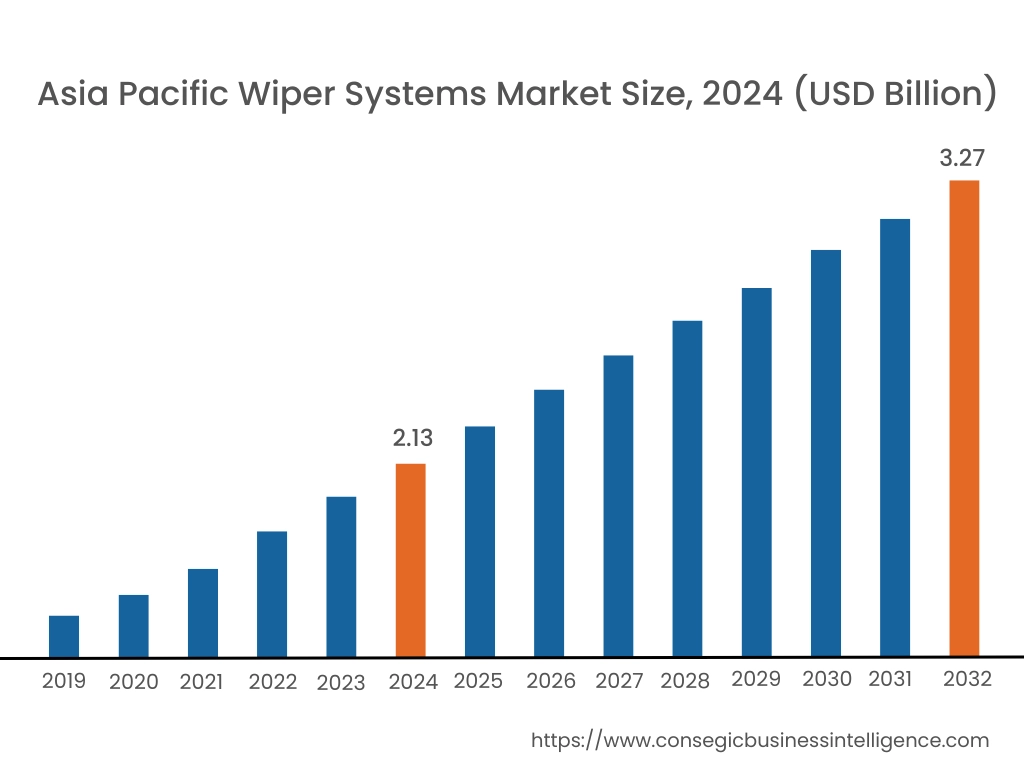
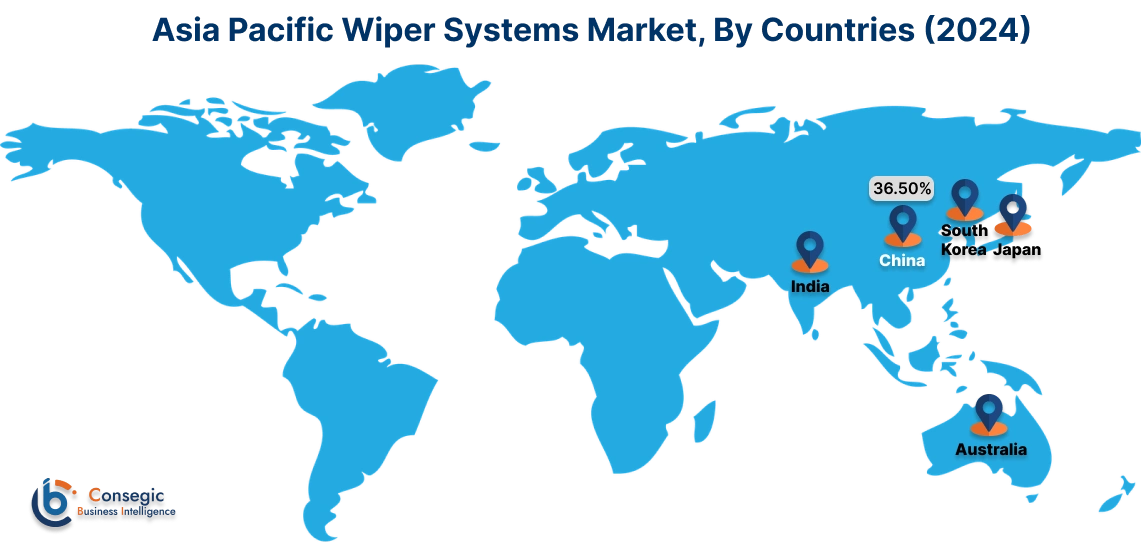
Asia Pacific wiper systems market expansion is estimated to reach over USD 3.27 billion by 2032 from a value of USD 2.13 billion in 2024 and is projected to grow by USD 2.21 billion in 2025. Out of this, the China market accounted for the maximum revenue split of 36.50%. Countries such as Japan, India, China, and South Korea are key automotive manufacturing hubs, driving the need for wiper solutions in both domestic and export markets. Moreover, commercial vehicles, such as trucks, buses, and two-wheelers, contribute to the growth of the wiper systems market in the region. The manufacturers in the region cater to a diverse range of vehicles and consumer preferences, offering cost-effective solutions tailored to local market needs. These trends would further drive the regional wiper systems market share during the forecast period.
- For instance, in October 2023, Nio signed an agreement with Shanghai Baolong Automotive Corporation, to co-develop automotive parts. With this agreement, Baolong and Nio will cooperate on products, including optical rain sensors, wheel speed sensors, and air springs.
North American market is estimated to reach over USD 3.99 billion by 2032 from a value of USD 2.71 billion in 2024 and is projected to grow by USD 2.80 billion in 2025. The regional market is characterized by ongoing research and development activities aimed at enhancing wiper system performance, durability, and efficiency. Further, manufacturers in the region are focusing on developing innovative technologies such as rain-sensing wipers, heated wiper blades, and adaptive wiper solutions. They automatically adjust wiper speed and pressure based on environmental conditions, to meet the evolving needs of customers and regulatory standards. The factors would further contribute to its leading position in the wiper systems market share.
- For instance, in September 2021, Tesla got a patent for using a laser to clear debris from vehicles, which is used as a windshield wiper. The laser system would use cameras to detect extreme weather or debris and then use a laser system to clean the surface of materials.
According to the wiper systems industry, the European market has experienced significant development in recent years. Germany has the region’s largest vehicle production and sales market. The country’s automobiles are known for their dependability, safety, inventiveness, and design, and have won acclaim in all the regions of the globe. Additionally, Latin America presents opportunities for wiper system manufacturers, supported by a growing automotive aftermarket sector and increasing vehicle ownership rates. Countries such as Brazil, Mexico, and Argentina have significant automotive industries, driving the need for wiper solutions in passenger cars, commercial vehicles, and off-road applications. Additionally, countries such as Saudi Arabia, the United Arab Emirates, and South Africa have growing automotive markets, where these systems play a crucial role in ensuring clear visibility and safety for drivers. Wiper system manufacturers in the region cater to the needs of consumers and industries, offering products suitable for desert environments, extreme temperatures, and off-road applications. Thus, on the above wiper systems market analysis, these factors would further drive the regional market during the forecast period.
Top Key Players and Market Share Insights:
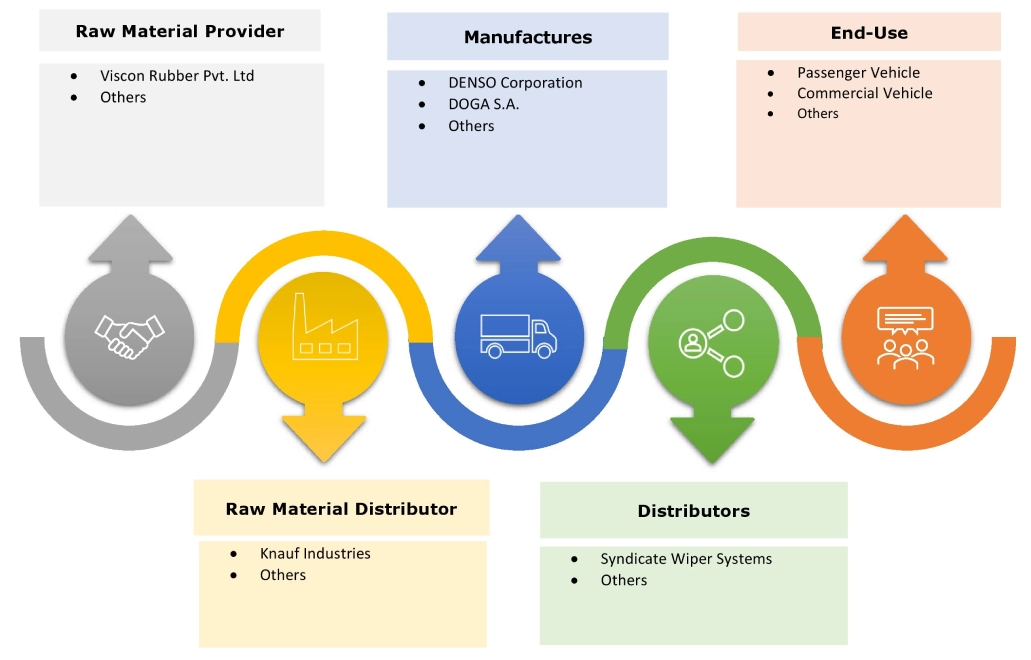
The global wiper systems market is highly competitive with major players providing automotive solutions to the national and international markets. Key players are adopting several strategies in research and development (R&D), product innovation, and end-user launches to hold a strong position in the market. Key players in the wiper systems industry include-
- AM Equipment (U.S.)
- Hepworth Group (U.K.)
- DENSO Corporation (Japan)
- DOGA S.A. (Spain)
- DRiV Incorporated (U.S.)
- HELLA GmbH & Co. KGaA (Germany)
- Marelli Holdings Co., Ltd. (Japan)
- Mitsuba Corp. (Japan)
- Pilot Automotive (U.S.)
- Robert Bosch GmbH (Germany)
- TEX Automotive Ltd. (U.S.)
- Valeo (France)
Recent Industry Developments :
Product Launch:
- In May 2022, Schaeffler unveiled a new kind of wiper blades, Tru Power. The wiper blades have distinctive features and are available in Ultra-Premium and Premium Plus versions. The wiper blades were designed to offer superior wiping performance and improved visibility in any weather conditions.
Wiper Systems Market Report Insights :
| Report Attributes | Report Details |
| Study Timeline | 2019-2032 |
| Market Size in 2032 | USD 11.80 Billion |
| CAGR (2025-2032) | 5.4% |
| By Technology Type |
|
| By Wiper Blade Type |
|
| By Component Type |
|
| By Vehicle Type |
|
| By Region |
|
| Key Players |
|
| North America | U.S. Canada Mexico |
| Europe | U.K. Germany France Spain Italy Russia Benelux Rest of Europe |
| APAC | China South Korea Japan India Australia ASEAN Rest of Asia-Pacific |
| Middle East and Africa | GCC Turkey South Africa Rest of MEA |
| LATAM | Brazil Argentina Chile Rest of LATAM |
| Report Coverage |
|
Key Questions Answered in the Report
How big is the Wiper Systems market? −
Wiper Systems Market Size is estimated to reach over USD 11.80 Billion by 2032 from a value of USD 7.95 Billion in 2024 and is projected to grow by USD 8.22 Billion in 2025, growing at a CAGR of 5.4% from 2025 to 2032.
Which is the fastest-growing region in the wiper systems market? +
Asia-Pacific is the region experiencing the most rapid growth in the market. The regional growth can be attributed to the expanding population, growing automobile purchases, and increasing GDP of developing nations.
What specific segmentation details are covered in the Wiper Systems report? +
The wiper systems report includes specific segmentation details for technology type, wiper blade type, component type, vehicle type, and region.
Who are the major players in the Wiper Systems market? +
The key participants in the market are AM Equipment (U.S.), Hepworth Group (U.K.), DENSO Corporation (Japan), DOGA S.A. (Spain), DRiV Incorporated (U.S.), HELLA GmbH & Co. KGaA (Germany), Marelli Holdings Co., Ltd. (Japan), Mitsuba Corp. (Japan), Pilot Automotive (U.S.), Robert Bosch GmbH (Germany), TEX Automotive Ltd. (U.S.), Valeo (France), and others.
Overview
Reputation & Certifications


Our Services
- Market Intelligence & Forecasting
- Custom Research Solutions
- Market Entry Strategy
- Competitive Intelligence
- Customer Insights
- Industry Innovation Analysis
- Investment Advisory