Jump to Content
2D Materials Market Size & Industry Share - Growth Trends & Forecasts (2026 - 2034)
2D Materials Market Size:
2D Materials Market size is estimated to reach over 3.75 (US$B) by 2034 from a value of 2.7 (US$B) in 2025 and is projected to grow by 2.8 (US$B) in 2026, growing at a CAGR of 3.7% from 2026 to 2034, according to a recent report from Consegic Business Intelligence.
2D Materials Market Scope & Overview:
2D materials are a class of advanced materials characterized by their single-layer thickness, offering unique electrical, mechanical, and optical properties. These materials, including graphene, boron nitride, and transition metal dichalcogenides, have garnered significant attention for applications in electronics, energy storage, sensors, and composite materials. Due to their high strength, flexibility, and excellent conductivity, 2D materials are increasingly used in the development of next-generation technologies such as flexible electronics, ultra-fast transistors, and energy-efficient batteries. Continuous research and development in material science are expanding the application scope of these materials across multiple industries, including electronics, aerospace, and energy. End-use sectors such as electronics manufacturing, energy storage, and research institutions are at the forefront of adopting 2D materials, which are expected to play a pivotal role in future technological innovations.

2D Materials Market Dynamics - (DRO) :
Key Drivers:
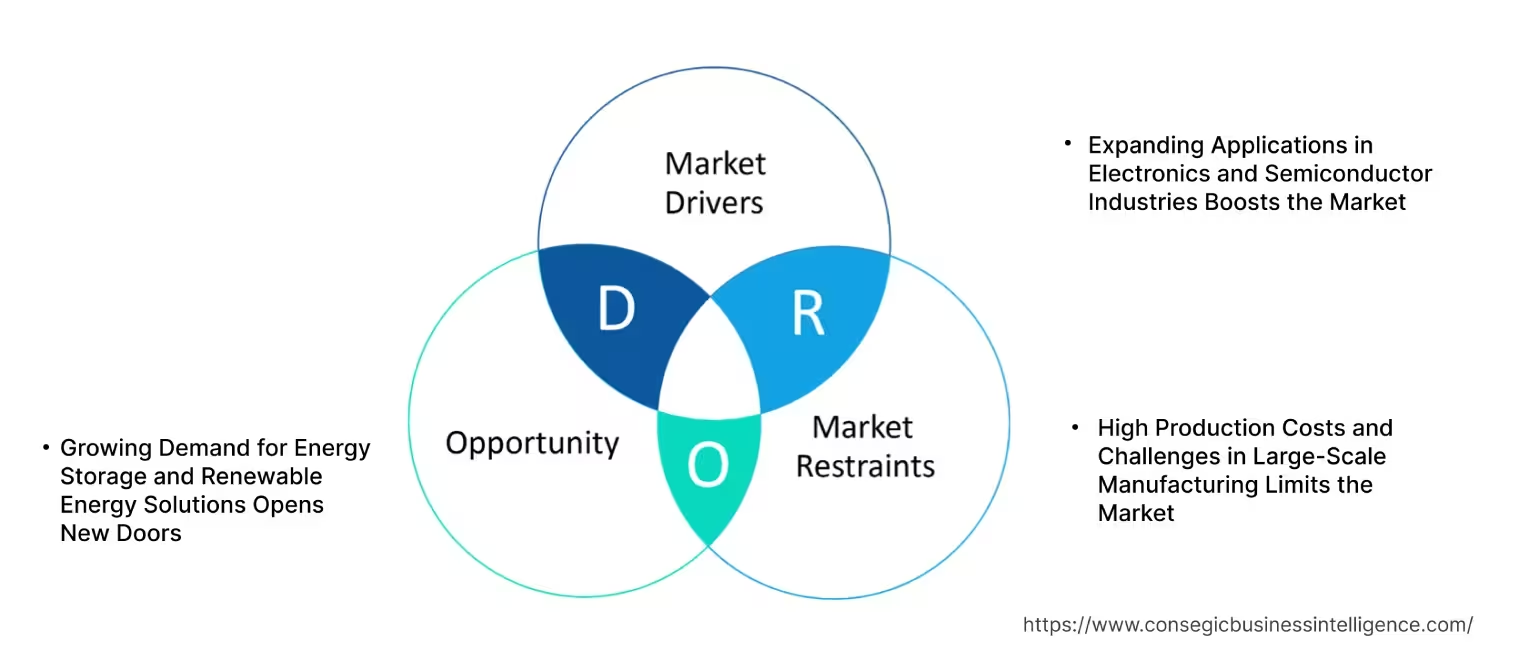
Expanding Applications in Electronics and Semiconductor Industries Boosts the Market
The growing demand for advanced electronic and semiconductor devices is a significant driver of the 2D materials market growth. Materials like graphene, molybdenum disulfide (MoS2), and hexagonal boron nitride (h-BN) have unique electrical, optical, and mechanical properties, making them ideal for next-generation electronic components. These materials are used in the development of high-performance transistors, flexible displays, and energy-efficient sensors. The need for smaller, faster, and more efficient devices has led to increased research and development in the use of these materials for applications such as quantum computing, integrated circuits, and optoelectronics. Additionally, as the miniaturization trend in electronics continues, these materials are being explored for their potential to revolutionize device fabrication and improve the performance of semiconductors beyond the capabilities of traditional silicon-based technologies.
Key Restraints :
High Production Costs and Challenges in Large-Scale Manufacturing Limits the Market
Despite their promising applications, the high cost and technical challenges associated with the production of 2D materials remain a major restraint for the market. Current methods for synthesizing high-quality 2D materials, such as chemical vapor deposition (CVD) and mechanical exfoliation, are complex and expensive, making large-scale manufacturing difficult. Additionally, maintaining the structural integrity and uniformity of these materials at industrial scales is a significant challenge. The lack of cost-effective, scalable production techniques has limited the widespread adoption of these materials, particularly in industries that require large volumes of materials for mass production. Overcoming these manufacturing barriers is essential for unlocking the full potential of 2D materials across various sectors.
Future Opportunities :
Growing Demand for Energy Storage and Renewable Energy Solutions Opens New Doors
2D materials like graphene are being explored for their potential in enhancing the efficiency of energy storage systems such as batteries and supercapacitors. Their exceptional electrical conductivity, high surface area, and flexibility make them ideal for improving the performance of energy storage devices, enabling faster charging times, higher energy density, and longer lifespans. Additionally, these materials are being integrated into solar cells and other renewable energy technologies to improve energy conversion efficiency. As the global demand for clean energy solutions grows, the development of advanced materials for energy applications is expected to create significant 2D materials market opportunities.
2D Materials Market Segmental Analysis :
By Material Type:
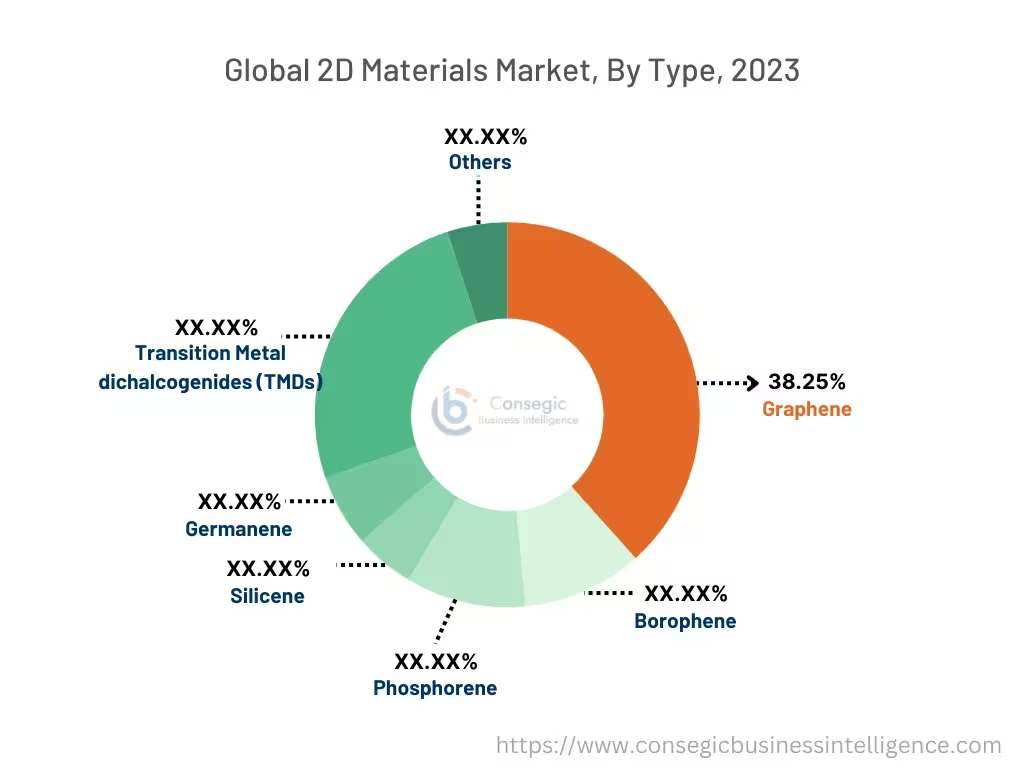
Based on material type, the market is segmented into graphene, borophene, phosphorene, silicene, germanene, transition metal dichalcogenides (TMDs), and others.
The graphene segment accounted for the largest revenue share of 38.25% of the total 2D materials market share in 2023.
- Graphene is the most commercially established and widely researched 2D material due to its exceptional electrical conductivity, mechanical strength, and flexibility.
- It is extensively used in electronics, energy storage, and composite materials, making it a critical component for advanced technologies.
- The growing demand for high-performance batteries, supercapacitors, and flexible electronics is driving the adoption of graphene in various applications.
- Additionally, graphene's potential in next-generation semiconductors, due to its ability to improve device performance, further strengthens its leading position in the market.
- Thus, the market trends analysis shows that graphene leads the market, driven by its superior electrical and mechanical properties and its critical role in high-performance electronics and energy storage applications, driving the 2D materials market demand.
The transition metal dichalcogenides (TMDs) segment is anticipated to register the fastest CAGR during the forecast period.
- Transition metal dichalcogenides (TMDs), such as molybdenum disulfide (MoS2), are gaining attention due to their unique properties, including tunable bandgaps and excellent semiconductor characteristics.
- These materials are increasingly being adopted in applications like flexible electronics, photodetectors, and transistors.
- Their potential to replace traditional semiconductors in low-power electronics and optoelectronics is driving their rapid growth.
- Additionally, ongoing research into the optical and electronic properties of TMDs is expected to further enhance their adoption in advanced technologies, particularly in the electronics and optoelectronics industries.
- Thus, the segmental trends analysis depicts that TMDs are expected to grow rapidly due to their semiconductor properties, making them suitable for next-generation electronic devices, photodetectors, and low-power electronics, boosting the 2D materials market trends.
By End-User Industry:
Based on end-user industry, the market is segmented into electronics, automotive, aerospace & defense, healthcare, energy, and others.
The electronics segment accounted for the largest revenue share of the overall 2D materials market share in 2023.
- 2D materials, particularly graphene and TMDs, are increasingly being used in the electronics sector to improve device performance, reduce energy consumption, and enable flexible and wearable devices.
- Their excellent electrical properties make them ideal for use in transistors, sensors, and other semiconductor components.
- The increasing demand for miniaturized and high-performance electronic devices, including flexible displays, wearable technology, and next-generation semiconductors, is driving the adoption of the materials in the electronics sector.
- Additionally, the ongoing research into the materials for use in quantum computing and photonics further supports the dominance of this segment.
- Thus, the analysis of market trends depicts that electronics sector dominates the market due to the critical role of these materials in enhancing the performance and flexibility of semiconductor devices, enabling advancements in flexible electronics, sensors, and quantum computing, driving the 2D materials market growth.
The energy segment is anticipated to register the fastest CAGR during the forecast period.
- The energy sector is increasingly adopting 2D materials for use in advanced energy storage and harvesting solutions, such as batteries, supercapacitors, and solar cells.
- Graphene, in particular, is gaining traction for its ability to improve the energy density and charge-discharge rates of batteries and supercapacitors.
- Additionally, 2D materials like phosphorene and TMDs are being explored for their potential to enhance the efficiency of solar cells.
- As the demand for renewable energy and energy-efficient storage solutions grows globally, the adoption of these materials in the energy sector is expected to accelerate rapidly.
- Thus, the analysis of segmental trends depicts that energy sector is expected to grow rapidly as these materials play a crucial role in advancing energy storage solutions and improving the efficiency of renewable energy technologies, particularly in batteries and solar cells, proliferating the 2D materials market trends.
Regional Analysis:
The regions covered are North America, Europe, Asia Pacific, the Middle East and Africa, and Latin America.
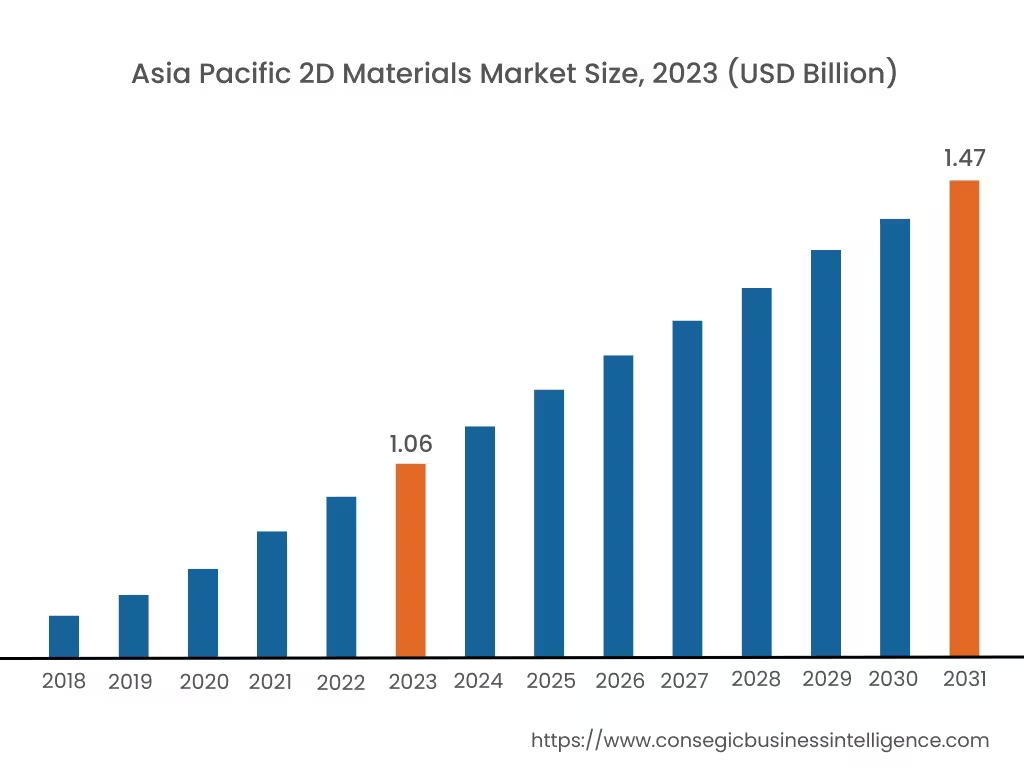
Asia Pacific region was valued at USD 1.06 Billion in 2023. Moreover, it is projected to grow by USD 1.08 Billion in 2024 and reach over USD 1.47 Billion by 2031. Out of this, China accounted for 37.3% of the total market share. As per the 2D materials market analysis, Asia-Pacific is the fastest-growing with China, Japan, and South Korea being the major contributors. China's dominance in the semiconductor and electronics industries is driving the adoption of these materials, particularly graphene, for flexible electronics and energy storage applications. The region benefits from large-scale manufacturing capabilities and significant government funding for nanotechnology research. Japan and South Korea are also investing in graphene-based innovations for use in batteries, sensors, and flexible displays. However, environmental concerns related to the production process and challenges in commercial scalability remain key barriers.

North America is a leading region in the market, driven by extensive research and development in nanotechnology and advanced materials. The U.S., in particular, is at the forefront due to significant investments in graphene and other materials for applications in electronics, energy storage, and semiconductors. Research institutions and universities play a crucial role in advancing the commercialization of materials, supported by funding from agencies like the National Science Foundation (NSF). However, the high production cost of materials and challenges in large-scale manufacturing may limit market growth in the region.
Europe is a key player in the market, particularly with strong contributions from Germany, the UK, and France. The region benefits from active research initiatives, such as the Graphene Flagship Project, which aims to accelerate the commercialization of graphene-based products across industries. The demand for the materials in applications such as energy storage, electronics, and automotive sectors is growing, driven by the region's emphasis on sustainability and technological advancements. However, regulatory challenges and the need for standardized production processes could hinder 2D materials market expansion.
The 2D materials market analysis shows that the Middle East & Africa market is still emerging, but countries like the UAE and Saudi Arabia are beginning to invest in nanotechnology research and advanced material applications. The focus in the region is on leveraging the materials for energy storage and renewable energy projects, particularly in solar energy. Government initiatives to diversify the economy and reduce reliance on oil are encouraging investments in new technologies, including 2D materials. However, limited research infrastructure and high production costs may slow market growth in this region.
Latin America is an emerging market, with Brazil and Mexico being the primary drivers. The region's focus on improving electronics manufacturing and energy storage solutions supports demand for 2D materials like graphene. Brazil's growing investments in nanotechnology research, particularly in universities and research centers, contribute to market growth. However, challenges such as economic instability and the lack of large-scale production facilities limit the region's potential for 2D materials market expansion.
Top Key Players & Market Share Insights:
The 2D materials market is highly competitive with major players providing products to the national and international markets. Key players are adopting several strategies in research and development (R&D), product innovation, and end-user launches to hold a strong position in the global 2D materials market. Key players in the 2D materials industry include -
- Graphenea SA (Spain)
- Versarien Plc (UK)
- Haydale Graphene Industries Plc (UK)
- XG Sciences, Inc. (USA)
- Grolltex Inc. (USA)
- 2D Materials Pte. Ltd. (Singapore)
- ACS Material, LLC (USA)
- Global Graphene Group (G3) (USA)
- Thomas Swan & Co. Ltd. (UK)
- Sixth Element Materials Technology Co. Ltd. (China)
Recent Industry Developments :
Approvals:
- In March 2024, the European Commission (EC) approved Horizon Europe's second strategic plan, endorsing the Graphene Flagship and Advanced Materials 2030 Initiative's proposed Innovative Materials for EU partnership.
Mergers and Acquistions:
- In September 2022, NanoXplore acquired the assets of XG Sciences, significantly strengthening its intangible assets related to graphene and graphene-enhanced battery materials.
Research and Innovations:
- In November 2021, a research team in Singapore developed an ultra-sensitive 2D material sensor capable of detecting breast cancer cells through electric signals. This pioneering research is the first to use 2D materials to identify electrical signals in cancer cells.
2D Materials Market Report Insights :
| Report Attributes | Report Details |
| Study Timeline | 2021-2034 |
| Market Size in 2034 | USD 3.75 Billion |
| CAGR (2026-2034) | 3.70% |
| Base Year | 2025 |
| By Material Type |
|
| By End-User Industry |
|
| By Region |
|
| Key Players |
|
| North America | U.S. Canada Mexico |
| Europe | U.K. Germany France Spain Italy Russia Benelux Rest of Europe |
| APAC | China South Korea Japan India Australia ASEAN Rest of Asia-Pacific |
| Middle East and Africa | GCC Turkey South Africa Rest of MEA |
| LATAM | Brazil Argentina Chile Rest of LATAM |
| Report Coverage |
|
Key Questions Answered in the Report
What is the projected growth of the 2D Materials Market? −
2D Materials Market size is estimated to reach over USD 3.36 Billion by 2031 from a value of USD 2.50 Billion in 2023 and is projected to grow by USD 2.55 Billion in 2024, growing at a CAGR of 3.7% from 2024 to 2031.
What are 2D materials, and where are they used? +
2D materials are ultra-thin materials, typically one or two atoms thick, with unique properties such as high electrical conductivity, mechanical strength, and flexibility. They are used in a wide range of applications, including semiconductors, battery technologies, photovoltaics, and sensors.
Which region is expected to dominate the 2D Materials Market? +
North America is expected to dominate the 2D Materials Market due to significant investments in research and development, particularly in the fields of nanotechnology and materials science. The region also benefits from the presence of key players and a strong industrial base for electronics and energy sectors.
What are the key trends driving innovation in the 2D Materials Market? +
Key trends include the increasing focus on graphene-based 2D materials for their exceptional conductivity and strength, as well as the exploration of new 2D materials like transition metal dichalcogenides (TMDs). The growing demand for flexible and wearable electronics and advanced energy storage solutions is also driving innovation in the market.
Overview
Reputation & Certifications


Our Services
- Market Intelligence & Forecasting
- Custom Research Solutions
- Market Entry Strategy
- Competitive Intelligence
- Customer Insights
- Industry Innovation Analysis
- Investment Advisory