Jump to Content
Active Calcium Silicate Market - Size, Share, Industry Trends, and Forecasts (2024 - 2031)
Active Calcium Silicate Market Size:
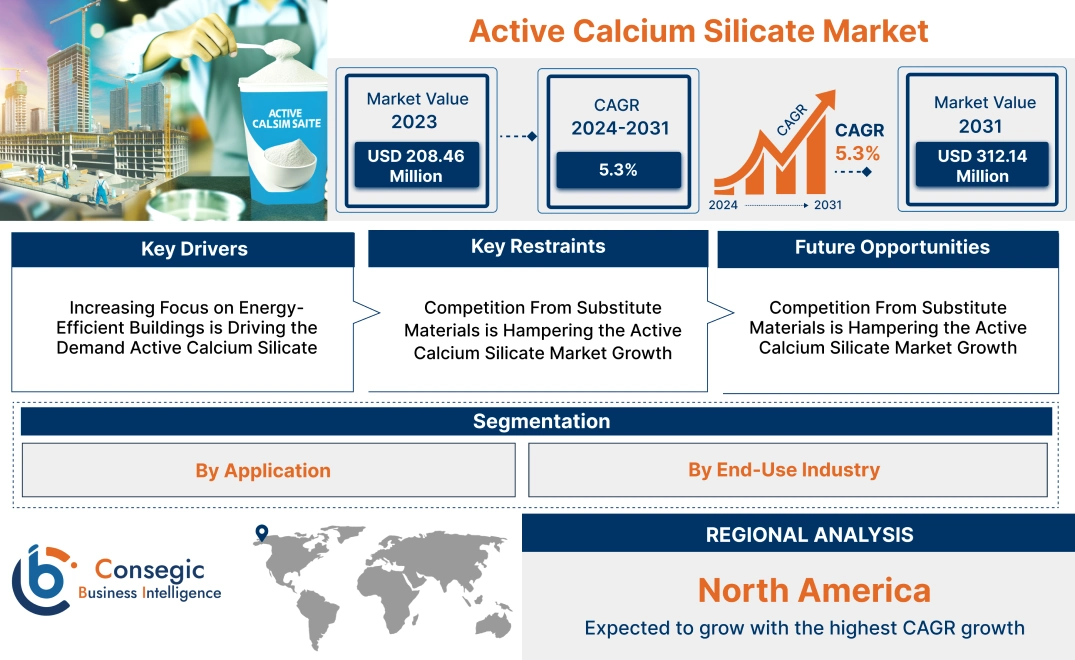
Active Calcium Silicate Market size is growing with a CAGR of 5.3% during the forecast period (2024-2031), and the market is projected to be valued at USD 312.14 Million by 2031 from USD 208.46 Million in 2023.
Active Calcium Silicate Market Scope & Overview:
Active calcium silicate (ACS) is an inorganic compound composed primarily of calcium oxide and silicon dioxide. It exists in both hydrated and anhydrous forms, with varying proportions of these two components. This compound is typically produced through chemical reactions involving siliceous materials, such as diatomaceous earth, and calcium-based compounds including lime or calcium hydroxide.
Chemically, it is stable, non-combustible, and non-toxic. It is lightweight, porous, and possesses good mechanical strength. It also offers excellent thermal insulation and sound absorption properties. These characteristics make the compound suitable for a wide range of applications, including thermal insulation in buildings and industries, fire protection in construction and industrial settings, soundproofing in buildings and machinery, food additives, pharmaceuticals, and cosmetics among others. The growing demand for high-performance building materials, energy-efficient construction, and adoption in a wide range of sectors are prominent factors fuelling the market.
How is AI Impacting the Active Calcium Silicate Market?
AI algorithms can analyze vast datasets of material properties and environmental conditions to predict the performance of active calcium silicate under various scenarios. This allows manufacturers to optimize formulations for specific applications, such as high-temperature insulation or fireproofing, and improve product durability and effectiveness. Also, AI-powered technologies, such as IoT sensors and data analytics, are being integrated into manufacturing processes to monitor production parameters in real-time, identify potential issues, and optimize process control. This leads to improved product quality, reduced waste, and increased production efficiency.
Active Calcium Silicate Market Dynamics - (DRO) :
Key Drivers:
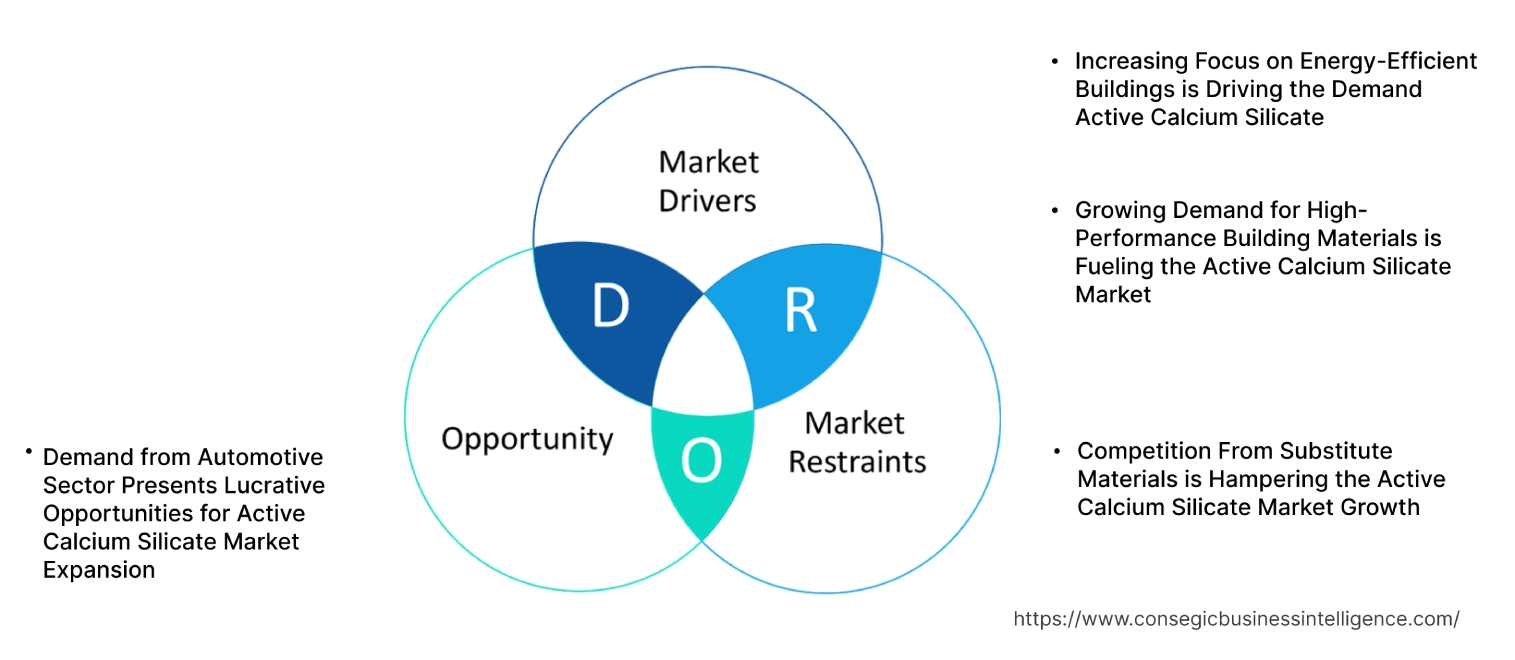
Increasing Focus on Energy-Efficient Buildings is Driving the Demand Active Calcium Silicate
As global concerns about climate change and energy consumption grow, governments and individuals are seeking ways to reduce energy consumption and lower carbon emissions. Public awareness about the benefits of energy-efficient buildings, such as improved indoor air quality and higher property values, has further fueled the focus. As sustainability becomes a priority in building design and construction, consumers and builders are increasingly seeking materials that enhance energy efficiency. Governments worldwide are actively supporting this factor through stricter building codes.
- For instance, the S. Department of Energy (DOE) has implemented new, more stringent energy efficiency standards for federal low-rise residential buildings. Effective June 6, 2022, these updated standards, based on the 2021 International Energy Conservation Code (IECC), aim to reduce energy consumption and greenhouse gas emissions from federally funded housing projects. The updated standards require federal low-rise residential buildings to meet higher energy efficiency standards, leading to reduced energy consumption. The need for improved insulation boosts the requirement for high-performance insulation materials.
Active calcium silicate, with its exceptional thermal insulation properties, plays a crucial role in achieving these goals. By effectively reducing heat transfer, it helps maintain optimal indoor temperatures, leading to significant energy savings and lower carbon emissions. As a result, the rising focus on energy-efficient buildings is driving the active calcium silicate market growth.
Growing Demand for High-Performance Building Materials is Fueling the Active Calcium Silicate Market
The building and construction sector is undergoing a significant transformation, with a growing emphasis on high-performance materials that offer long-lasting durability. The heightened requirement for high-performance and durable building materials in the construction sector is attributed to a confluence of factors, including fire safety concerns, resilience requirements, evolving regulations, consumer preferences, advancements in material science, and life cycle cost considerations.
This is driving a substantial increase in the adoption of active calcium silicate-based materials including cement, fire-safety boards, and insulation materials among others. This compound offers exceptional thermal insulation properties. Its non-combustible nature and high-temperature resistance make it a suitable material for fireproofing applications. Moreover, the growing cases of fire incidents in construction projects are significantly contributing to the requirement for fire protection solutions such as calcium silicate boards.
- For instance, according to the Fire and Rescue Incident Statistics: England, year ending March 2022, published by the Government of the UK, FRSs attended 577,053 incidents in the year ending March 2022, an 11% increase compared with the previous year (518,270). Such a large count of fire incidences creates the requirement for building materials developed using active calcium silicate.
Additionally, the compound offers excellent acoustic performance. The material's durability and resistance to moisture, mold, and mildew ensure long-lasting performance and minimize maintenance costs. Thus, the growing requirement for high-performance building materials is fueling the adoption of active calcium silicate.
Key Restraints :
Competition From Substitute Materials is Hampering the Active Calcium Silicate Market Growth
The wide availability of substitute options is significantly hindering the growth of the active calcium silicate market. This factor is driven by the increasing preference for alternative materials including mineral wool, gypsum boards, and composite materials among others. Inorganic materials like mineral wool and gypsum board offer excellent fire resistance and thermal insulation properties. Mineral wool, composed of spun mineral fibers, is ideal for pipe insulation, wall and ceiling insulation, and fireproofing. Gypsum board, a common building material, provides good fire resistance and is used for interior walls and ceilings. Additionally, hybrid materials like composite materials, combining different materials like fiberglass and resin, offer enhanced fire resistance.
Organic options including polyurethane foam, polyisocyanurate, expanded polystyrene (EPS), and extruded polystyrene (XPS) offer various benefits including insulation. Polyurethane foam is versatile and provides excellent thermal insulation, while polyiso is a rigid foam with high thermal resistance. EPS is lightweight and commonly used in wall and roof insulation, while XPS is denser and more moisture-resistant, making it suitable for foundation insulation. As a result, as per analysis, the wide availability of alternative options is hindering the market expansion.
Future Opportunities :
Demand from Automotive Sector Presents Lucrative Opportunities for Active Calcium Silicate Market Expansion
The automotive sector is increasingly adopting active calcium silicate as a key material due to its versatile properties. This compound plays a crucial role in enhancing vehicle performance, safety, and efficiency. It is used in thermal management systems to regulate battery and motor temperatures, ensuring optimal performance and longevity. Additionally, it contributes to fire safety by being incorporated into fire-resistant components within the vehicle interior. Moreover, growing concerns over fire incidents in automotives in supporting the adoption of this compound.
- For instance, in June 2024, the Bureau of Indian Standards (BIS) introduced two new safety standards, IS 18590:2024 and IS 18606:2024, to enhance the safety of electric vehicles in India. These standards specifically target the powertrain, a crucial component of electric vehicles, ensuring it meets stringent safety requirements. By prioritizing battery safety and performance, these standards aim to address concerns raised by recent EV fire incidents. As a result, the adoption of materials such as ACS, which contribute to enhanced vehicle safety and performance, is expected to gain momentum.
Furthermore, its lightweight nature contributes to improved vehicle performance and fuel efficiency. As the automotive sector continues to prioritize safety, the need for high-performance materials such as ACS is expected to grow significantly contributing to the active calcium silicate market expansion in the upcoming years.
Active Calcium Silicate Market Segmental Analysis :
By Application:
Based on application, the market is categorized into building materials, insulation, fire protection, food additives, pharmaceutical intermediates, cosmetic ingredients, and others.
Trends in the Application:
- Growing focus on reducing carbon footprint in construction.
- Stricter energy efficiency regulations positively impact the adoption of advanced insulation materials.
The insulation segment accounted for the largest market share in 2023.
- Active calcium silicate is a versatile material that has gained significant adoption in thermal and acoustics insulation due to its exceptional properties. Its low thermal conductivity effectively reduces heat transfer and also excels in acoustic insulation.
- It finds widespread use in building insulation, where it is employed in walls, ceilings, pipes, and roofs to enhance energy efficiency and reduce heating and cooling costs. In industrial settings, this compound is used to insulate high-temperature equipment, pipes, and structures, minimizing heat loss and improving operational efficiency.
- The growing emphasis on energy conservation, coupled with stringent building codes and regulations, is driving the requirements for high-performance insulation materials.
- For instance, in the UK, standards such as Part L of the Building Regulations mandate insulation values like R-value and U-value, which measure thermal resistance and heat transfer, respectively. This regulation mandates specific thermal performance levels for buildings to minimize energy consumption and reduce carbon emissions. Active calcium silicate is a versatile material that aligns with the stringent energy efficiency standards set by the UK Building Regulations.
- Hence, considering the aforementioned factors insulation application serves as a dominant segment in the overall active calcium silicate market share.
The fire protection segment is expected to grow at the fastest CAGR over the forecast period.
- Active calcium silicate is a versatile material that offers exceptional fire protection properties. Its non-combustible nature prevents it from contributing to fire spread, while its
- high-temperature resistance allows it to withstand extreme heat without decomposing. When exposed to fire, the compound expands, forming a protective char layer that insulates the underlying substrate and slows down fire progression. This intumescent property, combined with its durability and longevity, makes it a suitable choice for various fire protection applications.
- This compound is widely used in fireproofing coatings, fire-resistant boards, intumescent paints, and fire-resistant sealants. These products are crucial in protecting structural steel, pipes, walls, ceilings, and other components from fire damage.
- Thus, the incorporation of the compound into building designs allows for improved fire safety and compliance with stringent building codes and regulations further boosting the market.
By End-Use Industry:
Based on the end-use industry, the market is classified into construction, automotive, food & beverage, pharmaceutical, cosmetics & personal care, and others.
Trends in the End-Use Industry:
- Lightweighting trends are leading to the adoption of this compound.
- The focus on developing innovative drug delivery systems is driving the use of ACS in advanced drug formulations.
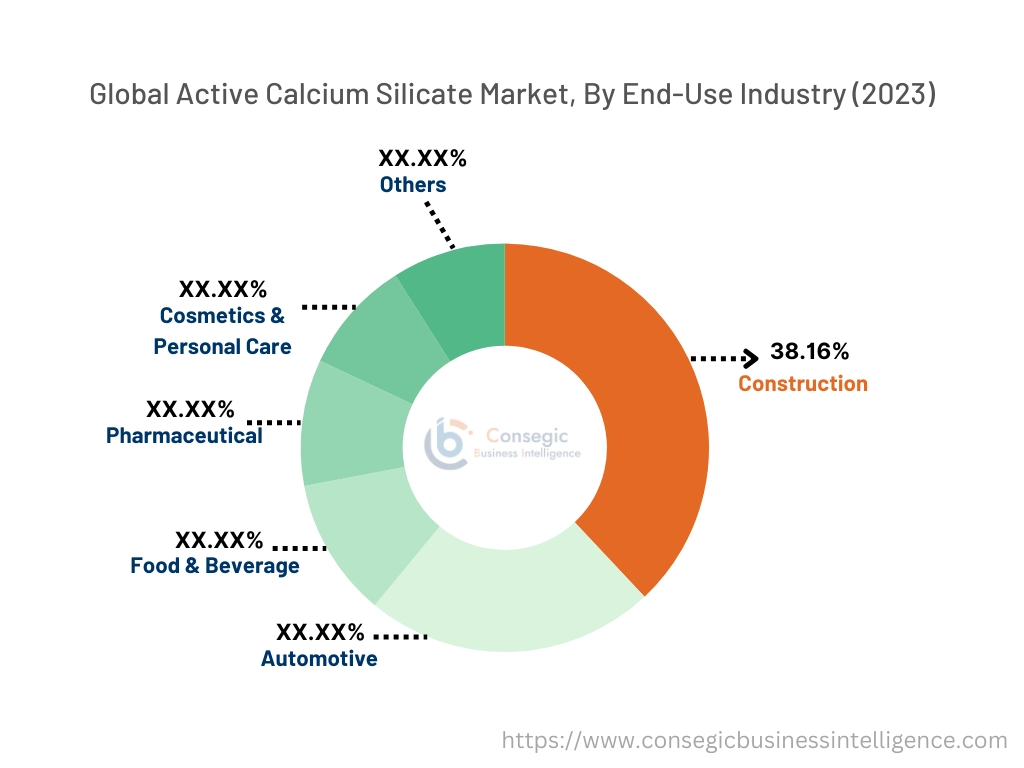
The construction segment accounted for the largest market share of 38.16% in the year 2023.
- The construction sector is the largest consumer of active calcium silicate owing to its versatile properties making it a crucial component in various construction applications.
- Its non-combustible nature, high-temperature resistance, and intumescent properties make it an appropriate choice for fire protection. Calcium silicate-based coatings, boards, and paints are used to protect structures from fire damage.
- Additionally, this compound also provides excellent thermal and acoustic insulation. Calcium silicate-based insulation materials are widely used in walls, roofs, and pipes to enhance the thermal performance of buildings. Furthermore, it effectively reduces noise transmission, improving the acoustic comfort of indoor spaces.
- Moreover, this compound also plays a crucial role in enhancing the properties of cement and concrete. Incorporation in these materials improves their strength, durability, and water resistance. This leads to the construction of more robust and long-lasting structures.
- The growing emphasis on sustainability and energy efficiency in the construction sector has further increased the market. As the construction sector continues to evolve, it drives the overall construction segment analysis in active calcium silicate market trends.
The automotive segment is expected to grow at the fastest CAGR over the forecast period.
- The unique properties of active calcium silicate make it suitable for various automotive applications.
- Its thermal insulation properties make it suitable for use in components including exhaust systems, engine compartments, and underbody panels. By reducing heat transfer, this compound helps to improve fuel efficiency and reduce engine operating temperatures.
- Additionally, its fire resistance properties make it suitable for applications that require high-temperature resistance, such as firewalls and engine bay insulation.
- Moreover, in specific automotive components such as brake pads and clutch linings, the compound's high thermal stability and friction properties are particularly beneficial.
- The rise of EVs presents new prospects for this compound, as it presents potential for use in battery thermal management systems and other components.
- For instance, according to the data published by the International Trade Administration, in the United States, new electric car registrations totaled 1.4 million in 2023, increasing by more than 40% compared to 2022. This presents a promising solution for the active calcium silicate industry, as the EV market continues to expand, the adoption of this compound is expected to grow significantly.
- Thus, considering the aforementioned factors, the automotive sector is emerging as a significant end-user in the overall active calcium silicate market trends.
Regional Analysis:
The regional segment includes North America, Europe, Asia Pacific, the Middle East and Africa, and Latin America.
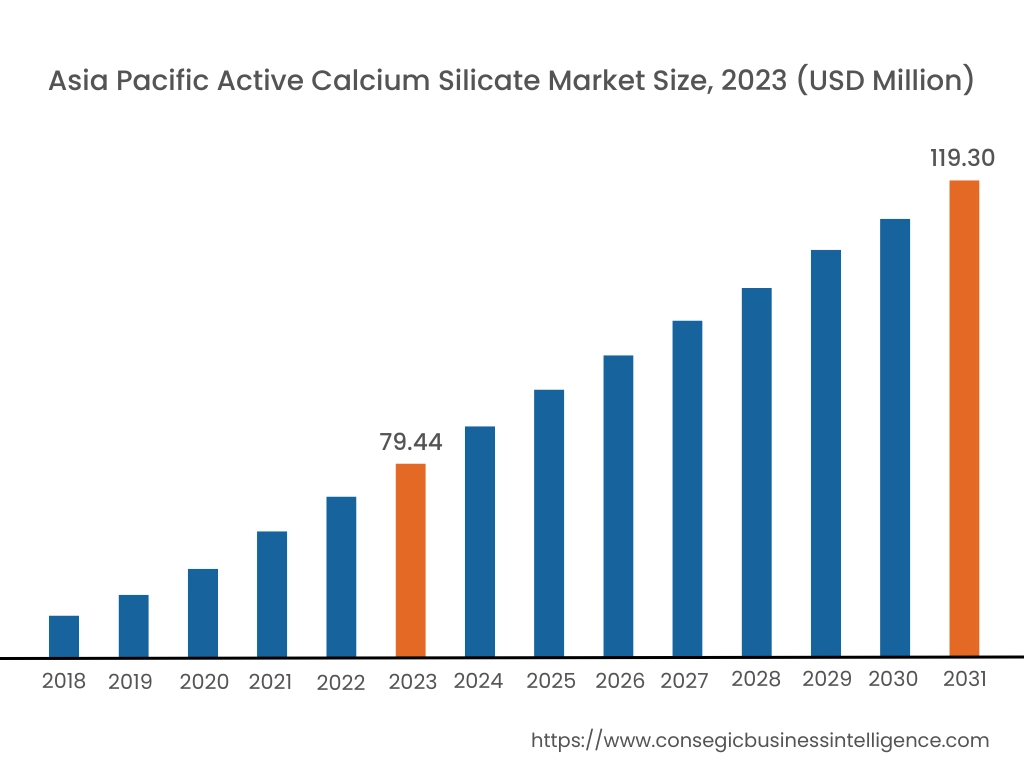
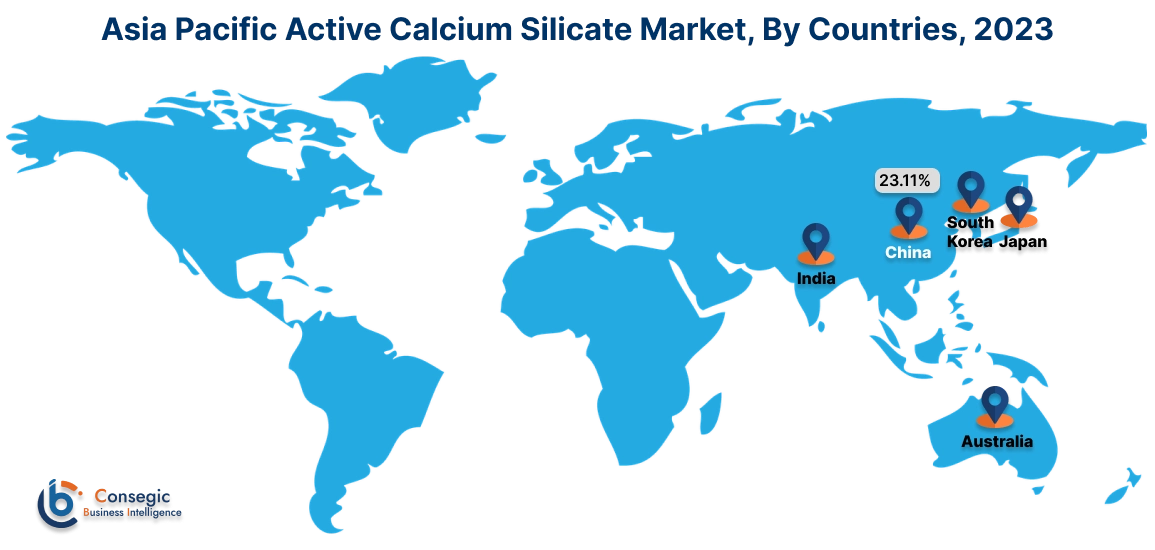
In 2023, Asia Pacific accounted for the highest market share at 38.11% and was valued at USD 79.44 Million and is expected to reach USD 119.30 Million in 2031. In Asia Pacific, China accounted for the highest share of 23.11% during the base year of 2023. The Asia-Pacific region is a major market, driven by factors including a large construction sector, increased infrastructure investments, and a growing emphasis on energy efficiency and fire safety. Countries like China and India, with their growing construction activities, are major consumers of this compound. Additionally, the region's stringent energy regulations and focus on sustainable building practices have created the requirements for energy-efficient insulation materials including active calcium silicate.
- For instance, in January 2024, the Confederation of Real Estate Developers Associations of India stated it would certify 100,000 homes and 25 million sq ft of commercial real estate with green building certifications every year. Active calcium silicate plays a crucial role in achieving these sustainability goals by contributing to energy efficiency and environmental friendliness in buildings.
Furthermore, the increasing industrialization in the region, particularly in sectors such as manufacturing and automotive, has created new prospects for this compound in various industrial applications. The combination of the aforementioned factors and trends is driving substantial growth in the Asia Pacific active calcium silicate market share.
North America is experiencing the fastest growth with a CAGR of 5.6% over the forecast period. As per the active calcium silicate market analysis, this region holds a significant position driven by a well-established construction sector, stringent building codes, and a focus on energy efficiency creating the requirement for calcium silicate-based products. Strict fire safety standards mandate the use of fire-resistant materials like ACS, while energy efficiency standards promote the use of energy-efficient insulation materials. Furthermore, the ongoing construction of residential and commercial buildings, as well as investments in infrastructure projects, create a steady demand presenting active calcium silicate market opportunities and trends in the region.
Europe is a significant player in the global active calcium silicate market demand, characterized by stringent fire safety regulations and a strong emphasis on the adoption energy energy-efficient building materials. European Union (EU) directives mandate energy performance standards for buildings, driving the need for high-performance insulation materials. The region is increasingly focusing on renovation and remodeling trends for buildings. The renovation and retrofitting of existing buildings to meet energy efficiency standards creates the adoption of insulation materials such as ACS. Additionally, the European automotive sector market is mature, creating constant requirements for thermal and acoustic insulation solutions based on this compound. Moreover, well-established food & beverage and cosmetic & personal care sectors significantly contribute to the market. Collectively, these factors create favorable conditions for active calcium silicate market opportunities across Europe.
Latin America represents an emerging market. The region's rapid urbanization and infrastructure development are driving the necessity for construction materials. Governments in the region are also implementing stricter building codes and regulations to promote energy efficiency and sustainability, further boosting the adoption of this compound. Its significant growth potential is fueled by ongoing urbanization, rising living standards, and government initiatives to stimulate economic growth and attract foreign investment. Additionally, rapid urbanization and infrastructure development are driving the need for efficient transportation solutions. This includes the rise in public transportation systems. Commercial vehicles boast higher requirements for thermal & acoustic solutions and fire protection. This analysis presents a substantial prospect for manufacturers and suppliers to capitalize on this expanding market and contribute to the region's active calcium silicate market demand.
As per active calcium silicate market analysis, the Middle East and Africa (MEA) region is an emerging market. This region's rapid urbanization, infrastructure development, and growing population are driving the need for construction materials. Governments in the region are investing heavily in mega-projects and infrastructure development, leading to increased construction activity. Additionally, the rising middle class and economic diversification are fueling requirements for housing and commercial spaces. To address concerns about energy efficiency and sustainability, governments are promoting green building practices and implementing stricter building codes and regulations. Africa is experiencing good economic growth in the food and beverage sector. South Africa boasts more than 1,800 food production companies, creating the necessity for food additives such as calcium silicate in the food manufacturing sector. This analysis presents a substantial prospect for the market.
Active Calcium Silicate Market Competitive Landscape:
The active calcium silicate market is highly competitive with major players providing products to the national and international markets. Key players are adopting several strategies in research and development (R&D) and product innovation to hold a strong position in the global active calcium silicate market. Key players in the Active calcium silicate industry include-
- Etex Group (Belgium)
- Merck KGaA (Germany)
- Prinova Group LLC. (U.S.)
- Biosynth (Switzerland)
- KANTO KAGAKU (Japan)
- American Elements (U.S.)
- Bee Chems (India)
- Johns Manville. A Berkshire Hathaway Company (U.S.)
- MLA Group of Industries (India)
- Evonik Industries AG (Germany)
Recent Industry Developments:
Product Launches:
- In September 2023, Nuvoco Vistas introduced Duraguard Microfibre Cement, a cutting-edge fiber-reinforced cement. This innovative cement boasts a clinker composition of 48-52% tricalcium silicate.
Active Calcium Silicate Market Report Insights :
| Report Attributes | Report Details |
| Study Timeline | 2018-2031 |
| Market Size in 2031 | USD 312.14 Million |
| CAGR (2024-2031) | 5.3% |
| By Application |
|
| By End-Use Industry |
|
| By Region |
|
| Key Players |
|
| North America | U.S. Canada Mexico |
| Europe | U.K. Germany France Spain Italy Russia Benelux Rest of Europe |
| APAC | China South Korea Japan India Australia ASEAN Rest of Asia-Pacific |
| Middle East and Africa | GCC Turkey South Africa Rest of MEA |
| LATAM | Brazil Argentina Chile Rest of LATAM |
| Report Coverage |
|
Key Questions Answered in the Report
How big is the Active Calcium Silicate market? −
In 2023, the Active Calcium Silicate market is USD 208.46 Million.
Which is the fastest-growing region in the Active Calcium Silicate market? +
North America is the fastest-growing region in the Active Calcium Silicate market.
What specific segmentation details are covered in the Active Calcium Silicate market? +
Application and End-Use Industry segmentation details are covered in the Active Calcium Silicate market.
Who are the major players in the Active Calcium Silicate market? +
Merck KGaA, American Elements, and BioSynth are some of the major players in the market.
Overview
Reputation & Certifications


Our Services
- Market Intelligence & Forecasting
- Custom Research Solutions
- Market Entry Strategy
- Competitive Intelligence
- Customer Insights
- Industry Innovation Analysis
- Investment Advisory