Jump to Content
Acute Sinusitis Market Size & Industry Share - Growth Trends & Forecasts (2026 - 2034)
Acute Sinusitis Market Size:
Acute Sinusitis Market size is estimated to reach over 4,679.5 (US$M) by 2034 from a value of 2,632.6 (US$M) in 2025 and is projected to grow by 2,806.35 (US$M) in 2026, growing at a CAGR of 6.6% from 2026 to 2034, according to a recent report from Consegic Business Intelligence.
Acute Sinusitis Market Scope & Overview:
Acute sinusitis is an infection and inflammation of the sinuses and nasal cavity. It is a short-term infection and inflammation of the membranes that line the sinuses. The condition is caused by viral, bacterial, or fungal infections and lasts for less than four weeks. This inflammation obstructs the drainage of mucus, leading to symptoms such as facial pain or pressure, congestion, a runny nose, postnasal drip, and a reduced sense of smell. In some cases, individuals also experience fever, cough, headache, or toothache. Several treatment options including saline nasal sprays, nasal corticosteroids, decongestants, and analgesics among others help alleviate symptoms of this condition.

Acute Sinusitis Market Dynamics - (DRO) :
Key Drivers:
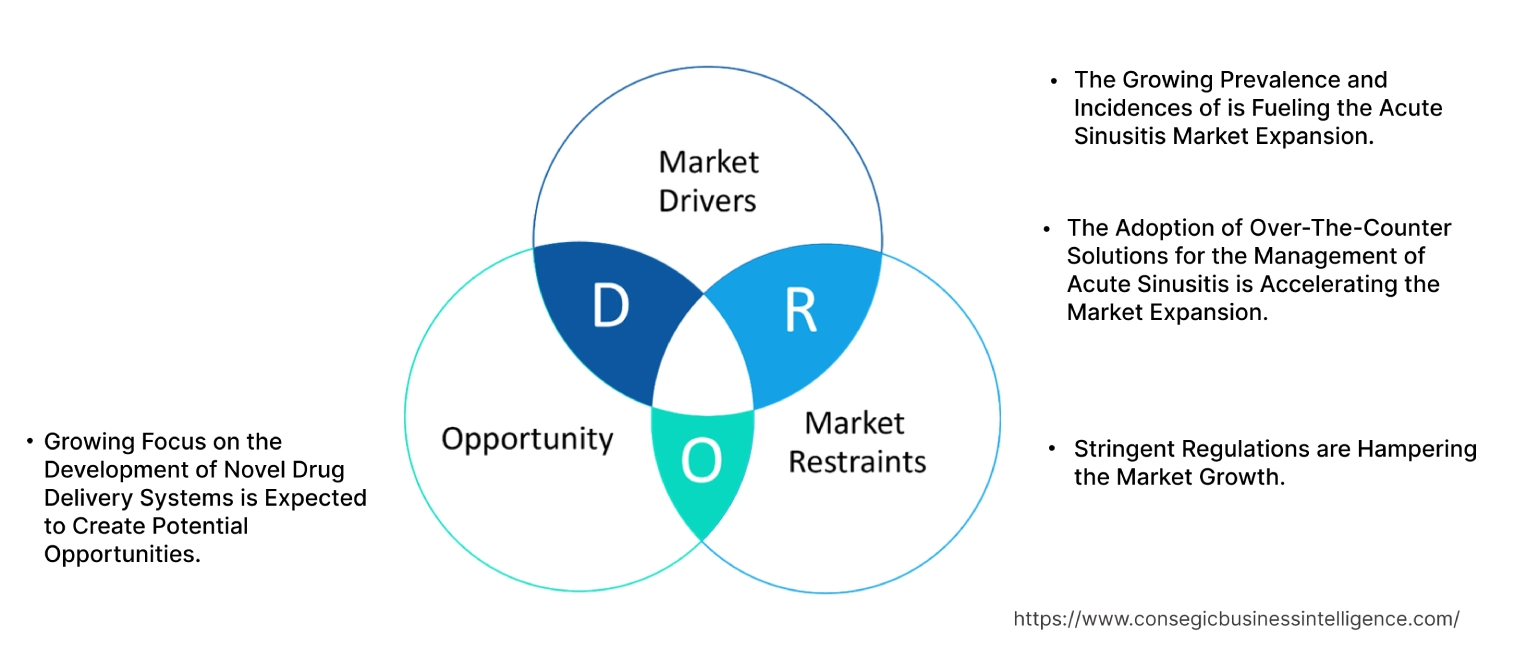
The Growing Prevalence and Incidences of is Fueling the Acute Sinusitis Market Expansion.
Acute sinusitis has become a prevalent health issue globally. The prevalence of this condition is influenced by the confluence of several factors such as weakened immune systems, resulting from environmental pollutants, allergens, viral infections, poor lifestyle habits, and stress, which make individuals more susceptible to sinusitis.
Additionally, increased air pollution, triggering allergic reactions, and sinus inflammation significantly contribute to the prevalence of acute type sinusitis. Viral infections, particularly common colds and flu, often precede or trigger acute type sinusitis; while emerging viral strains cause more severe and prolonged infections.
These factors collectively drive the global acute sinusitis market trend as the need for effective treatments and preventive measures surges.
- For instance, based on the analysis published by the American College of Allergy Asthma and Immunology, sinus infection affects 31 million people in the United States. Sinus infections are responsible for 16 million doctor visits and USD 150 million spent on prescription medications annually.
The high prevalence of this condition has led to a surge in the requirement for effective treatments and diagnostic measures. Healthcare providers are increasingly focusing on early diagnosis and treatment to prevent complications and improve patient outcomes. Thus, the rising prevalence and incidence is fueling the significant rise in the global acute sinusitis market trend.
The Adoption of Over-The-Counter Solutions for the Management of Acute Sinusitis is Accelerating the Market Expansion.
The increasing adoption of over-the-counter (OTC) treatment solutions is a prominent factor in the global acute sinusitis market analysis. Several factors contribute to the rising adoption of OTC treatments for this condition. The convenience and accessibility of OTC medications, readily available at pharmacies, allow for treatment of mild to moderate sinusitis without requiring a doctor's prescription. These medications, including decongestants, pain relievers, and nasal corticosteroids, offer effective symptom relief by reducing congestion, alleviating pain, and reducing inflammation.
Moreover, OTC treatments are generally more affordable than prescription medications, making them accessible to a wider population. Early intervention with OTC treatments often prevents the need for more expensive medical interventions, ultimately reducing healthcare costs.
- For instance, based on the analysis published by the American College of Allergy Asthma and Immunology, Americans spend more than USD 1 billion each year on over-the-counter medications to treat sinus infections including acute sinusitis. This signifies higher adoption of OTC medications for the management of acute type of sinusitis.
Overall, the rising adoption of over-the-counter treatment solutions for this condition is a significant factor driving the global acute sinusitis market. These readily available medications offer convenient and effective relief for a wide range of symptoms associated with sinusitis, including nasal congestion, facial pain, and pressure.
Key Restraints :
Stringent Regulations are Hampering the Market Growth.
The acute sinusitis market is subject to stringent regulations aimed at ensuring patient safety. The regulations present significant constraints for pharmaceutical and medical device companies. One major factor is the lengthy and complex drug development process. Clinical trials are rigorous and time-consuming, requiring substantial investment and resources. This, coupled with stringent regulatory hurdles, delays the approval process, hindering the timely introduction of new therapies.
Furthermore, post-market survey and safety monitoring requirements add to the regulatory burden. Companies must continuously monitor the safety and efficacy of their products, which becomes costly and resource-intensive, especially for smaller players. Compliance with these regulations is particularly difficult for smaller companies and startups. The rigorous regulatory environment also hinders innovation within the industry, as companies are hesitant to invest in risky or unconventional approaches due to the high cost of failure. Overall, the regulations delay product approvals, increase costs, and limit profitability, especially for smaller companies further hampering the acute sinusitis market growth.
Future Opportunities :
Growing Focus on the Development of Novel Drug Delivery Systems is Expected to Create Potential Opportunities.
Innovative drug delivery systems, such as targeted drug delivery, improve drug delivery to the site of inflammation in the sinus. By precisely delivering drugs to the site of inflammation, novel drug delivery systems maximize therapeutic efficacy while minimizing systemic side effects. Controlled-release formulations ensure a sustained therapeutic effect, reducing the frequency of administration and improving patient compliance. Innovative carriers and formulations enhance drug penetration through the mucosal barriers, increasing drug bioavailability at the target site. Targeted drug delivery minimizes systemic side effects, enhancing patient tolerability and satisfaction.
- For instance, in January 2024, Penn Medicine researchers reported results from two randomized phase III clinical trials for an exhalation system that improves symptoms of sinus infections. An exhalation delivery system uses a patient's breath to carry the anti-inflammatory compound fluticasone directly to the sinuses reducing sinusitis symptoms and inflammation by more than 50%.
Thus, the development of novel drug delivery systems represents one of the promising acute sinusitis market opportunities. By addressing the limitations of traditional therapies, these advanced systems improve drug delivery efficiency, reduce side effects, and enhance patient outcomes.
Acute Sinusitis Market Segmental Analysis :
By Type:
Based on type, the market is bifurcated into diagnosis and treatment.
Trends in the Type:
- Adoption of personalized dosing strategies to support the improvement in treatment outcomes.
The treatment segment accounted for the largest market share in 2024 and is also expected to grow at the fastest CAGR over the forecast period.
- The segment is further categorized into antibiotics, saline nasal spray, nasal corticosteroids, decongestants, and others.
- Saline nasal spray is a common over-the-counter treatment. It helps to moisten the nasal passages, thin mucus, and reduce inflammation. Antibiotics target and kill the bacteria causing the infection, leading to symptom relief and preventing complications. Nasal corticosteroids are steroid medications that are sprayed into the nasal passages. They work by reducing inflammation in the sinuses. They are often used in combination with other treatments, such as decongestants, for more severe cases of sinusitis.
- Decongestants are medications that help to shrink swollen blood vessels in the nasal passages, reducing congestion and improving drainage. Other treatments include analgesics to manage pain and fever.
- Sinusitis severely impacts the quality of life of patients which creates the need for highly effective treatment solutions.
- For instance, based on the analysis published on NCBI in 2023, it is stated that over one year, there were up to 73 million restricted days associated with sinusitis in the United States and total direct medical costs of almost USD 2.4 billion. The impact on daily life activities owing to sinusitis influences the need for effective treatment solutions.
- Overall, the significant impact of sinusitis on quality of life and substantial healthcare costs underscores the urgent need for effective treatment solutions further driving the segment analysis.
By End Use:
Based on end use, the market is categorized into hospitals, clinics, and others.
Trends in the End Use:
- Expansion of telemedicine services for remote diagnosis and management of the condition, especially in rural and underserved areas.
- Increasing adoption of advanced diagnostic tools and minimally invasive surgical procedures for complex sinusitis cases.
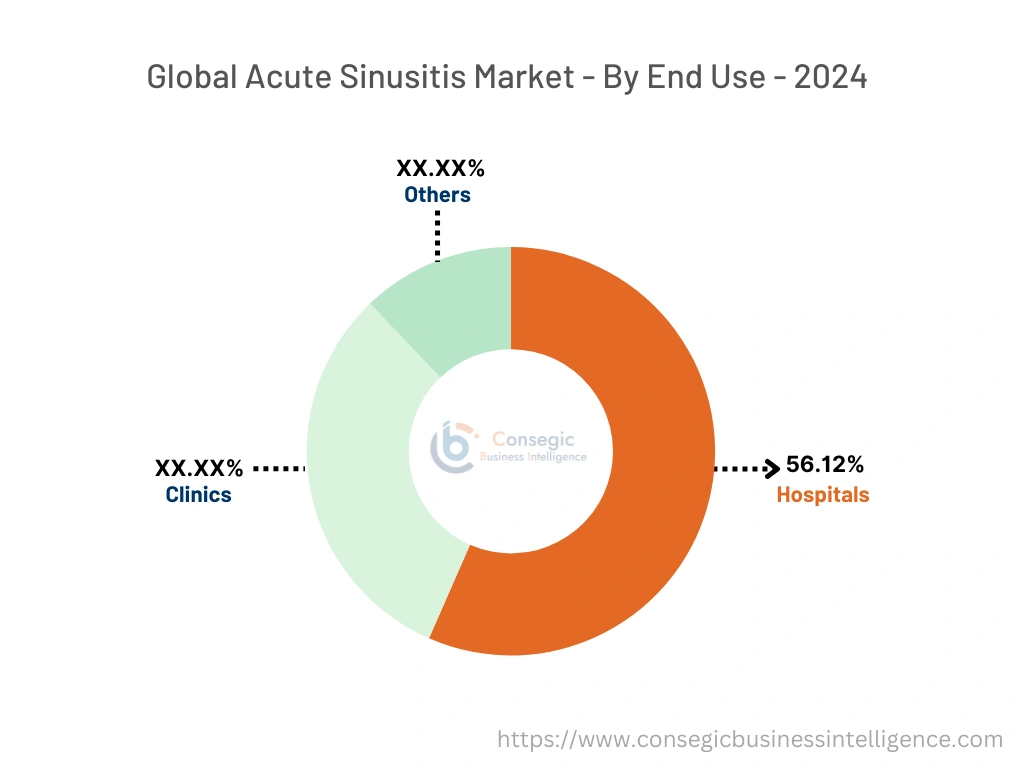
The hospitals segment accounted for the largest market share of 56.12% in the year 2024.
- Hospitals serve a crucial role as primary centers for the comprehensive treatment of acute sinusitis, offering a sophisticated ecosystem of medical expertise and advanced technologies.
- They play a major and crucial role in helping patients by providing convenient, affordable, and easy access to treatment for this condition. Additionally, hospitals are equipped with state-of-the-art diagnostic techniques enabling early detection and precise diagnosis of the condition.
- Hospitals also offer the distribution of prescription medications to their patients, which is a key factor driving the acute sinusitis market growth across the globe. Additionally, growing healthcare spending is significantly contributing to the provision of effective care through hospital settings.
- For instance, based on the analysis published by the U.S. Centers for Medicare & Medicaid Services in December 2023, hospital care accounted for a 30% of overall U.S. national healthcare spending in 2022. Spending on hospital care services increased 2.2% in 2022 to reach USD 1.4 trillion. Given the substantial contribution for hospital care, there is a growing focus on adopting innovative treatment solutions for various conditions including acute type sinusitis.
- Thus, hospitals are pivotal in providing comprehensive care for this condition, offering advanced diagnostics, multidisciplinary treatment, and medication distribution.
The clinics segment is expected to grow at the fastest CAGR over the forecast period.
- A clinic is a healthcare facility that primarily focuses on outpatient care. In such settings, patients receive medical treatment, consultation, or preventive care without being admitted for overnight stays. Clinics often specialize in particular areas and are generally more accessible than hospitals. Otolaryngology clinics offer a variety of treatments for conditions affecting the ears, nose, and throat including acute sinusitis.
- Additionally, clinics often offer a more personalized and patient-centered approach to care, with shorter waiting times and more one-on-one attention. Moreover, the government's support for clinics is influencing the demand for effective diagnostic and treatment solutions for this condition.
- For instance, in June 2024, Ramsay Santé a group of private clinics headquartered in Paris, announced an agreement with the government on funding of private clinics. It also specifies that a multi-year agreement on tariffs for the period 2025-2027 should be finalized by mid-July 2024, as well as increased access for the private sector to regional funding. This supports the operations of clinics including those providing effective care for acute type sinusitis.
- Thus, the significant role of clinics in healthcare delivery, coupled with government support, is driving the demand for effective solutions to manage this condition.
Regional Analysis:
The regional segment includes North America, Europe, Asia Pacific, the Middle East and Africa, and Latin America.
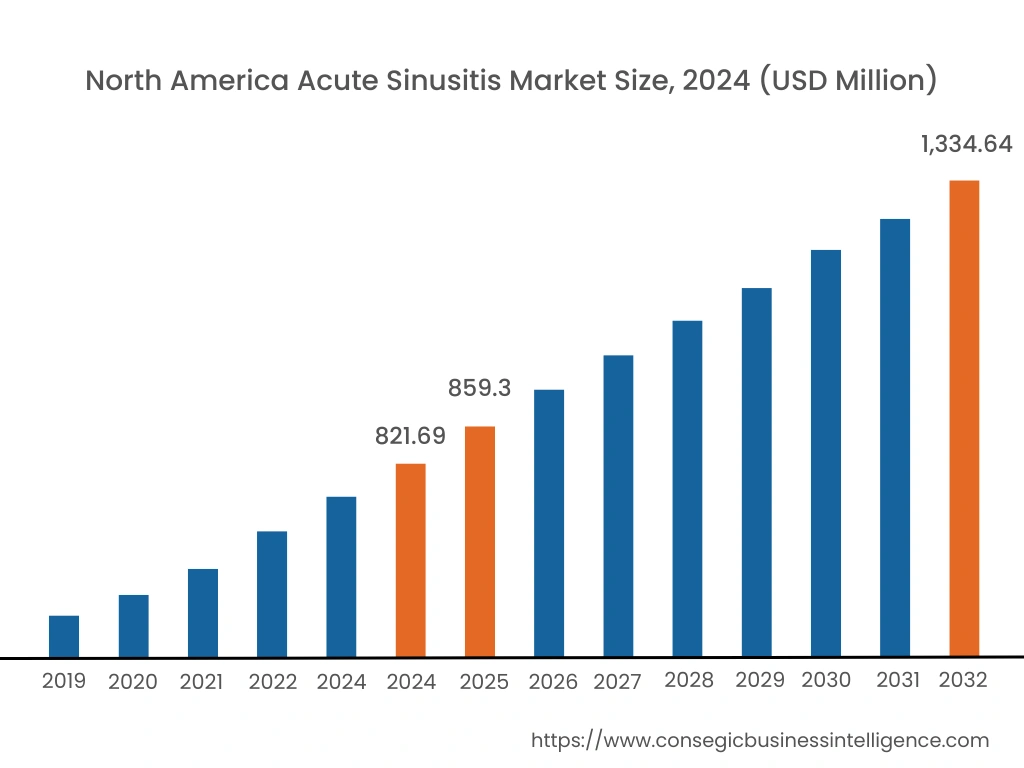
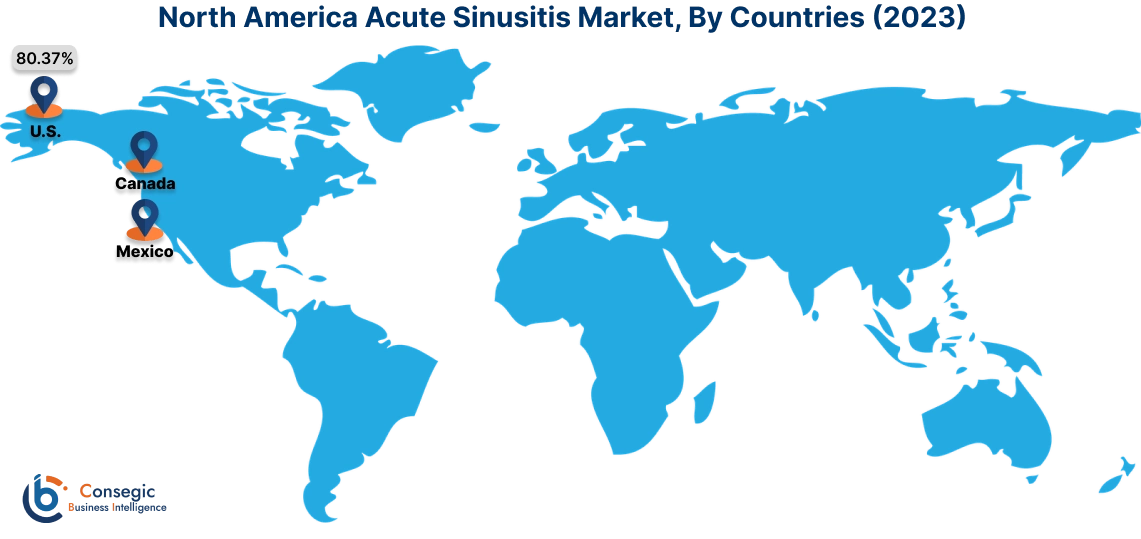
In 2024, North America accounted for the highest market share at 39.45% and was valued at USD 821.69 Million and is expected to reach USD 1,334.64 Million in 2032. In North America, the U.S. accounted for the highest market share of 80.37% during the base year of 2024. The acute sinusitis market is gaining significant rise in North America owing to the confluence of multiple factors such as the growing prevalence of sinusitis in the region. Additionally, North America boasts a robust healthcare infrastructure with advanced diagnostic and treatment facilities, leading to timely intervention and improved patient outcomes. Moreover, region's favorable reimbursement policies and government initiatives such as Medicare and Medicaid provide financial support for sinusitis treatment, especially for vulnerable populations.
- For instance, based on the analysis published by the U.S. Centers for Medicare & Medicaid Services in September 2024, Medicare spending grew 5.9% to USD 944.3 billion in 2022, or 21% of total national healthcare (NHE) spending in the U.S. Medicaid spending grew 9.6% to USD 805.7 billion in 2022, or 18% of total NHE. Medicare provides health coverage for senior citizens, while Medicaid covers health care costs for people with low incomes.
Furthermore, significant investments in research and development are fueling the development of novel treatment solutions and preventive strategies for acute sinusitis that aim to improve patient outcomes and reduce the burden of this condition. The combination of the aforementioned factors and trends is driving substantial growth in the North American acute sinusitis market share.
The Asia-Pacific is experiencing the fastest growth with a CAGR of 7.9% over the forecast period. This surge is attributed to factors such as the increasing prevalence of this condition. Rapid urbanization and industrialization have led to air quality deteriorating, exacerbating respiratory infections and triggering sinusitis. As the healthcare industry infrastructure develops and awareness about effective management of this condition increases, more cases are being diagnosed and reported. The rising healthcare expenditure and trend of improvements in healthcare infrastructure are also supporting market analysis. Moreover, growing healthcare investments and expanding access to pharmaceuticals in the region are further fueling acute sinusitis market demand.
Europe boasts a well-developed healthcare infrastructure with advanced diagnostic and treatment facilities. Strong primary care systems in many European countries provide early diagnosis and treatment for this condition, leading to timely management and reduced complications. Additionally, many European countries have strong public healthcare systems that provide access to quality healthcare services, including those for acute type sinusitis further propelling the market. The combination of accessible primary care, strong public healthcare systems, and advanced diagnostic facilities contributes to the effective management of this condition in Europe, ultimately driving the trend of the market.
The Middle East and Africa (MEA) region is witnessing notable trends in demand for diagnosis and treatment solutions of acute type sinusitis. Additionally, the burgeoning healthcare sector in the Middle East is playing a pivotal role in demand. Many countries in the MEA region are investing in developing their healthcare infrastructure. This includes building hospitals, and clinics, and improving access to diagnostic tools which are essential for detecting this condition. The combined impact of these factors is creating a favorable environment for the trajectory of the acute sinusitis market opportunities in the MEA region.
Latin America is an emerging region in the acute sinusitis market share. The combination of increasing prevalence, government support, and rising disposable income is driving the significant growth of the acute sinusitis market demand in Latin America. The region encompasses a mix of public and private healthcare systems, with varying levels of access and affordability. This diversity impacts the availability and utilization of diagnostic and treatment options for this condition. The growth of the middle class in several Latin American countries has led to increased healthcare spending and demand for quality treatments, including those for acute type sinusitis. These factors collectively present a promising factor for healthcare providers and pharmaceutical companies' manufacturers to develop and deliver innovative solutions to address the needs of individuals with this condition in Latin America.
Top Key Players & Market Share Insights:
The Acute Sinusitis market is highly competitive with major players providing precise measurements between objects to the national and international markets. Key players are adopting several strategies in research and development (R&D) and product innovation to hold a strong position in the global Acute Sinusitis market. Key players in the Acute Sinusitis industry include-
- Sanofi (France)
- Medline Industries (U.S.)
- Bayer AG (Germany)
- Hikma Specialty USA Inc. (U.S.)
- OptiNose US, Inc. (U.S.)
- AdvaCare Pharma (U.S.)
- Kenvue Brands LLC (U.S.)
- Haleon (UK)
- Perrigo Company plc (Ireland)
- Pfizer Inc. (U.S.)
Acute Sinusitis Market Report Insights :
| Report Attributes | Report Details |
| Study Timeline | 2021-2034 |
| Market Size in 2034 | USD 4,679.50 Million |
| CAGR (2026-2034) | 6.60% |
| Base Year | 2025 |
| By Type |
|
| By End Use |
|
| By Region |
|
| Key Players |
|
| North America | U.S. Canada Mexico |
| Europe | U.K. Germany France Spain Italy Russia Benelux Rest of Europe |
| APAC | China South Korea Japan India Australia ASEAN Rest of Asia-Pacific |
| Middle East and Africa | GCC Turkey South Africa Rest of MEA |
| LATAM | Brazil Argentina Chile Rest of LATAM |
| Report Coverage |
|
Key Questions Answered in the Report
How big is the Acute Sinusitis market? −
In 2024, the Acute Sinusitis market was USD 2,477.14 Million.
Which is the fastest-growing region in the Acute Sinusitis market? +
Asia Pacific is the fastest-growing region in the Acute Sinusitis market.
What specific segmentation details are covered in the Acute Sinusitis market? +
Type and End Use segmentation details are covered in the Acute Sinusitis market.
Who are the major players in the Acute Sinusitis market? +
Pfizer (U.S.), Sanofi (France), and Bayer AG (Germany) are some of the major players in the market.
Overview
Reputation & Certifications


Our Services
- Market Intelligence & Forecasting
- Custom Research Solutions
- Market Entry Strategy
- Competitive Intelligence
- Customer Insights
- Industry Innovation Analysis
- Investment Advisory