Jump to Content
Lactate Dehydrogenase Test Market - Size, Share, Industry Trends, and Forecasts (2025 - 2032)
Lactate Dehydrogenase Test Market Size:
Lactate Dehydrogenase Test Market size is estimated to reach over USD 6,025.29 Million by 2032 from a value of USD 3640.82 Million in 2024 and is projected to grow by USD 3,812.60 Million in 2025, growing at a CAGR of 6.5% from 2025 to 2032.
Lactate Dehydrogenase Test Market Scope & Overview:
The lactate dehydrogenase (LDH) test are diagnostic tools used to measure the levels of lactate dehydrogenase, an enzyme released during tissue damage. LDH tests are widely used in clinical diagnostics to assess conditions such as tissue injuries, liver disease, heart attacks, anemia, and certain cancers. These tests play a critical role in monitoring disease progression, evaluating treatment efficacy, and aiding in early diagnosis.
Key characteristics of LDH tests include high sensitivity, rapid results, and compatibility with automated diagnostic platforms. The benefits include improved diagnostic accuracy, enhanced disease management, and early detection of underlying conditions.
Applications span hospitals, diagnostic laboratories, and research institutions, where LDH tests are used for comprehensive health assessments and disease-specific monitoring. End-users include healthcare providers, clinicians, and researchers, driven by increasing prevalence of chronic diseases, rising demand for biomarker-based diagnostics, and advancements in laboratory automation and assay technologies.
How is AI Impacting the Lactate Dehydrogenase Test Market?
AI is transforming the Lactate Dehydrogenase (LDH) test market by enhancing diagnostic accuracy and efficiency. By analyzing LDH test results in conjunction with other patient data, AI algorithms can provide more precise and timely diagnoses. This is crucial as elevated LDH levels are a non-specific indicator of cell or tissue damage. AI-powered systems can help clinicians differentiate between various conditions, like liver disease, heart attack, or blood disorders, which all can cause elevated LDH. This enables faster, more accurate treatment plans, reduces the need for additional tests, and supports personalized medicine, ultimately driving growth in the diagnostic and clinical management segments of the market.

Lactate Dehydrogenase Test Market Dynamics - (DRO) :
Key Drivers:
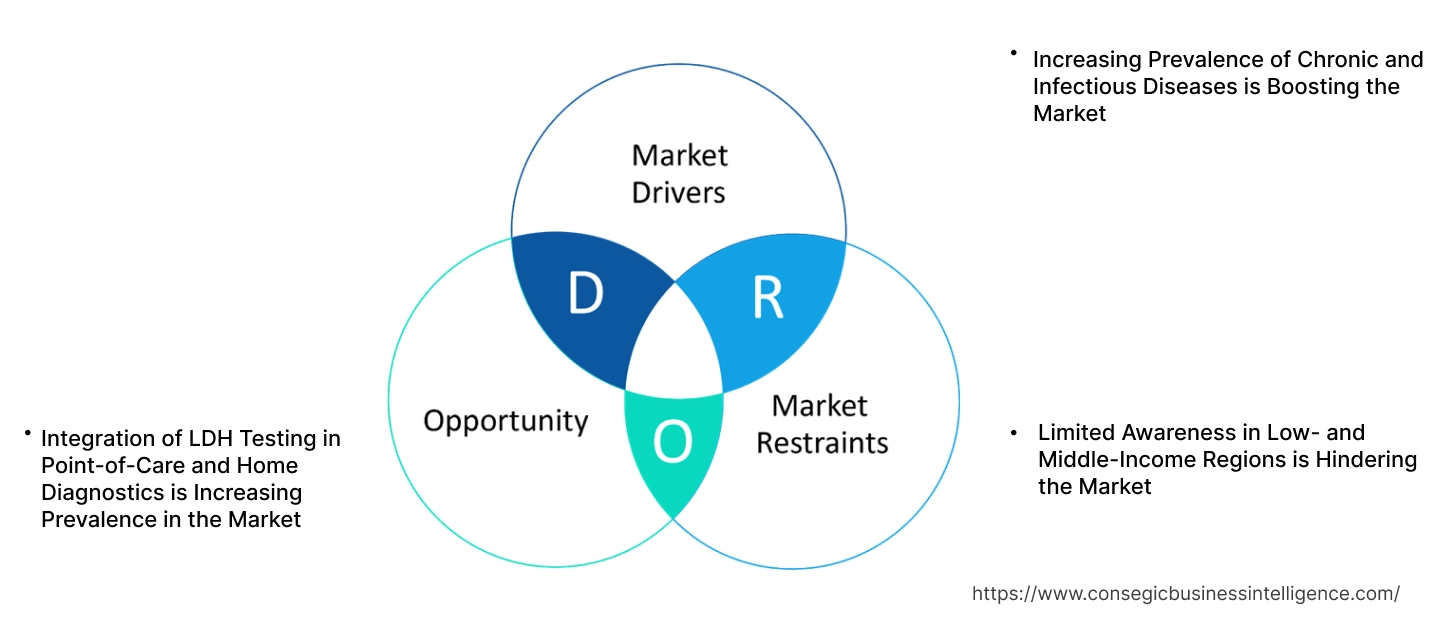
Increasing Prevalence of Chronic and Infectious Diseases is Boosting the Market
The growing prevalence of chronic and infectious diseases is a primary driver of the lactate dehydrogenase (LDH) test market. LDH is a critical biomarker for diagnosing and monitoring conditions such as cancer, cardiovascular diseases, liver disorders, and infections like sepsis and meningitis. The increasing incidence of these diseases, coupled with the rising awareness of early diagnosis, has fueled the demand for LDH tests across clinical and diagnostic laboratories. Additionally, LDH testing is widely used in oncology for monitoring tumor progression and treatment efficacy, particularly in hematological malignancies and solid tumors. The test's utility in assessing tissue damage and cellular injury has further expanded its application in emergency and critical care settings, driving lactate dehydrogenase test market growth.
Key Restraints:
Limited Awareness in Low- and Middle-Income Regions is Hindering the Market
A significant restraint for the LDH test market is the limited awareness and availability of diagnostic services in low- and middle-income regions. Despite its importance, the adoption of LDH testing in these regions is hindered by inadequate healthcare infrastructure, insufficient access to advanced diagnostic technologies, and a lack of trained personnel. Furthermore, the absence of routine screening programs and limited awareness among patients and healthcare providers about the benefits of LDH testing contribute to underdiagnosis of conditions where LDH serves as a critical biomarker. This gap in accessibility and awareness restricts market penetration in emerging economies.
Future Opportunities :
Integration of LDH Testing in Point-of-Care and Home Diagnostics is Increasing Prevalence in the Market
The integration of lactate dehydrogenase testing into point-of-care (POC) and home diagnostic devices presents a significant opportunity for market growth. Technological advancements are enabling the development of portable and user-friendly LDH testing solutions, allowing for rapid and accurate assessments outside traditional laboratory settings. These innovations are particularly valuable in managing conditions such as sepsis and myocardial infarction, where timely diagnosis is critical. Additionally, the increasing adoption of home healthcare solutions, driven by the aging population and the trends for convenient monitoring tools, is expected to boost the uptake of LDH POC devices. Manufacturers focusing on miniaturized, cost-effective, and connected diagnostic platforms are well-positioned to capture this emerging market segment.
These dynamics underscore the growing importance of LDH testing in diagnosing and managing a wide range of medical conditions. While challenges related to awareness and accessibility persist, the advancements in point-of-care diagnostics and the rising focus on early detection and home healthcare solutions are poised to drive significant lactate dehydrogenase test market opportunities.
Lactate Dehydrogenase Test Market Segmental Analysis :
By Test Type:
Based on test type, the lactate dehydrogenase (LDH) test market is segmented into laboratory-based tests and point-of-care (POC) tests.
The laboratory-based test segment accounted for the largest revenue in lactate dehydrogenase test market share in 2024.
- Laboratory-based LDH tests are widely adopted due to their high accuracy and reliability in diagnosing various conditions.
- These tests are extensively used in hospitals and diagnostic laboratories, which remain primary settings for comprehensive patient evaluations.
- Increasing lactate dehydrogenase test market demand for advanced automated analyzers and integrated systems for high-throughput testing is driving this segment's trends.
- Growing prevalence of chronic diseases requiring regular monitoring, such as cancer and cardiovascular disorders, supports the adoption of laboratory-based tests.
The point-of-care (POC) test segment is anticipated to register the fastest CAGR during the forecast period.
- POC tests offer rapid results, making them ideal for emergency and ambulatory settings.
- Increasing trends for decentralized and patient-centric testing solutions is driving the adoption of POC LDH tests.
- Advancements in portable and easy-to-use testing devices are improving accessibility and expanding the application of POC tests.
- Rising adoption of POC testing in homecare settings and rural healthcare facilities is expected to propel growth in this segment.
By Application:
Based on application, the LDH test market is segmented into cardiovascular diseases, liver disorders, kidney disorders, cancer diagnosis, muscle disorders, hemolytic anemia, and others.
The cancer diagnosis segment accounted for the largest revenue share in 2024.
- LDH levels serve as a biomarker for cancer progression and treatment response, particularly in hematologic malignancies and solid tumors.
- Increasing global cancer prevalence has heightened the lactate dehydrogenase test market trends for tests in oncology diagnostics and monitoring.
- Advances in diagnostic techniques integrating LDH testing with molecular and imaging tools are enhancing its utility in cancer care.
- Rising awareness about early cancer detection and routine monitoring is driving for LDH tests in this segment.
The cardiovascular diseases segment is anticipated to register the fastest CAGR during the forecast period.
- LDH testing is increasingly utilized to detect and monitor tissue damage associated with heart attacks and other cardiovascular events.
- Rising prevalence of cardiovascular diseases globally is driving trends for rapid and accurate diagnostic tools.
- Integration of LDH testing in comprehensive cardiac panels and point-of-care diagnostics is expanding its use.
- Growing awareness about preventive healthcare and early intervention in cardiac conditions is expected to propel this segment.
By End-User:
Based on end-use, the LDH test market is segmented into hospitals, diagnostic laboratories, ambulatory surgical centers, research institutes, and homecare settings.
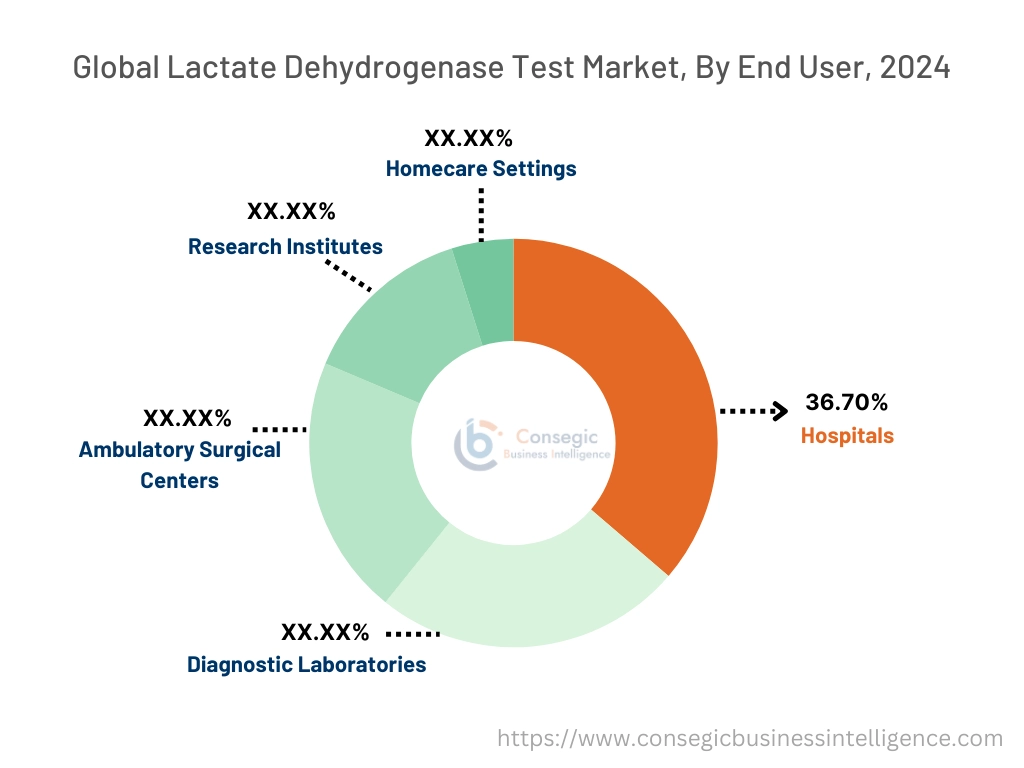
The hospitals segment accounted for the largest revenue in lactate dehydrogenase test market share of 36.70% in 2024.
- Hospitals are the primary settings for advanced diagnostic and therapeutic services, including LDH testing for acute and chronic conditions.
- Availability of skilled professionals and advanced diagnostic infrastructure supports the trends of this segment.
- Increasing hospital admissions for cancer, cardiovascular diseases, and liver disorders have bolstered lactate dehydrogenase test market trends in tests.
- Rising investments in hospital laboratories and adoption of automated testing equipment are driving lactate dehydrogenase test market growth in this segment.
The homecare settings segment is anticipated to register the fastest CAGR during the forecast period.
- Homecare settings are gaining popularity due to the increasing preference for at-home diagnostics and monitoring.
- Advancements in portable LDH testing devices are enabling patients to conduct tests conveniently at home.
- Growing emphasis on patient-centered care and cost-effectiveness is driving adoption of home-based LDH testing solutions.
- Expansion of telemedicine and remote monitoring services is further supporting trends in this segment.
Regional Analysis:
The regions covered are North America, Europe, Asia Pacific, the Middle East and Africa, and Latin America.
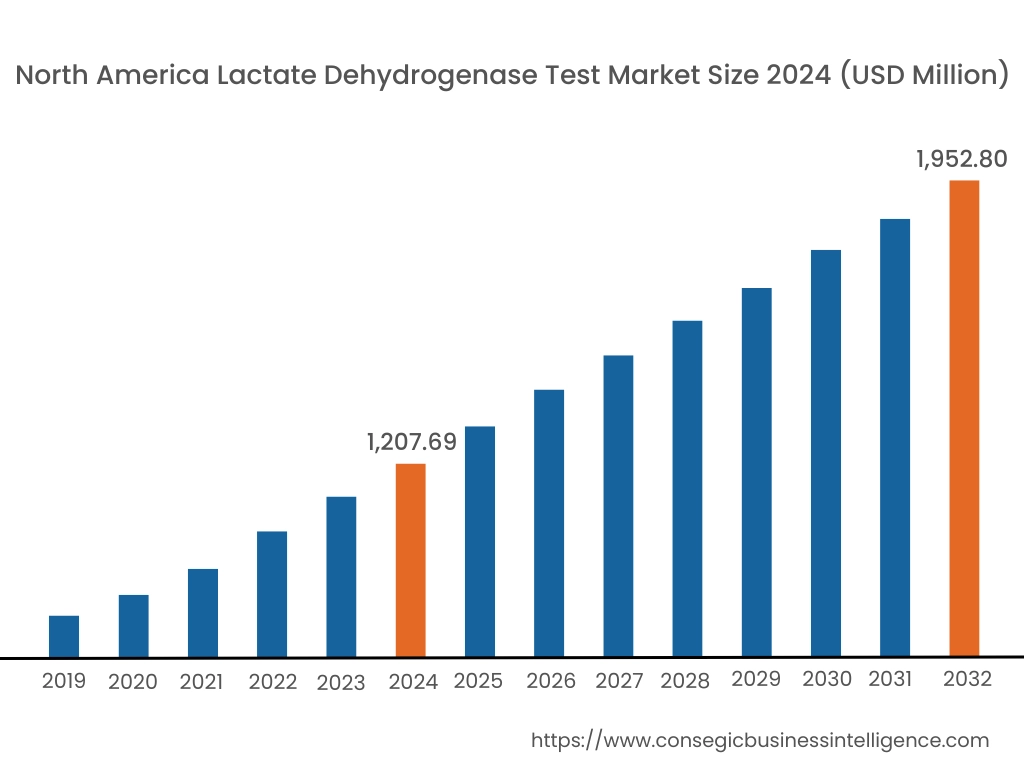
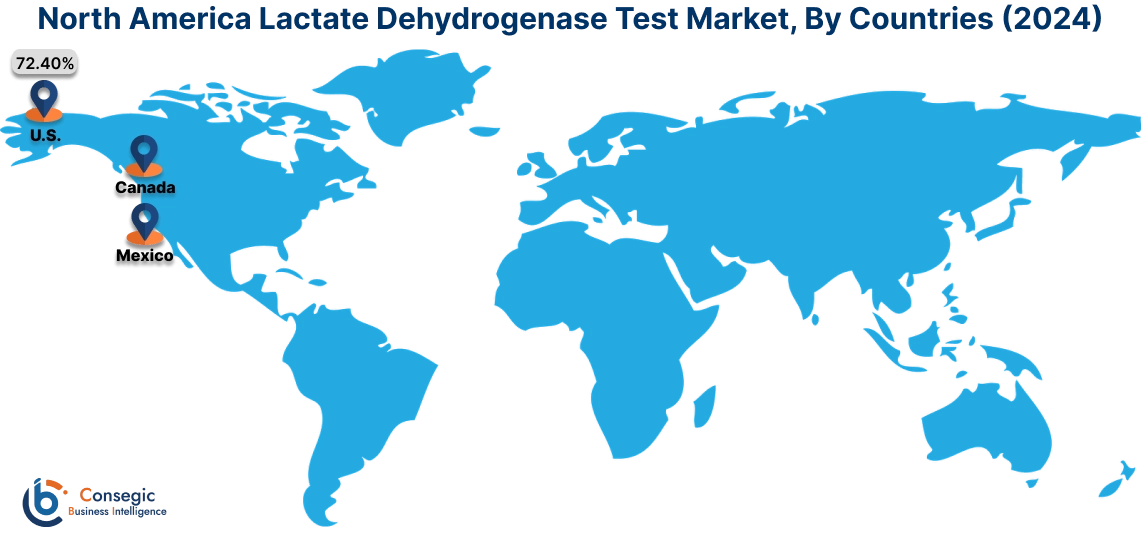
In 2024, North America was valued at USD 1,207.69 Million and is expected to reach USD 1,952.80 Million in 2032. In North America, the U.S. accounted for the highest share of 72.40% during the base year of 2024. North America holds a significant share in the LDH test market, driven by advanced healthcare infrastructure, high prevalence of chronic diseases such as cancer and cardiovascular disorders, and increasing adoption of diagnostic testing. The U.S. dominates the region due to strong investments in clinical laboratories, widespread awareness of diagnostic testing, and high utilization of LDH tests for monitoring tissue damage and disease progression. As per the lactate dehydrogenase test market analysis, Canada contributes through rising healthcare expenditure and adoption of LDH testing in public and private healthcare facilities. However, high diagnostic costs may limit accessibility in underserved areas.
In Asia Pacific, the market is experiencing the fastest growth with a CAGR of 6.9% over the forecast period. The LDH test market analysis, is fueled by rising healthcare awareness, increasing prevalence of infectious diseases and cancer, and expanding healthcare infrastructure in China, India, and Japan. China dominates the region with significant demand for LDH tests in monitoring disease progression in oncology and infectious diseases. India’s growing healthcare sector supports the adoption of cost-effective LDH tests in diagnostic laboratories and hospitals. Japan focuses on precision diagnostics, leveraging its advanced healthcare technologies for LDH testing in cancer and cardiac care. However, limited access to diagnostic services in rural areas may hinder expansion in certain parts of the region.
Europe is a prominent market for LDH tests, supported by a growing aging population, increasing incidence of cancer and cardiovascular diseases, and well-established diagnostic facilities. Countries like Germany, France, and the UK are key contributors. As per the regional analysis, Germany leads with advanced healthcare systems and growing use of LDH tests in oncology and cardiovascular diagnostics. France emphasizes early disease detection through LDH testing as part of routine diagnostics, while the UK focuses on improving diagnostic access for both urban and rural populations. However, budget constraints in public healthcare systems may impact the adoption of advanced diagnostic tools.
The Middle East & Africa region is witnessing steady growth in the LDH test market, the analysis portrays the market is driven by increasing healthcare investments and rising prevalence of chronic and infectious diseases. Countries like Saudi Arabia and the UAE are adopting advanced diagnostic tools, including LDH tests, for disease monitoring and early detection in hospitals and clinics. In Africa, South Africa is emerging as a key market, focusing on improving access to diagnostic services and public health initiatives to combat infectious diseases. However, limited healthcare infrastructure and affordability challenges may restrict lactate dehydrogenase test market expansion in the region.
Latin America is an emerging market for LDH tests, with Brazil and Mexico leading in the regional analysis. Brazil’s expanding healthcare sector and rising prevalence of cancer and infectious diseases drive demand for LDH testing in clinical and diagnostic laboratories. Mexico focuses on integrating LDH testing into public healthcare programs for early diagnosis and disease monitoring. The region is also investing in partnerships with international healthcare providers to improve diagnostic access. However, economic instability and inconsistent healthcare infrastructure may pose challenges to market growth in smaller economies.
Top Key Players and Market Share Insights:
The lactate dehydrogenase test market is highly competitive with major players providing products to the national and international markets. Key players are adopting several strategies in research and development (R&D), product innovation, and end-user launches to hold a strong position in the lactate dehydrogenase test market. Key players in the lactate dehydrogenase test industry include -
- Thermo Fisher Scientific Inc. (United States)
- Hoffmann-La Roche AG (Switzerland)
- Randox Laboratories Ltd. (United Kingdom)
- Agilent Technologies, Inc. (United States)
- PerkinElmer, Inc. (United States)
- Abbott Laboratories (United States)
- Beckman Coulter, Inc. (a subsidiary of Danaher Corporation) (United States)
- Siemens Healthineers AG (Germany)
- Bio-Rad Laboratories, Inc. (United States)
- Horiba Ltd. (Japan)
Lactate Dehydrogenase Test Market Report Insights :
| Report Attributes | Report Details |
| Study Timeline | 2019-2032 |
| Market Size in 2032 | USD 6,025.29 Million |
| CAGR (2025-2032) | 6.5% |
| By Test Type |
|
| By Application |
|
| By End-User |
|
| By Region |
|
| Key Players |
|
| North America | U.S. Canada Mexico |
| Europe | U.K. Germany France Spain Italy Russia Benelux Rest of Europe |
| APAC | China South Korea Japan India Australia ASEAN Rest of Asia-Pacific |
| Middle East and Africa | GCC Turkey South Africa Rest of MEA |
| LATAM | Brazil Argentina Chile Rest of LATAM |
| Report Coverage |
|
Key Questions Answered in the Report
What is the projected size of the Lactate Dehydrogenase Test Market by 2032? −
Lactate Dehydrogenase Test Market size is estimated to reach over USD 6,025.29 Million by 2032 from a value of USD 3640.82 Million in 2024 and is projected to grow by USD 3,812.60 Million in 2025, growing at a CAGR of 6.5% from 2025 to 2032.
What are the key drivers for the LDH Test Market? +
The increasing prevalence of chronic diseases such as cancer, cardiovascular disorders, and liver diseases drives the demand for LDH tests. Rising awareness of early diagnosis and advancements in biomarker-based diagnostics further boost the market.
What challenges does the LDH Test Market face? +
Limited awareness and inadequate healthcare infrastructure in low- and middle-income regions hinder market growth. High diagnostic costs and a lack of routine screening programs also pose challenges.
Which test type dominates the LDH Test Market? +
The laboratory-based test segment holds the largest market share due to its high accuracy and reliability in diagnosing a wide range of conditions.
Overview
Reputation & Certifications


Our Services
- Market Intelligence & Forecasting
- Custom Research Solutions
- Market Entry Strategy
- Competitive Intelligence
- Customer Insights
- Industry Innovation Analysis
- Investment Advisory