Jump to Content
Metastases Spinal Tumor Market - Size, Share, Industry Trends, and Forecasts (2025-2032)
Metastases Spinal Tumor Market Size:
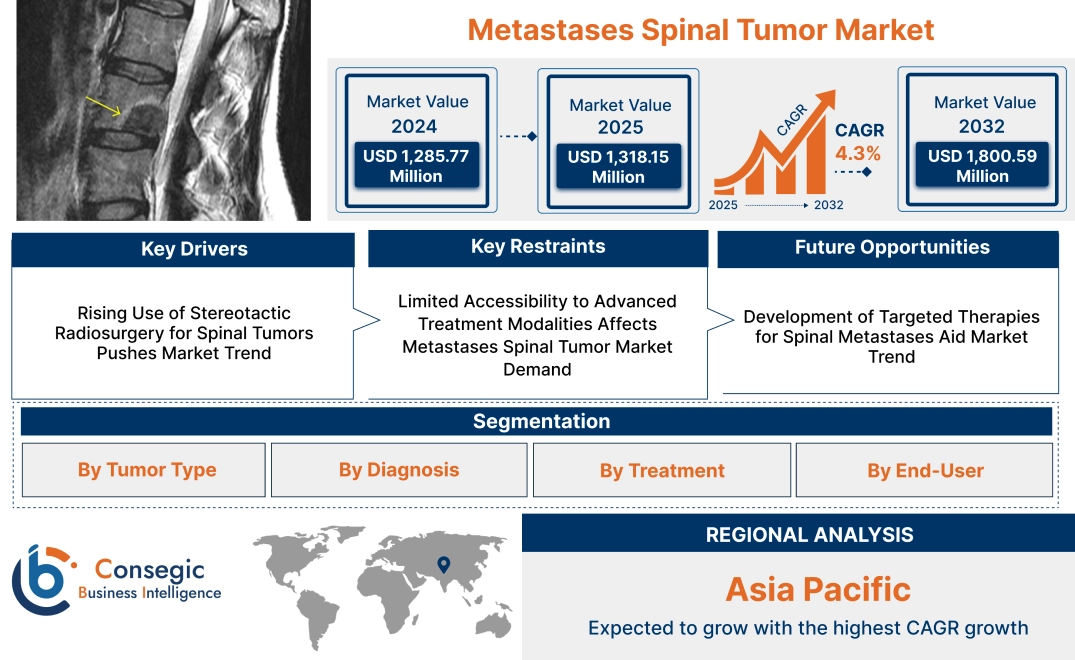
Metastases Spinal Tumor Market size is estimated to reach over USD 1,800.59 Million by 2032 from a value of USD 1,285.77 Million in 2024 and is projected to grow by USD 1,318.15 Million in 2025, growing at a CAGR of 4.3% from 2025 to 2032.
Metastases Spinal Tumor Market Scope & Overview:
Metastases spinal tumors are secondary cancerous growths that develop in the spine due to the spread of malignant cells from primary tumors. Treatments focus on pain relief, preserving neurological function, and stabilizing the spine. Treatment options include surgery, radiation therapy, and pharmacological interventions such as corticosteroids and bisphosphonates. These therapies improve patient mobility, reduce complications, and enhance quality of life.
Applications of metastases spinal tumor treatments span hospitals, specialty clinics, and research institutes. The market serves healthcare providers by offering advanced therapeutic solutions to manage this critical condition effectively.
Metastases Spinal Tumor Market Dynamics - (DRO) :
Key Drivers:
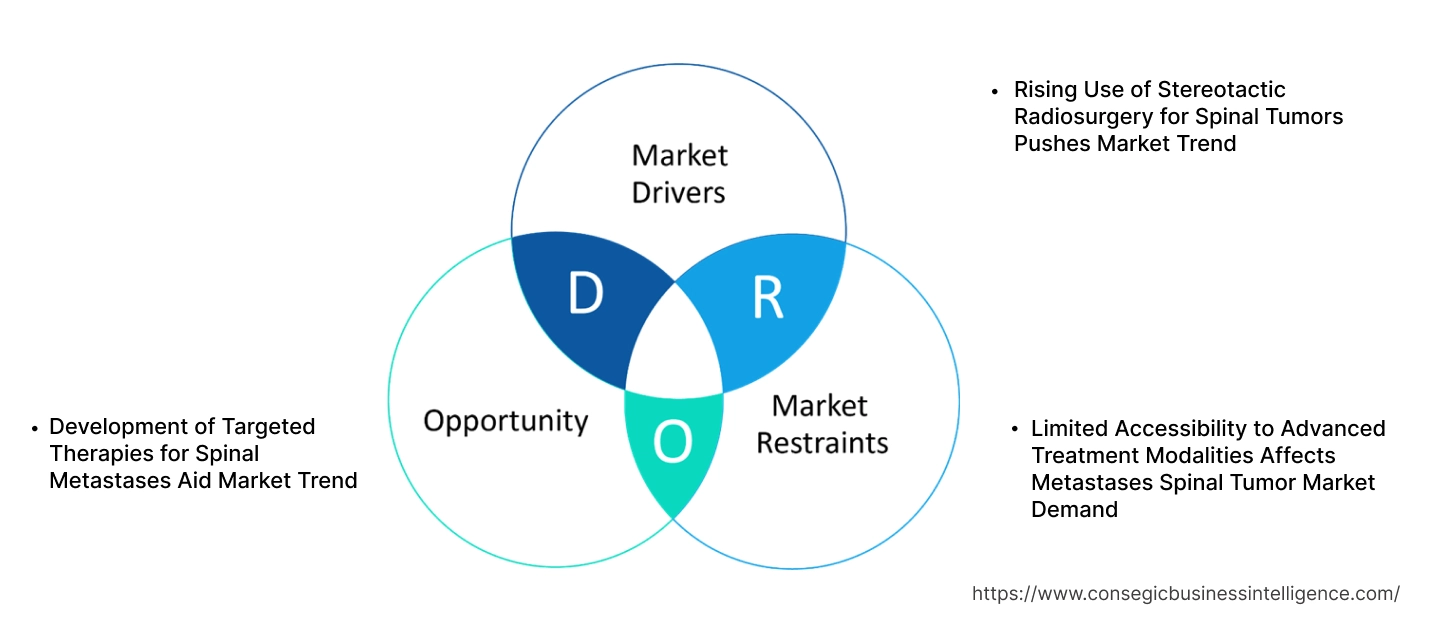
Rising Use of Stereotactic Radiosurgery for Spinal Tumors Pushes Market Trend
Stereotactic radiosurgery (SRS) is gaining traction as a non-invasive treatment option for metastases spinal tumors. SRS delivers precisely targeted radiation to spinal lesions, minimizing damage to surrounding healthy tissues. Its application in treating spinal tumors is significant because it offers a high degree of accuracy, reducing the need for invasive surgical procedures and improving patient recovery times. For example, Gamma Knife and CyberKnife systems are widely used in managing spinal metastases due to their efficacy in controlling tumor growth and alleviating pain.
Thus, the increasing adoption of stereotactic radiosurgery as an effective treatment modality supports the metastases spinal tumor market expansion.
Key Restraints:
Limited Accessibility to Advanced Treatment Modalities Affects Metastases Spinal Tumor Market Demand
Advanced treatment options, such as stereotactic radiosurgery and spinal stabilization surgeries, are not widely accessible in low- and middle-income regions. These therapies require highly specialized equipment and skilled professionals, which are predominantly available in developed healthcare systems. The high cost associated with acquiring and maintaining these technologies further limits their adoption. For instance, patients in remote areas may face delays or financial challenges in accessing such treatments, impacting overall survival outcomes.
This limited accessibility to advanced treatment modalities poses a significant barrier to the metastases spinal tumor market growth.
Future Opportunities :
Development of Targeted Therapies for Spinal Metastases Aid Market Trend
Targeted therapies represent a promising avenue for improving outcomes in patients with metastases spinal tumors. These therapies, which include monoclonal antibodies and small-molecule inhibitors, focus on specific genetic mutations or proteins involved in tumor growth. Future advancements are expected to yield therapies with higher efficacy and fewer side effects compared to traditional options. For instance, ongoing clinical trials are exploring the use of tyrosine kinase inhibitors for treating specific types of spinal metastases.
The development and introduction of targeted therapies offer a significant metastases spinal tumor market opportunity for the metastases spinal tumor market, with the potential to transform the treatment landscape.
Metastases Spinal Tumor Market Segmental Analysis :
By Tumor Type:
Based on tumor type, the market is segmented into osteoblastic tumors, osteolytic tumors, and mixed tumors.
Osteolytic tumors held the largest revenue in metastases spinal tumor market share in 2024
- Osteolytic tumors are characterized by bone destruction due to abnormal tumor activity, leading to weakened bones and fractures.
- These tumors are highly prevalent among patients with metastases spinal tumors, often associated with cancers like breast, lung, and thyroid.
- Their high prevalence has driven the demand for early diagnosis and intervention methods, such as imaging and minimally invasive surgical techniques.
- Treatment focuses on stabilizing the spine and preventing fractures, increasing the use of advanced therapies like vertebroplasty and kyphoplasty.
- The growing awareness among healthcare professionals about osteolytic tumors has contributed significantly to their revenue dominance.
- Therefore, according to metastases spinal tumor market analysis, Osteolytic tumors accounted for the largest share due to their prevalence, severe complications, and the associated advancements in treatment options.
Mixed tumors to register the fastest CAGR during the forecast period
- Mixed tumors involve both osteoblastic and osteolytic characteristics, complicating their diagnosis and management.
- Increasing research on hybrid tumor types has led to advancements in diagnostic techniques such as PET-CT and biomarkers.
- These tumors require a combination of therapies, including surgery, radiation, and targeted treatments, which contribute to rising metastases spinal tumor market demand.
- The complexity and growing focus on personalized medicine for mixed tumors are fostering metastases spinal tumor market expansion.
- Partnerships between research institutions and healthcare providers are driving innovations for this tumor type.
- Thus, according to metastases spinal tumor market analysis, mixed tumors are expected to grow rapidly, driven by advancements in diagnostic and personalized treatment approaches.
By Diagnosis:
Based on diagnosis, the market is segmented into imaging (X-ray, MRI, CT scan, PET scan), biopsy, blood tests, and others.
Imaging segment accounted for the largest revenue in metastases spinal tumor market share in 2024
- Imaging techniques, such as MRI and PET scans, are the gold standard for detecting and monitoring metastases spinal tumors.
- These methods provide detailed anatomical and functional insights, enabling accurate diagnosis and treatment planning.
- The widespread availability of advanced imaging equipment in hospitals and specialty clinics has fueled the metastases spinal tumor market growth.
- Imaging also plays a critical role in assessing the effectiveness of therapies and detecting tumor recurrence.
- Continuous innovation, such as AI integration in imaging, is enhancing diagnostic accuracy and efficiency.
- Therefore, according to market analysis, imaging holds the largest share due to its critical role in diagnosis, therapy planning, and monitoring of spinal metastases.
Biopsy segment to exhibit the fastest CAGR during the forecast period
- Biopsy is essential for confirming the type and stage of tumors, guiding personalized treatment plans.
- The advent of minimally invasive biopsy techniques, such as needle and stereotactic biopsies, has increased their adoption.
- Advanced pathological tests, including molecular profiling, are further improving the precision of biopsy results.
- The growing emphasis on targeted therapies has led to increased demand for biopsies to identify specific tumor markers.
- Increasing investment in research for advanced biopsy methods is anticipated to propel the market trend.
- Thus, according to market analysis, the biopsy segment is anticipated to grow rapidly due to innovations in minimally invasive techniques and molecular diagnostics.
By Treatment:
Based on treatment, the market is segmented into surgery (vertebroplasty, kyphoplasty, spinal decompression), radiation therapy (SRS, EBRT), chemotherapy, targeted therapy, immunotherapy, and pain management.
Radiation therapy segment held the largest revenue share in 2024
- Radiation therapy, particularly stereotactic radiosurgery (SRS), is widely used due to its precision in targeting spinal tumors.
- External beam radiation therapy (EBRT) remains a standard treatment for palliation and tumor control in metastatic spinal tumors.
- Advancements in radiation delivery technologies, such as image-guided radiation therapy (IGRT), have improved outcomes.
- Radiation therapy is preferred for patients who are not candidates for surgery, expanding its application scope.
- The segment benefits from continuous technological innovations and the increasing prevalence of metastatic cancers.
- Therefore, according to market analysis, radiation therapy dominates the market due to its non-invasive nature, precision, and advancements in delivery systems.
Targeted therapy to register the fastest CAGR during the forecast period
- Targeted therapy focuses on specific molecules and pathways involved in tumor growth, offering personalized treatment options.
- Recent approvals of targeted drugs for spinal metastases have significantly expanded the treatment landscape.
- These therapies are often combined with radiation or immunotherapy, enhancing their effectiveness.
- Increasing investments in oncology research are leading to the development of novel targeted drugs.
- High efficacy and reduced side effects compared to traditional treatments make targeted therapy highly sought after.
- Thus, according to market analysis, targeted therapy is expected to grow rapidly due to its precision, efficacy, and integration with other treatment modalities.
By End User:
Based on end-user, the market is segmented into hospitals, specialty clinics, ambulatory surgical centers (ASCs), research institutes, and others.
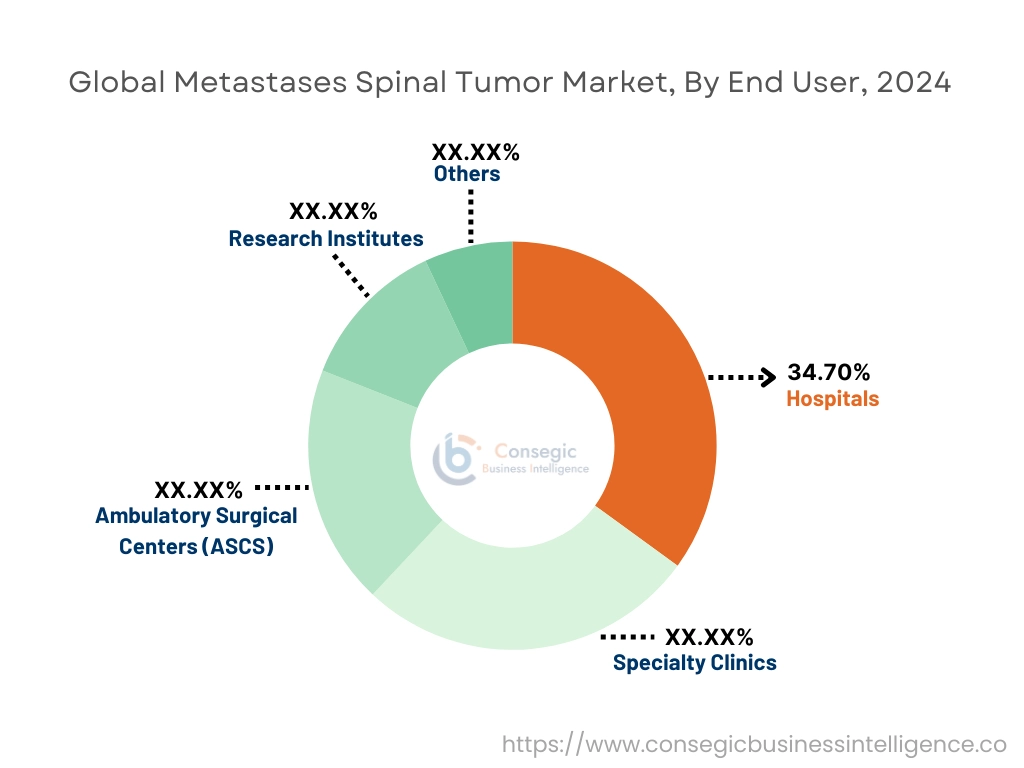
Hospitals accounted for the largest revenue share by 34.70% in 2024
- Hospitals serve as primary centers for diagnosis, treatment, and management of metastatic spinal tumors.
- They house advanced imaging equipment, surgical tools, and radiation therapy systems, making them critical players in the market.
- Multidisciplinary tumor boards in hospitals provide comprehensive care, integrating surgery, radiation, and targeted therapies.
- Increasing healthcare expenditure and the presence of specialized oncology departments have strengthened their market position.
- Many hospitals collaborate with research organizations, enhancing their capacity to deliver cutting-edge treatments.
- Therefore, according to market analysis, hospitals dominate the market due to their comprehensive facilities, specialized expertise, and role as primary treatment centers.
Specialty clinics to register the fastest CAGR during the forecast period
- Specialty clinics offer focused care for spinal tumor patients, providing advanced diagnostics and minimally invasive treatments.
- They ensure quicker access to care, shorter waiting times, and personalized treatment plans compared to larger hospitals.
- The growing trend toward outpatient procedures, such as vertebroplasty and kyphoplasty, has bolstered the role of these clinics.
- Many clinics are equipped with state-of-the-art technology, offering services comparable to larger facilities.
- Rising patient preference for specialized care in a comfortable setting is driving the trend of this segment.
- Thus, according to market analysis, specialty clinics are expected to grow rapidly due to their patient-centric approach, advanced technologies, and streamlined services.
Regional Analysis:
The regional segment includes North America, Europe, Asia Pacific, Middle East and Africa, and Latin America.
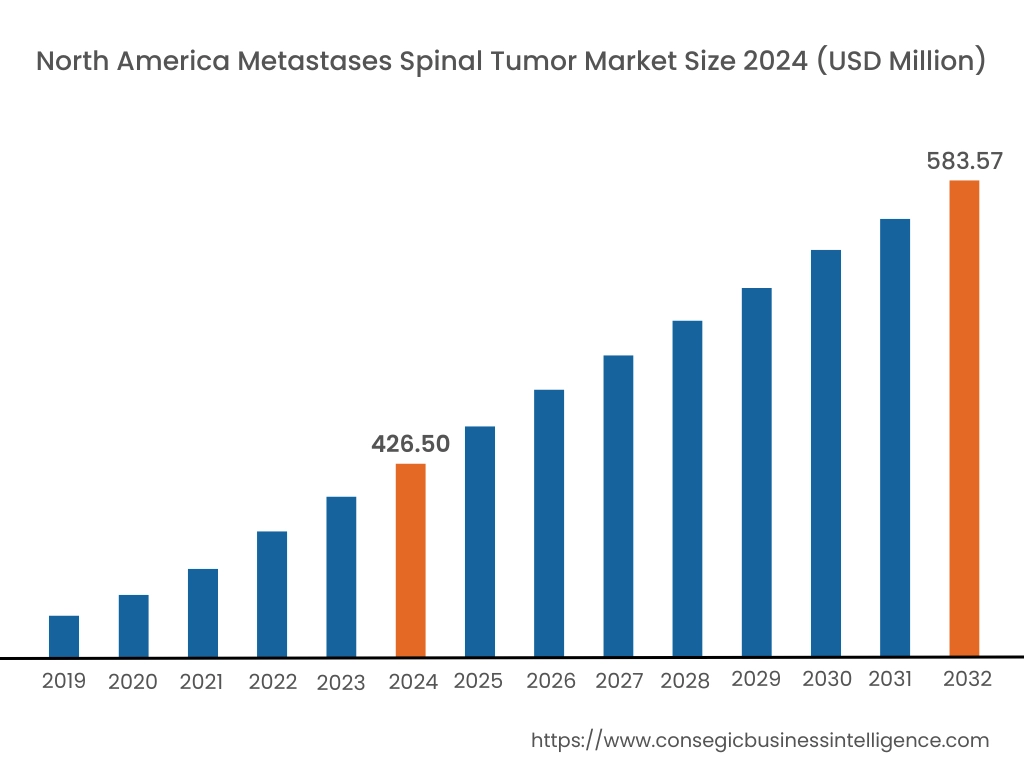
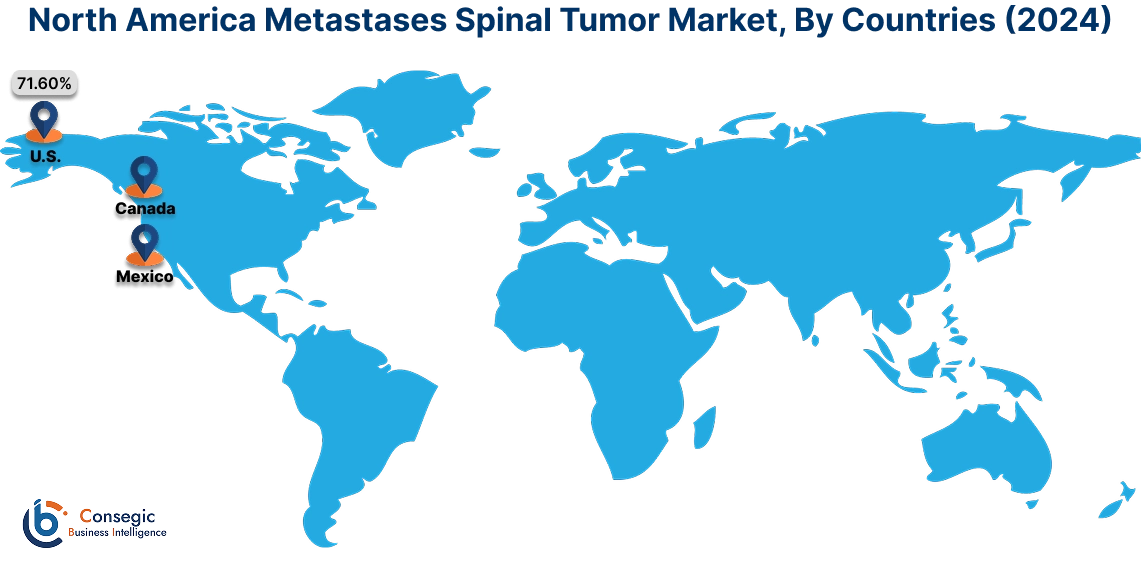
In 2024, North America was valued at USD 426.50 Million and is expected to reach USD 583.57 Million in 2032. In North America, the U.S. accounted for the highest share of 71.60% during the base year of 2024.
North America leads the metastases spinal tumor market due to advanced healthcare infrastructure and strong research capabilities. The United States, in particular, is a key player, with numerous specialized treatment centers and high demand for novel therapies. The presence of major pharmaceutical and biotechnology companies, coupled with significant healthcare investments, supports market development. Ongoing clinical trials and innovations in targeted therapies contribute to metastases spinal tumor market trend. However, the high cost of advanced treatments, including surgical procedures and radiation therapies, presents a challenge for patient access.
In Asia Pacific, the market is experiencing the fastest growth with a CAGR of 4.7% over the forecast period.
The Asia-Pacific region shows promising potential in the metastases spinal tumor market, fueled by an increasing prevalence of cancer and improvements in healthcare infrastructure. Countries like Japan, China, and India are focusing on enhancing diagnostic capabilities and access to advanced treatment options. Japan leads the region in healthcare innovation, particularly in cancer treatment, which includes spinal tumor management. However, the market faces challenges in rural areas where specialized care may not be readily available. Rising awareness of cancer treatments and government initiatives to improve healthcare will likely boost market development in the region.
Europe exhibits a robust market for metastases spinal tumors, supported by established healthcare systems and a high focus on cancer treatment. The United Kingdom, Germany, and France dominate the market, benefiting from strong research institutions and well-developed healthcare facilities. The European Medicines Agency (EMA) facilitates the approval of new treatments, including those for spinal tumors. However, disparities in healthcare access between Western and Eastern Europe could affect the overall market. High treatment costs and limited access to advanced therapies in certain areas also pose challenges to metastases spinal tumor market trend.
The Middle East and Africa (MEA) region faces challenges in the metastases spinal tumor market due to limited healthcare infrastructure and low awareness of spinal tumor treatments. However, countries like the UAE and Saudi Arabia are investing in improving cancer care and expanding access to advanced treatment options. Efforts to raise awareness and improve diagnostic capabilities will help enhance market performance in the region. Africa, particularly sub-Saharan regions, struggles with a lack of specialized treatment centers and high costs, hindering market potential. As healthcare systems develop, metastases spinal tumor market opportunities for growth in this region may increase.
The metastases spinal tumor market in Latin America is gradually developing, with countries like Brazil, Mexico, and Argentina seeing improvements in healthcare access. While cancer treatment centers are concentrated in urban areas, the region faces significant challenges in providing widespread access to advanced treatments. High treatment costs and limited insurance coverage for specialized care restrict market trend. However, increasing investments in healthcare infrastructure and rising awareness of spinal tumor treatment are expected to contribute to market development. Efforts by non-governmental organizations and government programs focused on cancer care will likely improve market conditions in the coming years.
Top Key Players and Market Share Insights:
The Global Metastases Spinal Tumor Market is highly competitive with major players providing products and services to the national and international markets. Key players are adopting several strategies in research and development (R&D), product innovation, and end-user launches to hold a strong position in the Global Metastases Spinal Tumor Market. Key players in the Metastases Spinal Tumor industry include-
- Medtronic PLC (Ireland)
- Stryker Corporation (United States)
- Baxter International Inc. (United States)
- DePuy Synthes (United States)
- Orthofix Medical, Inc. (United States)
- Johnson & Johnson (United States)
- Varian Medical Systems, Inc. (United States)
- Zimmer Biomet Holdings, Inc. (United States)
- Brainlab AG (Germany)
- NuVasive, Inc. (United States)
Recent Industry Developments :
Partnerships & Collaborations:
- In October 2023, OncoBone Ventures, a UK-based biotech company, announced a collaboration with India-based Mestastop Solutions. Mestastop specializes in metastasis research and has developed three patent-protected platforms—METAssay®, METSCAN®, and METVivo®—to identify cancer patients at higher risk of metastasis and to discover pertinent drug targets. The collaboration aims to develop novel in vitro models as screening platforms to evaluate the efficacy of therapies on cancer bone metastases.
Metastases Spinal Tumor Market Report Insights :
| Report Attributes | Report Details |
| Study Timeline | 2019-2032 |
| Market Size in 2032 | USD 1,800.59 Million |
| CAGR (2025-2032) | 4.3% |
| By Tumor Type |
|
| By Diagnosis |
|
| By Treatment |
|
| By End-User |
|
| By Region |
|
| Key Players |
|
| North America | U.S. Canada Mexico |
| Europe | U.K. Germany France Spain Italy Russia Benelux Rest of Europe |
| APAC | China South Korea Japan India Australia ASEAN Rest of Asia-Pacific |
| Middle East and Africa | GCC Turkey South Africa Rest of MEA |
| LATAM | Brazil Argentina Chile Rest of LATAM |
| Report Coverage |
|
Key Questions Answered in the Report
How big is the Metastases Spinal Tumor Market? −
In 2024, the Metastases Spinal Tumor Market was USD 1,285.77 million.
What will be the potential market valuation for the Metastases Spinal Tumor Market by 2032? +
In 2032, the market size of Metastases Spinal Tumor Market is expected to reach USD 1,800.59 million.
What are the segments covered in the Metastases Spinal Tumor Market report? +
The tumor type, diagnosis, treatment, and end-user are the segments covered in this report.
Who are the major players in the Metastases Spinal Tumor Market? +
Medtronic PLC (Ireland), Stryker Corporation (United States), Johnson & Johnson (United States), Varian Medical Systems, Inc. (United States), Zimmer Biomet Holdings, Inc. (United States), Brainlab AG (Germany), NuVasive, Inc. (United States), Baxter International Inc. (United States), DePuy Synthes (United States), Orthofix Medical, Inc. (United States) are the major players in the Metastases Spinal Tumor market.
Overview
Reputation & Certifications


Our Services
- Market Intelligence & Forecasting
- Custom Research Solutions
- Market Entry Strategy
- Competitive Intelligence
- Customer Insights
- Industry Innovation Analysis
- Investment Advisory