Jump to Content
Diphtheria Treatment Market - Size, Share, Industry Trends, and Forecasts (2025-2032)
Diphtheria Treatment Market Size:
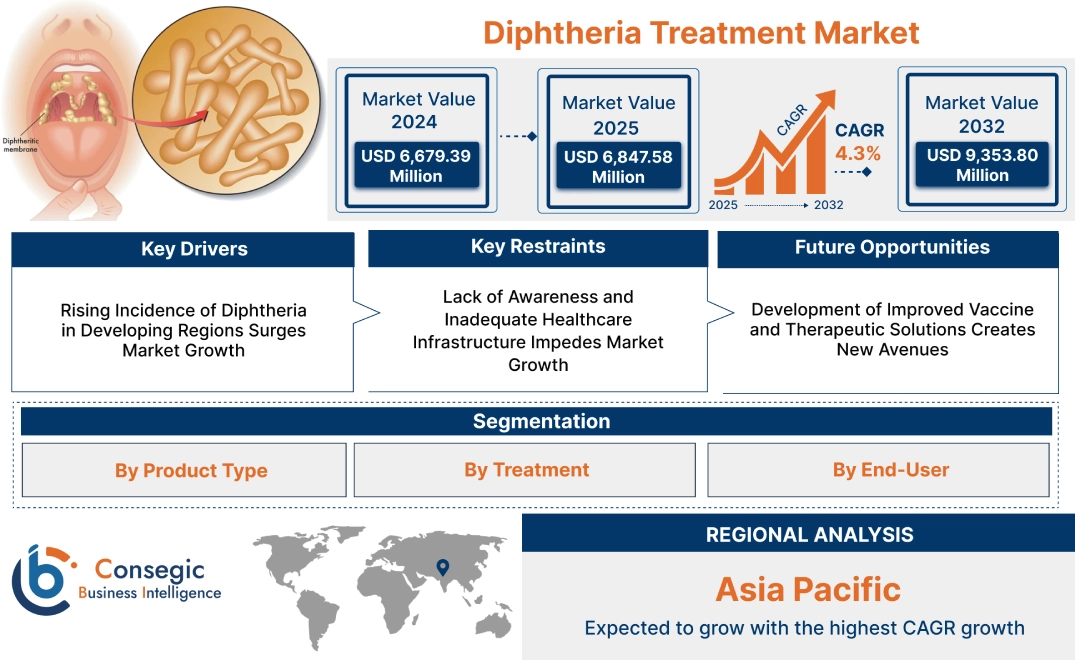
Diphtheria Treatment Market size is estimated to reach over USD 9,353.80 Million by 2032 from a value of USD 6,679.39 Million in 2024 and is projected to grow by USD 6,847.58 Million in 2025, growing at a CAGR of 4.3% from 2025 to 2032.
Diphtheria Treatment Market Scope & Overview:
Diphtheria treatment involves the use of medications and interventions to combat the bacterial infection caused by Corynebacterium diphtheriae. The primary treatment options include diphtheria antitoxin and antibiotics. These treatments aim to neutralize the toxins produced by the bacteria, reduce infection, and prevent complications. The key features of diphtheria treatment include fast-acting relief, effectiveness in toxin neutralization, and high safety profiles. These treatments play a critical role in preventing life-threatening outcomes, including respiratory and cardiac failure.
Diphtheria treatment is used in hospitals, clinics, and healthcare facilities. It is crucial in the healthcare industry for managing outbreaks and ensuring patient recovery. Early diagnosis and prompt treatment are vital for successful outcomes in diphtheria cases.
Diphtheria Treatment Market Dynamics - (DRO):
Key Drivers:
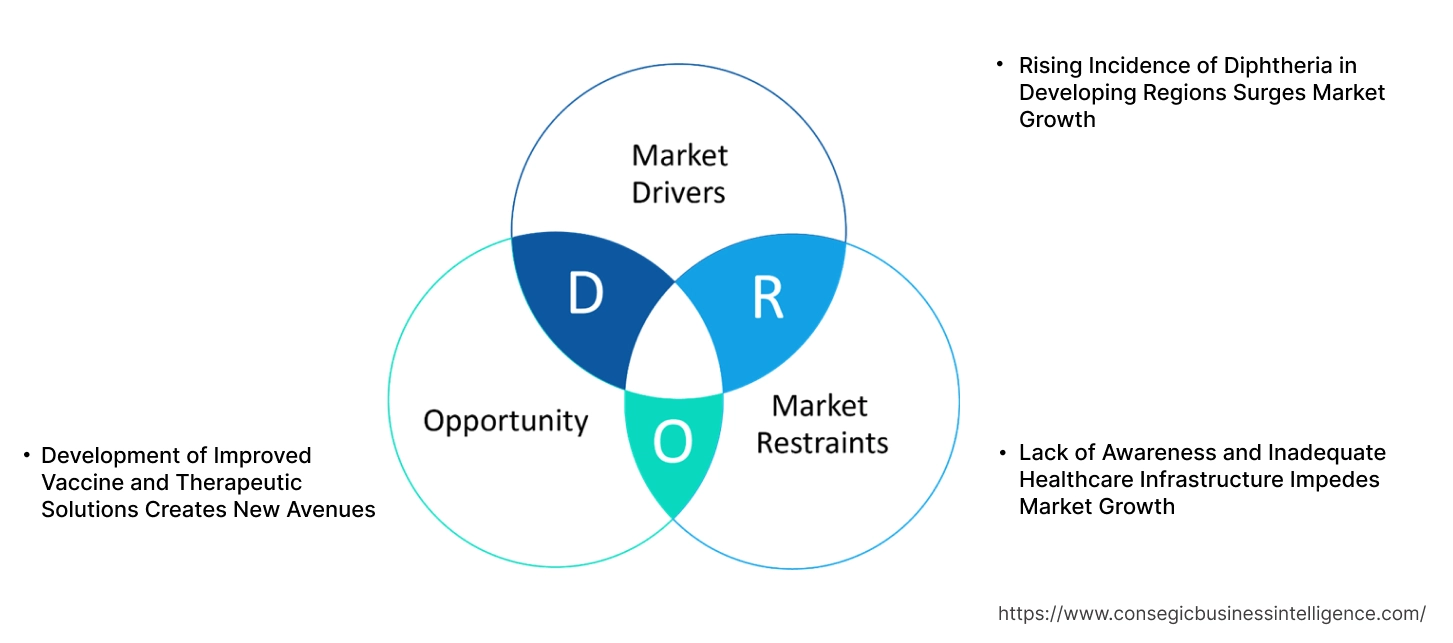
Rising Incidence of Diphtheria in Developing Regions Surges Market Growth.
Diphtheria remains a significant health threat in several developing countries, where access to immunization and healthcare facilities is limited. This has led to periodic outbreaks, especially in areas with low vaccination rates. The resurgence of diphtheria cases, particularly in regions like South Asia and parts of Africa, has resulted in a higher trend for effective treatment options. The primary treatment for diphtheria involves the administration of diphtheria antitoxin and antibiotics. As cases rise, governments and healthcare providers are focusing on enhancing treatment accessibility, fueling diphtheria treatment market demand for diphtheria treatment medications.
Therefore, the growing incidence of diphtheria in regions with insufficient vaccination coverage is a key driver for the market, leading to an increased diphtheria treatment market trend for treatment solutions.
Key Restraints:
Lack of Awareness and Inadequate Healthcare Infrastructure Impedes Market Growth
One of the major challenges hindering the diphtheria treatment market is the lack of awareness about the disease and limited healthcare infrastructure in certain areas. In many regions, people are not fully aware of the symptoms of diphtheria or the importance of early treatment. This results in delayed diagnoses and complications, making treatment less effective. Additionally, in some underdeveloped regions, healthcare systems lack the necessary infrastructure to provide timely and adequate medical care. These limitations, including a shortage of healthcare professionals and medical resources, contribute to the slow response to diphtheria outbreaks.
Consequently, these factors impede the diphtheria treatment market growth by restricting the reach and accessibility of treatment options for diphtheria.
Future Opportunities:
Development of Improved Vaccine and Therapeutic Solutions Creates New Avenues
The growing emphasis on vaccine development presents a substantial diphtheria treatment market opportunity. Ongoing advancements in vaccine technology, such as the development of combination vaccines and enhanced diphtheria toxoid vaccines, aim to provide long-lasting immunity with fewer side effects. Additionally, new therapeutic treatments, such as monoclonal antibodies and next-generation antibiotics, are under research to offer more effective and targeted solutions for treating diphtheria.
As these innovations emerge, they will significantly improve the treatment landscape, making it easier to manage and prevent diphtheria. This progress in vaccine and therapeutic development is expected to become a major opportunity for the market in the near future.
Diphtheria Treatment Market Segmental Analysis :
By Product Type:
Based on product type, the Diphtheria Treatment Market is segmented into Tetanus Immune Globulin (TIG), Tetanus Toxoid (TT), Tetanus-Diphtheria (Td), and Diphtheria Toxoid and Pertussis (DTaP).
The Diphtheria Toxoid and Pertussis (DTaP) sector accounted for the largest revenue in diphtheria treatment market share in 2024.
- DTaP vaccines hold the largest market share, as they are widely used in immunization programs for infants and young children, ensuring long-term protection against diphtheria, tetanus, and pertussis.
- The demand for routine childhood vaccinations is increasing, supported by government immunization initiatives and global health organizations like WHO and CDC.
- Diphtheria treatment market analysis highlights that DTaP vaccines are preferred due to their effectiveness in preventing multiple diseases in a single dose, improving compliance.
- Thus, as per market trends, ongoing vaccination awareness campaigns and public health strategies are strengthening the dominance of this segment.
The Tetanus-Diphtheria (Td) sector is anticipated to register the fastest CAGR during the forecast period.
- The increasing emphasis on improving immunization rates in developing nations is driving the adoption of the Td vaccine.
- Growing awareness of the benefits of combined vaccines and the need for improved coverage against preventable diseases like diphtheria is contributing to the rapid diphtheria treatment market growth of this segment.
- Expanding healthcare infrastructure in emerging markets is expected to enhance vaccine distribution, further accelerating growth.
- The ongoing research into improving vaccine formulations and enhancing efficacy over time is expected to provide additional momentum for Td's diphtheria treatment market expansion.
- As booster vaccination programs continue to target populations at risk, diphtheria treatment market demand for Td vaccines will likely surge in both developed and developing regions.
- Thus, according to diphtheria treatment market analysis, the Td vaccine's anticipated rapid growth is propelled by increased vaccine accessibility, public health campaigns, and improved immunization strategies in emerging economies.
By Treatment:
Based on treatment, the market is segmented into Antitoxins and Antibiotics, which include Macrolides and others.
The Antitoxins sector accounted for the largest revenue in diphtheria treatment market share in 2024.
- Diphtheria antitoxin (DAT) is essential in neutralizing the diphtheria toxin and is used to treat patients who exhibit severe symptoms of diphtheria.
- The critical role of antitoxins in preventing severe complications such as organ damage and death drives their continued dominance in the treatment of diphtheria.
- Hospitals and clinics, especially in areas with frequent outbreaks, rely heavily on the use of antitoxins for immediate diphtheria management.
- Due to the life-saving nature of antitoxins, they are considered a priority in the treatment of diphtheria, especially in resource-limited settings.
- Additionally, the availability of antitoxins in emergency treatment protocols, especially during outbreaks, has led to their sustained importance in healthcare settings.
- Therefore, according to market analysis, antitoxins remain indispensable in managing severe diphtheria cases, where they provide immediate intervention by neutralizing the dangerous effects of the diphtheria toxin.
The Antibiotics sector is anticipated to register the fastest CAGR during the forecast period.
- Antibiotics, particularly macrolides like erythromycin and penicillin, are used to eliminate the bacterial infection and prevent transmission.
- These treatments are widely recommended alongside antitoxins, especially in patients with mild to moderate cases of diphtheria.
- The segment benefits from advancements in antibiotic formulations, improving efficacy and reducing resistance-related concerns.
- As per market trends, the rising focus on infectious disease management and global vaccination programs has increased the usage of antibiotics in diphtheria treatment.
- The growing adoption of combination therapies, integrating antibiotics with supportive care, is further accelerating the demand for antibiotic-based treatments.
By End-User:
Based on end-users, the Diphtheria Treatment Market is segmented into Hospitals and Clinics, Academic and Research Institutes, and Others.
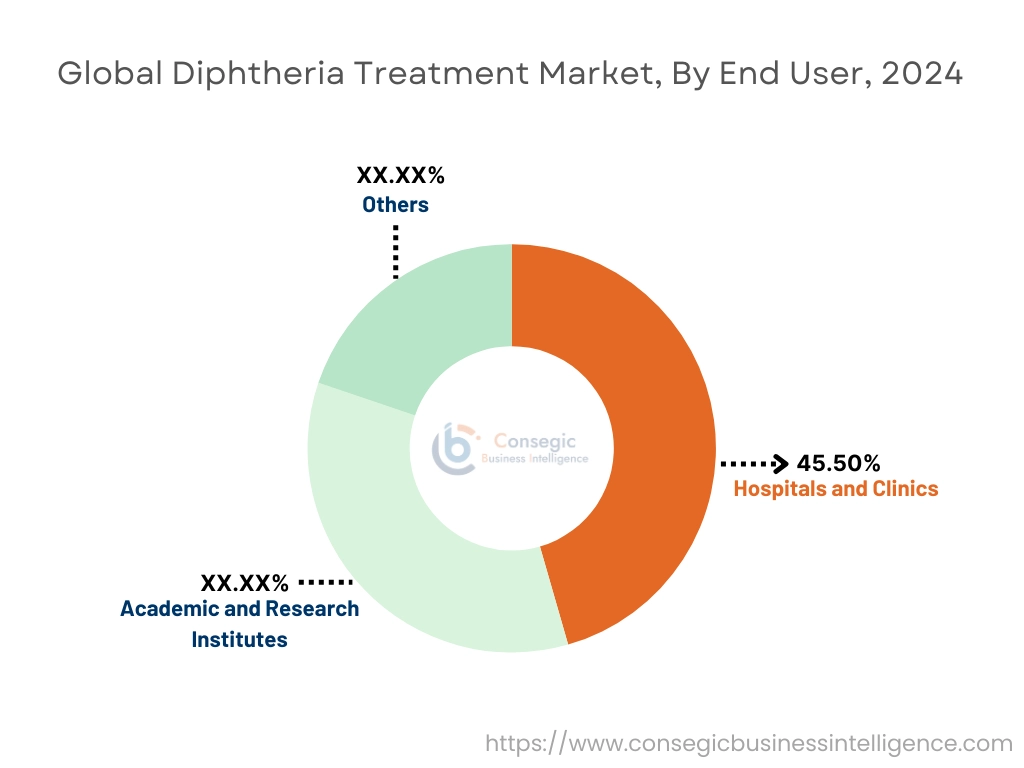
The Hospitals and Clinics sector accounted for the largest revenue share by 45.50% in 2024.
- Hospitals and clinics are the primary settings where diphtheria patients receive urgent medical care, including vaccination, antitoxin administration, and antibiotic treatments.
- The need for specialized care, especially during outbreaks, ensures that hospitals and clinics remain the central hubs for treating diphtheria.
- Healthcare facilities in both developed and emerging markets are well-equipped to manage diphtheria cases, which contributes to their dominant position in the market.
- The growing number of hospitals and clinics, particularly in developing countries, supports their ability to provide consistent and wide-reaching treatment options for diphtheria.
- With increasing access to modern medical infrastructure, these establishments are central to the delivery of care, making them a key player in the market.
- Therefore, according to market analysis, hospitals and clinics will continue to dominate the end-user segment due to their critical role in the direct treatment of diphtheria and their ability to manage emergency cases effectively.
The Academic and Research Institutes sector is anticipated to register the fastest CAGR during the forecast period.
- Academic and research institutes are experiencing the fastest growth, driven by increased R&D activities focused on vaccine innovation and diphtheria drug development.
- The demand for advanced research in immunology and infectious diseases is rising, particularly in the development of next-generation diphtheria vaccines and novel treatment approaches.
- Market trends indicate that funding from government bodies and private institutions is fueling research efforts, leading to innovations in disease prevention.
- Thus, with growing investments in vaccine development and public health initiatives, this segment is contributing significantly to market growth.
Regional Analysis:
The regional segment includes North America, Europe, Asia Pacific, Middle East and Africa, and Latin America.
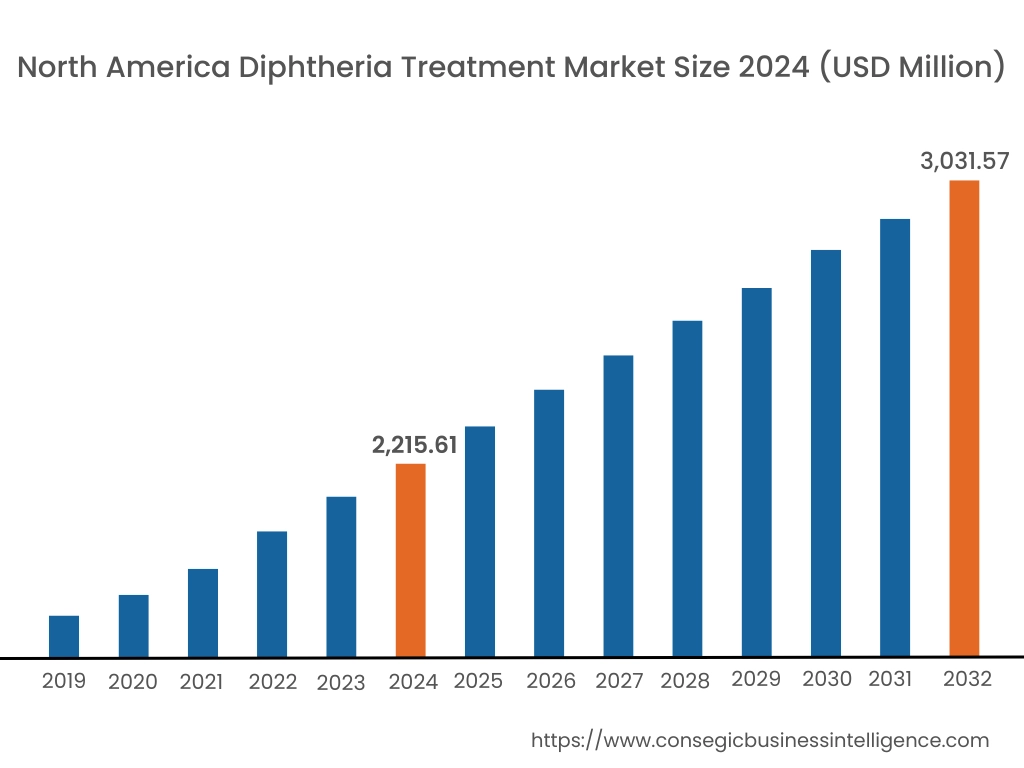
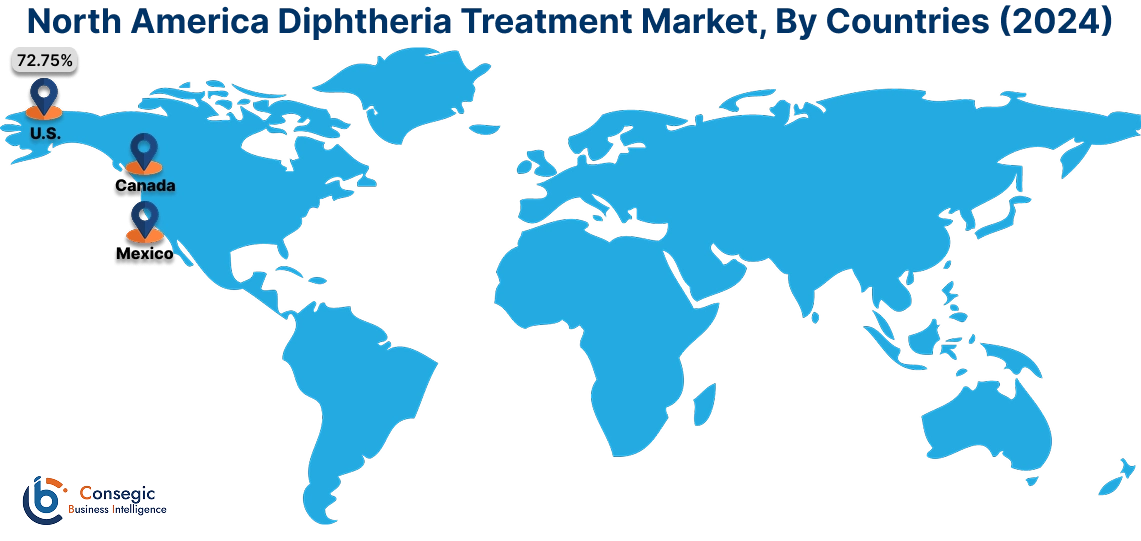
In 2024, North America was valued at USD 2,215.61 Million and is expected to reach USD 3,031.57 Million in 2032. In North America, the U.S. accounted for the highest share of 72.75% during the base year of 2024. In North America, the diphtheria treatment market is robust, supported by advanced healthcare infrastructure and a high level of public health awareness. The United States leads the market due to the presence of well-established healthcare facilities, government-funded vaccination programs, and the use of effective treatments. Additionally, the high rate of immunization in the region reduces the incidence of diphtheria, but treatment options remain in trend due to occasional outbreaks. Regulatory support for innovative treatments and vaccines further strengthens the market landscape.
In Asia Pacific, the market is experiencing the fastest growth with a CAGR of 4.7% over the forecast period.
Asia-Pacific presents a mixed landscape for the diphtheria treatment market. Countries like India and China have experienced improvements in healthcare systems, leading to increased access to diphtheria treatments. However, certain areas still struggle with inadequate immunization programs, which increases the prevalence of the disease. Increasing government efforts to enhance vaccination coverage and address healthcare disparities fuel market trend for treatments. The market faces challenges from fluctuating healthcare infrastructure quality across the region.
Europe maintains a steady demand for diphtheria treatment solutions, supported by comprehensive immunization programs and strong healthcare systems. Countries such as the United Kingdom, Germany, and France exhibit low incidence rates due to high vaccination coverage. However, treatment options remain important for responding to occasional outbreaks, particularly in areas with lower vaccination rates. The European Medicines Agency (EMA) facilitates the approval of new vaccines and treatments, contributing to market stability. Public health policies also ensure continuous demand for treatment solutions.
The Middle East and Africa region faces a significant challenge with diphtheria treatment due to varying healthcare standards across countries. In the Middle East, countries like Saudi Arabia and the UAE have strong healthcare infrastructure and high vaccination rates, which helps reduce diphtheria incidence. However, in parts of sub-Saharan Africa, limited healthcare access and lower vaccination rates result in higher disease prevalence. Efforts to improve immunization programs and healthcare infrastructure are key factors influencing the market in this region.
Latin America is experiencing increased demand for diphtheria treatment solutions, driven by improvements in healthcare access and public health initiatives. Countries like Brazil and Mexico have strengthened their vaccination programs, reducing diphtheria cases. However, sporadic outbreaks still occur, particularly in underserved areas. Growing awareness about the importance of immunization and treatment access in remote regions is expected to boost market demand. The region benefits from international aid programs that support the availability of vaccines and treatments.
Top Key Players & Market Share Insights:
The Global Diphtheria Treatment Market is highly competitive with major players providing products and services to the national and international markets. Key players are adopting several strategies in research and development (R&D), product innovation, and end-user launches to hold a strong position in the Global Diphtheria Treatment Market. Key players in the Diphtheria Treatment industry include-
- Serum Institute of India (India)
- Sanofi Pasteur (France)
- Novo Nordisk (Denmark)
- Janssen Pharmaceuticals (Johnson & Johnson) (United States)
- Biovac Institute (South Africa)
- GlaxoSmithKline plc (GSK) (United Kingdom)
- Merck & Co., Inc. (United States)
- Pfizer Inc. (United States)
- Bharat Biotech (India)
- Hoffmann-La Roche (Switzerland)
Recent Industry Developments :
Partnerships & Collaborations:
- In April 2024, Invera Inc. and Astellas Pharma established a collaboration to discover therapeutic bispecific antibodies, leveraging Invera's advanced B-body bispecific antibody platform to enhance therapeutic research efforts.
Diphtheria Treatment Market Report Insights:
| Report Attributes | Report Details |
| Study Timeline | 2019-2032 |
| Market Size in 2032 | USD 9,353.80 Million |
| CAGR (2025-2032) | 4.3% |
| By Product Type |
|
| By Treatment |
|
| By End-User |
|
| By Region |
|
| Key Players |
|
| North America | U.S. Canada Mexico |
| Europe | U.K. Germany France Spain Italy Russia Benelux Rest of Europe |
| APAC | China South Korea Japan India Australia ASEAN Rest of Asia-Pacific |
| Middle East and Africa | GCC Turkey South Africa Rest of MEA |
| LATAM | Brazil Argentina Chile Rest of LATAM |
| Report Coverage |
|
Key Questions Answered in the Report
How big is the Diphtheria Treatment Market? −
In 2024, the Diphtheria Treatment Market was USD 6,679.39 million.
What will be the potential market valuation for the Diphtheria Treatment Market by 2032? +
In 2032, the market size of Diphtheria Treatment Market is expected to reach USD 9,353.80 million.
What are the segments covered in the Diphtheria Treatment Market report? +
The product type, treatment, and end-user are the segments covered in this report.
Who are the major players in the Diphtheria Treatment Market? +
Serum Institute of India (India), Sanofi Pasteur (France), GlaxoSmithKline plc (GSK) (United Kingdom), Merck & Co., Inc. (United States), Pfizer Inc. (United States), Bharat Biotech (India), Hoffmann-La Roche (Switzerland), Novo Nordisk (Denmark), Janssen Pharmaceuticals (Johnson & Johnson) (United States), Biovac Institute (South Africa) are the major players in the Diphtheria Treatment market.
Overview
Reputation & Certifications


Our Services
- Market Intelligence & Forecasting
- Custom Research Solutions
- Market Entry Strategy
- Competitive Intelligence
- Customer Insights
- Industry Innovation Analysis
- Investment Advisory