Jump to Content
Companion Animal Healthcare Market - Size, Share, Industry Trends, and Forecasts (2025 - 2032)
Companion Animal Healthcare Market Size:
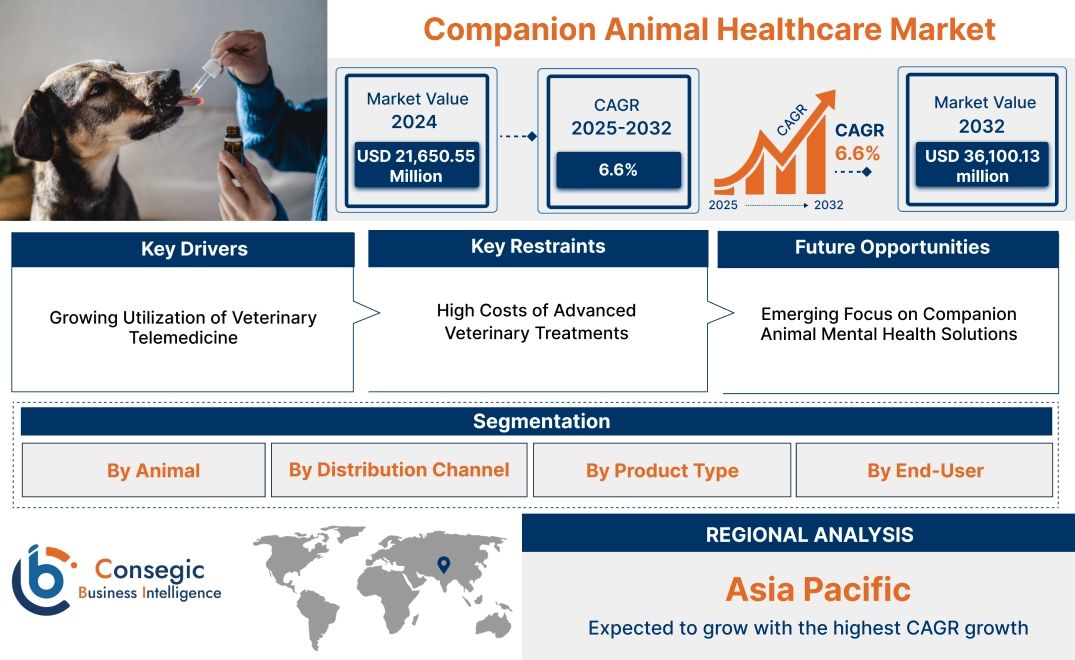
CCompanion Animal Healthcare Market size is estimated to reach over USD 36,100.13 Million by 2032 from a value of USD 21,650.55 Million in 2024 and is projected to grow by USD 22,693.71 Million in 2025, growing at a CAGR of 6.6 % from 2025 to 2032.
Companion Animal Healthcare Market Scope & Overview:
Companion animal healthcare encompasses a range of products and services designed to maintain and improve the health of pets. These include pharmaceuticals, vaccines, diagnostics, and nutritional supplements tailored to address specific animal needs. Key features include advanced diagnostic tools, innovative therapeutic formulations, and preventive healthcare solutions ensuring the well-being of pets. These products help identify and manage diseases, enhance immunity, and promote overall health.
Benefits of companion animal healthcare include improved life expectancy, enhanced quality of life, and reduced risks of disease transmission to humans. Preventive care and treatment options contribute to stronger bonds between pets and their owners. Applications span veterinary clinics, diagnostic laboratories, and pet specialty stores. End-use industries include animal hospitals, research institutions, and commercial pet care facilities offering tailored healthcare solutions.
Companion Animal Healthcare Market Dynamics - (DRO) :
Key Drivers:
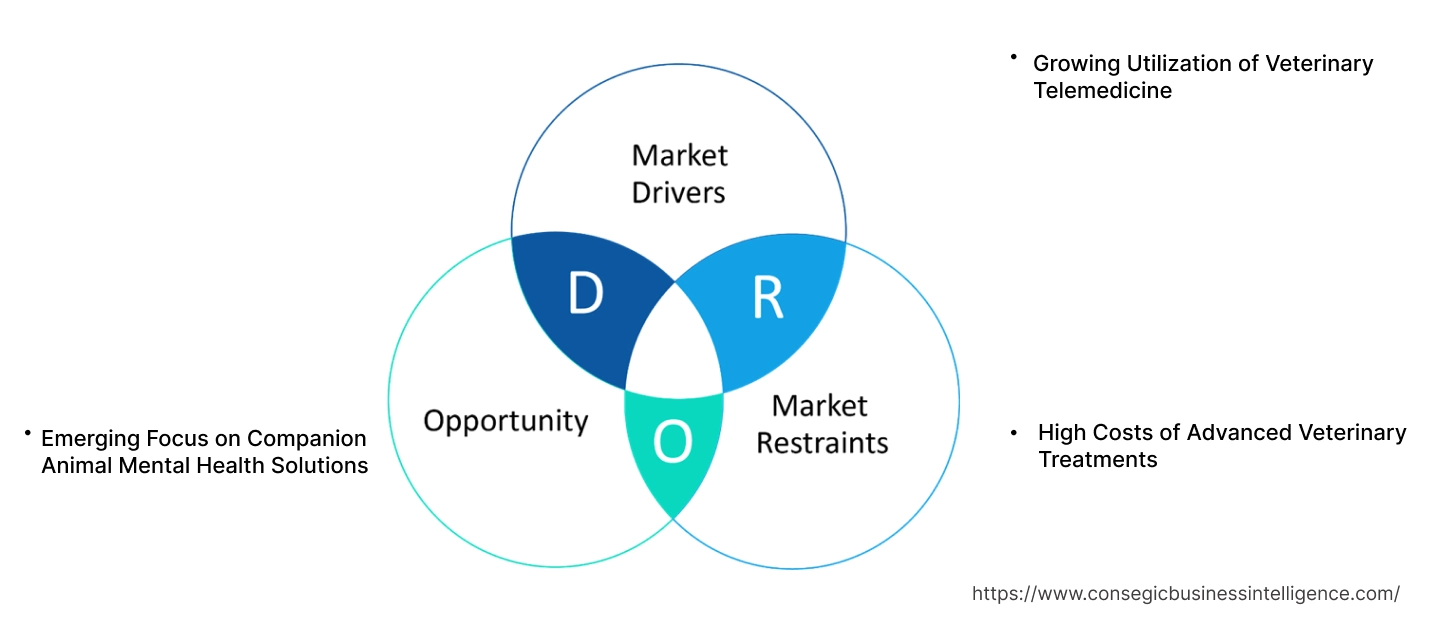
Growing Utilization of Veterinary Telemedicine
Veterinary telemedicine is transforming companion animal healthcare by enabling remote consultations and diagnostics. This technology helps pet owners access professional veterinary advice without geographical constraints. It is particularly beneficial for routine follow-ups, initial assessments of minor ailments, and chronic disease management in pets.
For instance, services like Fuzzy Pet Health and PetDesk provide virtual veterinary consultations, reducing stress for pets and owners by eliminating the need for travel. This convenience encourages pet owners to seek timely medical advice, thus promoting better healthcare outcomes for companion animals.
Consequently, the increasing adoption of veterinary telemedicine is propelling advancements in the companion animal healthcare market.
Key Restraints:
High Costs of Advanced Veterinary Treatments
The growing sophistication of veterinary treatments, including surgeries, diagnostic imaging, and therapeutic interventions, involves substantial costs. These expenses often become a financial burden for pet owners, especially those without pet insurance. For example, procedures such as orthopedic surgeries or cancer treatments can cost several thousand dollars.
Such high costs deter pet owners from opting for advanced care, leading to a reliance on basic or preventive healthcare. This restraint hampers the widespread adoption of innovative treatments, limiting the potential companion animal healthcare market trend.
Therefore, the financial challenges associated with advanced veterinary treatments obstruct the companion animal healthcare market growth trajectory.
Future Opportunities :
Emerging Focus on Companion Animal Mental Health Solutions
The mental well-being of companion animals is gaining attention, leading to the development of specialized products and therapies. In the future, advancements in animal behavior studies are expected to enhance solutions like anxiety-reducing medications, wearables, and behavioral therapy programs for pets.
For instance, companies are exploring devices that monitor stress indicators in pets, offering data-driven insights for managing mental health. Such innovations align with the increasing awareness among pet owners about the holistic health of their animals.
Thus, the focus on addressing mental health in companion animals represents a significant companion animal healthcare market opportunity for companion animal healthcare market growth.
Companion Animal Healthcare Market Segmental Analysis :
By Animal:
Based on animal type, the companion animal healthcare market is segmented into dogs, equine, cats, and others.
The dogs segment accounted for the largest revenue in companion animal healthcare market share in 2024.
- Dogs represent the most popular companion animal globally, driving significant trend for healthcare products.
- Advancements in veterinary medicine have increased the availability of vaccines, pharmaceuticals, and diagnostic tools for canine diseases such as distemper and parvovirus.
- Increasing awareness of preventive care, such as regular check-ups and vaccinations, among pet owners further supports the companion animal healthcare market expansion.
- Trends in pet humanization, where owners treat their pets as family members, also drive expenditure on healthcare solutions for dogs.
- Therefore, according to companion animal healthcare market analysis, the extensive adoption of dogs as pets and increased spending on their healthcare contribute to the dominance of this segment in the market.
The cats segment is anticipated to register the fastest CAGR during the forecast period.
- Cats are increasingly being adopted in urban areas due to their independent and low-maintenance nature, boosting the companion animal healthcare market demand for feline healthcare solutions.
- Growth in specific treatments for feline diseases such as hyperthyroidism and chronic kidney disease has expanded the scope of this segment.
- Rising availability of advanced feline vaccines and diagnostic tools also supports the market.
- Online and in-store promotions of cat-specific healthcare products have played a role in raising awareness and adoption among pet owners.
- Thus, according to companion animal healthcare market analysis, the growing awareness of cat-specific diseases and treatments, coupled with rising adoption, is anticipated to drive robust trend for this segment.
By Distribution Channel:
Based on the distribution channel, the market is segmented into veterinary hospitals & clinics, retail pharmacies, and online pharmacies.
The veterinary hospitals and clinics segment accounted for the largest revenue in companion animal healthcare market share in 2024.
- Veterinary clinics remain the primary choice for pet owners seeking diagnostics, vaccinations, and treatment for their pets.
- The availability of specialized veterinarians ensures higher accuracy in disease management and treatment.
- Comprehensive services, including emergency care and routine check-ups, boost their popularity.
- Pet insurance coverage has made healthcare services more accessible, encouraging pet owners to use veterinary clinics.
- Therefore, according to market analysis, veterinary hospitals and clinics dominate due to their extensive service offerings and growing reliance on professional healthcare services by pet owners.
The online pharmacies segment is anticipated to register the fastest CAGR during the forecast period.
- Convenience and competitive pricing drive the adoption of online platforms for purchasing pet medications and supplements.
- Digital platforms increasingly offer prescription management, automated refills, and home delivery, catering to pet owners’ needs.
- Growing internet penetration and the proliferation of e-commerce platforms contribute to the rapid expansion of this segment.
- Prominent players in the pet healthcare market are leveraging online channels for wider reach and personalized customer engagement.
- Therefore, according to market analysis, the shift toward digital platforms for healthcare products and services, along with enhanced accessibility, drives the companion animal healthcare market trend of online pharmacies.
By Product Type:
Based on product type, the market is segmented into vaccines, pharmaceuticals, feed additives, diagnostics, and others.
The vaccines segment accounted for the largest revenue share in 2024.
- Vaccines are a crucial preventive measure against life-threatening diseases in companion animals, such as rabies and leptospirosis.
- Regular immunization programs, supported by government campaigns, contribute to steady companion animal healthcare market expansion.
- Advances in vaccine development, including DNA and recombinant vaccines, have improved efficacy and safety.
- Increasing awareness among pet owners about preventive care ensures consistent trend in this segment.
- Thus, according to market analysis, the vaccines segment dominates due to its essential role in disease prevention and consistent companion animal healthcare market demand across various companion animal categories.
The diagnostics segment is anticipated to register the fastest CAGR during the forecast period.
- Technological innovations have led to the development of advanced diagnostic solutions, including PCR tests and imaging systems.
- Early detection of diseases allows timely intervention, encouraging pet owners to invest in diagnostic services.
- The expansion of diagnostic laboratories and mobile diagnostic services enhances accessibility for pet owners.
- Rising cases of chronic conditions, such as diabetes and arthritis in pets, further fuel the demand for diagnostic tools.
- Thus, according to market analysis, the growth of diagnostics is driven by technological advancements and the increasing need for early disease detection, ensuring its rapid expansion during the forecast period.
By End-User:
Based on end user, the market is segmented into hospitals & clinics, in-house testing, and others.
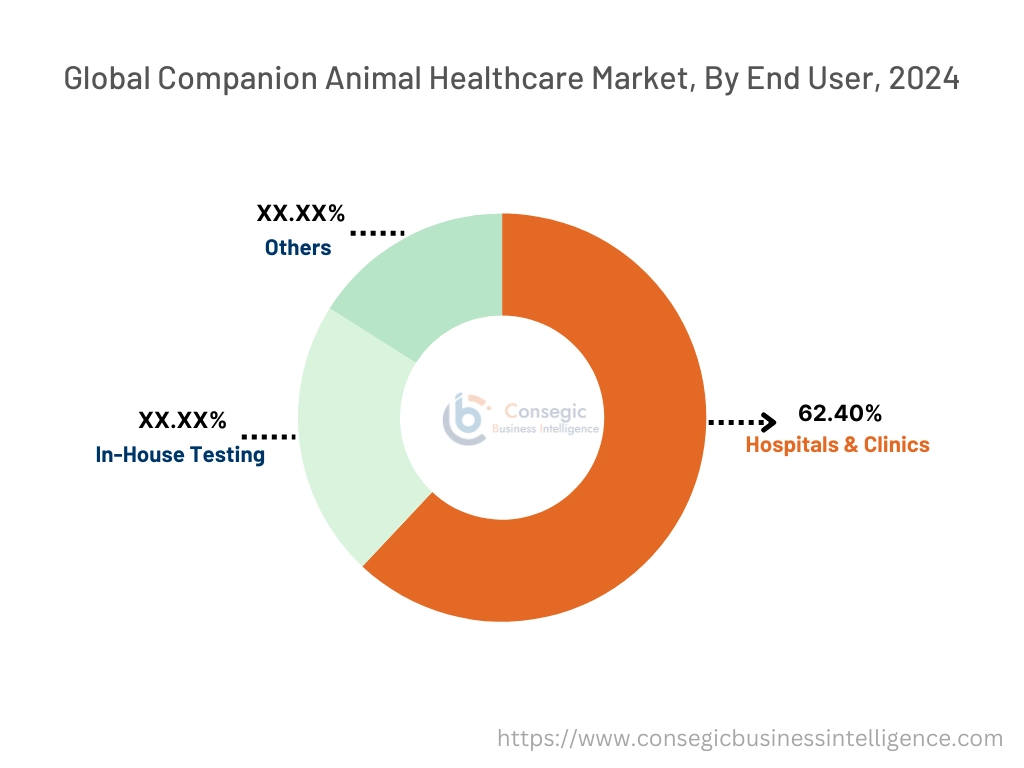
The hospitals and clinics segment accounted for the largest revenue share of 62.40% in 2024.
- Professional healthcare settings are the preferred choice for critical and advanced treatments.
- Specialized veterinary clinics offer tailored diagnostic and surgical services, enhancing their adoption.
- Increasing government initiatives to promote animal welfare have bolstered infrastructure development in veterinary care facilities.
- Rising cases of zoonotic diseases have heightened awareness of preventive measures in professional settings.
- Therefore, according to market analysis, the dominance of hospitals and clinics stems from their advanced diagnostic and treatment capabilities, supported by infrastructure improvements and disease awareness.
The in-house testing segment is anticipated to register the fastest CAGR during the forecast period.
- Technological advancements have enabled the development of compact diagnostic tools suitable for home use.
- Products like rapid test kits for infectious diseases and portable imaging systems empower pet owners to monitor health independently.
- Convenience, cost-effectiveness, and rising consumer interest in home-based solutions drive this segment.
- Collaborations between healthcare providers and pet product manufacturers are expanding the scope of in-house testing solutions.
- Thus, according to market analysis, increasing consumer demand for convenient, affordable, and technologically advanced solutions supports the rapid growth of the in-house testing segment.
Regional Analysis:
The regional segment includes North America, Europe, Asia Pacific, Middle East and Africa, and Latin America.
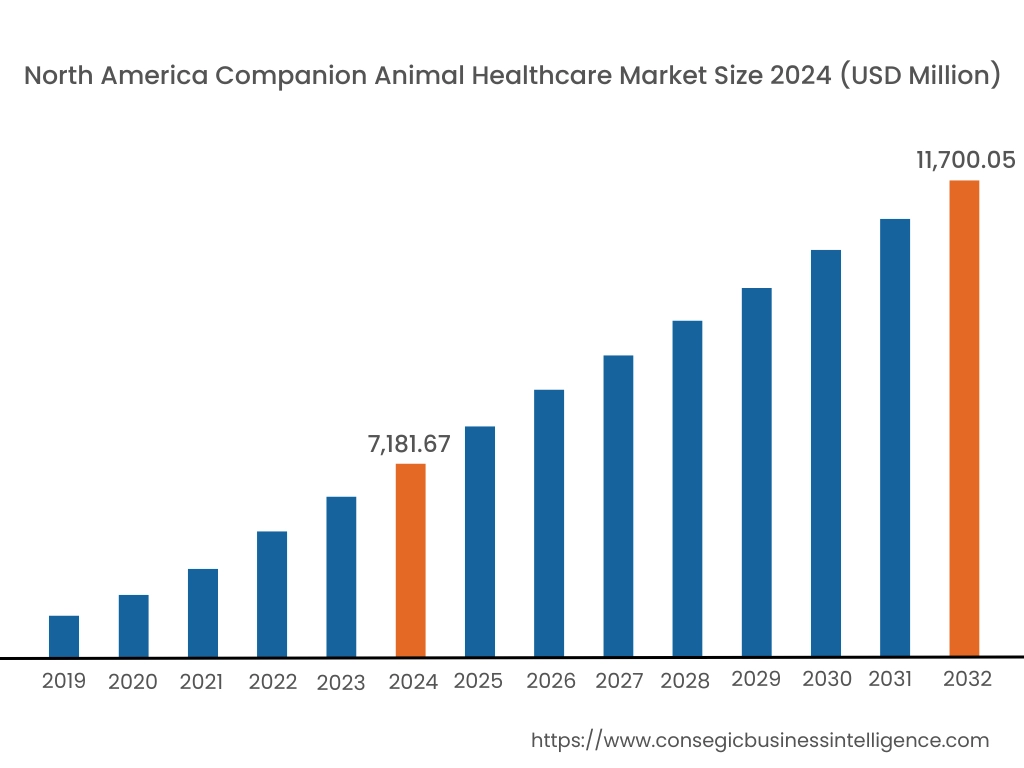
In 2024, North America was valued at USD 7,181.67 Million and is expected to reach USD 11,700.05 Million in 2032. In North America, the U.S. accounted for the highest share of 73.10% during the base year of 2024. North America dominates the companion animal healthcare market due to increasing pet ownership and spending on veterinary care. The United States leads with its advanced veterinary infrastructure and high awareness regarding pet health. Rising prevalence of chronic diseases in pets, along with access to innovative diagnostic tools and therapies, supports the market. Favorable pet insurance policies also contribute to the market’s development. Canada shows steady growth, driven by increasing veterinary services and preventive care for companion animals.

In Asia Pacific, the market is experiencing the fastest growth with a CAGR of 7.0% over the forecast period. Asia-Pacific shows significant growth potential in the companion animal healthcare market, led by countries like China, Japan, and India. Rising disposable incomes and changing cultural attitudes toward pets are increasing the companion animal healthcare market expansion. Japan has an advanced market due to a well-established veterinary sector and high pet healthcare spending. India and China are witnessing rising pet ownership and improving veterinary infrastructure. However, limited awareness about advanced treatments poses a challenge in some areas. Government initiatives and foreign investments are enhancing the market landscape.
Europe holds a prominent share in the companion animal healthcare market, supported by well-developed veterinary care systems in countries like Germany, France, and the United Kingdom. Increasing awareness about zoonotic diseases and expansion of preventive care strengthen the market. The United Kingdom leads the region in pet insurance coverage, while Germany has high companion animal healthcare market demand for advanced diagnostics and therapeutics. Expanding adoption of pets among single households is contributing to market development across Europe.
The Middle East and Africa region is gradually developing in the companion animal healthcare market. The Middle East, particularly the UAE and Saudi Arabia, is investing in advanced veterinary services due to increasing pet adoption. In Africa, South Africa is a key market with improving access to veterinary services. However, limited availability of specialized healthcare products and services in other parts of Africa poses challenges. Efforts to improve veterinary training and international collaborations are supporting companion animal healthcare market trend.
Latin America is experiencing steady companion animal healthcare market trend, led by Brazil, Mexico, and Argentina. Rising pet ownership, particularly in urban areas, boosts demand for veterinary services and preventive care. Brazil has a well-established market for veterinary pharmaceuticals and diagnostics. Increasing availability of affordable pet care products and services in Mexico and Argentina is contributing to the market. Economic constraints and unequal access to veterinary services remain challenges in rural areas of the region.
Top Key Players and Market Share Insights:
The Global Companion Animal Healthcare Market is highly competitive with major players providing products and services to the national and international markets. Key players are adopting several strategies in research and development (R&D), product innovation, and end-user launches to hold a strong position in the Global Companion Animal Healthcare Market. Key players in the Companion Animal Healthcare industry include-
- Zoetis Inc. (United States)
- Boehringer Ingelheim Animal Health (Germany)
- Idexx Laboratories, Inc. (United States)
- Dechra Pharmaceuticals PLC (United Kingdom)
- Merial (now part of Boehringer Ingelheim) (Germany)
- Merck Animal Health (United States)
- Elanco Animal Health (United States)
- Virbac S.A. (France)
- Hill's Pet Nutrition, Inc. (United States)
- Vetoquinol S.A. (France)
Recent Industry Developments :
Product launches:
- In October 2024, the S. FDA approved Elanco Animal Health's Credelio Quattro, an oral monthly chewable tablet for dogs aged eight weeks and older. This medication treats and prevents six parasitic infections, including flea and tick infestations, as well as roundworm, hookworm, tapeworm, and heartworm disease. Elanco plans to launch Credelio Quattro in the first quarter of 2025, positioning it as a potential blockbuster product in the market.
- In September 2024, the S. FDA approved Zenrelia, an oral immunosuppressant designed to control itching associated with allergic and atopic dermatitis in dogs over 12 months old. Administered once daily, Zenrelia demonstrated superior results in reducing itching and skin lesions compared to existing treatments. Elanco plans to price Zenrelia 20% lower than competitors, aiming to capture significant market share upon its release.
Partnerships & Collaborations:
- In September 2024, Royal Canin, a leader in pet health nutrition, partnered with Friendicoes SECA to launch an Animal-Assisted Intervention (AAI) project in select Indian cities. This initiative aims to utilize the therapeutic benefits of cats and dogs to enhance the social, emotional, and cognitive well-being of individuals facing challenges such as autism, dementia, depression, anxiety, and loneliness.
Mergers and Acquisitions:
- In June 2024, IVC Evidensia, backed by EQT Private Equity, acquired the Well Pet Hospital in Sligo, Ireland. This acquisition is part of IVC's ongoing expansion, having acquired 38 practices in Ireland since 2018.
- In January 2024, Ceva Santé Animale acquired Scout Bio, a biotechnology company specializing in advanced pet medicines. This acquisition provides Ceva with access to innovative therapies, including gene therapy and monoclonal antibodies targeting chronic pet illnesses.
Companion Animal Healthcare Market Report Insights :
| Report Attributes | Report Details |
| Study Timeline | 2019-2032 |
| Market Size in 2032 | USD 36,100.13 Million |
| CAGR (2025-2032) | 6.6% |
| By Animal |
|
| By Distribution Channel |
|
| By Product Type |
|
| By End-User |
|
| By Region |
|
| Key Players |
|
| North America | U.S. Canada Mexico |
| Europe | U.K. Germany France Spain Italy Russia Benelux Rest of Europe |
| APAC | China South Korea Japan India Australia ASEAN Rest of Asia-Pacific |
| Middle East and Africa | GCC Turkey South Africa Rest of MEA |
| LATAM | Brazil Argentina Chile Rest of LATAM |
| Report Coverage |
|
Key Questions Answered in the Report
How big is the Companion Animal Healthcare Market? −
In 2024, the Companion Animal Healthcare Market was USD 21,650.55 million.
What will be the potential market valuation for the Companion Animal Healthcare Market by 2032? +
In 2032, the market size of Companion Animal Healthcare Market is expected to reach USD 36,100.13 million.
What are the segments covered in the Companion Animal Healthcare Market report? +
The animal, distribution channel, product type, and end-user are the segments covered in this report.
Who are the major players in the Companion Animal Healthcare Market? +
Zoetis Inc. (United States), Boehringer Ingelheim Animal Health (Germany), Merck Animal Health (United States), Elanco Animal Health (United States), Virbac S.A. (France), Hill's Pet Nutrition, Inc. (United States), Vetoquinol S.A. (France), Idexx Laboratories, Inc. (United States), Dechra Pharmaceuticals PLC (United Kingdom), Merial (now part of Boehringer Ingelheim) (Germany) are the major players in the Companion Animal Healthcare market.
Overview
Reputation & Certifications


Our Services
- Market Intelligence & Forecasting
- Custom Research Solutions
- Market Entry Strategy
- Competitive Intelligence
- Customer Insights
- Industry Innovation Analysis
- Investment Advisory