Jump to Content
Healthcare Security Systems Market Size, Share, Growth, Trends & Top Providers (2026-2034)
Healthcare Security Systems Market Size:
According to Consegic Business Intelligence, the healthcare security systems market size was valued at USD 14148.86 Million in 2025, and it is projected to grow from USD 15648.65 Million in 2026 to USD 35036.27 Million by 2034, with a CAGR of 10.6% during the forecast period (2026-2034).
Healthcare Security Systems Market Scope & Overview:
Healthcare security encompasses a comprehensive system of safeguards implemented within medical facilities. It aims to reduce the likelihood of harmful incidents and minimize their impact by continuously evaluating and adapting security measures. Healthcare security system refers to a range of technologies and services designed to protect sensitive patient data, safeguard physical assets, and ensure the safety of both patients and staff within healthcare facilities. These systems include a range of hardware, software, and services employed in medical facilities such as hospitals, clinics, long-term care facilities, home healthcare, and others. The healthcare security systems market is experiencing significant growth, driven by factors such as increasing cyberattacks, rising privacy and security concerns, and the widespread adoption of IoT devices in healthcare settings.

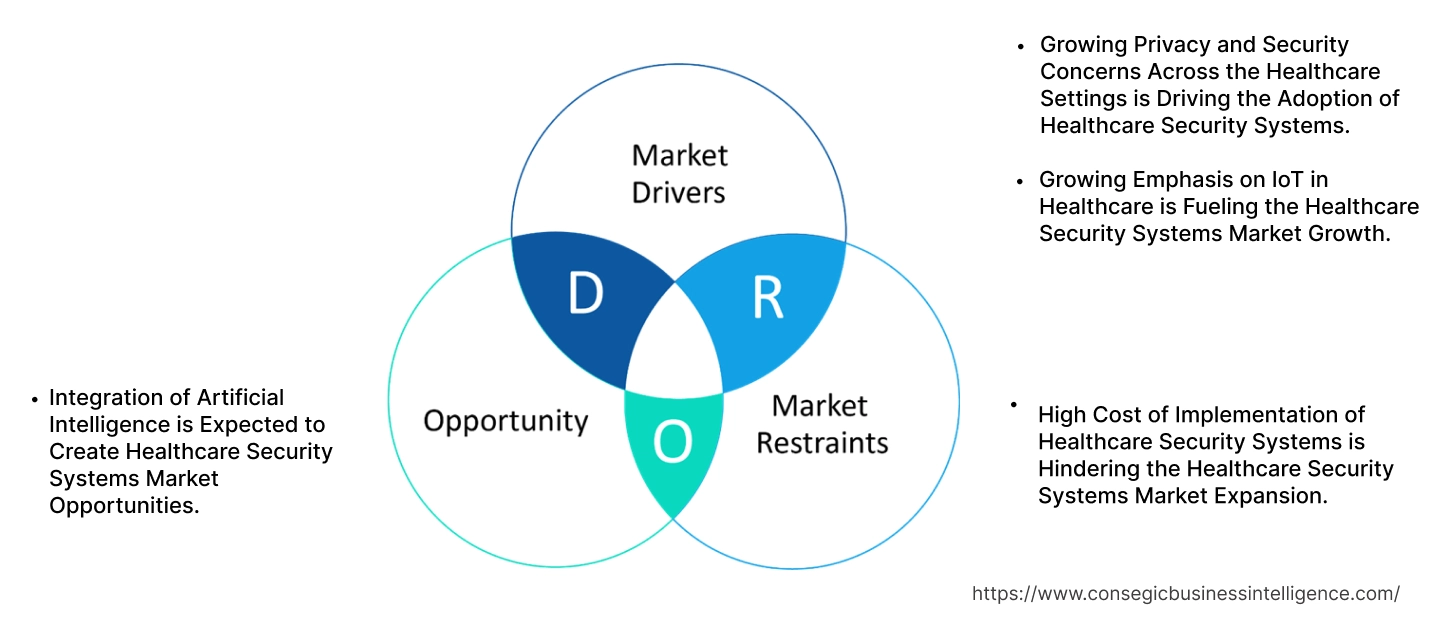
Healthcare Security Systems Market Dynamics - (DRO) :
Healthcare Security Systems Market Size Growth Factors:
Growing Privacy and Security Concerns Across the Healthcare Settings is Driving the Adoption of Healthcare Security Systems.
Growing privacy and security concerns across healthcare settings are significantly driving the demand for robust security systems. The healthcare industry handles a large number of sensitive patient data, including medical records, financial information, and personal details. This data is highly valuable to both legitimate healthcare providers and cybercriminals. As a result, the need to protect this sensitive information has become paramount. Additionally, the healthcare industry is a prime target for cybercriminals due to the valuable and sensitive nature of patient data. This has led to a growing concern over the privacy and security of patient data.
- For instance, according to the data published by the White House in June 2024, cyberattacks against the American healthcare system rose 128% from 2022 to 2023. In February and March of 2024 alone, the United States experienced one of the most significant healthcare-related cyberattacks to date.
In response to these growing concerns, healthcare organizations are investing heavily in security systems to protect patient data. These systems include access control systems to restrict access to sensitive areas and patient records, video surveillance systems to monitor activities within healthcare facilities and deter crime, intrusion detection systems to detect and prevent unauthorized access to critical systems and data, and robust cybersecurity solutions to protect networks, devices, and data from cyber threats such as ransomware and phishing attacks. In conclusion, the rising threat of cyberattacks and the increasing emphasis on patient data privacy are driving the rapid adoption of security systems across healthcare facilities.
Growing Emphasis on IoT in Healthcare is Fueling the Market Growth.
IoT refers to the collective network of connected devices and the technology that facilitates communication between devices and the cloud, as well as between the devices themselves. The adoption of IoT in healthcare is primarily fueled by the rise in connected medical devices, smart sensors, and intelligent monitoring systems that enable real-time health monitoring & data access resulting in improved patient health, experience & enhanced healthcare operations. The proliferation of IoT devices in healthcare, such as wearable medical devices and connected medical equipment, introduces new security challenges as devices are highly vulnerable to cyberattacks, potentially compromising patient safety and data privacy.
- For instance, according to the report published by T‑Mobile USA, Inc. in April 2022, 3.2 million IoMT (Internet of Medical Things) devices were deployed globally as of 2021. This necessitates robust security measures to protect patient data and ensure the safe and secure operation of these interconnected devices.
In conclusion, the integration of IoT in healthcare positively impacts the need for advanced security solutions to safeguard patient data and ensure the safe and effective operation of connected medical devices.
Healthcare Security Systems Market Restraining Factors:
High Cost of Implementation of Healthcare Security Systems is Hindering the Market Expansion.
The high cost associated with the implementation of comprehensive healthcare security systems poses a barrier to market expansion. The initial investment required for procuring and installing essential hardware components is quite considerable. This includes items such as high-definition surveillance cameras, sophisticated access control systems, advanced intrusion detection systems, and various other security devices that collectively ensure a safe environment for patients and staff.
In addition to the substantial upfront costs, healthcare facilities must also contend with ongoing financial commitments related to the maintenance and upgrading of these security systems. These costs encompass software licenses required for system operation, maintenance contracts to ensure the systems function optimally, and the expenses tied to personnel training, which is crucial for effective system utilization. For smaller healthcare facilities, which often operate under tighter budget constraints, these financial burdens are particularly daunting. The lack of sufficient funding limits their capacity to invest in advanced and robust security measures, leaving them vulnerable to potential security threats. Consequently, this financial limitation significantly impedes the adoption rate of innovative security technologies within the healthcare sector. Such a slowdown ultimately stifles the overall healthcare security systems industry growth.
Healthcare Security Systems Market Opportunities :
Integration of Artificial Intelligence is Expected to Create Market Opportunities.
The integration of Artificial Intelligence (AI) within healthcare security systems is poised to create significant market opportunities. AI-powered technologies, such as machine learning and computer vision, are enhancing various aspects of healthcare security by analyzing vast amounts of surveillance footage in real time, identifying and flagging potential threats, such as suspicious activity, unauthorized personnel, or potential violence. This enables proactive intervention and enhances situational awareness, improving overall security within healthcare facilities.
The integration of AI is not only enhancing the effectiveness of existing security measures but also creating new avenues for innovation, such as predictive analytics for security risk assessment and the development of more intelligent and responsive security systems. Additionally, AI-powered solutions offer enhanced threat detection and response capabilities, enabling proactive identification and mitigation of cyberattacks. By analyzing vast amounts of data in real-time, AI algorithms identify anomalies, detect suspicious activity, and predict potential threats with greater accuracy and speed than traditional methods, Manufacturers are developing novel solutions that offer efficient security solutions in healthcare systems.
- For instance, in November 2024, Health Catalyst, Inc. developed an AI-powered version of its BluePrint Protect platform, acquired from Intraprise Health, LLC. This enhancement leverages artificial intelligence to streamline and enhance the platform's ability to screen and identify cybersecurity risks posed by third-party vendors. By automating key aspects of the risk assessment process, the AI-powered BluePrint Protect enables healthcare organizations to more efficiently evaluate vendor security information, identify and prioritize critical risks, and ultimately strengthen their overall cybersecurity posture.
Thus, this rapid advancement in AI-powered security solutions is expected to drive significant healthcare security systems market expansion in the coming years.
Healthcare Security Systems Market Segmental Analysis :
Component Insights :
Based on component, the market is categorized into hardware, software, and services.
Trends in the Component:
- Hardware components like cameras and sensors are increasingly incorporating Artificial intelligence and the Internet of Things capabilities that enable real-time data exchange and remote monitoring of security systems.
- Software solutions are leveraging predictive analytics and machine learning algorithms to anticipate threats and proactively mitigate risks.
The hardware segment accounted for the largest market share in 2024.
- The hardware segment is further categorized into access control systems, video surveillance systems, intrusion detection systems, and others.
- Healthcare security relies on a diverse range of hardware components to deliver its transformative capabilities in healthcare applications.
- Access control systems restrict entry using card readers, biometric scanners, and electronic locks, enhancing patient safety and compliance.
- Video surveillance systems utilize cameras with video analytics for monitoring, deterring crime, and improving incident response.
- Intrusion detection systems, employ sensors and alarms, detect unauthorized entry, protect valuable assets, and enable early threat detection.
- Increasing demand for robust and reliable access control solutions is a primary factor supporting the segment trajectory. Additionally, as healthcare facilities seek to enhance their perimeter security and improve overall situational awareness demand for hardware solutions in healthcare security is increasing.
- Overall, as per analysis, the critical importance of consistent and rigorous safety and security protocols in healthcare settings to protect patients, healthcare personnel, and all those visiting the hospitals significantly drives the segment trajectory.
The software segment is expected to grow at the fastest CAGR over the forecast period.
- The software segment is further categorized as security information and event management software, video management software, access control management software, and others.
- Security Information and Event Management software plays a critical role by collecting and analyzing security data from various sources to proactively detect and respond to cyber threats. This is becoming increasingly important as cyberattacks targeting healthcare organizations rise.
- Video Management Software (VMS) is another key player, enabling the management of video surveillance systems, recording footage, and utilizing advanced features like facial recognition. The adoption of VMS is driven by the need for improved investigation and security monitoring, along with the growing adoption of AI-powered video analytics.
- Additionally, Access Control Management Software strengthens security by managing access control systems, including user management and access rights. Adoption of these software solutions is expected to grow as healthcare facilities prioritize better access control and enhanced security.
- Thus, the software segment is anticipated to experience a significant trajectory as healthcare organizations prioritize comprehensive security measures to safeguard their data and systems.
- For instance, in May 2024, the HHS agency announced the launch of a program to automate cybersecurity at hospitals. The program has invested more than USD 50 million to create a software suite that automatically finds potential vulnerabilities that hackers could exploit and deploy fixes.
- In conclusion, as per analysis, the healthcare security software market is poised for a significant trajectory driven by increasing cyber threats and the need for proactive security measures.
End User Analysis :
Based on end user, the market is categorized into hospitals, clinics, long-term care facilities, home healthcare, and others.
Trends in End User:
- Hospitals and clinics are increasingly adopting cloud-based security solutions, offering flexibility, scalability, and cost-effectiveness. This trend allows them to access and manage security systems remotely and easily integrate with other cloud-based services.
- Home healthcare providers are integrating security measures with telehealth platforms to ensure secure and reliable communication with patients and remote monitoring of patient health data.
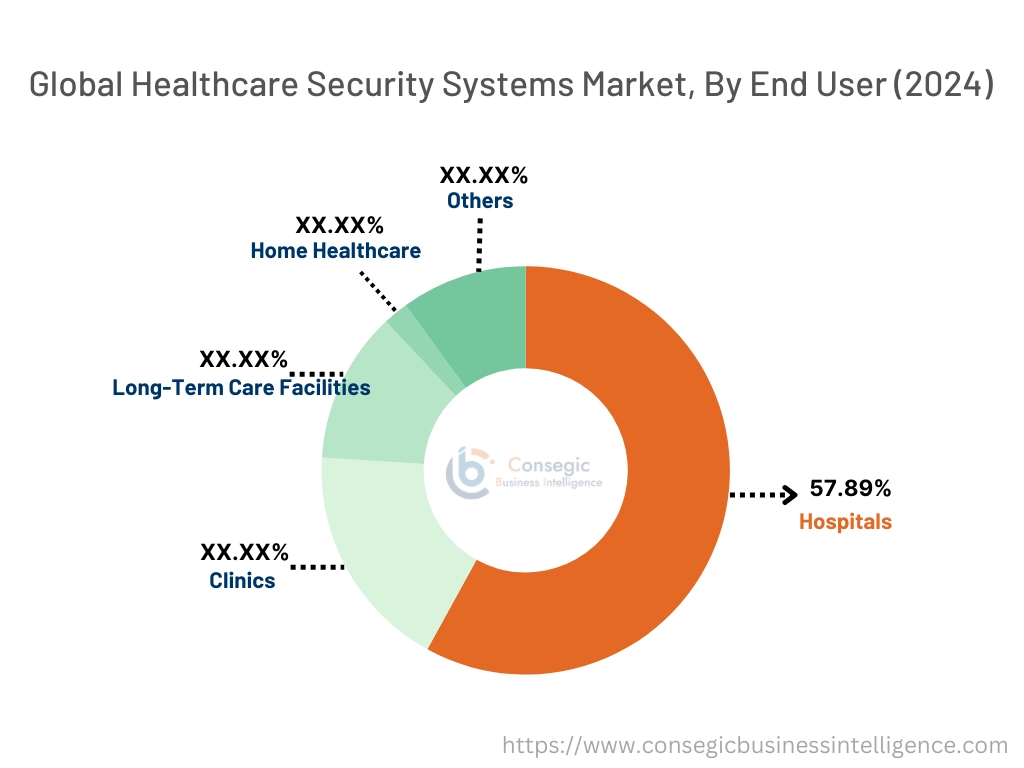
The hospitals segment accounted for the largest market share of 57.89% in the year 2024.
- Security systems serve a crucial role in hospital settings driven by the critical need to safeguard sensitive patient data and ensure operational continuity.
- Hospitals handle vast amounts of sensitive patient data, including medical records, financial information, and personal details. Robust security measures are essential to comply with regulations like HIPAA (Health Insurance Portability and Accountability Act) and maintain patient trust.
- Hospitals are prime targets for cyberattacks due to the valuable data they possess. These attacks pose the threat of disrupting operations, compromising patient care, and leading to significant financial losses.
- Additionally, ensuring uninterrupted operations is crucial in healthcare. Security systems help maintain operational continuity by preventing cyberattacks that disrupt access to electronic health records, medical devices, and other critical systems.
- Moreover, hospitals face stringent regulatory requirements related to data security and privacy. Implementing robust security measures is essential to comply with these regulations and avoid hefty fines.
- For instance, In 2024, Corsight AI and ISEG have partnered to significantly enhance security measures at Monterrey Hospitals in Mexico. This collaboration leverages Corsight AI's advanced Facial Intelligence technology, integrated into ISEG's security infrastructure, to bolster safety and security within the hospital environment.
- Overall, as per analysis, security systems are vital in hospitals to safeguard sensitive patient data, ensure operational continuity, comply with regulations, and mitigate the risk of cyberattacks.
The clinics segment is expected to grow at the fastest CAGR over the forecast period.
- A clinic is a health facility that provides outpatient care, such as routine checkups, diagnostic tests, and treatment. Clinics are a significant and growing segment within the healthcare security systems market analysis due to the increasing number of outpatient procedures and the rising demand for accessible healthcare.
- Additionally, clinics are increasingly adopting electronic health records and other digital technologies, which require robust cybersecurity measures.
- They are prioritizing patient safety and satisfaction, leading to increased investment in security measures to ensure a safe and welcoming environment.
- Moreover, the rise of specialized clinics, such as those focused on oncology, cardiology, and dermatology, is driving demand for specialized security solutions.
- Overall, these factors and trends are driving the demand for robust security measures to protect patient data, ensure a safe environment, and meet the evolving needs of modern healthcare.
Regional Insights:
The regional segment includes North America, Europe, Asia Pacific, the Middle East and Africa, and Latin America.
Healthcare Security Systems Market Insights
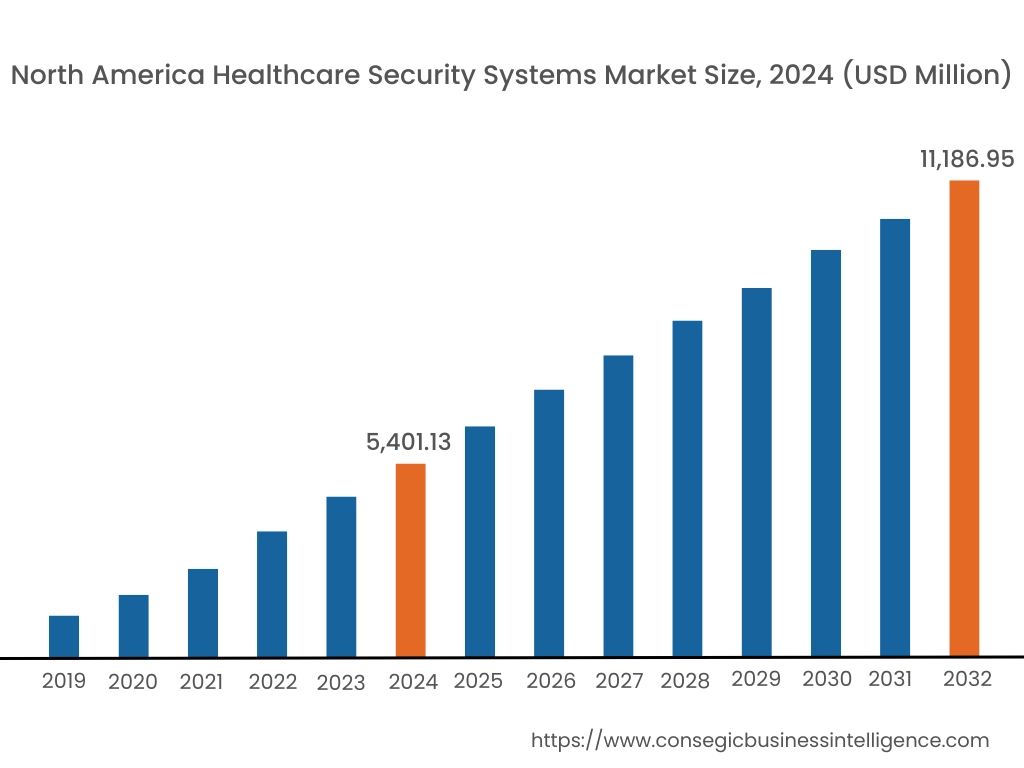
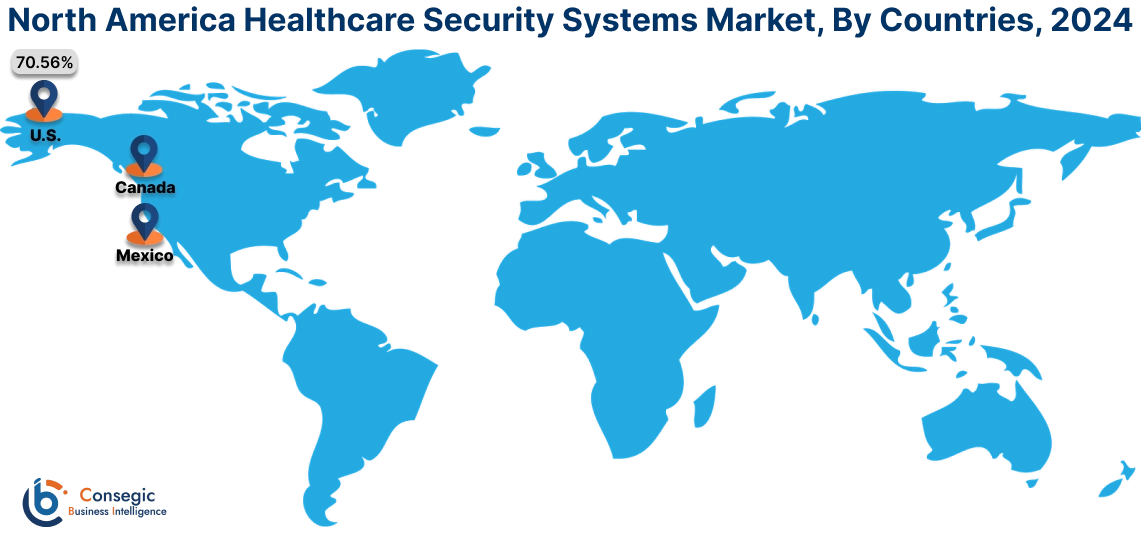
In 2024, North America accounted for the highest market share at 42.22% and was valued at USD 5,401.13 Million and is expected to reach USD 11,186.95 Million in 2032. In North America, the U.S. accounted for the highest market share of 70.56% during the base year of 2024. North America dominates the global healthcare security systems industry, primarily due to the well-established healthcare infrastructure across the region. North America has stringent data privacy regulations like HIPAA (Health Insurance Portability and Accountability Act) in the US, which mandate robust security measures to protect sensitive patient data. This regulatory compliance drives the adoption of advanced security technologies. The healthcare sector in North America is a frequent target for cyberattacks, including ransomware, phishing, and data breaches. This heightened threat environment necessitates robust cybersecurity measures to protect patient data and ensure operational continuity driving the demand for healthcare security systems.
- For instance, in June 2024, Microsoft launched a new cybersecurity program to assist independent critical access hospitals and rural emergency hospitals in enhancing their defenses. This initiative offers nonprofit pricing and discounts on Microsoft's security products, tailored specifically for smaller organizations, with discounts reaching up to 75%. Furthermore, for larger rural hospitals already utilizing eligible Microsoft solutions, the company is providing its most advanced security suite free of charge for one year. To further support these hospitals, Microsoft will also provide Windows 10 security updates at no additional cost for at least one year. In addition to these offerings, the program includes free cybersecurity assessments conducted by Microsoft and its trusted partners to evaluate risks and identify security gaps.
Additionally, countries across the region are at the forefront of technological advancements in healthcare security, with a strong emphasis on research and development of innovative solutions like AI-powered video analytics, cloud-based security, and IoT security. The combination of the aforementioned factors and trends is driving a substantial trajectory in the Asia Pacific healthcare security systems industry.
Asia-Pacific Market Insights
Asia Pacific is experiencing the fastest growth with a CAGR of 12.6% over the forecast period. The healthcare security systems market trend across the region is attributed to factors such as growth due to increasing healthcare expenditure, rising healthcare infrastructure development, and growing adoption of healthcare technology. Many countries in the Asia-Pacific region are experiencing rapid economic growth, leading to increased healthcare spending and infrastructure development. This creates a strong demand for advanced security solutions to protect these investments. Additionally, governments across the region are investing heavily in improving healthcare infrastructure, including hospitals, clinics, and telemedicine services. This increased spending creates a significant demand for healthcare security systems to protect these facilities and the data they handle. Governments in many countries in the region are implementing initiatives to improve healthcare security and data privacy. This includes the development of cybersecurity frameworks, regulations, and awareness programs, which are driving the adoption of security solutions further boosting the market share for healthcare security systems industry.
Europe Healthcare Security Systems Market Insights
Europe presents a significant contribution to the healthcare security systems market analysis. Europe has stringent data privacy regulations like the General Data Protection Regulation (GDPR), which mandates robust security measures to protect patient data and ensure compliance. This regulatory framework significantly drives the adoption of security solutions. Additionally, European healthcare systems prioritize patient-centered care, which includes ensuring patient safety and privacy. This focus drives the implementation of security measures to protect patients from harm and maintain trust. Moreover, the region faces a growing threat landscape with increasing cyberattacks targeting healthcare organizations. This necessitates robust cybersecurity measures to protect sensitive patient data and ensure operational continuity. Furthermore, Europe is at the forefront of technological advancements in healthcare, with a strong focus on innovation and the adoption of new technologies, including AI-powered security solutions, cloud-based security, and IoT security.
MEA Market Inisghts
The Middle East and Africa (MEA) region is witnessing notable market demand characterized by significant potential. The growing healthcare sector in the Middle East is playing a pivotal role in demand. Government investments are fueling the development of healthcare infrastructure including hospitals and clinics, leading to increased demand for security solutions to protect these facilities and assets. Additionally, the growing adoption of advanced medical devices, and cybersecurity awareness among healthcare providers is supporting the adoption of security solutions to the unique needs and challenges of the region. Collectively, as per analysis, these factors create a favorable environment for the healthcare security systems market opportunities across the region.
LMAEA Market Inisghts
Latin America is an emerging region in the healthcare security systems industry share, with significant innovation potential. Key factors driving this growth include increasing healthcare spending, the rise of cyber threats targeting healthcare organizations, government initiatives to improve healthcare security and data privacy, and ongoing investments in healthcare infrastructure. Key trends within this market include the need to improve cybersecurity awareness among healthcare providers, the implementation of basic security measures such as access control and video surveillance, and the crucial adaptation to the evolving threat landscape. While the market is still developing, it presents significant opportunities for growth as healthcare organizations in the region prioritize security and data protection.
Top Companies in the Healthcare Security Systems Industry:
The Healthcare Security Systems market is highly competitive with major players providing precise products to the national and international markets. Key players are adopting several strategies in research and development (R&D) and product innovation to hold a strong position in the global market. Key players in the Healthcare Security Systems industry include-
- Securitas Technology (U.S.)
- Motorola Solutions, Inc. (U.S.)
- Tyco Security Products (Ireland)
- CriticalArc (Australia)
- BTI Communications Group, Ltd. (U.S.)
- Genetec Inc. (Canada)
- Sonitrol (U.S.)
- Inteconnex (U.S.)
- Honeywell International Inc. (U.S.)
- SMG (U.S.)
Recent Industry Developments :
Product Launch:
- In November 2024, Health Catalyst, Inc developed AI-powered version of its BluePrint Protect platform, acquired from Intraprise Health, LLC. This enhancement leverages artificial intelligence to streamline and enhance the platform's ability to screen and identify cybersecurity risks posed by third-party vendors. By automating key aspects of the risk assessment process, the AI-powered BluePrint Protect enables healthcare organizations to more efficiently evaluate vendor security information, identify and prioritize critical risks, and ultimately strengthen their overall cybersecurity posture.
Healthcare Security Systems Market Report Insights :
| Report Attributes | Report Details |
| Study Timeline | 2021-2034 |
| Market Size in 2032 | USD 35,036.27 Million |
| CAGR (2026-2034) | 10.6% |
| By Component |
|
| By End-User |
|
| By Region |
|
| Key Players |
|
| North America | U.S. Canada Mexico |
| Europe | U.K. Germany France Spain Italy Russia Benelux Rest of Europe |
| APAC | China South Korea Japan India Australia ASEAN Rest of Asia-Pacific |
| Middle East and Africa | GCC Turkey South Africa Rest of MEA |
| LATAM | Brazil Argentina Chile Rest of LATAM |
| Report Coverage |
|
Key Questions Answered in the Report
How big is the Healthcare Security Systems market? −
According to Consegic Business Intelligence, the healthcare security systems market size was valued at USD 14148.86 Million in 2025, and it is projected to grow from USD 15648.65 Million in 2026 to USD 35036.27 Million by 2034, with a CAGR of 10.6% during the forecast period (2026-2034).
Which is the fastest-growing region in the Healthcare Security Systems market? +
Asia Pacific is the fastest-growing region in the Healthcare Security Systems market.
What specific segmentation details are covered in the Healthcare Security Systems market? +
Component and End User segmentation details are covered in the Healthcare Security Systems market.
Who are the major players in the Healthcare Security Systems market? +
Securitas Technology (U.S.), Motorola Solutions, Inc. (U.S.), and Genetec Inc. (Canada) are some of the major players in the market.
Overview
Reputation & Certifications


Our Services
- Market Intelligence & Forecasting
- Custom Research Solutions
- Market Entry Strategy
- Competitive Intelligence
- Customer Insights
- Industry Innovation Analysis
- Investment Advisory