Jump to Content
Hammertoe Market - Size, Share, Industry Trends, and Forecasts (2025-2032)
Hammertoe Market Size:
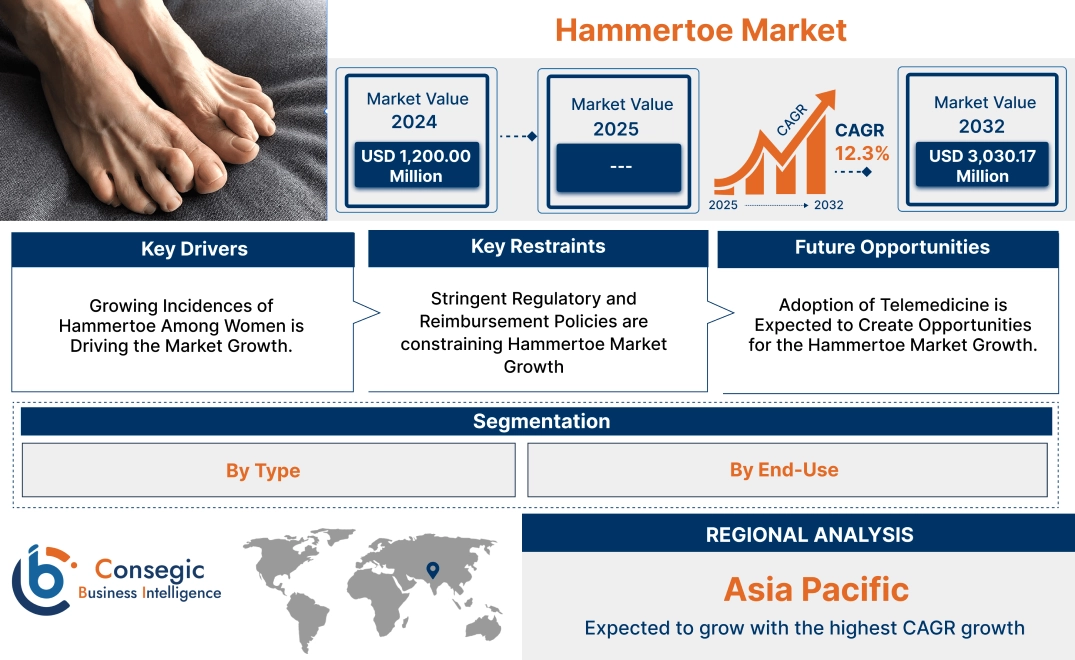
Hammertoe Market size is growing with a CAGR of 12.3% during the forecast period (2025-2032), and the market is projected to be valued at USD 3,030.17 Million by 2032 from USD 1,200.00 Million in 2024.
Hammertoe Market Scope & Overview:
A hammertoe is a deformity of the second, third, or fourth toes. In this condition, the toe is bent at the middle joint which resembles a hammer. This occurs due to an imbalance in the muscles and tendons that control toe movement. When the toe remains bent for extended periods it puts pressure on the toe tendons and joints, which causes muscles to shorten and tighten. Common symptoms of this deformity include toe pain, corns and calluses on the affected joints, swelling and redness, a burning sensation, and even sores. This condition is diagnosed primarily by physical examination and X-ray. Treatment involves both surgical and non-surgical approaches. Non-surgical approaches include footwear modifications, physical therapy, and medications. When conservative measures fail, surgical options such as arthroplasty, arthrodesis, phalangectomy, and osteotomy are considered to alleviate pain and improve toes' function.
Hammertoe Market Dynamics - (DRO) :
Key Drivers:
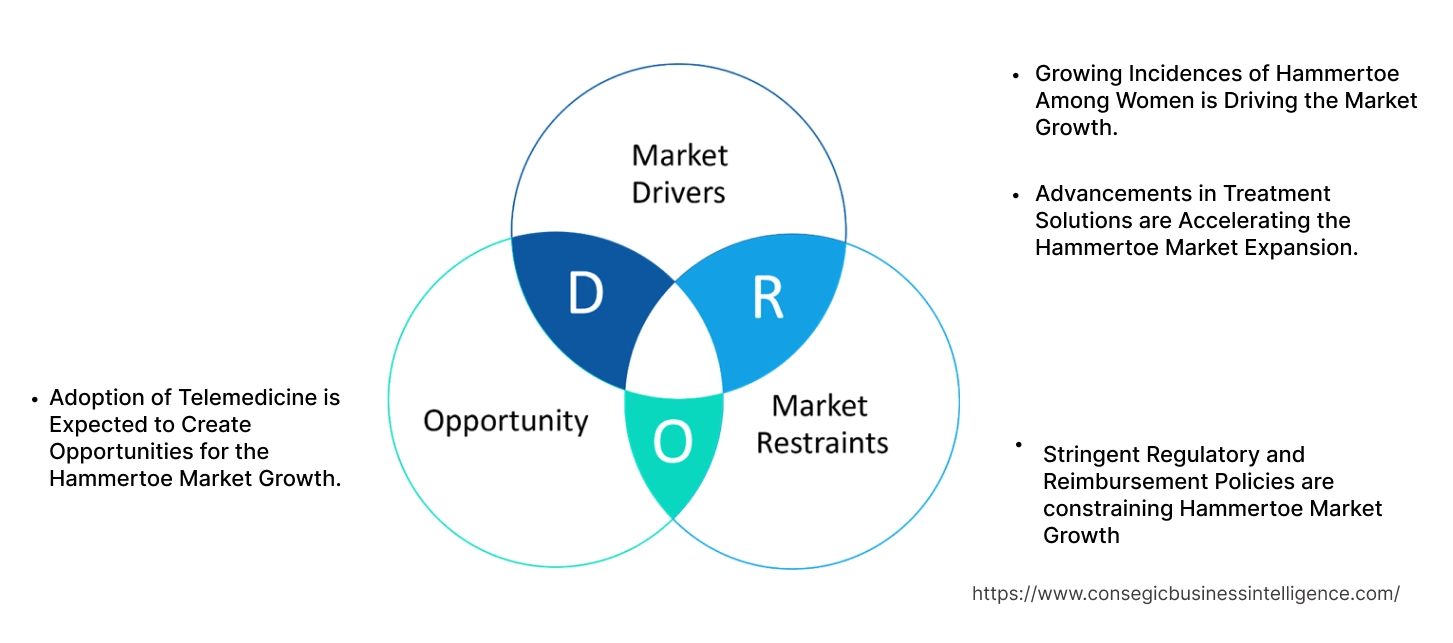
Growing Incidences of Hammertoe Among Women is Driving the Market Growth.
Women are more prone to develop hammertoe. This disease exhibits a higher incidence among the elderly population primarily attributed to the frequent wearing of tight, high-heeled shoes which put pressure on the toes, causing the deformity to develop. This creates a chronic, sustained imbalance between flexion and extension of the toes. This female population translates into a larger patient status for products such as diagnostic tests and treatment solutions.
- For instance, according to the data published on NCBI, as per a research study conducted for prevalence estimation of common forefoot deformities, it is found that hammertoe accounts for the prevalence of 8.9% among the population in Turkey. Females reported a higher rate of this deformity than males.
Overall, a higher incidence of this deformity among women, particularly due to factors that create a significant patient status, driving demand for diagnostic tests, treatment solutions, and ultimately, the hammertoe market expansion.
Advancements in Treatment Solutions are Accelerating the Hammertoe Market Expansion.
Technological advancements in the treatment of hammertoe are significant factors supporting the market. Advancements in the treatment such as the adoption of minimally invasive surgery, the development of fixation systems, and innovative implants are significantly improving patient outcomes. The development of innovative implants, such as biodegradable implants and 3D-printed implants, offers improved biocompatibility, reduced risk of infection, and enhanced functional outcomes for patients. Additionally, the development of minimally invasive surgical techniques, such as percutaneous tenotomy and flexor tendon lengthening, is transforming treatment by offering reduced pain, faster recovery times, and smaller incisions compared to traditional open surgery.
- For instance, in September 2023, Forma Medical, a medical device innovator, announced the launch of OptimalHT, the world's first instrumented Minimally Invasive Surgery (MIS) Hammertoe Arthrodesis procedure, with over 50 successful hammertoe deformities treated. This innovative approach, designed for less invasive hammertoe correction, offers several potential advantages. OptimalHT utilizes unique instrumentation to guide the procedure, aiming to provide consistent and predictable outcomes with minimal incisions. This approach translates to faster recovery times, reduced patient discomfort, and lower healthcare costs compared to traditional open surgical techniques.
Overall, technological advancements, including minimally invasive techniques and innovative implants are driving significant growth in the hammertoe market share by improving patient outcomes and increasing treatment efficiency.
Key Restraints:
Stringent Regulatory and Reimbursement Policies are constraining Hammertoe Market Growth
The market for hammertoe is subject to stringent regulations aimed at ensuring patient safety. The unique nature of the condition significant hurdle to the development of medical devices. Additionally, the regulations present significant constraints for medical device companies. One major factor is the lengthy and complex process of device development. Clinical trials are rigorous and time-consuming, requiring substantial investment and resources. This, coupled with stringent regulatory hurdles, delays the approval process, hindering the timely introduction of new treatment solutions.
Furthermore, post-market survey and safety monitoring requirements add to the regulatory burden. Companies must continuously monitor the safety and efficacy of their products, which becomes costly and resource-intensive, especially for smaller players. The rigorous regulatory environment also hinders innovation within the industry, as companies are hesitant to invest in risky or unconventional approaches due to the high cost of failure. Overall, the regulations delay product approvals, increase costs, and limit profitability, especially for smaller companies further hampering the hammertoe market growth.
Future Opportunities :
Adoption of Telemedicine is Expected to Create Opportunities for the Hammertoe Market Growth.
Telemedicine is the provision of health care services by all medical practitioners employing information and communications technology for the exchange of reliable information for the diagnosis, treatment, and prevention of diseases and injuries. It serves as the process of distributing medical care to patients across a long distance. The adoption of telemedicine offers several key advantages in the context of hammertoe diagnosis and treatment prescriptions.
Telemedicine improves access to healthcare, especially for individuals in remote areas or those with limited mobility. This increased access supports earlier diagnosis and treatment of this condition. Additionally, it allows healthcare providers to remotely assess patients, discuss symptoms, and provide initial treatment recommendations. This is particularly beneficial for conditions like hammertoe, which often require ongoing monitoring and management.
- For instance, in June 2024, Apollo Telehealth announced the launch of a telemedicine-driven primary health center in Borobeka, Manipur, India. This initiative aims to improve healthcare access for communities offering specialized teleconsultations for several fields including orthopedics for hammertoe.
Overall, by improving access to care, facilitating early detection, and enhancing patient convenience, the adoption of telemedicine is poised to play a significant role in the market in the upcoming years.
Hammertoe Market Segmental Analysis :
By Type:
Based on type, the market is bifurcated into diagnosis and treatment.
Trends in the Type:
- Development of artificial intelligence-powered image analysis tools to assist in the detection and classification of severity of this deformity.
- Development of portable and non-invasive diagnostic devices for rapid assessment of deformity in clinics and physician offices.
- Increased use of telemedicine platforms for remote consultations and diagnosis, improving access to care in underserved areas.
- Development of new minimally invasive surgical tools and techniques for improved precision and accuracy.
The treatment segment accounted for the largest market share in 2024.
The treatment segment includes non-surgical and surgical.
- Non-surgical management primarily focuses on footwear modifications, such as avoiding tight, narrow, and high-heeled shoes and opting for those with a wide toe box and adequate length. Additionally, exercises, including toe stretches and strengthening exercises such as towel curls, improve flexibility and muscle balance. Over-the-counter remedies, such as toe separators and cushions, provide pain relief.
- Surgical intervention is typically considered when non-surgical approaches fail to alleviate symptoms or if the toe joint has become rigid. Surgical options include tendon lengthening, suitable for flexible toe joints, which involves lengthening the tendons contributing to the toe's abnormal bending. Tendon transfer, also applicable for flexible toe joints, involves transferring tendons to improve toe alignment. Arthrodesis is recommended for rigid toe joints and combines tendon lengthening with the removal of a small bone fragment. Fixation with external wires, pins, or internal plates is then used to stabilize the fused joint. Moreover, the development of innovative products for the management of hammertoe is driving the segment trajectory.
- For instance, in May 2022, Paragon 28, Inc., a prominent medical device company specializing in foot and ankle orthopedics, announced the expansion of its hammertoe and soft-tissue portfolio with the introduction of its TenoTac 2.0 Soft Tissue Fixation System. The TenoTac 2.0 utilizes a titanium threaded implant designed to enhance soft tissue capture, streamline tensioning procedures, and ensure improved fit to the bony surface. This leads to better outcomes for patients with this deformity.
- Overall, as per market analysis, non-surgical management and surgical interventions coupled with the development of innovative products drive advancements in the treatment of this condition.
The diagnosis segment is expected to grow at the fastest CAGR over the forecast period.
- The diagnosis segment includes physical examination, imaging, and others.
- The diagnosis typically involves a comprehensive evaluation. This process begins with a thorough physical examination, which includes visual inspection to identify the affected toes assess the severity of the bend, and check for associated conditions such as corns, calluses, or redness. If necessary, imaging studies such as X-rays are performed to further assess the severity of the deformity, including the degree of bone misalignment, the presence of bone spurs or arthritis, and to rule out other conditions that mimic this deformity.
- The growth of the diagnosis segment within the market is driven by several key factors. Increased public awareness about foot health and the impact of conditions like hammertoe is encouraging earlier medical attention, enabling prompt diagnosis, and potentially preventing the condition from worsening. Technological advancements, such as improved imaging techniques and the emergence of point-of-care diagnostic tools, are enhancing diagnostic accuracy and accessibility.
- Moreover, the increasing adoption of telemedicine platforms is improving access to diagnostic services, particularly in underserved areas. These factors contribute to a significant increase in the demand for diagnostic services related to the condition, driving the trajectory of this crucial segment within the overall hammertoe market demand.
By End User:
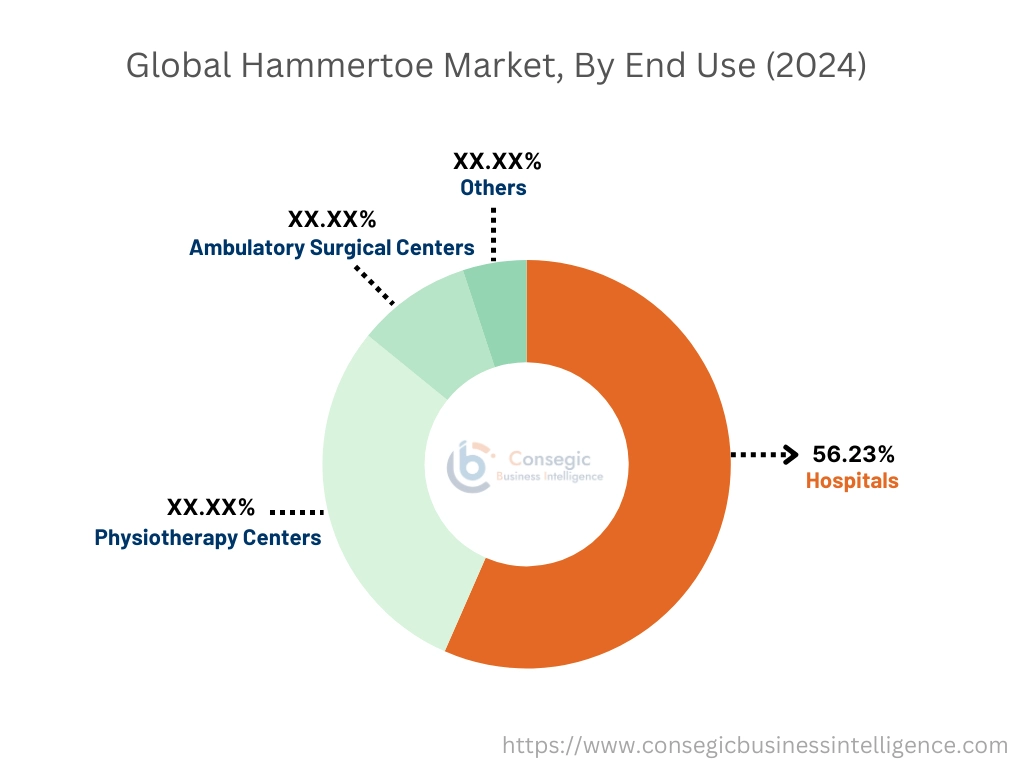
Based on end use, the market is categorized into hospitals, physiotherapy centers, ambulatory surgical centers, and others.
Trends in the End Use:
- Hospitals are increasingly adopting minimally invasive surgical techniques for treatment, leading to shorter hospital stays and faster recovery times for patients.
- The rise of ambulatory surgical centers has facilitated a shift towards outpatient procedures for many surgeries, reducing healthcare costs and improving patient convenience.
The hospitals segment accounted for the largest market share of 56.23% in the year 2024.
- Hospitals currently dominate the market among end-users. This dominance stems from their comprehensive resources, including advanced diagnostic equipment, sophisticated surgical suites, and access to a multidisciplinary team of specialists.
- Hospitals are well-equipped to manage complex cases, such as severe deformities and patients with comorbidities. Furthermore, hospitals often have access to the latest surgical techniques and technologies, leading to improved patient outcomes.
- Many hospitals are also actively involved in research and development related to the treatment of this deformity, contributing to advancements in diagnosis and surgical techniques. Additionally, the development of new departments within hospitals focused on orthopedic conditions supports the segment trajectory.
- For instance, in November 2023, the Welsh Government agreed on funding of up to USD 31.89 million for a new Orthopaedic hub at Llandudno Hospital to help reduce orthopedic waiting times. The new hub supports transforming elective orthopaedic services and provides benefits for patients, staff, and the wider North Wales community, by delivering planned 1,900 procedures a year. The Orthopaedic Hub benefits hammertoe patients by reducing waiting times, improving access to care, and streamlining referral processes within the health board.
- Thus, as per hammertoe market analysis, hospitals remain a dominant force due to their comprehensive resources, expertise in managing complex cases, and focus on research and innovation.
The ambulatory surgical center segment is expected to grow at the fastest CAGR over the forecast period.
- Ambulatory surgery centers, or ASCs, are modern healthcare facilities focused on providing same-day surgical care, including diagnostic and preventive procedures.
- Several factors contribute to this growth, including a strong shift towards outpatient procedures driven by lower costs, shorter recovery times, and improved patient experiences compared to hospital settings.
- Advancements in surgical techniques, anesthesia, and pain management have made many hammertoe surgeries suitable for the outpatient environment, particularly minimally invasive procedures.
- Furthermore, the increasing demand for convenient and cost-effective healthcare options among patients is driving a preference for ASCs.
- Overall, as per market analysis, the aforementioned factors collectively position the ambulatory surgical center segment for a substantial trajectory within the hammertoe market share, making it a significant player in the evolving landscape of market trends.
Regional Analysis:
The regional segment includes North America, Europe, Asia Pacific, the Middle East and Africa, and Latin America.
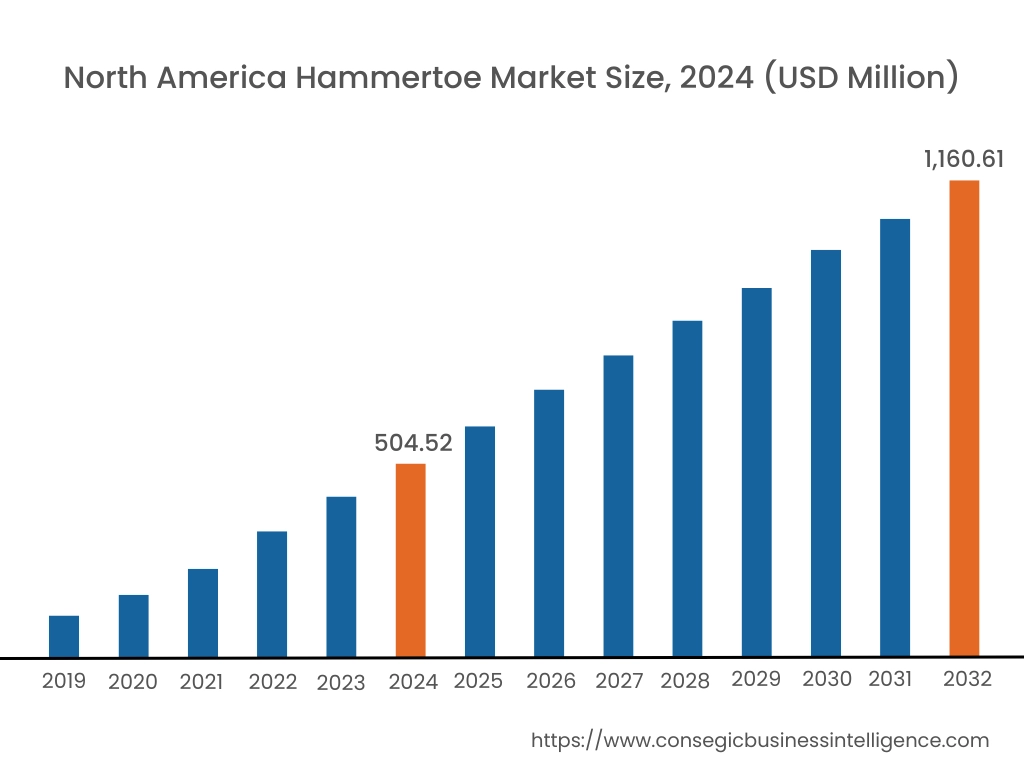
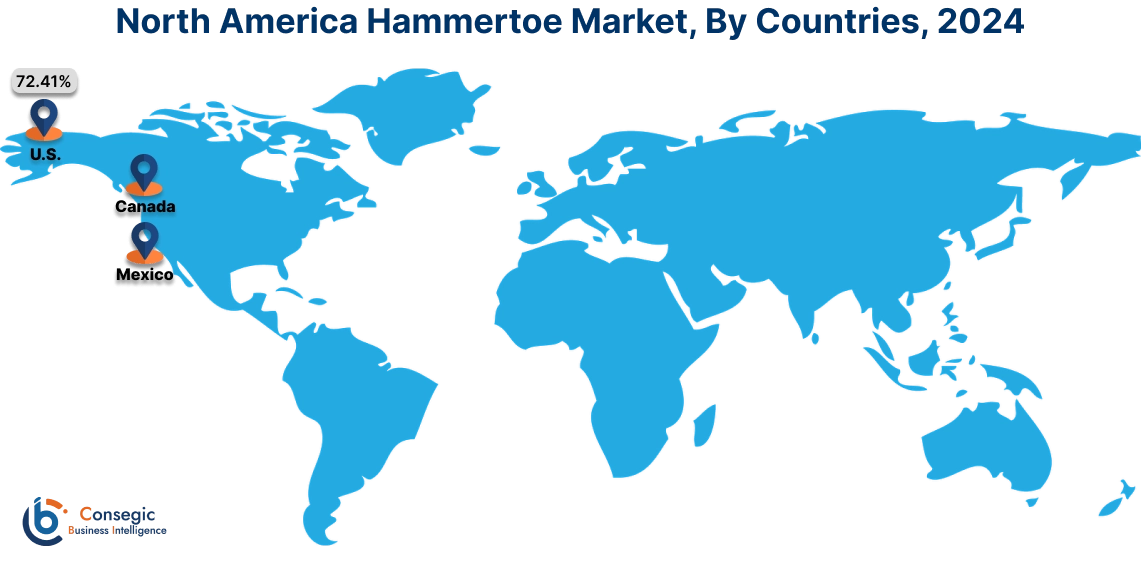
In 2024, North America accounted for the highest market share at 42.05% and was valued at USD 504.52 Million and is expected to reach USD 1,160.61 Million in 2032. In North America, the U.S. accounted for the highest market share of 72.41% during the base year of 2024.
North America dominates the global hammertoe market driven by factors such as a high prevalence of diabetes, advanced healthcare infrastructure, and high adoption of new technologies. The region has a high prevalence of diabetes, a significant risk factor for the development of foot complications, including hammertoe. The region boasts a well-developed healthcare infrastructure with advanced medical facilities, skilled professionals, and access to cutting-edge technologies. The region is an early adopter of new medical technologies, including minimally invasive surgical techniques and advanced imaging modalities, which contribute to improved diagnosis and treatment. Additionally, North America presents many leading medical device industries, driving innovation and competition within the market.
- For instance, in October 2023, Intelivation Technologies, an innovative medical device company headquartered in the U.S. announced that it received clearance from the Food and Drug Administration for its Hammerdesis Interphalangeal Fusion System. Hammerdesis allows surgeons to correct hammertoe deformities in patients by affixing a distinctively designed implant on the patient's toe joint.
The combination of the aforementioned factors and trends is driving a substantial trajectory in the North American market demand.
Asia Pacific is experiencing the fastest growth with a CAGR of 14.5% over the forecast period. The hammertoe market trend across the region is attributed to factors such as a large and rapidly growing population, rising disposable incomes leading to increased healthcare expenditure, and growing awareness of foot health among the general population. Furthermore, rapid economic development in many Asian countries is driving improvements in healthcare infrastructure and access to advanced medical technologies. Additionally, the aging population in many Asian countries is experiencing a higher prevalence of age-related foot conditions, further contributing to the market's growth.
Europe presents a significant contribution to the hammertoe market analysis. Many European countries possess well-developed healthcare systems with access to advanced diagnostic and treatment options. Additionally, healthcare expenditure continues to rise across many European countries, enabling greater access to advanced treatments and technologies. Moreover, European societies generally place a high value on quality of life, driving demand for effective treatments for conditions that impact mobility and comfort, such as hammertoe. Europe is also a center for medical innovation, with ongoing research and development in areas such as minimally invasive surgery and regenerative medicine for foot and ankle conditions. These factors and trends position Europe as a significant market, with a strong emphasis on advanced medical technologies and a focus on improving patient quality of life.
The Middle East and Africa (MEA) region is witnessing notable hammertoe market trends. The growing healthcare sector in the Middle East is playing a pivotal role in demand. Many countries in the MEA region are investing in developing their healthcare infrastructure with advanced diagnostic and treatment facilities. This includes building hospitals and clinics and improving access to diagnostic tools and treatment solutions for hammertoe. Additionally, the region is witnessing the development of research and development centers. The combined impact of these factors is creating a favorable environment for the trajectory of the hammertoe market opportunities in the MEA region.
Latin America is an emerging region in hammertoe market demand, with significant potential for innovation. The combination of increasing prevalence, government support, and rising disposable income is driving the significant hammertoe market opportunities in Latin America. The region encompasses a mix of public and private healthcare systems, with varying levels of access and affordability. This diversity impacts the availability and utilization of diagnostic and treatment options. The growing middle class in several Latin American countries has led to increased healthcare spending and demand for quality treatments, including those with this condition. Overall, as per analysis, these factors collectively present a promising factor for healthcare providers and medical device industry companies to develop and deliver innovative solutions to address the needs of individuals with this condition in Latin America.
Top Key Players and Market Share Insights:
The Hammertoe market is highly competitive with major players providing precise products to the national and international markets. Key players are adopting several strategies in research and development (R&D) and product innovation to hold a strong position in the global Hammertoe market. Key players in the Hammertoe industry include-
- Smith & Nephew (UK)
- Stryker Corporation (U.S.)
- Integra LifeSciences (U.S.)
- Forma Medical (U.S.)
- Extremity Medical (U.S.)
- Treace Medical Concepts, Inc. (U.S.)
- Paragon 28, Inc. (U.S.)
- Zimmer Biomet (U.S.)
- DePuy Synthes (U.S.)
- Intelivation Technologies (U.S.)
Recent Industry Developments :
Certification:
- In September 2024, Tyber Medical LLC, an orthopedic device manufacturer, announced that its PEEK ToeGrip Hammer Toe implant family has received Medical Device Regulation (MDR) certification from TÜV Rheinland. This significant achievement marks the first time a hammer toe implant has achieved both FDA 510(k) clearance and MDR certification, underscoring the company's commitment to rigorous regulatory standards and product safety.
Product Launch:
- In September 2023, Forma Medical, a medical device innovator, announced the launch of OptimalHT, the world's first instrumented Minimally Invasive Surgery (MIS) Hammertoe Arthrodesis procedure, which has successfully treated over 50 hammertoe deformities. OptimalHT, the company's initial product launch, received FDA approval in July.
- In May 2022, Paragon 28, Inc., a medical device company specializing in foot and ankle orthopedics, announced the addition to its hammertoe and soft-tissue portfolio with the launch of the TenoTac 2.0 Soft Tissue Fixation System. This system incorporates a titanium threaded implant designed to enhance soft tissue capture, streamline tensioning procedures, and ensure improved fit to the bony surface.
Hammertoe Market Report Insights :
| Report Attributes | Report Details |
| Study Timeline | 2019-2032 |
| Market Size in 2032 | USD 3,030.17 Million |
| CAGR (2025-2032) | 12.3% |
| By Type |
|
| By End User |
|
| By Region |
|
| Key Players |
|
| North America | U.S. Canada Mexico |
| Europe | U.K. Germany France Spain Italy Russia Benelux Rest of Europe |
| APAC | China South Korea Japan India Australia ASEAN Rest of Asia-Pacific |
| Middle East and Africa | GCC Turkey South Africa Rest of MEA |
| LATAM | Brazil Argentina Chile Rest of LATAM |
| Report Coverage |
|
Key Questions Answered in the Report
How big is the Hammertoe market? −
In 2024, the Hammertoe market is USD 1,200.00 Million.
Which is the fastest-growing region in the Hammertoe market? +
Asia Pacific is the fastest-growing region in the Hammertoe market.
What specific segmentation details are covered in the Hammertoe market? +
Type and End Use segmentation details are covered in the Hammertoe market.
Who are the major players in the Hammertoe market? +
Smith & Nephew (UK), Stryker Corporation (U.S.), and Treace Medical Concepts, Inc. (U.S.) are some of the major players in the market.
Overview
Reputation & Certifications


Our Services
- Market Intelligence & Forecasting
- Custom Research Solutions
- Market Entry Strategy
- Competitive Intelligence
- Customer Insights
- Industry Innovation Analysis
- Investment Advisory