Jump to Content
Turner Syndrome Market - Size, Share, Industry Trends, and Forecasts (2025-2032)
Turner Syndrome Market Size:
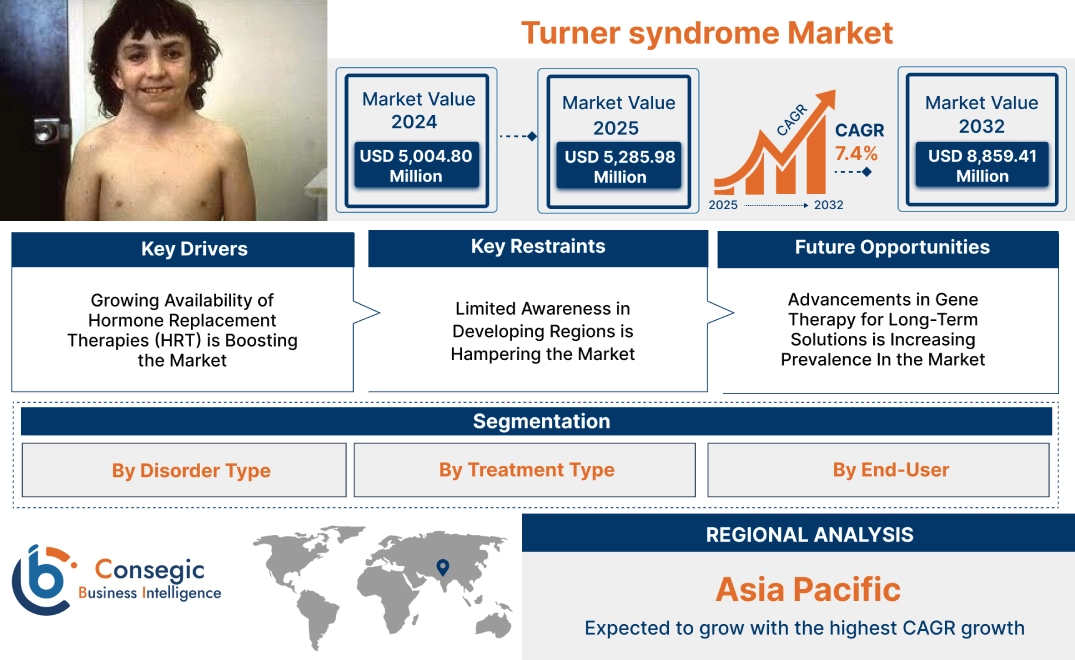
Turner syndrome market size is estimated to reach over USD 8,859.41 Million by 2032 from a value of USD 5,004.80 Million in 2024 and is projected to grow by USD 5,285.98 Million in 2025, growing at a CAGR of 7.4% from 2025 to 2032.
Turner Syndrome Market Scope & Overview:
The market focuses on the diagnosis, management, and treatment of Turner syndrome, a rare chromosomal disorder affecting females, characterized by the partial or complete absence of one X chromosome. The market encompasses diagnostic tools, hormone replacement therapies (HRT), and supportive care products aimed at addressing the condition's symptoms, including short stature, ovarian insufficiency, and cardiovascular anomalies.
Its key characteristics include early diagnosis through genetic testing, targeted therapies such as growth hormone treatments, and comprehensive care addressing associated comorbidities. The benefits achieved are improved quality of life, enhanced growth outcomes, and better management of health complications. Applications span pediatric and adult care, endocrinology, and gynecology while end-users include hospitals, specialty clinics, and research institutions, driven by advancements in genetic testing technologies, increasing awareness and the availability of effective treatment options.
Turner Syndrome Market Dynamics - (DRO) :
Key Drivers:
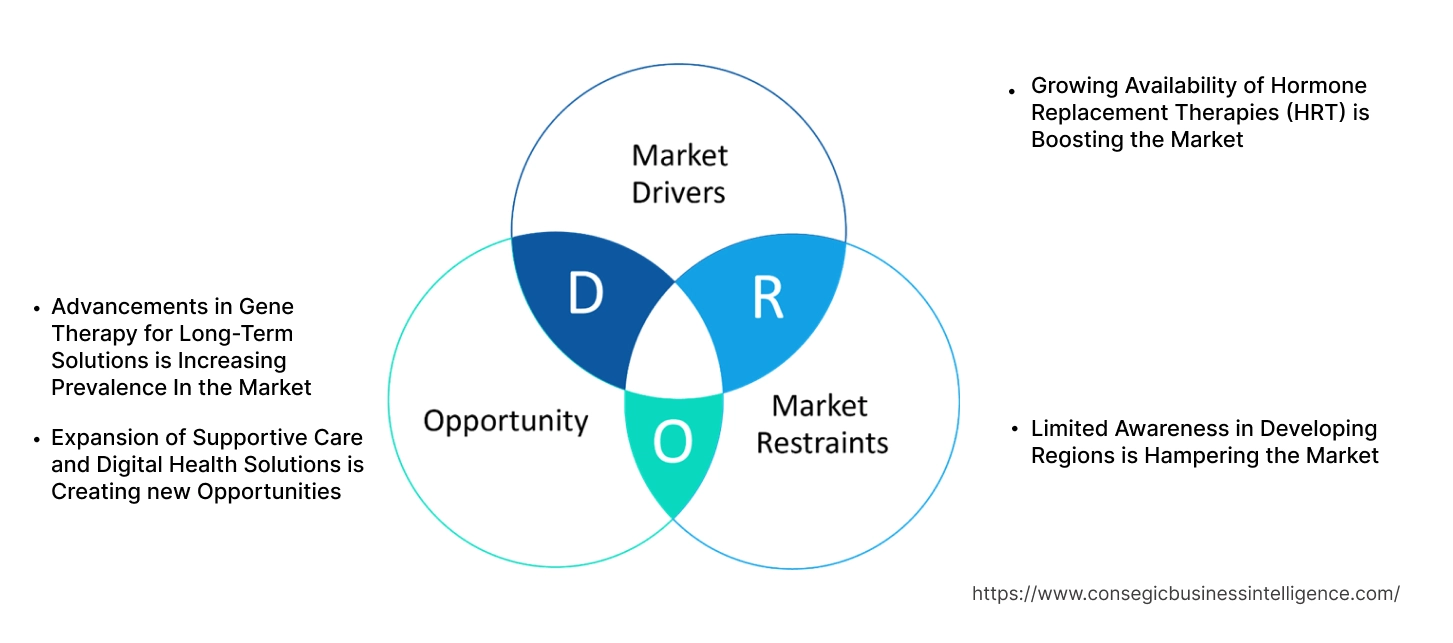
Growing Availability of Hormone Replacement Therapies (HRT) is Boosting the Market
The increasing availability and adoption of hormone replacement therapies (HRT) are shaping significant trends in Turner syndrome market demand. Growth hormone therapy is widely recognized as a cornerstone treatment for managing short stature and promoting optimal development in children diagnosed with the condition. Additionally, estrogen replacement therapy plays a critical role in supporting the demand of secondary sexual characteristics, maintaining bone health, and preventing osteoporosis in affected individuals.
Recent trends in HRT formulations, including extended-release growth hormone injectable and transdermal estrogen patches, have enhanced the demand for patient compliance by offering more convenient and less invasive options. The growing focus on personalized medicine has also paved the way for tailored hormonal treatments, ensuring that patients receive therapies optimized for their specific needs. As awareness of these therapies increases Turner syndrome market opportunities, more individuals are gaining access to effective management strategies, improving quality of life and treatment outcomes.
Key Restraints:
Limited Awareness in Developing Regions is Hampering the Market
Despite advancements in the diagnosis and management of Turner syndrome, limited awareness in developing regions remains a significant barrier to early intervention and treatment. Many individuals in such areas go undiagnosed or experience delayed diagnoses due to a lack of knowledge among healthcare providers and the general public about the condition's symptoms and health implications. Cultural stigmas and misconceptions about genetic disorders further exacerbate the issue, discouraging families from seeking timely medical attention.
Additionally, inadequate healthcare infrastructure and limited access to specialized diagnostic tools, such as karyotyping and genetic testing, hinder early detection efforts. This gap in awareness and resources contributes to suboptimal care, leaving many patients without the necessary interventions to address growth, hormonal, and developmental challenges. Addressing these disparities through targeted education campaigns and investments in healthcare infrastructure is essential for Turner syndrome market expansion in underserved regions.
Future Opportunities :
Advancements in Gene Therapy for Long-Term Solutions is Increasing Prevalence In the Market
The exploration of gene therapy as a potential treatment represents a transformative opportunity for this market. Gene-editing technologies, such as CRISPR, are being researched for their ability to target and correct the underlying genetic abnormalities associated with the condition. By addressing the root cause, gene therapy has the potential to provide long-term solutions that go beyond managing symptoms, offering hope for more effective and sustainable treatments.
While still in the experimental stages, advancements in gene therapy hold promise for mitigating complications associated with Turner syndrome, such as cardiovascular issues and infertility. Continued research and clinical trials in this area could redefine the treatment landscape, enabling breakthroughs that significantly improve patient outcomes. As these technologies mature, they are expected to complement existing therapies, paving the way for a more comprehensive and curative approach to its management.
Expansion of Supportive Care and Digital Health Solutions is Creating new Opportunities
The growing integration of supportive care programs and digital health technologies is enhancing its management. Telemedicine platforms and mobile health applications are providing patients with remote access to specialized healthcare services, enabling regular monitoring and consultation without the need for frequent in-person visits. These tools are particularly beneficial for individuals in rural or underserved areas, where access to specialized care may be limited.
In addition to medical management, digital platforms are offering educational resources and support networks that empower patients and families to better understand and cope with the condition. Psychological counseling and peer support groups are addressing the emotional challenges associated with this condition, improving mental well-being and quality of life. By fostering holistic care that encompasses medical, emotional, and social aspects, digital health solutions are creating new opportunities for improving treatment adherence and overall patient outcomes in the Turner syndrome market growth.
Turner Syndrome Market Segmental Analysis :
By Disorder Type:
Based on disorder type, the market is segmented into monosomy and mosaic Turner syndrome.
The monosomy type segment accounted for the largest Turner syndrome market share in 2024.
- The monosomy type represents the most frequently diagnosed form of the condition, where one complete X chromosome is missing.
- This segment benefits from the increasing availability of advanced genetic diagnostic tools, including non-invasive prenatal testing (NIPT).
- Trends indicate a rising emphasis on early intervention programs to address the developmental and medical challenges associated with this syndrome.
- Moreover, global health initiatives aimed at improving the accessibility of treatment options for genetic disorders are supporting this segment’s dominance.
- Monosomy dominates the market expansion due to its high prevalence and increasing focus on early diagnosis and comprehensive management strategies.
The mosaic type segment is anticipated to register the fastest CAGR during the forecast period.
- The mosaic type is characterized by the partial or selective loss of an X chromosome in some cells.
- Advancements in genetic testing methods, including karyotyping and chromosomal microarray analysis, have improved its detection and differentiation.
- Personalized treatment approaches focusing on hormone regulation and addressing varying clinical presentations are key factors boosting this segment.
- Moreover, research studies investigating the genetic and epigenetic mechanisms underlying mosaicism are driving innovation in treatment protocols.
- Mosaic type is expected to grow rapidly, supported by increasing Turner syndrome market opportunities awareness and advancements in personalized therapeutic approaches tailored to individual genetic profiles.
By Treatment Type:
Based on treatment type, the market is segmented into hormone replacement therapy, fertility treatment, psychological therapy, and others.
The hormone replacement therapy segment accounted for the largest revenue share in 2024.
- Hormone replacement therapy (HRT) is crucial for managing the primary symptoms of Turner syndrome, including growth failure and estrogen deficiency.
- The increasing adoption of recombinant human growth hormone (rhGH) therapy has been a significant Turner syndrome market trend, with proven benefits in improving height outcomes and overall health.
- Furthermore, advancements in estrogen delivery systems, including transdermal patches and gels, have enhanced patient compliance.
- Collaborative care models incorporating endocrinologists, pediatricians, and gynecologists have further reinforced the prominence of HRT in its management.
- Hormone replacement therapy remains the cornerstone treatment of this conditon, driven by its efficacy in addressing key symptoms and improving patient quality of life.
The fertility treatment segment is anticipated to register the fastest CAGR during the forecast period.
- Turner syndrome is often associated with infertility, but advancements in fertility preservation techniques, such as cryopreservation and donor egg programs, have created new possibilities for patients.
- The growing adoption of assisted reproductive technologies (ART) in its care is a key trend.
- Additionally, comprehensive fertility counseling services integrated into the condition’s management plans have driven patient awareness and acceptance of available options.
- Partnerships between healthcare providers and fertility clinics are further expanding access to these treatments.
- Fertility treatment analysis is expected to grow rapidly due to advancements in Turner syndrome market trends, reproductive technologies and increasing demand for fertility preservation among the patients.
By End-User:
By end-user, the market is segmented into hospitals & clinics, academic institutes, research organizations, and others.
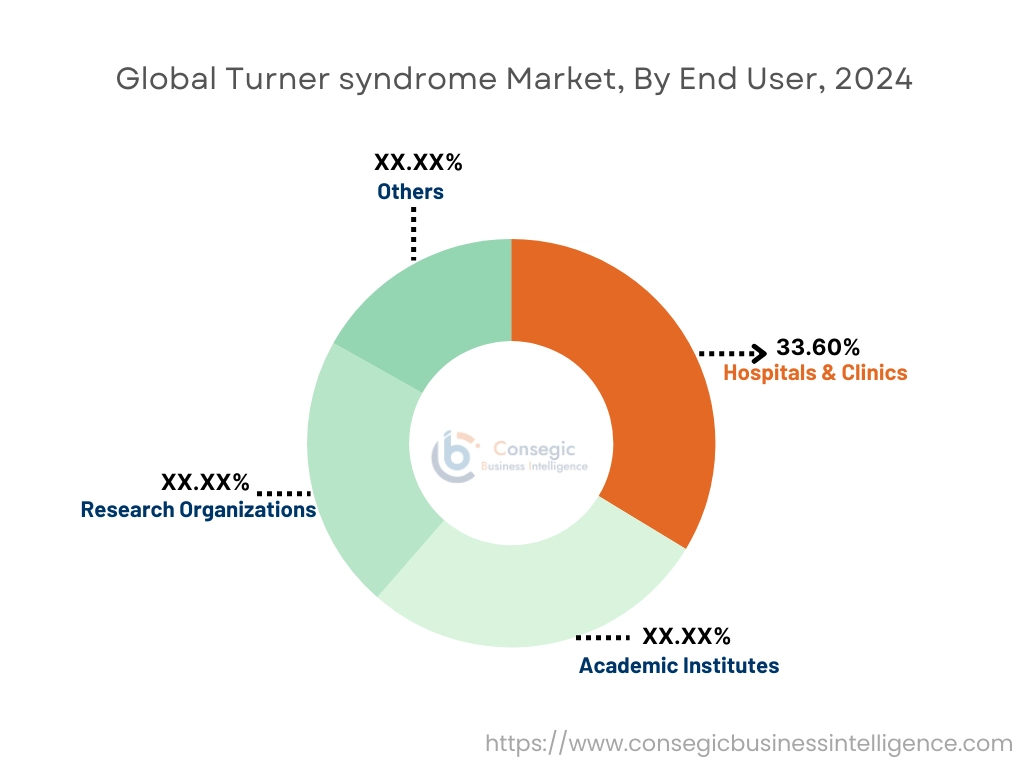
The hospitals & clinics segment accounted for the largest Turner syndrome market share of 33.60% in 2024.
- Hospitals and clinics serve as the primary care settings for diagnosis and treatment.
- The trend of establishing condition-specific multidisciplinary clinics that offer comprehensive services, including genetic counseling, cardiology, endocrinology, and gynecology, has strengthened this segment.
- Additionally, government programs and insurance policies covering specialized genetic and hormonal therapies have further supported the meed for hospital-based care.
- The integration of telemedicine services for follow-up consultations and hormonal therapy monitoring is also becoming increasingly common.
- Hospitals and clinics segment dominate the Turner syndrome market expansion due to their role in providing specialized care and access to advanced diagnostic and treatment options.
The research organizations segment is anticipated to register the fastest CAGR during the forecast period.
- Research organizations play a pivotal role in developing novel therapies and improving the understanding of the genetic and clinical aspects of this disorder.
- The growing number of clinical trials focusing on innovative hormone therapies, gene therapies, and fertility solutions has driven investment in this segment.
- Additionally, collaborations between research institutions, pharmaceutical companies, and patient advocacy groups are accelerating the pace of scientific discovery and treatment innovation.
- As per Turner syndrome market analysis, the research organizations segment is expected to grow rapidly, driven by advancements in trends in clinical studies and the development of novel therapeutic solutions.
Regional Analysis:
The regions covered are North America, Europe, Asia Pacific, the Middle East and Africa, and Latin America.
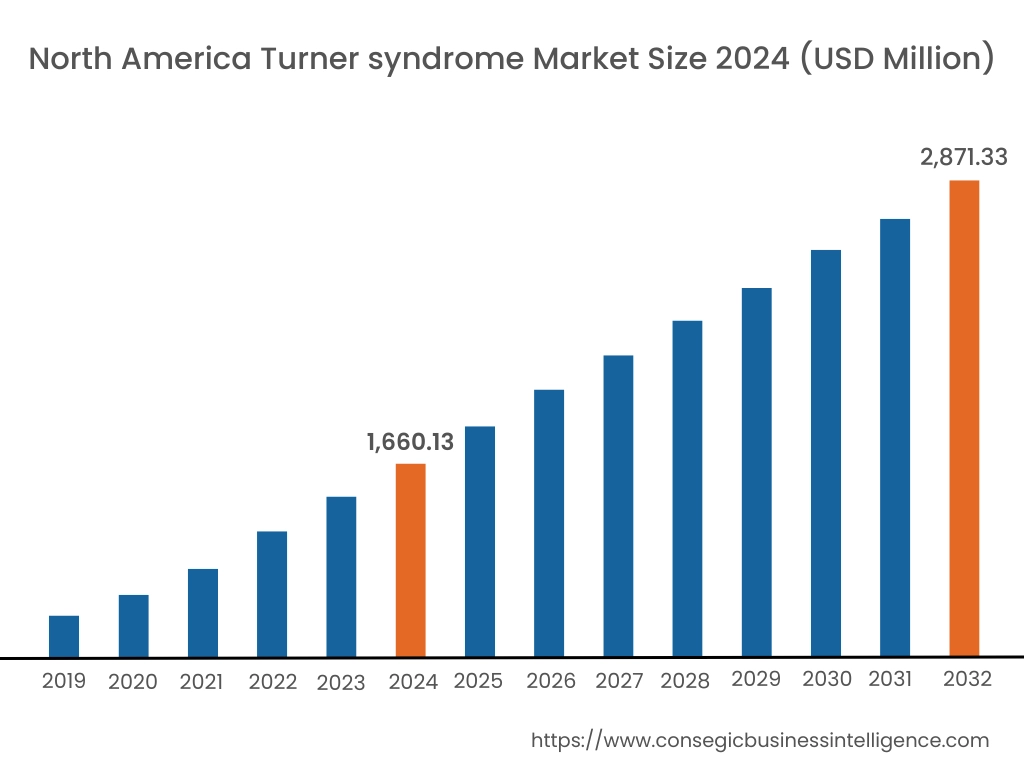
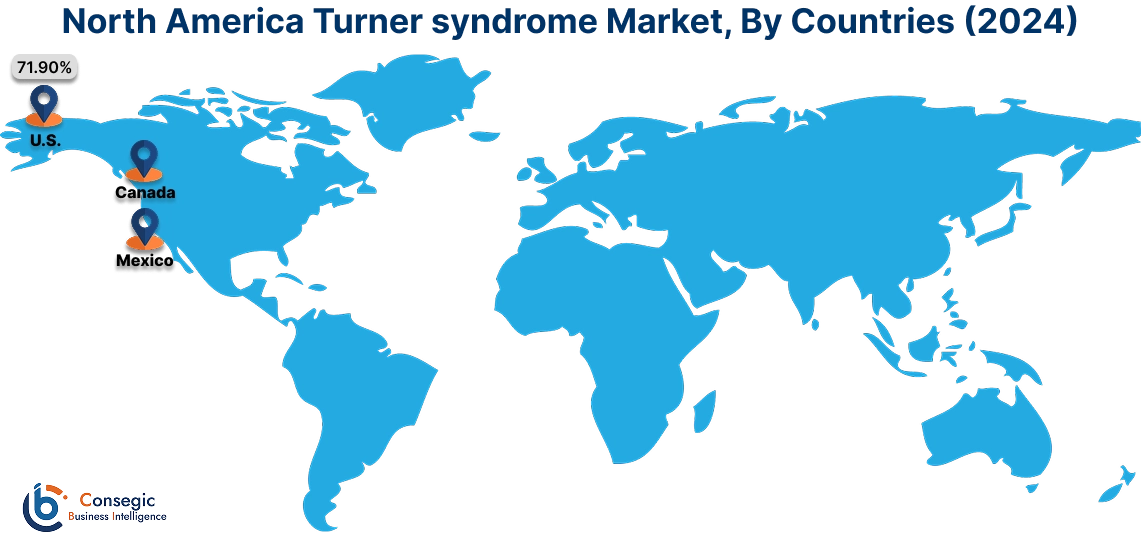
In 2024, North America was valued at USD 1,660.13 Million and is expected to reach USD 2,871.33 Million in 2032. In North America, the U.S. accounted for the highest share of 71.90% during the base year of 2024.
North America dominates the Turner syndrome market demand due to well-established healthcare infrastructure and high awareness of rare genetic disorders. The U.S. leads the region with strong emphasis on early diagnosis and access to advanced treatments, including hormone replacement therapies and fertility preservation methods. Ongoing research and development initiatives focused on innovative therapies further advance the market. Canada contributes with growing awareness campaigns and government-supported healthcare programs that provide better access to specialized treatments. However, the high cost of therapy and limited patient awareness in rural areas pose challenges.
In Asia Pacific, the market is experiencing the fastest growth with a CAGR of 7.8% over the forecast period. Asia Pacific has an emerging Turner syndrome industry, driven by improving healthcare infrastructure, growing awareness about genetic disorders, and increasing availability of hormone therapies with China, Japan, and India as key contributors. China’s expanding healthcare sector is focusing on early diagnosis and treatment for rare genetic disorders, while Japan is leveraging advanced medical technologies and genetic research for effective management. In India, rising awareness and improving access to affordable therapies are driving market potential, though challenges such as limited specialized care centers and delayed diagnoses persist in rural areas.
Europe has a significant market, supported by advancements in genetic research and healthcare policies promoting rare disease management. Countries like Germany, France, and the UK lead the region with increasing use of growth hormone therapy and estrogen replacement therapy in its patients. Germany’s robust healthcare system ensures early diagnosis and better treatment outcomes, while the UK emphasizes awareness campaigns to address delayed diagnoses. France is focusing on patient-centric care through multidisciplinary treatment approaches. However, disparities in access to specialized care across different European countries remain a barrier to optimal treatment.
The Middle East & Africa region analysis is showing steady rise in the Turner syndrome market growth due to increasing healthcare investments and rising awareness about rare genetic conditions. Countries like Saudi Arabia and the UAE are focusing on improving access to diagnostic tools and hormone therapies to manage the condition. In Africa, South Africa is emerging as a key market, with better access to specialize pediatric and endocrinology care. However, limited healthcare infrastructure, particularly in rural areas, and lack of awareness remains a significant challenge in many parts of the region.
Latin America is an evolving for Turner syndrome market analysis, with Brazil and Mexico leading the region. Brazil’s growing focus on genetic testing and increasing access to growth hormone therapies are driving the market expansion. Mexico’s healthcare reforms and public awareness campaigns about rare diseases are contributing to early diagnosis and treatment. However, economic constraints and limited availability of advanced therapies in some parts of the region hinder broader access to effective treatment for patients.
Top Key Players & Market Share Insights:
The Turner syndrome market is highly competitive with major players providing products and services to the national and international markets. Key players are adopting several strategies in research and development (R&D), product innovation, and end-user launches to hold a strong position in the global Turner syndrome market. Key players in the Turner syndrome industry include -
- Eli Lilly and Company (United States)
- Novo Nordisk A/S (Denmark)
- LG Chem (South Korea)
- Takeda Pharmaceuticals (Japan)
- Anthropic (United States)
- Pfizer Inc. (United States)
- Merck KGaA (Germany)
- Ascendis Pharma A/S (Denmark)
- Ferring Pharmaceuticals (Switzerland)
- Genentech, Inc. (United States)
Recent Industry Developments :
Development:
- In September 2024, GlobalData reported ongoing advancements in Turner syndrome treatments, with five drugs currently under development, primarily targeting the growth hormone receptor. Companies like BioMarin Pharmaceutical and Ascendis Pharma are leading these efforts. Most drugs are in the preclinical or Phase III stages, focusing on growth hormone receptor agonists administered via injection. These developments aim to provide new, effective treatment options for managing growth and development in Turner syndrome patients.
Turner Syndrome Market Report Insights:
| Report Attributes | Report Details |
| Study Timeline | 2019-2032 |
| Market Size in 2032 | USD 8,859.41 Million |
| CAGR (2025-2032) | 7.4% |
| By Disorder Type |
|
| By Treatment Type |
|
| By End-User |
|
| By Region |
|
| Key Players |
|
| North America | U.S. Canada Mexico |
| Europe | U.K. Germany France Spain Italy Russia Benelux Rest of Europe |
| APAC | China South Korea Japan India Australia ASEAN Rest of Asia-Pacific |
| Middle East and Africa | GCC Turkey South Africa Rest of MEA |
| LATAM | Brazil Argentina Chile Rest of LATAM |
| Report Coverage |
|
Key Questions Answered in the Report
What is the projected size of the Turner syndrome Market by 2032? −
The market is expected to reach over USD 8,859.41 Million by 2032.
Which disorder type dominates the Turner syndrome Market? +
The monosomy Turner syndrome segment holds the largest market share, driven by its high prevalence and the availability of advanced diagnostic tools for early detection.
Which disorder type is expected to grow the fastest? +
The mosaic Turner syndrome segment is anticipated to register the fastest growth, supported by advancements in genetic testing and personalized therapeutic approaches.
What is the most prominent treatment type in the market? +
Hormone replacement therapy (HRT) leads the market due to its critical role in addressing growth failure, estrogen deficiency, and other primary symptoms of Turner syndrome.
Which treatment type is expected to grow the fastest? +
Fertility treatments are expected to grow rapidly, driven by advancements in assisted reproductive technologies and increased awareness about fertility preservation options.
Overview
Reputation & Certifications


Our Services
- Market Intelligence & Forecasting
- Custom Research Solutions
- Market Entry Strategy
- Competitive Intelligence
- Customer Insights
- Industry Innovation Analysis
- Investment Advisory