Jump to Content
G-Protein Coupled Receptors Market - Size, Share, Industry Trends, and Forecasts (2025 - 2032)
G-Protein Coupled Receptors Market Size:
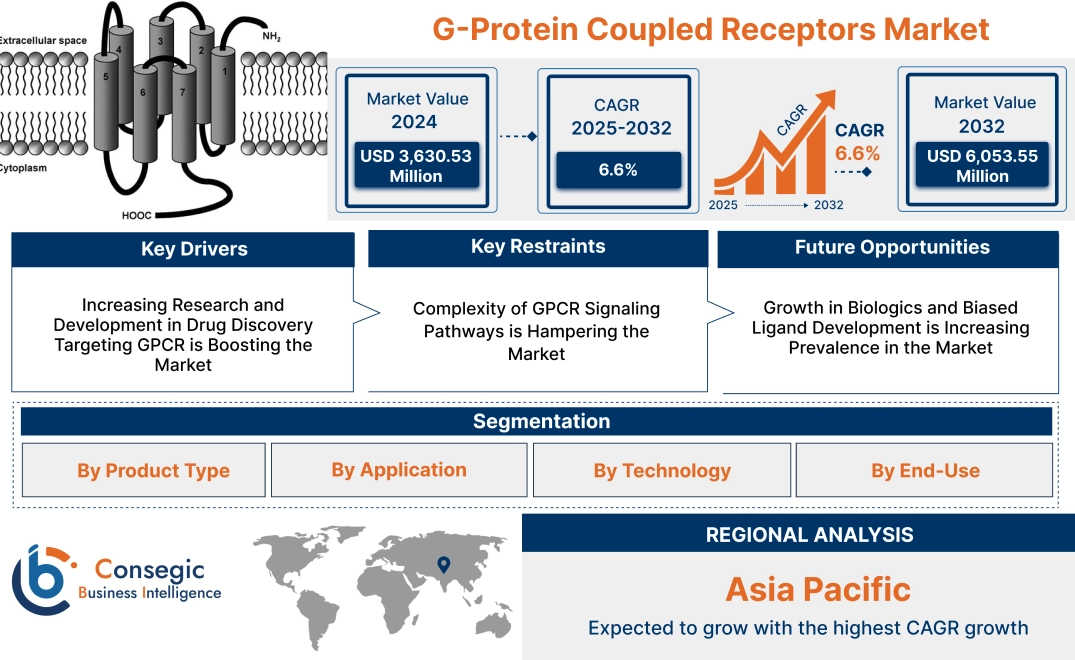
G-Protein Coupled Receptors Market size is estimated to reach over USD 6,053.55 Million by 2032 from a value of USD 3,630.53 Million in 2024 and is projected to grow by USD 3,805.45 Million in 2025, growing at a CAGR of 6.6% from 2025 to 2032.
G-Protein Coupled Receptors Market Scope & Overview:
G-Protein Coupled Receptors (GPCRs) are a large family of cell surface receptors that play a critical role in cellular communication and signal transduction. These receptors are activated by various ligands, including hormones, neurotransmitters, and sensory stimuli, enabling them to regulate numerous physiological processes such as vision, taste, smell, and immune responses. GPCRs are widely studied for their role in developing targeted therapies for various diseases, including cancer, cardiovascular disorders, and metabolic conditions.
The growing demand for precision medicine and advancements in drug discovery technologies are driving the advancement for the GPCR market. As GPCRs serve as key drug targets, pharmaceutical companies are focusing on developing novel therapies to address unmet medical needs. Continuous advancements in structural biology, computational modeling, and high-throughput screening have further enhanced the understanding of GPCR functions, accelerating drug development processes.
End-users of GPCR technologies include pharmaceutical companies, academic research institutions, and biotechnology firms. These entities leverage GPCR-based tools and techniques for drug discovery, disease modeling, and clinical research. With the increasing prevalence of chronic diseases and the demand for targeted therapies, the GPCR market is expected to witness substantial growth, supported by innovations in receptor-based research and therapeutic development.
G-Protein Coupled Receptors Market Dynamics - (DRO) :
Key Drivers:
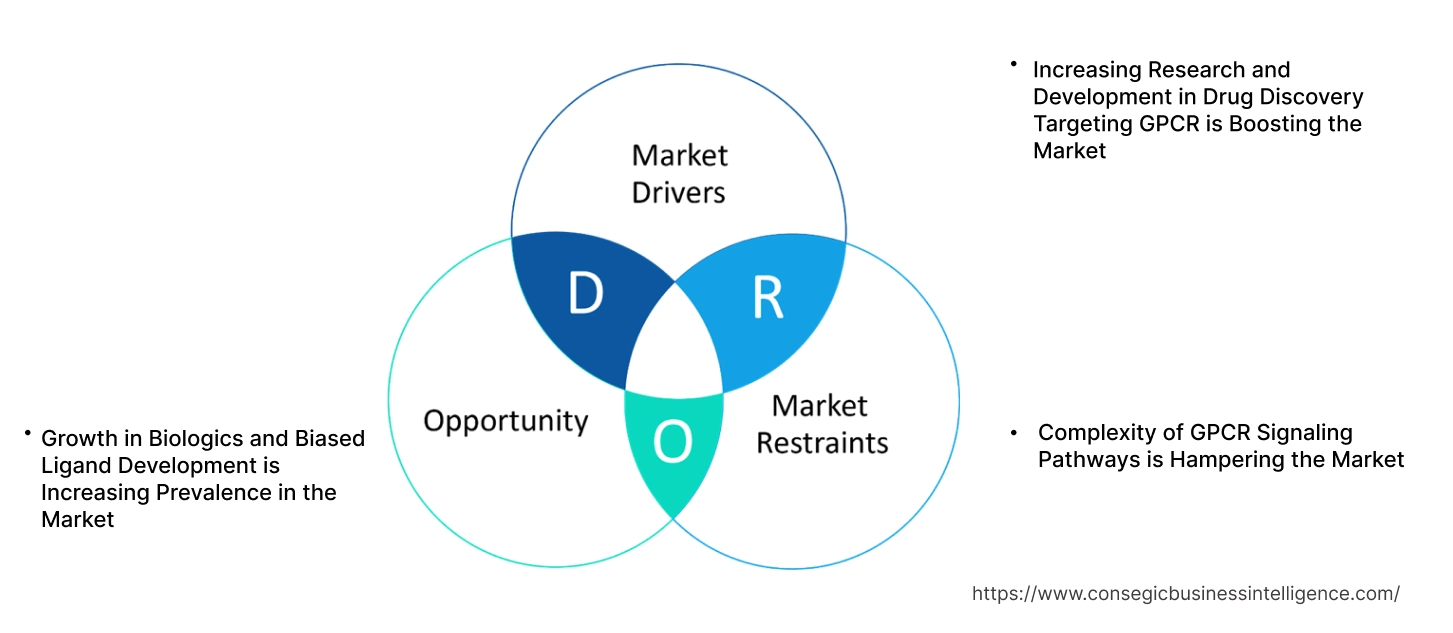
Increasing Research and Development in Drug Discovery Targeting GPCR is Boosting the Market
G-Protein Coupled Receptors (GPCRs) have gained significant attention in drug discovery due to their pivotal role in various physiological processes and disease mechanisms. These receptors are integral to treating a wide range of conditions, including cancer, cardiovascular diseases, and neurological disorders. Pharmaceutical and biotechnology companies are prioritizing research and development efforts to design targeted therapies that interact with GPCRs effectively.
Trends in high-throughput screening, coupled with advancements in genomics and proteomics, are enabling the identification of novel GPCR-targeted drugs. Analysis highlights that the integration of computational modeling and AI-driven drug discovery platforms is enhancing the precision and efficiency of research efforts, reinforcing GPCRs as one of the most valuable therapeutic targets in the pharmaceutical sectors.
Key Restraints:
Complexity of GPCR Signaling Pathways is Hampering the Market
The intricate nature of GPCR signaling pathways presents significant challenges in drug development. GPCRs interact with multiple signaling molecules and exhibit diverse functionalities, making it difficult to predict and control their behavior in specific disease contexts. This complexity often leads to off-target effects and suboptimal therapeutic outcomes, increasing the time and resources required for drug development.
Trends in advanced research methodologies and improved analytical techniques are addressing some of these challenges, but understanding and harnessing GPCR signaling remains a resource-intensive endeavor. Analysis underscores the need for further breakthroughs in structural biology and receptor-ligand interaction studies to simplify and optimize drug development processes for these highly complex targets.
Future Opportunities :
Growth in Biologics and Biased Ligand Development is Increasing Prevalence in the Market
The emergence of biologics and biased ligands in GPCR-targeted drug development is revolutionizing therapeutic approaches. Biologics, such as monoclonal antibodies, offer high specificity, while biased ligands selectively activate specific signaling pathways, minimizing adverse effects and enhancing therapeutic efficacy. These innovations are particularly promising for treating chronic pain, immune disorders, and certain cancers.
Trends in personalized medicine and the shift toward precision therapies are driving the exploration of these advanced modalities. Analysis highlights that investing in biologics and biased ligand development aligns with the growing emphasis on innovative, patient-centric treatments. As pharmaceutical companies continue to refine these technologies, the potential for improving patient outcomes and addressing unmet medical needs in complex diseases expands significantly.
G-Protein Coupled Receptors Market Segmental Analysis :
By Product Type:
Based on product type, the GPCR market is segmented into cell lines, detection kits, ligands (agonists and antagonists), assay systems, and others.
The cell lines segment accounted for the largest revenue in G-protein coupled receptors market share in 2024.
- Cell lines are widely used in studying GPCR functions due to their ability to model receptor activity under physiological conditions.
- Genetically engineered cell lines tailored for specific GPCRs are increasingly employed in drug discovery and functional studies.
- Their extensive use in high-throughput screening and lead optimization processes has bolstered G-protein coupled receptors market demand in pharmaceutical and biotechnology companies.
- Continuous advancements in cell line engineering, including CRISPR-based modifications, are expected to further enhance the segment's dominance.
The detection kits segment is anticipated to register the fastest CAGR during the forecast period.
- Detection kits simplify GPCR analysis, offering quick, accurate, and cost-effective solutions for both research and diagnostic applications.
- The growing G-protein coupled receptors market demand for standardized tools in academic and clinical research is driving the adoption of these kits.
- Advancements in assay technologies, such as fluorescence-based detection, have improved the sensitivity and specificity of these kits.
- The increasing focus on precision medicine and the need for rapid screening tools are expected to propel G-protein coupled receptors market growth in this segment.
By Application:
Based on application, the GPCR market is segmented into drug discovery, disease diagnostics, and research & development.
The drug discovery segment accounted for the largest revenue share in 2024.
- GPCRs are one of the most targeted receptor families in drug discovery, accounting for a significant proportion of FDA-approved drugs.
- High-throughput screening and lead optimization technologies are extensively used to identify GPCR-targeted drug candidates.
- The rising trends for therapies addressing chronic diseases, such as cancer and cardiovascular disorders, has boosted this segment.
- Pharmaceutical companies are heavily investing in GPCR-targeted drug development, supported by technological advancements in assay systems and detection kits.
The research & development segment is anticipated to register the fastest CAGR during the forecast period.
- R&D efforts focused on understanding GPCR-mediated signaling pathways are expanding, especially in cancer, neurological, and metabolic disorders.
- Increasing government funding and research grants for life sciences research are driving the adoption of GPCR tools in academic and industrial settings.
- Collaborative studies between research institutes and biotechnology companies are accelerating the development of innovative GPCR-based therapies.
- The integration of advanced screening technologies, such as label-free detection and biosensors, is further fueling development in this segment.
By Technology:
Based on technology, the GPCR market is segmented into calcium signaling assays, fluorescent/colorimetric assays, cAMP assays, label-free detection, and others.
The calcium signaling assays segment accounted for the largest revenue in G-protein coupled receptors market share in 2024.
- Calcium signaling assays are widely used to measure intracellular calcium levels, a critical parameter in GPCR activity studies.
- These assays are integral in drug discovery workflows, providing reliable data for receptor-ligand interactions.
- The availability of high-throughput platforms compatible with calcium signaling assays has driven their adoption in pharmaceutical research.
- Advancements in fluorescent probes and assay formats have enhanced the accuracy and efficiency of these assays.
The label-free detection segment is anticipated to register the fastest CAGR during the forecast period.
- Label-free detection technologies offer real-time insights into GPCR interactions without the need for fluorescent or radioactive labels.
- These methods are increasingly preferred for their cost-effectiveness and ability to preserve native receptor functionality.
- Biosensor-based technologies, such as surface plasmon resonance (SPR), are driving the adoption of label-free approaches in research and diagnostics.
- The rising focus on reducing assay complexity and improving throughput is expected to further fuel G-protein coupled receptors market opportunities in this segment.
By End-Use:
Based on end-use, the GPCR market is segmented into pharmaceutical & biotechnology companies, academic & research institutes, contract research organizations (CROs), and diagnostic laboratories.
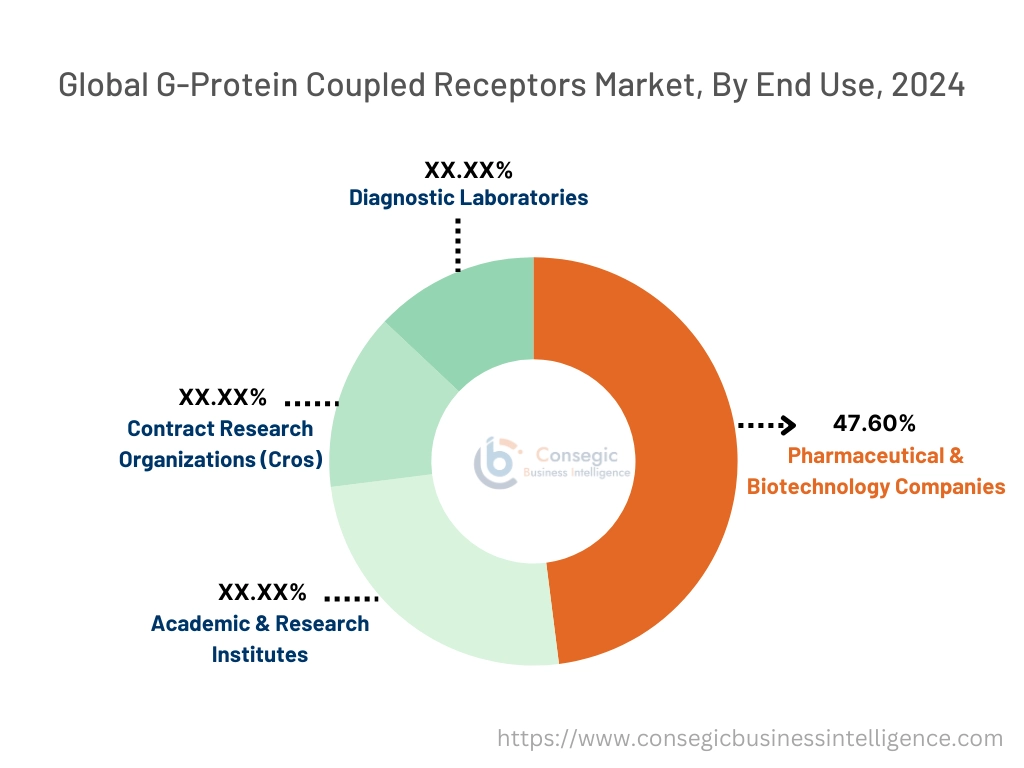
The pharmaceutical & biotechnology companies segment accounted for the largest revenue share of 47.60% in 2024.
- GPCR-targeted drug discovery and development remain a priority for pharmaceutical companies, driving significant investments in this segment.
- Increasing collaborations with CROs and technology providers for high-throughput GPCR screening have boosted trends for advanced tools and reagents.
- The rising prevalence of chronic diseases and the growing focus on personalized medicine are supporting the adoption of GPCR-based solutions.
- Technological advancements in GPCR screening platforms and assay systems are further enhancing the segment’s growth potential.
The academic & research institutes segment is anticipated to register the fastest CAGR during the forecast period.
- Academic institutions are key contributors to basic research on GPCR signaling pathways and their implications for human health.
- Government initiatives and funding for life sciences research are driving the adoption of GPCR tools and technologies in academia.
- Collaborative research efforts between universities and industry players are fostering innovation and expanding the scope of GPCR studies.
- The growing emphasis on translational research and the development of next-generation therapies are expected to fuel G-protein coupled receptors market trends in this segment.
Regional Analysis:
The regions covered are North America, Europe, Asia Pacific, the Middle East and Africa, and Latin America.
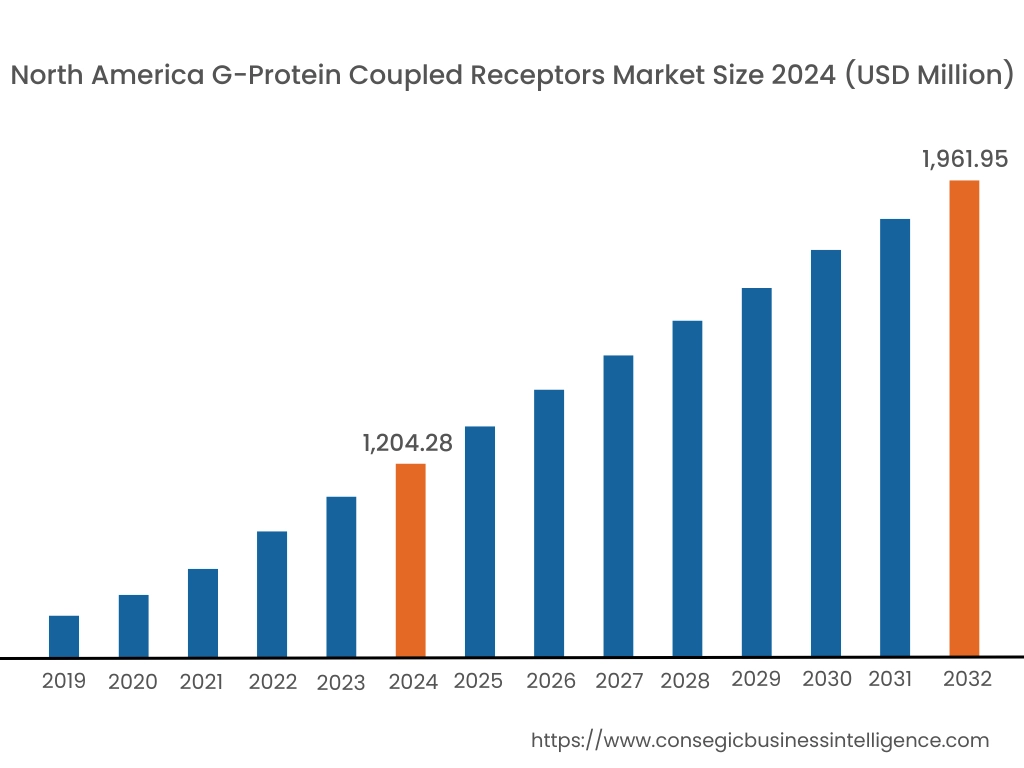
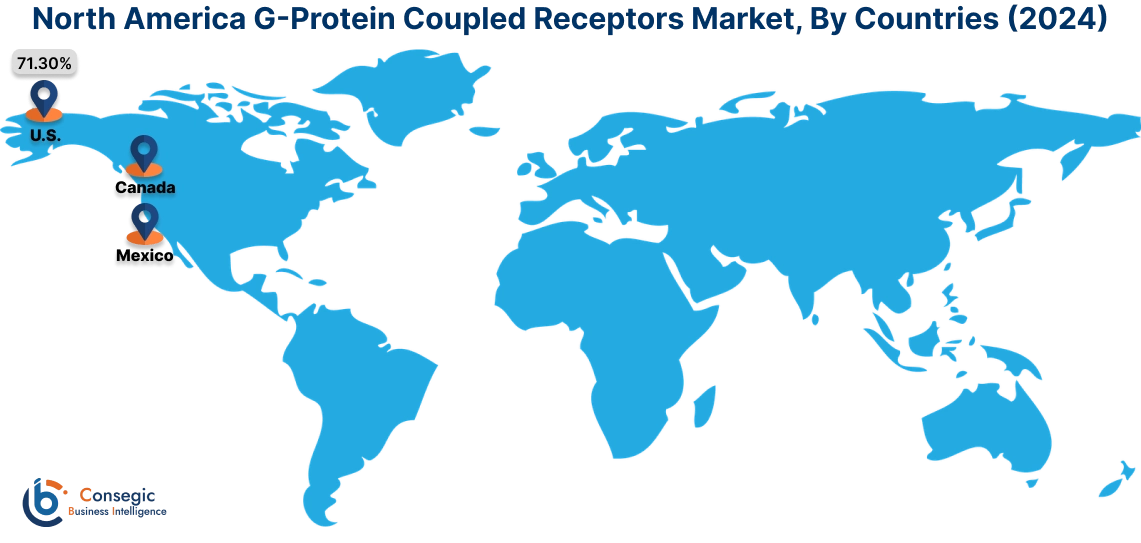
In 2024, North America was valued at USD 1,204.28 Million and is expected to reach USD 1,961.95 Million in 2032. In North America, the U.S. accounted for the highest share of 71.30% during the base year of 2024. North America holds a significant share of the GPCR market, driven by advanced research infrastructure, substantial investments in drug discovery, and the increasing prevalence of chronic diseases. The U.S. leads the region with robust pharmaceutical and biotechnology industries focusing on GPCR-targeted drug development for conditions such as cancer, cardiovascular diseases, and neurological disorders. As per the G-protein coupled receptors market analysis, Canada contributes to rising academic and industrial collaborations in GPCR research and drug discovery. However, the high cost of advanced technologies and drug development processes may pose challenges to smaller research organizations in the region.
In Asia Pacific, the market is experiencing the fastest growth with a CAGR of 7.0% over the forecast period. The GPCR market, is fueled by rapid advancements in biotechnology, increasing healthcare investments, and a rising prevalence of chronic and infectious diseases in China, Japan, and India. As per the G-protein coupled receptors market analysis, China dominates the region with growing pharmaceutical R&D activities and government support for drug discovery targeting GPCRs. India’s expanding biotech industry and focus on cost-effective drug development drive trends for GPCR assays and technologies. Japan emphasizes high-precision GPCR research for cancer and metabolic disorders, supported by its strong academic research base. However, limited access to cutting-edge technologies and infrastructure in emerging markets may hinder G-protein coupled receptors market expansion.
Europe is a prominent market for GPCR research and development, supported by strong pharmaceutical and biotechnology industries and government funding for healthcare innovations. Countries like Germany, the UK, and France are key contributors. Germany drives trends through extensive GPCR research for personalized medicine and biologics. The UK focuses on innovative GPCR-targeted therapies for rare diseases, leveraging its advanced research institutions. France emphasizes collaborative initiatives between academia and industry to explore GPCR drug discovery. However, stringent EU regulations on drug approvals and complex compliance requirements may slow market growth.
The Middle East & Africa region is witnessing steady rise in the GPCR market, driven by increasing healthcare investments and rising demand for innovative therapies. Countries like Saudi Arabia and the UAE are adopting advanced GPCR technologies in drug development and diagnostics to address the growing burden of chronic diseases. In Africa, South Africa is an emerging market, leveraging international collaborations and research funding to enhance GPCR-targeted drug discovery. However, limited local expertise and reliance on imported technologies may restrict broader market expansion in the region.
Latin America is an emerging market for GPCR research and applications, with Brazil and Mexico leading the region. Brazil’s expanding pharmaceutical and biotechnology sectors drive G-protein coupled receptors market trends for targeted drug development in oncology and metabolic disorders. Mexico focuses on increasing academic-sectors partnerships for GPCR research, supported by government initiatives to boost healthcare R&D. The region is also exploring opportunities in diagnostics and personalized medicine through GPCR-based technologies. However, economic instability and inconsistent research funding may pose challenges to market growth in smaller economies.
Top Key Players and Market Share Insights:
The G-protein coupled receptors market is highly competitive with major players providing products to the national and international markets. Key players are adopting several strategies in research and development (R&D), product innovation, and end-user launches to hold a strong position in the G-protein coupled receptors market. Key players in the G-protein coupled receptors industry include -
- Thermo Fisher Scientific (United States)
- PerkinElmer (United States)
- Promega Corporation (United States)
- Bio-Rad Laboratories (United States)
- Lonza Group (Switzerland)
- Merck KGaA (Germany)
- Abcam plc (United Kingdom)
- Enzo Life Sciences (United States)
- QIAGEN (Germany)
- BD Biosciences (United States)
G-Protein Coupled Receptors Market Report Insights :
| Report Attributes | Report Details |
| Study Timeline | 2019-2032 |
| Market Size in 2032 | USD 6,053.55 Million |
| CAGR (2025-2032) | 6.6% |
| By Product Type |
|
| By Application |
|
| By Technology |
|
| By End-Use |
|
| By Region |
|
| Key Players |
|
| North America | U.S. Canada Mexico |
| Europe | U.K. Germany France Spain Italy Russia Benelux Rest of Europe |
| APAC | China South Korea Japan India Australia ASEAN Rest of Asia-Pacific |
| Middle East and Africa | GCC Turkey South Africa Rest of MEA |
| LATAM | Brazil Argentina Chile Rest of LATAM |
| Report Coverage |
|
Key Questions Answered in the Report
What is the expected size of the G-Protein Coupled Receptors (GPCR) Market by 2032? −
G-Protein Coupled Receptors Market size is estimated to reach over USD 6,053.55 Million by 2032 from a value of USD 3,630.53 Million in 2024 and is projected to grow by USD 3,805.45 Million in 2025, growing at a CAGR of 6.6% from 2025 to 2032.
What factors are driving the growth of the GPCR market? +
The market is driven by increasing R&D in drug discovery targeting GPCRs, advancements in high-throughput screening technologies, and the growing prevalence of chronic diseases requiring precision therapies.
What challenges does the GPCR market face? +
The complexity of GPCR signaling pathways, leading to difficulties in drug development and potential off-target effects, is a major challenge.
What opportunities are emerging in the GPCR market? +
The development of biologics and biased ligands, which provide high specificity and minimize adverse effects, offers significant growth opportunities. These innovations align with the growing demand for targeted and personalized therapies.
Overview
Reputation & Certifications


Our Services
- Market Intelligence & Forecasting
- Custom Research Solutions
- Market Entry Strategy
- Competitive Intelligence
- Customer Insights
- Industry Innovation Analysis
- Investment Advisory