Jump to Content
Laser Probe Market - Size, Share, Industry Trends, and Forecasts (2025 - 2032)
Laser Probe Market Size:
Laser Probe Market size is estimated to reach over USD 2,365.19 Million by 2032 from a value of USD 1240.64 Million in 2024 and is projected to grow by USD 1,322.75 Million in 2025, growing at a CAGR of 8.4% from 2025 to 2032.
Laser Probe Market Scope & Overview:
The laser probe are optical devices designed to deliver highly precise laser energy for diagnostic, therapeutic, and surgical applications. These probes are integral to various medical and industrial processes, including ophthalmology, oncology, dermatology, and material processing. Laser probes are engineered for precision, offering targeted energy delivery with minimal collateral damage to surrounding tissues or materials.
Key characteristics of laser probes include high accuracy, compatibility with a range of laser wavelengths, and adaptability for minimally invasive procedures. The benefits include enhanced treatment outcomes, reduced recovery times in medical applications, and improved efficiency in industrial processes.
Applications span medical procedures such as retinal photocoagulation, tumor ablation, and cosmetic dermatology, as well as industrial uses like precision cutting and welding. End-users include hospitals, specialty clinics, research institutions, and manufacturing firms, driven by increasing adoption of minimally invasive techniques, advancements in laser technologies, and the rising demand for precision tools in healthcare and industry.
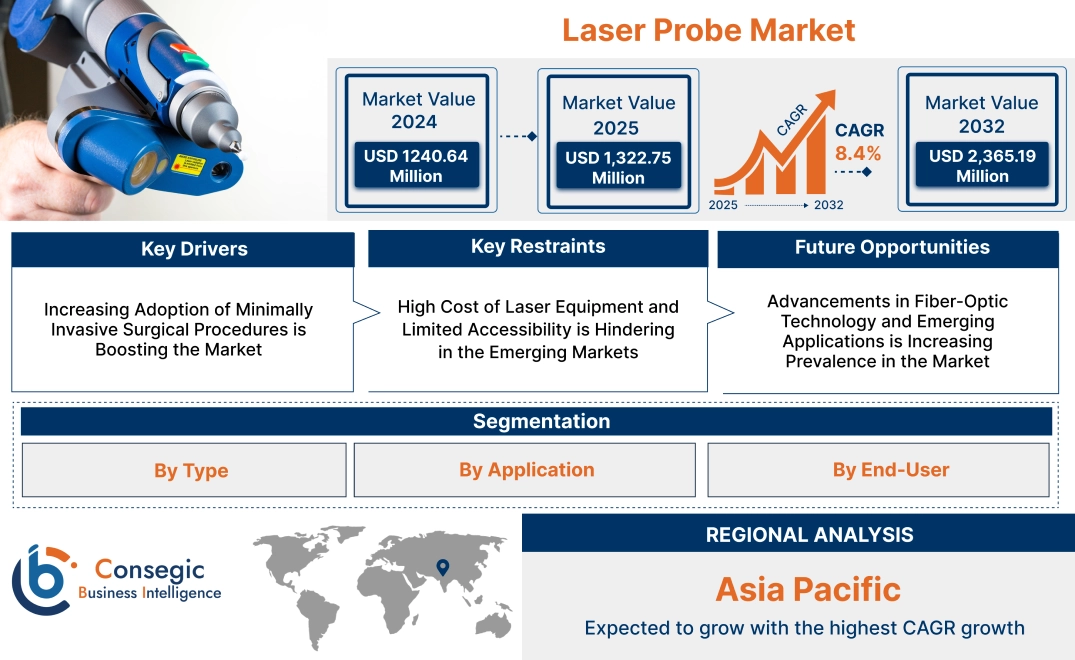
Laser Probe Market Dynamics - (DRO) :
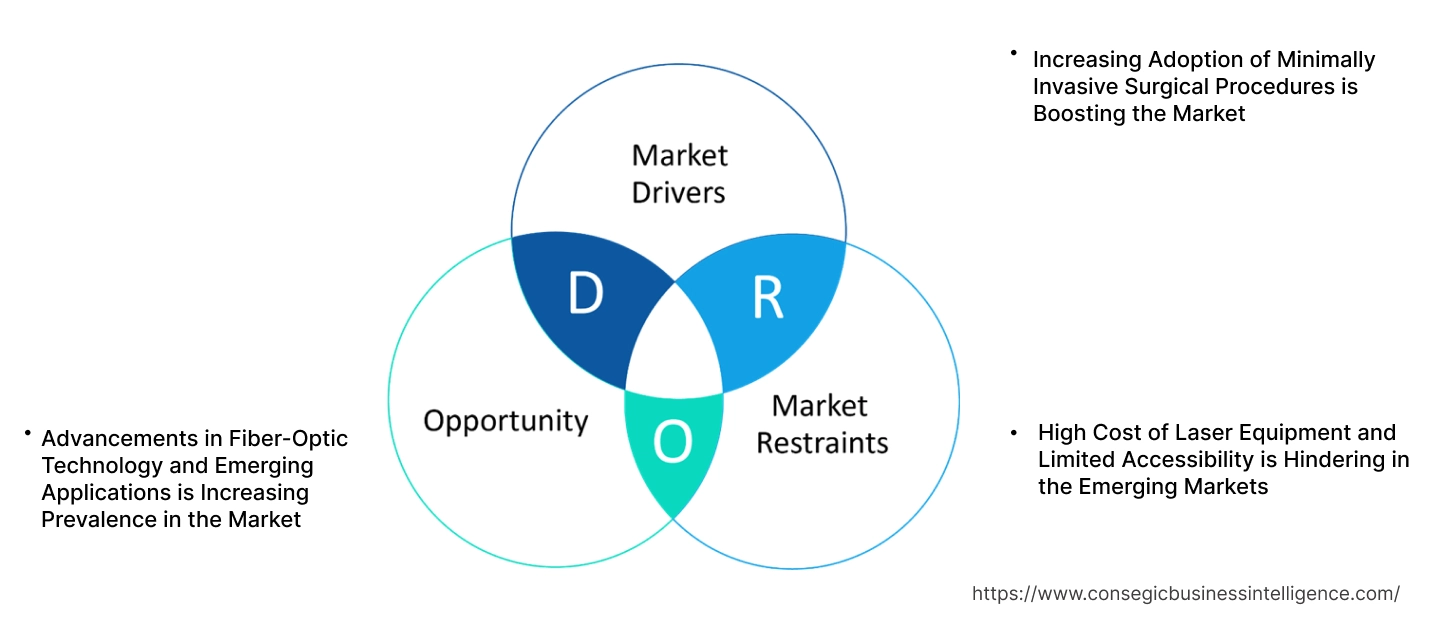
Key Drivers:
Increasing Adoption of Minimally Invasive Surgical Procedures is Boosting the Market
The growing preference for minimally invasive surgical procedures is a significant driver of the laser probe market. These are widely used in various medical applications, including ophthalmology, oncology, dermatology, and cardiology, due to their precision, reduced recovery time, and minimal tissue damage compared to traditional surgical techniques. In ophthalmology, laser probes are extensively employed for retinal treatments, such as photocoagulation for diabetic retinopathy and retinal detachment. Similarly, in oncology, these lasers are used for tumor ablation, providing a targeted and effective solution for cancer treatment. The rising prevalence of chronic diseases, coupled with advancements in laser technology offering greater precision and safety, has led to increased adoption of laser across healthcare settings, driving laser probe market expansion.
Key Restraints:
High Cost of Laser Equipment and Limited Accessibility is Hindering in the Emerging Markets
Despite their advantages, the high cost of laser probes and associated equipment remains a significant barrier to market growth, particularly in low- and middle-income regions. The initial investment required for laser systems, along with maintenance and operating costs, limits their accessibility to smaller clinics and hospitals with budget constraints. Additionally, the lack of trained professionals to operate laser devices further restricts their adoption in emerging markets. These factors hinder the penetration of laser technologies in regions with limited healthcare infrastructure, slowing the overall market expansion.
Future Opportunities :
Advancements in Fiber-Optic Technology and Emerging Applications is Increasing Prevalence in the Market
The integration of fiber-optic technology into laser probes presents significant opportunities for market opportunities. Fiber-optic laser probes allow for greater flexibility, precision, and access to hard-to-reach areas, making them ideal for complex surgical procedures. Advancements in this technology have enabled the development of smaller, more efficient these lasers are used in delicate applications, such as neurosurgery and urology. Additionally, the rising use of laser probes in emerging fields like photodynamic therapy (PDT) and laser-assisted bioprinting further expands their application scope. For instance, PDT combines lasers with photosensitizing agents to treat conditions like cancer and age-related macular degeneration. These emerging applications, coupled with ongoing research and development efforts, are expected to create new avenues for market growth.
These dynamics emphasize the critical role of laser probes in advancing modern medical practices, driven by the increasing laser probe market opportunities for minimally invasive solutions and technological advancements. While challenges related to cost and accessibility persist, innovations in fiber-optic technology and expanding applications position the market for substantial development in the coming years.
Laser Probe Market Segmental Analysis :
By Type:
Based on type, the market is segmented into surgical laser probes, diagnostic laser probes, and therapeutic laser probes.
The surgical laser probes segment accounted for the largest revenue in laser probe market share in 2024.
- Surgical laser are widely adopted in minimally invasive procedures, offering precision and reduced recovery times.
- Increasing prevalence of chronic diseases such as cancer and cardiovascular disorders has driven the laser probe market demand for surgical laser interventions.
- Advancements in laser technologies, including fiber-optic and diode lasers, have enhanced the efficacy of surgical probes.
- Rising preference for minimally invasive surgeries globally is fueling the adoption of surgical probes.
The therapeutic laser probes segment is anticipated to register the fastest CAGR during the forecast period.
- Therapeutic probes are gaining popularity in physiotherapy, pain management, and wound healing applications.
- Growing adoption in dermatology for treating scars, skin rejuvenation, and pigmentation issues is driving surge.
- Expanding use of therapeutic probes in neurology for conditions such as neuropathy is supporting segment trends.
- Increasing focus on non-invasive therapeutic solutions across healthcare settings is expected to propel growth.
By Application:
Based on application, the market is segmented into ophthalmology, dermatology, oncology, cardiovascular treatments, neurology, and others.
The ophthalmology segment accounted for the largest revenue in laser probe market share in 2024.
- Laser probes are extensively used in ophthalmology for retinal treatments, glaucoma management, and cataract surgeries.
- Increasing prevalence of age-related macular degeneration (AMD) and diabetic retinopathy is driving demand in this segment.
- Advancements in laser-assisted ophthalmic procedures, such as photocoagulation and photodisruption, are boosting adoption.
- Rising investments in eye care technologies and growing awareness about early diagnosis are supporting segment laser probe market growth.
The oncology segment is anticipated to register the fastest CAGR during the forecast period.
- These probes are increasingly used in oncology for tumor ablation, biopsy, and photodynamic therapy.
- Growing adoption of minimally invasive laser-based treatments for cancer management is driving trends.
- Technological innovations enabling targeted therapy with minimal damage to surrounding tissues are boosting laser probe market growth in this segment.
- Rising prevalence of cancer globally and increasing focus on advanced therapeutic solutions are expected to propel trends.
By End-User:
Based on end-user, the market is segmented into hospitals, specialty clinics, ambulatory surgical centers, and research institutes.
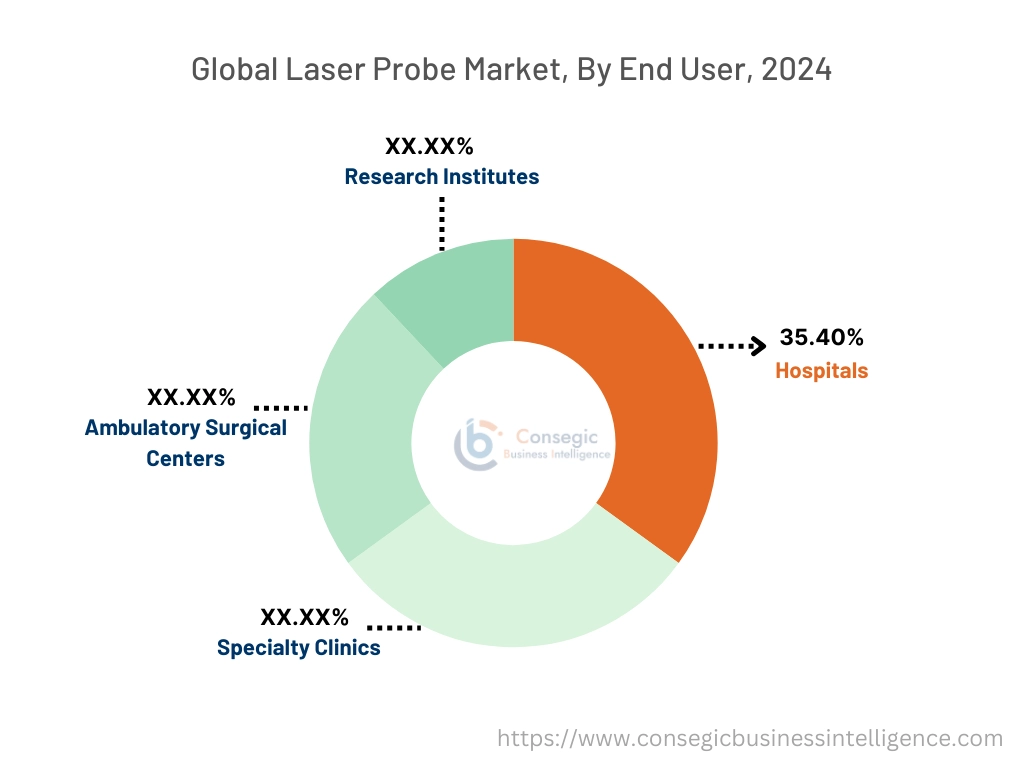
The hospitals segment accounted for the largest revenue share of 35.40% in 2024.
- Hospitals serve as the primary facilities for complex surgical and diagnostic procedures requiring probes.
- Availability of advanced infrastructure and skilled professionals in hospitals supports in the laser probe market trends.
- Increasing hospital admissions for conditions requiring laser-based interventions, such as cancer and cardiovascular diseases, is driving development.
- Rising investments in hospital infrastructure and adoption of cutting-edge laser technologies are further supporting segment progress.
The specialty clinics segment is anticipated to register the fastest CAGR during the forecast period.
- Specialty clinics focusing on dermatology, ophthalmology, and oncology offer tailored laser treatments, driving demand.
- Growing patient preference for outpatient procedures performed in specialized settings is boosting segment trends.
- Expansion of specialty clinics in urban and semi-urban regions has improved access to advanced laser treatments.
- Increasing collaborations between specialty clinics and technology providers for adopting innovative probes are expected to propel laser probe market trends.
Regional Analysis:
The regions covered are North America, Europe, Asia Pacific, the Middle East and Africa, and Latin America.
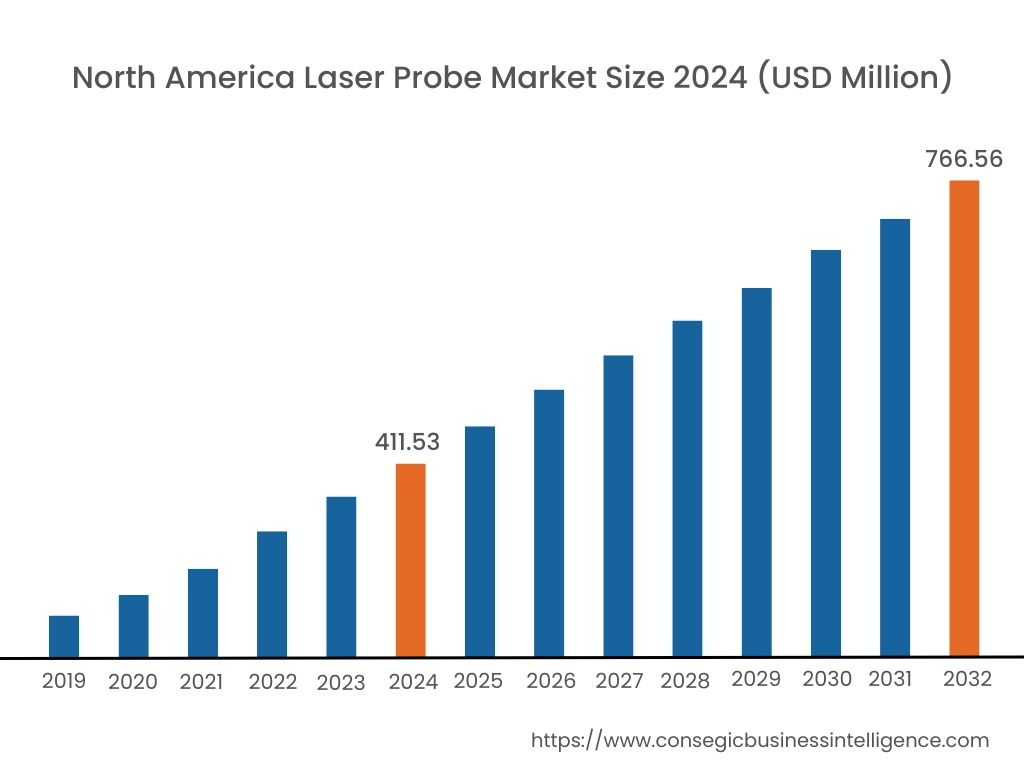
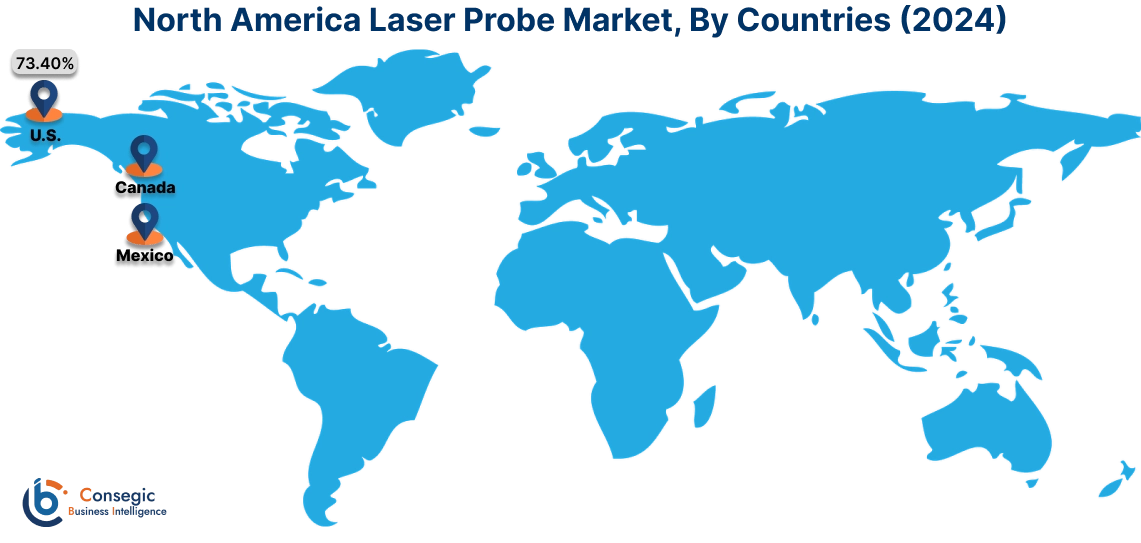
In 2024, North America was valued at USD 411.53 Million and is expected to reach USD 766.56 Million in 2032. In North America, the U.S. accounted for the highest share of 73.40% during the base year of 2024. North America holds a significant share in the global laser probe market, driven by advancements in healthcare technology, widespread adoption of laser-based medical devices, and high prevalence of conditions requiring minimally invasive treatments such as ophthalmic disorders and cancer. The U.S. dominates the region due to strong investments in R&D, increasing demand for probes in diagnostic and therapeutic procedures, and a robust healthcare infrastructure. As per the laser probe market analysis, Canada contributes with rising adoption of probes in ophthalmology and oncology. However, high costs associated with advanced laser technologies may limit access in smaller healthcare facilities.
In Asia Pacific, the market is experiencing the fastest growth with a CAGR of 8.9% over the forecast period. The laser probe market analysis, is fueled by rapid advancements in healthcare infrastructure, increasing prevalence of chronic diseases, and rising adoption of minimally invasive procedures in China, India, and Japan. China dominates the region with growing demand for probes in ophthalmology, oncology, and dermatology, supported by government initiatives to improve healthcare access. India’s expanding healthcare sector drives adoption of cost-effective laser probe technologies for cataract surgeries and tumor ablation. Japan focuses on high-precision probes for advanced therapeutic applications, leveraging its strong R&D capabilities. However, affordability challenges and limited awareness in rural areas may hinder market growth in certain parts of the region.
Europe is a prominent market , supported by a growing elderly population, increasing prevalence of chronic diseases, and strong government support for innovative medical technologies. Countries like Germany, France, and the UK are key contributors. The regional analysis of, Germany leads with extensive use of probes in surgical procedures such as ophthalmic surgeries and oncology treatments, supported by advanced healthcare facilities. France emphasizes laser-based technologies in dermatology and cosmetic procedures, while the UK focuses on expanding access to probes in public healthcare systems for minimally invasive treatments. However, strict regulatory frameworks for medical devices may pose challenges for manufacturers.
The Middle East & Africa region is witnessing steady growth in the laser probe market, driven by increasing healthcare investments and rising trends for advanced diagnostic and therapeutic technologies. Countries like Saudi Arabia and the UAE are adopting probes in ophthalmology, oncology, and aesthetic procedures, supported by government initiatives to modernize healthcare infrastructure. In Africa, South Africa is an emerging market, the analysis portrays it, focusing on improving access to laser-based treatments in ophthalmology and dermatology. However, limited local manufacturing capabilities and reliance on imports may restrict market development in the region.
Latin America is an emerging market, with Brazil and Mexico leading the region. Brazil’s growing healthcare sector and increasing trends for laser-based surgical and diagnostic procedures drive the market, particularly in ophthalmology and oncology. Mexico focuses on expanding access to minimally invasive laser probe technologies in public and private healthcare facilities. The region also benefits from rising awareness of laser-based aesthetic procedures. However, economic instability and inconsistent healthcare infrastructure may pose challenges to market growth in smaller economies.
Top Key Players and Market Share Insights:
The laser probe market is highly competitive with major players providing products to the national and international markets. Key players are adopting several strategies in research and development (R&D), product innovation, and end-user launches to hold a strong position in the laser probe market. Key players in the laser probe industry include -
- Boston Scientific Corporationv (United States)
- Lumenis Ltd. (Israel)
- Coherent, Inc. (United States)
- NIDEK Co., Ltd. (Japan)
- Bausch + Lomb (United States)
- Alcon, Inc. (Switzerland)
- Carl Zeiss Meditec AG (Germany)
- Ellex Medical Lasers Ltd. (Australia)
- Topcon Corporation (Japan)
- Iridex Corporation (United States)
Recent Industry Developments :
Product Launches:
- In July 2023, IRIDEX introduced a new range of Illuminating Laser Probes combining white-light illumination with laser delivery. These dual-function probes are designed to enhance surgical efficiency in retinal procedures by allowing bimanual operation with one hand managing both illumination and laser delivery.
- In March 2024, Lumenis unveiled the SmartPulse Laser Probe, featuring advanced optics for precision in retinal photocoagulation. The probe integrates real-time tracking, enhancing treatment outcomes in diabetic retinopathy and macular edema surgeries.
Laser Probe Market Report Insights :
| Report Attributes | Report Details |
| Study Timeline | 2019-2032 |
| Market Size in 2032 | USD 2,365.19 Million |
| CAGR (2025-2032) | 8.4% |
| By Type |
|
| By Application |
|
| By End-User |
|
| By Region |
|
| Key Players |
|
| North America | U.S. Canada Mexico |
| Europe | U.K. Germany France Spain Italy Russia Benelux Rest of Europe |
| APAC | China South Korea Japan India Australia ASEAN Rest of Asia-Pacific |
| Middle East and Africa | GCC Turkey South Africa Rest of MEA |
| LATAM | Brazil Argentina Chile Rest of LATAM |
| Report Coverage |
|
Key Questions Answered in the Report
What is the projected size of the Laser Probe Market by 2032? −
Laser Probe Market size is estimated to reach over USD 2,365.19 Million by 2032 from a value of USD 1240.64 Million in 2024 and is projected to grow by USD 1,322.75 Million in 2025, growing at a CAGR of 8.4% from 2025 to 2032.
What are the key drivers for the Laser Probe Market? +
The increasing adoption of minimally invasive surgical procedures and advancements in laser technologies are key drivers. The rising prevalence of chronic conditions such as cancer, ophthalmic disorders, and cardiovascular diseases further fuels the market growth.
What challenges does the Laser Probe Market face? +
High costs associated with laser probes and limited accessibility in emerging markets are major challenges. Additionally, a lack of trained professionals to operate advanced laser systems hinders adoption in low-income regions.
Which type dominates the Laser Probe Market? +
The surgical laser probes segment holds the largest market share due to its extensive use in minimally invasive procedures for various medical applications.
Overview
Reputation & Certifications


Our Services
- Market Intelligence & Forecasting
- Custom Research Solutions
- Market Entry Strategy
- Competitive Intelligence
- Customer Insights
- Industry Innovation Analysis
- Investment Advisory