Jump to Content
Gabapentin Market - Size, Share, Industry Trends, and Forecasts (2025 - 2032)
Gabapentin Market Size:
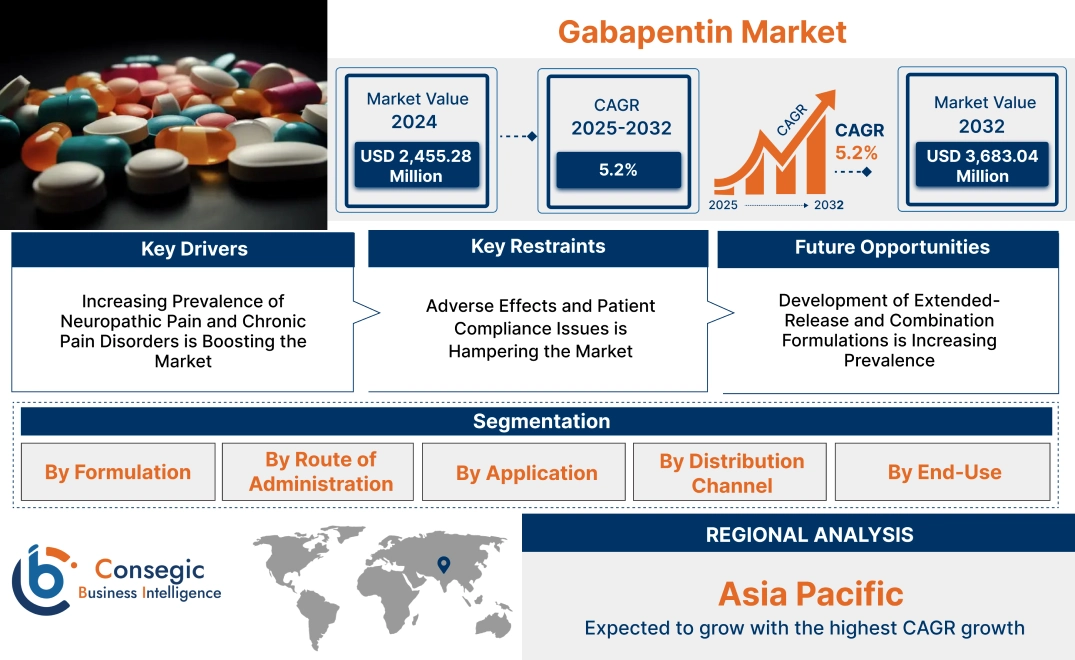
Gabapentin Market size is estimated to reach over USD 3,683.04 Million by 2032 from a value of USD 2,455.28 Million in 2024 and is projected to grow by USD 2,539.21 Million in 2025, growing at a CAGR of 5.2% from 2025 to 2032.
Gabapentin Market Scope & Overview:
Gabapentin is an anticonvulsant medication primarily used to treat neuropathic pain, epilepsy, and postherpetic neuralgia. By modulating the activity of calcium channels in the nervous system, gabapentin helps reduce nerve pain and control seizures. It is widely prescribed due to its effectiveness, favorable safety profile, and versatility in addressing multiple neurological conditions.
Gabapentin is available in various formulations, including tablets, capsules, and oral solutions, making it suitable for a diverse patient population. The growing prevalence of neurological disorders, coupled with an increasing awareness of neuropathic pain management, is driving the trends for gabapentin. Rising cases of conditions such as diabetic neuropathy, shingles-related pain, and epilepsy are further contributing to market expansion.
Additionally, advancements in pharmaceutical manufacturing have enabled the development of extended-release formulations, improving patient compliance and therapeutic outcomes. End-users of gabapentin include hospitals, clinics, and retail pharmacies, which cater to the rising demand for effective pain management and neurological therapies. As the global burden of chronic pain and neurological disorders continues to increase, the gabapentin market is expected to witness steady growth, supported by ongoing innovations and an expanding patient base.
Gabapentin Market Dynamics - (DRO) :
Key Drivers:
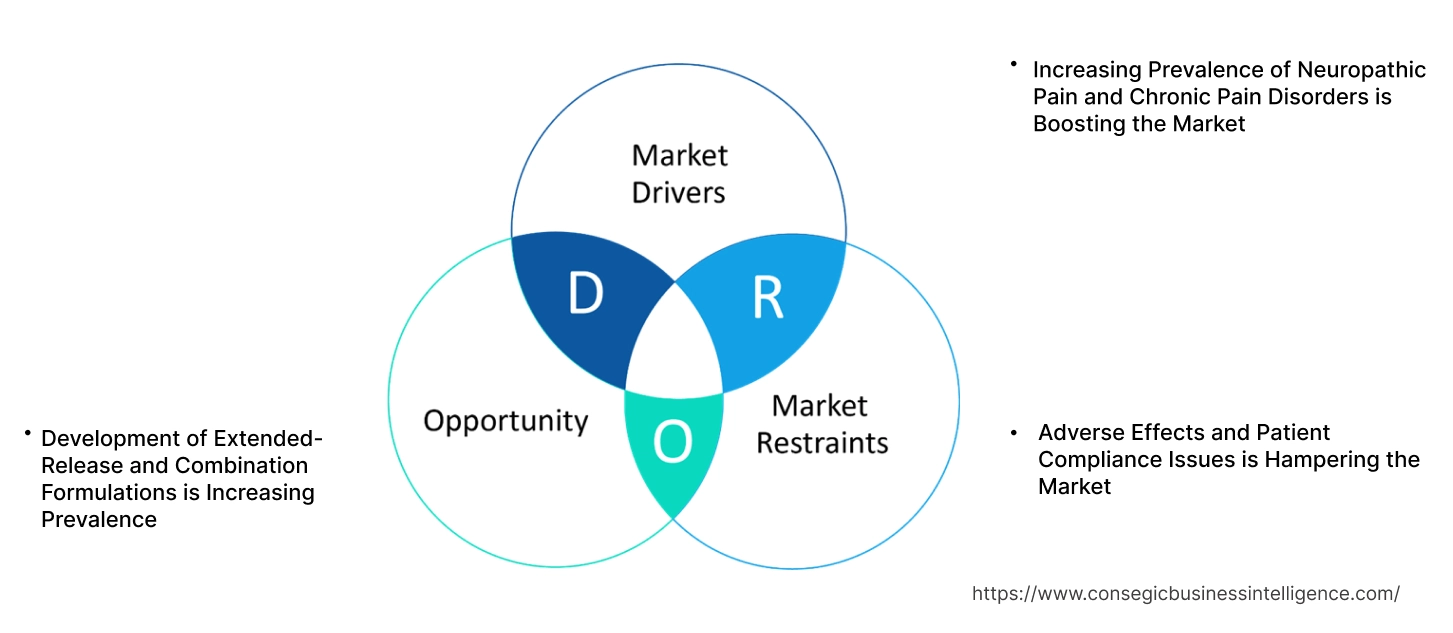
Increasing Prevalence of Neuropathic Pain and Chronic Pain Disorders is Boosting the Market
The rising incidence of neuropathic and chronic pain conditions, such as diabetic neuropathy, postherpetic neuralgia, and fibromyalgia, has significantly elevated the use of gabapentin as a preferred treatment option. Its efficacy in managing persistent pain and improving quality of life makes it a critical component of chronic pain management strategies. Additionally, an aging population, which is more susceptible to these conditions, further underscores the increasing relevance of gabapentin in clinical settings.
Trends in non-opioid pain management are driving the focus toward safer alternatives like gabapentin to address the opioid crisis and associated risks. The analysis highlights its role in supporting comprehensive pain management solutions, particularly as healthcare systems emphasize patient-centered care and reduced reliance on addictive medications.
Key Restraints:
Adverse Effects and Patient Compliance Issues is Hampering the Market
Despite its therapeutic benefits, gabapentin’s use can be limited by its side effects, which include dizziness, drowsiness, and fatigue. These adverse effects may impact patients’ ability to adhere to prescribed treatment regimens, particularly for those requiring long-term therapy. Moreover, abrupt discontinuation of gabapentin can lead to withdrawal symptoms, posing additional challenges in patient management.
Trends in addressing medication compliance and adverse effect mitigation emphasize the need for patient education and improved formulations. Analysis suggests that strategies to minimize side effects and enhance treatment adherence are essential for optimizing gabapentin’s effectiveness in clinical practice.
Future Opportunities :
Development of Extended-Release and Combination Formulations is Increasing Prevalence
Innovations in drug delivery systems, such as extended-release (ER) and combination formulations, offer significant potential for improving the efficacy and convenience of gabapentin therapy. ER formulations can reduce dosing frequency, thereby enhancing patient adherence, while combination therapies can target multiple symptoms simultaneously, streamlining treatment plans.
Trends in pharmaceutical advancements and patient-centric design are driving the development of these formulations, aligning with the goal of improved therapeutic outcomes and reduced side effects. Analysis indicates that manufacturers focusing on innovative delivery systems can cater to evolving patient needs and address existing gaps in chronic pain management. These advancements are poised to broaden gabapentin’s utility and acceptance across diverse medical applications.
Top Key Players and Market Share Insights:
The gabapentin market is highly competitive with major players providing products to the national and international markets. Key players are adopting several strategies in research and development (R&D), product innovation, and end-user launches to hold a strong position in the gabapentin market. Key players in the gabapentin industry include -
- Pfizer Inc. (United States)
- Aurobindo Pharma Limited (India)
- Torrent Pharmaceuticals Ltd. (India)
- Glenmark Pharmaceuticals Ltd. (India)
- Lupin Limited (India)
- Sun Pharmaceutical Industries Ltd. (India)
- Teva Pharmaceutical Industries Ltd. (Israel)
- Mylan N.V. (United States)
- Apotex Inc. (Canada)
- Amneal Pharmaceuticals LLC (United States)
Gabapentin Market Segmental Analysis :
By Formulation:
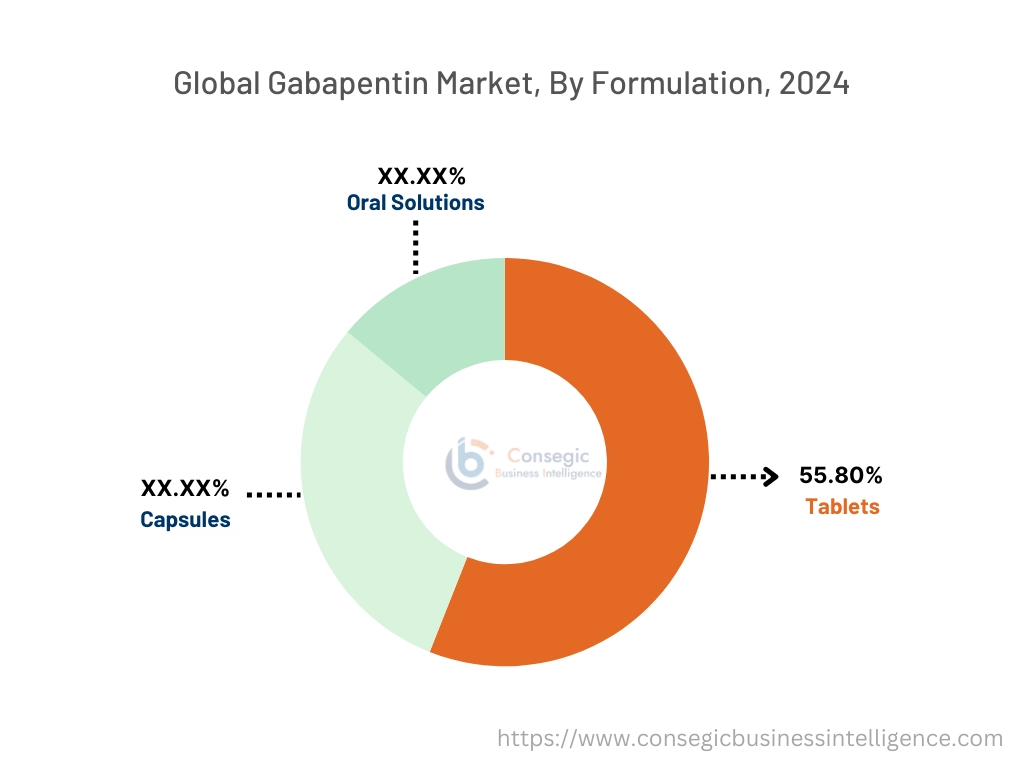
Based on formulation, the market is segmented into tablets, capsules, and oral solutions.
The tablets segment accounted for the largest revenue of 55.80% in gabapentin market share in 2024.
- Tablets dominate the market due to their convenience, accurate dosing, and ease of storage, making them a preferred choice for chronic conditions.
- Gabapentin tablets are widely prescribed for neuropathic pain, epilepsy, and other neurological disorders, supporting their extensive use.
- The availability of generic formulations has further contributed to the affordability and accessibility of tablets, driving their adoption.
- Advances in extended-release tablet formulations have improved patient compliance, especially for conditions requiring long-term management.
The oral solutions segment is anticipated to register the fastest CAGR during the forecast period.
- Oral solutions are increasingly preferred for pediatric and geriatric populations, where swallowing solid formulations can be challenging.
- Gabapentin oral solutions provide flexibility in dosing and are especially beneficial for patients requiring tailored treatment regimens.
- Rising gabapentin market trends for flavored and easy-to-administer formulations are driving the gabapentin market growth of this segment.
- The increasing focus on patient-centric drug delivery solutions is expected to further boost the adoption of oral gabapentin solutions.
By Route of Administration:
Based on the route of administration, the market is segmented into oral, parenteral, and intravenous.
The oral route segment accounted for the largest revenue share in 2024.
- Gabapentin is predominantly administered orally, given its convenience and effectiveness for managing chronic neurological conditions.
- This route ensures high patient compliance, particularly in outpatient and home care settings.
- Advancements in oral formulations, including extended-release and rapid-acting options, have enhanced therapeutic outcomes.
- The widespread availability of gabapentin in oral forms through hospital and retail pharmacies has reinforced this segment's dominance.
The intravenous route segment is anticipated to register the fastest CAGR during the forecast period.
- Intravenous administration of gabapentin is gaining attention in acute settings, particularly for severe neuropathic pain or post-operative pain management.
- This route ensures rapid onset of action, making it ideal for hospital use and critical care scenarios.
- Increasing adoption in surgical centers and advancements in intravenous drug delivery systems are driving advancement in this segment.
- Ongoing research into expanding the use of intravenous gabapentin for broader indications is expected to further propel trends.
By Application:
Based on application, the market is segmented into neuropathic pain, epilepsy, restless leg syndrome (RLS), migraine, and others.
The neuropathic pain segment accounted for the largest revenue in gabapentin market share in 2024.
- Gabapentin is a first-line treatment for neuropathic pain, offering relief for conditions such as diabetic neuropathy and postherpetic neuralgia.
- The increasing prevalence of diabetes and other conditions associated with nerve pain has driven gabapentin market demand.
- Its effectiveness, safety profile, and affordability make gabapentin a preferred option among healthcare providers.
- Growing awareness about early diagnosis and treatment of neuropathic pain is further supporting the dominance of this segment.
The restless leg syndrome (RLS) segment is anticipated to register the fastest CAGR during the forecast period.
- Gabapentin is increasingly used off-label for managing symptoms of RLS, providing significant relief for affected patients.
- Rising awareness about the impact of RLS on quality of life has led to increased diagnosis and treatment rates.
- Research supporting gabapentin's efficacy in RLS management is driving its adoption among healthcare providers.
- The growing prevalence of RLS, particularly among older adults, is expected to fuel gabapentin market trends for the application.
By Distribution Channel:
Based on distribution channels, the market is segmented into hospital pharmacies, retail pharmacies, and online pharmacies.
The retail pharmacies segment accounted for the largest revenue share in 2024.
- Retail pharmacies are the primary distribution channel for gabapentin, catering to the high volume of prescriptions for chronic neurological conditions.
- The widespread availability of generic gabapentin formulations has increased affordability and accessibility for patients.
- Retail pharmacies are well-positioned to serve both urban and rural populations, reinforcing their dominance in the market.
- Collaborations between pharmaceutical manufacturers and retail pharmacy chains to ensure supply chain efficiency are supporting this segment.
The online pharmacies segment is anticipated to register the fastest CAGR during the forecast period.
- The convenience, competitive pricing, and privacy offered by online pharmacies have driven their adoption among patients managing chronic conditions.
- Rising penetration of e-commerce platforms and growing awareness about online pharmacy services are boosting this segment.
- The COVID-19 pandemic accelerated the adoption of online pharmacies, a trend that continues to gain momentum.
- Regulatory support and the availability of gabapentin through licensed online platforms are further driving growth in this segment.
By End-User:
Based on end-use, the market is segmented into hospitals, clinics, home care settings, and others.
The hospitals segment accounted for the largest revenue share in 2024.
- Hospitals are key centers for managing severe neurological conditions, including acute pain and epilepsy, requiring gabapentin-based treatments.
- The availability of skilled professionals and advanced diagnostic and therapeutic facilities supports the widespread use of gabapentin in hospital settings.
- Increasing hospital admissions for conditions such as post-surgical neuropathic pain have driven trends for gabapentin in this segment.
- Partnerships between hospitals and pharmaceutical companies to ensure access to high-quality medications are bolstering gabapentin market opportunities.
The homecare settings segment is anticipated to register the fastest CAGR during the forecast period.
- The growing trend of managing chronic neurological conditions at home has boosted the use of gabapentin in homecare settings.
- The availability of easy-to-administer formulations, such as tablets and oral solutions, has enhanced patient convenience.
- Advances in telemedicine and home delivery services for prescriptions are driving growth in this segment.
- The increasing preference for home-based care, particularly among elderly patients, is expected to fuel trends for gabapentin in this end-use category.
Gabapentin Market Report Insights :
| Report Attributes | Report Details |
| Study Timeline | 2019-2032 |
| Market Size in 2032 | USD 3,683.04 Million |
| CAGR (2025-2032) | 5.2% |
| By Formulation |
|
| By Route of Administration |
|
| By Application |
|
| By Distribution Channel |
|
| By End-Use |
|
| By Region |
|
| Key Players |
|
| North America | U.S. Canada Mexico |
| Europe | U.K. Germany France Spain Italy Russia Benelux Rest of Europe |
| APAC | China South Korea Japan India Australia ASEAN Rest of Asia-Pacific |
| Middle East and Africa | GCC Turkey South Africa Rest of MEA |
| LATAM | Brazil Argentina Chile Rest of LATAM |
| Report Coverage |
|
Regional Analysis:
The regions covered are North America, Europe, Asia Pacific, the Middle East and Africa, and Latin America.
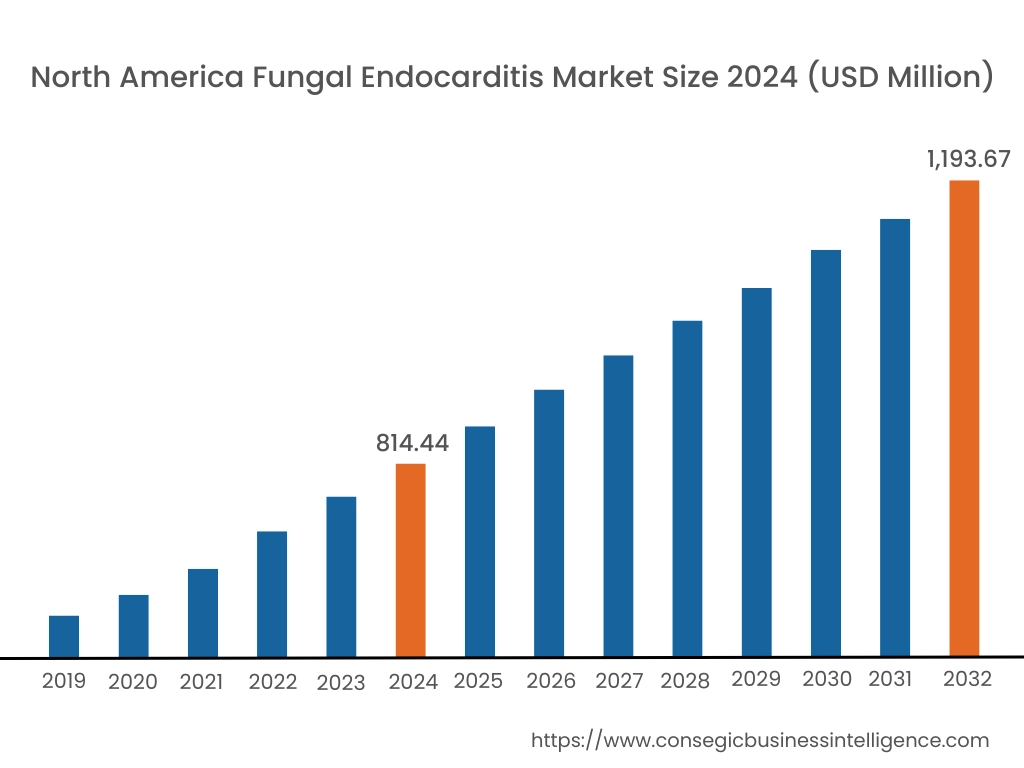
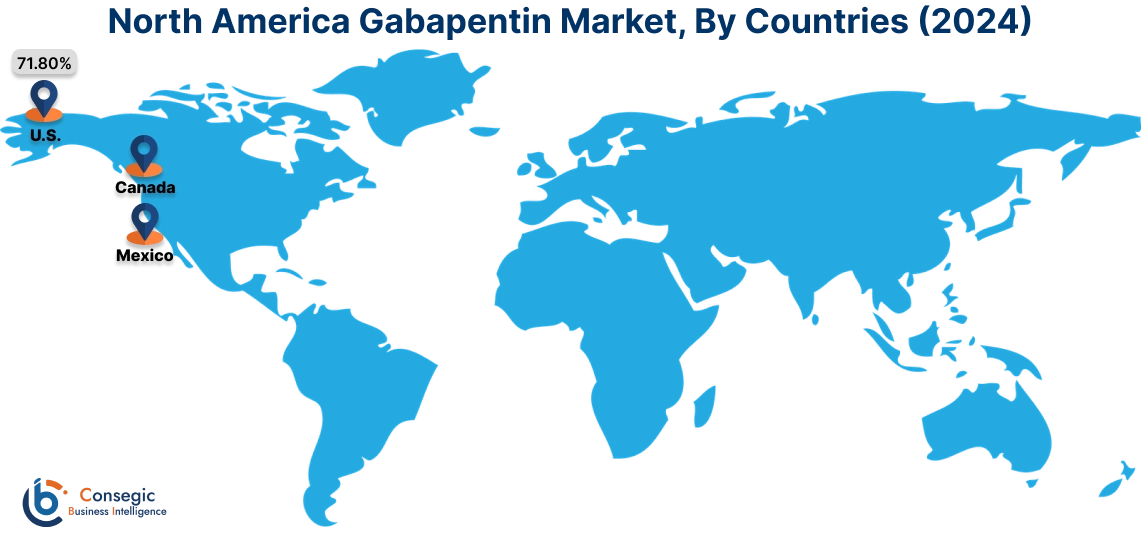
In 2024, North America was valued at USD 814.44 Million and is expected to reach USD 1,193.67 Million in 2032. In North America, the U.S. accounted for the highest share of 71.80% during the base year of 2024. North America holds a significant share of the gabapentin market, driven by the high prevalence of neuropathic pain, epilepsy, and other nerve-related disorders. The U.S. dominates the region due to strong trends for gabapentin as a prescription medication for chronic pain management and off-label uses, including anxiety and migraine treatment. The rising geriatric population and increasing awareness about nerve-related conditions further boost gabapentin market demand. As per the gabapentin market analysis, Canada contributes to the market with growing prescription rates for gabapentin in pain and epilepsy management. However, concerns over the misuse of gabapentin and stringent regulations around its prescribing practices may pose challenges in the region.
In Asia Pacific, the market is experiencing the fastest growth with a CAGR of 5.6% over the forecast period. The gabapentin market is fueled by a rising prevalence of epilepsy, increasing awareness about neuropathic conditions, and expanding healthcare access in China, India, and Japan. China dominates the region with growing adoption of gabapentin in pain management and epilepsy treatment, supported by government initiatives to improve neurological healthcare. India’s expanding pharmaceutical industry and increasing availability of affordable generic gabapentin further drive market rise. Japan focuses on advanced formulations of gabapentin for managing nerve pain and other neurological disorders. However, limited awareness in rural areas and regulatory challenges may hinder development in some parts of the region.
Europe is a prominent market for gabapentin, supported by increasing cases of neuropathic pain, epilepsy, and post-herpetic neuralgia. Countries like Germany, the UK, and France are key contributors. Germany drives demand through its advanced healthcare infrastructure and high prescription rates for chronic pain management. The UK emphasizes the use of gabapentin in nerve-related conditions, but rising concerns about potential abuse have led to stricter regulatory controls. France focuses on managing neuropathic pain and seizures in its aging population, driving steady demand for gabapentin. However, regulatory scrutiny over gabapentin’s potential for addiction may slow market growth.
The Middle East & Africa region is witnessing steady growth in the gabapentin market, driven by increasing cases of nerve-related conditions and expanding healthcare investments. In the Middle East, countries like Saudi Arabia and the UAE are adopting gabapentin for chronic pain management and epilepsy treatment in hospitals and clinics. In Africa, South Africa is emerging as a key market, leveraging government initiatives to improve access to neurological treatments. However, the limited availability of advanced formulations and reliance on imports may restrict broader gabapentin market expansion in the region.
Latin America is an emerging market for gabapentin, with Brazil and Mexico leading the region. Brazil’s expanding healthcare infrastructure and increasing prevalence of chronic pain and epilepsy drive trends for gabapentin as a cost-effective treatment option. Mexico focuses on improving access to gabapentin for nerve pain and seizure management, supported by government healthcare initiatives. The region’s analysis depicts the emphasis on affordable generic medications further supports market expansion. However, economic instability and inconsistent regulatory frameworks may pose challenges to market development in smaller economies.
Recent Industry Developments :
Approvals:
- In January 2024, Zydus Lifesciences received final approval from the U.S. Food and Drug Administration (USFDA) to manufacture and market once-daily Gabapentin Tablets in 300 mg and 600 mg strengths for the management of postherpetic neuralgia, with plans for immediate launch in the U.S. market.
Fundings and Investments:
- In August 2024, Sun Pharmaceutical Industries Limited announced an investment of up to $15 million in Pharmazz Inc. to support the Phase 3 clinical trial of Sovateltide, a novel treatment for acute cerebral ischemic stroke, in the United States.
Key Questions Answered in the Report
What is the expected size of the Gabapentin Market by 2032? −
Gabapentin Market size is estimated to reach over USD 3,683.04 Million by 2032 from a value of USD 2,455.28 Million in 2024 and is projected to grow by USD 2,539.21 Million in 2025, growing at a CAGR of 5.2% from 2025 to 2032.
What factors are driving the growth of the gabapentin market? +
The market is driven by the increasing prevalence of neuropathic pain, chronic pain disorders, and epilepsy. Trends in non-opioid pain management, an aging population, and advancements in extended-release formulations also contribute to market growth.
What challenges does the gabapentin market face? +
Key challenges include side effects such as dizziness and fatigue, which may affect patient compliance, as well as concerns about the potential misuse of gabapentin, leading to stricter regulations in some regions.
What opportunities exist in the gabapentin market? +
The development of extended-release and combination formulations offers opportunities for improved patient adherence and therapeutic outcomes. These innovations align with trends in patient-centric healthcare solutions.
Which formulation of gabapentin holds the largest market share? +
The tablet segment dominates the market due to its convenience, accurate dosing, and widespread use in chronic conditions. Advances in extended-release tablet formulations further support its dominance.
Overview
Reputation & Certifications


Our Services
- Market Intelligence & Forecasting
- Custom Research Solutions
- Market Entry Strategy
- Competitive Intelligence
- Customer Insights
- Industry Innovation Analysis
- Investment Advisory