Jump to Content
Migraine Drugs Market - Size, Share, Industry Trends, and Forecasts (2025-2032)
Migraine Drugs Market Size:
Migraine Drugs Market size is estimated to reach over USD 7.92 Billion by 2032 from a value of USD 5.85 Billion in 2024 and is projected to grow by USD 5.97 Billion in 2025, growing at a CAGR of 3.9% from 2025 to 2032.
Migraine Drugs Market Scope & Overview:
Migraine drugs are pharmaceutical formulations designed to relieve or prevent migraine attacks by targeting neurological pathways associated with pain and inflammation. These medications include triptans, gepants, ergot derivatives, and CGRP inhibitors, each addressing specific migraine symptoms and triggers. Available in oral, injectable, and nasal spray forms, they provide varying levels of relief based on the severity and frequency of migraine episodes.
Key features include fast-acting formulations, long-duration efficacy, and targeted mechanisms that minimize associated symptoms such as nausea and sensitivity to light. Preventive options help reduce attack frequency, while acute treatments offer immediate symptom relief. Many medications are designed for patient-friendly administration, improving adherence and treatment outcomes.
Pharmaceutical companies, healthcare providers, and research institutions develop and distribute them to support effective migraine management. Ongoing advancements in drug delivery and formulation methods continue to enhance their therapeutic potential, ensuring reliable relief and improved patient quality of life.
How is AI Transforming the Migraine Drugs Market?
The integration of AI is significantly transforming the migraine drugs market, specifically by accelerating drug discovery through identifying novel targets and optimizing treatments, improving personalized medicine through predictive models and wearable devices, and enhancing clinical practice with automated notes and improved diagnostic tools for non-specialists. Moreover, the ability of AI-powered solutions to analyze complex biological and patient data leads to faster identification of effective drug combinations and more accurate forecasting of migraine attacks, while also facilitating innovative digital therapeutics that support patient management and engagement. Therefore, the aforementioned factors are expected to drive the market growth in upcoming years.

Migraine Drugs Market Dynamics - (DRO):
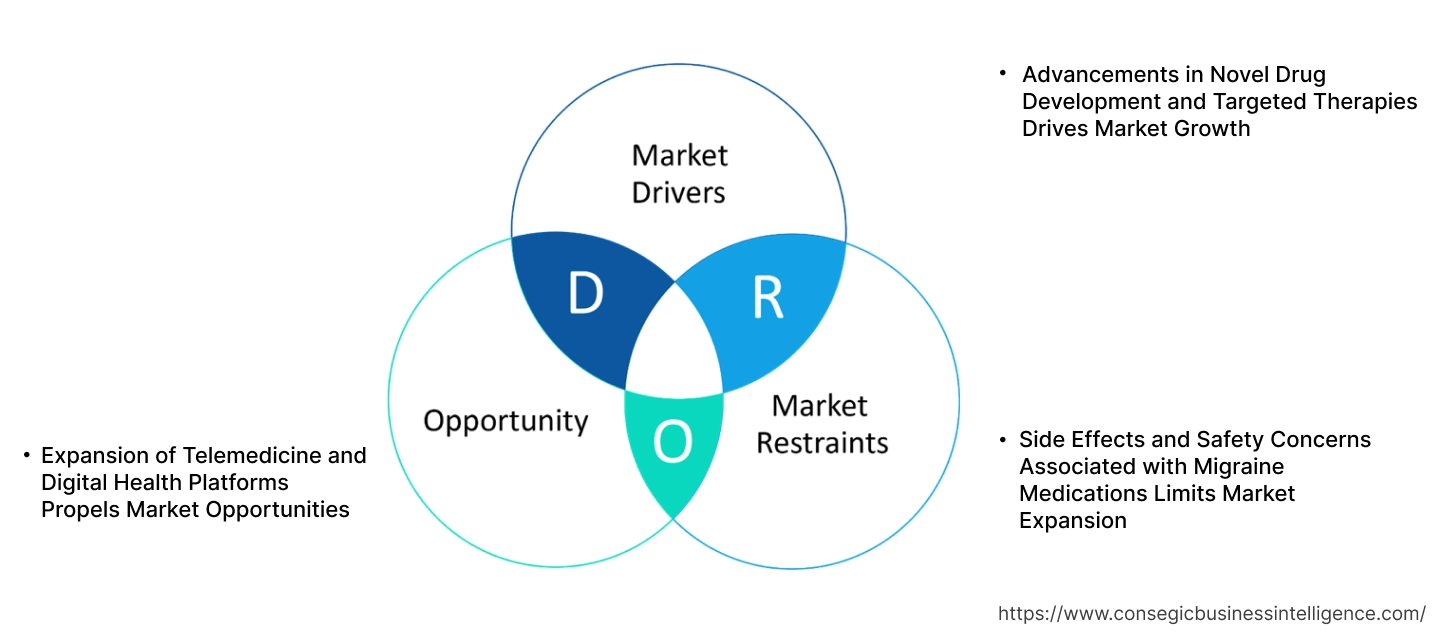
Key Drivers:
Advancements in Novel Drug Development and Targeted Therapies Drives Market Growth
The introduction of CGRP (calcitonin gene-related peptide) inhibitors, gepants, and ditans has revolutionized migraine management by providing better efficacy with fewer side effects. These medications offer preventive and acute treatment options, reducing the frequency and severity of migraine attacks. Additionally, advancements in monoclonal antibody therapies and gene-based treatments are creating highly specialized solutions for chronic migraine patients. Pharmaceutical companies are heavily investing in clinical trials, drug delivery innovations, and personalized treatment approaches to enhance patient outcomes. As researchers develop more selective, well-tolerated medications, the migraine treatment landscape is shifting toward precision medicine and biologics.
- In June 2023, Lilly announced the results of the clinical trial comparing the efficacy of Emgality®and Nurtec® ODT, two calcitonin gene-related peptide (CGRP) antagonist therapies. The study demonstrated the ability of Emgality to work quickly and improve patients’ lives without frequent dosing.
With continued innovation in drug formulations and non-invasive delivery systems, the market is set for substantial migraine drugs market expansion, improving access to advanced treatment options.
Key Restraints:
Side Effects and Safety Concerns Associated with Migraine Medications Limits Market Expansion
Triptans, a common class of migraine treatments, are linked to cardiovascular complications, nausea, and dizziness, making them unsuitable for patients with heart disease or hypertension. Similarly, long-term use of nonsteroidal anti-inflammatory drugs (NSAIDs) and ergotamines may lead to gastrointestinal issues, dependency risks, and medication-overuse headaches. Patients experiencing severe adverse effects often discontinue treatment or seek alternative therapies, affecting market penetration. Regulatory agencies impose strict guidelines on dosage, contraindications, and patient monitoring, increasing challenges for drug manufacturers. Additionally, public awareness regarding the risks of prescription migraine treatments has led to a growing preference for natural and non-pharmacological alternatives. Addressing these safety concerns through drug innovation and patient education will be critical for ensuring sustained migraine drugs market growth, improving trust in pharmaceutical solutions.
Future Opportunities:
Expansion of Telemedicine and Digital Health Platforms Propels Market Opportunities
With more patients seeking virtual consultations and AI-driven diagnostic tools, telehealth services are providing easier access to neurologists, headache specialists, and personalized treatment plans. Digital platforms enable real-time symptom tracking, medication reminders, and lifestyle management recommendations, improving adherence to prescribed therapies. Additionally, mobile health applications integrated with wearable migraine detection devices are enhancing early diagnosis and preventive care strategies. The growth of cloud-based healthcare systems and e-prescriptions is simplifying access to CGRP inhibitors, triptans, and preventive medications, reducing barriers to treatment. As digital health adoption continues to rise, healthcare providers and pharmaceutical companies are collaborating to integrate AI-powered analytics and virtual migraine clinics into mainstream care.
- In January 2024, Lilly launched an end-to-end digital healthcare experience through LillyDirect™. Targeted at obesity, migraine and diabetes afflicted patients, it offers a digital pharmacy service, disease state and healthcare educational information, access to independent telehealth providers and an independent search engine to find healthcare professionals.
These advancements will create significant migraine drugs market opportunities, improving accessibility and efficiency in migraine treatment.
Migraine Drugs Market Segmental Analysis :
By Route of Administration:
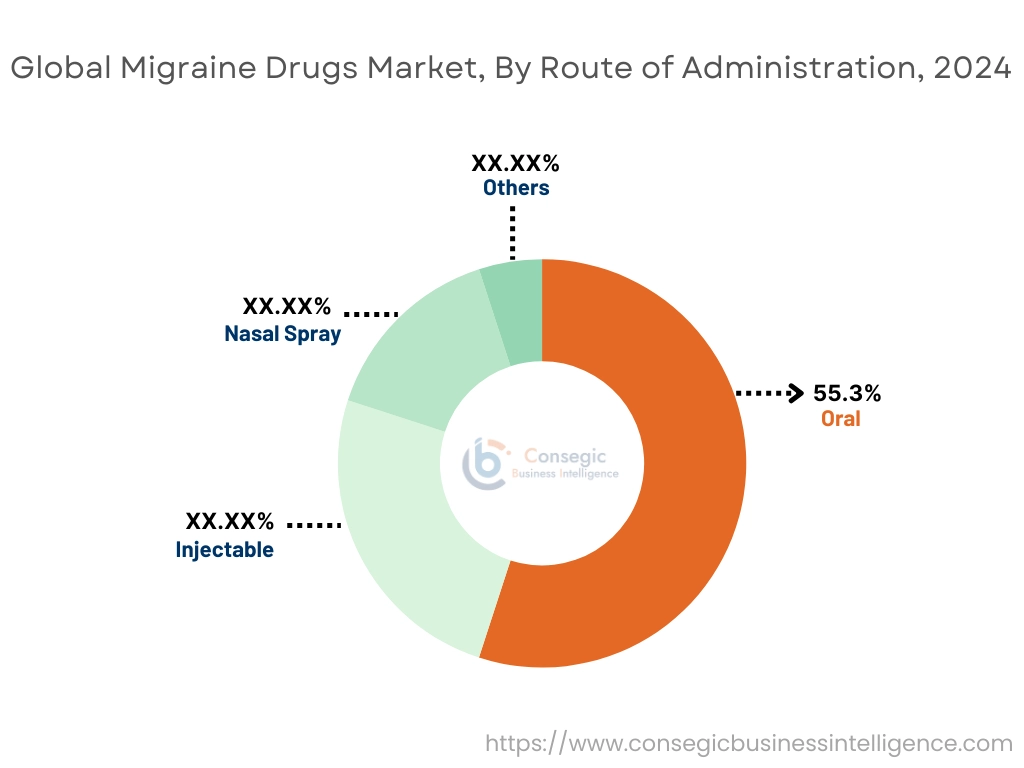
By route of administration, the market is segmented into oral, injectable, nasal spray, and others.
The oral segment held the largest migraine drugs market share of 55.3% in 2024.
- Oral migraine drugs, including triptans, NSAIDs, and CGRP inhibitors, are widely used due to their ease of administration and availability in prescription and over-the-counter forms.
- The need for effective, fast-acting oral migraine treatments is increasing, particularly for acute migraine attacks where rapid relief is needed.
- Segmental analysis highlights that innovations in oral formulations, such as dissolvable tablets and extended-release medications, are improving patient compliance.
- As per migraine drugs market trends, the increasing preference for self-administered oral drugs is driving continued investment in novel migraine treatment options.
The nasal spray segment is expected to experience the fastest CAGR during the forecast period.
- Nasal spray migraine treatments provide rapid absorption, making them highly effective for patients who experience nausea or difficulty swallowing during migraine episodes.
- The demand for non-oral, fast-acting migraine solutions is rising, particularly in patients with severe and frequent attacks.
- Market trends indicate that nasal spray CGRP inhibitors and triptans are gaining traction, offering quicker relief compared to traditional oral formulations.
- For instance, in March 2023, Pfizer’s ZAVZPRET™ migraine nasal spray received FDA approval. This is the first and only calcitonin gene-related peptide (CGRP) receptor antagonist nasal spray for the acute treatment of migraine in adults. The study further demonstrated pain relief as soon as 15 minutes versus the placebo.
- Thus, with ongoing advancements in intranasal drug delivery technology, this segment is contributing to migraine drugs market growth.
By Treatment Outlook:
Based on the treatment outlook, the market is divided into acute and preventive.
The acute segment held the largest share in 2024.
- Acute migraine treatment drugs, including triptans, NSAIDs, and ditans, remain the primary choice for immediate symptom relief.
- The demand for fast-acting acute migraine medications is growing, particularly among patients who experience episodic migraines.
- Migraine drugs market analysis suggests that combination therapies combining NSAIDs and triptans are improving treatment outcomes.
- As per market trends, pharmaceutical companies are focusing on enhancing the efficacy and tolerability of acute treatment options.
The preventive segment is expected to have the fastest CAGR during the forecast period.
- Preventive migraine treatments, including CGRP monoclonal antibodies and acetylcholine inhibitors, are gaining traction among chronic migraine sufferers.
- The need for long-term migraine management solutions is increasing, particularly in patients who experience frequent and debilitating attacks.
- Segmental trends highlight that newer preventive therapies, such as CGRP inhibitors, are offering sustained relief and reducing migraine frequency.
- Thus, with increasing awareness of migraine prophylaxis, this segment is driving migraine drugs market expansion.
By Age Group:
By age group, the market is segmented into pediatric, adult, and geriatric.
The adult segment held the largest migraine drugs market share in 2024.
- Adults account for the highest prevalence of migraines, making them the largest demographic for migraine drug consumption.
- The demand for effective migraine treatments among working professionals is increasing, as migraine episodes significantly impact daily productivity.
- Segmental analysis highlights that lifestyle factors, including stress and dietary habits, contribute to the growing need for adult migraine treatments.
- As per migraine drugs market trends, pharmaceutical companies are developing targeted therapies for adult migraine sufferers, enhancing treatment efficacy.
The pediatric segment is anticipated to experience the fastest CAGR during the forecast period.
- Pediatric migraine treatment options are expanding, with increased research into child-friendly formulations and lower-dose medications.
- The need for safe, effective migraine therapies for children is rising, particularly as awareness of pediatric migraine diagnosis increases.
- Market trends suggest that nasal spray and dissolvable tablet formulations are becoming more common, ensuring better compliance among younger patients.
- Thus, with increasing efforts to improve pediatric healthcare, this segment is expected to contribute significantly to migraine drugs market demand.
By Therapeutic Class Outlook:
Based on therapeutic class outlook, the market is segmented into CGRP monoclonal antibodies, CGRP small molecule antagonists, acetylcholine inhibitors/neurotoxins, triptans, ditans, ergot alkaloids, NSAIDs, and others.
The triptans segment held the largest share in 2024.
- Triptans remain the most commonly prescribed migraine treatment, offering fast relief by targeting serotonin receptors.
- The need for triptan-based migraine therapies is increasing, particularly for acute migraine management.
- Migraine drugs market analysis highlights that triptans continue to evolve with newer formulations, including nasal sprays and dissolvable tablets.
- As per market trends, triptans will remain a mainstay treatment, though CGRP inhibitors are emerging as strong competitors.
The CGRP monoclonal antibodies segment is anticipated to achieve the fastest CAGR during the forecast period.
- CGRP inhibitors, including monoclonal antibodies, are revolutionizing migraine prevention, reducing attack frequency in chronic migraine sufferers.
- The need for long-lasting, injectable migraine therapies is increasing, particularly for patients who do not respond well to traditional treatments.
- Market trends indicate that CGRP-targeting drugs are being adopted rapidly, offering fewer side effects and greater efficacy than older preventive medications.
- For instance, in October 2020, the Overcome study by Lilly revealed nearly 80% of people reported improvement in their migraine since starting a CGRP monoclonal antibody for preventive treatment.
- Therefore, with continued research into personalized migraine treatment, this segment is expected to drive market expansion.
Regional Analysis:
The regions covered are North America, Europe, Asia Pacific, the Middle East and Africa, and Latin America.
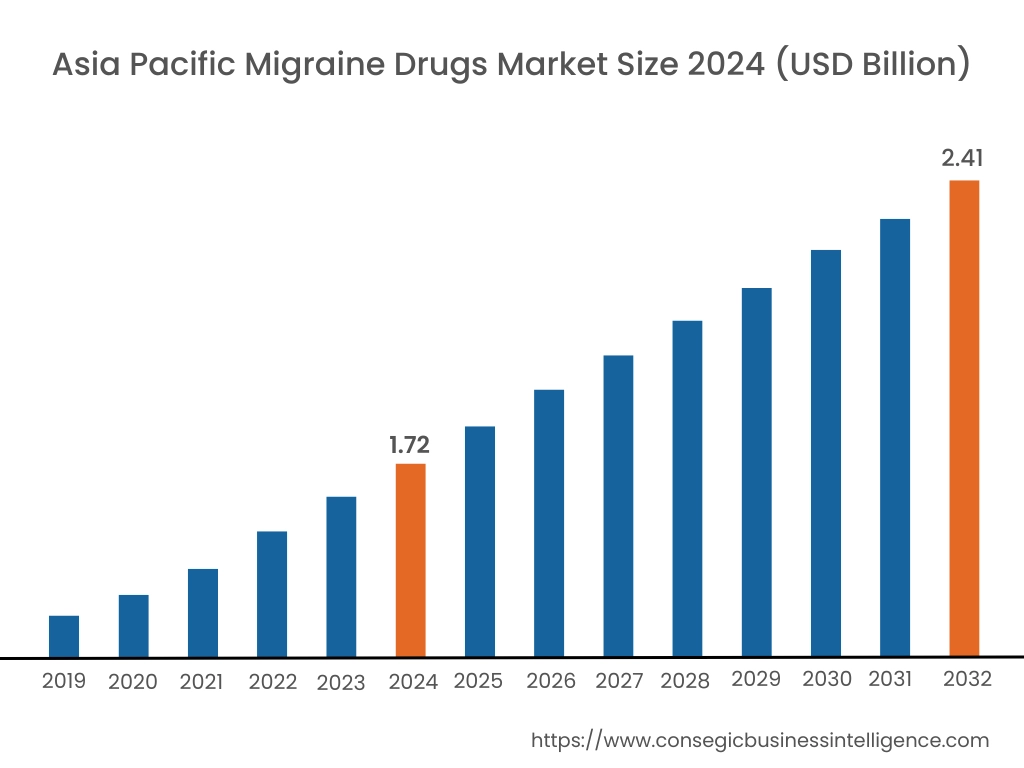
Asia-Pacific region was valued at USD 1.72 Million in 2024. Moreover, it is projected to grow by USD 1.76 Million in 2025 and reach over USD 2.41 Million by 2032. Out of this, China accounted for the maximum revenue share of 38.3%. The Asia-Pacific region is experiencing rapid growth in the migraine drugs market, attributed to a large population base and increasing healthcare expenditure. Countries such as China, Japan, and India are witnessing a rise in migraine prevalence, leading to a heightened demand for effective treatments. The adoption of Western lifestyles and increasing stress levels contribute to the growing incidence of migraines. The expanding middle-class population and improving access to healthcare services present a significant migraine drugs market opportunity for pharmaceutical companies.

North America is estimated to reach over USD 2.57 Million by 2032 from a value of USD 1.94 Million in 2024 and is projected to grow by USD 1.98 Million in 2025. This region holds a significant share of the migraine drugs industry, primarily due to a high prevalence of migraine cases and robust healthcare systems. The United States, in particular, has seen substantial investments in research and development, leading to the introduction of innovative therapies. The presence of major pharmaceutical companies and favorable reimbursement policies further bolster the market. The increasing awareness about migraine and its treatments contributes to the growing need for effective medications.
Europe represents a mature market for migraine drugs, with countries like Germany, France, and the United Kingdom leading in terms of market share. The region's comprehensive healthcare infrastructure and supportive reimbursement policies facilitate access to advanced migraine treatments. The increasing focus on preventive therapies and the availability of novel drug classes have contributed to the expanding market. Additionally, the rising awareness about migraine management among healthcare professionals and patients drives the demand for effective therapies.
In Latin America, the migraine drugs market is gradually expanding, driven by improving healthcare infrastructure and increasing awareness about migraine disorders. Countries like Brazil and Mexico are focusing on enhancing their healthcare systems, which is expected to improve access to migraine treatments. The growing urbanization and changing lifestyles contribute to the rising prevalence of migraines, thereby increasing the need for effective therapies.
The migraine drugs market demand in the Middle East and Africa is rising, with growth potential linked to the development of healthcare infrastructure and increasing awareness about migraine management. The rising prevalence of migraine disorders and the gradual improvement in healthcare services are expected to drive the need for migraine drugs in this region. However, challenges such as limited access to advanced treatments and economic constraints may hinder market growth.
Top Key Players & Market Share Insights:
The migraine drugs market is highly competitive with major players providing products and services to the national and international markets. Key players are adopting several strategies in research and development (R&D), product innovation, and end-user launches to hold a strong position in the global migraine drugs market. Key players in the migraine drugs industry include -
- Pfizer Inc. (USA)
- GlaxoSmithKline plc (UK)
- AstraZeneca plc (UK)
- AbbVie Inc. (USA)
- Sanofi SA (France)
- Eli Lilly and Company (USA)
- Novartis AG (Switzerland)
- Teva Pharmaceutical Industries Ltd. (Israel)
- Amgen Inc. (USA)
- Bayer AG (Germany)
Recent Industry Developments :
Product Launches:
- In January 2025, the FDA approved the use of Axsome Therapeutics’ SYMBRAVO® (meloxicam and rizatriptan) for the acute treatment of migraine with or without aura in adults. This is a novel multimechanistic approach to treating migraine which targets multiple pathways underlying the attack. It can rapidly eliminate migraine pain and return patients to normal functioning, with efficacy sustained through 24 and 48 hours in some patients with a single dosage.
Migraine Drugs Market Report Insights:
| Report Attributes | Report Details |
| Study Timeline | 2019-2032 |
| Market Size in 2032 | USD 7.92 Billion |
| CAGR (2025-2032) | 3.9% |
| By Route of Administration |
|
| By Treatment Outlook |
|
| By Age Group |
|
| By Therapeutic Class Outlook |
|
| By Region |
|
| Key Players |
|
| North America | U.S. Canada Mexico |
| Europe | U.K. Germany France Spain Italy Russia Benelux Rest of Europe |
| APAC | China South Korea Japan India Australia ASEAN Rest of Asia-Pacific |
| Middle East and Africa | GCC Turkey South Africa Rest of MEA |
| LATAM | Brazil Argentina Chile Rest of LATAM |
| Report Coverage |
|
Key Questions Answered in the Report
How big is the Migraine Drugs Market? −
Migraine Drugs Market size is estimated to reach over USD 7.92 Billion by 2032 from a value of USD 5.85 Billion in 2024 and is projected to grow by USD 5.97 Billion in 2025, growing at a CAGR of 3.9% from 2025 to 2032.
What specific segmentation details are covered in the Migraine Drugs Market report? +
The migraine drugs market report includes specific segmentation details for the route of administration, treatment outlook, age group and therapeutic class outlook.
Which is the fastest-growing region in the Migraine Drugs Market? +
Asia Pacific is the fastest-growing region in the Migraine Drugs market. These trends are encouraged by a large population base and increasing healthcare expenditure.
Who are the major players in the Migraine Drugs Market? +
The key participants in the Migraine Drugs market are Pfizer Inc. (USA), GlaxoSmithKline plc (UK), Eli Lilly and Company (USA), Novartis AG (Switzerland), Teva Pharmaceutical Industries Ltd. (Israel), Amgen Inc. (USA), Bayer AG (Germany), AstraZeneca plc (UK), AbbVie Inc. (USA) and Sanofi SA (France).
Overview
Reputation & Certifications


Our Services
- Market Intelligence & Forecasting
- Custom Research Solutions
- Market Entry Strategy
- Competitive Intelligence
- Customer Insights
- Industry Innovation Analysis
- Investment Advisory