Jump to Content
Drug Delivery Devices Market - Size, Share, Industry Trends, and Forecasts (2024 - 2031)
Drug Delivery Devices Market Size:
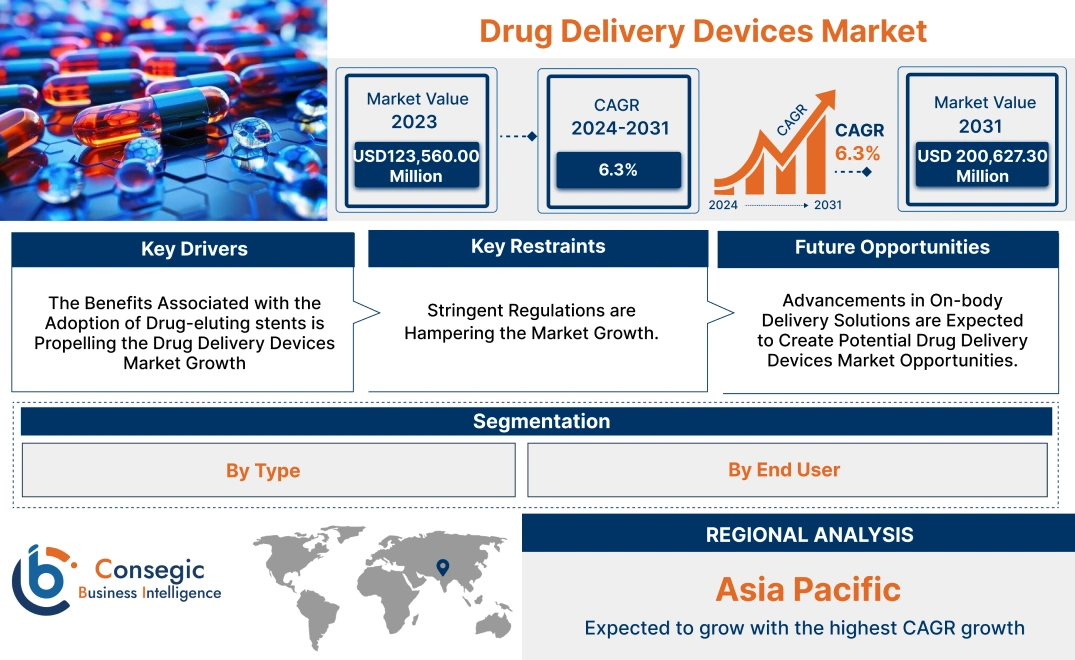
Drug Delivery Devices Market size is growing with a CAGR of 6.3% during the forecast period (2024-2031), and the market is projected to be valued at USD 200,627.30 Million by 2031 from USD 123,560.00 Million in 2023.
Drug Delivery Devices Market Scope & Overview:
Drug delivery devices are physical tools used to introduce medications into the body. They play a crucial role in administering drugs in a precise and controlled manner. They are available in various forms, including injectable devices like syringes, pen injectors, and infusion pumps, and inhalation devices such as metered-dose inhalers, dry powder inhalers, and nebulizers among others. Additionally, implantable devices like intrauterine devices and drug-eluting stents, transdermal devices such as microneedle patches, and oral devices like oral sprays and smart pills, among others, cater to a wide range of therapeutic needs, providing flexibility and convenience for patients and healthcare providers. The devices are used in a wide range of settings, including hospitals, clinics, home care settings, and ambulatory surgical centers, to deliver medications effectively and efficiently.
How is AI Impacting the Drug Delivery Devices Market?
AI is transforming the drug delivery devices market by enabling a new generation of smart, connected, and personalized systems. These devices, from AI-powered insulin pumps to intelligent inhalers, use algorithms to analyze real-time patient data and adjust dosages automatically for optimal therapeutic outcomes. AI also significantly improves patient adherence by providing personalized reminders, tracking medication usage, and offering insights to healthcare providers. This integration of intelligence into delivery devices enhances safety, reduces errors, and moves the industry towards precision medicine, ultimately improving patient care and driving innovation.
Drug Delivery Devices Market Dynamics - (DRO) :
Key Drivers:
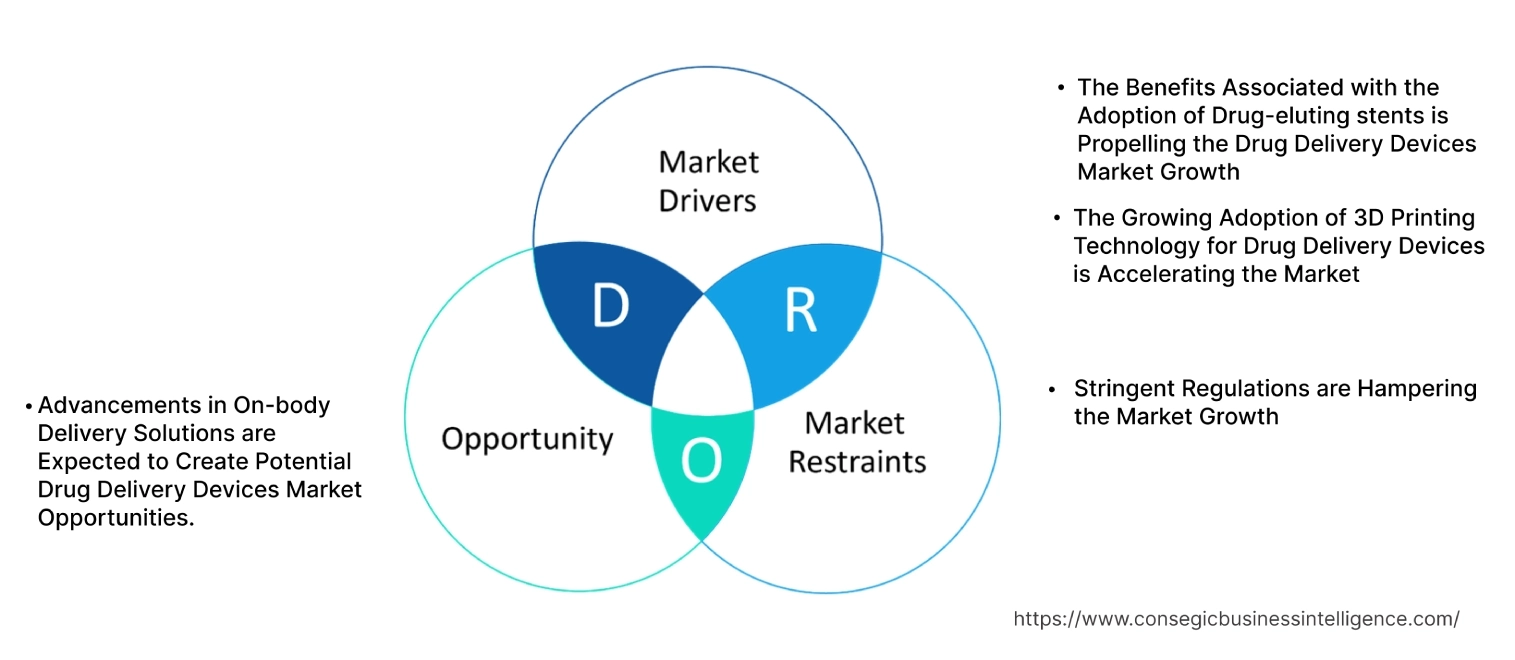
The Benefits Associated with the Adoption of Drug-eluting stents is Propelling the Drug Delivery Devices Market Growth
Drug-eluting stent is a drug-delivering device that provides a controlled release of therapeutic agents directly to the area of the artery. Drug-eluting stents (DES) are medical devices used to treat artery disease, a condition characterized by narrowed or blocked arteries in the legs, arms, and other extremities. These stents serve as novel implantable devices that release single or multiple bioactive agents into blood vessels after implantation.
The stent is coated with a drug and placed in an artery to treat vascular disease. They incorporate a variety of therapeutic agents including sirolimus, everolimus, and others to prevent restenosis. Moreover, the overall benefits provided by drug-eluting stents are resulting in an increase in their adoption leading to the approval of novel drug-eluting stents.
- For instance, in May 2022, Medtronic received FDA approval for its latest generation drug-eluting coronary stent system. This innovative device is designed to improve patient outcomes by effectively treating coronary artery disease. The approval is a significant advancement in the field of interventional cardiology, offering a promising solution for patients suffering from heart disease.
Thus, as per the analysis, the increasing adoption of DES, fueled by various FDA-approved products, is significantly contributing to their adoption.
The Growing Adoption of 3D Printing Technology for Drug Delivery Devices is Accelerating the Market.
The 3D printing technology allows for the precise fabrication of complex drug delivery devices, enabling personalized medicine and tailored treatments. By enabling the development of intricate designs and precise drug release profiles, 3D printing is accelerating the development of novel devices.
This technology offers significant advantages such as reduced development time, increased flexibility in design, and the potential for on-demand manufacturing. Various research activities are leading to the development of novel drug-delivery solutions.
- For instance, in September 2021, Researchers from Carolina and Stanford University made a significant innovation in vaccine delivery with their development of a 3D-printed microneedle vaccine patch. This innovative approach surpasses traditional needle injections in boosting immunity. By utilizing microneedles, the vaccine is delivered directly to the skin, bypassing the initial barrier and triggering a stronger immune response.
Thus, 3D printing technology is poised to drive significant development and innovation in the market.
Key Restraints :
Stringent Regulations are Hampering the Market Growth.
The drug delivery devices market is subject to stringent regulations aimed at ensuring patient safety. These regulations, while necessary, present significant constraints for pharmaceutical and medical device companies. These regulations are enforced by regulatory bodies like the FDA (Food and Drug Administration) in the United States and equivalent regulatory bodies in other countries. The development of delivery devices is a lengthy and complex process, involving rigorous clinical trials and stringent regulatory hurdles. These factors significantly delay the approval and market introduction of new products, requiring substantial investment and resources.
Post-market surveillance and safety monitoring add to the regulatory burden, necessitating continuous monitoring of product safety and efficacy. Overall, these factors delay product approvals, increase costs, and limit profitability, impacting the drug delivery devices market growth.
Future Opportunities :
Advancements in On-body Delivery Solutions are Expected to Create Potential Drug Delivery Devices Market Opportunities.
Advancements in on-body delivery solutions are influenced by a growing demand for personalized, targeted, and patient-friendly drug delivery solutions. The on-body delivery solutions are available in the form of patches or bands that continuously or intermittently release medication into the bloodstream, providing sustained therapeutic effects. This approach offers several advantages, including improved patient compliance, reduced dosing frequency, and enhanced drug efficacy.
Advancements in on-body delivery solutions enable precise, controlled, and potentially automated drug delivery, enhancing patient compliance and therapeutic outcomes. Various advanced devices are introduced for large-volume drug delivery.
- For instance, in 2024, Stevanato Group introduced Vertiva, an innovative on-body delivery system that offers significant advancement in drug delivery. This device combines a single-use pod with a pre-filled, pre-loaded cartridge and a reusable, smart controller. This unique design allows for the delivery of high-volume drugs, including both small molecules and biologics for cardiovascular and metabolic disorders among others.
Thus, advancements in on-body delivery solutions are creating drug delivery devices market opportunities in the coming years.
Drug Delivery Devices Market Segmental Analysis :
By Type:
Based on type, the market is categorized into injectable devices, inhalation devices, implantable devices, transdermal devices, oral devices, and others.
Trends in the Type:
- Growing trends for personalized dosing solutions support the improvement in treatment outcomes.
- Trends for implantable devices, such as insulin pumps and drug infusion pumps, offer long-term, continuous drug delivery.
The injectable devices segment accounted for the largest drug delivery devices market share in 2023.
- An injectable drug delivery device is a medical device designed to administer medications directly into the body, bypassing the digestive system.
- Injectable devices are a common and effective method of drug delivery, offering precise administration and rapid onset of action.
- These devices, such as syringes, pen injectors, autoinjectors, and others, are designed to deliver medications directly into the bloodstream.
- Syringes, while widely used, require manual injections. Autoinjectors, on the other hand, are pre-filled devices that automatically deliver a specific dose of medication with a simple press of a button, making them suitable for self-administration.
- Various novel injectors are introduced for efficient drug delivery.
- For instance, in 2023, Altaviz, one of the leading medical device companies, introduced a new auto-injector device designed for high-viscosity and high-volume biologic drug delivery. This innovative device utilizes Pico-Cylinders, a proprietary technology developed by Altaviz, to deliver drugs with precision and ease.
- Thus, the growing trends of injectable devices for drugs are influencing the drug delivery devices market demand.
The transdermal devices segment is expected to grow at the fastest CAGR over the forecast period.
- Transdermal drug delivery devices refer to products for drug administration where the medication is delivered through the skin and into the bloodstream.
- Transdermal devices offer a non-invasive and convenient method for administering medications through the skin.
- These devices, such as patches and microneedle patches, provide sustained drug release, avoiding the first-pass metabolism of the liver.
- This approach enhances drug efficacy and reduces side effects. Transdermal patches, for example, release medication at a controlled rate, providing a consistent therapeutic effect.
- Microneedle patches, on the other hand, create microscopic channels in the skin, enabling rapid drug absorption.
- These devices have gained significant popularity for various therapeutic applications, including hormone replacement therapy, pain management, nicotine cessation, and others.
- Thus, the growing use of transdermal devices is influencing the drug delivery devices market expansion in the coming years.
By End User:
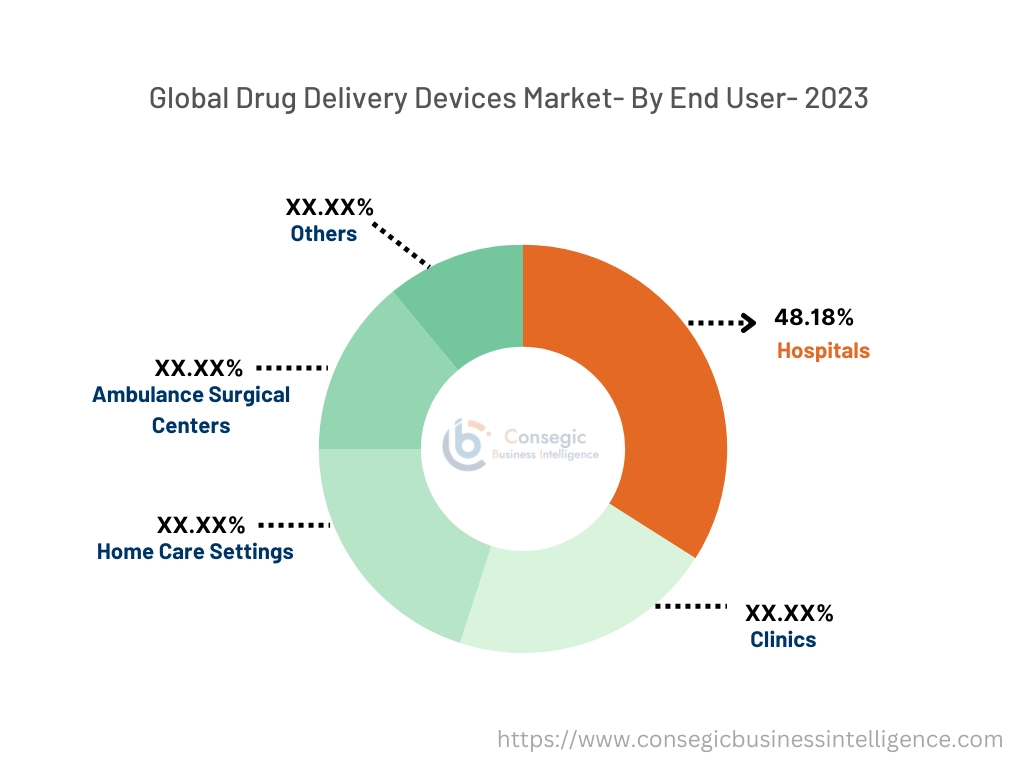
Based on end users, the market is categorized into hospitals, clinics, home care settings, ambulatory surgical centers, and others.
Trends in the End User:
- These products integrate drug delivery with diagnostic capabilities or other therapeutic functions that are useful in hospital settings.
- Microneedle patches provide painless drug delivery through the skin, avoiding the need for injections in homecare settings.
The hospitals segment accounted for the largest drug delivery devices market share of 48.18% in the year 2023.
- Drug delivery devices are necessary tools in hospital settings, facilitating precise and efficient administration of medications.
- Syringes and needles are fundamental for intravenous, intramuscular, and subcutaneous injections, enabling rapid drug delivery and precise dosing.
- Infusion pumps are used to deliver medications continuously or intermittently, ensuring accurate and controlled drug administration, especially for critical care patients.
- Inhalers are crucial for respiratory conditions, delivering medications directly to the lungs, optimizing treatment efficacy, and minimizing systemic side effects.
- Additionally, implantable devices, such as insulin pumps and pain pumps, provide long-term drug delivery, improving patient comfort and quality of life.
- Moreover, there is a rise in hospital settings that offer various solutions including drug-delivery devices.
- For instance, according to the data provided by the American Hospital Association, the U.S. boasts approximately 6,120 hospitals, many of which are equipped with advanced solutions such as novel drug delivery devices for efficient delivery of drugs.
- Thus, as per the analysis, the rising trends for the use of these delivery devices in hospitals are propelling the drug delivery devices market expansion.
The home care settings segment is expected to grow at the fastest CAGR over the forecast period.
- Drug delivery devices play a crucial role in home care settings, enabling patients to manage their conditions independently and safely.
- These devices offer convenience and flexibility, allowing patients to administer medications at home, and reducing the need for frequent hospital visits.
- For example, insulin pens and pumps help diabetic patients control their blood sugar levels, while inhalers and nebulizers help manage respiratory conditions like asthma and chronic obstructive pulmonary disease (COPD) amongst others.
- Additionally, wearable devices, such as patch pumps, provide continuous or intermittent medication delivery, improving adherence and treatment outcomes.
- As per the analysis, by allowing patients to take an active role in their healthcare industry, delivery devices enhance the quality of life and contribute to better health outcomes in home care settings, thus driving the segment in the coming years.
Regional Analysis:
The regional segment includes North America, Europe, Asia Pacific, the Middle East and Africa, and Latin America.
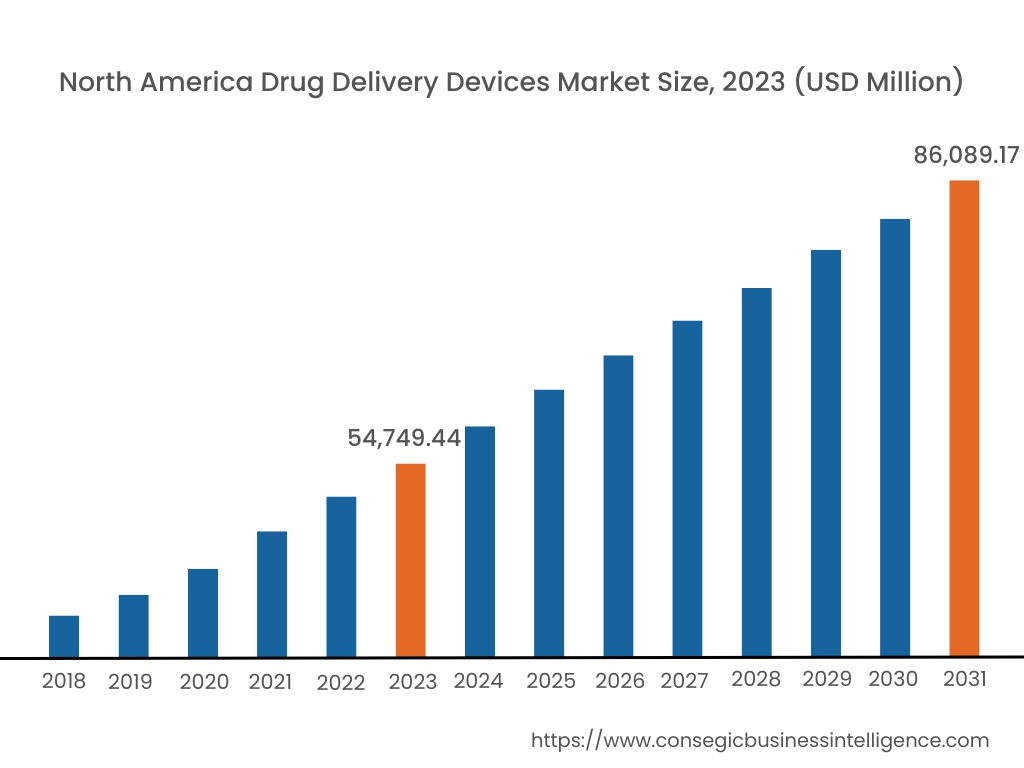
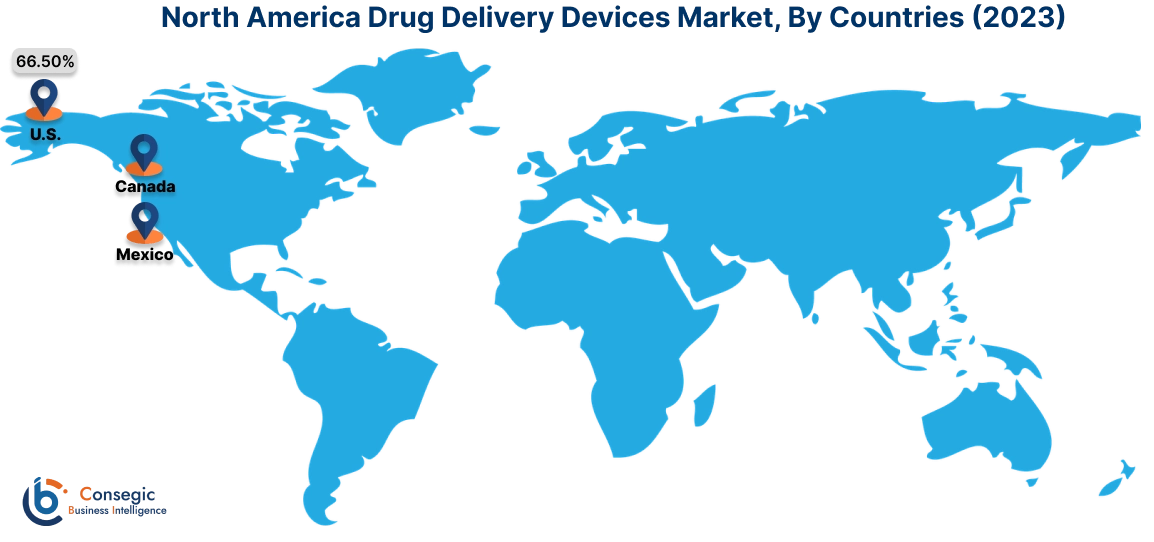
In 2023, North America accounted for the highest market share at 44.31% and was valued at USD 54,749.44 Million and is expected to reach USD 86,089.17 Million in 2031. In North America, the U.S. accounted for the highest market share of 68.92% during the base year of 2023.
North America has a significant market share for drug delivery devices, driven by factors such as a large aging population, increasing prevalence of chronic diseases, and a robust healthcare infrastructure. The region consists of numerous pharmaceutical and medical device companies that are actively involved in the research and development of innovative drug delivery technologies.
Key trends in the North American market include a focus on personalized medicine, wearable delivery devices, and advanced drug delivery systems that enhance patient compliance and improve therapeutic outcomes. Moreover, based on the drug delivery devices market analysis, the rise in manufacturing capacity benefits that region.
- For instance, in 2024, APTAR Pharms capacity expansion at its Congers, New York facility is a significant step towards meeting the growing demand for specialized drug delivery systems in North America. This development will enable APTAR to efficiently support both prescription and consumer healthcare customers, providing them with innovative solutions to meet their specific needs.
Additionally, stringent regulatory frameworks in North America, such as those enforced by the FDA, ensure the safety and efficacy of delivery devices and further drive the drug delivery devices market demand.
The Asia Pacific market for drug delivery devices is experiencing the fastest growth with a CAGR of 7.7% over the forecast period. The Asia-Pacific region is witnessing a significant rise in the drug delivery devices market, driven by factors such as a rising geriatric population, increasing prevalence of chronic diseases, and growing healthcare expenditure. As per the drug delivery devices market analysis, countries like India and China are emerging as major players in the global delivery device market due to their large patient populations, lower manufacturing costs, and increasing focus on healthcare industry development. Additionally, the increasing adoption of advanced technologies like digital health and artificial intelligence is further accelerating innovation in delivery devices within the region. These technologies enable the development of smart drug delivery systems, personalized medicine, and real-time monitoring of drug delivery, propelling the Asia-Pacific market towards a future of precision medicine and improved patient outcomes.
Europe is a significant market for drug delivery devices, driven by a strong healthcare infrastructure. The region has a robust regulatory framework, including the Medical Device Regulation (MDR), which ensures the safety and efficacy of delivery devices. Key trends in the European market include a focus on personalized medicine, innovative drug delivery technologies, and digital health solutions. Additionally, the European Union's emphasis on patient-centric healthcare has led to the development of innovative and user-friendly delivery devices. This focus on improving patient experience and adherence has driven the development of advanced technologies, such as smart inhalers and wearable drug delivery systems. As a result, the demand for innovative delivery devices is increasing, contributing to the growth of the global drug delivery devices market trends.
The Middle East and Africa (MEA) regions are witnessing significant growth in the drug delivery devices market. The region is characterized by a diverse healthcare industry, with a mix of developed and developing countries. While developed countries like Israel and South Africa have well-established healthcare systems and a strong requirement for advanced delivery devices, developing countries in the region are experiencing rapid economic growth and increased healthcare investment. This is driving the adoption of innovative drug delivery solutions, particularly in areas like diabetes, respiratory diseases, and oncology. Additionally, as per the analysis, pharmaceutical companies and device manufacturers are focusing on partnerships with local healthcare providers, government initiatives, and patient education programs to promote the adoption of innovative drug delivery solutions in the MEA region, which is further driving the drug delivery devices market trends.
While Latin America is an emerging market for drug delivery devices, it is experiencing significant growth due to several factors. Increasing healthcare expenditure, coupled with a rising prevalence of chronic diseases such as diabetes, cardiovascular diseases, and respiratory disorders, is driving the requirement for effective and convenient drug delivery solutions. Additionally, growing awareness of advanced therapies and the requirement for improved patient outcomes are fueling the adoption of innovative drug delivery systems. The region is witnessing a shift towards innovative drug delivery systems, particularly in countries like Brazil, Mexico, and Argentina. These countries have a growing middle class with increasing disposable income, leading to higher healthcare spending. Moreover, government initiatives to improve healthcare access and quality are further driving the market.
Top Key Players & Market Share Insights:
The global Drug Delivery Devices Industry is highly competitive with major players providing precise measurement between objects to the national and international markets. Key players are adopting several strategies in research and development (R&D) and product innovation to hold a strong position in the global Drug Delivery Devices Market. Key players in the Drug Delivery Devices industry include-
- Pfizer Inc (United States)
- BD (United States)
- 3M (United States)
- SHL Medical AG (Switzerland)
- Phillips Medisize (United States)
- Gerresheimer (Germany)
- Insulet Corporation (United States)
- Amgen Inc (United States)
- ViVO Smart Medical Devices Ltd. (United Kingdom)
- Stevanato Group (Italy)
Recent Industry Developments :
Investments:
- In 2024, PCI Pharma Services, a leading global contract development and manufacturing organization (CDMO), made a significant investment of over USD 365 million in its European and US facilities. This strategic investment is aimed at expanding the company's capabilities in the clinical and commercial supply of advanced drug delivery and drug-device combination products.
Acquisitions:
- In 2024, Aptar Pharma, a global leader in drug delivery solutions, recently acquired all device technology assets from SipNose Nasal Delivery Systems. This acquisition strengthens Aptar Pharma's position in the nasal drug delivery market, enabling the company to offer innovative and advanced solutions to its customers.
Product Approvals:
- In 2024, Medtronic received FDA clearance for its innovative InPen smartphone app and launched the new Smart MDI system. This cutting-edge system aims to provide real-time insights to users on multiple daily injection therapy. The Smart MDI system comprises the InPen smart insulin pen.
Product Launches
- In 2024, BD, a global medical technology company, recently launched a new pre-fillable syringe platform. This development of its product portfolio aims to meet the growing demand for innovative drug delivery solutions.
- In 2024, Stevanato Group introduced Vertiva, an innovative on-body delivery system that offers significant advancement in drug delivery. This device combines a single-use pod with a pre-filled, pre-loaded cartridge and a reusable, smart controller. This unique design allows for the delivery of high-volume drugs, including both small molecules and biologics.
Drug Delivery Devices Market Report Insights :
| Report Attributes | Report Details |
| Study Timeline | 2018-2031 |
| Market Size in 2031 | USD 200,627.30 Million |
| CAGR (2024-2031) | 6.3% |
| By Type |
|
| By End-User |
|
| By Region |
|
| Key Players |
|
| North America | U.S. Canada Mexico |
| Europe | U.K. Germany France Spain Italy Russia Benelux Rest of Europe |
| APAC | China South Korea Japan India Australia ASEAN Rest of Asia-Pacific |
| Middle East and Africa | GCC Turkey South Africa Rest of MEA |
| LATAM | Brazil Argentina Chile Rest of LATAM |
| Report Coverage |
|
Key Questions Answered in the Report
How big is the Drug Delivery Devices Market? −
In 2023, the Drug Delivery Devices Market is USD 123,560.00 Million.
Which is the fastest-growing region in the Drug Delivery Devices Market? +
Asia Pacific is the fastest-growing region in the Drug Delivery Devices Market.
What specific segmentation details are covered in the Drug Delivery Devices Market? +
Type and End-user segmentation details are covered in the Drug Delivery Devices Market.
Who are the major players in the Drug Delivery Devices Market? +
Pfizer Inc (United States), BD (United States), 3M (United States), Gerresheimer (Germany), Insulet Corporation (United States), Amgen Inc (United States), ViVO Smart Medical Devices Ltd. (United Kingdom), Stevanato Group (Italy), SHL Medical AG (Switzerland), Phillips Medisize (United States).
Overview
Reputation & Certifications


Our Services
- Market Intelligence & Forecasting
- Custom Research Solutions
- Market Entry Strategy
- Competitive Intelligence
- Customer Insights
- Industry Innovation Analysis
- Investment Advisory