Jump to Content
Adenomyosis Treatment Market - Size, Share, Industry Trends, and Forecasts (2024 - 2031)
Adenomyosis Treatment Market Size:
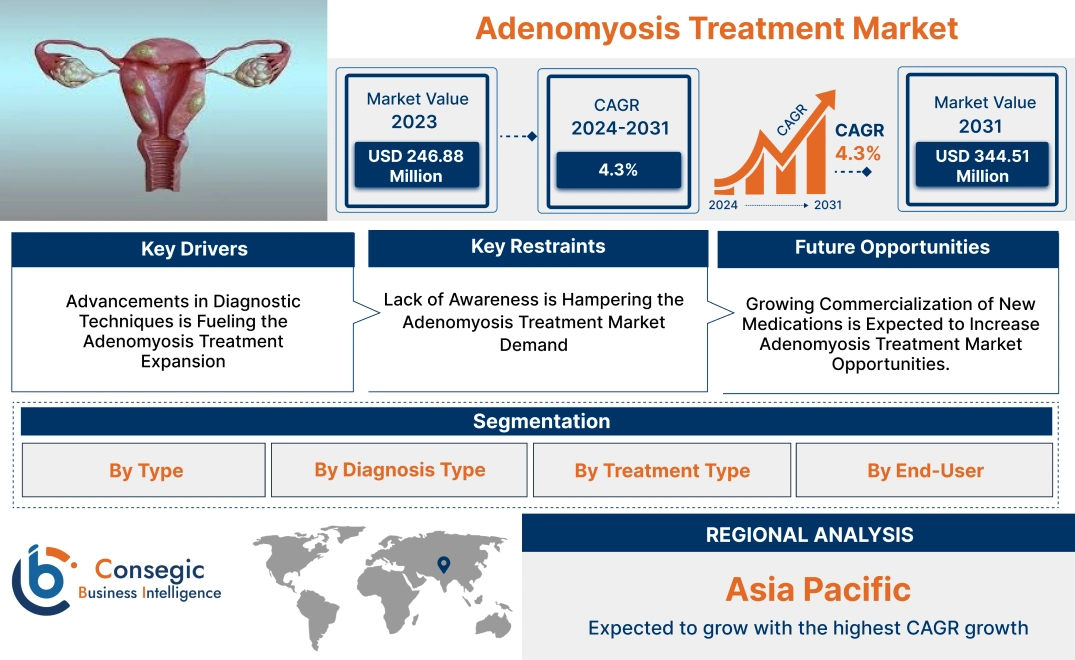
Adenomyosis Treatment Market size is growing with a CAGR of 4.3% during the forecast period (2024-2031), and the market is projected to be valued at USD 344.51 Million by 2031 from USD 246.88 Million in 2023.
Adenomyosis Treatment Market Scope & Overview:
Adenomyosis is a uterine condition where the tissue that normally lines the uterus (endometrium) grows into the muscular wall of the uterus (myometrium). This leads to heavy menstrual bleeding, painful periods, pelvic pain, and other symptoms. Its treatment depends on the analysis conducted on the severity of symptoms. Non-surgical options include anti-inflammatory drugs such as Ibuprofen, Naproxen, and Diclofenac amongst others. Hormonal therapies include gonadotropin-releasing hormone (GnRH) agonists, progestins, and oral contraceptives amongst others. For more severe cases, surgical interventions such as hysterectomy (removal of the uterus) or endometrial ablation (removal of the uterine lining) are necessary. In recent years, minimally invasive surgical techniques such as uterine artery embolization (UAE) have emerged as less invasive alternatives to traditional surgery.
Adenomyosis Treatment Market Dynamics - (DRO) :
Key Drivers:
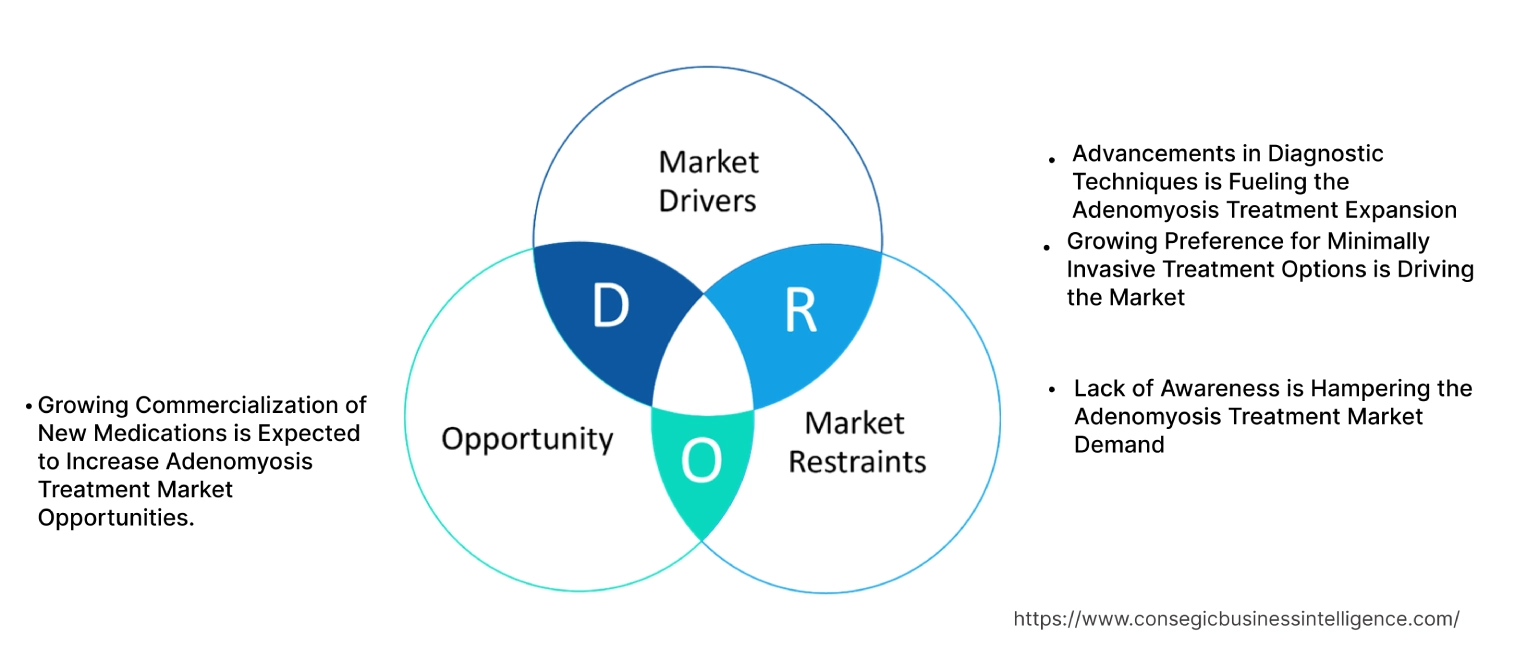
Advancements in Diagnostic Techniques is Fueling the Adenomyosis Treatment Expansion
Advancements in imaging technologies such as ultrasound and MRI have revolutionized the analysis and diagnosis of adenomyosis. This has enabled earlier detection and diagnosis of the condition, driving the adenomyosis treatment industry.
- For instance, in April 2024, GE HealthCare launched the AI-enhanced Voluson Signature Ultrasound Systems to advance women's health imaging. The incorporation of artificial intelligence (AI) enhances image quality and accelerates examination speed. This has allowed healthcare providers to offer accurate diagnoses and tailor appropriate treatments for women across all their health issues, including adenomyosis, positively influencing the market.
Early diagnosis enables timely intervention and tailored treatment plans, improving patient outcomes and reducing the burden of symptoms such as heavy bleeding and pelvic pain. Additionally, changes in lifestyle factors, including delayed childbearing and increased exposure to hormonal therapies, are contributing to the growing prevalence of adenomyosis. Overall, the combination of advanced diagnostic techniques and evolving lifestyle factors is driving the global adenomyosis treatment market expansion.
Growing Preference for Minimally Invasive Treatment Options is Driving the Market.
Minimally invasive procedures involve small incisions to perform surgical procedures. These procedures utilize advanced tools and technologies, such as laparoscopy and robotic surgery to minimize tissue damage. Patients and healthcare providers are increasingly favoring minimally invasive procedures due to multiple advantages. These procedures have reduced risks, shorter recovery times, and improved quality of life. Traditional treatments, such as hysterectomy, are invasive and involve significant downtime, making them less appealing, especially for women seeking to preserve fertility. In adenomyosis treatment, minimally invasive treatments such as uterine artery embolization (UAE) and laparoscopic surgeries are gaining traction due to their painless nature.
- For instance, according to an article published in Sydney Fibroid Clinic, in 2021, uterine artery embolization (UAE) is a safe, minimally invasive, and non-surgical option for a hysterectomy. The procedure has demonstrated effectiveness in 90% of women with adenomyosis by alleviating heavy periods and alleviating pain. Following UAE, 95% of women successfully evade a hysterectomy. This has positively impacted adenomyosis treatment market trends.
Overall, the increasing trend for minimally invasive procedures, offering reduced risks, faster recovery, and improved quality of life, is driving the global adenomyosis treatment market growth.
Key Restraints :
Lack of Awareness is Hampering the Adenomyosis Treatment Market Demand
Adenomyosis is underdiagnosed or misdiagnosed due to its symptoms overlapping with other gynecological conditions such as fibroids or endometriosis. This negatively affects the market.
Moreover, there is insufficient public health education regarding adenomyosis and its impact on women's reproductive and overall health. Many women remain unaware of adenomyosis, its symptoms, and the available treatment options. This lack of awareness leads to delayed diagnosis and suboptimal treatment, as women attribute their symptoms to other, more common conditions.
- For instance, a 2023 article from Shree IVF Clinic in India highlights a considerable deficiency in awareness about adenomyosis, even though it frequently affects Indian women.
- According to an article published in BBC, the world's leading public service broadcaster, in 2023, it is estimated that one out of every ten women is affected by adenomyosis, although it frequently remains undetected for many years due to lack of awareness. Thus, it negatively impacts the market due to delayed diagnoses.
Additionally, societal stigma around discussing menstrual health prevents women from seeking medical advice for symptoms such as heavy bleeding or chronic pelvic pain. Overall, the lack of awareness and understanding of adenomyosis among women and healthcare providers is hampering the global adenomyosis treatment market demand.
Future Opportunities :
Growing Commercialization of New Medications is Expected to Increase Adenomyosis Treatment Market Opportunities.
As awareness of adenomyosis increases, there is a rising adenomyosis treatment demand to address symptoms such as heavy menstrual bleeding, chronic pelvic pain, and infertility. This is driving the development and commercialization of new medications. These new medications offer the potential to address the underlying causes of adenomyosis, providing more effective and targeted treatments.
- For instance, Repronovo, a reproductive medicine company that develops and commercializes drugs, is advancing RPN-002through the pipeline, prepared for clinical phase 2. RPN-002 is aimed at the oxytocin receptor, which is designed to mitigate the signs and symptoms of adenomyosis by rectifying abnormal uterine contractility, decreasing local tissue inflammation, alleviating menstrual pain, and potentially enhancing fertility rates.
New medications will offer superior efficacy and fewer side effects compared to existing treatments, leading to better patient outcomes. Moreover, the availability of new drugs will broaden the range of treatment options for women with adenomyosis, allowing for more personalized treatment plans. Overall, as research into adenomyosis continues, the development of innovative drugs and treatments is expected to increase the adenomyosis treatment market opportunities.
Adenomyosis Treatment Market Segmental Analysis :
By Type:
Based on type, the market is categorized into diffuse and focal.
The diffuse segment accounted for the largest share in 2023.
- Diffuse adenomyosis refers to a condition where the endometrial tissue is evenly spread throughout the uterine wall. This type of adenomyosis leads to a more widespread thickening of the uterine walls. This results in symptoms such as heavy menstrual bleeding, pelvic pain, and sometimes infertility.
- Treatment for diffuse adenomyosis aims to manage symptoms and improve quality of life. Hormonal therapies help reduce bleeding and pain by controlling hormone levels. Nonsteroidal anti-inflammatory drugs (NSAIDs) help alleviate pain and inflammation. For more severe cases, surgical options such as hysterectomy are considered, especially if other treatments are ineffective.
- The benefits of treatment for diffuse adenomyosis include reduced symptoms, improved fertility prospects, and better overall management of the condition. This enables women to maintain a better quality of life.
- As per the analysis, the rising aging population is driving the segment, as particularly postmenopausal women are at increased risk of developing diffuse adenomyosis, requiring effective treatment for its management.
- For instance, according to the Mayo Clinic, the majority of adenomyosis cases, which are influenced by estrogen, are predominantly observed in females during their fourth and fifth decades of life.
- Overall, the rising prevalence of diffuse adenomyosis, particularly among postmenopausal women, is driving the segment in the adenomyosis treatment market growth.
The focal segment is expected to grow at the fastest CAGR over the forecast period.
- Focal adenomyosis is a localized form of adenomyosis where endometrial tissue grows within a specific area of the uterine muscle, creating a nodule or lesion. Focal adenomyosis causes severe localized pain and is mistaken for fibroids, making accurate diagnosis essential.
- Treatments such as minimally invasive surgery (e.g., laparoscopic excision), uterine artery embolization, and hormonal therapies (e.g., GnRH agonists or progestins) offer targeted relief for focal adenomyosis. These treatments aim to reduce pain, control bleeding, and preserve fertility, a key benefit for women planning pregnancies.
- Treatments such as minimally invasive surgery (e.g., laparoscopic excision), uterine artery embolization, and hormonal therapies (e.g., GnRH agonists or progestins) offer targeted relief for focal adenomyosis. These treatments aim to reduce pain, control bleeding, and preserve fertility, a key benefit for women planning pregnancies.
- Advancements in imaging technologies, such as MRI and ultrasound, are enabling more accurate diagnosis and identification of focal lesions, creating potential for the upcoming years.
By Diagnosis Type:
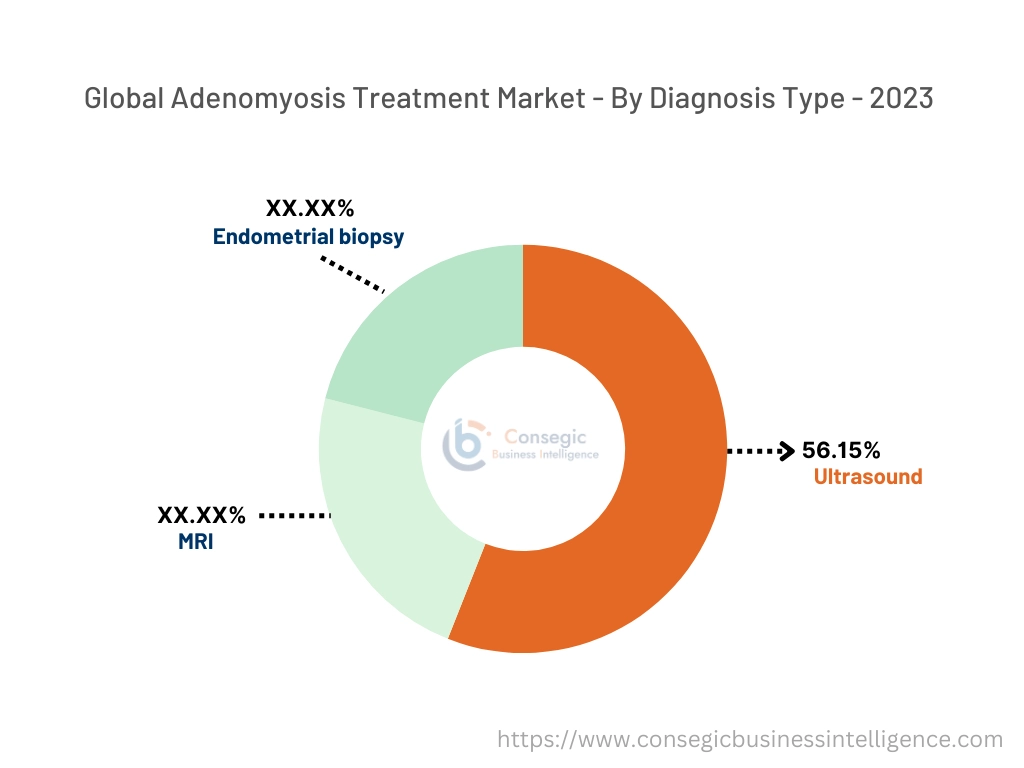
The diagnosis type segment is categorized into ultrasound, MRI, and endometrial biopsy.
The ultrasound segment accounted for the largest market share of 56.15% in 2023.
- Ultrasound, particularly transvaginal ultrasound (TVUS), is a primary diagnostic tool for adenomyosis. It uses high-frequency sound waves to create images of the uterus. This helps in detecting characteristic signs such as an enlarged uterus, heterogeneous myometrium, or cystic spaces. Advanced 3D ultrasound techniques enhance diagnostic accuracy.
- Ultrasound is cost-effective, widely available, non-invasive, and poses no radiation risk. It provides real-time imaging, which helps clinicians evaluate the extent and type (focal or diffuse) of adenomyosis, which is eventually very important in guiding treatment decisions for patients.
- TVUS is also beneficial for monitoring the effectiveness of treatments such as hormonal therapy or minimally invasive procedures such as uterine artery embolization.
- The rising prevalence of adenomyosis and heightened awareness of women's reproductive health are driving the ultrasound segment.
- For instance, according to a study published in 2023 by Molecular Diversity Preservation International, significantly, 40% of women identified with endometriosis have adenomyosis. Furthermore, among women receiving assisted reproductive technologies (ARTs), adenomyosis occurs in about 20% to 25% of instances. Thus, increasing cases drive the need for effective treatments.
- Overall, the increasing prevalence of adenomyosis, coupled with the advantages of ultrasound in diagnosis and monitoring, is driving the need for ultrasound-based diagnostic services.
The MRI segment is expected to grow at the fastest CAGR over the forecast period.
- Magnetic Resonance Imaging (MRI) is a valuable diagnostic tool for adenomyosis, especially in cases where ultrasound findings are inconclusive or when more detailed information is needed.
- MRI employs strong magnetic fields and radio waves to produce detailed cross-sectional images of the uterus. This helps in identifying the thickened junctional zone and myometrial abnormalities characteristic of adenomyosis.
- MRI offers superior accuracy, particularly in complex cases or when adenomyosis coexists with other uterine conditions such as fibroids. Its high-resolution imaging allows for precise mapping of the disease. This helps healthcare professionals in planning targeted treatments, such as uterine-sparing procedures. Additionally, MRI is valuable for monitoring post-treatment outcomes and assessing residual disease.
- Advances in MRI technology have improved image quality and reduced scan time, making it a more accessible and efficient diagnostic tool. Moreover, rising awareness of its benefits and increased access to advanced MRI systems are driving its adoption globally. This creates the potential for forecasted years.
By Treatment Type:
The treatment type segment is categorized into anti-inflammatory medications, hormonal medications, and surgical treatment.
The hormonal medications segment accounted for the largest market share in 2023.
- Hormonal medications are treatments that regulate hormone levels to manage symptoms of adenomyosis, such as heavy menstrual bleeding and pelvic pain. These medications work by suppressing ovulation, reducing endometrial progression, and minimizing inflammation in the uterine wall.
- There are many types of hormonal medications. Gonadotropin-releasing hormone (GnRH) agonists induce a temporary menopausal state, reducing estrogen levels and shrinking adenomyosis-affected tissue.
- Moreover, progestin-based therapies include intrauterine devices (e.g., levonorgestrel-releasing IUDs) and oral progestins, which stabilize the endometrium and reduce bleeding and pain. Combined oral contraceptives (COCS) are also very beneficial.
- For instance, according to a study published by the www.pmc.ncbi.nlm.nih.gov, in 2023, COCS function by creating a pseudo-gestational condition, which prompts decidualization and the eventual atrophy of both the endometrium and adenomyotic lesions. This leads to amenorrhea, a decrease in menstrual volume, and alleviation from dysmenorrhea, offering advantages to individuals suffering from adenomyosis.
- Thus, the segment's growth is fueled by the increasing prevalence of adenomyosis and advancements in drug formulations. Overall, the rising prevalence of adenomyosis and the effectiveness of hormonal medications in managing symptoms are driving the segment in the market.
The surgical treatment segment is expected to grow at the fastest CAGR over the forecast period.
- Surgical treatment refers to medical procedures performed to remove or alleviate adenomyosis when other treatment options fail, or symptoms are severe. It aims to improve quality of life by addressing the root cause of the condition, such as abnormal endometrial tissue growth within the uterine wall.
- There are multiple surgical treatments available. Hysterectomy is the complete removal of the uterus which is the most definitive treatment for adenomyosis. It eliminates symptoms such as chronic pain and heavy bleeding and prevents recurrence.
- Minimally invasive techniques such as laparoscopic or uterine artery embolization reduce recovery time, scarring, and post-operative complications, making them preferred options.
- Rising awareness about definitive treatment options, coupled with advancements in surgical techniques, drives the need for surgical interventions. Moreover, the adenomyosis treatment market analysis shows that the growing prevalence of severe adenomyosis cases and the limitations of hormonal and anti-inflammatory medications in managing advanced disease contribute to the growth. Increased availability of skilled surgeons and better healthcare infrastructure further boost the adoption of surgical treatments globally, creating the potential for the upcoming years.
By End-User:
The end-user segment is categorized into hospitals, clinics, and ambulatory surgical centers.
Trends in the end-user:
- Growing adoption of advanced diagnostic and treatment technologies.
- Growing popularity for outpatient procedures such as uterine artery embolization (UAE)
The hospitals and clinics segment accounted for the largest market share in 2023.
- Hospitals are large healthcare institutions equipped with advanced medical infrastructure, multidisciplinary teams, and comprehensive facilities to provide diagnosis, treatment, and post-operative care for various medical conditions, including adenomyosis.
- They serve as primary treatment centers for complex and severe cases requiring specialized interventions.
- Hospitals dominate the adenomyosis treatment segment due to their superior diagnostic and therapeutic capabilities. They house advanced imaging systems such as MRI and skilled gynecological specialists essential for accurate diagnosis and effective treatment planning.
- Hospitals dominate the adenomyosis treatment segment due to their superior diagnostic and therapeutic capabilities. They house advanced imaging systems such as MRI and skilled gynecological specialists essential for accurate diagnosis and effective treatment planning.
- Their dominance is further driven by the high influx of patients due to referral systems, insurance coverage, and the trust associated with hospital-based treatments. The development of healthcare infrastructure, especially in emerging economies, also boosts the requirement.
- For instance, in 2023, the reported www.ceicdata.com reached 38,400 units. This marks a rise from the earlier figure of 36,976 units recorded in 2022. Thus, this has led to an increase in more diagnostic and treatment-providing facilities, positively impacting the market.
- Overall, As the prevalence of adenomyosis increases, hospitals are the preferred choice for managing severe cases, offering both expertise and convenience.
The ambulatory surgical centers segment is expected to grow at the fastest CAGR over the forecast period.
- Ambulatory surgical centers (ASCS) are healthcare facilities that provide surgical and diagnostic services on an outpatient basis, meaning patients do not require an overnight hospital stay.
- ASCs offer a cost-effective alternative to traditional hospital settings, reducing patient out-of-pocket expenses.
- Patients increasingly prefer the convenience and shorter recovery times associated with outpatient surgery. Additionally, ASCs offer shorter wait times, lower infection risks, and more personalized care, driving patient preference.
- Advances in minimally invasive surgical techniques, such as uterine artery embolization, align well with the capabilities of ASCs, reducing recovery time and costs, are driving their demand in the market.
- Moreover, healthcare policies encouraging outpatient care, coupled with rising awareness of these centers' benefits, further contribute to the growth.
Regional Analysis:
The regional segment includes North America, Europe, Asia Pacific, the Middle East and Africa, and Latin America.
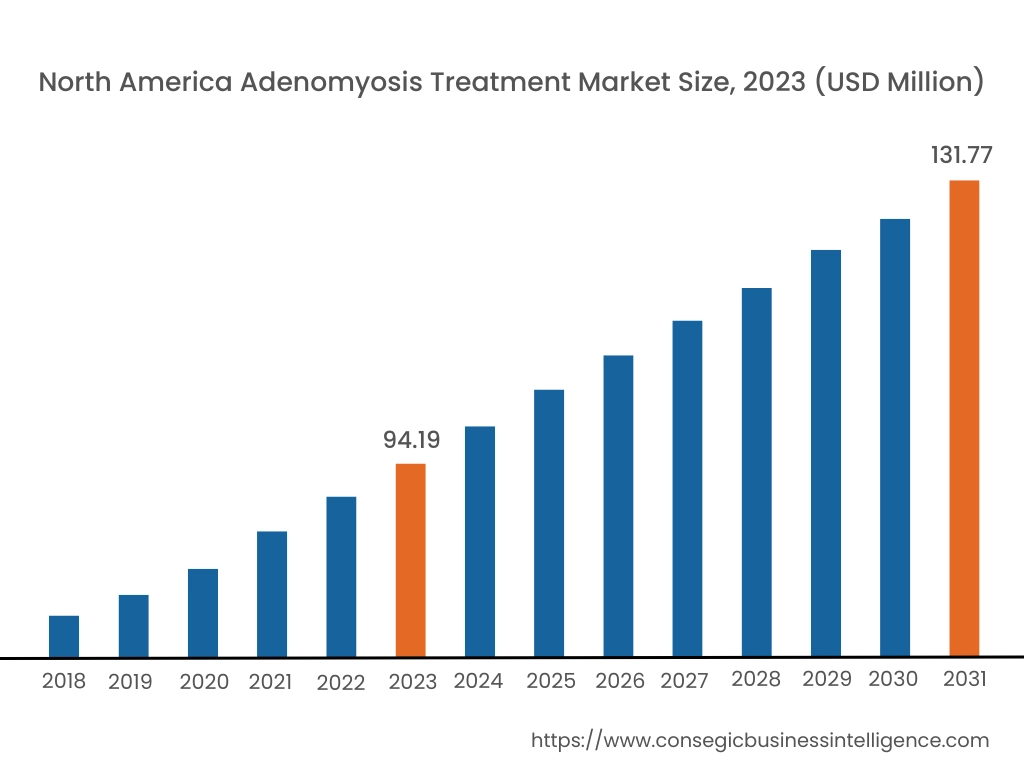
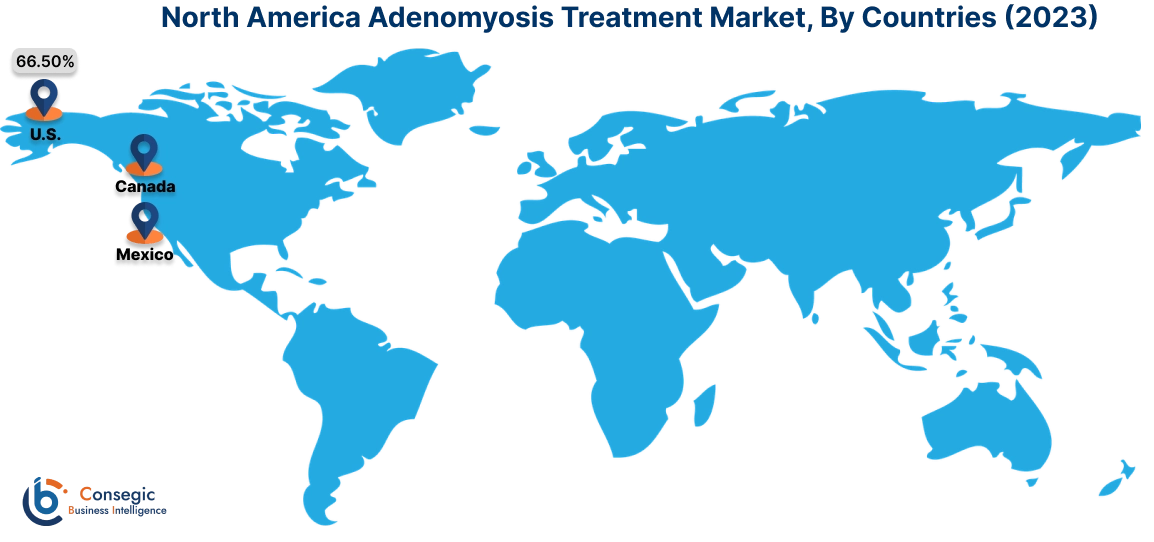
In 2023, North America accounted for the highest adenomyosis treatment market share at 38.15% and was valued at USD 94.19 Million and is expected to reach USD 131.77 Million in 2031. In North America, the U.S. accounted for the highest adenomyosis treatment market share of 66.50% during the base year of 2023. The adenomyosis treatment market trends are gaining a significant rise in North America owing to the confluence of multiple factors. The region boasts a well-developed healthcare infrastructure with advanced diagnostic facilities and experienced healthcare professionals. This enables early diagnosis and timely treatment of adenomyosis. Moreover, the high healthcare expenditure in North America allows for the adoption of innovative treatments and technologies.
- For instance, according to recent data from the Centers for Medicare and Medicaid Services (CMS), the United States leads North America in healthcare expenditure, spending a total of USD 4.5 trillion in 2022, which translates to USD 13,493 per person, representing 17.3% of the nation's GDP; this figure significantly surpasses other developed countries in terms of per capita healthcare spending. Thus, this has led to increasing demand for advanced treatment options, positively influencing the market.
Additionally, the presence of major pharmaceutical companies in North America drives research and development in the field of women's health, including adenomyosis medications. Furthermore, growing awareness about adenomyosis and its symptoms leads to early detection and treatment. Overall, the robust healthcare infrastructure, high healthcare expenditure, and strong pharmaceutical industry in North America are driving the adenomyosis treatment market size in the region.
In Asia Pacific, the adenomyosis treatment market is experiencing the fastest growth with a CAGR of 4.7% over the forecast period. Asia Pacific is emerging in the adenomyosis treatment market due to rapid advancements in healthcare infrastructure, and the growing adoption of modern medical technologies. With rising disposable incomes, more women in the region are seeking treatment for adenomyosis. Countries such as China, India, and Japan are seeing improved access to diagnostic tools such as MRI and advanced surgical procedures, contributing to the market. Additionally, the increase in private healthcare facilities and rising health insurance coverage are driving the need for adenomyosis treatments across this region.
Europe's adenomyosis treatment market analysis states several factors are responsible for the progress of the market in the region. First, Europe has a well-developed healthcare system with advanced laboratories and research institutions. Moreover, it is also driven by high healthcare standards, a growing aging population, and increasing awareness of women's reproductive health. Rising public and private health expenditure is ensuring better access to treatments. Additionally, the growing focus on non-invasive therapies and patient preference for minimally invasive procedures are fueling the market in the region. Increasing awareness campaigns and initiatives to tackle women's health issues further boost the need for adenomyosis treatments.
The Middle East and Africa (MEA) region analysis depicts, that there is a notable surge in the adenomyosis treatment market, fueled by improving healthcare infrastructure and increasing healthcare investment in countries such as the UAE, Saudi Arabia, and South Africa. The expansion of medical facilities and access to advanced diagnostics and treatments has made adenomyosis care more accessible. Additionally, rising awareness of adenomyosis symptoms and treatment availability, coupled with a growing middle class seeking better healthcare options, is stimulating demand. Governments in MEA are also investing in healthcare reforms and encouraging the use of modern medical treatments, which is positively influencing the market.
Latin America is an emerging region in the adenomyosis treatment market. Countries such as Brazil, Mexico, and Argentina are investing in healthcare infrastructure, making advanced treatments such as MRI and laparoscopic surgery more accessible. The region's growing pharmaceutical industry also boosts demand, with companies focusing on developing more innovative treatments for adenomyosis. Furthermore, growing health insurance coverage is improving patient access to treatments, while women are becoming more proactive about their reproductive health, contributing to market growth in this region. Apart from all these factors, increasing disposable incomes are enabling more patients to afford advanced treatments and minimally invasive procedures for adenomyosis.
Top Key Players & Market Share Insights:
Latin America is an emerging region in the adenomyosis treatment market. Countries such as Brazil, Mexico, and Argentina are investing in healthcare infrastructure, making advanced treatments such as MRI and laparoscopic surgery more accessible. The region's growing pharmaceutical industry also boosts demand, with companies focusing on developing more innovative treatments for adenomyosis. Furthermore, growing health insurance coverage is improving patient access to treatments, while women are becoming more proactive about their reproductive health, contributing to market growth in this region. Apart from all these factors, increasing disposable incomes are enabling more patients to afford advanced treatments and minimally invasive procedures for adenomyosis.-
- Bayer AG (Germany)
- Pfizer, Inc. (US)
- AbbVie, Inc. (U.S.)
- Novartis AG (U.S.)
- Ferring B.V. (Switzerland)
- Merck KGaA (Germany)
- Teva Pharmaceutical (Israel)
- Johnson & Johnson (U.S.))
- Lupin Pharmaceuticals (India)
- TerSera Therapeutics (U.S.)
Adenomyosis Treatment Market Report Insights :
| Report Attributes | Report Details |
| Study Timeline | 2018-2031 |
| Market Size in 2031 | USD 344.51 Million |
| CAGR (2024-2031) | 4.3% |
| By Type |
|
| By Diagnosis Type |
|
| By Treatment Type |
|
| By End-User |
|
| By Region |
|
| Key Players |
|
| North America | U.S. Canada Mexico |
| Europe | U.K. Germany France Spain Italy Russia Benelux Rest of Europe |
| APAC | China South Korea Japan India Australia ASEAN Rest of Asia-Pacific |
| Middle East and Africa | GCC Turkey South Africa Rest of MEA |
| LATAM | Brazil Argentina Chile Rest of LATAM |
| Report Coverage |
|
Key Questions Answered in the Report
How big is the Adenomyosis Treatment market? −
In 2023, the Adenomyosis Treatment market was valued at USD 246.88 Million.
Which is the fastest-growing region in the Adenomyosis Treatment market? +
Asia Pacific is the fastest-growing region in the Adenomyosis Treatment market.
What specific segmentation details are covered in the Adenomyosis Treatment market? +
Type and Treatment Type segmentation details are covered in the Adenomyosis Treatment market.
Who are the major players in the Adenomyosis Treatment market? +
Bayer AG (Germany), Pfizer, Inc. (U.S.), AbbVie, Inc. (U.S.), Novartis AG (U.S.), Ferring B.V. (Switzerland), Merck KGaA (Germany), Teva Pharmaceutical (Israel), Johnson & Johnson (U.S.), Lupin Pharmaceuticals (India), and TerSera Therapeutics (U.S.).
Overview
Reputation & Certifications


Our Services
- Market Intelligence & Forecasting
- Custom Research Solutions
- Market Entry Strategy
- Competitive Intelligence
- Customer Insights
- Industry Innovation Analysis
- Investment Advisory