Jump to Content
Aerospace Forging Market Size & Industry Share - Growth Trends & Forecasts (2026 - 2034)
Aerospace Forging Market Size :
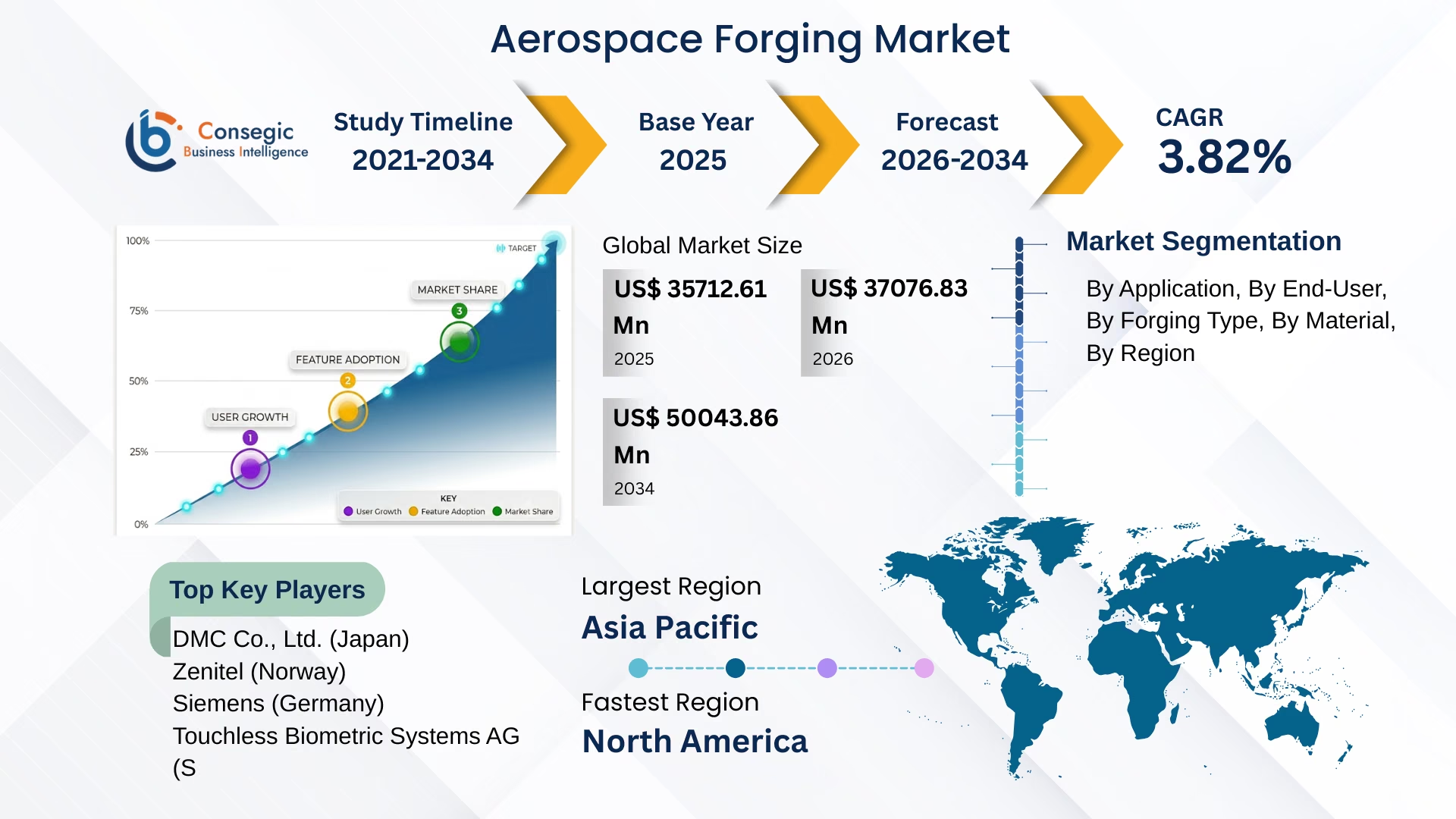
Aerospace Forging Market size is estimated to reach over 50,043.86 (US$M) by 2034 from a value of 35,712.61 (US$M) in 2025 and is projected to grow by 37,076.83 (US$M) in 2026, growing at a CAGR of 3.8% from 2026 to 2034, according to a recent report from Consegic Business Intelligence.
Aerospace Forging Market Definition & Overview:
Aerospace forgings refer to products that are manufactured by the process of shaping metals by utilizing compressive forces for integration in aircraft. The compressive forces are primarily delivered through pressing, squeezing, or pounding of metals under great pressure to attain the required aircraft forged components. Moreover, aerospace forgings offer a range of benefits including higher structural durability, superior mechanical properties, improved fatigue resistance, various shapes and dimensions with tighter tolerances, and extended product life, among others. Additionally, these forgings are capable of enduring extreme temperatures and pressure while maintaining structural integrity under stress. Furthermore, the aerospace forging market is driven by factors such as increasing air travel activities, rising commercial aircraft deliveries, investments in aircraft manufacturing facilities, and advancements in air defence systems, among others.
Aerospace Forging Markett Dynamics - (DRO) :
Key Drivers :
Rising commercial aircraft deliveries are driving the market growth
Aerospace forgings are primarily used during the production of commercial aircraft for a range of applications, including engines, landing gear, structural components, rotor, brake components, and other related components. Aerospace forgings often utilize materials such as stainless steel, titanium, aluminium alloys, and others for the fabrication of multiple commercial aircraft components. Moreover, aircraft forgings offer several benefits, including higher structural durability, extended product life, and high strength-to-weight ratio, among others. The aforementioned benefits of aircraft forgings are key aspects for increasing its utilization during the manufacturing of commercial aircraft.
Additionally, critical sub-assemblies, including turbine discs, compressor rings, landing gear assemblies, and engine pylons, rely significantly on precision closed-die and isothermal forging techniques using advanced titanium and nickel-based superalloys to endure extreme thermal and mechanical cyclic stresses. In addition, factors including increasing air travel activities, significant investments in aircraft manufacturing facilities, and rising commercial aircraft deliveries are among the key prospects driving the adoption of these forgings.
- For instance, Airbus, a European aircraft manufacturer, delivered 793 commercial aircraft in 2025, depicting an increase of nearly 3.5% in comparison to 766 deliveries in 2024.
Hence, the rising commercial aircraft deliveries are increasing the utilization of aircraft forgings for fabrication of metal components used in engines, landing gear, and structural parts of the commercial aircraft, thereby driving the aerospace forging market size.
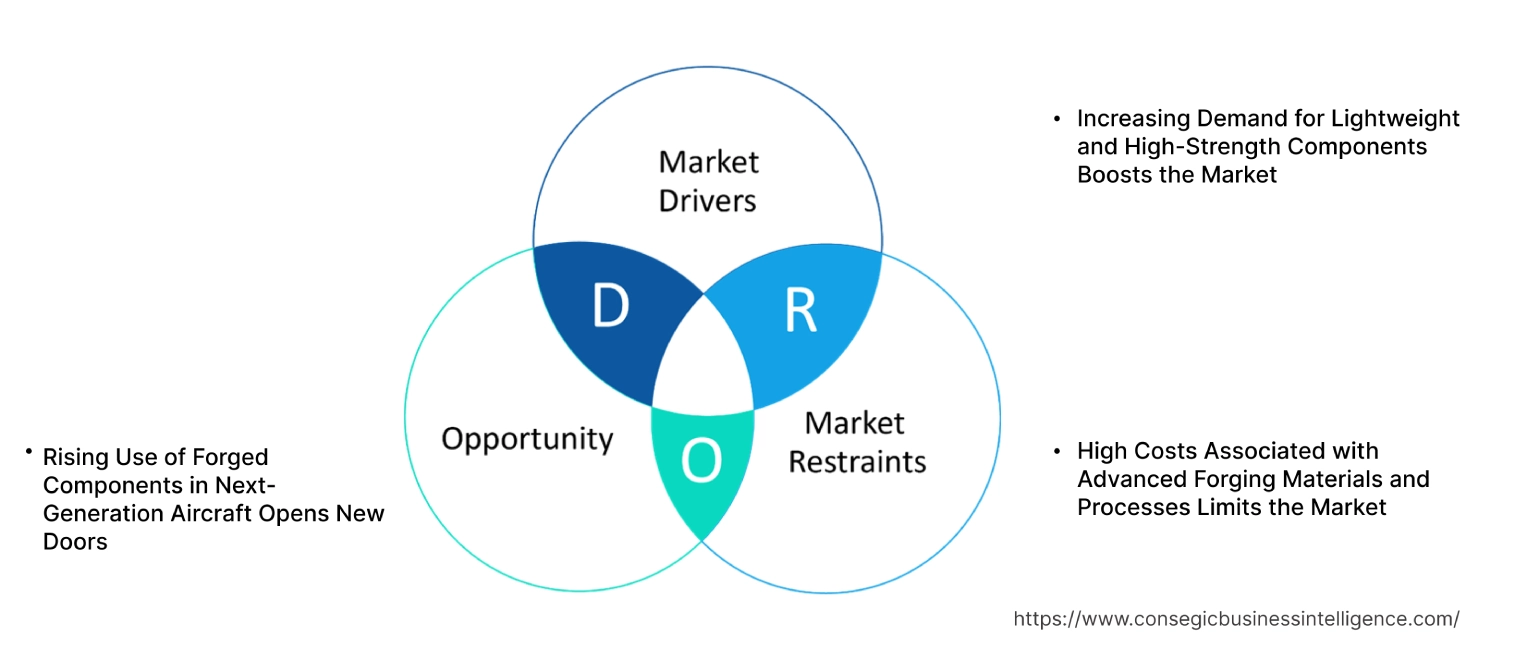
Key Restraints :
Availability of substitutes is restraining the aerospace forging market growth
The primary substitutes of aerospace forging include aerospace casting, advanced CNC machining, and others. Moreover, the substitutes have similar performance and applications in comparison to aerospace forging, which is a key factor restricting the market growth. For instance, aerospace casting acts as an ideal alternative to aircraft forgings in a range of applications involving commercial and military aircraft. Aerospace casting is also used for fabrication of metal components utilized in engines, interiors, landing gear, and structural parts of an aircraft. Moreover, aerospace casting offers a range of benefits, including fabrication of components in a variety of shapes and sizes, higher flexibility in part design, and lighter cast products as compared to its forging counterparts.
Additionally, aerospace components fabricated through casting offer high resistance to wear, corrosion, and other deposits, excellent resistance to extreme temperatures, and superior tensile strength. Further, aerospace casting provides relatively easier and quicker modifications of part designs and associated molds, making it ideal for utilization in fabrication of several aircraft parts and components. Therefore, the availability of multiple substitutes for aerospace forging with improved operational benefits is hindering the aerospace forging market expansion.
Future Opportunities :
Growing air defence sector is expected to drive the aerospace forging market opportunities
Aerospace forgings are primarily used for manufacturing several parts and components for military aircraft, including special mission aircraft, combat aircraft, and others. The utilization of forging process for fabrication of military aircraft parts and components ensures higher strength in comparison to parts manufactured by other metalworking processes. Moreover, aircraft forging leverages the metal’s natural grain flow and further shapes the grain flow to conform to the contours of each part’s distinctive geometry. In addition, aircraft forgings are capable of enduring extreme temperatures and pressure while maintaining structural integrity under stress. The above characteristics of forged components are increasing its utilization in military/defence aircraft.
Further, factors including rising government investments in air defence aircraft, advancements in air defence systems, and increasing production of advanced military aircraft for improvement of aerial defence capabilities are key prospects driving the market.
- For instance, the U.S. Air Force reports that the B-21 Raider and F-47 fighter aircraft production has been accelerated by 25% due to digital engineering and increased funding. Flight testing is underway for the B-21, which is estimated to be operational by 2027, with 7 new bombers projected to be produced annually. In addition, the F-47 is scheduled for its first flight in 2028.
Hence, as per the analysis, the growing air defence sector and rising production of military aircraft are anticipated to boost the market opportunities during the forecast period.
Aerospace Forging Market Segmental Analysis :
By Process Type:
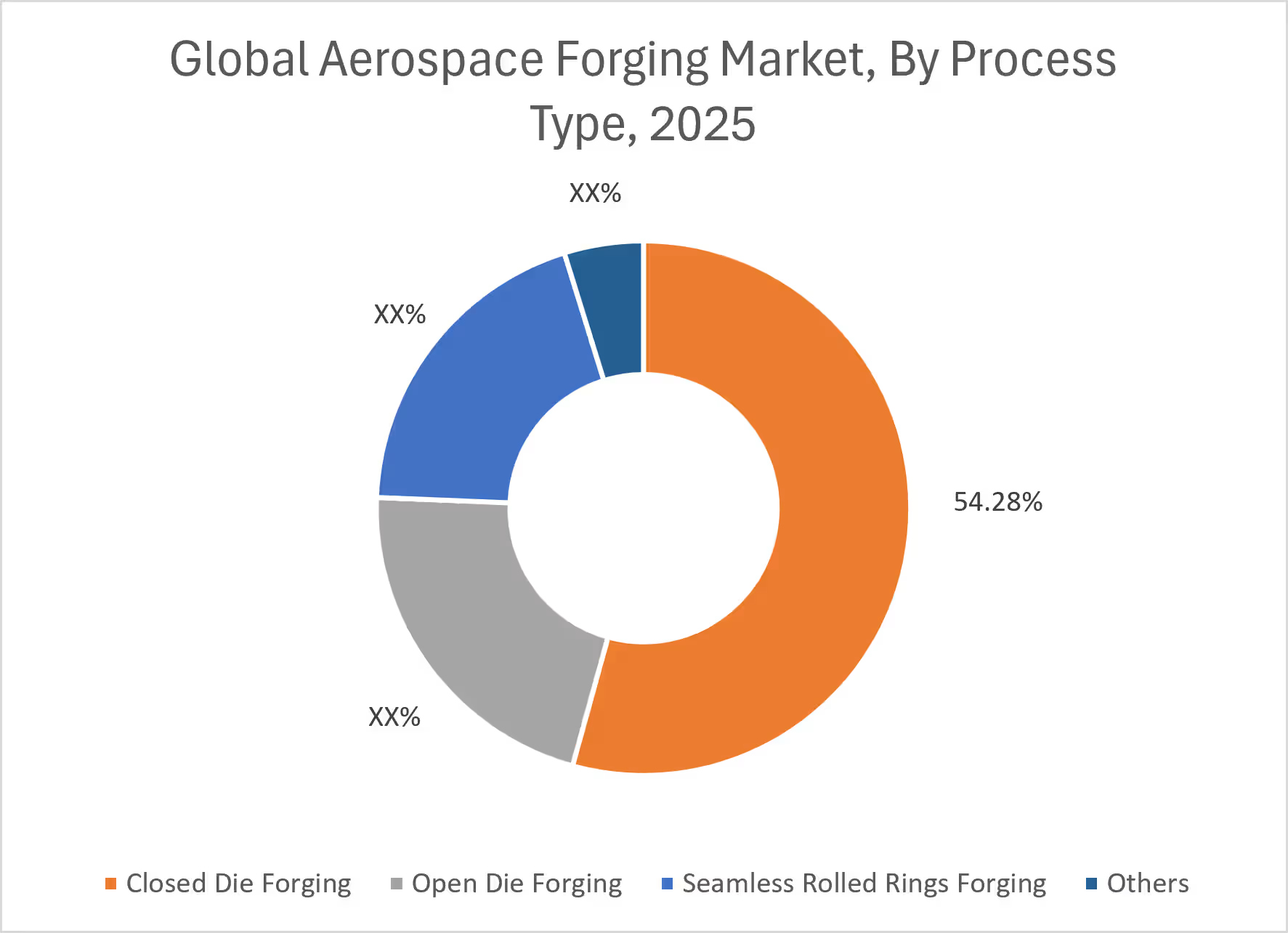
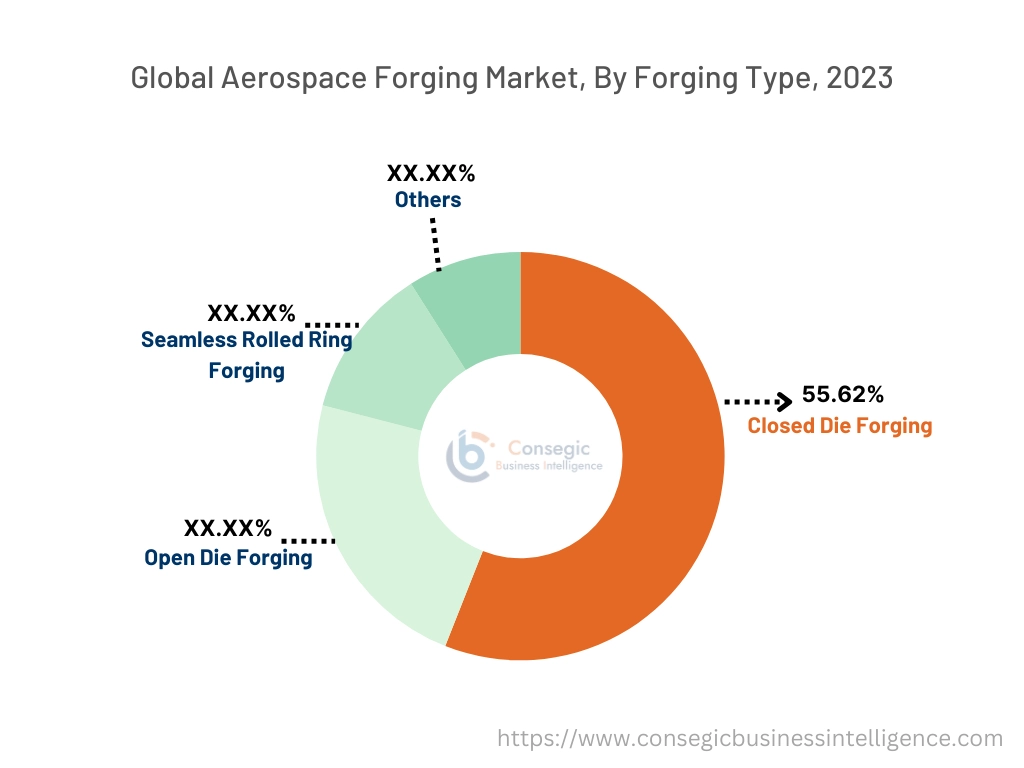
Based on the process type, the market is segmented into closed die forging, open die forging, seamless rolled rings forging, and others.
Trends in the process type:
- Factors including the growing aerospace & defence sector and rising need for high-performance aircraft parts and components with exceptional strength and durability are key trends driving the closed die forging segment.
- The open die forging segment is driven by several factors, including increasing aircraft production and growing need for high-strength aerospace components with improved fatigue resistance.
The closed die forging segment accounted for the largest revenue share of 54.28% in the market in 2025.
- The closed die forging process involves the method of hammering or pressing preformed metal blanks into a set of dies that are shaped as a three-dimensional negative of the aerospace part to be manufactured.
- In closed die forging process, the hammer and anvil completely enclose the workpiece, which further forces the metal to fill all areas of the dies. The impact of the top die on the raw material forms and converts it into the required forged form.
- The closed die forging process is capable of manufacturing a wide range of 3D shapes along with fabrication of complex parts with tight tolerances.
- Moreover, closed die forging process offers several benefits including superior mechanical properties, various shapes and dimensions with tighter tolerances, precise and consistent impressions, improved surface finish, and others. The above benefits of closed die forging process are key aspects increasing its adoption for forging of aircraft components.
- Further, factors including the growing aerospace & defense sector and rising demand for high-performance aircraft parts and components with exceptional strength and durability are key prospects driving the closed die forging process segment.
- According to the aerospace forging market analysis, the above factors are further propelling the market growth.
The seamless rolled rings forging segment is anticipated to register a significant CAGR during the forecast period.
- The seamless rolled rings forging process is usually performed by punching a hole in a thick, round piece of metal and further rolling and squeezing the metal piece into a thin ring. Ring diameters typically range from a few inches to 30 feet.
- Moreover, rings forged by the seamless ring rolling process can weigh less than 1 lb up to 350,000 lbs. Also, rolled ring forging offers various benefits including high tangential strength and ductility, superior pressure resistance, and the ability to forge a wide range of materials, among others.
- Additionally, rolled ring forgings are ideal for utilization in aircraft components such as engine bearings, wheel bearings, rotor spacers, sealed discs and cases, pressure vessels and valve bodies, and other related components.
- In addition, factors including increasing commercial aircraft deliveries and rising need for economical forging solutions for fabrication of aircraft components with high tangential strength and superior pressure resistance are vital aspects boosting the rolled rings segment.
- Consequently, the above factors are anticipated to boost the aerospace forging market during the forecast period
By Material:
Based on material, the market is segmented into aluminium alloys, titanium & titanium alloys, stainless steel, nickel-based superalloys, and others.
Trends in the material:
- Factors including the rising production of aircraft and increasing need for lightweight and high-strength forged components for integration in aircraft are driving the aluminium alloy segment.
- The titanium & titanium alloys segment is primarily driven by factors including increasing production of military and commercial aircraft, combined with the rising need for aircraft forgings with high tensile strength and superior heat resistance.
The aluminium alloys segment accounted for the largest revenue share in the aerospace forging market in 2025.
- Aluminium alloy is composed of a combination of aluminium and other elements such as magnesium, nickel, zinc, and others.
- Moreover, aluminium alloy offers various benefits including high versatility, superior strength, reliability, lightweight, design flexibility, corrosion resistance, and improved fuel efficiency, among others.
- Additionally, the utilization of aluminium alloys for aircraft forgings offers high ductility at normal forging temperatures while requiring low forging pressure. The above benefits of aluminium alloy are key determinants for increasing its utilization in aircraft forgings.
- Furthermore, factors including the rising production of aircraft, combined with the increasing need for lightweight and high-strength forged components for integration in aircraft, are key prospects driving the aluminium alloy segment.
- Therefore, the above factors are further propelling the market growth.
The titanium & titanium alloys segment is anticipated to register the fastest CAGR during the forecast period.
- Titanium & titanium alloys are among the key materials used in aircraft forgings.
- Moreover, titanium & titanium alloys offer a range of benefits including very high strength-to-weight ratio, excellent heat resistance, superior corrosion resistance, and longer life span even at extreme temperatures. The above factors are further increasing its adoption in aircraft forgings.
- Also, the use of titanium & titanium alloy-based forged components makes aircraft lighter, safer, and more fuel-efficient under extreme flight conditions.
- In addition, the segment is driven by increasing production of military and commercial aircraft, combined with the growing demand for aircraft forgings with high tensile strength and superior heat resistance.
- Hence, the above factors are anticipated to boost the aerospace forging market during the forecast period.
By Aircraft Type:
Based on application, the market is segmented into aircraft structure, engine components, landing gear, and others.
Trends in the aircraft type:
- Factors including rising investments in commercial aircraft development, technological advancements in aircraft manufacturing, and the growing need for aircraft with longer flight range and endurance are key trends driving the fixed wing aircraft segment.
- The rotary wing aircraft segment is primarily driven by factors including rising investments in military aircraft such as special mission aircraft and transport aircraft, increasing cases of medical and emergency rescue missions, combined with rising development of advanced helicopters.
The fixed wing segment accounted for the largest revenue share in the market in 2025.
- Fixed wing aircraft refers to a type of aircraft with wings that remain stationary while generating the aircraft's lift. Fixed wing aircraft is capable of flight using wings that produce lift generated by the aircraft's forward air speed and the shape of the wings.
- Moreover, fixed wing aircraft offer a range of benefits, including higher speed capabilities, longer flight range and endurance, greater payload capacity, improved stability in turbulent weather conditions, along with relatively lower maintenance and operational costs, among others.
- Aircraft forgings are primarily used in multiple components of fixed wing aircraft, including engines, structural parts, landing gear components, and other related components.
- Additionally, factors including the rising development of commercial aircraft, technological advancements in aircraft manufacturing, and increasing need for aircraft with longer flight range and endurance are vital aspects driving fixed wing aircraft segment.
- Therefore, the aforementioned factors are further driving the aerospace forging market.
The rotary wing segment is anticipated to register a substantial CAGR during the forecast period.
- Rotary wing aircraft is a type of aircraft that is completely or partly sustained in the air by lifting rotors revolving around a vertical axis. Rotary wing aircraft typically include aircraft which consist of rotors that provide lift throughout the entire flight, such as helicopters, gyrodynes, and autogyros.
- The primary benefits of rotary wing aircraft includes its ability to fly vertically, hover over a fixed position at a given height, and take off and land in a very small space.
- Moreover, aircraft forgings are often used for the fabrication of various structural parts and components integrated into rotary wing aircraft.
- In addition, factors including rising investments in military aircraft such as special mission aircraft and transport aircraft, increasing cases of medical and emergency rescue missions, along with rising development of advanced helicopters are key aspects driving the rotary wing aircraft segment.
- Hence, the aforementioned factors are anticipated to drive the adoption of rotary wing aircraft for military operations, in turn propelling the market during the forecast period.
By Application:
Based on end-user, the market is segmented into commercial aviation, military aviation, business & general aviation, and others.
Trends in the application:
- Factors including the growing commercial aviation sector and rising aircraft production are among the key prospects driving the market.
- The market is also driven by rising investments in aircraft manufacturing facilities and increasing need for reliable air defence systems.
The engine/propulsion components segment accounted for the largest revenue share in the market in 2025, and it is anticipated to register a significant CAGR during the forecast period.
- The primary components of an aircraft engine include turbine blades, compressor blades, vanes, casings, and others. These components enable the aircraft engine to use air and fuel to produce power to drive a shaft connected to a propeller or rotor blades or to provide thrust out of the exhaust.
- Moreover, forged aircraft engine components offer several benefits, including lightweight, low density, excellent mechanical properties, wide temperature range, and others, making them ideal for integration in commercial and military aircraft.
- Additionally, factors including rising air travel activities, significant advancements in aircraft engine manufacturing, and increasing aircraft MRO (maintenance, repair, and overhaul) activities are key aspects driving the engine/propulsion components segment.
- Therefore, the aforementioned factors are further driving the aerospace forging market.
By End User:
Based on end user, the market is segmented into commercial aviation and military & defense.
Trends in the end user:
- The commercial aviation sector is driven by key factors such as increasing air travel trends, rising commercial flight activities, and growing production of commercial aircraft, among others.
- The military & defense segment is driven by factors including increased defence budgets, rising government investments in air defence platforms, and growing need for advanced military aircraft to improve aerial defence operations, among others.
The commercial aviation segment accounted for the largest revenue share in the aerospace forging market in 2025.
- Forged components are primarily used during the production of commercial aircraft for a range of applications including engines, landing gear, structural components, rotor, brake components, and other related components.
- Aircraft forgings use materials such as titanium alloys, stainless steel, aluminium alloys, nickel alloys, and others for fabrication of several aircraft components used in commercial aircraft.
- Moreover, aircraft forgings offer a range of benefits including robust design, higher structural durability, extended product life, and high strength-to-weight ratios, which are key prospects increasing its integration in commercial aircraft.
- Furthermore, factors including increasing air travel trends, rising commercial flight activities, and growing production of commercial aircraft are key determinants for driving the commercial aviation segment.
- According to the analysis, the aforementioned factors are driving the aerospace forging market trends.
The military & defense segment is anticipated to register a significant CAGR during the forecast period.
- Aircraft forgings are utilized for fabrication of several parts and components for military aircraft, including special mission aircraft, combat aircraft, and others.
- The use of forging process for fabrication of military aircraft parts and components ensures higher strength in comparison to parts manufactured by other metalworking processes.
- Moreover, aircraft forgings are capable of enduring extreme temperatures and pressure while maintaining structural integrity under stress, which are key determinants for increasing its utilization in military & defense sector.
- In addition, factors including rising government investments in air defence platforms and increasing need for advanced military aircraft for improving aerial defence operations are primary aspects projected to drive the market during the forecast period.
Based on the Region :
The regions covered are North America, Europe, Asia Pacific, Middle East and Africa, and Latin America.
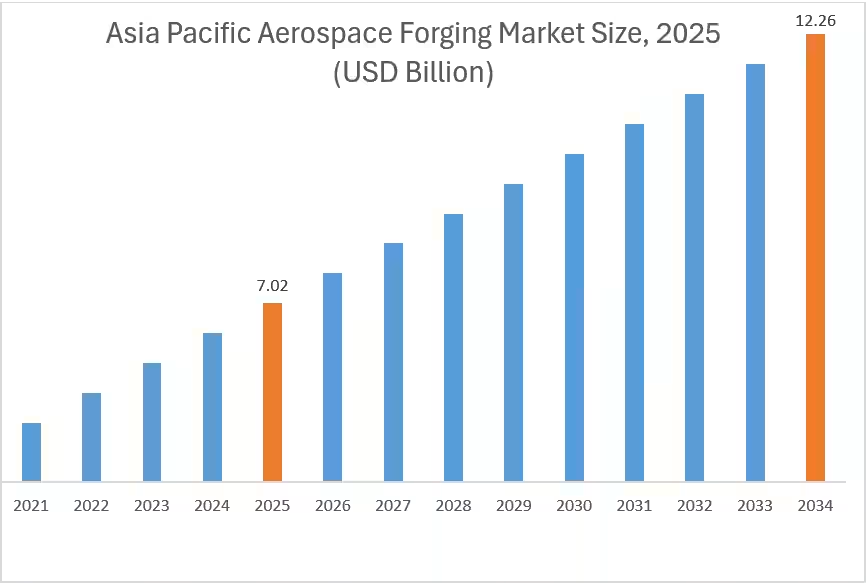
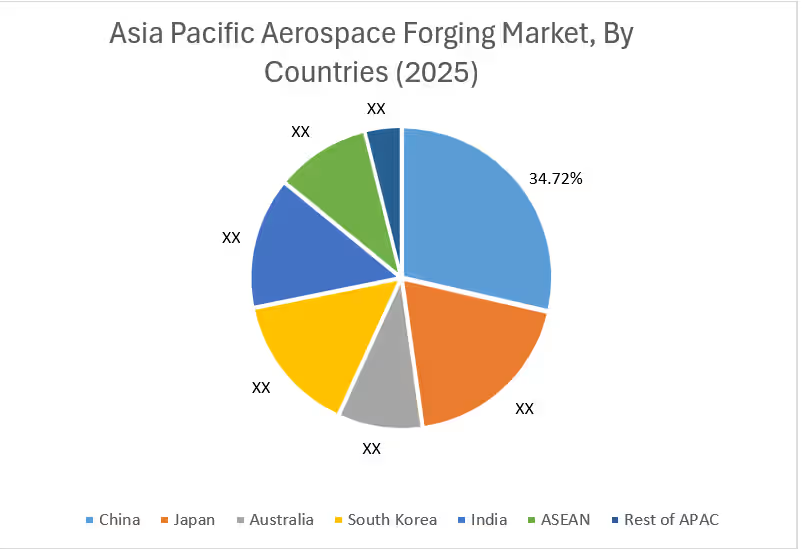
Asia Pacific region was valued at USD 7.02 Billion in 2025. Moreover, it is projected to grow by USD 7.35 Billion in 2026 and reach over USD 12.26 Billion by 2034. Out of this, China accounted for the maximum revenue share of 34.72%. As per the market analysis, the adoption of aircraft forgings in the Asia-Pacific region is primarily driven by the rising air travel activities, growing commercial aviation, and increasing aircraft production, among others. Additionally, factors such as increasing geopolitical tensions, rising investments in the military & defense industry to enhance military preparedness, and increasing domestic defence modernization initiatives are further accelerating the market expansion.
In Asia Pacific, the market is experiencing the fastest growth with a CAGR of 4.3% over the forecast period. Asia-Pacific is the fastest-growing region in the aerospace forging market analysis, fueled by increasing aircraft production, growing air travel demand, and expanding defense budgets in China, India, and Japan. China leads the market with its focus on domestic aircraft manufacturing and the development of high-strength forged components for both commercial and military aviation. India is witnessing aerospace forging market growth due to government initiatives such as “Make in India,” encouraging local manufacturing of aerospace components. Japan’s advanced material science and focus on high-precision forging for engines and structural parts further boost the market. However, limited infrastructure for high-end forging technologies in some parts of the region may hinder growth.produ
- For instance, India's Ministry of Defence (MoD) was allocated approximately USD 72.62 billion in the 2024-2025 Union Budget, an increase of around 18.35% as compared to the previous year. The above factors are further driving the adoption of aircraft forgings in military & defense aircraft, thereby driving the market in the Asia-Pacific region.
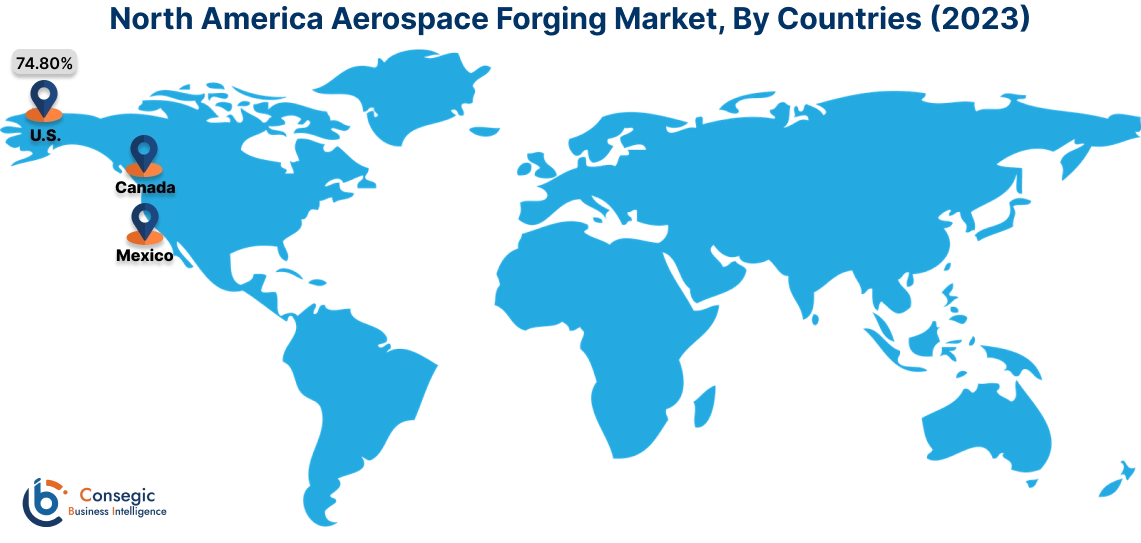
North America is estimated to reach over USD 16.60 Billion by 2034 from a value of USD 9.98 Billion in 2025 and is projected to grow by USD 10.38 Billion in 2026. In North America, the growth of the aerospace forging industry is mostly driven by rising commercial aircraft deliveries and increasing development of aircraft manufacturing facilities, among others. Similarly, the increasing geopolitical tensions and rising government funding for military & defence modernizations are further contributing to the aerospace forging market demand.
- For instance, Boeing, a U.S.-based aerospace company, delivered approximately 600 commercial aircraft in 2025, depicting a substantial increase of 72.4% as compared to 348 commercial aircraft in 2024. The above factors are expected to propel the market trends in North America during the forecast period.
Meanwhile, according to the regional analysis, factors including rising aircraft production, growing investments in the air defence sector, and rising demand for robust aircraft components are driving the market in Europe. Furthermore, according to the market analysis, the market in Latin America, Middle East, and African regions is expected to grow at a considerable rate due to factors such as growing commercial aviation, increasing regional conflicts and security challenges, combined with the growing need for aerial defence platforms for enhanced border security and intelligence-gathering capabilities.
Top Key Players & Market Share Insights :
The global aerospace forging market is highly competitive, with major players providing solutions to the national and international markets. Key players are adopting several strategies in research and development (R&D), product innovation, and end-user launches to hold a strong position in the aerospace forging market. Key players in the market include-
- Precision Castparts Corp. (United States)
- Howmet Aerospace (United States)
- ATI Inc. (United States)
- Aubert & Duval (France)
- Voestalpine AG (Austria)
- Otto Fuchs KG (Germany)
- Bharat Forge Limited (India)
- Forgital Group (Italy)
- Kobe Steel Ltd. (Japan)
- Scot Forge Company (United States)
Recent Industry Developments :
Partnerships & Agreements:
- In March 2026, Bharat Forge Limited and Liebherr-Aerospace launched a new advanced facility in Pune, India, designed for the high-precision machining of landing gear components for commercial aviation. This partnership strengthens regional manufacturing capabilities, focusing on the production of critical aerospace parts.
- In July 2026, Hindustan Aeronautics Limited (HAL) entered a long-term contract with Safran Aircraft Engines for manufacturing critical superalloy turbine ring forgings for CFM LEAP engine program in Bengaluru. This initiative aims to strengthen regional supply chains for global aviation.
Acquisitions:
- In June 2026, H.I.G. Capital completed the acquisition of Premier Forge Group, an Indiana-based manufacturer specializing in critical forged components for the aviation, defence, and industrial markets. The acquisition aims to strengthen Premier Forge Group's production capacity and engineering solutions.
Aerospace Forging Market Report Insights :
| Report Attributes | Report Details |
| Study Timeline | 2021-2034 |
| Market Size in 2034 | USD 50,043.86 Million |
| CAGR (2026-2034) | 3.82% |
| Base Year | 2025 |
| By Process Type |
|
| By Material |
|
| By Aircraft Type |
|
| By Application |
|
| By End User |
|
| By Region |
|
| Key Players |
|
| Report Coverage |
|
Key Questions Answered in the Report
What is Aerospace Forging Market? −
Covered in Market Scope & Overview
What are the Key Drivers, Restraints, and Opportunities in the Aerospace Forging Market? +
Covered in DROs
What are the Key Segments in the Aerospace Forging Market? +
Covered in Market Segmental Analysis
What are the major challenges faced by the Aerospace Forging Market? +
Covered in Regional Analysis
Who are the Major Players Operating in the Aerospace Forging Market? +
Covered in Top Key Players & Market Share Insights
Overview
Reputation & Certifications


Our Services
- Market Intelligence & Forecasting
- Custom Research Solutions
- Market Entry Strategy
- Competitive Intelligence
- Customer Insights
- Industry Innovation Analysis
- Investment Advisory