Jump to Content
Alpha Lipoic Acid Market - Size, Share, Industry Trends, and Forecasts (2024 - 2031)
Alpha Lipoic Acid Market Size:
Alpha Lipoic Acid Market size is estimated to reach over USD 1,486.33 Million by 2031 from a value of USD 935.40 Million in 2023 and is projected to grow by USD 974.48 Million in 2024, growing at a CAGR of 5.96% from 2024 to 2031.
Alpha Lipoic Acid Market Scope & Overview:
The alpha-lipoic acid is naturally occurring antioxidant widely used in the pharmaceutical, nutraceutical, and cosmetic industries. Known for its ability to combat oxidative stress and support metabolic health, alpha-lipoic acid is valued for its multifunctional properties in health and wellness applications. Key characteristics include its dual solubility in water and fat, high bioavailability, and effectiveness in neutralizing free radicals. The benefits include enhanced energy production, improved skin health, and support for managing chronic conditions such as diabetes and neuropathy. Applications span dietary supplements, anti-aging skincare products, and pharmaceuticals for metabolic and neurological health. End-users include nutraceutical companies, pharmaceutical manufacturers, and personal care product developers, driven by increasing consumer awareness of antioxidants, rising prevalence of lifestyle-related diseases, and advancements in alpha-lipoic acid production technologies.
How is AI Impacting the Alpha Lipoic Acid Market?
AI is significantly impacting the alpha lipoic acid (ALA) market by accelerating research, improving production efficiency, and enabling personalized medicine approaches. AI-driven analytics are helping identify new applications for ALA, optimize formulations, and tailor products to individual needs. Additionally, AI is being used to enhance manufacturing processes and improve supply chain management, leading to greater efficiency and cost-effectiveness.

Alpha Lipoic Acid Market Dynamics - (DRO) :
Key Drivers:
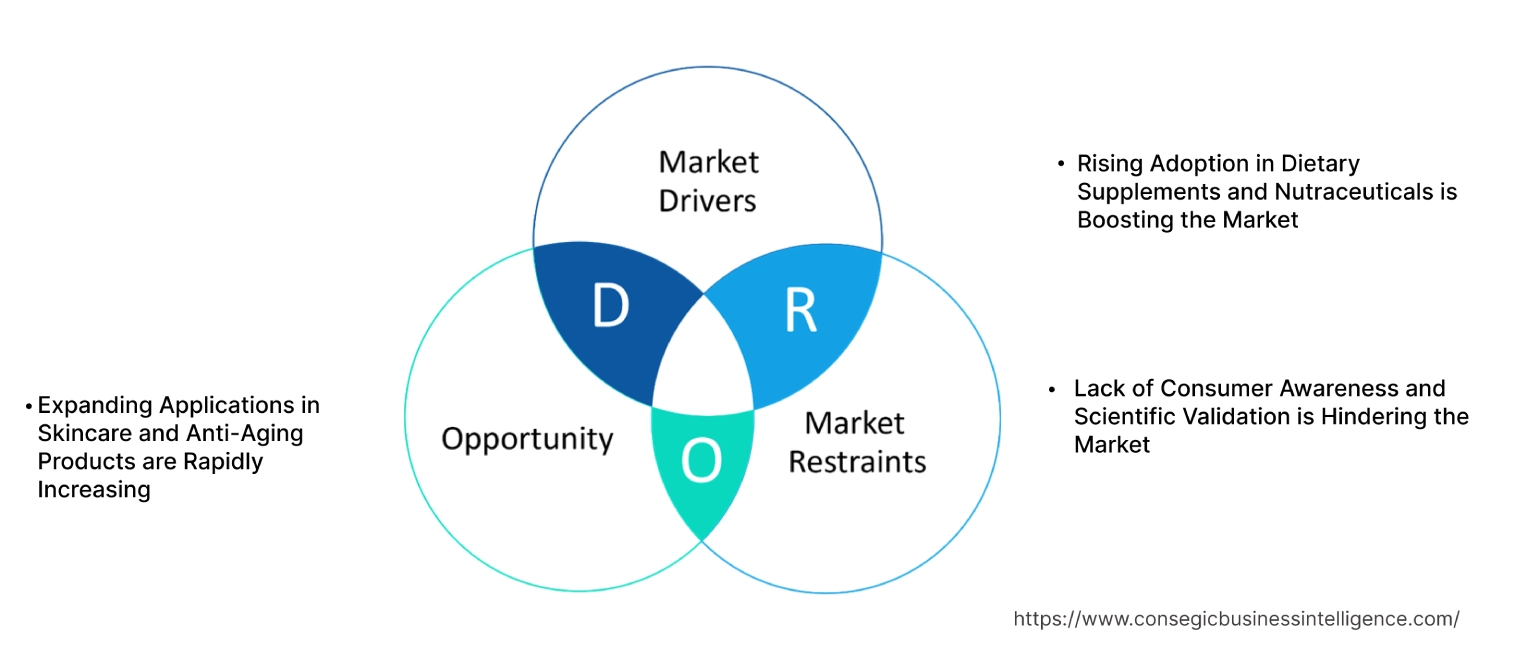
Rising Adoption in Dietary Supplements and Nutraceuticals is Boosting the Market
Alpha lipoic acid (ALA) has gained significant traction in the dietary supplements and nutraceuticals industry due to its potent antioxidant and anti-inflammatory properties. ALA is often included in products targeting metabolic health, weight management, and oxidative stress reduction. Its role in supporting energy metabolism and enhancing the body's ability to neutralize free radicals makes it an appealing ingredient for health-conscious consumers.
Trends in preventive healthcare and functional foods are driving the integration of ALA into wellness routines, particularly for individuals managing diabetes, cardiovascular health, or general aging-related concerns. Additionally, ALA's synergy with other nutrients, such as vitamins C and E, enhances its appeal as a comprehensive supplement. As analysis highlights the growing preference for holistic health solutions, ALA's use in nutraceuticals is set to remain prominent in wellness-focused markets.
Key Restraints :
Lack of Consumer Awareness and Scientific Validation is Hindering the Market
Despite its known benefits, alpha lipoic acid faces challenges due to limited awareness among consumers and healthcare professionals. Many individuals remain unfamiliar with its potential applications or its role in managing chronic conditions like diabetes and neurodegenerative disorders. This lack of knowledge often results in underutilization, especially in regions where nutritional literacy is still developing.
Additionally, while research supports many of ALA's benefits, a lack of large-scale, conclusive studies in some areas contributes to skepticism among potential users. Addressing this restraint requires concerted efforts in education and marketing, as well as further investment in clinical research to validate its effectiveness across diverse applications. Bridging this gap can help enhance its adoption in both the health and wellness sectors.
Future Opportunities :
Expanding Applications in Skincare and Anti-Aging Products are Rapidly Increasing
The antioxidant and anti-inflammatory properties of ALA are increasingly being leveraged in skincare and anti-aging formulations. Its ability to neutralize free radicals and improve skin elasticity makes it a sought-after ingredient for combating signs of aging such as fine lines, wrinkles, and dullness. ALA also enhances the effectiveness of other antioxidants, amplifying its appeal in multi-functional skincare products.
Trends in clean beauty and science-driven cosmetics have amplified interest in ALA, particularly as consumers seek products with proven benefits and minimal environmental impact. Its inclusion in topical formulations and serums caters to a growing alpha lipoic acid market demand for natural and effective anti-aging solutions. Analysis suggests that as skincare markets prioritize innovative and results-oriented products, ALA will play an increasingly central role in next-generation cosmetic developments.
Alpha Lipoic Acid Market Segmental Analysis :
By Product Type:
Based on product type, the market is segmented into S-ALA and R-ALA.
The R-ALA segment accounted for the largest revenue in alpha lipoic acid market share in 2023.
- R-ALA is the natural and biologically active form of alpha lipoic acid, known for its superior antioxidant properties and higher bioavailability compared to its counterpart.
- This form is widely utilized in pharmaceuticals and dietary supplements due to its effectiveness in neutralizing free radicals, reducing oxidative stress, and supporting metabolic health.
- Its strong efficacy in managing diabetes-related neuropathy and improving skin health has further boosted its adoption in the pharmaceutical and cosmetics industries.
- The rising preference for natural and potent antioxidants among consumers has established R-ALA as the dominant product type in the alpha lipoic acid market trends.
The S-Alpha Lipoic Acid segment is anticipated to register the fastest CAGR during the forecast period.
- S-ALA, the synthetic form of alpha lipoic acid, is increasingly being used in dietary supplements and cosmetics due to its cost-effectiveness and ability to enhance antioxidant activity.
- This form is often combined with R-ALA to improve overall stability and efficacy in formulations.
- The growing demand for affordable antioxidant solutions in emerging markets and its expanding applications in anti-aging products are key drivers of growth for this segment.
- With ongoing research and development, the use of S-ALA in innovative product formulations is expected to grow significantly during the forecast period.
By Application:
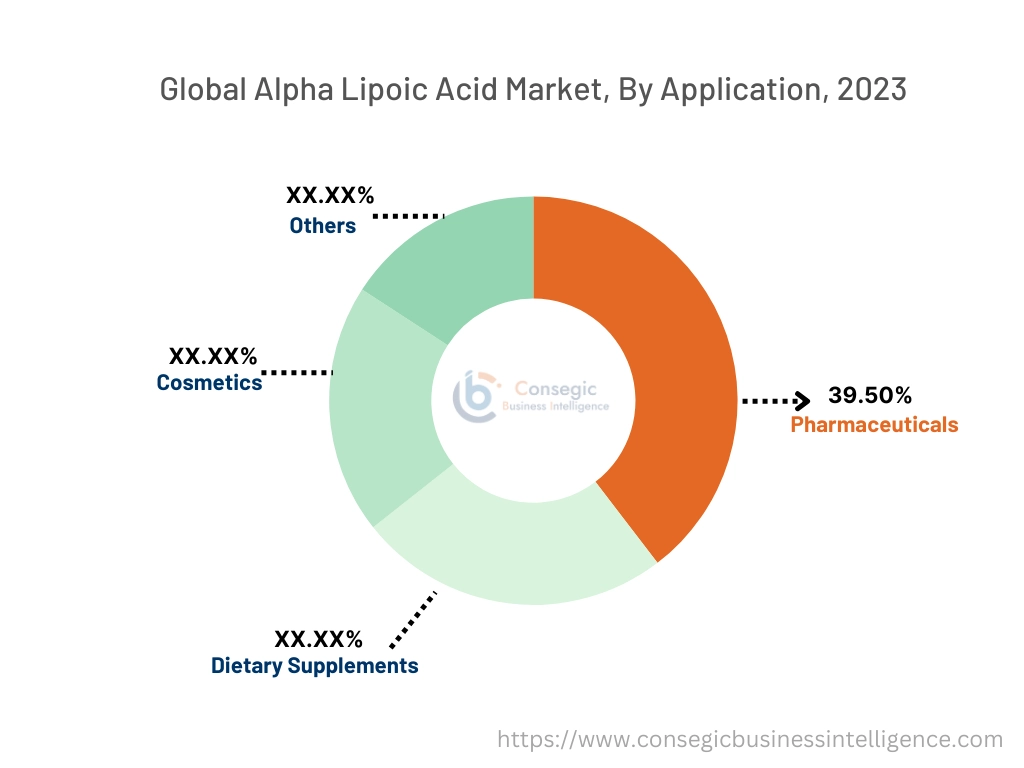
Based on application, the market is segmented into pharmaceuticals, dietary supplements, cosmetics, and others.
The pharmaceuticals segment accounted for the largest revenue of 39.50% in alpha lipoic acid market share in 2023.
- Alpha lipoic acid is extensively used in the pharmaceutical sector for its therapeutic properties, particularly in the treatment of diabetic neuropathy and cardiovascular diseases.
- Its ability to regenerate other antioxidants, such as vitamins C and E, enhances its effectiveness in managing oxidative stress-related conditions.
- Additionally, its neuroprotective benefits have led to increased alpha lipoic acid market opportunities in formulations aimed at treating neurodegenerative disorders.
- The rising prevalence of diabetes and chronic diseases, coupled with growing awareness of alpha lipoic acid’s medicinal benefits trends, has propelled the dominance of this segment trend in the market.
The dietary supplements segment is anticipated to register the fastest CAGR during the forecast period.
- Dietary supplements containing alpha lipoic acid are gaining popularity due to their wide range of health benefits, including improved energy metabolism, weight management, and anti-inflammatory effects.
- The rising consumer focus on preventive healthcare and wellness, along with the growing demand for antioxidant-rich supplements, is driving growth in this segment.
- Additionally, the increasing opportunities in the adoption of alpha lipoic acid in sports nutrition and weight loss products are further fueling alpha lipoic acid market demand.
- As consumer awareness of dietary supplements’ health benefits grows, this segment is expected to experience significant expansion during the forecast period.
Regional Analysis:
The regions covered are North America, Europe, Asia Pacific, the Middle East and Africa, and Latin America.
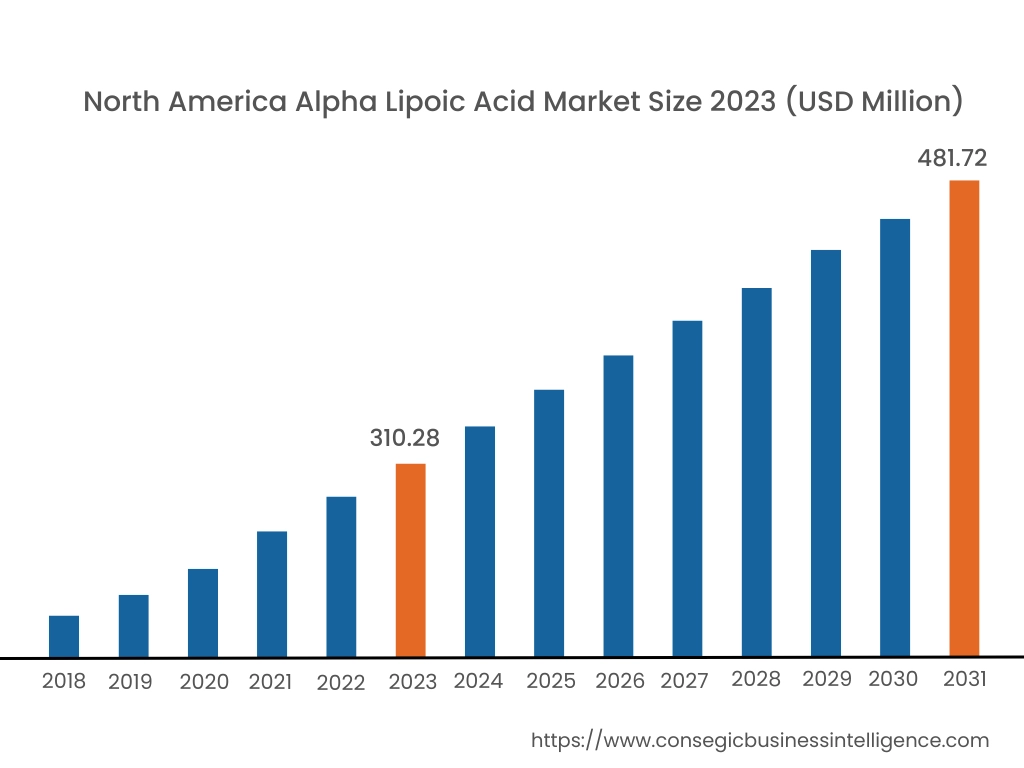
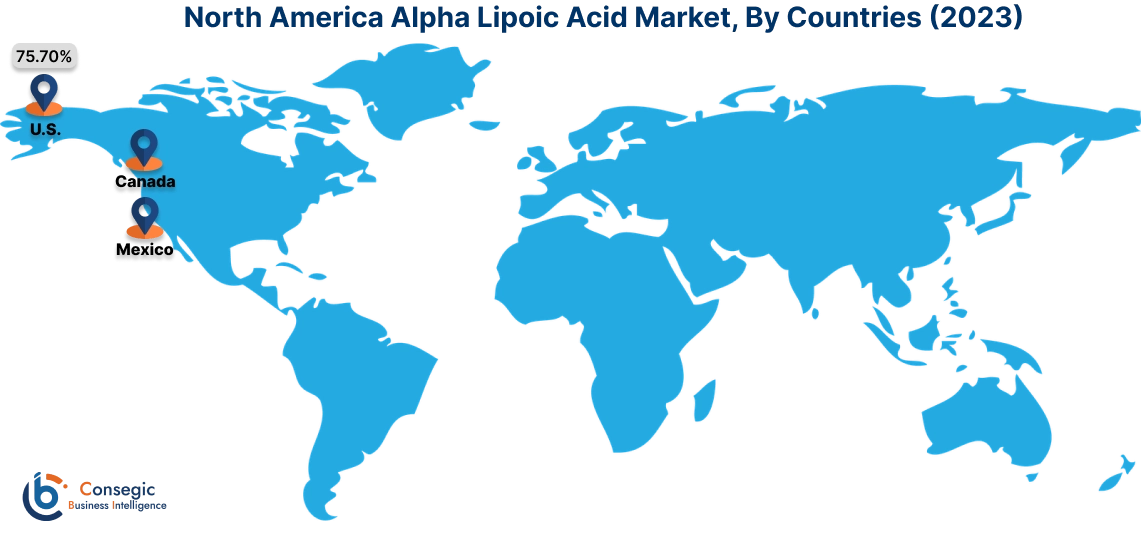
In 2023, North America was valued at USD 310.28 Million and is expected to reach USD 481.72 Million in 2031. In North America, the U.S. accounted for the highest share of 75.70% during the base year of 2023. North America holds a significant share in the alpha lipoic acid market analysis, driven by increasing consumer awareness of dietary supplements and their health benefits. The U.S. dominates the regional trends with strong demand for ALA in the nutraceutical sector, where it is used for its antioxidant properties to support energy metabolism and manage chronic conditions like diabetes and neuropathy. The growing emphasis on anti-aging and wellness products also supports its adoption in cosmetics. Canada contributes through a rising interest in functional foods and supplements containing alpha lipoic acid. However, strict regulatory requirements for dietary supplements may pose challenges in this region.
In Asia Pacific, the market is experiencing the fastest growth with a CAGR of 6.4% over the forecast period. Asia-Pacific is the fastest-growing region in the alpha lipoic acid market analysis, fueled by rising health awareness, growing disposable income, and increasing prevalence of chronic diseases in China, India, and Japan. China dominates the market trends with strong demand for ALA in pharmaceuticals and dietary supplements, driven by its applications in managing diabetes and promoting general health. India’s expanding pharmaceutical sector supports its use in therapeutic formulations, while Japan leverages it in advanced anti-aging and skincare products. However, limited awareness in rural areas and affordability concerns may hinder the alpha lipoic acid market growth in certain parts of the region.
Europe is a prominent market, supported by trends analysis of its well-established pharmaceutical and nutraceutical industries. Countries like Germany, France, and the UK are major contributors. Germany leads with increasing opportunities in the adoption of alpha lipoic acid in formulations for diabetic neuropathy management and as an antioxidant supplement. France emphasizes its use in anti-aging products and dietary supplements aimed at improving skin health, while the UK focuses on its incorporation in functional beverages and wellness products. However, regulatory hurdles surrounding ingredient claims and approvals for health benefits may restrict market growth in some areas.
The Middle East & Africa region is witnessing steady alpha lipoic acid market growth, driven by increasing adoption trends of nutraceuticals and supplements in urban areas. Countries analysis like Saudi Arabia and the UAE are key contributors, focusing on the use of alpha lipoic acid in managing diabetes and promoting wellness among the growing health-conscious population. In Africa, South Africa is emerging as a market, leveraging alpha lipoic acid in supplements and pharmaceuticals aimed at managing metabolic disorders. However, limited access to advanced healthcare products and reliance on imports may restrict broader market penetration.
Latin America is an emerging market for alpha lipoic acid, with Brazil and Mexico leading the region. Brazil’s rising prevalence of chronic diseases, particularly diabetes, drives the growth of alpha lipoic acid in pharmaceutical and dietary supplement formulations. Mexico’s expanding nutraceutical market supports its adoption of supplements for antioxidant and anti-inflammatory benefits. The region is also witnessing growing interest in functional foods enriched with alpha lipoic acid. However, economic instability and inconsistent regulatory frameworks may pose challenges to alpha lipoic acid market expansion in certain countries.
Top Key Players and Market Share Insights:
The alpha lipoic acid market is highly competitive with major players providing products and services to the national and international markets. Key players are adopting several strategies in research and development (R&D), product innovation, and end-user launches to hold a strong position in the global alpha lipoic acid market. Key players in the alpha lipoic acid industry include -
- AlzChem Group AG (Germany)
- GeroNova Research Inc. (U.S.)
- -W. Pfannenschmidt GmbH (Germany)
- Suzhou Fushilai Pharmaceutical Co. Ltd. (China)
- HiMedia Laboratories Pvt. Ltd. (India)
- Haihang Industry (China)
- Bio Actives Japan Corporation (Japan)
- Prinova Group LLC (U.S.)
- Olon S.p.A (Italy)
- Spectrum Chemical (U.S.)
Alpha Lipoic Acid Market Report Insights :
| Report Attributes | Report Details |
| Study Timeline | 2018-2031 |
| Market Size in 2031 | USD 1,486.33 Million |
| CAGR (2024-2031) | 5.96% |
| By Product Type |
|
| By Application |
|
| By Region |
|
| Key Players |
|
| North America | U.S. Canada Mexico |
| Europe | U.K. Germany France Spain Italy Russia Benelux Rest of Europe |
| APAC | China South Korea Japan India Australia ASEAN Rest of Asia-Pacific |
| Middle East and Africa | GCC Turkey South Africa Rest of MEA |
| LATAM | Brazil Argentina Chile Rest of LATAM |
| Report Coverage |
|
Key Questions Answered in the Report
What is the projected market size of the Alpha Lipoic Acid Market by 2031? −
Alpha Lipoic Acid Market size is estimated to reach over USD 1,486.33 Million by 2031 from a value of USD 935.40 Million in 2023 and is projected to grow by USD 974.48 Million in 2024, growing at a CAGR of 5.96% from 2024 to 2031.
What are the key drivers for the Alpha Lipoic Acid Market growth? +
The market growth is driven by the rising adoption of alpha lipoic acid in dietary supplements and nutraceuticals, its expanding applications in skincare and anti-aging products, and increasing consumer awareness of antioxidants and metabolic health.
What are the major applications of alpha lipoic acid? +
Major applications include pharmaceuticals (e.g., for managing diabetic neuropathy and cardiovascular diseases), dietary supplements (e.g., for energy metabolism and oxidative stress reduction), and cosmetics (e.g., for anti-aging and skin health).
Which product type holds the largest market share? +
The R-Alpha Lipoic Acid (R-ALA) segment holds the largest market share due to its higher bioavailability, superior antioxidant properties, and widespread use in pharmaceuticals and dietary supplements.
Overview
Reputation & Certifications


Our Services
- Market Intelligence & Forecasting
- Custom Research Solutions
- Market Entry Strategy
- Competitive Intelligence
- Customer Insights
- Industry Innovation Analysis
- Investment Advisory