Jump to Content
Anesthesia Video Laryngoscope Market - Size, Industry Share, Growth Trends and Forecasts (2025 - 2035)
Anesthesia Video Laryngoscope Market:
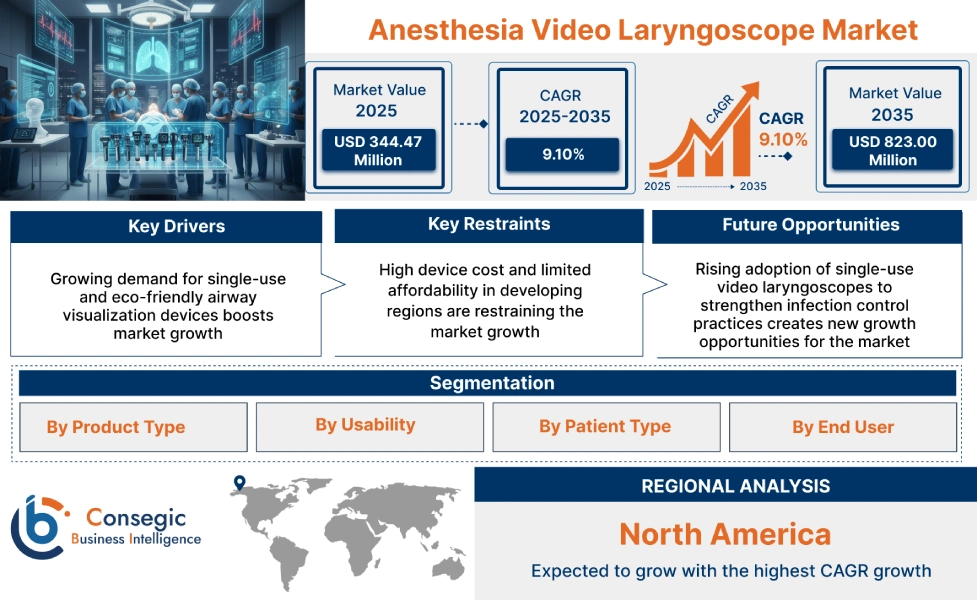
Anesthesia Video Laryngoscope Market size is estimated to reach over USD 823.00 Million by 2035 from a value of USD 315.74 Million in 2024 and is projected to grow by USD 344.47 Million in 2025, growing at a CAGR of 9.10% from 2025 to 2035
Anesthesia Video Laryngoscope Scope & Overview:
Anesthesia video laryngoscope is a medical tool that helps in tracheal intubation by offering a video view of the airway during anesthesia procedures. The tool consists of a small camera and light source at the tip of the blade, which sends images to a monitor in real time. Anesthesia video laryngoscopes are commonly used in operating rooms, emergency rooms, and intensive care units to enhance visibility and facilitate accurate airway management.
The growth of the anesthesia video laryngoscope market is driven by the rising number of surgical procedures and the increasing need for safe airway management. Growing awareness about reducing intubation-related complications is supporting device adoption. Technological advancements such as portable systems and disposable blades are improving ease of use and infection control. Increased spending on hospital infrastructure and training initiatives is also adding to the demand.
How is AI Impacting the Anesthesia Video Laryngoscope Market?
AI uses image recognition and machine learning to assist clinicians in identifying airway structures more accurately during intubation procedures. Also, AI helps improve visualization by enhancing image clarity and providing real-time guidance, which supports faster and safer airway management. Moreover, AI allows for the analysis of data from recorded procedures to aid training and enhance skills for healthcare professionals. Additionally, AI assists healthcare professionals in enhancing procedural consistency by facilitating decision-making in complex airway cases, leading to improved patient outcomes and fewer complications.
Anesthesia Video Laryngoscope Market Dynamics - (DRO):
Key Drivers:
Growing demand for single-use and eco-friendly airway visualization devices boosts market growth
The anesthesia video laryngoscope market is growing as the healthcare facilities are focusing on minimizing infection risk and patient safety during airway management. Single-use video laryngoscopes help lower cross-contamination and reduce sterilization burdens, making them increasingly preferred in operating rooms and critical care units. The rising need for reliable airway visualization tools in emergency and surgical settings further supports adoption.
Hospitals and surgical centers are also looking for more sustainable medical devices that align with environmental goals and reduce medical waste. The companies are focusing on developing eco-friendly video laryngoscope designs, which provide clinical performance and minimize environmental impact.
- For instance, in October 2024, Verathon launched its first single-use video laryngoscope made with bio-based plastics, aiming to lower carbon footprint while maintaining trusted GlideScope performance.
Therefore, the increasing prevalence of difficult airway conditions and stronger patient safety standards are driving the growth of the anesthesia video laryngoscope market.
Key Restraints:
The Anesthesia video laryngoscopes are advanced medical devices that involve higher procurement costs compared to conventional laryngoscopes. The healthcare facilities need to invest in video laryngoscopes, monitors, disposable blades, and maintenance services, which increases overall costs. Budget limitations in small healthcare facilities are a constraint for large-scale adoption.
In addition, recurring costs associated with disposable components and device sterilization increase operational expenses. Limited reimbursement support in certain countries further reduces purchasing willingness among healthcare providers.
Therefore, high device costs and affordability challenges are restraining the anesthesia video laryngoscope market expansion.
Future Opportunities:
Rising adoption of single-use video laryngoscopes to strengthen infection control practices creates new growth opportunities for the market
Increasing focus on infection prevention in operating rooms, emergency departments, and intensive care units is anticipated to create strong growth opportunities in the anesthesia video laryngoscope market. Healthcare facilities are prioritizing single-use airway devices to reduce cross-contamination risks and comply with strict sterilization protocols. In addition, the increasing number of surgical procedures and the rising number of difficult airway patients are also driving the use of video-assisted intubation equipment that enhances first-pass success rates and patient safety.
- For example, in April 2025, KARL STORZ launched the Slimline C-MAC S single-use video laryngoscope, which has a slimmer design to facilitate easier handling and visualization during intubation procedures. The equipment promotes infection control programs by integrating reusable imaging platforms with disposable blades.
Thus, the increasing demand for eco-friendly non-halogen flame retardants is expected to open new growth avenues for the Anesthesia Video Laryngoscope Market in the coming forecast period.
Anesthesia Video Laryngoscope Market Segmental Analysis:
By Product Type:
Based on the product type, the anesthesia video laryngoscope market is segmented into rigid video laryngoscopes and flexible video laryngoscopes.
Trends in the Product Type:
- The increasing preference for minimally invasive airway management techniques is driving the adoption of flexible video laryngoscopes.
- The growing number of surgical procedures requiring precise airway visualization is boosting demand for advanced rigid video laryngoscopes.
Rigid video laryngoscopes accounted for the largest revenue share in the year 2024.
- Rigid video laryngoscopes are commonly used in operating rooms and emergency departments because of their ease of use and high-quality visualization.
- These products offer improved glottic visualization, which helps in increasing the success rate of intubation.
- In addition, the rising use of video-assisted intubation as a standard of care in many healthcare facilities is also fueling the growth of this market.
- Moreover, the development of high-resolution imaging and display systems is also enhancing clinical outcomes.
- Thus, the reliability and improved visualization capabilities are driving adoption of rigid video laryngoscopes.
Flexible video laryngoscopes are anticipated to register the fastest CAGR during the forecast period.
- Flexible video laryngoscopes are very useful in dealing with difficult airways and challenging anatomical conditions.
- These instruments enable easier maneuvering and visualization in patients with limited mouth opening or unstable cervical spines.
- Moreover, the rising prevalence of obesity and other airway-related complications is fueling the demand for flexible instruments.
- In addition, the continuous technological developments in lightweight and portable flexible systems are propelling the market forward.
- Therefore, the rising need for effective management of difficult airways is anticipated to boost the flexible video laryngoscope segment during the forecast period.
By Usability:
Based on usability, the anesthesia video laryngoscope market is segmented into reusable and disposable.
Trends in the Usability:
- The increasing focus on infection prevention and cross-contamination control in healthcare facilities is driving the adoption of disposable video laryngoscopes.
- The rising need to minimize the long-term costs of equipment and ensure the longevity of devices is fueling the demand for reusable systems.
Reusable accounted for the largest revenue share in the year 2024.
- Reusable video laryngoscopes are commonly used in hospitals and operation theaters because of their cost-effectiveness.
- The equipment is made from strong materials and advanced imaging technology that can withstand frequent sterilization.
- Moreover, hospitals with a high surgical rate would opt for reusable equipment to maximize budget efficiency.
- In addition, sterilization procedures and infection control practices in healthcare facilities facilitate the use of reusable laryngoscope systems.
- Therefore, cost-effectiveness and durability are factors that promote the use of reusable video laryngoscopes.
Disposable is anticipated to register the fastest CAGR during the forecast period.
- Disposable video laryngoscopes are increasingly preferred due to their ability to minimize the risk of cross-contamination between patients.
- These devices eliminate the need for reprocessing and sterilization, reducing turnaround time in emergency and critical care settings.
- Additionally, the growing emphasis on single-use medical devices following heightened infection control awareness is accelerating segment growth.
- Furthermore, technological advancements are improving image quality and performance of single-use devices, increasing their clinical acceptance.
- Therefore, the rising focus on infection control and operational efficiency is anticipated to boost the disposable segment during the forecast period.
By Patient Type:
Based on patient type, the anesthesia video laryngoscope market is segmented into adult, pediatric, and neonatal.
Trends in the Patient Type:
- The rising number of surgical procedures among the adult population is driving the adoption of anesthesia video laryngoscopes in adult care settings.
- The increasing focus on specialized airway management solutions for infants and children is accelerating demand in pediatric and neonatal segments.
Adult accounted for the largest revenue share in the year 2024.
- The adult segment is prominent due to the large number of surgeries, emergency admissions, and intensive care unit admissions among adults.
- Video laryngoscopes are commonly used in adult patients to enhance the success rate of first-pass intubation and decrease airway-related complications.
- In addition, the increasing incidence of chronic diseases that require surgical intervention is also contributing to the growing need for advanced airway management devices among adults.
- Moreover, the increasing incidence of obesity and respiratory diseases among adults is also fueling the demand for improved visualization devices during intubation.
- Furthermore, healthcare facilities are increasingly standardizing video-assisted intubation in adult operating rooms and emergency departments.
- Thus, the high surgical volume and complex airway conditions in adults are driving segment dominance.
Pediatric is anticipated to register the fastest CAGR during the forecast period.
- The pediatric market is experiencing growth owing to the rising demand for specialized airway equipment for smaller anatomical structures.
- Video laryngoscopes are also useful in improving the safety of intubation procedures in pediatric patients.
- In addition, the rising awareness about advanced airway management in pediatric emergency care is also fueling the demand for video laryngoscopes.
- Further, continuous product innovation focusing on size-specific blades and enhanced imaging is boosting market progress in this segment.
- Furthermore, the increasing emphasis on improving clinical outcomes and patient safety in pediatric surgeries is accelerating demand.
- Therefore, the rising focus on safe and precise airway management in children is anticipated to boost the pediatric segment during the forecast period.
By End User:
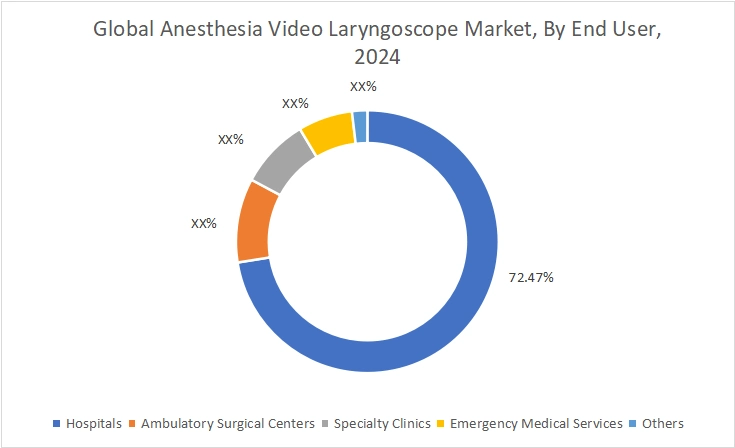
Based on end user, the anesthesia video laryngoscope market is segmented into hospitals, ambulatory surgical centers, specialty clinics, emergency medical services, and others.
Trends in the End User:
- The increasing number of surgical procedures performed in hospital settings is driving the adoption of anesthesia video laryngoscopes in hospitals.
- The rising trend of outpatient and minimally invasive procedures is also fueling the demand for video laryngoscopes in ambulatory surgical centers.
Hospitals accounted for the largest revenue share of 72.47% in the year 2024.
- Hospitals are the major end-users because of the large number of surgeries, intensive care, and emergency intubations performed on a daily basis.
- Video laryngoscopes are commonly used in operation theaters, intensive care units, and emergency rooms for improved intubation success and patient safety.
- Moreover, the presence of qualified anesthesiologists and well-developed medical infrastructure also promotes the use of video laryngoscopes in hospitals.
- In addition, strict patient safety measures and infection control practices are also encouraging hospitals to adopt video-assisted intubation systems.
- Therefore, the large number of surgeries and well-developed infrastructure are promoting the use of video laryngoscopes in hospitals.
Ambulatory Surgical Centers are anticipated to register the fastest CAGR during the forecast period.
- Ambulatory surgical centers are increasingly turning to video laryngoscopes as a means of facilitating the growing number of outpatient surgeries.
- Ambulatory surgical centers need efficient and easy-to-use airway management products in order to minimize procedure time and maximize efficiency.
- Moreover, the trend towards cost-effective and portable products is also fueling adoption in ambulatory surgical centers.
- In addition, the trend towards minimally invasive procedures is also fueling adoption in ambulatory surgical centers.
- Therefore, the growing number of outpatient surgeries and the need for efficiency is expected to drive adoption in ambulatory surgical centers.
Regional Analysis:
North America, Europe, Asia Pacific, the Middle East and Africa, and Latin America are the regions of coverage.

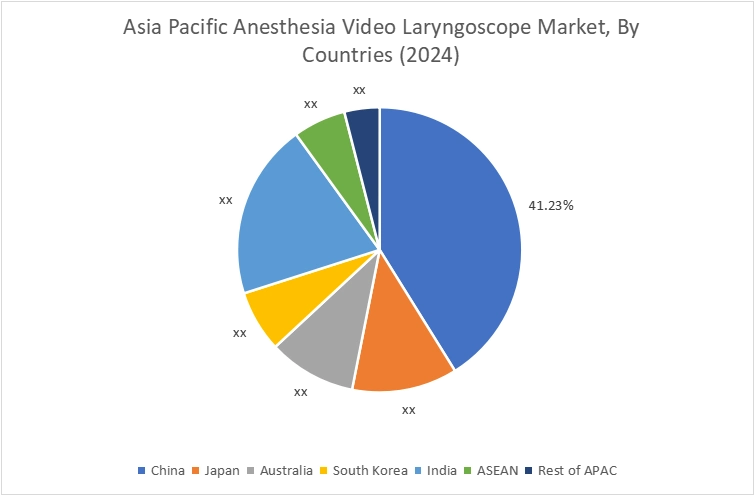
Asia Pacific region was valued at USD 110.51 million in 2024. Furthermore, it is expected to reach USD 120.56 million in 2025 and exceed USD 288.05 million by 2035. China accounted for the highest revenue share of 41.23% during the base year of 2024. Asia Pacific anesthesia video laryngoscope market is fueled by the growing number of surgical procedures, the development of hospital infrastructure, and the emphasis on the safety of airway management in China, India, and Japan. The development of tertiary care facilities and critical care services is also fueling the demand for visualization devices for intubation procedures.
- For example, in China, the total number of hospital beds was about 8.18 million in 2024, indicating the continued development of inpatient and surgical facilities and the growing need for airway management solutions. In Japan, according to the OECD, the country has 12.5 hospital beds per 1,000 population, which is substantially higher than the OECD average.
In North America, the anesthesia video laryngoscopes market is experiencing the fastest growth with a CAGR of 11.2% over the forecast period. The North American region’s growing emphasis on patient safety, reduced intubation complications, and technological advancements in airway visualization offers strong growth prospects for the market. Additionally, the increasing prevalence of chronic respiratory diseases and continued surgical procedure volumes are driving the market progress.
- For instance, according to the Centers for Disease Control and Prevention, chronic lower respiratory diseases continue to be one of the top causes of death in the US. The sustained burden of respiratory illness increases the need for advanced airway management technologies in hospitals and emergency departments.
In Europe, the use of anesthesia video laryngoscopes is associated with patient safety practices and operating room protocols for airway management. Hospitals are integrating video-assisted intubation solutions to improve first-pass success rates.
In Latin America, the use of anesthesia video laryngoscopes is increasing in conjunction with hospital modernization initiatives and surgical expansion in Brazil, Argentina, and Chile. Public healthcare institutions are enhancing operating room capabilities to improve patient safety outcomes.
The Middle East & Africa anesthesia video laryngoscope market is driven by hospital expansion projects and growing investment in tertiary healthcare infrastructure in the UAE, Saudi Arabia, and South Africa. National health strategies are placing emphasis on improving emergency and perioperative care quality.
Top Key Players & Market Share Insights:
The global anesthesia video laryngoscope market is highly competitive, with major medical device manufacturers supplying advanced airway management solutions to hospitals, ambulatory surgical centers, and emergency care settings worldwide. The key players are using various strategies in research and development, product innovation, and new product launches to keep a dominant position in the anesthesia video laryngoscope market. The companies are focusing on single-use devices, visualization technologies, ergonomic blades, and connectivity options to enhance their presence in normal and difficult airway management.
The key players operating in the anesthesia video laryngoscope market are:
- Verathon Inc. (US)
- Medtronic plc(Ireland)
- Ambu A/S(Denmark)
- KARL STORZ SE & Co. KG (Germany)
- Olympus Corporation (Japan)
- Teleflex Incorporated (US)
- Pentax Medical (Japan)
- Flexicare Medical Ltd. (UK)
- Vyaire Medical Inc. (US)
- Intersurgical Ltd. (UK)
Recent Industry Developments:
- In January 2025, Ambu launched the Ambu SureSight Connect video laryngoscopy solution in the United States, significantly expanding its airway visualization product portfolio to enhance intubation workflows across routine and difficult airway procedures, with phased rollout throughout 2025.
- In April 2025, Karl Storz announced the global launch of the Slimline C-MAC S single-use video laryngoscope, engineered with a slimmer blade geometry to enhance visibility and handling during airway management procedures, aiming to improve clinical access and performance in challenging intubation scenarios.
Anesthesia Video Laryngoscope Market Report Insights:
| Report Attributes | Report Details |
|---|---|
| Study Timeline | 2019-2035 |
| Market Size in 2035 (USD Trillion) | USD 823.00 Million |
| CAGR (2025-2035) | 9.10% |
| By Product Type |
|
| By Usability |
|
| By Patient Type |
|
| By End User |
|
| By Region |
|
| Key Players |
|
| Report Coverage |
|
Key Questions Answered in the Report
How big is the anesthesia video laryngoscope market? −
The anesthesia video laryngoscope marketsize is estimated to reach over USD 823.00 Million by 2035 from a value of USD 315.74 Million in 2024 and is projected to grow by USD 344.47 Million in 2025, growing at a CAGR of 9.10% from 2025 to 2035.
Which segmentation details are covered in the anesthesia video laryngoscope report? +
The anesthesia video laryngoscope report includes specific segmentation details for product type, usability, patient type, end user, and regions.
Which is the fastest segment anticipated to impact the market growth? +
In the anesthesia video laryngoscope market, the disposable segment is anticipated to be the fastest-growing segment during the forecast period due to increasing focus on infection control and rising demand for single-use devices in surgical and emergency settings.
Who are the major players in the anesthesia video laryngoscope market? +
The key participants in the anesthesia video laryngoscope marketare Verathon Inc. (US), Medtronic plc (Ireland), Ambu A/S (Denmark), KARL STORZ SE & Co. KG (Germany), Olympus Corporation (Japan), Teleflex Incorporated (US), Pentax Medical (Japan), Flexicare Medical Ltd. (UK), Vyaire Medical Inc. (US), Intersurgical Ltd. (UK), and others.
What are the key trends in the Anesthesia Video Laryngoscope Market? +
The anesthesia video laryngoscope market is shaped by several key trends including growing preference for minimally invasive airway management devices, technological advancements in high-resolution imaging systems, and rising emphasis on patient safety during anesthesia procedures.
Overview
Reputation & Certifications


Our Services
- Market Intelligence & Forecasting
- Custom Research Solutions
- Market Entry Strategy
- Competitive Intelligence
- Customer Insights
- Industry Innovation Analysis
- Investment Advisory