Jump to Content
Apiculture Market - Size, Share, Industry Trends, and Forecasts (2025-2032)
Apiculture Market Size:
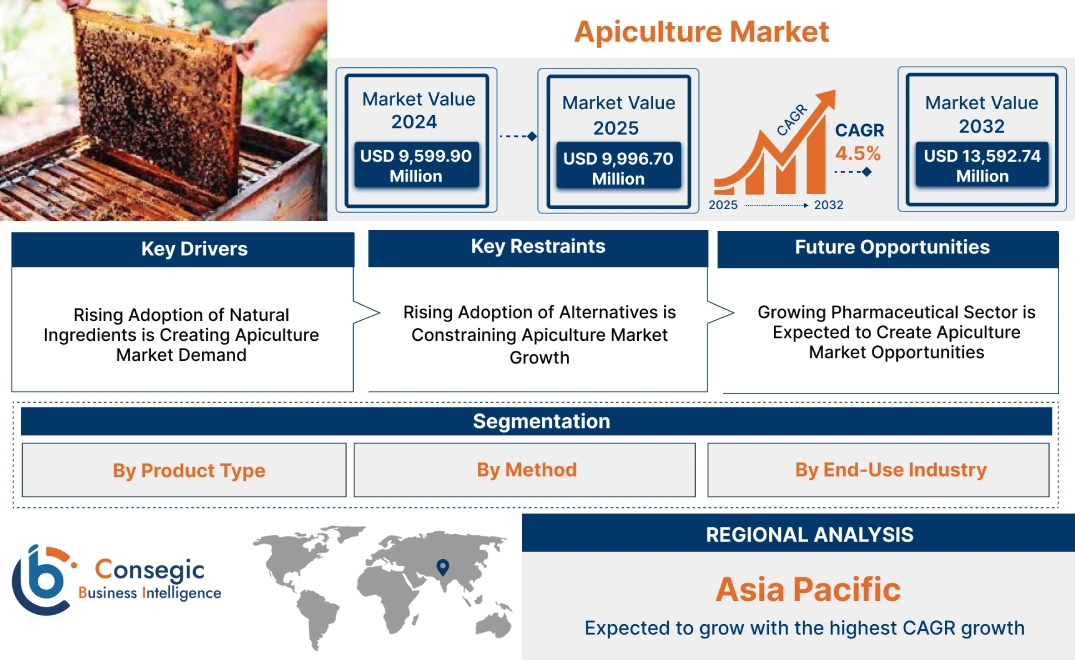
The apiculture market size is growing with a CAGR of 4.5% during the forecast period (2025-2032), and the market is projected to be valued at USD 13,592.74 Million by 2032 from USD 9,599.90 Million in 2024. Additionally, the market value for the 2025 attributes to USD 9,996.70 Million.
Apiculture Market Scope & Overview:
Apiculture is the practice of maintaining and managing bee colonies. Through this practice, various products are derived such as honey, beeswax, royal jelly, propolis, and others. Apiculture involves both traditional as well as modern beekeeping methods. Further, traditional beekeeping involves managing bees using natural and locally available material while modern beekeeping involves additional care and management of bees to increase honey production and its derivatives. Apiculture- based products are used in various industries such as food & beverages, cosmetics & personal care, pharmaceutical, and others. Due to growing focus towards sustainability and health concerns, consumers are preferring honey, beeswax, royal jelly-based products, thereby driving the market.
Apiculture Market Dynamics - (DRO) :
Key Drivers:
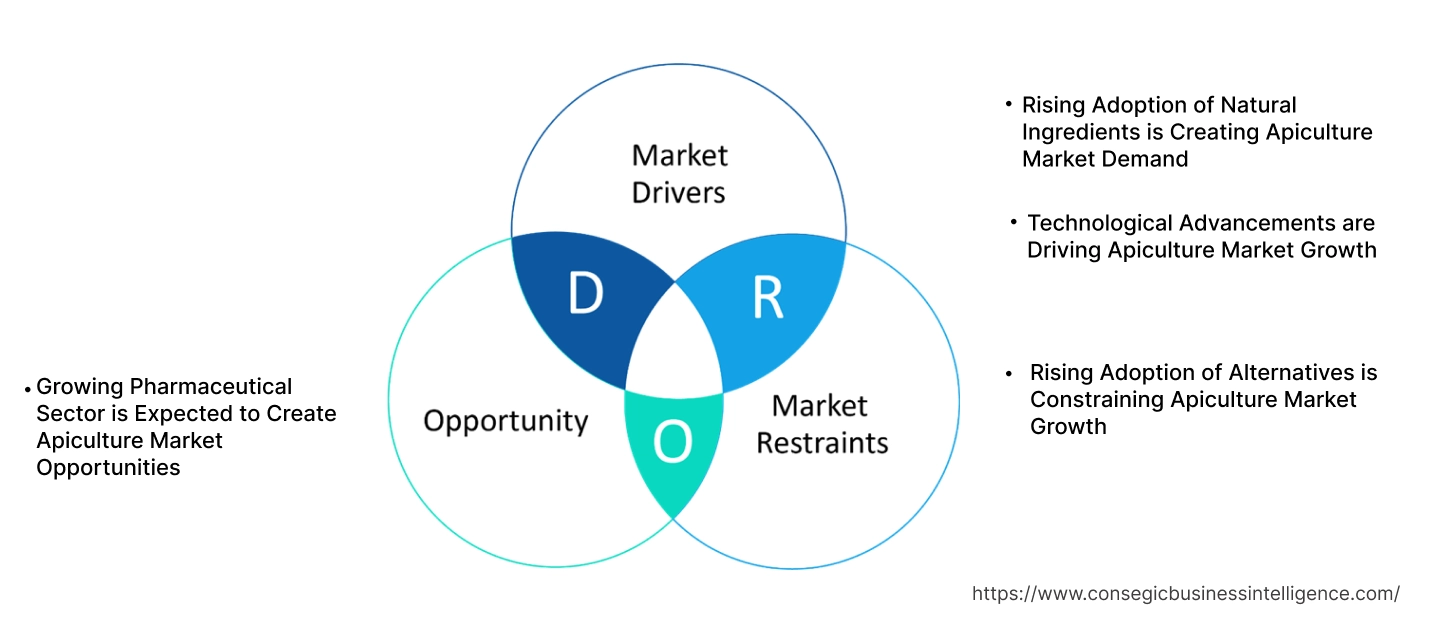
Rising Adoption of Natural Ingredients is Creating Apiculture Market Demand
Products such as dietary supplements, immunity boosters and syrup contain chemical ingredients. These chemical ingredients lead to side effects such as skin rashes, liver damage, and others. Honey is a natural source of vitamins, minerals and other organic compounds, synthesized through apiculture. Consumers are becoming aware of the side effects of chemical ingredients and are increasingly preferring natural ingredients in their food and other products. To cater to this demand, companies are also manufacturing products using honey.
- In 2024, TopGum Industries, Ltd. launched honey based dietary supplement gummies. This has increased the utilization of honey, further driving the market.
Thus, the adoption of honey-based products is rising due to growing consumer preference towards natural ingredients leading to apiculture market demand.
Technological Advancements are Driving Apiculture Market Growth
Technological advancements such as automatic beekeeping machines, plasma ozone storage, and smart beekeeping systems are increasing efficiency of apiculture. Plasma ozone storage is an eco-friendly technology that improves sterilization, disinfection, and odor removal effects. Moreover, companies are also developing beekeeping systems with advanced features.
- In 2022, DAESUNG launched smart beekeeping systems. This system features device that enables integrated management of honeybee growth environments through apps. It enhances honey and beeswax production through automation, thereby driving the market.
Thus, technological advancements are improving health management of bees and enhancing efficiency in beekeeping thereby leading to apiculture market expansion.
Key Restraints:
Rising Adoption of Alternatives is Constraining Apiculture Market Growth
The adoption of alternatives such as artificial sweeteners and synthetic honey is constraining the market. The artificial sweeteners such as high-fructose corn syrup and sugar substitutes offer lower production costs and longer shelf life. Additionally, synthetic honey which is produced through labs and plant-based alternatives are reducing reliance on beekeeping. Cosmetics and pharmaceutical manufacturers are also shifting towards synthetic or plant-based ingredients that have similar benefits as that of apiculture-based products. These alternatives also offer consistent quality, controlled production, and lower contaminations risks. Hence, adoption of alternatives such as synthetic honey is growing due to lower cost and better product quality, thereby constraining the market.
Future Opportunities :
Growing Pharmaceutical Sector is Expected to Create Apiculture Market Opportunities
Pharmaceutical sector refers to the discovery, development, and manufacture of drugs and medications. The apiculture-based products such as honey, propolis, and royal jelly exhibited antiviral, anti-bacterial, and anti-inflammatory properties. Due to these properties apiculture-based products are used in wound dressings and oral medications. Due to the growing need for medications to treat chronic diseases, the pharmaceutical sector is witnessing significant growth.
- In 2024, according to India Brand Equity Foundation, the Indian pharmaceutical sector is projected to grow at a compound annual growth rate of over 10% by year 2030. This will create opportunities for the market in producing formulations such as cough syrups, toothpaste and others.
Hence, incorporation of honey, propolis, and royal jelly in pharmaceutical formulations is expanding which will lead to apiculture market opportunities.
Apiculture Market Segmental Analysis :
By Product Type:
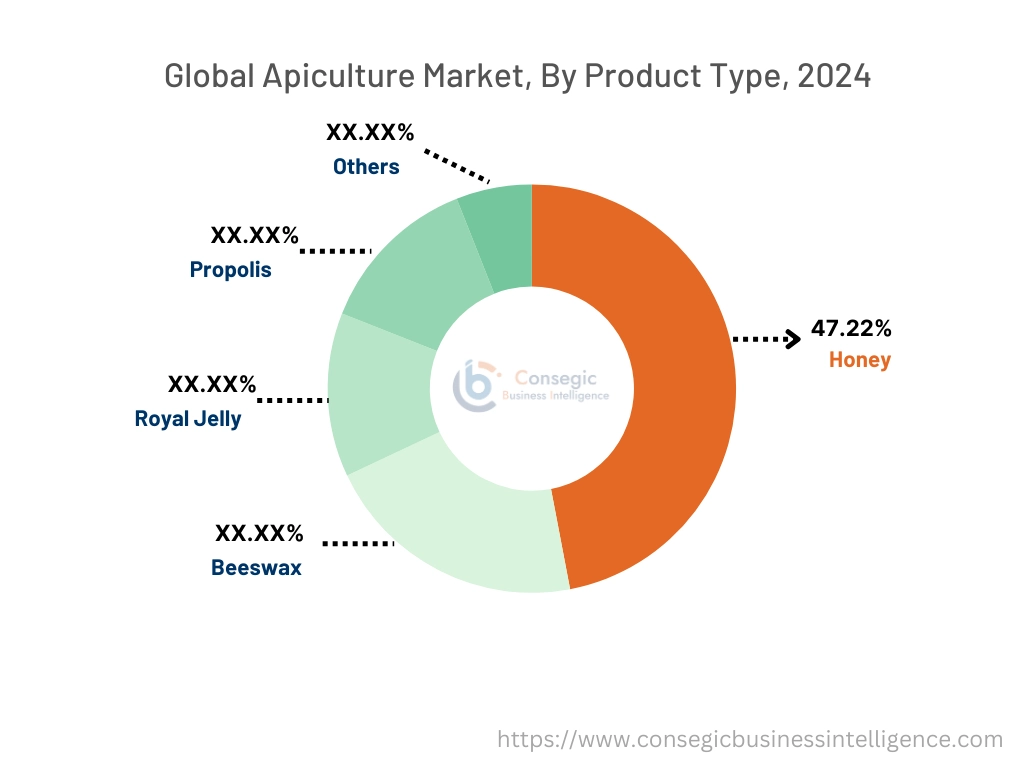
Based on product type, the market is categorized into honey, beeswax, royal jelly, propolis, and others.
Trends in Product Type:
- According to apiculture market trends, honey is widely consumed due to its nutritional value and health improving properties.
- The use of beeswax is growing in candle-making, food packaging as sustainable alternative to synthetic materials as per market trends.
The honey segment accounted for the largest market share of 47.22% in the year 2024.
- Honey is a natural, sweet, and viscous substance which is synthesized through apiculture. It has antioxidants, antibacterial properties and high nutritional value.
- Honey is widely consumed due to its nutritional benefits such as improving respiratory health, controlling blood sugar level, and strengthening cardiovascular systems.
- Due to its wide consumption, companies are developing different variants of honey.
- For instance, in 2024, Farmery launched two variants of honey named as Organic Honey and Wild Forest Honey. People are consuming these different variants of honey due to nutritional content. It is driving the market as effective apiculture is required to produce different variants of honey.
- Thus, honey segment is dominating in the market due to different variants and nutritional benefits.
The beeswax segment is expected to grow at the fastest CAGR over the forecast period.
- Beeswax is natural wax produced by honeybees during the apiculture process which is primarily used by honeybees for constructing honeycombs.
- It is highly utilized in personal and cosmetics applications such as lip balms, lotions, and skincare formulations due to its moisturizing and protective properties.
- Additionally, beeswax is widely used in candle-making, pharmaceuticals, and food packaging as sustainable alternative to synthetic materials.
- With growing awareness of sustainable and biodegradable products, beeswax wraps are replacing plastic food warps, further boosting the market.
- Thus, adoption of beeswax is growing in the food and plastic packaging due to its sustainability further driving the growth of the segment.
By Method:
Based on method, the market is categorized into traditional beekeeping and modern beekeeping.
Trends in Method:
- As per apiculture market trends, traditional beekeeping is widely adopted by farmers due to minimal harm to the bee colonies.
- Modern beekeeping is growing for high product yield and easy inspection of bees as per market trends.
The traditional beekeeping segment accounted for the largest market share in the year 2024.
- Traditional beekeeping is a method of apiculture where bees are kept in hives using natural and locally available material.
- This method is highly used by beekeepers due to its minimal intervention. It allows the bees to build their combs naturally in hollow logs, clay pots, and wooden boxes.
- Traditional beekeeping is preferred by beekeepers to obtain products such as honey, beeswax, royal jelly and others due to its minimal cost and sustainability.
- It ensures minimal harm to bee populations and involves natural building of bee hives.
- Thus, the traditional beekeeping segment is dominating in the market due to minimal cost and sustainability.
The modern beekeeping segment is expected to grow at the fastest CAGR over the forecast period.
- Modern beekeeping is a method of apiculture which involves additional care and management of bees to increase honey production and its derivatives.
- In this method modern beehives are used for the bee colonies which are easy to move.
- Modern beekeeping have the advantages of high product yield, good product quality, easy inspection, low cost, and fewer diseases.
- To increase the honey production and enhance product quality, organizations are investing in modern beekeeping.
- In 2022, Food & Agriculure Organization (FAO) launched a project in Yemen. Through this project, FAO provided eight modern beehives containing bee colonies to 700 small-scale beekeepers. This is promoting the modern beekeeping method among beekeepers to enhance honeys production.
- Hence, the adoption of modern beekeeping is growing in the market due to government support thereby driving the growth of the segment.
By End-Use Industry:
Based on end-use industry, the market is categorized into food & beverages, cosmetics & personal care, pharmaceutical, and others.
Trends in End-Use Industry:
- As per market trends, consumers are preferring honey-based energy drinks, herbal teas, and dietary supplements due to health concerns.
- Adoption of apiculture-based products is growing in cosmetics due to their moisturizing, anti-bacterial, and anti-aging properties as per trends.
The food & beverages segment accounted for the largest market share in the year 2024.
- The food and beverage sector includes all the companies involved in transforming raw agricultural goods into consumer food products.
- It widely uses apiculture-based products such as honey, beeswax, and others.
- Honey is used as a natural sweetener in various food products including baking items, confectionary, and beverages.
- Further, it is also incorporated in energy drinks, herbal teas, and dietary supplements by food and beverages manufacturers.
- Beeswax is used in food packaging for making eco-friendly wax wraps as an alternative to the plastic.
- Thus, food and beverage segment is dominating in the market due to the growing adoption of honey in food products such as energy drinks and herbal teas.
The cosmetics & personal care segment is expected to grow at the fastest CAGR over the forecast period.
- The cosmetic & personal care segment includes research, production, and sale of personal care and cosmetics products.
- Apiculture-based products such as honey, beeswax, and royal jelly are used in cosmetics such as lip balm, deodorants, and moisturizer due to their moisturizing, anti-bacterial, and anti-aging properties.
- The consumer preference for skin-friendly and sustainable cosmetics products is growing. To cater to this demand, companies are incorporating beeswax into their cosmetics products.
- For instance, in 2023, Jollys Pharmacy introduced eco-friendly deodorant which is made of beeswax, coconut oil, shea butter, and other ingredients. Consumers prefer this deodorant due to its skin-friendly formulation and applicability to sensitive skin, thereby driving the market.
- Hence, consumer preference for sustainable cosmetics is rising due to less side effects thereby driving the growth of the segment.
Regional Analysis:
The regional segment includes North America, Europe, Asia Pacific, the Middle East and Africa, and Latin America.
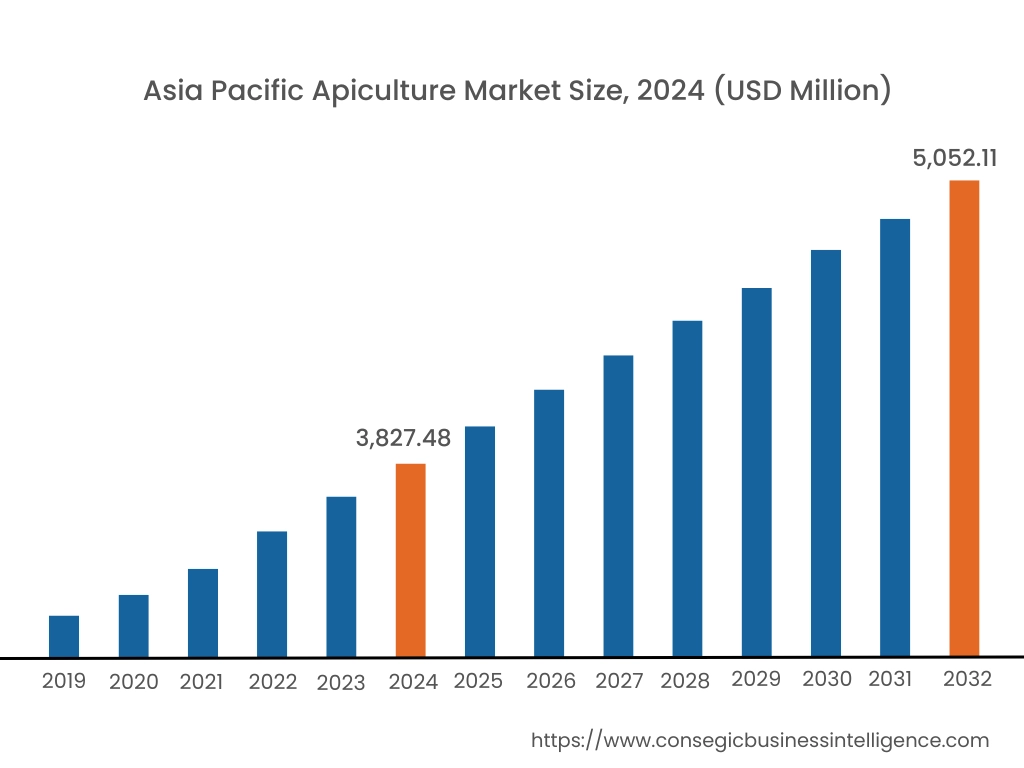
In 2024, Asia-Pacific accounted for the highest market share at 39.87% and was valued at USD 3,827.48 Million and is expected to reach USD 5,052.11 Million in 2032. In Asia-Pacific, the China accounted for the highest market share of 36.08% during the base year of 2024. The apiculture market share of Asia Pacific is major due to growing honey production and rising demand for honey-based products. Countries such as China, India, and Vietnam are major contributors in the market with large-scale beekeeping practices. Moreover, governments in these countries are also investing in beekeeping practices to enhance the production of honey, beeswax, royal jelly, and other products.
- In 2021, Government of India allocated USD 77.48 million for in National Beekeeping & Honey Mission from year 2021 up to the year 2023. It promotes beekeeping practices through developing honey testing labs and Api-therapy centers, further driving the market.
Therefore, the Asia-pacific region is dominating in the market supported by government investment and large-scale honey production as per analysis.
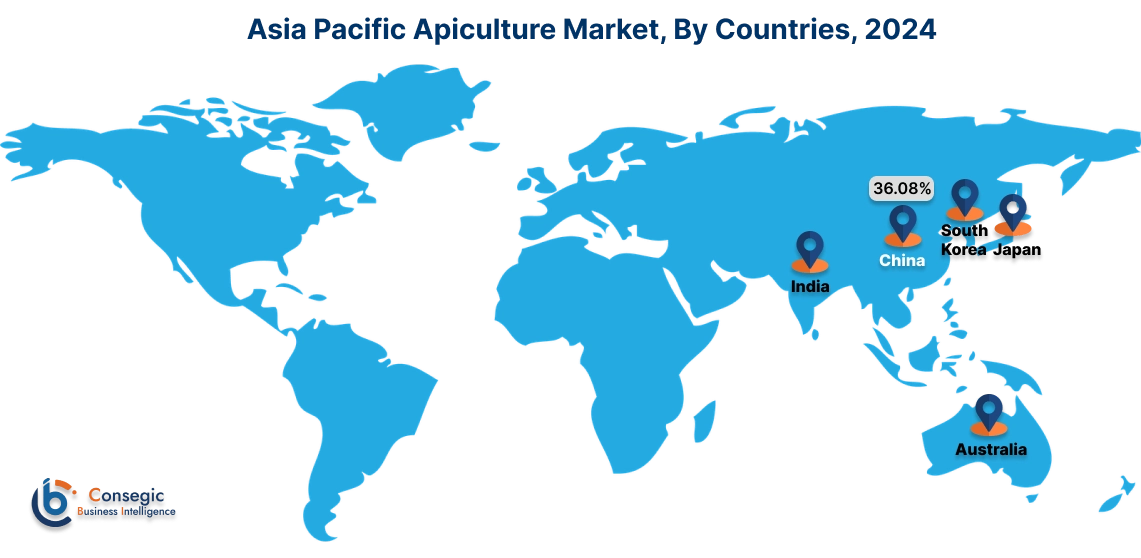
North America is expected to witness the fastest CAGR of 6.4% over the forecast period of 2025-2032. According to apiculture market analysis, the North America region is growing rapidly driven by technological advancements. Technological advancements such as smart hive technology, drones and automated honey extraction systems have enhanced operational efficiency in apiculture. Companies are developing advanced tracking systems that allow beekeepers to track individual bees foraging patterns and colony movements. Thus, the apiculture market share of North America is expected to emerge rapidly through advanced tracking systems and smart hive technology as per analysis.
As per apiculture market analysis, the Europe region is growing rapidly in the market driven by cosmetics sector. Honey, beeswax, royal jelly are utilized in organic beauty products for their moisturizing, healing, and anti-ageing properties. Consumers are preferring sustainability and clean beauty products thereby driving the adoption of apiculture-based products in lip balm, moisturizer, and deodorants. Additionally, growing aging population, awareness about skin appearance has led to the growing adoption of cosmetics further leading to apiculture market expansion.
The Middle East and Africa regions are experiencing gradual expansion in the market, driven by government support and increasing exports. Countries such as Saudi Arabia, UAE and South Africa are promoting beekeeping though training programs, subsidies, and research initiatives. The government is encouraging local honey production through modern techniques. Also, the region is exporting premium honey through large-scale apiculture thereby driving the market as per analysis.
As per analysis, the market in Latin America is driven by rising disposable income and urbanization. Countries such as Brazil, Mexico and Argentina are major contributors in the region due to increased spending on organic products. As urbanization expands, there is growing demand for premium and sustainable products, including honey-based supplements. Additionally, rising disposable income has led to the adoption of smart beekeeping technologies by beekeepers further driving the market in the region.
Top Key Players and Market Share Insights:
The apiculture industry is highly competitive with major players providing products to the national and international markets. Key players are adopting several strategies in research and development (R&D) and product innovation to hold a strong position in the global apiculture market. Key players in apiculture industry include-
- Capilano Honey Ltd. (Australia)
- Betterbee (United States)
- Strahl & Pitsch Inc. (United States)
- Durham’s Bee Farm (United States)
- Bee Healthy Farms LLC (United States)
- Miller Honey Farms, Inc. (United States)
- Thomas Apiculture (France)
- Dabur India Ltd. (India)
- Georgia Honey Farm (United States)
- Heavenly Organics (United States)
Recent Industry Developments :
Product Launches:
- In 2023, Sanctuaire launched a candle collection named Plage Noire. It is made of beeswax further driving the adoption of apiculture in the candle making sector.
- In 2023, RAK Honey, launched their Samar Honey in the United Kindom. It is comprising a vast range of essential minerals and vitamins, compared to other honey types.
Apiculture Market Report Insights :
| Report Attributes | Report Details |
| Study Timeline | 2019-2032 |
| Market Size in 2032 | USD 13,592.74 Million |
| CAGR (2025-2032) | 4.5% |
| By Product Type |
|
| By Method |
|
| By End-Use Industry |
|
| By Region |
|
| Key Players |
|
| North America | U.S. Canada Mexico |
| Europe | U.K. Germany France Spain Italy Russia Benelux Rest of Europe |
| APAC | China South Korea Japan India Australia ASEAN Rest of Asia-Pacific |
| Middle East and Africa | GCC Turkey South Africa Rest of MEA |
| LATAM | Brazil Argentina Chile Rest of LATAM |
| Report Coverage |
|
Key Questions Answered in the Report
How big is the apiculture market? −
In 2024, the apiculture market is USD 9,599.90 million.
Which is the fastest-growing region in the apiculture market? +
North America is the fastest-growing region in the apiculture market.
What specific segmentation details are covered in the apiculture market? +
Product type, Method, and End-Use Industry are covered in the apiculture market.
Who are the major players in the apiculture market? +
Capilano Honey Ltd. (Australia), Betterbee (United States), and Miller Honey Farms, Inc. (United States) are some of the major players in the market.
Overview
Reputation & Certifications


Our Services
- Market Intelligence & Forecasting
- Custom Research Solutions
- Market Entry Strategy
- Competitive Intelligence
- Customer Insights
- Industry Innovation Analysis
- Investment Advisory