Jump to Content
Sensory and Functional Food Ingredients Market - Size, Share, Industry Trends, and Forecasts (2025 - 2035)
Sensory and Functional Food Ingredients Market 2025 - 2035:
- The Global Sensory and Functional Food Ingredients Market recorded a valuation of USD 121.41 billion in 2025.
- The market is anticipated to register a CAGR of 5.65% during the period 2025 to 2035.
- The global market valuation is projected to rise to USD 210.36 billion by 2035.
- North America held the leading share of the Sensory and Functional Food Ingredients Market in 2024.
Market Scope & Overview:
Sensory and functional food ingredients are specialized compounds that provide enhanced taste, texture, aroma, and visual appeal while delivering additional nutrition and health-related benefits in food products. The manufacturing of sensory and functional food ingredients takes place using modern processing technologies such as bioactive compound extraction, ingredient fortification, and advanced formulation optimization techniques. The overall production process includes ingredient development, rigorous quality testing, and regulatory compliance measures, which ensure the required product stability and performance.
In addition, the key factors driving the sensory and functional food ingredients market include the growing demand from functional foods and nutraceutical industries. Moreover, the need for high-quality and health-oriented ingredients that improve sensory attributes in processed foods and beverages further drives growth of the market. Furthermore, sensory and functional food ingredients offer several benefits, such as improved product quality, enhanced nutritional value, and better consumer acceptance. The sensory and functional food ingredients market is experiencing growth as a result of the aforementioned factors.
Market Size & Forecast
- 2024 Market Size : USD 114.92 Billion
- 2025 Market Size : USD 121.41 Billion
- 2035 projected Market Size : USD 210.36 Billion
- CAGR (2025-2035) : 5.65%
- Largest Market in 2025 : North America
- Fastest growing country : Asia Pacific

Market Dynamics - (DRO):
Key Drivers:
Increasing Demand from Functional & Health-Oriented Food Products Drives Market Growth
The increasing expansion of functional and health-oriented food products is considered to be one of the major drivers that is contributing to the adoption of sensory and functional food ingredients. Food manufacturers are increasingly choosing sensory and functional food ingredients for enhancing taste, texture, and nutritional value in products designed for health-conscious consumers. Sensory and functional food ingredients enable flavor enhancement, better mouthfeel, and enhanced consumer acceptance in functional foods, beverages, and nutraceutical formulations.
- For instance, in 2023, according to the International Food Information Councilv, nearly 52% of consumers reported following a specific diet or eating pattern focused on health and wellness in 2023. This rising consumer interest in health-oriented foods drives the demand for sensory and functional food ingredients market.
Therefore, the sensory and functional food ingredients market is experiencing growth as a result of the increasing demand from functional and health-oriented food products.
Key Restraints:
Stringent Regulatory Standards Limit Market Expansion
The stringent regulatory standards associated with sensory and functional food ingredients usage, such as food safety regulations and labeling requirements, are slowing down adoption among certain food manufacturers. Additionally, the concerns related to ingredient authenticity and the rising preference for clean-label products contribute to cautious product selection strategies. Manufacturers are also facing challenges that include regulatory approvals, product reformulation, and certification requirements, which are hindering expansion among small and medium-sized producers.
Therefore, the sensory and functional food ingredients market is impacted by strict regulatory frameworks and compliance challenges.
Future Opportunities:
Rising Demand for Clean-Label Natural Ingredients to Create Growth Opportunities for the Market
The increasing global focus on health-conscious consumption and transparency in food products is anticipated to generate significant growth opportunities for the sensory and functional food ingredients market. Consumers are increasingly demanding food products that contain natural, minimally processed, and recognizable ingredients that enhance nutritional value and sensory appeal. Moreover, the growing trend of functional foods that provide health benefits with improved taste and texture is creating new demand for innovative sensory and functional food ingredients.
- For example, in 2023, according to the US Government, foods labeled as natural represented about 16.3% of total US retail food expenditures, reflecting strong consumer demand for clean-label and minimally processed food products.
Hence, the increasing consumer preference for clean-label natural food ingredients is anticipated to create significant future opportunities for the sensory and functional food ingredients market during the forecast period.
Market Segmental Analysis:
By Product:
On the basis of product, the sensory and functional food ingredients market is segmented into sensory and functional.
Trends in product:
- The growing demand for enhanced taste, texture, and nutritional benefits in food products is fueling the adoption of both sensory and functional ingredients.
- The increasing focus on health-oriented food formulations and product differentiation is driving the demand across various product categories.
The functional segment held the highest revenue share in 2024.
- Functional ingredients help in providing additional health benefits such as improved digestion, immunity support, and heart health, which is increasing their adoption.
- Also, the growing consumer preference for nutritionally enriched food products is driving segment dominance.
- Moreover, the rising incorporation of functional ingredients in processed foods and beverages is supporting widespread use.
- Furthermore, the increasing demand for fortified food products is contributing to higher consumption.
- Therefore, the dominance of the functional segment is being fueled by its extensive use in health-focused food and beverage applications.
It is anticipated that the sensory segment will exhibit the highest compound annual growth rate (CAGR) during the forecast period.
- Sensory ingredients help in providing improved taste, aroma, color, and texture, which is increasing their adoption in innovative food products.
- Also, the rising demand for premium and appealing food experiences is fueling segment growth.
- Moreover, their role in enhancing product quality and consumer acceptance is supporting adoption.
- Therefore, the increasing focus on sensory appeal and product differentiation is accelerating the growth of the sensory segment during the forecast period.
By type:
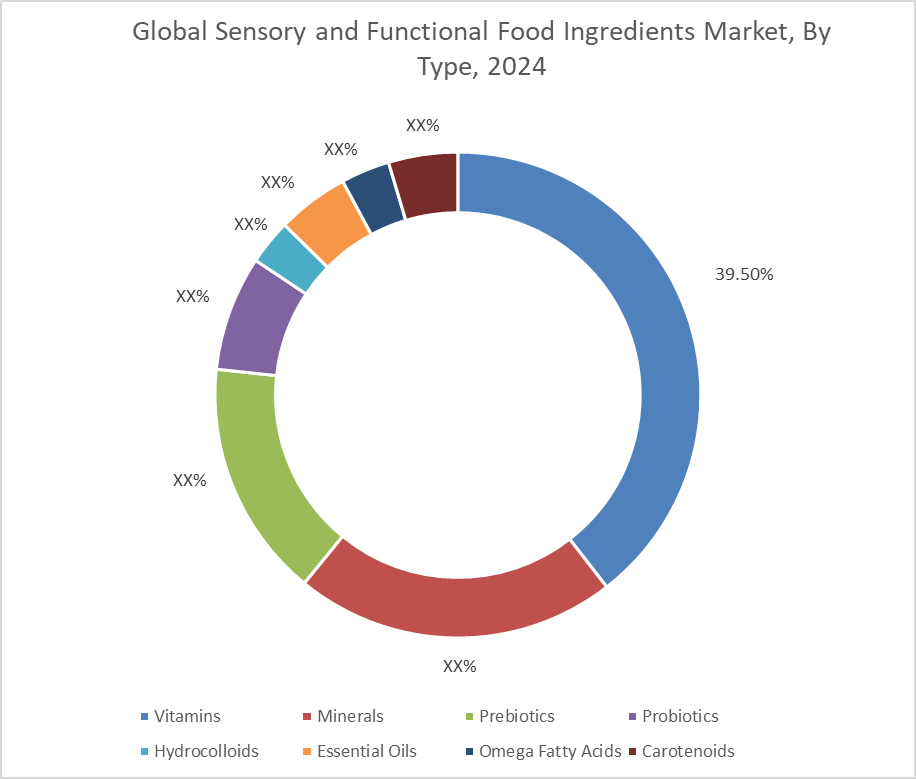
On the basis of type, the sensory and functional food ingredients market is segmented into vitamins, minerals, prebiotics, probiotics, hydrocolloids, essential oils, omega fatty acids, and carotenoids.
Trends in type:
- The growing demand for health-enhancing food ingredients across functional foods and beverages is fueling the adoption of different ingredient types.
- The increasing need for nutritional fortification, digestive health support, and improved product quality is driving the demand across various ingredient categories.
The vitamins segment held the highest revenue share of 39.5% in 2024.
- Vitamins help in providing essential nutritional benefits and supporting overall health, which is increasing their adoption in fortified food products.
- Also, the growing use of vitamins in functional beverages, dairy products, and dietary foods is driving segment dominance.
- Moreover, their widespread availability and compatibility with different food formulations is supporting their widespread use.
- Furthermore, the increasing demand for nutrient-rich and fortified foods is contributing to higher consumption.
- Therefore, the dominance of the vitamins segment is being fueled by their extensive use in nutritional and functional food applications.
It is anticipated that the probiotics segment will exhibit the highest compound annual growth rate (CAGR) during the forecast period.
- Probiotics help in providing digestive health benefits and supporting gut microbiome balance, which is increasing their adoption in functional foods.
- Also, the rising demand from health-conscious consumers is fueling segment growth.
- Moreover, their role in improving digestive wellness and immunity is supporting adoption.
- Therefore, the growing preference for gut-health-focused food products is accelerating the growth of the probiotics segment during the forecast period.
By Purpose:
On the basis of purpose, the sensory and functional food ingredients market is segmented into weight management, digestive health, and cardio health.
Trends in purpose:
- The growing demand for health-supporting food products targeting specific wellness goals is increasing the adoption of functional ingredients.
- The increasing focus on preventive healthcare and nutritional wellness is fueling the demand across different health purposes.
The digestive health segment held the highest revenue share in 2024.
- Functional ingredients targeting digestive health are widely used in functional foods and beverages, which is driving their demand.
- Also, the increasing consumer awareness regarding gut health and immunity is fueling the adoption of digestive health ingredients.
- Moreover, the growing demand for probiotic and prebiotic-based food products is supporting segment growth.
- Furthermore, the rising trend of preventive healthcare and wellness-oriented diets is contributing to increased ingredient consumption.
- Hence, the dominance of the digestive health segment is being fueled by the extensive use of digestive health ingredients in functional food products.
It is anticipated that the cardio health segment will exhibit the highest compound annual growth rate (CAGR) during the forecast period.
- Functional ingredients supporting cardio health help in maintaining heart health and supporting cholesterol management, which is increasing their adoption.
- Also, the rising demand for heart-healthy and nutrient-enriched food products is driving segment growth.
- Furthermore, the increasing consumer focus on cardiovascular wellness and preventive nutrition is supporting the use of cardio health ingredients.
- For instance, in 2023, over 919,032 people died from cardiovascular diseases, that is an equivalent of 1in every 3 deaths. This rising number of deaths from cardiovascular diseases is driving the demand for sensory and functional food ingredients market.
- Therefore, the growing preference for heart-health-supporting functional foods is accelerating the growth of the cardio health segment.
By Application:
On the basis of application, the market is divided into snacks, bakery, beverages, and dairy products.
Trends in application:
- The growing demand for functional and sensory-enhanced food products is increasing their adoption across major food application segments.
- The increasing focus on improving product taste, texture, and nutritional value is fueling the demand across various food categories.
The beverages segment held the highest revenue share in 2024.
- Functional and sensory ingredients are widely used in energy drinks, and fortified drinks, which is driving their demand.
- Also, the increasing consumption of health-oriented beverages is fueling the adoption of these ingredients.
- Furthermore, the rising innovation in functional drink formulations is contributing to increased ingredient consumption.
- Hence, the dominance of the beverages segment is being fueled by the extensive use of sensory and functional ingredients in beverage products.
It is anticipated that the snacks segment will exhibit the highest compound annual growth rate (CAGR) during the forecast period
- Sensory and functional ingredients are increasingly used in snack products to enhance flavor, texture, and nutritional value, which is increasing their adoption.
- Also, the rising demand for healthy and fortified snack options is driving segment growth.
- Furthermore, the growing innovation in functional snack formulations is supporting the use of these ingredients.
- Therefore, the increasing consumer preference for convenient and nutritious snack products is accelerating the growth of the snacks segment.
Regional Analysis:
North America, Europe, Asia Pacific, the Middle East and Africa, and Latin America are the regions of coverage.
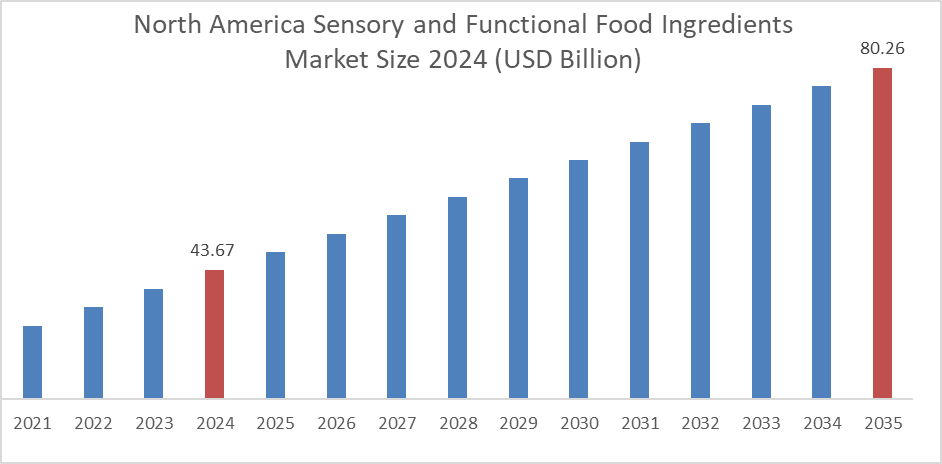
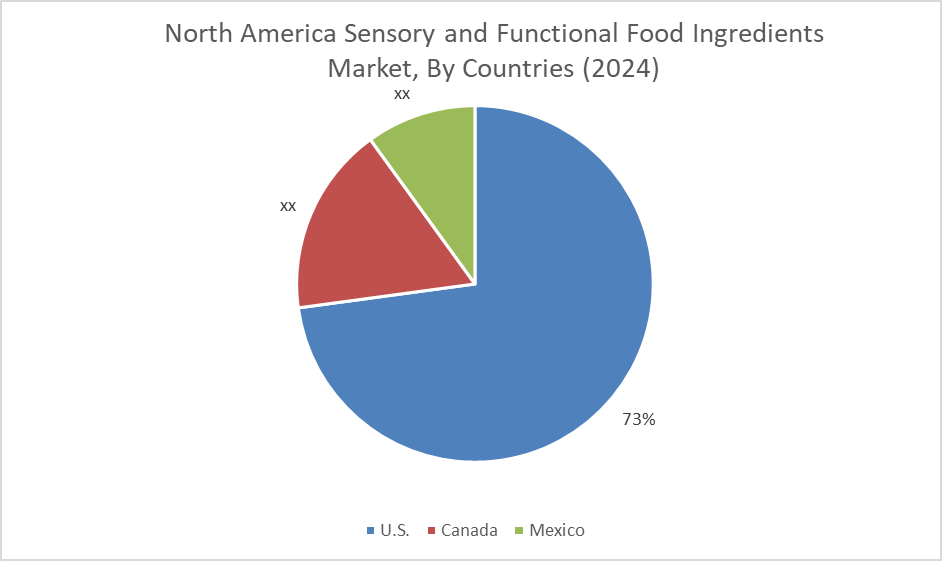
In 2024, North America accounted for the highest market share at 38% and was valued at USD 43.67 Billion, and is expected to reach USD 80.26 Billion by 2035. In North America, the US accounted for the highest market share of 73% during the base year of 2024. Market growth is primarily fueled by the rising demand for functional and health-oriented food products which helps to achieve regional dominance. Moreover, higher disposable income levels in the US significantly contribute to the rising demand for healthy food products, thereby supporting market growth. Although other regions are expected to fuel market demand, North America is anticipated to remain the dominant revenue contributor during the forecast period.
- For instance, in January 2026, according to the FRED, the actual per capita disposable income in the US increased from USD 51,889 in February 2024 to USD 52,433 in February 2025. Higher disposable income improves consumers’ ability to spend on healthy food products, thereby supporting the demand for functional food ingredients.
In the Asia Pacific region, the sensory and functional food ingredients market is expected to register the fastest growth during the forecast period. The growth in this region is driven by increasing demand for functional foods and beverages industries. Moreover, food manufacturers are increasingly adopting sensory and functional ingredients in packaged foods and beverages to improve taste, texture, and nutritional value, thereby contributing to the growth of the market.
- For instance, according to the Government of India, India’s non-alcoholic beverages market was valued at USD 14.95 billion in 2024 and is expected to grow at a CAGR of 7.36% through 2030. This expansion is increasing the demand for sensory and functional food ingredients that enhance taste while supporting low-calorie and reduced-sugar beverage formulations.
Europe sensory and functional food ingredients market is the second largest market after North America, owing to the increasing demand from functional foods, nutraceutical, and food processing sectors. The expansion of health-focused food product innovation is fueling the demand for sensory and functional food ingredients, hence driving the growth of the sensory and functional food ingredients market.
Market growth in the Middle East & Africa is expanding due to the rising investments in food processing and packaged food production activities. Moreover, the increasing demand for health-oriented food products is driving demand in this region, supported by ongoing expansion of the food and beverage industry.
Latin America sensory and functional food ingredients market is driven by rising demand from functional food and beverage sectors. Additionally, the growing adoption of sensory and functional food ingredients in dairy products, nutritional beverages, and bakery products is driving demand in this region, thereby supporting growth of the market.
Top Key Players & Market Share Insights:
The sensory and functional food ingredients market is competitive at the global level, with major food ingredient manufacturers and nutrition companies providing products for developed and emerging markets. The companies operating in the market are offering a wide range of products for functional foods, beverages, nutraceuticals, and other food applications. In addition, companies are adopting strategies such as capacity expansion, strategic partnerships, product innovation, and geographic expansion to gain a competitive advantage. The key players operating in the sensory and functional food ingredients market include:
- Kery group plc – Ireland
- Novonesis – Denmark
- Associated British Foods plc – UK
- Advanced Enzyme Technologies Ltd. – India
- Cargill Inc. – US
- Archer Daniels Midland – US
- Global Specialty Ingredients – Malaysia
- BASF SE – Germany
- DSM-Firmenich – Switzerland
- Lallemand Inc – Canada
Recent Industry Developments:
- In September 2025, Kerry Group launched Smart Taste, a portfolio of taste solutions developed to help food and beverage manufacturers to meet evolving nutritional and regulatory requirements while maintaining product taste and sensory appeal.
- In March 2025, BASF introduced Isobionics Natural beta-Sinensal 20 and Natural alpha-Humulene 90, two fermentation-derived natural flavor ingredients designed to enhance citrus and aroma profiles in food and beverage products.
Sensory and Functional Food Ingredients Market Report Insights:
| Report Attributes | Report Details |
|---|---|
| Study Timeline | 2024-2035 |
| Market Size in 2032 (USD Trillion) | USD 210.36 Billion |
| CAGR (2025-2032) | 5.65% |
| By Product |
|
| By Type |
|
| By Purpose |
|
| By Application |
|
| By Region |
|
| Key Players |
|
| Report Coverage |
|
Key Questions Answered in the Report
Overview
Reputation & Certifications


Our Services
- Market Intelligence & Forecasting
- Custom Research Solutions
- Market Entry Strategy
- Competitive Intelligence
- Customer Insights
- Industry Innovation Analysis
- Investment Advisory