Jump to Content
Automotive Fuel System Market - Size, Share, Industry Trends, and Forecasts (2025-2032)
Automotive Fuel System Market Size:
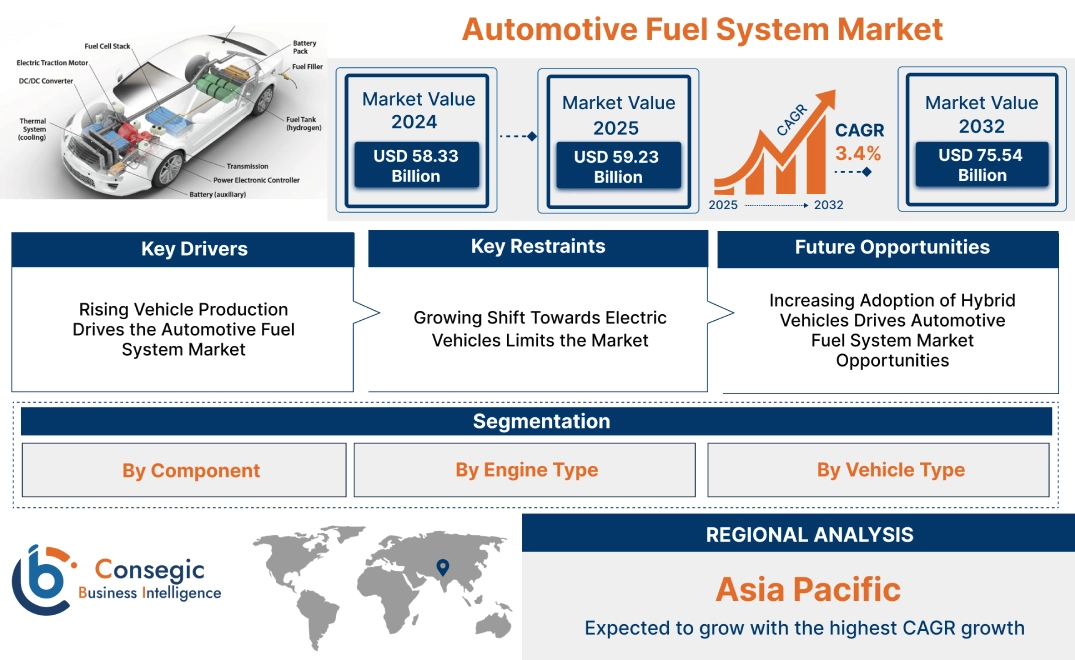
Automotive Fuel System Market Size is estimated to reach over USD 75.54 Billion by 2032 from a value of USD 58.33 Billion in 2024 and is projected to grow by USD 59.23 Billion in 2025, growing at a CAGR of 3.4% from 2025 to 2032.
Automotive Fuel System Market Scope & Overview:
An automotive fuel system is a network of components that store and deliver fuel to an engine for combustion. It encompasses elements like the fuel tank, fuel pump, fuel lines, filters, and injectors or carburetors, all working together to ensure a consistent and controlled fuel supply. The primary function of this system is to provide the engine with the necessary fuel to generate power, enabling the vehicle to operate. Further, technological advancements, including direct fuel injection (DFI), high-pressure fuel pumps, and advanced electronic control units (ECUs), are driving the market. Furthermore, key factors driving the fuel system market include the increasing adoption of hybrid vehicles, which require advanced fuel delivery and management systems. Additionally, tightening emissions regulations are pushing for the development of more efficient and cleaner fuel systems which in turn drive the market.
Automotive Fuel System Market Dynamics - (DRO) :
Key Drivers:
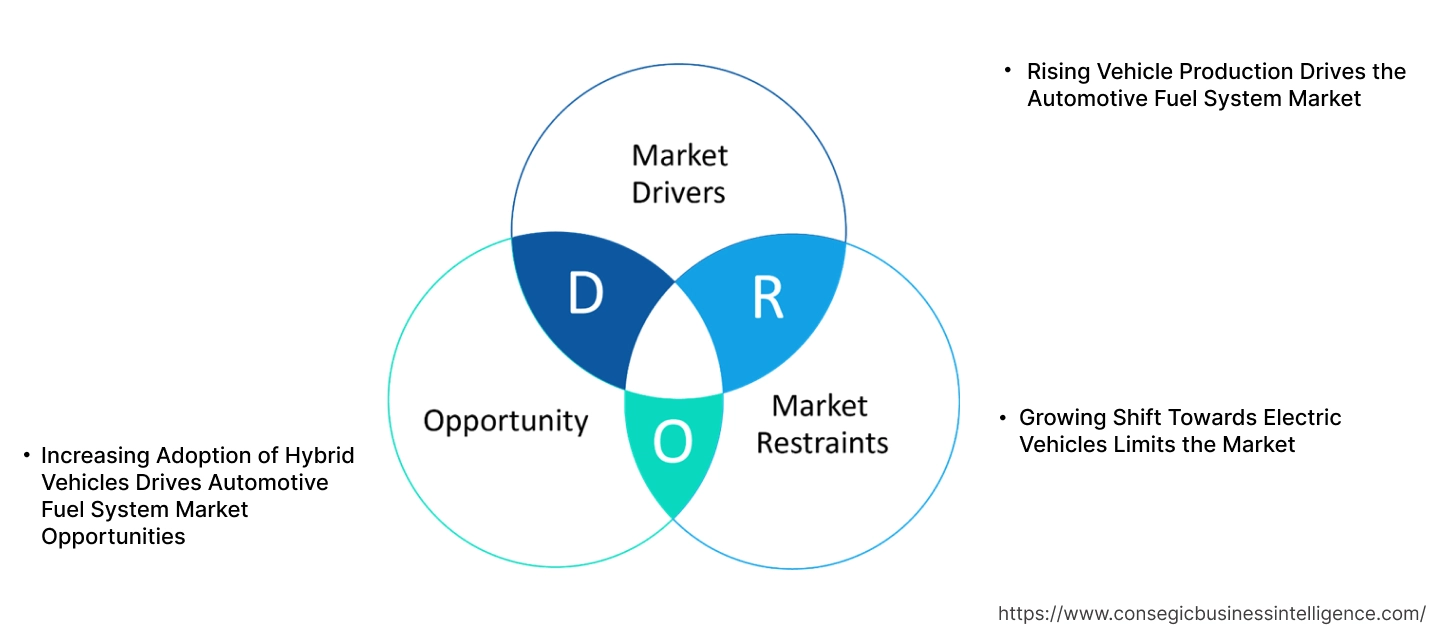
Rising Vehicle Production Drives the Automotive Fuel System Market
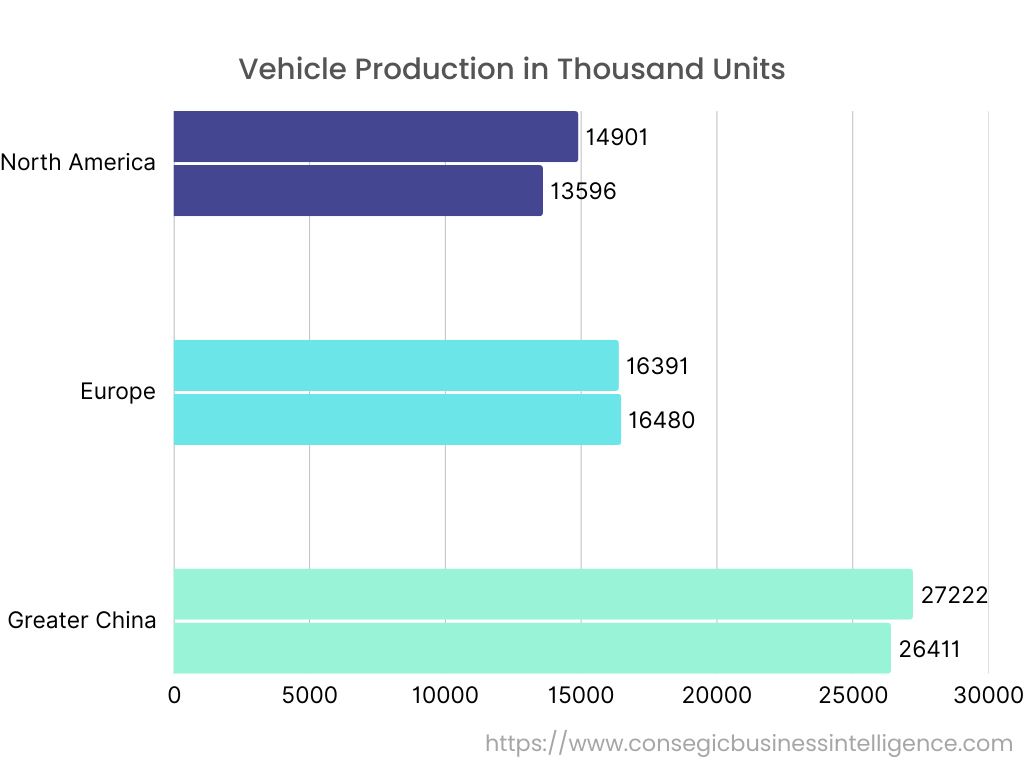
The fuel system market is experiencing significant progression mainly by the rising global production of vehicles. There has been an increasing demand for efficient and reliable fuel systems with the rise in automobile production. The surge in production necessitates advancements in fuel delivery technologies to meet stricter emission standards and enhance fuel efficiency. Moreover, innovations such as direct fuel injection and high-pressure fuel pumps are becoming increasingly prevalent, driving technological advancements within the market.
- For instance, as per the European Automobile Manufacturers' Association (ACEA), global motor vehicle production reached 85.4 million units in 2022, marking a 5.7% rise from 2021.
Thus, increasing vehicle ownership driven by rising disposable incomes and urbanization, contributes significantly to the automotive fuel system market size.
Key Restraints:
Growing Shift Towards Electric Vehicles Limits the Market
The rapidly increasing shift towards electric vehicles (EVs) is significantly influencing the traditional fuel system market. The growing EVs popularity and market stake is resulting in diminishing need for conventional fuel systems. The transition to EV is primarily driven by environmental concerns, government regulations, and advancements in battery technology. Further, the long-term shift towards a future dominated by fully electric vehicles, limits the potential of the conventional automotive fuel systems. Thus, the shift necessitates companies to explore alternative technologies and diversify their portfolios.
Future Opportunities :
Increasing Adoption of Hybrid Vehicles Drives Automotive Fuel System Market Opportunities
The increasing adoption of hybrid vehicles is creating significant opportunities within the automotive fuel system sector. The hybrid vehicle relies on a combination of internal combustion engines and electric motors which in turn requires sophisticated fuel systems. Further, this demand for hybrid technology is driving the development of advanced fuel injection systems, fuel pumps, and related components which are designed for optimal efficiency and reduced emissions. Moreover, the high demand of hybrid vehicle sales globally signifies a sustained need for these specialized fuel systems, offering manufacturers a pathway for expanding their market presence. Thus, as the stricter emission standards continue to push, the demand for hybrid vehicles continue to rise which in turn drives automotive fuel system market opportunities.
Automotive Fuel System Market Segmental Analysis :
By Component:
Based on the component, the market is segmented into air filters, airflow meters, fuel filters, fuel injectors, fuel pumps, fuel tanks, intake manifold, PCMs/ECMs, pressure regulators, and others.
Trends in the Component:
- Increasing development of air filters with finer filtration capabilities, capturing smaller particulate matter which in turn drives the automotive fuel system market trend.
- Increasing use of lightweight materials such as high-density polyethylene (HDPE) and composites for fuel tanks with the purpose of reducing vehicle weight and improving fuel efficiency is expected to drive automotive fuel system market size.
Fuel pumps accounted for the largest revenue share in the year 2024.
- Increasing adoption of electric fuel pumps which offers greater flexibility in fuel delivery and control in turn driving the automotive fuel system market share.
- Further, development of fuel pumps with variable flow and pressure control to optimize fuel delivery based on engine requirement.
- Furthermore, growing focus on integration of fuel pumps with electronic control systems to enable precise control.
- Thus, as per automotive fuel system market analysis, integration with electronic control systems, growing adoption of electric fuel pumps, and variable flow & pressure control are driving the market.
The fuel injectors segment is anticipated to register the fastest CAGR during the forecast period.
- Growing adoption of High-Pressure Direct Injection (HPDI) systems which offers improved fuel efficiency and reduced emissions through precise fuel delivery in turn driving the automotive fuel system market share.
- Further, piezoelectric injectors are gaining popularity when compared to solenoid injectors due to faster response times and higher precision, driving the automotive fuel system market demand.
- For instance, Denso Corporation offers direct injection high-pressure injector which delivers finely atomized fuel directly into the combustion chamber under high pressure, utilizing a tapered nozzle for optimal spray and precise fuel control.
- Therefore, based on analysis, adoption of High-Pressure Direct Injection system and growing popularity of piezoelectric injectors is anticipated to boost the market during the forecast period.
By Engine Type:
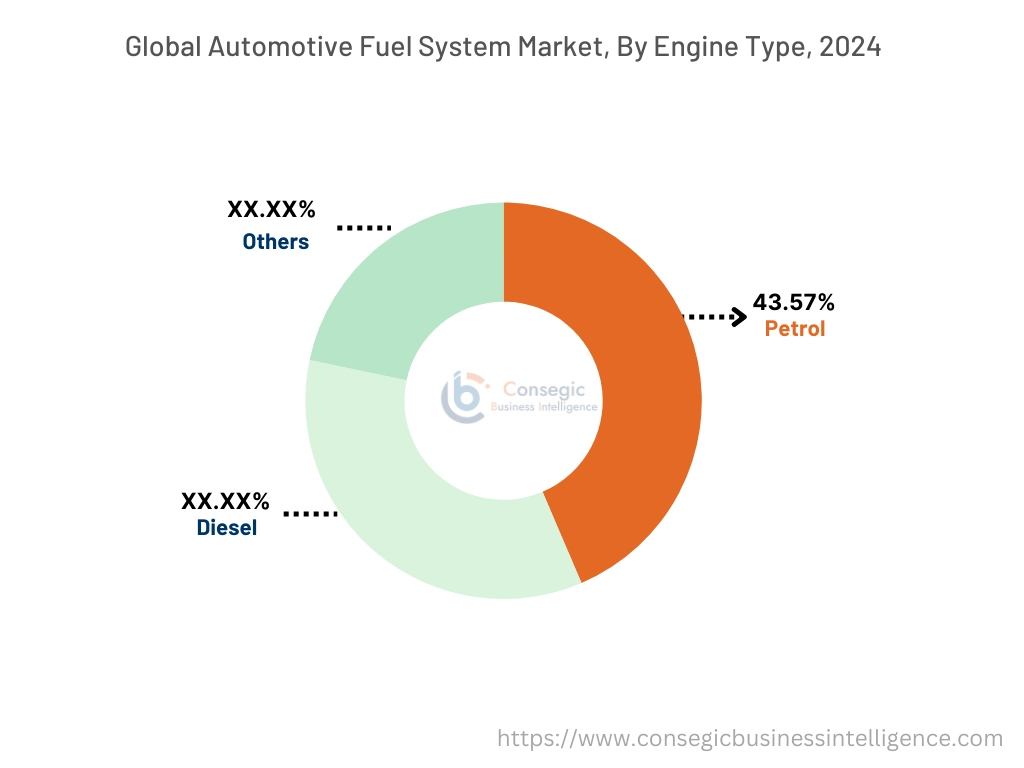
Based on the engine type, the market is segmented into petrol, diesel and others.
Trends in the Engine Type:
- The development of advanced fuel injection systems, such as common rail direct injection (CRDI) and exhaust after treatment technologies for diesel engines is driving the automotive fuel system market demand.
- Increasing interest in alternative diesel fuels such as biodiesel and renewable diesel, requires fuel systems that are compatible with these fuels.
Petrol engine accounted for the largest revenue share of 43.57% in the year 2024 and is anticipated to register the fastest CAGR during the forecast period.
- Gasoline Direct Injection (GDI) is becoming increasingly prevalent in petrol engines, offering improved fuel efficiency and reduced emissions.
- Further, growing focus on gasoline particulate filters and improved fuel filtration systems is driving the automotive fuel system industry.
- Furthermore, petrol engines are integrated with hybrid systems requiring sophisticated fuel management systems that can seamlessly switch between electric and petrol power.
- Thus, as per automotive fuel system market analysis, adoption of Gasoline Direct Injection (GDI), focus on reducing particulate emission, and integration with hybrid systems are driving the market.
By Vehicle Type:
Based on the vehicle type, the market is segmented into passenger cars, light commercial vehicles, heavy commercial vehicles, and off-road vehicles.
Trends in the Vehicle Type:
- Increasing adoption of EVs is significantly impacting the market since EVs doesn’t depend on fuel system which in turn limits automotive fuel system market expansion.
- Increasing focus on digitalization and predictive maintenance is driving the automotive fuel system market growth.
Passenger cars accounted for the largest revenue share in the year 2024.
- The integration of fuel systems with sensors and digital control is driving the market.
- Further, advancements in combustion strategies, such as lean-burn and homogeneous charge compression ignition (HCCI) are driving the automotive fuel system market trends.
- Furthermore, growing trend of automation is driving the automobile industry which in turn drives automotive fuel system market growth.
- For instance, International Organization of Motor Vehicle Manufacturers reports a significant rise in global passenger car sales, from 58.64 million units in 2022 to 65.27 million units in 2023, which is fueling the growth of the fuel system market.
- Thus, based on analysis, advancements in combustion strategies, growing trend of automation of autonomous vehicles, fuel efficiency, and advanced software control are driving the market.
Light commercial vehicles is anticipated to register the fastest CAGR during the forecast period.
- The expansion of e-commerce fuels the need for light commercial vehicles, which subsequently propels the automotive fuel system market expansion.
- Further, increased requirement of last-mile delivery services is a key factor in the growth of the automotive fuel system market trends.
- Therefore, based on analysis, rise of e-commerce and last-mile delivery services is anticipated to boost the growth of the market during the forecast period.
Regional Analysis:
The regions covered are North America, Europe, Asia Pacific, the Middle East and Africa, and Latin America.
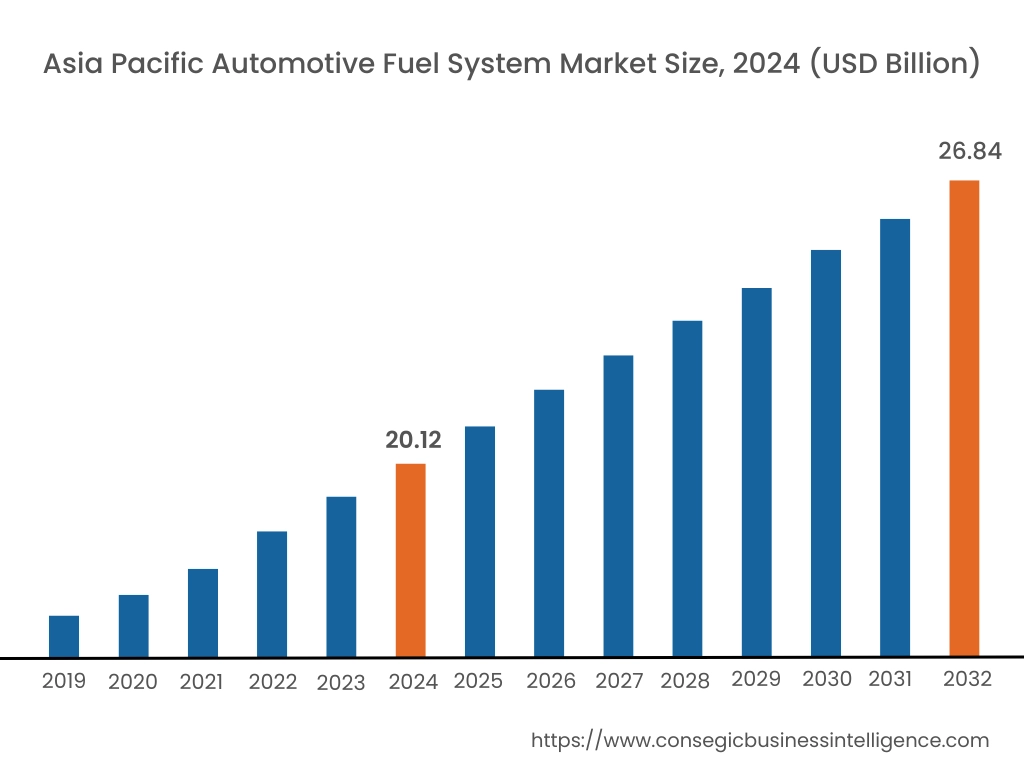
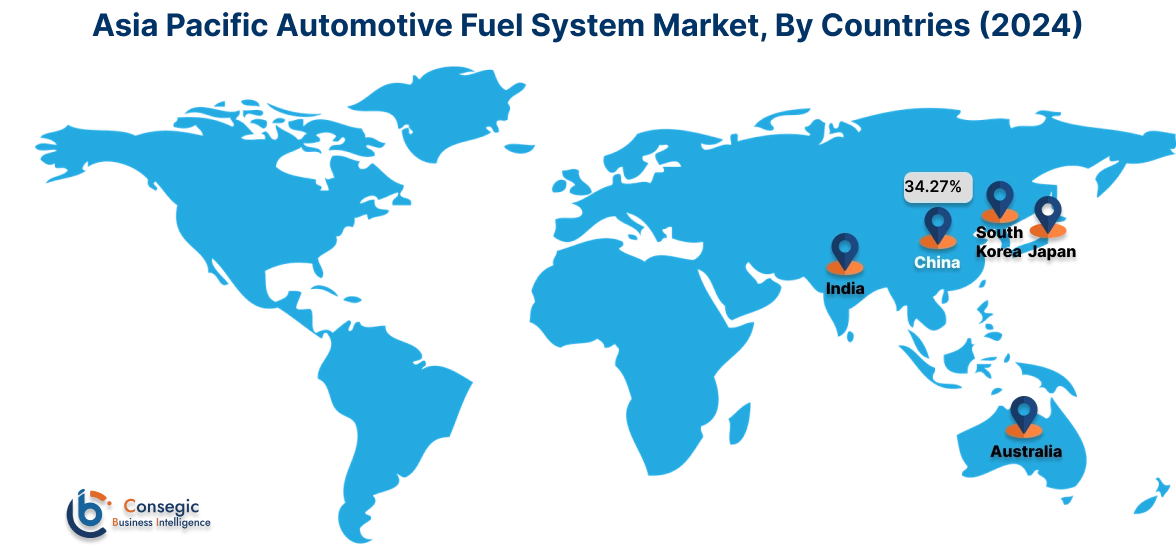
Asia Pacific region was valued at USD 20.12 Billion in 2024. Moreover, it is projected to grow by USD 20.48 Billion in 2025 and reach over USD 26.84 Billion by 2032. Out of this, China accounted for the maximum revenue share of 34.27%. The market growth for automotive fuel systems is mainly driven by expanding automotive production, increasing urbanization, and rising disposable incomes. Additionally, stringent emission regulations drive the need for sophisticated fuel systems.
- For instance, according to Global EV Outlook 2024 by IEA, electric car sale in China rose from 5.9 million units in 2022 to 8.2 million units in 2023.
North America is estimated to reach over USD 22.51 Billion by 2032 from a value of USD 17.60 Billion in 2024 and is projected to grow by USD 17.86 Billion in 2025. The North American market is primarily driven by continued requirement for high-performance vehicles and the need to comply with evolving emissions regulations. Additionally, continued development of advanced fuel injection systems is driving the market.
- For instance, in December 2023, Stanadyne introduced a High-Pressure Port Fuel Injection (HPFI) enhancement kit which is designed to boost performance in high-output gasoline engines. This aftermarket kit increases fuel delivery pressure from 5 bar to 50-100 bar which in turn results in a 20% horsepower increase and a 15% emissions reduction
The regional trends analysis depicts that the stringent emissions regulations, such as Euro 7 and innovation in fuel efficiency and alternative fuel technologies in Europe is driving the market. Additionally, the factors driving the market in the Middle East and African region are increasing vehicle ownership and heavy reliance on traditional combustion engine vehicles. Further, rising need for affordable and fuel-efficient vehicles, coupled with the region's strong reliance on flexible fuel technologies is paving the way for the progress of market trend in Latin America region.
Top Key Players and Market Share Insights:
The global automotive fuel system market is highly competitive with major players providing solutions to the national and international markets. Key players are adopting several strategies in research and development (R&D), product innovation, and end-user launches to hold a strong position in the automotive fuel system industry. Key players in the global automotive fuel system market include-
- Denso Corporation (Japan)
- Continental AG (Germany)
- Delphi Technologies PLC (Germany)
- Robert Bosch GmbH (Germany)
- Edelbrock LLC (US)
- Hitachi Automotive Systems Ltd (Japan)
- Kinsler Fuel Injection (US)
- Woodward, Inc (US)
- TERREPOWER (US)
- Syensqo (Belgium)
Recent Industry Developments :
Product Launch:
- In December 2023, Marelli launched first hydrogen fuel system, leveraging its high-pressure direct injection expertise to develop a solution featuring patented injectors and an advanced Engine Control Unit. This system injects hydrogen into the engine very accurately, allowing cars to run without producing harmful emissions. It's built to work well, last a long time, and fit easily into existing car designs.
Automotive Fuel System Market Report Insights :
| Report Attributes | Report Details |
| Study Timeline | 2019-2032 |
| Market Size in 2032 | USD 75.54 Billion |
| CAGR (2025-2032) | 3.4% |
| By Component |
|
| By Engine Type |
|
| By Vehicle Type |
|
| By Region |
|
| Key Players |
|
| North America | U.S. Canada Mexico |
| Europe | U.K. Germany France Spain Italy Russia Benelux Rest of Europe |
| APAC | China South Korea Japan India Australia ASEAN Rest of Asia-Pacific |
| Middle East and Africa | GCC Turkey South Africa Rest of MEA |
| LATAM | Brazil Argentina Chile Rest of LATAM |
| Report Coverage |
|
Key Questions Answered in the Report
How big is the automotive fuel system market? −
The automotive fuel system market is estimated to reach over USD 75.54 Billion by 2032 from a value of USD 58.33 Billion in 2024 and is projected to grow by USD 59.23 Billion in 2025, growing at a CAGR of 3.4% from 2025 to 2032.
What specific segmentation details are covered in the automotive fuel system report? +
The automotive fuel system report includes specific segmentation details for component, vehicle type, engine type, and regions.
Which is the fastest segment anticipated to impact the market growth? +
In the automotive fuel system market, petrol engine is the fastest-growing segment during the forecast period.
Who are the major players in the automotive fuel system market? +
The key participants in the automotive fuel system market are Denso Corporation (Japan), Continental AG (Germany), Delphi Technologies PLC (Germany), Robert Bosch GmbH (Germany), Edelbrock LLC (US), Hitachi Automotive Systems Ltd (Japan), Kinsler Fuel Injection (US), Woodward, Inc (US), TERREPOWER (US), Syensqo (Belgium), and others.
What are the key trends in the automotive fuel system market? +
The automotive fuel system market is being shaped by several key trends including stringent emission regulations, which are driving the development of more efficient fuel delivery technologies like direct injection and advanced electronic control systems.
Overview
Reputation & Certifications


Our Services
- Market Intelligence & Forecasting
- Custom Research Solutions
- Market Entry Strategy
- Competitive Intelligence
- Customer Insights
- Industry Innovation Analysis
- Investment Advisory