Jump to Content
Automotive Steering System Market - Size, Share, Industry Trends, and Forecasts (2025-2032)
Automotive Steering System Market Size:
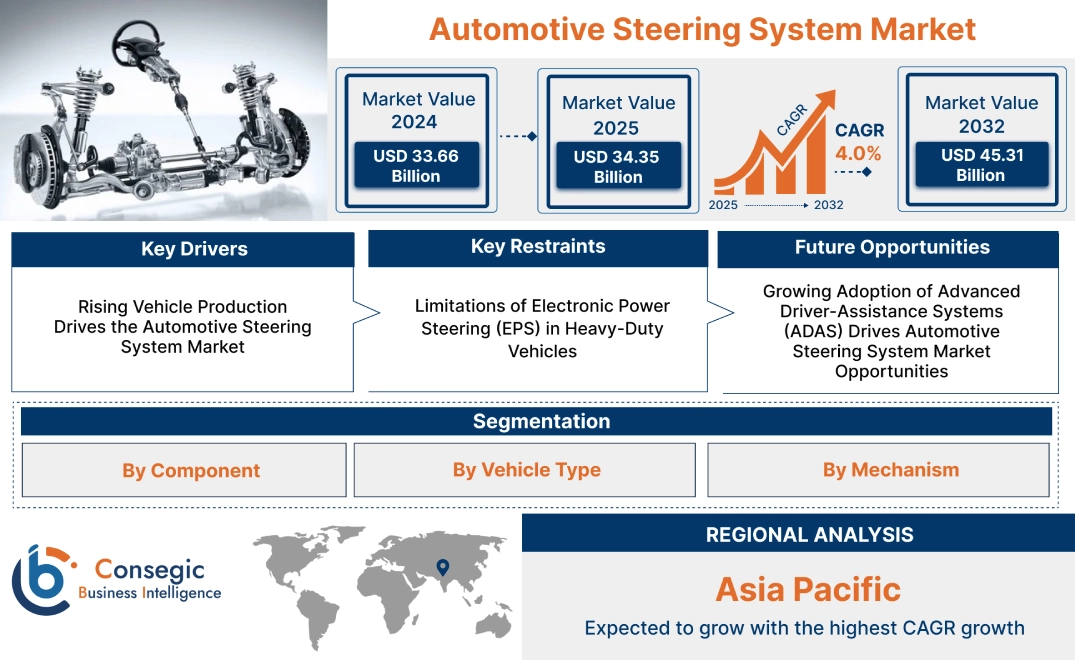
Automotive Steering System Market Size is estimated to reach over USD 45.31 Billion by 2032 from a value of USD 33.66 Billion in 2024 and is projected to grow by USD 34.35 Billion in 2025, growing at a CAGR of 4.0% from 2025 to 2032.
Automotive Steering System Market Scope & Overview:
An automotive steering system is the mechanism that allows a driver to control the direction of a vehicle. It primarily converts the rotational motion of the steering wheel into the angular movement of the vehicle's wheels. The most common mechanisms used in steering systems include electronic power steering (EPS) and hydraulic power steering (HPS). The automotive steering system market is experiencing robust growth, primarily fueled by the widespread adoption of electric power steering (EPS). EPS's superior fuel efficiency and seamless integration with ADAS features like lane keeping assist and automated parking are key drivers. Further, other factors driving the market include rising production of passenger vehicles and commercial vehicles, development of autonomous driving technologies, and rapid expansion of the electric vehicle market.
Automotive Steering System Market Dynamics - (DRO):
Key Drivers:
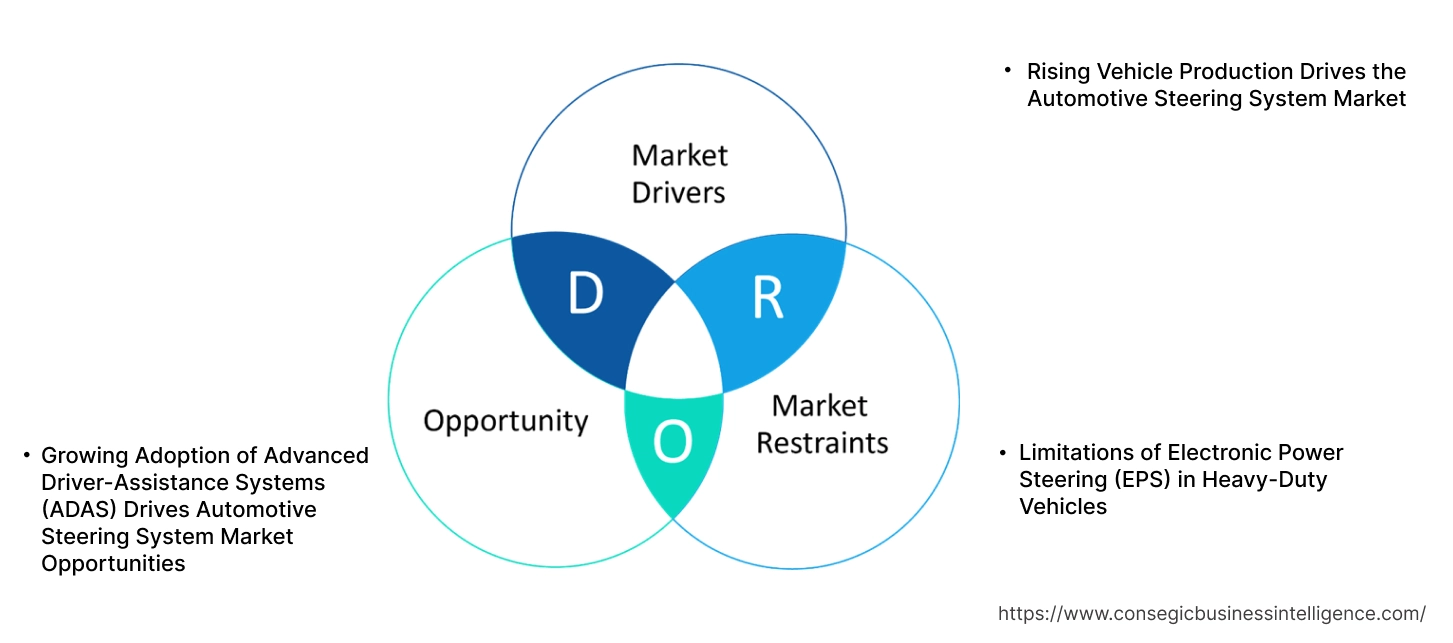
Rising Vehicle Production Drives the Automotive Steering System Market
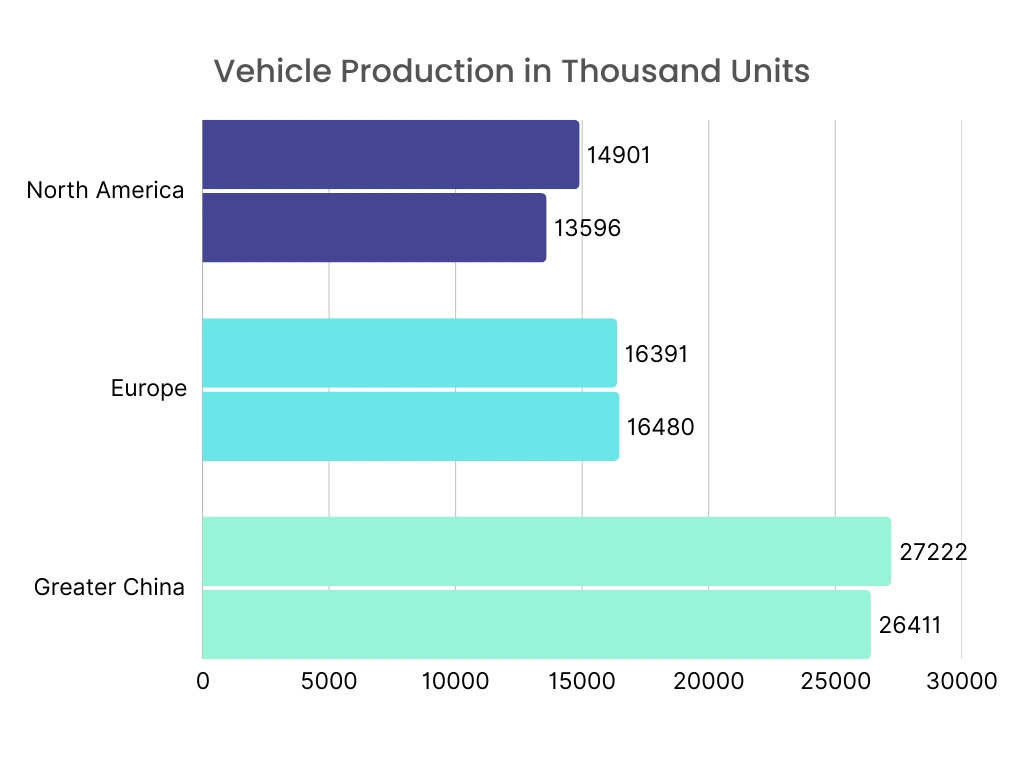
The automotive steering system market growth is linked to the upward trajectory of global vehicle production. As the number of vehicles manufactured increases, the demand for essential components like steering systems experiences a corresponding surge. Further, the advancement is compounded by industry shift towards electrification, where electric power steering (EPS) systems are crucial for optimizing efficiency and performance in electric vehicles. Furthermore, the growing trend of integrating advanced driver-assistance systems (ADAS) requires highly precise and reliable steering technologies in turn driving the market.
- For instance, according to European Automobile Manufacturers' Association (ACEA), in 2022, global motor vehicle production totaled 85.4 million vehicles, representing a 5.7% rise from 2021.
Thus, increasing vehicle ownership driven by rising disposable incomes and urbanization, contributes significantly to the automotive steering system market size.
Key Restraints:
Limitations of Electronic Power Steering (EPS) in Heavy-Duty Vehicles
The limitations of electronic power steering (EPS) in heavy-duty vehicles pose a significant restraint on the market. The substantial load and force requirements of these vehicles challenge the capabilities of current EPS systems, hindering their widespread adoption. Further, drivers accustomed to the direct feedback of hydraulic systems often find EPS lacking in "road feel," which is crucial for maneuvering heavy loads. Furthermore, reliability under extreme conditions is another concern, as heavy-duty vehicles frequently operate in harsh environments that can compromise electrical components. These inherent limitations create a barrier to the complete transition to EPS in heavy-duty applications, thus restraining the market's full potential.
Future Opportunities:
Growing Adoption of Advanced Driver-Assistance Systems (ADAS) Drives Automotive Steering System Market Opportunities
The escalating adoption of advanced driver-assistance systems (ADAS) presents significant prospects for the automotive industry, particularly in the steering systems. ADAS functionalities like lane keeping assist, automated parking, and adaptive cruise control rely heavily on precise and responsive steering control. The growing demand fuels the development of advanced steering technologies, such as steer-by-wire systems, which offer greater flexibility and accuracy compared to traditional hydraulic or even conventional EPS systems.
- For instance, according to Highway Loss Data Institute (HLDI), by 2043, 95% of U.S. vehicles will have standard ADAS features: rear parking sensors, rearview cameras, LDW, and BSW.
Furthermore, the integration of ADAS necessitates sophisticated sensor fusion and control algorithms, creating opportunities for software and electronics companies to contribute to the advancement of steering technology. Thus, increasing prevalence of ADAS features drives the automotive steering system market opportunities.
Automotive Steering System Market Segmental Analysis :
By Component:
Based on the component, the market is segmented into hydraulic pump, steering/column/rack, sensors, electric motor, and other.
Trends in the Component:
- Increasing trend of integration of hydraulic pumps with electronic controls to enable more precise and responsive steering which in turn drives the automotive steering system market trend.
- Increasing use of lightweight materials, such as aluminum and composites to reduce vehicle weight and improve fuel efficiency is expected to drive automotive steering system market size.
Electric motor accounted for the largest revenue share in the year 2024.
- Increasing adoption of electric motors that are designed to provide higher torque and power within smaller and lighter packages, in turn driving the automotive steering system market share.
- Further, growing focus on improving the efficiency of electric motors to reduce energy consumption and extend the range of electric vehicles.
- Furthermore, growing focus on integration of motors with sophisticated electronic control units (ECUs) to enable precise and responsive steering control.
- Thus, as per automotive steering system market analysis, increased power density, enhanced efficiency, and integration with electronic control is driving the Electric motor segment.
Sensors is anticipated to register the fastest CAGR during the forecast period.
- Sensors are becoming more accurate and reliable, providing precise data for steering control and ADAS functionalities in turn driving the automotive steering system market share.
- Further, there’s a growing focus towards sensor fusion, where data from multiple sensors (torque, angle, position) is combined to provide a comprehensive understanding of the steering situation, driving the automotive steering system market demand.
- Furthermore, sensors are being miniaturized to allow for easier integration into steering systems which in turn drives automotive steering system market growth.
- Therefore, based on analysis, factors including higher accuracy & reliability, miniaturization, and sensor fusion are anticipated to boost the growth of the market during the forecast period.
By Vehicle Type:
Based on the vehicle type, the market is bifurcated into passenger cars and commercial vehicles.
Trends in the Vehicle Type:
- Increasing focus on enhancing the maneuverability of the steering system of commercial vehicles is driving the automotive steering system market demand.
- Increasing integration of commercial vehicle steering systems with fleet management systems to enable real-time monitoring and diagnostics.
Passenger cars accounted for the largest revenue share in the year 2024.
- Features including variable steering ratios, active return, and customizable steering modes provide a refined and comfortable driving experience.
- Further, increasing need for electric passenger vehicles drives the automotive steering system industry.
- Furthermore, adoption of autonomous driving is accelerating the adoption of steer-by-wire technology in passenger cars, enabling greater flexibility and control.
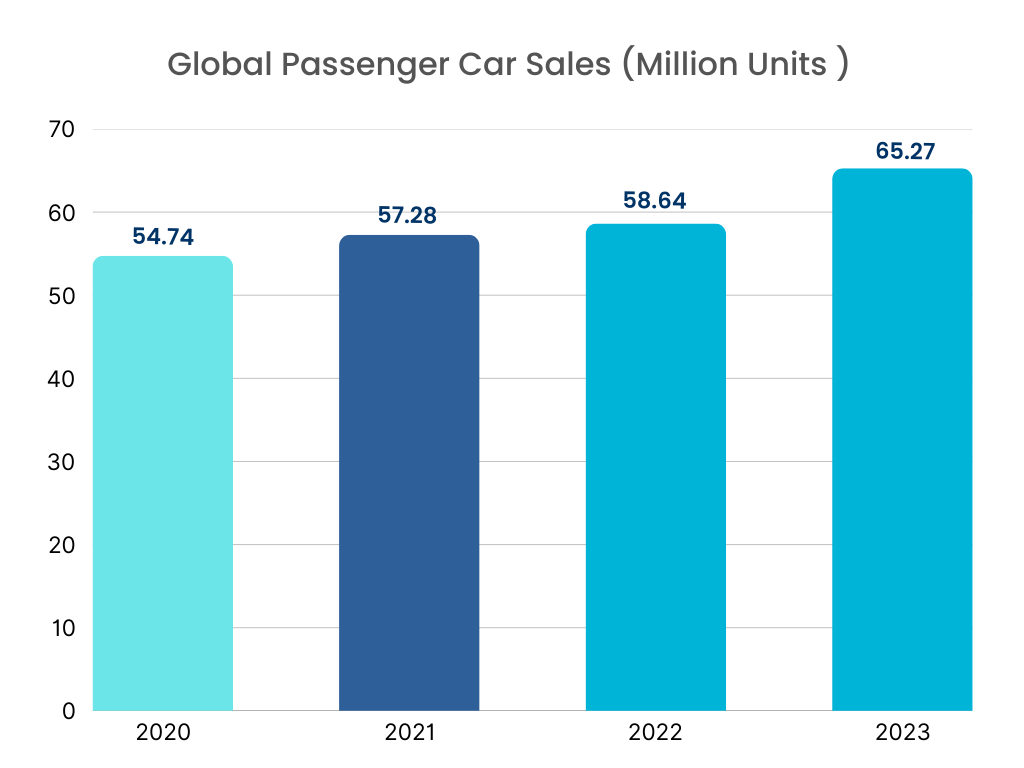
- For instance, according to International Organization of Motor Vehicle Manufacturers, global passenger car sales increased from 58.64 million in 2022 to 65.27 million in 2023. The increased sales drive the steering system market.
- Thus, as per automotive steering system market analysis, emphasis on driving comfort, steer-by-wire technology, and growing EV sector are driving the market.
The commercial vehicles segment is anticipated to register the fastest CAGR during the forecast period.
- Growth of e-commerce is driving the requirement for light commercial vehicles, which in turn drives the automotive steering system market trends.
- Further, growing need for last-mile delivery services is driving automotive steering system market expansion.
- Furthermore, commercial vehicle steering systems prioritize durability and reliability, as these vehicles often operate in harsh conditions and carry heavy loads.
- Therefore, as per analysis, growth of e-commerce and focus on durability & reliability is anticipated to boost the growth of the market during the forecast period.
By Mechanism:
Based on the mechanism, the market is segmented into electronic power steering (EPS), hydraulic power steering (HPS), and electrically assisted hydraulic power steering.
Trends in the Mechanism:
- Prevalent use of hydraulic power steering in commercial vehicles is driving the automotive steering system market expansion.
- Increasing focus on optimizing the integration of electric and hydraulic components in electrically assisted hydraulic power steering systems to improve efficiency and performance.
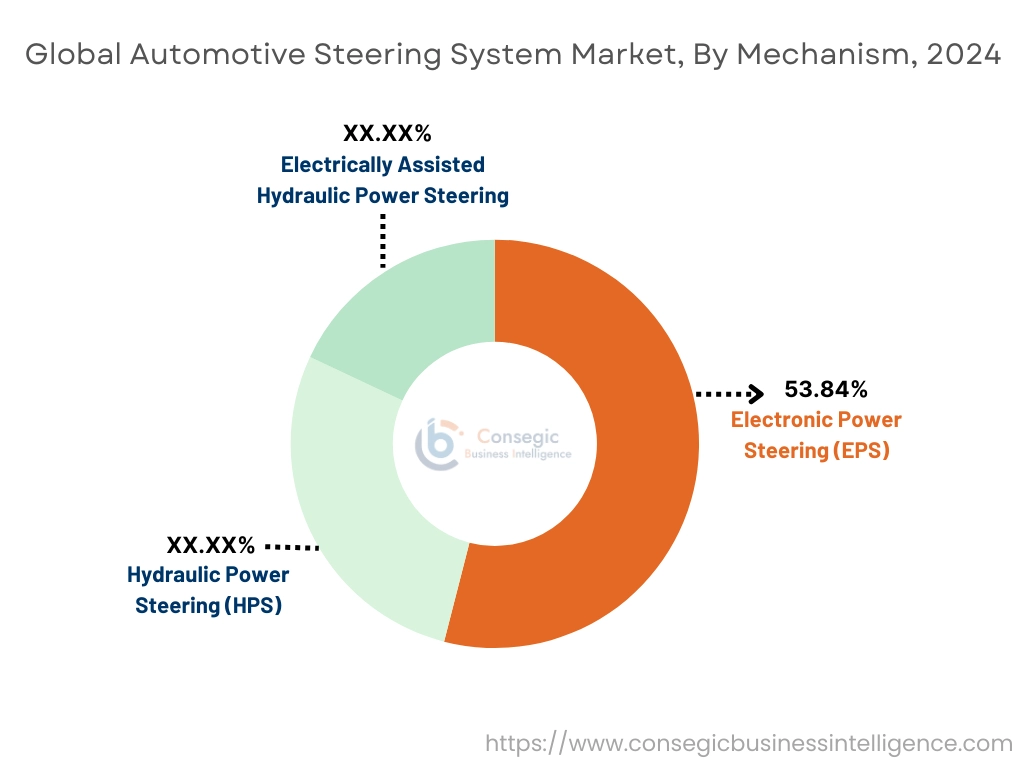
Electronic Power Steering (EPS) accounted for the largest revenue share of 53.84% in the year 2024 and is anticipated to register the fastest CAGR during the forecast period.
- The development of autonomous vehicles heavily relies on EPS systems, which provide precise and rapid steering control essential for advanced driver-assistance systems (ADAS).
- Further, compared to traditional hydraulic systems, EPS systems offer enhanced energy efficiency, resulting in improved fuel economy and lower emissions which in turn drives the automotive steering system market trends.
- Furthermore, EPS systems are increasingly driven by sophisticated software algorithms allowing highly customizable steering feel and adaptive responses to driving conditions.
- For instance, Robert Bosch GmbH offers EPSapa Power Steering system that provides precise and assisted steering with an enhanced feel and improved safety through a new-generation control unit. The system reduces CO2 emissions compared to hydraulic systems and complies with ASIL-D standards for automated driving
- Thus, based on analysis, rise of autonomous vehicles, fuel efficiency, and advanced software control are driving the market.
Regional Analysis:
The regions covered are North America, Europe, Asia Pacific, Middle East and Africa, and Latin America.
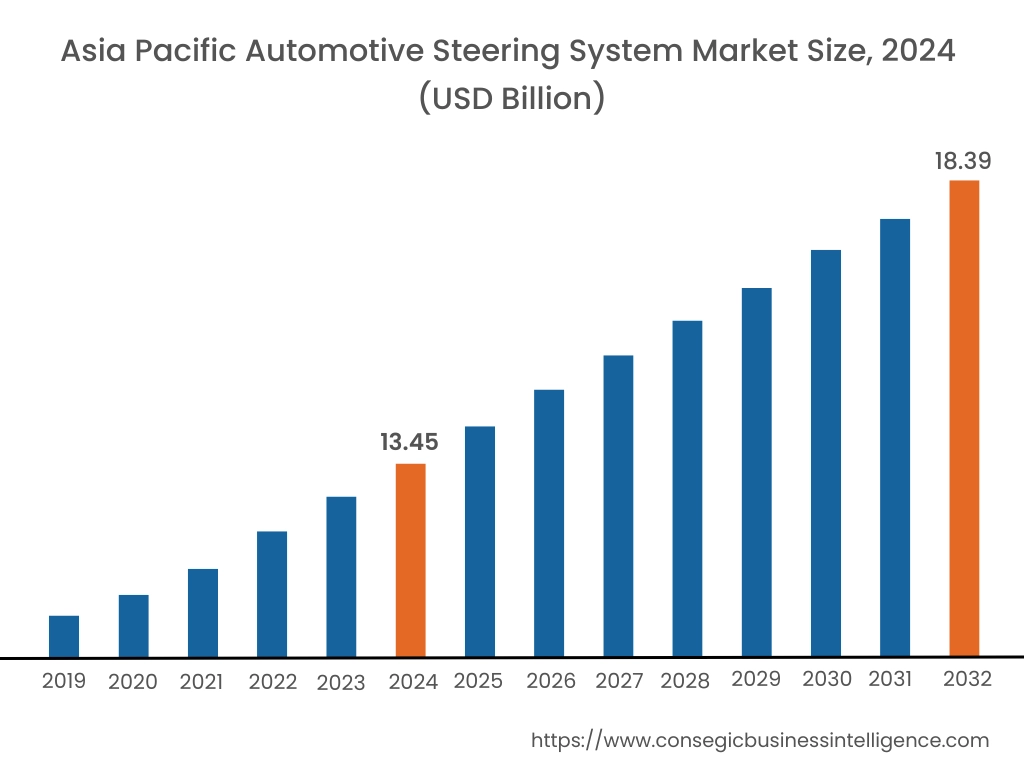
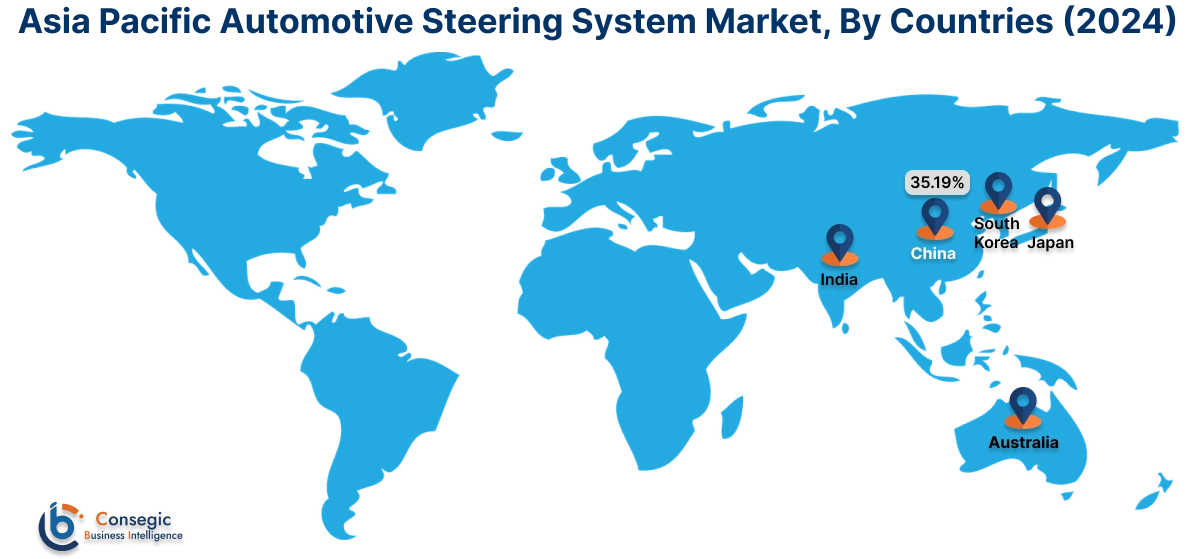
Asia Pacific region was valued at USD 13.45 Billion in 2024. Moreover, it is projected to grow by USD 13.74 Billion in 2025 and reach over USD 18.39 Billion by 2032. Out of this, China accounted for the maximum revenue share of 35.19%. The market growth for automotive steering systems is mainly driven by growing vehicle production, particularly the rapid adoption of electric vehicles which necessitate advanced EPS systems. Additionally, rising disposable incomes and stringent emission regulations drives the demand for sophisticated steering solutions.
- For instance, according to Global EV Outlook 2024 by IEA, electric car sale in China rose from 5.9 million units in 2022 to 8.2 million units in 2023. The increasing sales of electric vehicles in turn drives the adoption of steering system.
North America is estimated to reach over USD 11.33 Billion by 2032 from a value of USD 8.45 Billion in 2024 and is projected to grow by USD 8.62 Billion in 2025. The North American market is primarily driven by the increasing need for advanced driver-assistance systems (ADAS) and the rising adoption of electric vehicles. Additionally, the region's focus on vehicle safety and comfort contributes to the ongoing development and integration of advanced steering solutions.
- For instance, in March 2025, Nexteer Automotive launched a new, cost-effective, and lightweight Rear-Wheel Steering (RWS) system designed to improve maneuverability, stability, safety, and performance, particularly for large vehicles such as trucks, SUVs, and EVs.
The regional trends analysis depicts that the stringent emission regulations, growing EV adoption, and the strong push for advanced driver-assistance systems (ADAS) in Europe is driving the market. Additionally, the primary factor driving the market in the Middle East and African region is increasing vehicle ownership and a growing demand for modern vehicle features. Further, the increasing demand for affordable vehicles and the growing EV adoption is paving the way for the progress of market trend in the region.
Top Key Players & Market Share Insights:
The global automotive steering system market is highly competitive with major players providing solutions to the national and international markets. Key players are adopting several strategies in research and development (R&D), product innovation, and end-user launches to hold a strong position in the automotive steering system industry. Key players in the global automotive steering system market include-
- Robert Bosch GmbH (Germany)
- Hitachi Automotive Systems Limited (Japan)
- Showa Corporation (Japan)
- China Automotive System Inc. (China)
- thyssenkrupp AG (Germany)
- ZF Friedrichshafen AG (Germany)
- JTEKT Corporation (Japan)
- Mando Corporation (South Korea)
- Nexteer Automotive Corporation (US)
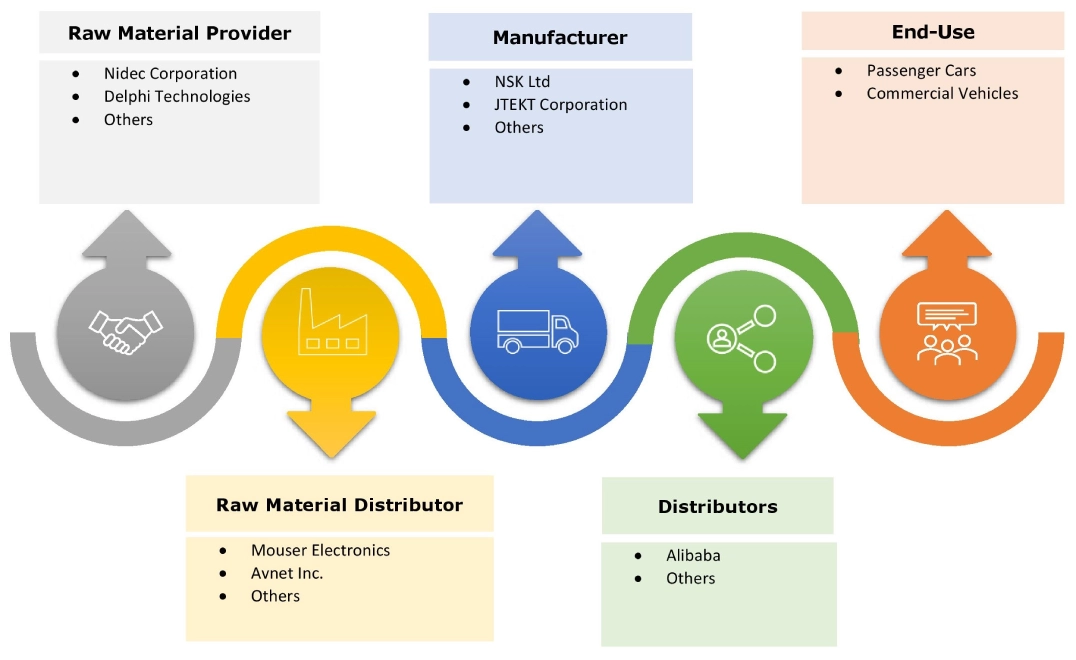
- NSK Ltd (Japan)
Recent Industry Developments :
Collaboration:
- In February 2025, ZF Friedrichshafen AG begun production of the latest steer-by-wire system for the Chinese car manufacturer NIO's electric flagship, the ET9. The company provides steering wheel and gear actuators along with the necessary software.
Automotive Steering System Market Report Insights:
| Report Attributes | Report Details |
| Study Timeline | 2019-2032 |
| Market Size in 2032 | USD 45.31 Billion |
| CAGR (2025-2032) | 4.0% |
| By Component |
|
| By Vehicle Type |
|
| By Mechanism |
|
| By Region |
|
| Key Players |
|
| North America | U.S. Canada Mexico |
| Europe | U.K. Germany France Spain Italy Russia Benelux Rest of Europe |
| APAC | China South Korea Japan India Australia ASEAN Rest of Asia-Pacific |
| Middle East and Africa | GCC Turkey South Africa Rest of MEA |
| LATAM | Brazil Argentina Chile Rest of LATAM |
| Report Coverage |
|
Key Questions Answered in the Report
How big is the automotive steering system market? −
The automotive steering system market is estimated to reach over USD 45.31 Billion by 2032 from a value of USD 33.66 Billion in 2024 and is projected to grow by USD 34.35 Billion in 2025, growing at a CAGR of 4.0% from 2025 to 2032.
What specific segmentation details are covered in the automotive steering system report? +
The automotive steering system report includes specific segmentation details for component, vehicle type, mechanism, and regions.
Which is the fastest segment anticipated to impact the market growth? +
In the automotive steering system market, Electronic Power Steering (EPS) is the fastest-growing segment during the forecast period due to increasing demands for fuel efficiency and the integration of advanced driver-assistance systems (ADAS).
Who are the major players in the automotive steering system market? +
The key participants in the automotive steering system market are Robert Bosch GmbH (Germany), Hitachi Automotive Systems Limited (Japan), ZF Friedrichshafen AG (Germany), JTEKT Corporation (Japan), Mando Corporation (South Korea), Nexteer Automotive Corporation (US), NSK Ltd (Japan), Showa Corporation (Japan), China Automotive System Inc. (China), thyssenkrupp AG (Germany), and others.
What are the key trends in the automotive steering system market? +
The automotive steering system market is being shaped by several key trends including increasing adoption of electric power steering (EPS), driven rise of electric vehicles, and the demand for improved fuel efficiency. Furthermore, the development of steer-by-wire technology is gaining momentum, paving the way for advanced driver-assistance systems (ADAS) and future autonomous driving capabilities.
Overview
Reputation & Certifications


Our Services
- Market Intelligence & Forecasting
- Custom Research Solutions
- Market Entry Strategy
- Competitive Intelligence
- Customer Insights
- Industry Innovation Analysis
- Investment Advisory