Jump to Content
Biopolymer Coatings Market Size & Industry Share - Growth Trends & Forecasts (2026 - 2034)
Biopolymer Coatings Market Size & Insights
The Biopolymer Coatings Market size was valued at 1,468.38 (US$M) in 2025 and is projected to grow from 1,549.23 (US$M) in 2026 to 2,773.67 (US$M) by 2034, at a CAGR of 7.6% during the forecast period (2026-2033), according to a recent report from Consegic Business Intelligence.
The biopolymer coatings market growth is driven by several factors such as the presence of stringent government regulations against single-use plastics, rising consumer and brand commitments to circular economy goals, and constant technological advancements improving the durability, barrier performance, and antimicrobial utility of biopolymer coatings.
Biopolymer Coatings Market Statistics:
- Current Market Size: USD 1,468.38 Million
- Forecast Market Size: USD 2,773.67 Million
- CAGR: 7.6%
- Largest Segment: Bio-polyurethane (Bio-PU) accounted for the largest revenue share in the market in 2025.
- Fastest-Growing Segment: Bio-polyamide (Bio-PA) segment is anticipated to register the fastest CAGR during the forecast period.
- Largest Geographic Market: Asia Pacific
- Fastest-Growing Geography: Asia Pacific
- Major Companies: Arkema S.A. (France), Danimer Scientific (United States), BASF SE (Germany), AkzoNobel N.V. (Netherlands), NatureWorks LLC (United States), Cargill Incorporated (United States), Mitsubishi Chemical Group (Japan), Novamont S.p.A. (Italy), Dow (United States), Covestro AG (Germany), Eastman Chemical Company (United States), and others.
- Key Technological/Commercial Development: Introduction of Plant-Derived Ready-to-Use Systems, Integration of Nanotechnology and Active Functional Additives, Strategic Partnerships & Global Supply Chain Collaborations, and Advancements in Biodegradable Polymers for Healthcare.

Key Growth Drivers in the Biopolymer Coatings Market
Strict Environmental Regulations and VOC Mandates
- Strict Regulatory Mandates: Stringent international laws restricting single-use plastics and high-emission processes are compelling industries to eliminate petroleum-based substances. Governments worldwide are implementing rigorous mandates to minimize volatile organic compound (VOC) emissions across industrial manufacturing sectors, further driving the biopolymer coatings industry growth.
- Shifting Consumer Preferences: Modern consumers are increasingly prioritizing sustainability and actively seeking out products with minimal environmental footprints. This behavioral shift drives retail brands to adopt bio-based coated packaging as a core strategy to enhance brand loyalty and appeal to green consumers.
- Corporate Sustainability Goals: Major multinational corporations are committing to net-zero carbon emissions and circular economy business models, thereby driving the biopolymer coatings market demand. Implementing biopolymer coatings allows these companies to substantially lower their scope 3 emissions and meet their stated environmental milestones.
Surge in Demand for Sustainable Packaging Solutions
- Eco-Friendly Consumer Preferences: Evolving consumer consciousness regarding single-use waste has triggered a massive shift toward sustainable retail and e-commerce packaging, thereby driving the biopolymer coatings industry trends. Brand owners across food, beverage, and consumer goods are increasingly adopting biodegradable coated papers and cardboards.
- Enhanced Food Preservation: Modern biopolymer-based barriers successfully protect perishable goods from moisture, oxygen, and microbial spoilage. This capability drives their widespread implementation as high-performance protective layers in food and beverage packaging lines.
Technological Advancements and Functional Integration
- Nanocomposite Integration: Incorporating advanced nanomaterials into biopolymer matrices has significantly neutralized historic material weaknesses like poor tensile strength and high moisture sensitivity. These engineering breakthroughs allow bio-coatings to match or exceed the strict performance thresholds of traditional petroleum-based polymers.
- Smart and Active Coating Functions: Recent R&D innovations have enabled the creation of responsive biopolymer layers embedded with natural antimicrobial agents and oxygen scavengers. These active functionalities actively extend the shelf-life of perishable goods, providing a distinct economic advantage to logistics providers.
- Water-Based Formulation Progress: Innovations in water-borne biopolymer technologies have intensely minimized the need for volatile organic compounds (VOCs) during application processes. This evolution results in a much safer manufacturing environment and seamlessly aligns with global industrial safety standards.
- Improved Substrate Compatibility: Advanced chemical modification techniques now allow biopolymers to adhere flawlessly to a wider variety of surfaces, including metals, textiles, and recycled paperboard. This expanded compatibility offers new application opportunities that were previously inaccessible to early-generation bio-coatings.
Expansion of Renewable Feedstocks and Industry Collaborations
- Raw Material Scalability: Increased production capacities for bio-based building blocks, such as lactic acid, succinic acid, and plant oils, ensure a steady supply of renewable raw materials. This availability helps chemical processors stabilize production costs and scale manufacturing operations.
- Strategic Partnerships: Chemical corporations are frequently partnering with research institutions, biotech startups, and regional distributors to fast-track commercialization. These joint ventures streamline the integration of eco-friendly coating alternatives into established global supply chains.
Biopolymer Coatings Industry Opportunities
Advanced Packaging and Eco-Friendly Food Contact Applications
- Paper and Paperboard Adoption: Surging demand for sustainable packaging is driving the widespread replacement of conventional plastic liners with biopolymer barrier coatings on paper and cardboard substrates. These renewable layers effectively block moisture, oil, and oxygen without compromising the recyclability of the base paper materials.
- Shelf-Life Extension:Exciting opportunities exist to engineer active and intelligent biopolymer coatings embedded with natural antimicrobials or antioxidants to preserve perishable food items. These advanced functional systems actively suppress pathogen growth and extend commercial freshness, reducing global food waste.
- Compostable Single-Use Solutions:Strict regulatory restrictions on single-use plastics encourage food service and retail brands to adopt fully biodegradable, compostable food wraps and container coatings. Such innovations allow businesses to comply with zero-waste targets while offering safe, eco-conscious consumer packaging.
- Edible Coating Integration:Growth potential is rapidly rising for flavorless, food-grade biopolymer layers applied directly to fresh fruits, vegetables, and confectionery goods. These invisible barriers successfully minimize moisture loss and microbial spoilage while remaining completely safe for direct human consumption.
High-Performance Industrial and Automotive Sector Expansion
- Bio-Based Polyurethane (PU) Formulations: Innovation in renewable polyols and plant-derived feedstocks allows chemical suppliers to capture high-value automotive interior and exterior coating contracts. These materials deliver the necessary scratch resistance and gloss retention while significantly lowering petroleum dependency.
- Low-VOC Architectural Paints: Stricter regulatory mandates on volatile organic compounds (VOCs) create lucrative opportunities for durable, non-toxic, bio-based architectural wall coatings. Formulators can leverage these solutions to satisfy green building certifications and fulfill consumer demand for safe indoor air quality.
- Wood and Furniture Protection: An increasing preference for eco-certified interior fittings fuels continuous demand for plant-derived wood coatings that deliver robust scratch, water, and UV resistance. These bio-coatings protect aesthetic finishes while ensuring low environmental impact throughout the product lifecycle.
- Corrosion-Resistant Metal Finishes: Developing specialized bio-polyesters and modified polysaccharides provides eco-friendly corrosion protection alternatives for heavy industrial equipment. These surface treatments protect metal infrastructure from harsh atmospheric conditions without relying on hazardous heavy-metal inhibitors.
Medical, Pharmaceutical, and Advanced Healthcare Integration
- Biocompatible Medical Devices: There is an expanding market application for specialized biodegradable polymers, such as resorbable polyesters, utilized in surgical meshes and medical implant coatings. These biocompatible layers safely degrade inside the human body once tissue healing is complete, eliminating the need for secondary removal surgeries.
- Targeted Drug Delivery Systems: Pharmaceutical manufacturers actively seek customized biopolymer surface layers for controlled-release capsules, tablets, and transdermal patches. These precision coatings ensure active pharmaceutical ingredients are released predictably at specific biological sites.
- Antimicrobial Healthcare Textiles: New opportunities are emerging to coat hospital linens, curtains, and protective wear with natural antibacterial biopolymers to prevent nosocomial infections. This application utilizes nature-derived defense properties to keep clinical environments sterile and safe.
- Eco-Friendly Pharmacy Packaging: The healthcare industry is witnessing a growing adoption of bio-derived blister packs and pharmacy bags protected by renewable barrier coatings. These materials shrink medical sector plastic waste while maintaining strict sterile storage requirements for sensitive drugs.
Technological Innovation and Circular Economy Feedstock Sourcing
- Agricultural and Industrial Waste Valorization: Chemical developers are successfully turning food processing waste, cellulose nanocrystals, and crustacean shells into high-purity coating inputs. This circular approach reduces raw material costs while keeping agricultural residues out of landfills.
- Nanotechnology Integration: Enhancing gas barrier properties and mechanical toughness is currently possible by blending natural biopolymers with cellulose or graphene nanoplatelets. These hybrid formulations bridge performance gaps with traditional petroleum plastics, enabling use in demanding industrial environments.
- AI-Assisted Formulation Discovery: Research teams are leveraging machine learning models to rapidly screen polymer blends, predict barrier performance, and optimize cross-linking processes. This technology shortens laboratory development timelines and accelerates the commercial rollout of next-generation bio-coatings.
- Closed-Loop Recycling Compatibility: Modern engineering focuses on creating multi-layer biopolymer structures that safeguard sensitive goods without disrupting standard municipal paper and plastic recycling streams. Such compatibility ensures that coated items seamlessly integrate into existing circular waste management systems.
Biopolymer Coatings Market Challenges
Technical and Performance Limitations
- Inherent Moisture Sensitivity: Many natural biopolymers exhibit a high affinity for water, which severely compromises their structural integrity in humid environments. This chemical vulnerability leads to premature degradation and poor barrier performance when used for liquid or high-moisture packaging.
- Inferior Gas Barrier Properties: Compared to conventional synthetic plastics like PET or PVDC, early-generation biopolymers often allow higher rates of oxygen and carbon dioxide transmission. This lack of robust gas containment limits their effectiveness in long-term food preservation and shelf-life extension.
- Thermal Instability During Processing: Biopolymers frequently possess a narrow thermal processing window and tend to degrade at high temperatures. This sensitivity can cause discoloration, loss of mechanical strength, and equipment fouling during standard industrial extrusion or molding processes.
- Brittleness and Poor Mechanical Strength: Materials like starch and PLA often suffer from low tensile strength and high brittleness in their unblended states. These poor mechanical traits make them susceptible to cracking or tearing under physical stress, requiring expensive structural additives.
Economic and Cost Disadvantages
- High Raw Material Costs: The manufacturing economics of bio-based resins remain significantly higher than those of traditional fossil-based polymers. The high cost is originated from complex extraction processes, low economies of scale, and the volatile costs of organic feedstocks.
- Substantial Capital Investment: Transitioning to biopolymer production lines often demands specialized equipment or extensive modifications to existing synthetic coating machinery. These high upfront engineering costs create a steep entry barrier for small and medium-sized manufacturers.
- Fluctuating Agricultural Prices: Since several biopolymers depend on crops like corn, potatoes, and sugarcane, their supply chain is highly vulnerable to agricultural volatility. Factors like unpredictable weather patterns, crop diseases, and seasonal yields directly disrupt pricing stability.
- Competition with Food Security: Diverting vast agricultural land and primary food crops toward industrial polymer production sparks intense ethical and economic debates. This friction often results in public backlash or shifting agricultural priorities that limit feedstock availability.
Regulatory and Standardization Hurdles
- Complex Composting Certifications: Achieving official global certifications for industrial compostability or marine biodegradability is a difficult and expensive process. Stringent, slow-moving approval standards across different jurisdictions heavily delay the commercial launch of new bio-coatings.
- Inconsistent Global Regulatory Frameworks: The definition and legal classification of sustainable packaging vary considerably from one country to another. This lack of international regulatory harmony forces multinational companies to redesign formulations continuously to comply with scattered regional laws.
- Strict Food-Contact Compliance: Deploying biopolymers in direct contact with food or pharmaceuticals requires exhaustive chemical migration testing to prove safety. Navigating these rigorous health protocols requires multi-year validation timelines that stall market entry.
Biopolymer Coatings Market Segmentation Insights
By Product Chemistry: Bio-Polyurethane (Bio-PU) Leads Due to Versatility and High Performance
Bio-Polyurethane (Bio-PU): The bio-polyurethane (Bio-PU) segment accounted for the largest revenue share in the market in 2025.
Bio-polyurethane coatings dominates the product chemistry segment due to their exceptional durability, flexibility, and high resistance to wear, chemicals, and weathering. Recent innovations by major chemical producers introducing formulations with up to 70% renewable polyol content have allowed industries like automotive and industrial manufacturing to meet stringent low-VOC mandates without compromising performance standards. These systems offer an ideal drop-in replacement for traditional petroleum-based polyurethanes across wood flooring, textiles, and exterior metal finishes.
Polylactic Acid (PLA)
Polylactic acid coatings represent a rapidly growing segment, driven mainly by the food and beverage packaging industry. PLA-based coatings are widely valued for their high transparency, good printability, and effective barrier performance against moisture and greases when applied to paper and paperboard containers. Their capacity to reduce greenhouse gas emissions compared to conventional plastics, combined with compatibility with industrial composting systems, makes them a preferred choice for eco-conscious single-use cups, trays, and flexible wraps
Bio-Polyamide (Bio-PA): The bio-polyamide (Bio-PA) segment is anticipated to register the fastest CAGR during the forecast period.
Bio-polyamide coatings deliver exceptional thermal stability, high tensile strength, and superior chemical resistance, making them crucial for demanding engineering and industrial applications. Sourced largely from renewable castor oil derivatives, bio-PA coatings protect automotive components, electrical wiring, and heavy-duty industrial machinery. Their ability to withstand harsh operating environments while reducing the overall carbon footprint drives their adoption in high-performance structural sectors.
Cellulose Esters/Nitrocellulose
Cellulose-derived coatings, including cellulose esters and nitrocellulose, command a steady market share, driven by its legacy performance in wood furniture finishes, luxury packaging, and specialized textiles. Derived from natural wood pulp and cotton linters, these materials provide excellent film-forming properties, rapid drying times, and high gloss retention. They offer a natural pathway for manufacturers seeking to enhance surface aesthetics and touch appeal while fulfilling sustainability criteria.
Polyhydroxyalkanoates (PHA)
Polyhydroxyalkanoates are expected to witness significant growth due to their true marine and soil biodegradability profile. Synthesized through bacterial fermentation of renewable feedstocks, PHA coatings provide exceptional moisture barrier qualities and function seamlessly as inner layers for compostable paper cups and food containers. Moreover, the ongoing technological investments are positioning PHA as a premier next-generation solution for zero-waste packaging mandate.
By Coating Technique: Spray Coating Leads Due to High Efficiency and Geometry Flexibility
Spray Coating: The spray coating segment accounted for the largest revenue share in the biopolymer coatings market in 2025.
Spray coating commands the largest market share among application techniques due to its exceptional adaptability for high-speed, continuous manufacturing lines. By atomizing the biopolymer solution into fine droplets, this method ensures uniform coverage across expansive and complex surfaces, ranging from automotive components to large architectural panels. Its ability to deposit ultra-thin, consistent layers without wasting excess material makes it highly cost-effective for industrial-scale packaging and wood finishing applications.
Dip Coating
Dip coating is particularly used for small-scale operations, irregular geometries, and edible food protection. The technique involves immersing a substrate directly into a precursor solution for a controlled duration, followed by a regulated withdrawal phase where excess liquid drains off before drying. It is mostly favored in the agricultural sector for applying protective layers onto fresh fruits and vegetables, as well as in medical device manufacturing for coating biocompatible layers onto implants.
Extrusion Coating: The extrusion coating segment is anticipated to register a significant CAGR during the forecast period.
Extrusion coating plays a dominant role in the packaging sector, where molten biopolymers (such as PLA or bio-polyesters) are directly laminated onto moving substrates like paper, paperboard, or foil. This technique creates robust, moisture-resistant barrier layers essential for liquid cartons, food service containers, and flexible pouches. Its high-throughput capacity and seamless integration with existing paper-processing lines drive its widespread adoption among commercial packaging converters.
Electrospinning
Electrospinning is an advanced, high-precision technique that utilizes high-voltage electrical fields to draw biopolymer solutions into continuous micro and nanofiber networks. Although less common for heavy industrial finishes, it is rapidly expanding in specialized high-value applications such as active antimicrobial food packaging, tissue-engineering scaffolds, and targeted pharmaceutical drug delivery systems. The resulting porous structures offer high surface-area-to-volume ratios that optimize the controlled release of active compounds.
By End User: Food & Beverage Leads Due to High-Volume Demand and Packaging Regulations
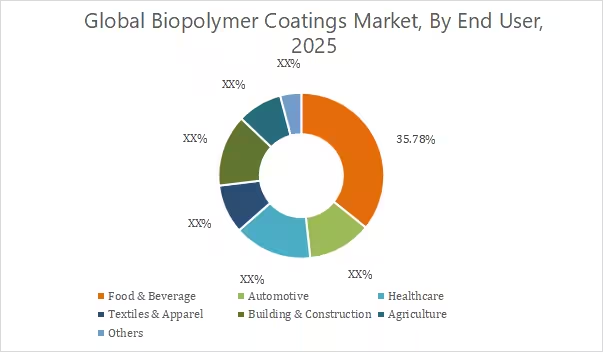
Food & Beverage: The food & beverage segment accounted for the largest revenue share of 35.78% in the market in 2025.
The food and beverage industry commands the largest share of the biopolymer coatings market, driven by intense regulatory pressures to phase out conventional single-use plastics and a massive surge in demand for eco-friendly packaging. Biopolymer-coated paperboard, cups, wrappers, and trays offer essential barrier properties against moisture, oxygen, and grease while ensuring complete compostability or recyclability. Furthermore, food brands heavily adopt active and edible biopolymer coatings to extend product shelf-life and satisfy strict safety and clean-label standards.
Automotive
The automotive sector increasingly utilizes advanced biopolymer coatings, particularly bio-based polyurethanes and polyesters, to fulfill corporate sustainability commitments and strict low-VOC mandates. These renewable surface finishes provide excellent scratch resistance, thermal stability, and high gloss retention for both interior components and exterior body panels. By integrating bio-derived coatings, automotive manufacturers successfully reduce interior emissions and vehicle weight without sacrificing long-term durability.
Healthcare: The healthcare segment is anticipated to register the fastest CAGR during the forecast period.
The healthcare sector represents a rapidly growing end-user segment, driven by the demand for biocompatible and sterile materials. Specialized biopolymers are widely applied as functional coatings on medical devices, surgical meshes, and controlled-release drug delivery systems, where they safely degrade inside the body post-healing. Additionally, renewable barrier coatings are increasingly used in eco-friendly pharmaceutical packaging and antimicrobial hospital textiles to maintain clinical hygiene.
Textiles & Apparel
The textiles and apparel industry leverages biopolymer coatings to manufacture waterproof, breathable, and eco-certified performance fabrics. Derived from plant and bio-polyester sources, these coatings offer sustainable alternatives to traditional synthetic finishes, fulfilling consumer preference for ethical and green fashion. They provide effective stain and water repellency while ensuring that finished garments align with circular economy recycling guidelines.
Building & Construction
In the building and construction sector, biopolymer coatings are being increasingly used for architectural paints, wood paneling, and interior fixtures. These formulations help builders comply with green building certifications, such as LEED, by considerably minimizing toxic indoor emissions and volatile organic compounds. Plant-derived wood and metal coatings protect structural components from moisture and UV degradation while lowering the overall carbon footprint of construction projects
Agriculture
The agricultural sector utilizes biopolymer coatings for controlled-release fertilizers, seed protection, and eco-friendly crop packaging. Biodegradable seed coatings shield crops from early pathogens and optimize germination rates before naturally breaking down harmlessly into the soil. These applications help minimize chemical runoff and plastic pollution in farmlands, supporting sustainable, high-yield farming practices.
Biopolymer Coatings Market Regional Breakdown
North America:
North America is estimated to reach over USD 764.15 Million by 2034 from a value of USD 411.33 Million in 2025 and it is projected to grow to USD 433.18 Million in 2026.
North America represents a highly innovative and lucrative regional market, heavily driven by stringent environmental standards, advanced R&D infrastructure, and proactive corporate sustainability mandates. Major industry players and research institutions are heavily investing in biomass-balanced formulations, bio-based resins, and high-performance polyurethanes. Furthermore, consumer preference for eco-certified goods and robust green building construction activities continue to accelerate regional demand across packaging, automotive, and industrial coating sectors.
United States
The United States holds the largest share within North America biopolymer coatings industry, fueled by expansive commercial packaging sectors and rigorous volatile organic compound (VOC) emissions restrictions enforced by the EPA. Strong partnerships between private biotech firms, large-scale agribusinesses, and the automotive sector accelerate the deployment of bio-polyurethane and PLA-based coatings across industrial manufacturing hubs.
Canada
Canada’s market growth is driven by its rich forestry and agricultural resources, which serve as primary feedstocks for cellulose-based and starch-derived coating innovations. Strict national carbon-reduction policies and expanding eco-packaging mandates across retail sectors further fuel regional consumption.
Europe:
Europe maintains a prominent position in the global market, propelled by rigorous regulatory frameworks such as the European Union’s single-use plastic restrictions and aggressive circular economy targets. European industries place a heavy emphasis on reducing carbon footprints, making bio-based polyurethane and compostable barrier coatings standard practice in packaging and automotive manufacturing.
Germany
Germany leads the European regional market, driven by advanced chemical engineering sectors, major automotive manufacturing hubs, and extensive architectural renovation projects. Moreover, German automotive OEMs utilize bio-based topcoats to lower their manufacturing carbon footprints while meeting strict quality standards for surface durability and scratch resistance.
United Kingdom
The United Kingdom biopolymer coatings market expansion is heavily driven by rapid retail transformations, widespread e-commerce expansion, and proactive fast-moving consumer goods (FMCG) brands transitioning to plastic-free alternatives. Rigid domestic EPR (Extended Producer Responsibility) schemes penalize non-recyclable packaging, providing an immediate economic advantage to businesses using biopolymer coatings.
Asia Pacific: Most Dominant and Fastest Growing Region
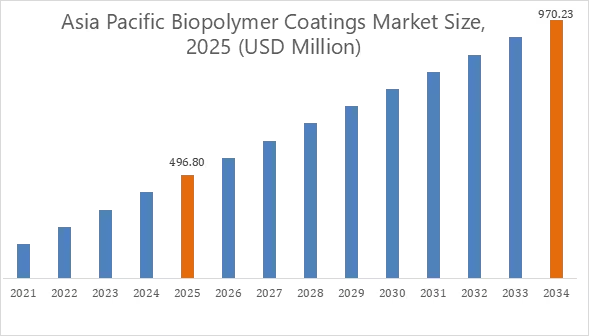
< p> The Asia Pacific region was valued at USD 496.80 Million in 2025. Moreover, it is projected to grow to USD 526.13 Million in 2026 and reach over USD 970.23 Million by 2034. Out of this, China accounted for the maximum revenue share of 30.28%.
According to the biopolymer coatings market analysis, the Asia Pacific region stands as the largest and fastest-growing market for biopolymer coatings, fueled by rapid industrialization, increasing urbanization, and a massive manufacturing sector. The region benefits from abundant agricultural feedstocks and low-cost processing capabilities, along with tightening government restrictions on conventional plastics in major emerging economies.
China
China drives massive volume consumption through its expansive packaging, electronics, and automotive manufacturing bases. National policies targeting plastic waste limitation and lower industrial emissions have compelled domestic producers to transition rapidly toward renewable coating solutions.
India
India is experiencing surging growth, driven by a massive food and beverage packaging sector, booming online delivery networks, and strict national regulations limiting single-use plastics. The country relies heavily on its vast agricultural waste streams to cultivate affordable, locally sourced biopolymers, allowing domestic manufacturers to minimize their reliance on imported petrochemical resins.
Japan
Japan biopolymer coatings market is characterized by high technological integration, where advanced electrospinning and nanotechnology-driven biopolymer coatings are deployed in premium food packaging and specialized medical devices. Strict national waste-sorting habits and corporate eco-consciousness create a steady demand for high-purity biodegradable coatings.
South Korea
South Korea demonstrates strong adoption of high-performance biopolymer solutions, driven by strict recycling laws and forward-thinking electronics and automotive industries. Major regional corporations routinely integrate eco-certified coatings to meet strict international export compliance criteria.
Latin America:
Latin America shows steady market progression, primarily supported by rich agricultural production that supplies abundant natural biopolymers derived from sugarcane, starch, and cellulose derivatives. Countries like Brazil and Chile are increasingly implementing localized plastic restrictions, which drive domestic food and beverage brands to adopt compostable packaging and protective bio-coatings.
Middle East and Africa:
The Middle East and Africa market is gradually expanding, influenced by emerging municipal sustainability initiatives and eco-tourism developments aiming to curb plastic pollution in coastal and urban environments. In the Gulf states, there is a strategic, long-term economic push to diversify away from oil dependence, leading to investments in advanced green building materials and eco-friendly protective construction coatings. Meanwhile, across African agricultural hubs, the market is expanding through the deployment of bio-based agricultural seed coatings and fertilizer encapsulation to protect crop yields from severe aridity and climate volatility.
Leading Companies in the Biopolymer Coatings Market
- Arkema S.A.
- Danimer Scientific
- BASF SE
- AkzoNobel N.V.
- NatureWorks LLC
- Cargill Incorporated
- Mitsubishi Chemical Group
- Novamont S.p.A.
- Dow
- Covestro AG
Recent Developments Among Companies in the Biopolymer Coatings Market
Product Launches
- In April 2026, BASF expanded its Ecovio portfolio with compostable grades optimized for flexible barrier packaging and extrusion coatings on paper, board, and plastic substrates. These bio-based formulations contain up to 80% renewable content and offer effective barriers against oils and moisture, while allowing wax-free and PFAS-free packaging that completely biodegrades without leaving microplastics.
Partnerships
- In June 2026, Amcor partnered with Kelpi for exploring an innovative bio-based barrier coating derived from seaweed and plant oils for fiber packaging. This ultra-thin, low-carbon bio-based coating delivers moisture and gas barrier capabilities comparable to conventional plastics while remaining fully recyclable in standard paper streams.
Biopolymer Coatings Market Report Insights :
| Report Attributes | Report Details |
| Study Timeline | 2021-2034 |
| Market Size in 2034 | USD 3,007.20 Million |
| CAGR (2026-2034) | 6.82% |
| Base Year | 2025 |
| By Type |
|
| By End-user |
|
| By Region |
|
| Key Players |
|
| North America | U.S. Canada Mexico |
| Europe | U.K. Germany France Spain Italy Russia Benelux Rest of Europe |
| APAC | China South Korea Japan India Australia ASEAN Rest of Asia-Pacific |
| Middle East and Africa | GCC Turkey South Africa Rest of MEA |
| LATAM | Brazil Argentina Chile Rest of LATAM |
| Report Coverage |
|
Key Questions Answered in the Report
How big is the biopolymer coatings market? −
The biopolymer coatings market was valued at USD 1,468.38 Million in 2025 and is projected to grow to USD 2,773.67 Million by 2034.
Which is the fastest-growing region in the market? +
Asia-Pacific is the region experiencing the most rapid growth in the market.
What specific segmentation details are covered in the biopolymer coatings report? +
The biopolymer coatings report includes specific segmentation details for product chemistry, coating technique, end user, and region.
Who are the major players in the market? +
The key participants in the market are Arkema S.A. (France), Danimer Scientific (United States), BASF SE (Germany), AkzoNobel N.V. (Netherlands), NatureWorks LLC (United States), Cargill Incorporated (United States), Mitsubishi Chemical Group (Japan), Novamont S.p.A. (Italy), Dow (United States), Covestro AG (Germany), Eastman Chemical Company (United States), and others.
Overview
Reputation & Certifications


Our Services
- Market Intelligence & Forecasting
- Custom Research Solutions
- Market Entry Strategy
- Competitive Intelligence
- Customer Insights
- Industry Innovation Analysis
- Investment Advisory