Jump to Content
Black Beer Market - Size, Share, Industry Trends, and Forecasts (2025-2035)
Black Beer Market Scope & Overview
The world market of black beer is a unique and culturally relevant market segment to the larger alcohol beverage market, which consists of dark-colored styles of beer with roasted malt profiles, complicated flavour compositions, and a dark appearance through specialized brewing procedures using highly kilned malts such as chocolate malt, black patent malt, and also roasted barley. This advanced category comprises classic varieties like dry stouts (e.g. Guinness), milk stouts, imperial stouts, robust porters, Baltic porters, German schwarzbier (black lager), as well as new craft versions such as barrel-aged imperial stouts, pastry stouts, and black IPAs, and these have a flavor profile that runs the gamut of coffee, chocolate, caramel, and roast flavor notes with Standard Reference Method (SRM) color values that are usually 30-40 units and higher. In 2024, the market is estimated to be USD 14,200 Million and in the year 2025, it will be USD 14,900 Million (base year), with projections showing that the market will grow by a lot to USD 24,800 Million in the year 2035. This growth pattern is a 5.1% compound annual growth rate (CAGR) over the forecast period of 2026 to 2035 due to the global craft beer revolution in which consumers are increasingly focused on flavor complexity and brewing artisanship, the trends of premiumization in the consumption of alcoholic beverages, the expanding food pairing culture that orient dark beers as a culinary counterpart, technological innovations, such as new nitrogenated packaging that recreates the flavor of draft beer, and an increasing market penetration in emerging economies where dark beers have
Key Insights
- Global CAGR (2026-2035): 5.1%
- Global Market Size (2025): USD 14,900 Million
- Global Market Size (2035): USD 24,800 Million
- Asia–Pacific Market Size (2025): USD 2,533 Million
- Europe Market Size (2025): USD 6,258 Million
- North America Market Size (2025): U.S. share = 89.0%
Black beer production. This is a specialized form of brewing that uses roasted malts produced by controlled kilning at high temperatures (150-230degC) which initiate Maillard reactions to produce melanoidins that produce the distinct dark coloration and intricate flavor formation. Older forms show a high degree of alcoholic content with Irish dry stouts containing 4.0-5.0 percent ABV, robust porters having 4.5-6.5 percent ABV, and imperial stouts being 8.0-12.0 percent ABV or more. Modern craft brewers have diversified the category with new methods such as barrel- aging in bourbon, whiskey, and wine barrels, additives using adjuncts with coffee, chocolate, vanilla, and spices, and special fermentation strategies that produce unique flavor profiles that address high end consumer preferences who would like to experience a better drink.

The total beer market is estimated to be more than 1.89 billion hectoliters that the company produces in a year, and the market value of the black beer is about 4.5-5.0% of the total market value instead of 3.8-4.2% of total beer volume, owing to premium positioning and higher average selling prices. This value premium is an indication of the willingness of consumers to pay 20-40 percent higher prices on craft stouts and porters than mainstream lagers, and specialty barrel-aged and imperial versions would also have 200-500 percent price Premiums in the super-premium segments.
Market Channel Distribution Analysis
Black beer market has its own distribution channel serving various occasions of use and serves various customer segments with differentiated service models and value propositions. The overall market revenue allocation shows a large disparity in terms of the type of channels and geographic market features:
Distribution Channel Failure (2025):
- On-Premise Consumption (Bars, Pubs, Restaurants, Taprooms): USD 8,149 Million (54.7% of the total market value)
- Off-Premise Retail (Supermarkets, Liquor Stores, Specialty Retailers): USD 5,215 Million (35.0% market revenue)
- E-Commerce and Direct-to-Consumer: USD 1,043 Million (7.0% of market share)
- Other Channels (Duty-Free, Events, Institutional): USD 493 Million (3.3% of total market value)
The global spending on black beer production infrastructure, such as specialized barrel-aging plant and nitro dispensing systems and premium packaging technologies, reached USD 385 Million in 2024 with large brewing companies and craft breweries spending between 6.5-7.2 percent of capital expenditure on the development of high-gravity brewing capacity required to produce imperial stouts, barrel-aging programs to create super-premium product lines and advanced packaging systems, including nitro-widget technology that gives the authentic draft experience in retail-store formats.
The on-premise channel has been dominant owing to the fact that black beer is closely tied to pub culture, and to the technical nature of serving it best (especially nitrogen-dispensed stouts, which require special equipment), and the social nature of dark beers. Nevertheless, off-premise and online retail distribution has shown even greater growth with packaging changes such as nitro-infused cans, high-end bottle presentations with collectible releases and direct-to-consumer initiatives with limited barrel-aged editions.
Black Beer Market Dynamics (DRO)
Key Drivers:
Premiumization Trends and Craft Beer Revolution.
The biggest structural force is the international craft beer movement focusing on flavor complexity, brewing artisanship and premium positioning where craft beer segment is increasing at a rate of 7.5-8.5 percent a year and has an out disproportionate value share based on higher premium pricing policies. Craft segment in dark beer styles has specific strength with approximately 18-22 percent of craft brewery production versus 3-4 percent of mainstream brewery production represented by stouts and porters as the styles of full-flavored and complex beer that exhibit brewing skills and ingredient quality to the consumer.
Consumer studies have shown that 62 percent of craft beer drinkers buy dark beer varieties often, which shows readiness to pay the higher prices of 25-40 percent in comparison to mainstream lagers on craft stouts and porters. This is a skewed group with high income consumers of urban groups aged 25-45 years who have a household income of more than USD 75,000/year as an economically promising target clientele in the premium beverage positioning.
Packaging and Serving Systems Technological Innovation.
The work of revolutionary new packaging technology, specifically nitro-infused canned stouts with widget systems or special can designs, has changed the home consumption experience to recreate the creamy cascade and smooth mouthfeel of traditionally draft stouts. Milk Stout Nitro is the first beer to adopt the nitro cans on a mainstream level, and the category is expanding at 18-22 percent per year, moving out of small shops specializing in craft beers and more into a large-scale retail platform.
These inventions deal with historical restrictions to the adoption of the dark beer such as poor accessibility beyond the specialty retail locations and perceived complexity of the best serving, allowing easy consumption at home and retaining the sensory properties that lead to consumer taste preference.
Growing Culture and Culinary Integration of Food Pairing.
The increasing level of sophistication among consumers as far as beer and food pairing is concerned is leading to a huge potential of the dark varieties of beer that exhibit exceptional capabilities of matching with many different types of food. Dark beers are also beginning to be included in tasting menus by professional sommeliers and culinary experts and are naturally matching with fatty dishes such as grilled meats, chocolate desserts, oysters and aged cheese. The global gastropub trend and the rise of the idea of high-quality, high casual dining with curated beer lists and offers more heavily focused on craft beer now represent 68 percent of full-service restaurants in the developed markets, versus 42 percent in 2015.
Key Restraints:
High Pronunciation: Seasonality and Weather Dependency.
The biggest market inhibitor arises as a result of strong seasonal consumption with dark beer sales registering 35-45 percent more volume in the fall and winter months (October-March in Northern Hemisphere) than the spring and summer months when people are more inclined toward the lighter and refreshing beer types. Correlation studies on temperature show the presence of negative correlation between ambient temperature and the consumption of dark beer but the sales reduce by 8-12 percent as the average daily temperature rises by 5degC above 20degC.
This seasonality has resulted in problems with production planning, inventory, and revenues among breweries with a heavy dark beer portfolio in addition to limiting the ability to grow the market in the tropical and subtropical regions which represent major population centers and the expanding middle-class demand.
Consumer Perception Problems in the matters of Heaviness and Calories.
Although the dark type of beer generally has similar calorie levels or even lesser levels compared to most pale ales and IPAs (usually 125-180 calories in 12 oz of a dark, dry stout versus 180-220 calories in IPA), people tend to think that the darker the beer the more calories and weight it has. According to consumer surveys, 58 percent of all surveyed think false information that dark beers have much more calories than light-colored beers, which have a psychological effect on the consumption of these beers especially within health-conscious groups.
Increasing Raw Material prices and Supply Chain Factors.
The production of black beer consumes more specialty roasted malts per hectoliter than light lagers, and the roasted malts can fetch a high price since the roasting process consumes high energy. The increase in the specialty malt prices of 25-35 percent between 2022 and 2024 has been caused by the geopolitical instability of major barley-producing areas and the effects of climate change. In the case of barrel-aged products, the costs of obtaining used bourbon and whiskey barrels have been growing more costly as a result of distilled spirits business competition and the costs of barrels have grown 40-60 percent during the period of forecast.
Future Opportunities:
Non- Alcoholic and Low-Alcohol Dark Beer Development.
There is a significant market potential of creating non-alcoholic and low-alcohol versions of dark beer to respond to the rising health-awareness and sober-curious consumer trend. A good example is Guinness 0.0 (non-alcoholic), which entered the market in 2020 and has already sold more than 25 million liters per year, which has been three years in the market. High-tech brewing processes such as vacuum distillation and arrested fermentation give rise to <0.5% ABV stouts that still have roasted body and mouthfeel of full-strength counterparts.
Penetration and Premiumization of Emerging Markets.
With increasing disposable income and sophisticated taste in beverages, as the consumers in the emerging markets grow, there is a great opportunity of introducing dark beer as a high-end imported or locally-produced craft beer. The craft beer market in China with higher growth rates of 15-18 per year with more consumers willing to experiment with different varieties of beer, and the premium beer segment in India with stronger penetration rates of 12-15 per year which provide opportunity to launch a unique product.
Barrel-Aged and Super-Premium Segment Growth.
The barrel aged imperial stout market has a premium pricing with limited release of prestigious breweries which are priced USD 15-50 a bottle of 12 oz which generates tremendous brand equity due to scarcity and quality positioning. Popular breweries such as Goose Island (Bourbon County Brand), The Bruery, and Firestone Walker have based their business on annual barrel aged offerings, which have formed collector clubs and resale markets that show a high interest in and readiness to pay high prices.
Market Segmentation Analysis
By Product Type: Style Category Analysis
Stouts: Leading Market Section.
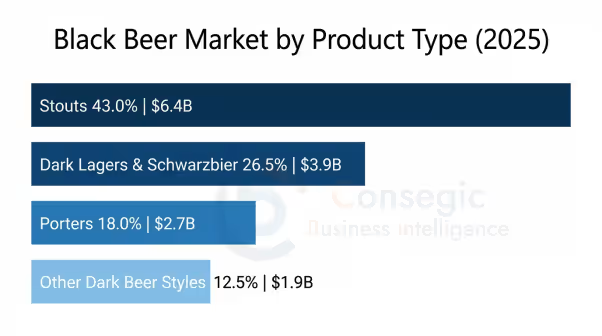
In 2025, Stouts continue to dominate the market leadership at USD 6,406 Million or 43.0% of the total market value, expected to rise to USD 10,664 Million at 5.2% CAGR in 2035. This category includes various subcategories such as dry stouts (such as Guinness with over 850 million liters of sales per year), milk stouts using lactose to make the drink sweet and rich, oatmeal stouts using oats to give the drink a smooth mouth feel, and imperial stouts that give 8-12% of alcohol content with a rich roasted taste.
Guinness is the most successful dark beer brand in the world that is distributed in 150+ countries and has brand value of USD 3,200 Million, depicting outstanding marketing performance and cultural appeal especially in Ireland, the United Kingdom and some African markets such as Nigeria.
Porters: Craft appeal Heritage Category.
Porters justify USD 2,682 Million (18.0% of market value), the historical antecedent of stouts having their origin in 18th century London. The contemporary porters show 4.5- 6.5% ABV with even-handed chocolate and coffee flavors, medium weight, and flexible food pairing attributes. The segment shows specific prowesses within the craft beer segment where breweries make several varieties of porters such as robust porters, Baltic porters (more alcohol lager fermented), and smoked porters.
Dark Lagers and Schwarzbier
Dark lagers such as German schwarzbier have a USD 3,948 Million (26.5% of market value) with clean lager fermentation which possesses light roast flavour and 4.4-5.4% ABV. These fashions show specific competence in German market and attract customers who like thin without the rich taste of dark beer based on ale.
Other Dark Beer Styles
Other segments such as black IPAs, dark wheat beers, and specialty dark ales have USD 1,863 Million (12.5% of market value), which is innovative craft brewery products with dark malt character and a wide range of flavors.
By Distribution Channel Analysis
On-Premise: Experience-Based Consumption.
On-premise consumption is 54.7% of market value that has the lowest volume share with premium pricing and best sensory experience especially to nitrogen-dispensed stouts that need specially designed equipment. The channel enjoys the added advantage of the dark beer brand being closely linked to the pub culture, social drinking events and expertise of serving beer best.
Convenience and Innovation Off-Premise Retail.
Off-premise is the most valued segment at 35.0 percent and it has been growing up due to packaging innovations such as nitro-infused cans, premium bottle displays and increased craft beer selections in the mainstream retailers. The channel is strong in some specific areas such as specialty formats such as 4-packs of 16 oz cans becoming a standard of craft offerings.
E-Commerce and Direct-to-Consumer: Rapidly Increasing.
E-commerce shows the highest growth at 9.5% CAGR but has only 7.0% market value since it is propelled by the beer subscription services, direct shipping by the breweries and online sites that specialize in craft beer. The channel is especially useful with limited-edition releases and barrel-aged versions which regularly sell out within hours of being made available online.
Regional Market Analysis
Europe: Traditional Market and Cultural Stronghold.
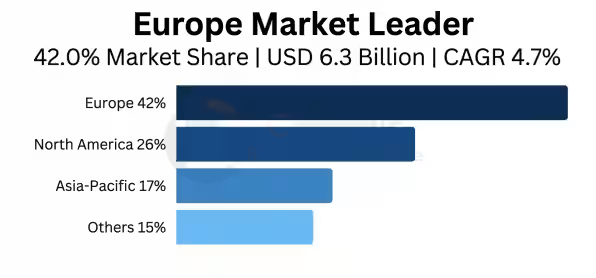
Black beer In Europe, the market value of the black beer is USD 6,258 Million in 2025, signifying 42.0 percent of the worldwide market worth, and the anticipated development of the market is USD 9,920 Million in the year 2035 at 4.7 percent CAGR. Ireland and United Kingdom together contribute 45.0 percent of regional market value, and Guinness holds market leading position and Irish dry stout is culturally relevant beverage with an unprecedented per capita consumption level.
Germany has 24.0% European market value in terms of schwarzbier tradition and good porter consumption and United Kingdom has a lively craft beer industry with more than 2,000 breweries that brewed different varieties of stout and porter. Belgium also offers high quality specialty dark ales such as Trappist dark beers that demand super-premium positioning.
North America: Craftery Leadership and Innovation Hub.
The North American black beer market is estimated at USD 3,874 Million in 2025 at 26.0% of the global market value, which is expected to grow by USD 6,448 Million in 2035 at 5.2% CAGR. United States controls the regional demand of 89.0% of the market value; they have the most dynamic craft beer market in the world with more than 9,000 breweries and extraordinary innovation in the dark beer styles.
The American craft brewers have led many innovations such as black IPA style that uses roasted malts and hop aggressiveness character, pastry stout category which uses dessert flavour adjuncts and barrel-aged imperial stout category which has created collector culture and secondary markets.
Asia-Pacific: Enhancing Growth Market.
The Asia-Pacific black beer market has a market value of USD 2,533 Million in 2025 of 17.0% of global market, and is expected to increase at a healthy pace of USD 4,216 Million in 2035 at 5.2% CAGR. China constitutes 40.0% of the regional market worth as the urban rich are showing increased interest in craft beer and Japan represents 28.0% exhibiting advanced beer culture appreciating different styles of beer.
The growth opportunity in the region is significant because middle-class consumers are building their sophisticated tastes in the beverage market, and craft beer culture is leaving the conventional markets.
Other Regions
Latin America comprises USD 1,192 Million (8.0% of the worldwide market) where Brazil and Mexico are as well undergoing a growing craft beer movement, with Middle East and Africa standing at USD 1,043 Million (7.0%), where Nigeria is a major market of guinness consumption due to the successful local beer production and marketing.
Competitive Landscape and Key Market Players
Market Leadership and Strategic Positioning
Diageo plc (Ireland/United Kingdom) - World Market Leader.
Diageo has a strong dominance in the market with Guinness brand family, and it is estimated that in 2024, black beer will be sold at USD 2,200-2,500 Million which is 16.0-17.0 per cent market share. Guinness has an outstanding brand strength as it is distributed in 150+ countries, and the annual production is over 850 million liters, which is significantly more than what any other stout in the world has sold.
The business approach will be focused on the stewardship of heritage brands and its effort to innovate with such products as Guinness 0.0 without alcohol and use of non-alcoholic-based product, Guinness Draught in Can with a widget technology, and Guinness Cold Brew Coffee with stout and coffee flavors.
Anheuser-Busch InBev (Belgium/United States) - Diversification of Portfolios.
AB InBev has a global market share of blacks beer ranging between 8.0-9.0% with portfolio comprising of craft beer acquisitions (Goose Island (with Bourbon County Brand Stout barrel-aged imperial stout), regional stouts and international distribution facilities that assist with the growth of dark beer.
Other Major Market players:
- Heineken N.V. (Netherlands) - market share of 5.5% by acquiring Murphy and craft brewery in Ireland via Murphy Irish Stout.
- Boston Beer Company (United States) - 4.2% market share through Samuel Adams seasonal porters and stouts.
- Sierra Nevada Brewing Co. (United States) - 3.8% market share based on renowned Stout beer and specialty dark beer releases.
- Founders Brewing Co. (United States) - 3.2% market share, cult following of Kentucky Breakfast Stout.
- Left hand brewing company (United States) - 2.5 percent market share, first to use nitro can technology, Milk Stout Nitro.
The Industry Development in the recent past.
Dark Beer Innovation and Market Expansion (2024-2025) Non-Alcoholic.
The large breweries increased the production of non-alcoholic dark beer faster, with Guinness 0.0 spreading to 40 or more countries and sales of over 25 million liters a year. Craft breweries such as Athletic Brewing and Brewdog released award-winning non-alcoholic stouts that showed technological innovations of brewing to provide genuine flavor profiles without beer.
Nitro-Infused Packaging Technology Development (2024).
Craft breweries also increased the use of liquid nitrogen dosing systems on canning lines, which was a preserve of large companies. This democratization enables smaller producers to compete, on the retail format, on high-end nitro-textured stouts and break the brand-dominance in the supermarket channels.
Sustainable Production and Packaging Initiatives (2024-2025).
The major dark beer brewers introduced sustainability measures such as the adoption of renewable energy sources like energy-intensive roasted malt production, 100 percent adoptions of aluminum cans and carbon footprint reduction programs related to environmentally conscious consumers.
Black Beer Market Report Insights
| Report Attributes | Report Details |
|---|---|
| Study Timeline | 2022–2035 |
| Base Year | 2025 |
| Forecast Period | 2026–2035 |
| Market Size in 2025 | USD 14,900 Million |
| Market Size in 2035 | USD 24,800 Million |
| CAGR (2026–2035) | 5.1% |
| By Product Type | Stouts (43.0%), Dark Lagers (26.5%), Porters (18.0%), Others (12.5%) |
| By Distribution Channel | On-Premise (54.7%), Off-Premise (35.0%), E-Commerce (7.0%), Others (3.3%) |
| By Alcohol Content | Standard 4-6% ABV (62.0%), Strong/Imperial 6-10% ABV (24.0%), Low/Non-Alcoholic <4% (14.0%) |
| By Region | Asia-Pacific, Europe, North America, Latin America, Middle East & Africa |
| Key Players | Diageo (Guinness), AB InBev, Heineken, Boston Beer, Sierra Nevada, Founders, Left Hand |
Key Questions Answered in the Report
What is the size of the Black Beer market? −
The predicted value of the global black beer market is a stable growth potential of USD 14,900 Million in 2025 with a projected growth of USD 24,800 Million in 2035 at 5.1% CAGR, which reflects a consistent growth of the market owing to the premiumization trends of craft beers with emphasis on the complexity of flavor and the art of brewing and brewing artisanship, the spread of the food-pairing culture as it positions dark beers as food partners and the development of consumer interest in the market.
What is the most growing market in the Black Beer market? +
Asia-Pacific exhibits high regional growth potential of 5.2% CAGR because China has an emerging craft beer trend among urban millennials with disposable incomes above USD 25,000 annually, growing willingness to test high quality imported and domestically-produced specialty beers, Japan has a developed beer culture with strong appreciation of various styles and the general trends of regional premiumization as middle-income consumption patterns shift towards quality over quantity, which is the largest market share of 42.0%.
What are the main growth drivers of the market until 2035? +
The global craft beer revolution with its focus on flavor variety, brewing artisanship, and the craft segment increasing at 7.5-8.5 percent per year and commanding high prices (25-40 percent above mainstream lagers) are all major drivers of growth, as are technological advances such as nitro-infused canned offerings growing at 18-22 percent/year and allowing convenient home consumption without sacrificing the complex flavor profiles and the culture of food pairing, culinary integration with 68 percent of full-service restaurants already featuring a craft beer program and premiumization.
What are the threats to further market growth? +
The main threats are that the product experiences significant seasonal consumption with an anticipated 35-45% larger volume in the autumn/winter seasons leading to production planning issues and constraining growth in tropical markets where dark beer takes up only 0.5-1.5% of the total beer volume, deep-roasted malts are still being used to produce dark color despite the same or lower calorie content than most pale ales and the premium price leads to accessibility barriers by price-sensitive consumers who might otherwise find the product in the mass-market despite the strong favour among affluent market segments.
What are the opportunities of innovation up to 2035? +
Significant opportunities are the development of non-alcoholic and low-alcohol dark beer where Guinness 0.0 is showing a strong acceptance and craft breweries producing award-winning alcohol-free stouts which meet the growing sober-curious movement, expansion of barrel-aged and super-premium segments through limited releases with premium price tags and creating collector communities, penetrating emerging markets with dark beer as a unique high-end product, functional ingredient incorporation with roasted malt antioxidant content and health benefits, and experiential marketing opportunities through brewery tourism.
Overview
Reputation & Certifications


Our Services
- Market Intelligence & Forecasting
- Custom Research Solutions
- Market Entry Strategy
- Competitive Intelligence
- Customer Insights
- Industry Innovation Analysis
- Investment Advisory