Inside the AI Boom: Is the World Entering Another Tech Bubble?
Cities around the world are growing rapidly, bringing both opportunities and challenges. As more people move into urban areas, managing energy use, pollution, traffic, waste, and public services has become more complex. To tackle these challenges while also reducing environmental impact, many cities are turning to artificial intelligence to create smarter, more sustainable urban spaces. Smart cities use digital technologies and data to improve urban life, and in 2026 this approach has become a key pathway to a greener future.
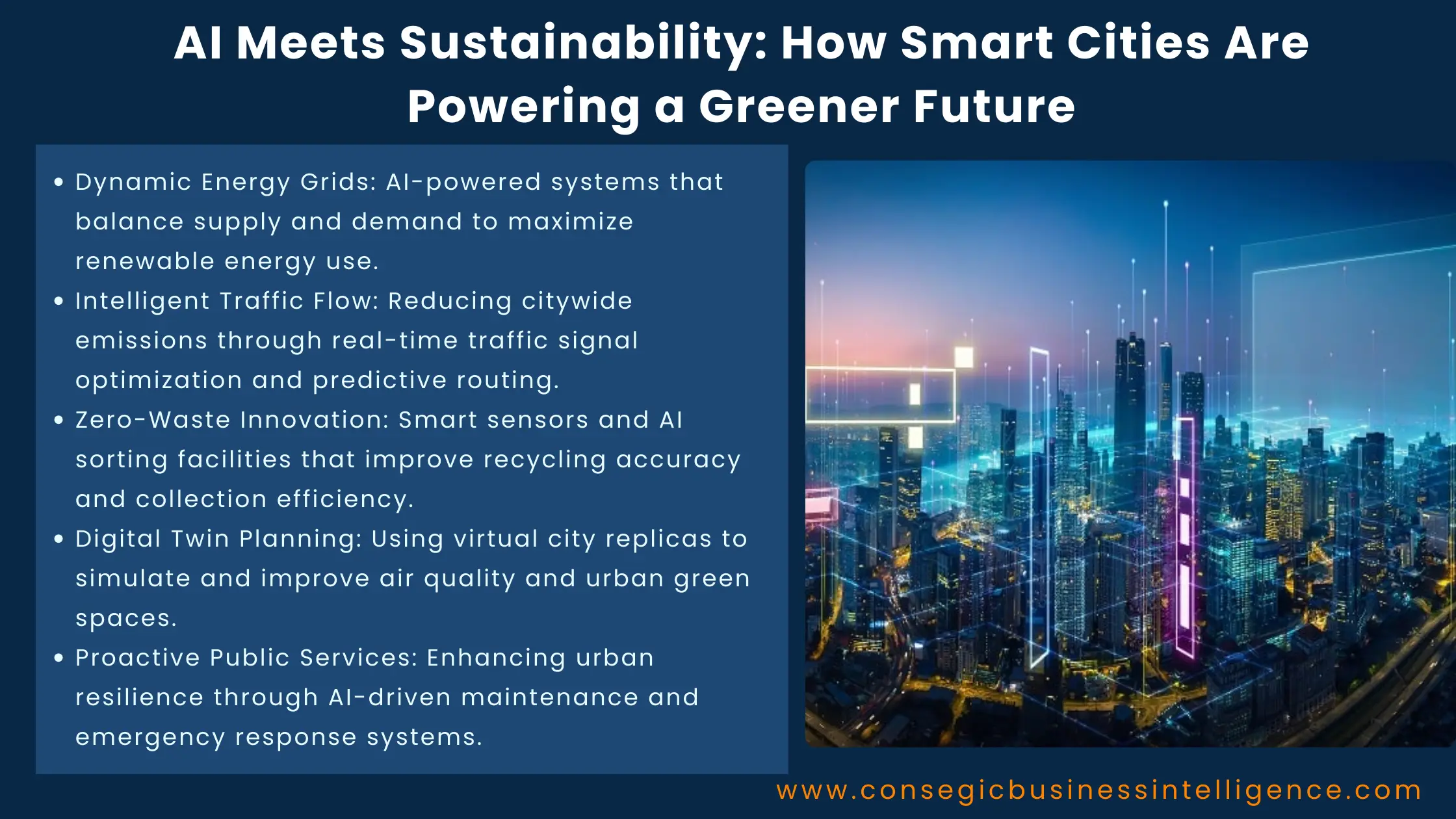
AI Meets Sustainability: How Smart Cities Are Powering a Greener Future
What Smart Cities Are and Why They Matter
A smart city uses advanced technology to collect data and make better decisions about how it operates. This includes everything from traffic lights and public transit to energy distribution and waste management. At the heart of these systems is artificial intelligence, which helps analyze huge amounts of data in real time so that city services run more efficiently and use fewer resources. In this way, smart cities aim to improve both quality of life for residents and environmental sustainability. Researchers have shown that integrating AI into urban systems can help reduce emissions, cut energy waste, and optimize resource use while improving public services.
AI in Energy and Resource Management
Energy use is a major issue for cities, as power plants and buildings account for a large share of emissions. To address this, smart cities are using AI to manage electrical systems more intelligently. AI-powered smart grids are being used to predict when energy demand will rise or fall and to distribute power more efficiently. These systems can also make better use of renewable energy sources like solar and wind by predicting when they will be most productive. This means less reliance on fossil fuels and lower overall carbon footprints.
Cities are also deploying AI to save energy in buildings. Machine learning helps control heating, cooling, and lighting based on occupancy and weather patterns, reducing waste and lowering costs. These small changes can add up to large energy savings citywide and help move urban centers closer to achieving environmental goals.
Transforming Traffic and Urban Mobility
Traffic congestion is not just a nuisance for drivers. It contributes to air pollution and wastes fuel. AI offers solutions by analyzing data from sensors, cameras, and vehicles to improve mobility. Systems can adjust traffic light timings in real time to reduce idle times at intersections and suggest alternative routes to minimize overall congestion. These improvements reduce emissions and make daily commuting faster and more predictable.
Moreover, AI systems can help cities better plan public transportation networks by using predictive modeling. For example, data can show where more buses are needed during peak hours and when additional service can help reduce private car usage. Smarter transit planning means fewer cars on the road and cleaner air for residents.
Waste Management and Cleaner Environments
Waste collection and recycling are other areas where AI is proving valuable. Traditional waste collection often runs on fixed schedules, even if bins are empty or overflowing. AI-enabled systems use sensors and data analysis to optimize collection routes so garbage trucks only visit areas that need service. This reduces fuel use and emissions while keeping neighborhoods cleaner and healthier.
In some cities, AI tools are even being tested to help sort recyclable materials more accurately. By improving recycling efficiency and cutting down on landfill usage, these technologies support broader goals of a circular economy where resources are reused rather than wasted.
Data, Digital Twins, and Real-Time Urban Planning
One of the most promising innovations in smart cities is the creation of digital twins. A digital twin is a virtual model of a city that mirrors real-world infrastructure using data from sensors, satellites, and connected devices. Urban planners and city managers can test different scenarios on these models before making decisions in the real world. For example, they can simulate how planting trees might reduce urban heat islands, or how new infrastructure changes could affect energy use. These simulations help cities prepare for climate challenges with greater precision and less risk.
More than 500 cities are expected to use digital twin systems, which could lead to significant economic and environmental benefits by 2030. These platforms support smarter climate resilience planning and help cities manage resources more sustainable over time.
Engaging Citizens and Building Inclusive Cities
AI also plays a role in how people interact with smart city services. For example, some smart cities are experimenting with AI-powered apps that help residents navigate traffic, find public services, or report issues like waste dumping. These tools make city services more accessible and responsive. By improving engagement, residents are more likely to support sustainability initiatives and help drive long-term environmental change.
Challenges and the Path Forward
While the potential benefits are significant, there are also challenges. Implementing AI in urban systems requires substantial investment in infrastructure, secure data management, and strong governance frameworks. Cities must also balance innovation with privacy protections and fair access to technologies so that no group is left behind. Nonetheless, the effort is paying off for many forward-thinking cities around the world.
Conclusion
Smart cities powered by AI are demonstrating how technology can help create more sustainable, efficient, and livable urban environments. From smart energy grids to traffic management, waste optimization, and digital twins, AI is enabling cities to reduce their environmental impact while improving the quality of life for residents. As smart city initiatives continue to expand in 2026 and beyond, the combination of digital intelligence and sustainability goals will play a central role in shaping greener futures for urban populations worldwide.