Introduction: The Rise of Electric Vehicles in 2026
By 2026, electric vehicles will be a form of mass transit, not a fringe invention. Within the last 10 years, in light of climate change concerns, increasing fuel prices and technological advancements, people and governments have been advocating for the use of more eco-friendly transport. Today EVs are not regarded as exotic cars but credible alternatives to petrol or diesel cars.
The electric vehicle market is growing phenomenally worldwide. Latest industry reports show that over 20 million electric vehicles were sold in 2025, accounting for almost a quarter of all vehicles sold globally. The key reasons for the impressive growth rate are increasing awareness of environment, supportive government policies and huge investments by automobile companies in this segment. Moreover, auto companies around the world are building EVs for various price points and consumer needs.
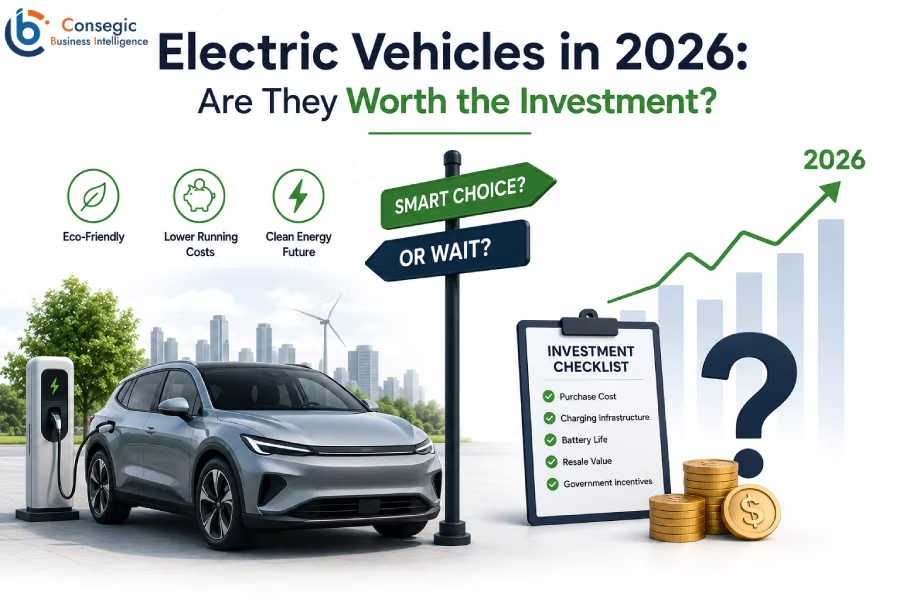
Another factor that has helped electric cars' success is improved charging facilities. Charging points are becoming familiar places in towns and cities and in rural areas too, making EVs the easy choice for commuting and travelling over longer distances. Additionally, improvements in battery have increased the range and reduced the charging time, taking away any concerns that could have been a deterrent for some customers.
In 2026, the electric vehicle is shaking up the automobile industry and changing how we move. For consumers, it’s not a question of the future of EVs, it’s a question of whether it worth in terms of money and practicality.
Technological Advancements Driving EV Adoption
Among the key factors responsible for the rise in the popularity of electric vehicles in 2026 is the tremendous development in the technologies used in EVs. The modern electric cars use new batteries that provide additional energy and allow using the fast-charging technology. Besides, new software increases the comfort of the driving. In particular, new batteries such as the lithium-ion and sodium-ion ones provide more energy, are long-lasting, and have low manufacturing costs. Thus, manufacturers are able to develop cheap electric cars with good driving ranges.
Moreover, fast charging technology has been developed significantly and allows charging most electric cars in less than half an hour, which is one of the main concerns of most people. Moreover, the average driving range has increased, and now many models of EVs can drive 400 kilometres and even more per one charge, which makes it easier for customers.
Besides, artificial intelligence and connectivity make the EVs more efficient and comfortable. Many cars now have the system of predictive maintenance, navigation, and effective route planning. All these innovations contribute to the increase in the popularity of EVs worldwide.
Cost Analysis: Are Electric Vehicles Economically Beneficial?
The financial side of buying an electric vehicle will always be among the key factors to consider for customers. Although electric cars are more expensive at the point of sale than conventional gasoline or diesel cars, the long-term running cost of the former is much lower. Electric power costs less than conventional fuel, which means that people spend less money on transportation daily. Also, electric cars do not require too much maintenance and have fewer moving parts, which means that owners spend less money repairing them.
Additionally, prices of batteries keep falling, which makes the manufacturing process of electric vehicles less expensive. Besides that, many governments provide tax benefits and incentives for those who decide to buy such vehicles. There is also a developing used electric car market, which allows people to save money by buying used EVs. Furthermore, for people who travel often, electric cars can be very economically beneficial.
Environmental Impact and Sustainability Benefits
Electric vehicles are deemed to be a crucial part of the world-wide fight against climate change and environmental pollution. EVs are a means to improve air quality in cities and reduce harmful greenhouse gas emissions and in contrast to conventional vehicles EVs have zero tailpipe emissions. Moreover, electric vehicles provide a cleaner and more sustainable alternative for urban areas threatened by pollution and public health concerns.
The positive environmental impact of EVs is not only limited to reduced emissions. Reduced reliance on fossil fuels makes the world more energy secure, thus assisting in switching towards renewable sources of energy. Nowadays, more and more countries install solar, wind, and hydro electric energy into the grid to generate electricity for cars.
Another big development in 2026 is the electrification of public transport and commercial vehicles. Electric buses, delivery vans and trucks are more and more used to cut emissions in the transport sector. Furthermore, the advances being made in the field of battery recycling technologies are alleviating concerns regarding battery disposal and resource management. Additionally, governments and industries are focusing on sustainability, making electric vehicles important for a more sustainable and environmentally friendly future.
Challenges and Future Prospects of EV Investment
There are several advantages to having an electric vehicle, however, there are factors which may potentially affect the buying of electric vehicles. The first one is the access to adequate charging stations. While charging stations are being rapidly established, there are still remote areas which lack this infrastructure and long-distance travel can be difficult for some customers.
Another challenge is battery recycling and the impact on the environment when mining the raw materials. These challenges are being solved through funding for recycling projects and sustainable mining techniques. Moreover, incentive uncertainty and change in government policies can also impact the buying of these electric vehicles. Battery technology will continue to upgraded, providing more range, faster charging and longer life. EV adoption will continue to accelerate through the end of the decade as infrastructure improves and awareness of the benefits increases.
And with technology improving and prices coming down, electric vehicles will be a primary mode of transportation for people, so they’re a good investment for consumers now and in years to come.
Conclusion: Are Electric Vehicles Worth the Investment in 2026?
The invention of electric vehicles has been among the greatest innovations that have come out in the automotive sector as far as providing solutions to escalating costs of fuels and environmental sustainability is concerned. In 2026, innovations in batteries, availability of better charging infrastructures and cost effectiveness are among the greatest reasons why EVs are increasingly affordable. Low maintenance and operational costs make them beneficial in terms of money whereas their capability of cutting down greenhouse gases helps create a healthy and environmentally friendly environment.
In spite of certain drawbacks like problems related to charging infrastructure in certain regions and battery recycling among others, the outlook for electric vehicles appears to be bright indeed. There have been considerable efforts on the part of the government, automakers and energy companies in improving EVs performance and making them cost-effective.
For the majority of people, especially those that regularly move from place to place and have good charging facilities, EVs appear to be an excellent investment. Additionally, the development of technology and gradual transition of the world towards sustainable modes of transport mean that EVs are not an alternative anymore but become a preferable choice.