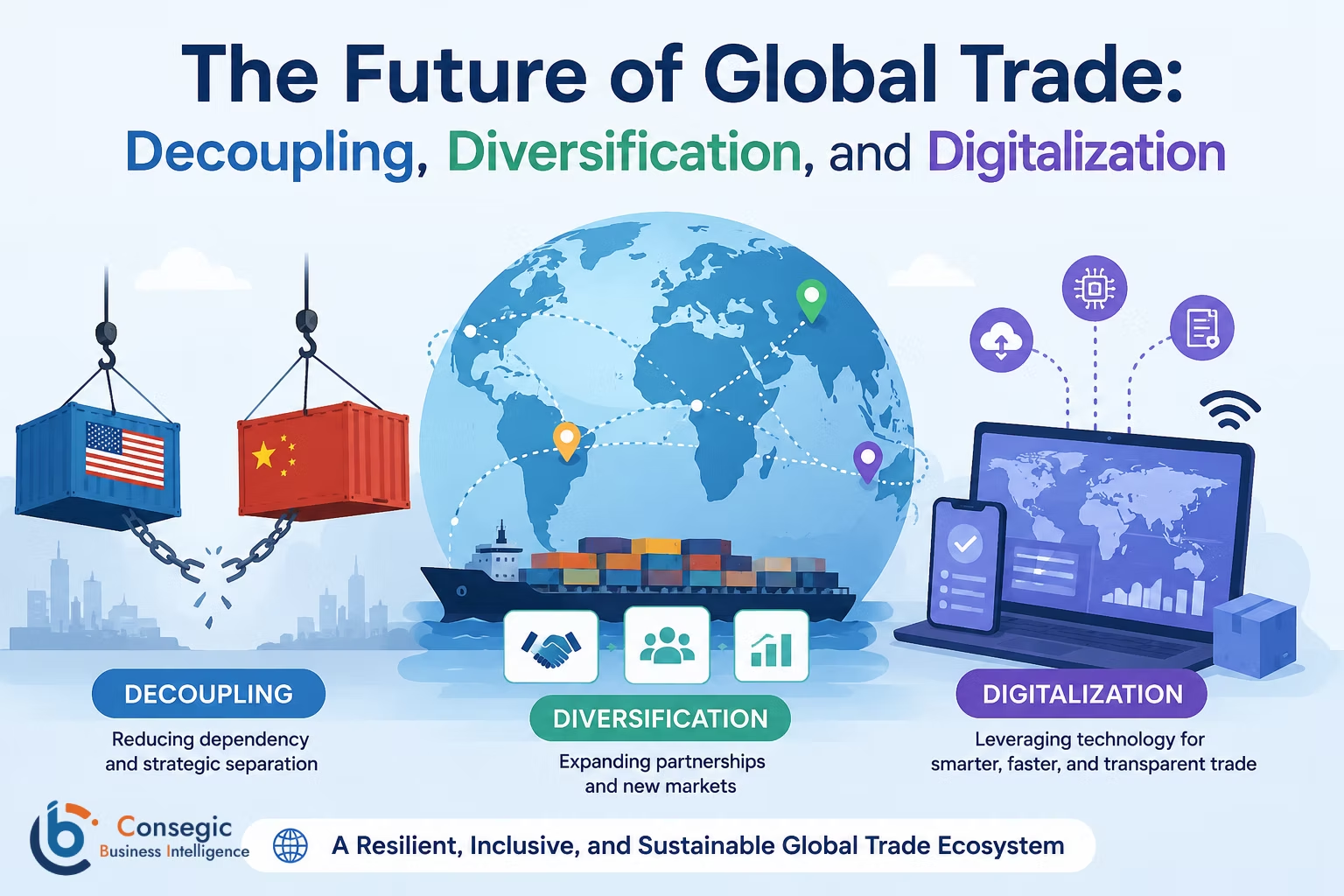
In a rapidly changing world of politics and economies, global trade is in the middle of a transformation, the year 2026 is being hailed as a new dawn where a change can be felt on the very core of how goods and services are being traded and transported around. This transition revolves around three critical points namely, Decoupling, Diversification, and Digitization and most companies are reviewing how their dependencies are working, moving their supply networks into different parts of the world, and developing a flexible trading system using technology. We shall see how these developments are impacting and reshaping global commerce into 2026 and beyond.
Understanding Trade in an Evolving Environment
Global trade was centered around optimizing costs and improving efficiencies as countries and businesses consolidated much of their operations in a selected few locations where they enjoyed significantly lower production costs. In a bid to maximise profit margins this model ensured that supply chains and operations were made efficient.
However, this system has exposed its weaknesses and businesses are finding that there is a cost of dependency especially in the current uncertain global environment. International trade networks, the backbone of the global economy that allow for the easy flow of goods, have been drastically affected by the growing tensions between countries, financial volatility, environmental catastrophes, health emergencies and an explosion of technologies which in effect are forcing us to reconsider the global supply networks which many of the developed economies are so dependent on.
Decoupling, a shift for more autonomy
Decoupling is the de facto name given to strategies by countries and multinational businesses to try and limit their dependencies on external forces such as other economies or partners to supply goods and services they need. While a complete severance from global trade partner is almost impossible, most businesses are moving to de-risk from political and economic forces and are taking various steps such as exploring different suppliers, shifting part of their operations in different geographies and building regional supply networks. This trend is most pronounced in industries such as electronics and advanced tech; however, Governments are also keen to encourage local production to secure supply in critical sectors.
This isn’t necessarily an abandonment of global trade, but a quest to have greater control over the complex global supply networks.
Diversification builds strength
Diversification is another powerful tool, helping companies and organisations cushion themselves from unexpected disruptions to their trade operations and their supply chains. Many businesses are working towards having a broader network of suppliers and distribution channels. By distributing their operations across more than one market they mitigate the risk posed by political uncertainty or logistical disruptions. A diversification strategy for companies can involve nearshoring, friend-shoring or the expansion of their production sites.
This gives countries a stronger footing and also increases their chances for global involvement.
Digitization is Powering Global Trade
In this increasingly technology-driven world, information is the new currency and for this reason Digitization remains a fundamental pillar in revolutionising global trade by creating seamless and highly efficient trade systems, reducing administrative tasks through digital processes and automating compliance procedures. The advent of artificial intelligence (AI), blockchain technology and advanced data analytics are helping in developing a smarter global trade ecosystem by enhancing visibility across the supply chain and enabling proactive planning. With real time access to all information from shipment progress to stock levels organisations are no longer flying blind and can adjust in real time as required.
The Evolution of Smart Supply Chain Management
Companies generate enormous quantities of information, with AI playing a significant part in helping them to turn that information into a tangible resource. The future will focus on how businesses are utilising predictive analytics and artificial intelligence to forecast and even pre-empt disruptions in their supply chains enabling proactive risk management. Smart supply chains provide greater oversight over logistics processes, improve on transportation plans and optimisation and ultimately lead to better management of global business operations through smarter collaboration amongst all parties in the supply chain.
The Rise of Sustainable Trade
Global Trade can no longer disregard the environmental impact that comes from the production, transportation and disposal of goods and services. Businesses that choose to prioritise environmental consciousness and sustainable supply chain management will become more competitive globally. This entails building a portfolio of suppliers who align with businesses’ sustainability values, investing in greener logistics solutions and supporting cleaner production methods. Technology further enhances these efforts by providing transparency in supply chains.
The Road Ahead – Challenges and Opportunities in Global Trade
While Decoupling, Diversification and Digitization present unprecedented opportunities for business growth and regional development, they come with their own set of challenges. Investment is required not just financially, but time and effort to manage new supply chains and re-align existing one. Digital initiatives may come with a higher price tag and cyber security risks will undoubtedly continue to rise in prominence. Balancing costs with efficiency, risk with the growing demand for sustainability will be no easy task.
However, this is an area with remarkable potential for global trade – developing economies with stable environments and an engaged, skilled workforce are well-placed to attract greater investment. Technology companies, logistic partners and cloud service providers will also benefit greatly from this shifting world of trade.
Conclusion
Globalisation still stands as the driving force behind global trade but will be more intelligently approached to reduce risks and allow businesses to adapt easily in ever-changing circumstances. All three factors-Decoupling, Diversification and Digitization- will work in tandem to influence every step of production to delivery. Those willing to invest and adapt will find it easier to survive and thrive in the future of global trade.