The foldable electric vehicle (EV) market is emerging as one of the most innovative segments in urban mobility. Designed for portability, efficiency, and sustainability, foldable EVs ranging from compact e-bikes and scooters to micro-cars are transforming the way people navigate congested city environments. By combining electric propulsion with foldable designs, these vehicles provide a practical solution for first- and last-mile transportation, particularly in urban centers where space and convenience are key priorities.
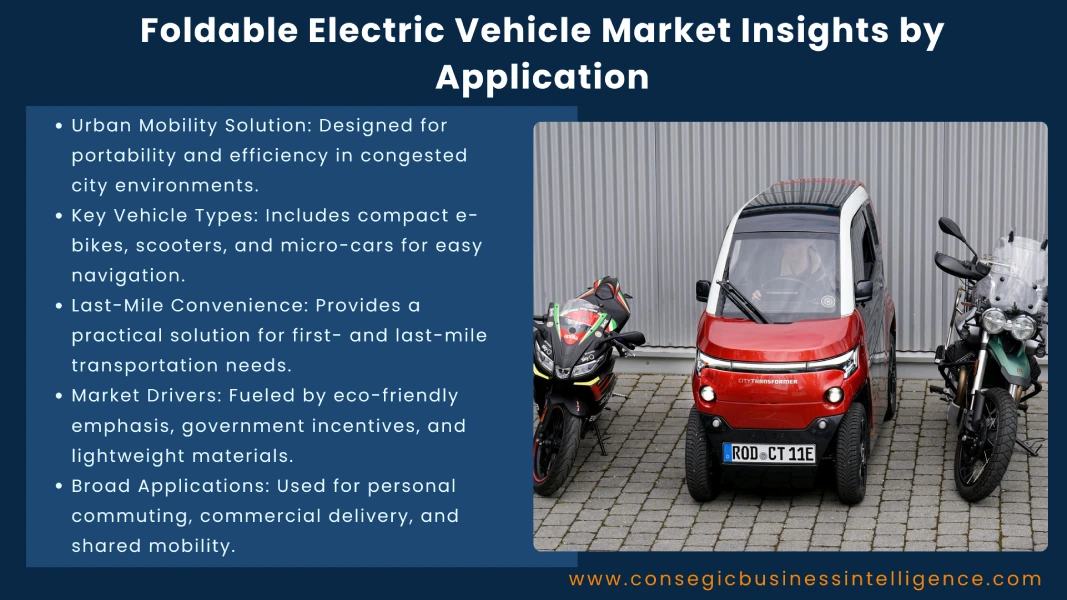
With increasing emphasis on eco-friendly mobility, government incentives, and advances in lightweight materials, the demand for foldable electric vehicles is expanding rapidly. Applications span from personal transportation and commercial delivery to shared mobility and tourism. Below, we explore the key applications driving growth in the global foldable electric vehicle market and how each contributes to reshaping modern mobility.
- Personal Urban Commuting
One of the most dominant applications of foldable electric vehicles lies in personal urban commuting. City dwellers face daily challenges such as traffic congestion, limited parking, and rising fuel costs, making foldable e-bikes and scooters an attractive alternative. These compact vehicles can be easily folded and carried into offices, public transport, or small apartments, offering unmatched convenience for short-distance travel.
Manufacturers are integrating smart connectivity features, including GPS tracking, mobile app control, and anti-theft systems, to enhance the user experience. Models like the YikeBike and Smacircle S1 have become popular among professionals and students alike, signaling a growing shift toward portable and sustainable mobility solutions. As more cities encourage green commuting through incentives and infrastructure development, this segment continues to drive major demand in the foldable EV market.
- Shared Mobility and Rental Services
The rise of the shared mobility ecosystem including bike-sharing, scooter-sharing, and micro-mobility rental services has significantly influenced the foldable EV market. Companies are deploying foldable e-scooters and compact e-bikes that can be easily transported, stored, and recharged between uses, optimizing fleet management.
Cities across North America, Europe, and Asia-Pacific have integrated foldable EV fleets into their smart mobility frameworks. Platforms such as Bird, Lime, and Bolt are experimenting with foldable models that can reduce operational challenges like parking space shortages and maintenance costs. The integration of AI-driven fleet monitoring systems ensures efficient use and predictive maintenance, making this application vital for sustainable urban transport.
- Commercial and Delivery Applications
As e-commerce and on-demand delivery services expand globally, foldable electric vehicles are finding new relevance in commercial logistics. Couriers, food delivery agents, and small businesses are adopting these compact EVs to navigate congested streets efficiently while minimizing operational costs.
Foldable e-bikes and scooters are particularly advantageous for last-mile deliveries, where flexibility and time efficiency are crucial. Some startups are even introducing modular cargo attachments that can be folded along with the vehicle, allowing businesses to customize loads according to delivery size. This trend aligns with global sustainability goals, as companies look to replace fossil-fueled delivery fleets with clean, space-efficient alternatives.
- Tourism and Recreational Mobility
The tourism sector has become an important adopter of foldable EVs, especially in eco-tourism destinations, resorts, and urban sightseeing hubs. Tourists prefer foldable scooters and e-bikes for their ability to explore cities and nature trails without the need for large rental vehicles.
These compact EVs can be folded and stored in hotel rooms, buses, or recreational vehicles, providing unmatched flexibility for travelers. Many tourist destinations, including Amsterdam, Singapore, and Barcelona, are promoting electric bike-sharing programs to reduce traffic and emissions while improving visitor experiences. As sustainability becomes a cornerstone of global tourism strategies, foldable EVs will continue to play a vital role in eco-friendly mobility.
- Military and Emergency Response
An emerging and less conventional application of foldable electric vehicles is within military and emergency response operations. Their lightweight design, silent operation, and quick deployment make them suitable for tactical mobility, reconnaissance, and first-response missions in challenging terrains.
Foldable electric bikes and compact utility vehicles can be deployed rapidly in disaster zones or remote areas where conventional vehicles cannot operate. Some defense organizations are experimenting with solar-assisted foldable EVs that enhance endurance during prolonged operations. As technology evolves, this niche application is expected to expand, driven by defense modernization and emergency preparedness initiatives.
- Corporate and Campus Mobility
Large corporate campuses, universities, and industrial parks are adopting foldable EVs for intra-campus mobility. These vehicles enable staff and students to move quickly between facilities while reducing reliance on larger, fuel-powered vehicles.
Foldable e-scooters and bikes are also being used as pool vehicles for employees, promoting sustainable commuting and aligning with corporate environmental, social, and governance (ESG) goals. Major universities in the U.S. and Europe are already integrating shared EV programs that encourage eco-conscious transport while supporting wellness initiatives.
- Integration in Smart City Infrastructure
The foldable EV market is deeply connected to the smart city movement, where technology, data, and sustainability converge. City planners are integrating charging stations, IoT-based parking systems, and mobility hubs designed for compact electric vehicles.
Smart city projects in countries like Japan, the UAE, and Germany are piloting foldable EV docking stations that optimize urban space and energy consumption. These initiatives aim to reduce traffic congestion, improve air quality, and create more inclusive transportation networks. As governments push for green infrastructure, foldable EVs are becoming an integral component of smart urban ecosystems.
- Sports and Fitness-Oriented Mobility
A growing segment of users is embracing foldable electric bikes not just for transport but also for fitness and leisure. Many models now offer hybrid assist modes, enabling riders to combine manual pedaling with electric support. This dual functionality promotes physical activity while reducing fatigue during longer rides.
Manufacturers are targeting this segment with customizable designs, lightweight carbon fiber frames, and app-connected fitness metrics. With increasing health consciousness and outdoor recreation trends, foldable EVs are expected to remain popular among fitness enthusiasts seeking sustainable exercise options.
Conclusion
The foldable electric vehicle market is redefining mobility through innovation, versatility, and sustainability. From personal commuting and shared mobility to logistics, tourism, and smart cities, foldable EVs are proving their potential across diverse applications.
As advancements in battery technology, AI integration, and lightweight materials continue, these vehicles will become even more practical, affordable, and efficient. The market’s future lies in balancing performance with portability, offering users convenience without compromising environmental responsibility.
Ultimately, the foldable EV revolution represents more than a transportation trend but it symbolizes a shift toward compact, connected, and sustainable urban living that aligns with the evolving demands of modern society.