Jump to Content
Bulimia Nervosa Market - Size, Share, Industry Trends, and Forecasts (2025-2032)
Bulimia Nervosa Market Size:
Bulimia Nervosa Market size is estimated to reach over USD 956.00 Million by 2032 from a value of USD 624.85 Million in 2024 and is projected to grow by USD 647.83 Million in 2025, growing at a CAGR of 5.5% from 2025 to 2032.
Bulimia Nervosa Market Scope & Overview:
Bulimia nervosa is an eating disorder characterized by episodes of binge eating followed by compensatory behaviors. These behaviors include self-induced vomiting, excessive exercise, and misuse of laxatives or diuretics. It affects physical and mental health, leading to complications such as electrolyte imbalances, gastrointestinal issues, and cardiovascular problems.
Treatment options include psychotherapy, medications, and nutritional counseling. Cognitive behavioral therapy (CBT) is a widely used intervention to address disordered eating patterns. Antidepressants, particularly selective serotonin reuptake inhibitors (SSRIs), are prescribed to manage symptoms. Nutritional therapy focuses on establishing healthy eating habits and improving overall well-being.
Applications of treatment services include hospitals, specialty clinics, and rehabilitation centers. Pharmaceutical companies develop medications to support symptom management. End users include healthcare providers, mental health professionals, and research institutions focusing on eating disorders.

Bulimia Nervosa Market Dynamics - (DRO):
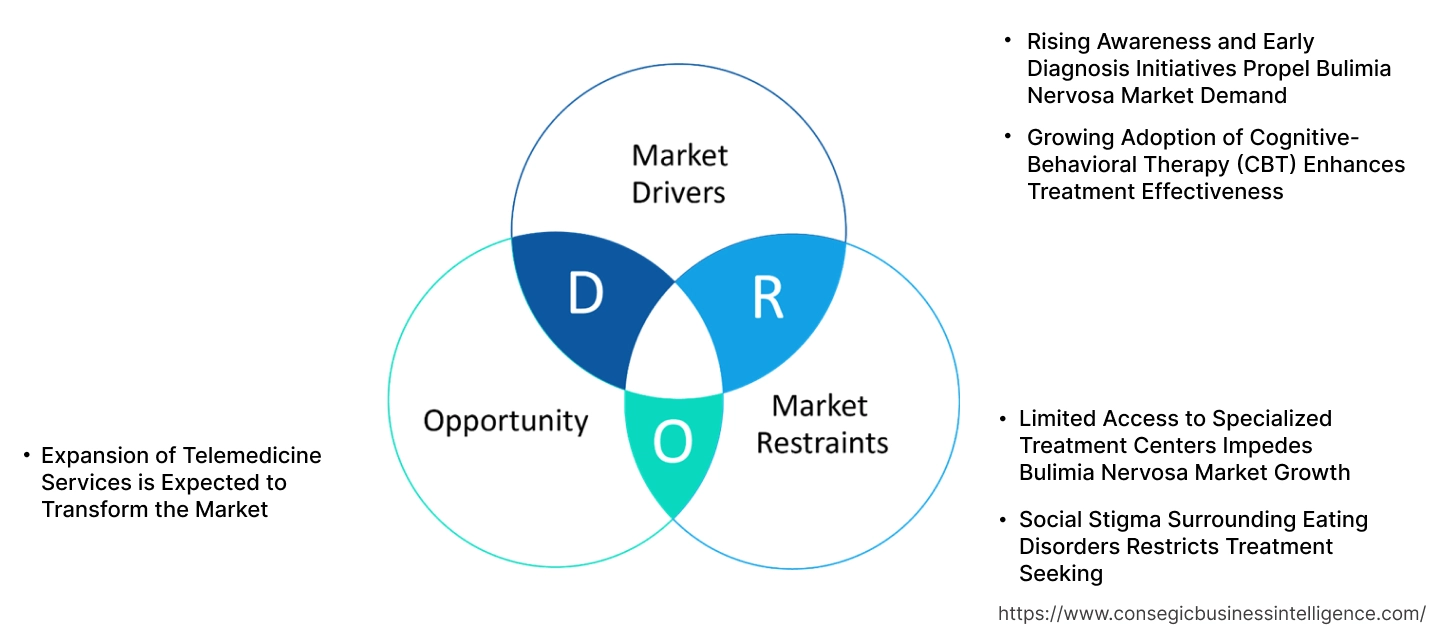
Key Drivers:
Rising Awareness and Early Diagnosis Initiatives Propel Bulimia Nervosa Market Demand
Increasing awareness campaigns and initiatives aimed at early diagnosis are significantly impacting the demand for bulimia nervosa treatment. Healthcare organizations and mental health advocacy groups are launching programs to educate the public about eating disorders, highlighting symptoms and available treatment options. These initiatives facilitate early detection and intervention, allowing for timely medical attention and improving patient outcomes. For instance, national eating disorder associations in the United States and Europe have strengthened efforts to promote awareness through public service announcements and digital outreach. Governments and nonprofit organizations are also collaborating to introduce school-based mental health programs that emphasize the importance of recognizing and addressing eating disorders at an early stage. Additionally, advancements in digital health platforms and social media campaigns are broadening the reach of awareness initiatives, ensuring that more individuals gain access to critical information. As these awareness programs continue to expand, the adoption for treatment solutions, including therapy and medications, is increasing, thus driving the market.
Growing Adoption of Cognitive-Behavioral Therapy (CBT) Enhances Treatment Effectiveness
Cognitive-behavioral therapy (CBT) has emerged as a widely adopted and effective treatment for bulimia nervosa, improving recovery rates and patient adherence to treatment plans. CBT helps patients recognize and modify harmful eating behaviors, addressing the psychological triggers of binge eating and purging. Clinical studies have demonstrated the effectiveness of CBT in reducing symptom severity, leading to increased healthcare provider recommendations for this treatment method. Additionally, the integration of CBT into digital platforms and mobile applications has further enhanced accessibility, allowing individuals to receive structured therapy remotely. The increasing adoption of CBT as a primary intervention method is contributing to the expansion of treatment options in the bulimia nervosa market.
Key Restraints:
Limited Access to Specialized Treatment Centers Impedes Bulimia Nervosa Market Growth
The availability of specialized treatment centers for bulimia nervosa remains a major challenge, particularly in low- and middle-income countries. Many regions lack sufficient mental health facilities equipped with trained professionals to provide comprehensive care. Patients in remote or underserved areas face difficulties accessing evidence-based therapies, which limits treatment adoption. Additionally, the cost of inpatient care for severe cases is high, further restricting accessibility. The absence of adequate medical infrastructure creates barriers to effective treatment, preventing many individuals from receiving timely intervention. Furthermore, long waiting times at specialized treatment centers in developed countries also pose a challenge, as delayed care can lead to worsening symptoms and complications. These challenges hinder the overall bulimia nervosa market growth.
Social Stigma Surrounding Eating Disorders Restricts Treatment Seeking
Despite increased awareness, the stigma associated with eating disorders continues to deter individuals from seeking medical help. Many patients hesitate to disclose their condition due to fear of judgment, misconceptions, or societal pressure. Cultural factors and lack of understanding about the seriousness of bulimia nervosa further discourage early intervention. Stigmatization within families and communities often results in delayed diagnosis, allowing the disorder to progress to severe stages. Healthcare professionals also report cases where individuals refrain from seeking treatment due to embarrassment or concerns about confidentiality. This reluctance to access medical care due to social stigma presents a significant barrier to the growth of the bulimia nervosa treatment.
Future Opportunities:
Expansion of Telemedicine Services is Expected to Transform the Market
The increasing adoption of telemedicine for mental health treatment is expected to create significant opportunities in the bulimia nervosa market. Virtual therapy sessions and online consultations are expanding access to specialized care, eliminating geographical barriers for patients in remote locations. Healthcare providers are leveraging digital platforms to offer cognitive-behavioral therapy (CBT) and nutritional counseling, improving treatment adherence. For example, several mental health startups and established telehealth providers are integrating eating disorder support services into their platforms. The inclusion of artificial intelligence-powered chatbots and remote monitoring tools in telemedicine platforms is further enhancing patient engagement and treatment outcomes. As telemedicine adoption continues to rise, it is expected to enhance treatment accessibility and improve patient engagement, thereby offering substantial market opportunities.
Advancements in Personalized Medicine and Pharmacological Treatments to Drive Market Growth
The development of personalized treatment approaches and targeted pharmacological therapies for bulimia nervosa is expected to create new market opportunities. Researchers are exploring precision medicine techniques to tailor treatment based on genetic, psychological, and behavioral factors unique to each patient. Innovations in pharmacological interventions, including medications that regulate neurotransmitter imbalances associated with bulimia nervosa, are also gaining traction. Clinical trials are evaluating the effectiveness of novel drug candidates that target specific brain pathways involved in appetite control and impulse regulation. As research in personalized medicine and pharmacology progresses, the availability of more effective and individualized treatment solutions is expected to expand, driving future bulimia nervosa market trend.
Bulimia Nervosa Market Segmental Analysis :
By Disorder Type:
Based on disorder type, the bulimia nervosa market is segmented into purging type and non-purging type.
The purging type accounted for the largest revenue in bulimia nervosa market share in 2024.
- The purging type involves behaviors such as self-induced vomiting, excessive use of laxatives, diuretics, or enemas to control weight.
- This form is more commonly diagnosed, increasing adoption for medical intervention, psychotherapy, and pharmacological treatments.
- Growing awareness and improved healthcare infrastructure have led to early diagnosis and management of purging-type bulimia nervosa.
- Various treatment programs focus on preventing purging behaviors and addressing underlying psychological issues.
- According to the bulimia nervosa market analysis, the rising number of cases and increased treatment adoption contribute to the segment’s significant revenue share.
The non-purging type is anticipated to register the fastest CAGR during the forecast period.
- The non-purging type involves compensatory behaviors such as excessive fasting and compulsive exercise instead of self-induced vomiting or laxative use.
- Growing recognition of atypical eating disorders has led to increased diagnosis and awareness among healthcare professionals.
- Behavioral therapy and lifestyle modifications are widely used for treatment, boosting bulimia nervosa market demand.
- The increased availability of digital platforms offering remote consultations and therapy is supporting segment expansion.
- According to the bulimia nervosa market analysis, these factors contribute to the rapid trend of the non-purging type segment.
By Treatment Type:
Based on treatment type, the market is segmented into drug treatment and non-drug treatment.
The drug treatment segment accounted for the largest revenue share in 2024.
- This segment includes antidepressants, antipsychotics, selective serotonin reuptake inhibitors (SSRIs), serotonin-norepinephrine reuptake inhibitors (SNRIs), and benzodiazepines.
- SSRIs, particularly fluoxetine, are widely prescribed for bulimia nervosa due to their effectiveness in reducing binge-purge cycles.
- The availability of FDA-approved medications and ongoing drug development initiatives have enhanced accessibility and adoption.
- Increased awareness among healthcare providers and patients regarding pharmacological treatments has further driven bulimia nervosa market expansion.
- According to the market analysis, these factors contribute to the dominance of the drug treatment segment in the market.
The non-drug treatment segment is anticipated to register the fastest CAGR during the forecast period.
- Non-drug treatments include cognitive behavioral therapy (CBT), interpersonal psychotherapy (IPT), dialectical behavior therapy (DBT), and family-based therapy.
- CBT is recognized as the most effective psychotherapy for bulimia nervosa, focusing on identifying and modifying unhealthy eating behaviors.
- Increased need for holistic treatment approaches has led to the rise in non-drug treatment adoption.
- Digital therapy platforms and online counseling services have made non-drug treatments more accessible, boosting segment trend.
- According to the market analysis, these factors contribute to the rapid expansion of the non-drug treatment segment.
By Route of Administration:
Based on route of administration, the market is segmented into oral, parenteral, and others.
The oral segment accounted for the largest revenue share in 2024.
- Oral administration includes tablets and capsules, which are the most commonly prescribed forms of medication for bulimia nervosa.
- The ease of administration, patient compliance, and availability of multiple oral drug formulations contribute to the segment’s dominance.
- SSRIs and SNRIs, primarily available in oral form, remain the first-line pharmacological treatment.
- Advancements in drug formulation and extended-release options have further strengthened market presence.
- According to the market analysis, these factors contribute to the revenue dominance of the oral segment.
The parenteral segment is anticipated to register the fastest CAGR during the forecast period.
- Parenteral administration includes injectable formulations used in severe cases requiring immediate intervention.
- Growing research into novel parenteral treatments for bulimia nervosa has expanded market potential.
- Hospital-based treatments often involve parenteral drug administration for critical patients, increasing demand.
- Increased adoption of biologics and psychiatric emergency care supports segment trend.
- According to the market analysis, these factors contribute to the anticipated rapid expansion of the parenteral segment.
By Dosage Form:
Based on dosage form, the market is segmented into tablets and injections.
The tablets segment accounted for the largest revenue in bulimia nervosa market share in 2024.
- Tablets are the most widely used form of medication due to their convenience, affordability, and patient preference.
- The availability of multiple prescription drugs in tablet form supports segment dominance.
- Advancements in extended-release and combination tablet formulations enhance therapeutic outcomes.
- Strong distribution networks and increased prescription rates contribute to segment revenue.
- According to the market analysis, these factors establish the tablets segment as the leading revenue contributor.
The injections segment is anticipated to register the fastest CAGR during the forecast period.
- Injectable medications are utilized for patients requiring immediate and controlled treatment interventions.
- Increasing R&D in psychiatric and behavioral disorder drugs supports the growth of this segment.
- The preference for fast-acting formulations in critical care settings has driven bulimia nervosa market trend.
- Ongoing clinical trials and the introduction of innovative biologic therapies contribute to rapid expansion.
- According to the market analysis, these factors drive the projected high trend of the injections segment.
By Distribution Channel:
Based on distribution channel, the market is segmented into online and offline.
The offline segment accounted for the largest revenue share in 2024.
- Offline channels include hospital pharmacies, retail pharmacies, and specialty clinics.
- Direct patient interaction with healthcare providers influences prescription patterns.
- Established pharmacy networks ensure accessibility to essential medications and treatment supplies.
- The presence of dedicated mental health centers and clinics strengthens segment dominance.
- According to the market analysis, these factors contribute to the significant revenue share of the offline segment.
The online segment is anticipated to register the fastest CAGR during the forecast period.
- Online pharmacies and telehealth services offer convenience and accessibility for patients seeking treatment.
- The growing adoption of e-commerce platforms for prescription medications supports segment expansion.
- Digital platforms provide remote access to non-drug treatments, including therapy and counseling.
- Increasing smartphone penetration and internet accessibility contribute to rapid growth.
- According to the market analysis, these factors drive the high trend potential of the online distribution segment.
By End-User:
Based on end-user, the market is segmented into hospitals, clinics, and others.
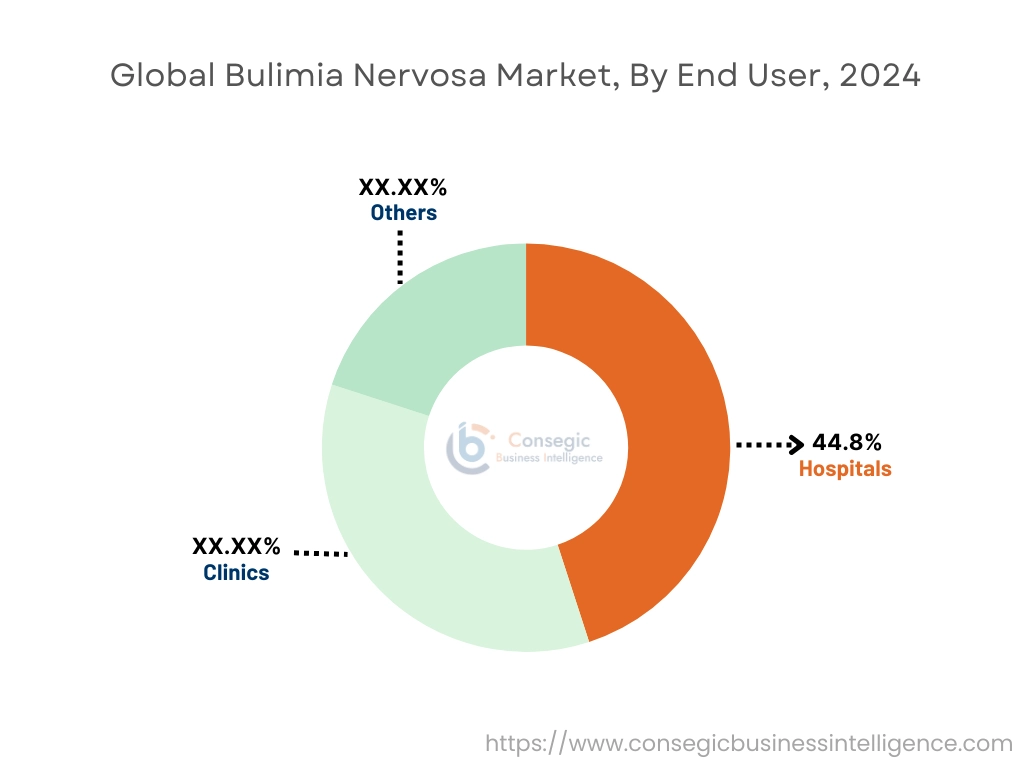
The hospitals segment accounted for the largest revenue share of 44.8% in 2024.
- Hospitals serve as primary treatment centers for severe cases of bulimia nervosa requiring multidisciplinary care.
- Availability of specialized psychiatric units and inpatient programs enhances patient management.
- Advanced medical infrastructure and access to a range of treatment options contribute to segment dominance.
- Increased hospitalization rates for eating disorders further strengthen market presence.
- According to the market analysis, these factors establish hospitals as the leading revenue-generating end-user segment.
The clinics segment is anticipated to register the fastest CAGR during the forecast period.
- Clinics provide outpatient treatment, including psychotherapy, counseling, and pharmacotherapy.
- Increased awareness and preference for personalized care options drive bulimia nervosa market trend.
- The expansion of private mental health practices and dedicated eating disorder centers supports trend.
- The availability of integrated therapy approaches in clinical settings contributes to rapid adoption.
- According to the market analysis, these factors drive the anticipated high growth of the clinics segment.
Regional Analysis:
The regional segment includes North America, Europe, Asia Pacific, Middle East and Africa, and Latin America.
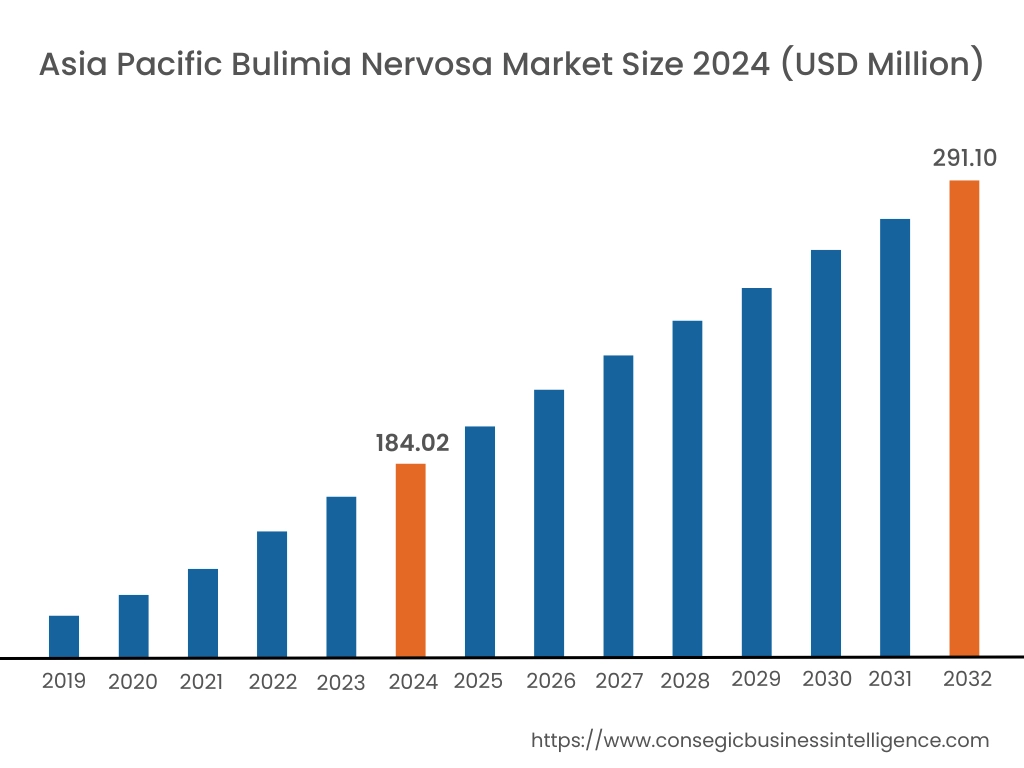
In 2024, Asia-Pacific was valued at USD 184.02 Million and is expected to reach USD 291.10 Million in 2032. In Asia-Pacific, China accounted for the highest share of 31.6% during the base year of 2024. Asia-Pacific exhibits increasing demand for bulimia nervosa treatment due to changing dietary habits and rising mental health awareness. Countries such as Japan, China, and Australia show higher diagnosis rates due to improved healthcare accessibility. The increasing influence of Western lifestyles affects eating behaviors, contributing to the need for treatment options. Stigma surrounding mental health remains a challenge, limiting early intervention in some countries. Government initiatives to integrate mental health into primary healthcare improve access to treatment. Pharmaceutical advancements and growing research activities in the region support bulimia nervosa market opportunities. Digital mental health platforms provide new avenues for treatment delivery.

North America is estimated to reach over USD 309.84 Million by 2032 from a value of USD 207.27 Million in 2024 and is projected to grow by USD 214.48 Million in 2025. North America holds a significant share in the bulimia nervosa market due to the high prevalence of eating disorders in the United States and Canada. Increased awareness and early diagnosis contribute to bulimia nervosa market expansion. Strong healthcare infrastructure and the availability of specialized treatment centers improve patient access to therapy. Government initiatives and funding for mental health programs support treatment advancements. The presence of key pharmaceutical companies facilitates the development of targeted medications. High insurance coverage for mental health services influences treatment accessibility. The rising adoption for telehealth services enhances patient engagement and treatment adherence.
Europe demonstrates steady demand for bulimia nervosa treatment due to the well-established healthcare system and strong mental health awareness programs. Countries such as the United Kingdom, Germany, and France have high diagnosis rates due to advanced screening and diagnostic procedures. Government regulations support the inclusion of eating disorder treatments under national healthcare programs. Increased funding for mental health research enhances the development of new therapies. The presence of specialized treatment facilities improves access to inpatient and outpatient care. Awareness campaigns and advocacy groups promote early intervention and reduce stigma. Digital health solutions, including online counseling and mobile applications, support patient engagement.
The Middle East and Africa have a developing bulimia nervosa market influenced by rising mental health awareness and improving healthcare infrastructure. Countries such as the United Arab Emirates and South Africa lead in diagnosis rates due to better healthcare accessibility. Cultural stigma and limited specialized treatment centers hinder bulimia nervosa market opportunities in certain regions. Government efforts to integrate mental health services into primary care improve access to treatment. Increasing collaborations with international mental health organizations enhance awareness and education. Digital health solutions and telemedicine expand treatment options in remote areas. Economic disparities affect affordability and access to advanced therapies.
Latin America experiences a growing demand for bulimia nervosa treatment, with increasing awareness in countries such as Brazil, Mexico, and Argentina. Expanding mental health initiatives support diagnosis and early intervention. Limited access to specialized treatment centers affects market performance. Government policies to integrate mental health into national healthcare programs improve patient access to therapy. Cultural influences impact treatment-seeking behavior, leading to delays in diagnosis. The presence of international mental health organizations supports awareness campaigns. Expanding telemedicine services and mobile health applications enhance access to treatment in remote areas. Economic fluctuations affect affordability and medication availability.
Top Key Players & Market Share Insights:
The Global Bulimia Nervosa Market is highly competitive with major players providing products and services to the national and international markets. Key players are adopting several strategies in research and development (R&D), product innovation, and end-user launches to hold a strong position in the Global Bulimia Nervosa Market. Key players in the Bulimia Nervosa industry include-
- Allergan, Inc. (Ireland)
- Eli Lilly and Company (United States)
- Dr. Reddy’s Laboratories Limited (India)
- Teva Pharmaceutical Industries Ltd. (Israel)
- Sun Pharmaceutical Industries Ltd. (India)
- AstraZeneca plc (United Kingdom)
- Bristol-Myers Squibb Company (United States)
- GlaxoSmithKline plc (United Kingdom)
- Pfizer Inc. (United States)
- Johnson & Johnson Services, Inc. (United States)
Bulimia Nervosa Market Report Insights:
| Report Attributes | Report Details |
| Study Timeline | 2019-2032 |
| Market Size in 2032 | USD 956.00 Million |
| CAGR (2025-2032) | 5.5% |
| By Disorder Type |
|
| By Treatment Type |
|
| By Route of Administration |
|
| By Dosage Form |
|
| By Distribution Channel |
|
| By End-User |
|
| By Region |
|
| Key Players |
|
| North America | U.S. Canada Mexico |
| Europe | U.K. Germany France Spain Italy Russia Benelux Rest of Europe |
| APAC | China South Korea Japan India Australia ASEAN Rest of Asia-Pacific |
| Middle East and Africa | GCC Turkey South Africa Rest of MEA |
| LATAM | Brazil Argentina Chile Rest of LATAM |
| Report Coverage |
|
Key Questions Answered in the Report
How big is the Bulimia Nervosa Market? −
In 2024, the Bulimia Nervosa Market was USD 624.85 million.
What will be the potential market valuation for the Bulimia Nervosa Market by 2032? +
In 2032, the market size of Bulimia Nervosa Market is expected to reach USD 956.00 million.
What are the segments covered in the Bulimia Nervosa Market report? +
The disorder type, treatment type, route of administration, dosage form, distribution channel and end-user are the segments covered in this report.
Who are the major players in the Bulimia Nervosa Market? +
Allergan, Inc. (Ireland), Eli Lilly and Company (United States), AstraZeneca plc (United Kingdom), Bristol-Myers Squibb Company (United States), GlaxoSmithKline plc (United Kingdom), Pfizer Inc. (United States), Johnson & Johnson Services, Inc. (United States), Dr. Reddy’s Laboratories Limited (India), Teva Pharmaceutical Industries Ltd. (Israel), Sun Pharmaceutical Industries Ltd. (India) are the major players in the Bulimia Nervosa market.
Overview
Reputation & Certifications


Our Services
- Market Intelligence & Forecasting
- Custom Research Solutions
- Market Entry Strategy
- Competitive Intelligence
- Customer Insights
- Industry Innovation Analysis
- Investment Advisory