Jump to Content
Anxiety Disorder Treatment Market - Size, Share, Industry Trends, and Forecasts (2025-2032)
Anxiety Disorder Treatment Market Size:
Anxiety Disorder Treatment Market size is growing with a CAGR of 4.0% during the forecast period (2025-2032), and the market is projected to be valued at USD 17,147.06 Million by 2032 from USD 12,554.60 Million in 2024. Additionally, the market value for 2025 attributes to USD 13,014.58 Million.
Anxiety Disorder Treatment Market Scope & Overview:
Anxiety disorders are a group of mental health conditions characterized by excessive and persistent fear, worry, or anxiety that interferes with daily life. Individuals with anxiety disorders experience a range of symptoms. They include physical symptoms such as rapid heartbeat, sweating, and trembling, as well as psychological symptoms such as restlessness, difficulty concentrating, and irritability. The chronic nature of these disorders significantly impacts an individual's social interactions, work performance, and overall well-being. The type of anxiety disorder consists of specific phobias, generalized anxiety disorder (GAD), social anxiety disorder (SAD), panic disorder, obsessive-compulsive disorder (OCD), and others. The treatment type for this condition consists of antidepressants, anti-anxiety medications, psychotherapy, combined therapy, and others.

Anxiety Disorder Treatment Market Dynamics - (DRO) :
Key Drivers:
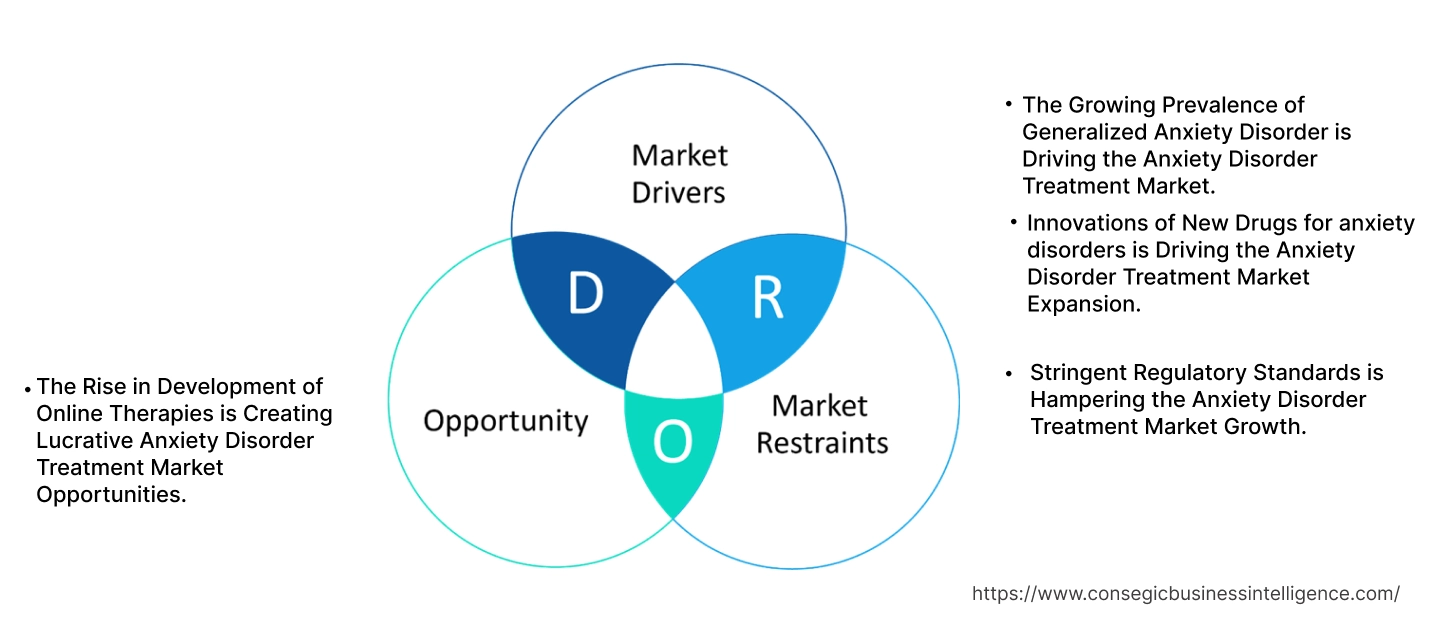
The Growing Prevalence of Generalized Anxiety Disorder is Driving the Anxiety Disorder Treatment Market.
Generalized anxiety disorder (GAD) is a condition characterized by persistent and excessive worry about various life events. This pervasive worry shifts from one concern to another, making it difficult for individuals to pinpoint a specific trigger. As more individuals are diagnosed with GAD, the demand for effective treatments is essential. They include both pharmacological and psychotherapeutic interventions. The surge in prevalence is attributed to a factor such as increased awareness of mental health conditions, evolving diagnostic criteria, and potential societal influences contributing to stress and anxiety.
For instance,
- According to the data published by the ADAA, in October 2022, states that generalized anxiety disorder (GAD) is the most common anxiety disorder among older adults (18-30). GAD affects 6.8 million adults, or 3.1% of the U.S. population. Women are twice as likely to be affected.
Thus, the prevalence of GAD is contributing to the development of effective treatment options and driving the anxiety disorder treatment market growth.
Innovations of New Drugs for anxiety disorders is Driving the Anxiety Disorder Treatment Market Expansion.
Existing medicines such as SSRIs and SNRIs, are effective for many individuals but there is a need for new treatment options, particularly for those who do not respond to first-line therapies or experience intolerable side effects. These novel drugs aim to address the complex neurobiological mechanisms underlying anxiety disorders, potentially offering more targeted and personalized treatment approaches.
For instance,
- In 2024, Exxua was introduced by Fabre-Kramer Pharmaceuticals, Inc. This new antidepressant offers a unique mechanism of action in contrast to most antidepressants. Instead of blocking the reuptake of serotonin, gepirone acts as a serotonin receptor agonist, specifically stimulating serotonin receptors.
Thus, the development of new drugs is driving the growth of the market.
Key Restraints:
Stringent Regulatory Standards is Hampering the Anxiety Disorder Treatment Market Growth.
Stringent regulatory standards imposed by government bodies worldwide pose significant constraints in the anxiety disorder treatment market. These regulations, designed to protect the public health, increase production costs and slow down product development. The rigorous clinical trial requirements and lengthy approval processes mandated by regulatory bodies like the FDA significantly delay the introduction of novel therapies. Furthermore, regulations surrounding the advertising and promotion of mental health treatments are complex and restrictive, limiting the ability of pharmaceutical companies and other providers to effectively communicate the benefits of their products or services. These regulatory hurdles create barriers to market entry for new treatments and contribute to a slower pace of innovation in the anxiety disorder treatment market, potentially hindering access to beneficial therapies for those in need.
Future Opportunities :
The Rise in Development of Online Therapies is Creating Lucrative Anxiety Disorder Treatment Market Opportunities.
Online therapies for anxiety disorders encompass a range of mental health services delivered remotely via the internet. These services include individual, or group therapy sessions conducted through video conferencing, phone calls, or even text-based messaging platforms. Online therapy platforms connect individuals with licensed mental health professionals, such as therapists, psychologists, and psychiatrists, who provide assessments, diagnosis, and treatment for various anxiety disorders. Various evidence-based treatments for social anxiety more are introduced for accurate management.
For instance,
- In July 2024, Researchers at the University of Oxford have developed four internet-based therapies that have shown promise in helping individuals with social anxiety disorder. They include modules on recognizing and challenging negative thoughts, gradually facing feared social situations through virtual reality or in vivo exposure exercises and developing coping skills.
Thus, the rise in the development of online treatment is driving the anxiety disorder treatment market opportunities.
Anxiety Disorder Treatment Market Segmental Analysis :
By Disorder Type:
Based on disorder type, the market is categorized into specific phobias, generalized anxiety disorder (GAD), social anxiety disorder (SAD), panic disorder, obsessive-compulsive disorder (OCD), and others.
Trends in the Disorder Type:
- The rise in awareness of mental health disorders is influencing the diagnosis of conditions such as generalized anxiety disorder.
The generalized anxiety disorder (GAD) segment accounted for the largest anxiety disorder treatment market share in 2024 and is expected to grow at the fastest CAGR over the forecast period.
- The generalized anxiety disorder segment dominates the anxiety disorder treatment market trends.
- Generalized anxiety disorder (GAD) is a chronic mental health condition characterized by persistent and excessive worry about various aspects of life, even when there is little or no reason to worry.
- The combination of genetic, environmental, and psychological influences are some factors that lead to the prevalence of this condition.
- For instance, according to the National Library of Medicine, in December 2023, states that 12-month prevalence of GAD from the general population varies from 1.2-1.9% among European countries.
- The condition requires appropriate medication for the management of these conditions.
- As per the market analysis, the development of these medications influenced by the prevalence is driving the growth of the segment at present and in the coming years.
By Treatment Type:
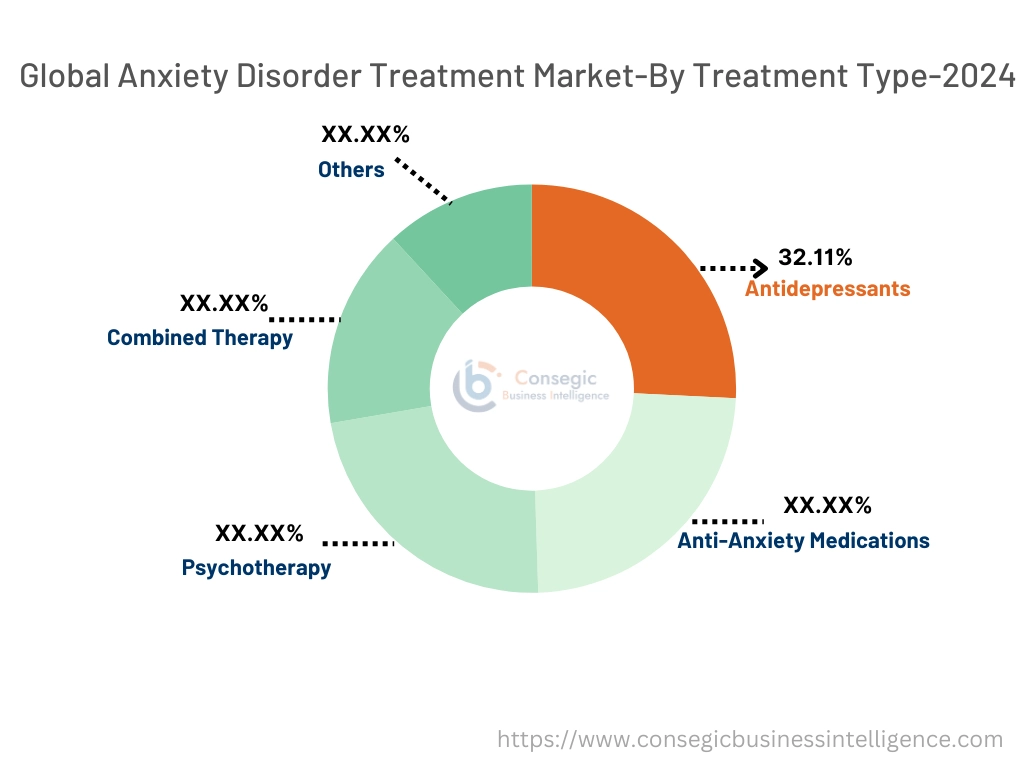
Based on treatment type, the market is categorized into antidepressants, anti-anxiety medications, psychotherapy, combined therapy, and others.
Trends in Treatment Type:
- The rise in the requirement of effective management solutions for anxiety disorders is influencing the use of antidepressants.
- The rise in the demand for combinations of SSRIs with cognitive behavioral therapy for anxiety disorder treatment is influencing the segment.
The antidepressants segment accounted for the largest market share of 32.11% in the year 2024.
- Antidepressants segment is dominating the anxiety disorder treatment market trends.
- Antidepressants are frequently employed in the treatment of various anxiety disorders, even in the absence of co-occurring depression.
- These medications have demonstrated efficacy in managing anxiety symptoms by influencing neurotransmitter levels in the brain, particularly serotonin and norepinephrine.
- These neurotransmitters play a role in mood regulation and anxiety responses.
- Selective Serotonin Reuptake Inhibitors (SSRIs) is widely considered first-line pharmacological treatment.
- It is considered as a prominent anxiety disorder treatment option.
- For instance, according to the data published in the British Journal of General Practice, in 2023, states that there is a rise in the number of patients treated by SSRI. The patients prescribed with SSRI increased from 18.6% in 2000 to 30.7% in 2021.
- Thus, the rise in the in the treatment of anxiety disorder using antidepressants is driving the anxiety disorder treatment market demand.
The combined therapy segment is expected to grow at the fastest CAGR over the forecast period.
- Combined therapy is the fastest growing anxiety disorder treatment.
- Combined therapy is the integration of both medication and psychotherapy.
- The medications address the biological aspects of anxiety, such as neurotransmitter imbalances.
- Psychotherapy, particularly Cognitive Behavioral Therapy (CBT), equips individuals with coping mechanisms and strategies to manage psychological and behavioral symptoms.
- The synergistic effect of combining these two modalities offer more comprehensive and long-lasting relief for many individuals, particularly those with moderate to severe anxiety disorders.
- As research continues to demonstrate the benefits of combined treatment, and as mental health professionals increasingly recommend this approach, its adoption is rising.
- Thus, as per the market analysis, these factors are influencing the growth and trend of the segment.
Regional Analysis:
The regional segment includes North America, Europe, Asia Pacific, the Middle East and Africa, and Latin America.
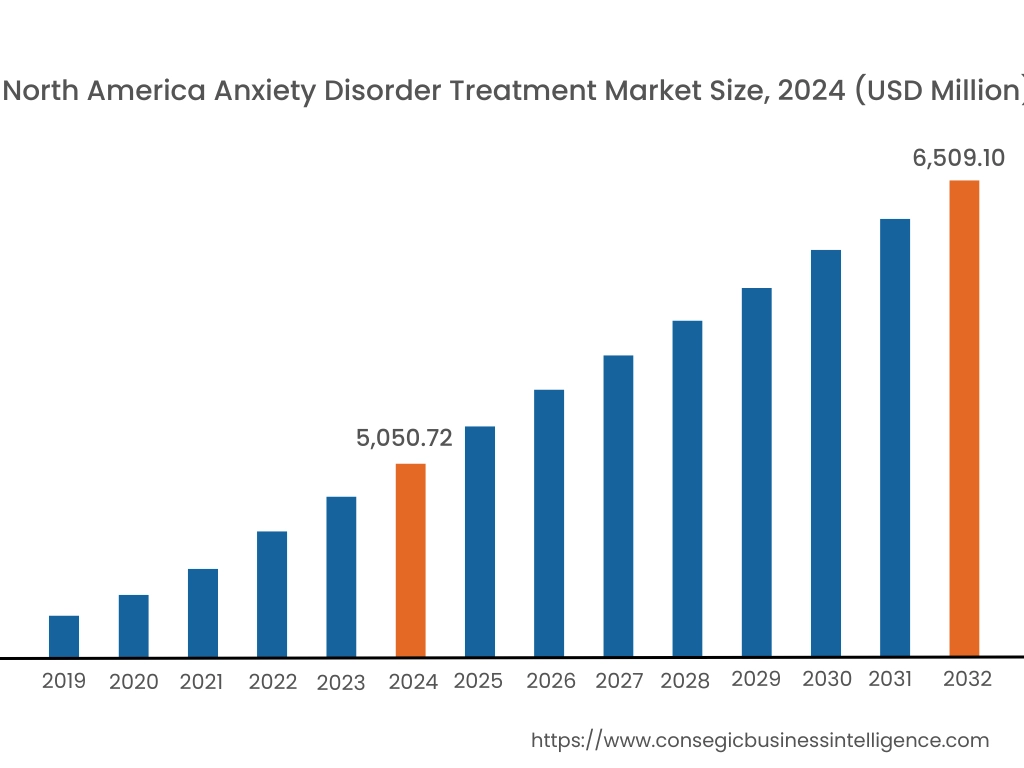
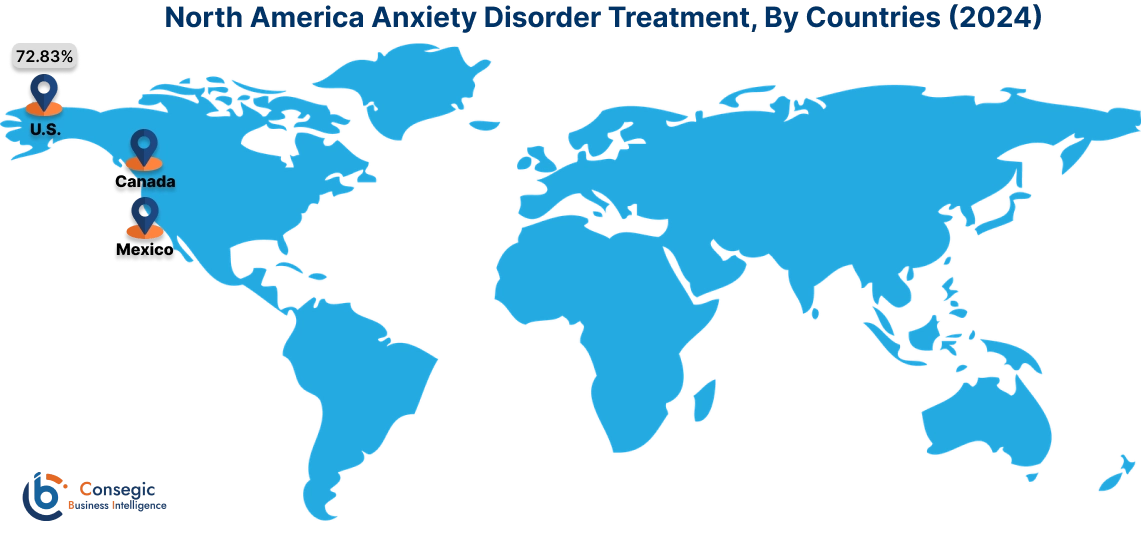
In 2024, North America accounted for the highest anxiety disorder treatment market share at 40.23% and was valued at USD 5,050.72 Million and is expected to reach USD 6,509.10 Million in 2032. In North America, U.S. accounted for the highest market share of 72.83% during the base year of 2024. The anxiety disorder treatment industry is dominated by the North America region. North America has a high reported prevalence of anxiety disorders. This high prevalence translates into a substantial demand for effective treatments, including therapy, medication, and combined approaches. factors such as societal pressures, lifestyle stressors, and increased awareness and diagnosis of mental health conditions are factors that are responsible for the high prevalence of various anxiety disorders.
For instance,
- According to the data published by ADAA, in October 2022, states that anxiety disorder are most common mental illness issue in the U.S. It affects roughly around 19.1% of the population.
Thus, as per the anxiety disorder treatment market analysis, the high prevalence leads to the development of novel therapies. These factors are driving the market in this region.
Asia Pacific is experiencing the fastest growth with a CAGR of 5.5% over the forecast period. The rapid growth of online therapy services in the Asia Pacific region is a significant driver of the anxiety disorder treatment market expansion. Several factors contribute to this trend. The increasing penetration of internet and smartphone technology across the region has created a readily accessible platform for online mental health services. The convenience and affordability of online therapy are particularly appealing in areas where access to traditional mental health professionals is limited due to geographical constraints, cost factors, or social stigma surrounding mental health issues. Thus, these factors are driving the market in this region.
Europe presents a significant contribution to the Anxiety Disorder Treatment market analysis. European healthcare systems and mental health professionals often prioritize psychotherapeutic interventions, such as Cognitive Behavioral Therapy (CBT) and other evidence-based therapies, as primary or complementary treatment approaches for anxiety. This focus stems from a growing recognition of the effectiveness of these therapies in addressing the root causes of anxiety and equipping individuals with long-term coping skills. Furthermore, there is a growing awareness of the potential limitations and side effects associated with long-term medication use, leading to increased interest in non-pharmacological interventions. Thus, the use of psychotherapeutic interventions in this region is driving the trends of the market.
The Middle East and Africa (MEA) region is witnessing notable anxiety disorder treatment market demand characterized by significant potential. Increasing investment in mental health research within MEA is leading to a better understanding of the specific needs and cultural contexts related to anxiety disorders in these populations. This research is crucial for developing culturally sensitive and effective treatment approaches, including adapting existing therapies and exploring new interventions. Additionally, collaborations with international research institutions and pharmaceutical companies are introducing innovative treatments and technologies into the MEA region. Based on the market analysis, local expertise and infrastructure for mental health research grows, it is expected to contribute to improved diagnosis, treatment, and ultimately, greater market trends for anxiety disorder treatment in the MEA region.
Increased awareness of mental health issues and growing government initiatives are contributing to the expansion of the anxiety disorder treatment market in Latin America. Public awareness campaigns, generally led by mental health organizations and advocates, are working to reduce stigma and encourage individuals to seek help for anxiety disorders. Concurrently, governments in the region are increasingly prioritizing mental health, developing national mental health plans, and allocating resources to improve access to mental health services. As per the market analysis, these initiatives generally include training healthcare professionals in mental health care, integrating mental health services into primary care settings, and increasing the availability of affordable treatments. As a result of these combined efforts, more individuals in Latin America are recognizing the symptoms of anxiety disorders, seeking professional help, and accessing available treatments, thereby driving the share of the market in this region.
Top Key Players and Market Share Insights:
The global anxiety disorder treatment market is highly competitive with major players providing precise products to the national and international markets. Key players are adopting several strategies in research and development (R&D) and product innovation to hold a strong position in the global Anxiety Disorder Treatment market. Key players in the Anxiety Disorder Treatment industry include-
- Eridanus (India)
- Pfizer Inc (U.S.)
- Teva Pharmaceuticals USA, Inc. (United States)
- Weefsel Pharma (India)
- Lifecare Neuro Products Limited (India)
- Jazz Pharmaceuticals plc (Ireland)
- AdvaCare Pharma (Canada)
- Lundbeck A/S (Denmark)
- Eli Lilly and Company. (United States)
- Novartis AG (Switzerland)
Recent Industry Developments :
Therapy Launch:
- In July 2024, Researchers at the University of Oxford have developed four internet-based therapies that have shown promise in helping individuals with social anxiety disorder. They include modules on recognizing and challenging negative thoughts, gradually facing feared social situations through virtual reality or in vivo exposure exercises and developing coping skills.
Anxiety Disorder Treatment Market Report Insights :
| Report Attributes | Report Details |
| Study Timeline | 2019-2032 |
| Market Size in 2032 | USD 17,147.06 Million |
| CAGR (2025-2032) | 4.0% |
| By Disorder Type |
|
| By Treatment Type |
|
| By Region |
|
| Key Players |
|
| North America | U.S. Canada Mexico |
| Europe | U.K. Germany France Spain Italy Russia Benelux Rest of Europe |
| APAC | China South Korea Japan India Australia ASEAN Rest of Asia-Pacific |
| Middle East and Africa | GCC Turkey South Africa Rest of MEA |
| LATAM | Brazil Argentina Chile Rest of LATAM |
| Report Coverage |
|
Key Questions Answered in the Report
How big is the Anxiety Disorder Treatment market? −
In 2024, the Anxiety Disorder Treatment market is USD 12,554.60 Million.
Which is the fastest-growing region in the Anxiety Disorder Treatment market? +
The Asia Pacific is the fastest-growing region in the Anxiety Disorder Treatment market.
What specific segmentation details are covered in the Anxiety Disorder Treatment market? +
Disorder Type and Treatment Type segmentation details are covered in the Anxiety Disorder Treatment market.
Who are the major players in the Anxiety Disorder Treatment market? +
Eridanus (India), Pfizer Inc (U.S.), Jazz Pharmaceuticals plc (Ireland) are some of the major players in the market.
Overview
Reputation & Certifications


Our Services
- Market Intelligence & Forecasting
- Custom Research Solutions
- Market Entry Strategy
- Competitive Intelligence
- Customer Insights
- Industry Innovation Analysis
- Investment Advisory