Jump to Content
Agoraphobia Market Size & Industry Share - Growth Trends & Forecasts (2026 - 2034)
Agoraphobia Market Size:
Agoraphobia Market size is estimated to reach over 1,924.45 (US$M) by 2034 from a value of 1,168.51 (US$M) in 2025 and is projected to grow by 1,235.11 (US$M) in 2026, growing at a CAGR of 5.7% from 2026 to 2034, according to a recent report from Consegic Business Intelligence.
Agoraphobia Market Scope & Overview:
Agoraphobia is an anxiety disorder where a person fears and often avoids situations or places where they feel trapped, helpless, or embarrassed. It is typically treated with a combination of medication such as Selective Serotonin Reuptake Inhibitors, therapy such as Cognitive Behavioural Therapy, and more recently digital health interventions. Agoraphobia is part of the broader mental health and anxiety disorder treatment market, which has seen consistent growth due to rising awareness of mental health issues and better mental health support systems. Additionally, the market is experiencing steady growth, primarily driven by the prevalence of anxiety-related disorders and advancements in digital mental health programs.

Agoraphobia Market Dynamics - (DRO) :
Key Drivers:
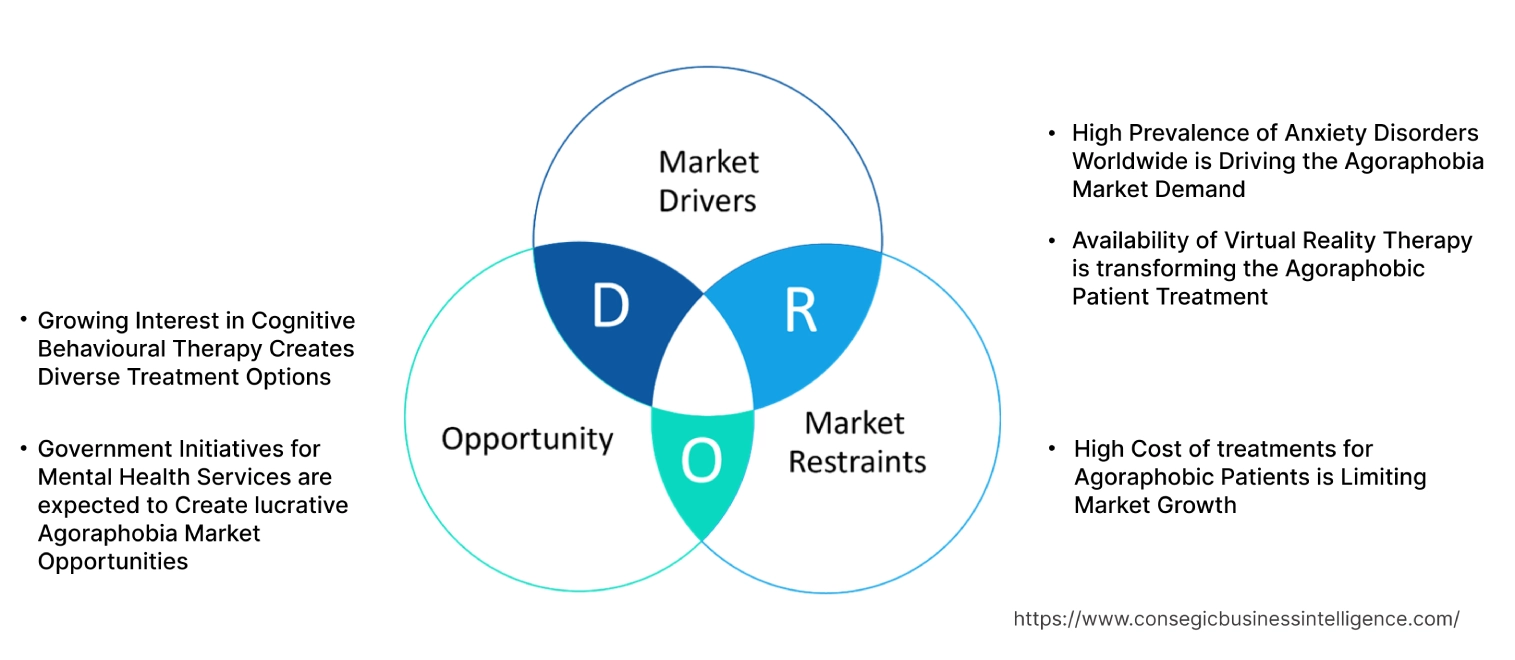
High Prevalence of Anxiety Disorders Worldwide is Driving the Agoraphobia Market Demand
Anxiety disorders, including agoraphobia, are among the most common mental health conditions worldwide, making up a significant portion of the mental health treatment market. The prevalence of anxiety appears to increase with socioeconomic development, a more dependent older population, and urbanization in the population. These factors are contributing to the rising number of agoraphobic patients further contributing to the agoraphobia industry proliferation.
- According to the DSM-5 (Diagnostic and Statistical Manual of Mental Disorders), agoraphobia is present in approximately 1.7% of the population in 2022 in the U.S.
Thus, a higher prevalence of agoraphobic patients due to rising urbanization, and socioeconomic development is expected to increase demand for overall Agoraphobia market size.
Availability of Virtual Reality Therapy is transforming the Agoraphobic Patient Treatment
Virtual reality (VR) therapy has emerged as an innovative approach for treating anxiety disorders including agoraphobic patients. It allows patients to engage in controlled exposure therapy within a virtual environment, which helps them confront and manage their fears in a safe setting without leaving their homes.
- In 2021, according to the Journal of Behavioural and Cognitive Psychotherapy, Virtual Reality Therapy along with Cognitive Behavioral Therapy with 360-degree video virtual environments is feasible, acceptable, and potentially efficacious in the treatment of Agoraphobic patients with panic disorder.
Therefore, as VR technology becomes more efficient and effective in agoraphobic patient treatment, it is poised to become an influential driver in the agoraphobia market size.
Key Restraints :
High Cost of treatments for Agoraphobic Patients is Limiting Market Growth
Treatments for agoraphobic patients often require a combination of medications, cognitive behavioral therapy, and lifestyle interventions. All this causes a significant financial burden on patients, especially due to a lack of insurance coverage. Cognitive Behavioural Therapy is a widely used and effective treatment for agoraphobic patients. The cost of Cognitive Behavioural Therapy typically ranges from $100 or more per hour. This expense makes therapy inaccessible to many, particularly those without comprehensive insurance coverage. These high treatment costs lead many patients to delay or refrain from treatments entirely.
Thus, the high cost of therapy and medications creates significant barriers to access, particularly for economically disadvantaged populations further constraining agoraphobia industry proliferation.
Future Opportunities :
Government Initiatives for Mental Health Services are expected to Create lucrative Agoraphobia Market Opportunities
The growing recognition of mental health as a critical component of overall health has led to initiatives by the government and organizations for mental health services. The Substance Abuse and Mental Health Services Administration (SAMHSA) is a branch of the U.S. Department of Health and Human Services that works to improve substance abuse and mental health treatment services. It allocates the budget to support Mental Health and Substance Use Services across the US.
- The Fiscal Year (FY) 2025 President’s Budget includes $8.1 billion for the Substance Abuse and Mental Health Services Administration (SAMHSA), $612 million more than the agency’s FY 2023 enacted budget. This will provide better access to treatments and medications for agoraphobic patients.
Thus, better government funding for mental health services is expected to improve the treatment, thereby creating an opportunity for the market.
Growing Interest in Cognitive Behavioural Therapy Creates Diverse Treatment Options
As awareness about potential side effects from long-term use of medication such as Selective serotonin reuptake inhibitors (SSRI) increases, there is growing interest in non-pharmaceutical treatments such as CBT (Cognitive Behavioural Therapy) for agoraphobia. Cognitive behavioral therapy (CBT) is a form of psychological treatment that has been demonstrated to be effective for a range of problems including depression, and anxiety disorders.
- In 2022, according to the Journal of Neurosciences, CBT was proven to be effective in removing the symptoms of agoraphobia disorder within the patient.
Agoraphobia Market Segmental Analysis :
By Type:
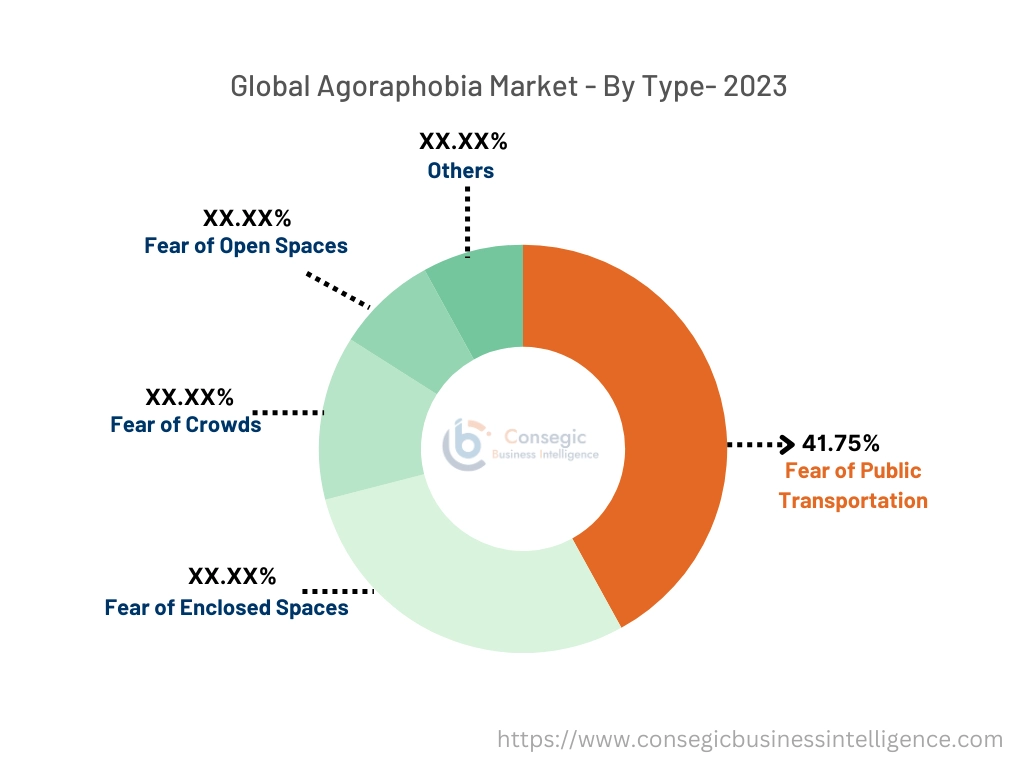
By type, the market is divided into Fear of Open Spaces, Fear of Enclosed Spaces, Fear of Crowds, Fear of Public Transportation, and others.
Trends in the type
- With urbanization and increased reliance on public transit in large cities, the fear of public transportation is even more apparent in current agoraphobia market trends.
The Fear of Public Transportation accounted for the largest revenue share of 41.75% in the year 2023.
- Among the various types of agoraphobia, the fear of using public transportation is one of the most prevalent.
- This specific type often stems from a combination of factors, including a fear of being unable to escape if panic strikes, unfamiliar environments, and the potential fear of crowds.
- For individuals with agoraphobia, using public transit can trigger intense feelings of anxiety, making it one of the most challenging environments to navigate.
- In 2021, according to a study conducted by Middle East Current Psychiatry, socio-demographic characteristics of participants are related to Agoraphobia.
- In conclusion, the rising number of public transportation-related agoraphobic patients highlights the need for accessible treatment options that cater to this specific fear.
The Fear of Open Spaces of this type is expected to grow at the fastest CAGR over the forecast period.
- The fear of open spaces type involves anxiety when individuals find themselves in large, open environments where escape may feel difficult or where they may feel vulnerable.
- The increasing urbanization and social changes over the past few years have intensified these fears for many individuals.
- In 2023, according to the Merck Sharp & Dohme manual about 2% of people have agoraphobia yearly.
- The rise in fear of open spaces as a predominant type in agoraphobic patients underscored the need for targeted therapeutic approaches and resources.
By Treatment:
By treatment, the market is divided into Selective serotonin reuptake inhibitors (SSRI), Norepinephrine Reuptake Inhibitors, Cognitive Behavioural Therapy, Virtual Reality Therapy, and others.
Trends in the Treatment:
- As per the latest agoraphobia market trends, Selective serotonin reuptake inhibitors (SSRI) continue to dominate the treatment, with drugs like sertraline, fluoxetine, and paroxetine frequently prescribed for their effectiveness and minimal side effects compared to other medication.
- The demand for Virtual Reality Therapy in mental health treatment is growing rapidly, driven by technological advancements and increased acceptance of virtual treatments in current trends.
The selective serotonin reuptake inhibitors account for the largest agoraphobia market share by treatment.
- Selective serotonin reuptake inhibitors (SSRI) are the most commonly prescribed medications for agoraphobia due to their high efficacy in treating anxiety symptoms and relatively manageable side effect profile.
- They work by increasing serotonin levels in the brain, which helps improve mood and reduce anxiety.
- It includes drugs like sertraline, fluoxetine, and paroxetine which have a growing preference due to improved formulations, including extended-release versions, which enhance patient adherence by reducing the dose frequency.
- In June 2024, Otsuka and Lundbeck announce the FDA Acceptance of sNDA Filing for Brexpiprazole in Combination With Sertraline for the Treatment of Adults With Post-Traumatic Stress Disorder (PTSD).
- SSRIs are likely to maintain their dominance in treatment due to their proven effectiveness, safety profile, and broad accessibility.
Virtual Reality Therapy in treatment is expected to grow at the fastest CAGR over the forecast period.
- Virtual reality therapy (VRT) uses specially programmed computers, visual immersion devices, and artificially created environments.
- Unlike traditional therapies, VRT immerses patient in controlled, stimulated environments, allowing them to confront and manage their fears safely.
- This technology provides an innovative approach to exposure therapy, making it especially appealing for patients who might feel uncomfortable in real-world exposure situations.
- In November 2023, Virtual Reality technology to treat agoraphobic patients was approved for use in the National Health System mental health services.
- In summary, VRT is expected to contribute to the agoraphobia market expansion due to its innovative approach and positive patient outcomes.
By End-user:
By end-user, the market is divided into hospitals, clinics, rehabilitation centers, and others.
Trends in the end-user:
- As per trends, Hospitals are increasingly adopting telemedicine platforms and virtual care models, which allow patients to receive mental health support remotely.
- There has been a major role of specialized clinics in the agoraphobia market expansion which provides access to coordinated comprehensive behavioral health care according to trends.
The hospitals account for the largest agoraphobia market share by end-user
- Hospitals represent the most dominant end-user segment due to the higher number of visits of agoraphobic patients.
- As primary healthcare institutions, hospitals often have specialized mental health departments and resources, including trained psychiatric staff and comprehensive therapy options.
- They provide structured environments for diagnosis, treatment, and follow-up care.
- Hospitals are now widely adopting telemedicine services to provide treatment for mental disorders due to its availability & effectiveness.
- In 2024, according to the Journal of Computers in Human Behaviour, telemedicine has shown comparable effectiveness to face-to-face treatment for Common Mental Disorders like Agoraphobia. It provides remote access to therapy and mental health services, reducing the need for patients to leave their homes for treatment.
- In conclusion, hospitals are likely to maintain their position due to their robust infrastructure, access to specialized care, and adoption of new technologies such as telemedicine for treatment.
The clinics in the end-user are expected to grow at the fastest CAGR over the forecast period.
- The clinics are emerging as the fastest-growing end-user segment largely due to more accessibility and personalized care.
- Compared to hospitals, clinics offer a more flexible, tailor-made approach to treatment.
- The number of clinics specially designed for mental health services has increased rapidly and the government also providing funding for such clinics.
- In 2023, in the U.S., Certified Community Behavioral Health Clinics (CCBHCs) are designed to ensure access to coordinated comprehensive behavioral health care. These clinics offer accessible mental health services, including therapy and medication management for treating mental conditions.
- Thus, clinics are seeing rapid proliferation due to their personalized care & more accessibility for the treatment.
Regional Analysis:
The regional segment includes North America, Europe, Asia Pacific, the Middle East and Africa, and Latin America.
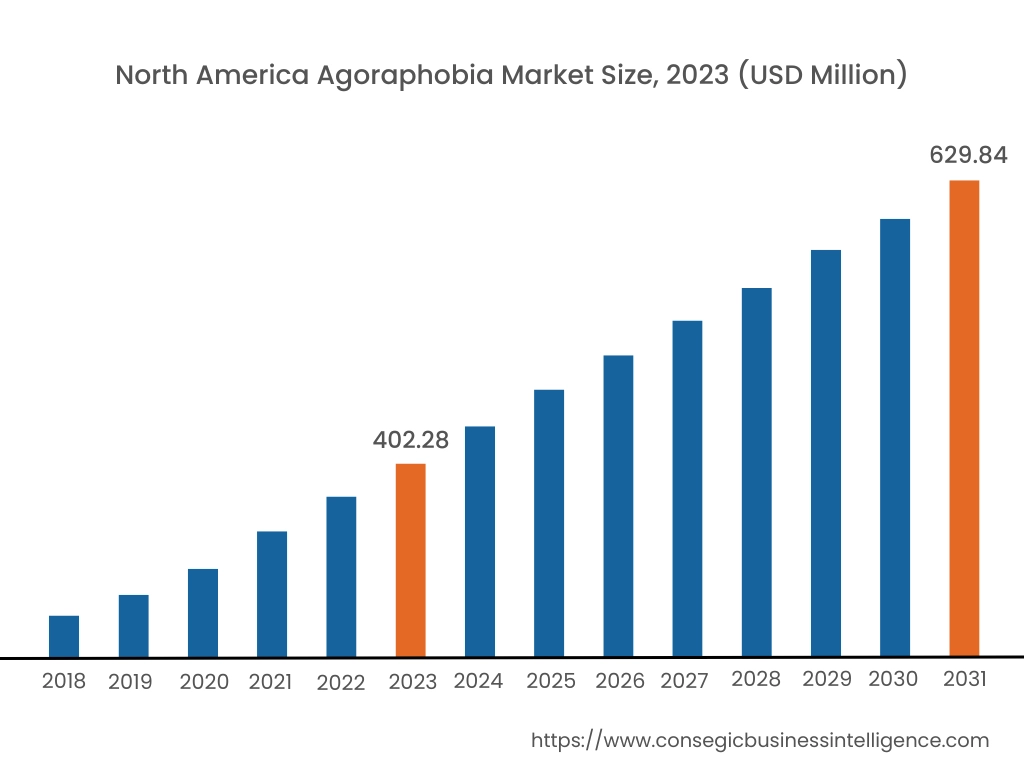
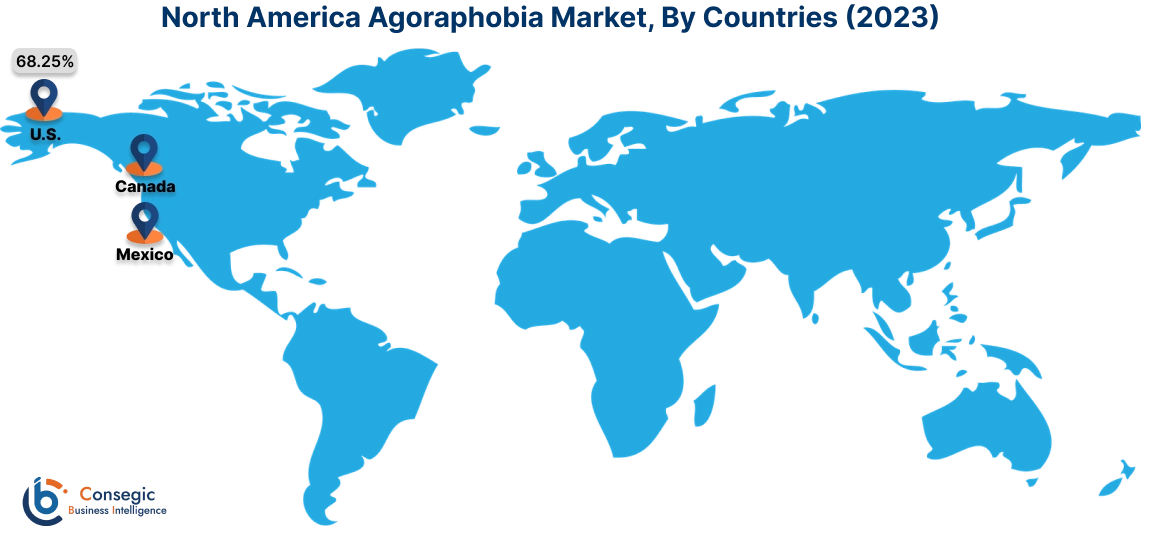
In 2023, North America accounted for the highest market share at 38.20% and was valued at USD 402.28 Million, and is expected to reach USD 629.84 Million in 2031. In North America, the U.S. accounted for the highest market share of 68.25% during the base year of 2023. As per analysis, North America's dominance in the market is supported by a robust healthcare system, a high prevalence of mental disorders, higher mental health awareness, and significant funding for mental health research. Moreover, government initiatives and insurance coverage for mental health services are further enhancing access to treatment.
- In 2021, according to Global Emergency of Mental Disorders, among the US adult population, the prevalence of agoraphobic patients is 1.4%. Between 30% and 50% of people are agoraphobic patients with panic disorder.
Thus, North America is maintaining its leading position in the market due to the higher prevalence of agoraphobic patients and government support as per agoraphobia market analysis.
Asia-Pacific is expected to witness the fastest CAGR over the forecast period of 6.5% during 2024-2031.
According to analysis, the Asia-Pacific region is experiencing rapid agoraphobia market growth due to increased mental health awareness, urbanization, and improved healthcare infrastructure in countries like China, Japan, and India. Additionally, low awareness of mental health is also declining through government initiatives and mental health education. The key factors include stress, sedentary lifestyles, and substance abuse.
- In 2023, according to a research article in the Indian Journal of Psychiatry, agoraphobia is the most commonly comorbid psychiatric disorder with Social Anxiety Disorders about 36% of the population studied in India.
Therefore, the prevalence of Agoraphobic patients in the Asia Pacific region is driving agoraphobia market demand.
As per analysis, the market in the European region is experiencing growth due to rising awareness about mental health, increasing prevalence of anxiety disorders, and better access to healthcare services. The market is also supported by advancements in telehealth and digital therapeutics, which improve access to therapy for individuals unable to visit clinics. Government and healthcare organizations in Europe are actively promoting mental health initiatives, further driving demand for effective treatments. Moreover, ongoing research into innovative drug formulations and personalized therapy approaches offers significant growth potential. Key players in the region are focusing on developing integrated care models to address the multifaceted needs of agoraphobic patients.
The market in the Middle East & Africa is gradually expanding driven by increasing awareness of mental health issues and improving healthcare infrastructure. The growth of telehealth services in countries like Saudi Arabia, and Dubai is enhancing access to mental health care, especially in remote areas where in-person services are limited. Government initiatives and non-government organizations are actively working to reduce mental barriers, encouraging more individuals to seek treatment. However, challenges such as limited mental health professionals and varying levels of awareness across countries will impact agoraphobia market growth. The region presents significant opportunities for the introduction of innovative, culturally sensitive mental health solutions as per the analysis.
Latin America’s market is growing due to increasing awareness of mental health and expanding access to healthcare services. Major countries like Brazil and Mexico are seeing rising demand for treatments such as selective serotonin reuptake inhibitors (SSRI) and cognitive behavioral therapy (CBT), which are central to managing agoraphobic patients. As mental health services gain more recognition, the market is benefiting from improved infrastructure, digital therapeutics, and telehealth services, making treatment more accessible in remote areas. However, the market faces challenges such as socioeconomic disparities and an insufficient number of trained mental health professionals. Despite these hurdles, the growing adoption of digital therapeutics and investment in healthcare offers significant industry proliferation according to analysis.
Top Key Players & Market Share Insights:
The agoraphobia market is highly competitive with major players providing products and services to the national and international markets. Key players are adopting several strategies in research and development (R&D), product innovation, and end-user launches to hold a strong position in the global agoraphobia market. Key players in the agoraphobia industry include -
-
- Elli Lily & Company (United States)
- GlaxoSmithKline plc. (United Kingdom)
- AstraZeneca (United Kingdom)
- Lundbeck A/S (Denmark)
- Merck & Co., Inc. (United States)
- Pfizer Inc. (United States)
- Apotex Inc (Canada)
- Sandoz Group AG (Switzerland)
- Viatris Inc (United States)
- Takeda Pharmaceutical Company Ltd (Japan)
Recent Industry Developments :
Innovations:
- In April 2024, Strides Pharma Science announced that its step-down wholly owned subsidiary, Strides Pharma Global Pte, Singapore, has received approval for Fluoxetine Tabs 10 mg and 20 mg, from the United States Food & Drug Administration (USFDA). Fluoxetine is Selective serotonin reuptake inhibitors (SSRI) which are the most commonly prescribed medications for Agoraphobic patient treatment.
- In April 2022, the University of Oxford used virtual reality (VR) technology to augment psychological therapy, thereby aiding the treatment of agoraphobic patients.
Business Expansions:
- In June 2024, the U.S. Department of Health and Human Services (HHS), through the Centers for Medicare & Medicaid Services (CMS) in partnership with the Substance Abuse and Mental Health Services Administration (SAMHSA) added 10 new states to the Certified Community Behavioral Health Clinic (CCBHC) Medicaid Demonstration Program. This will reduce reliance on hospital services for mental health crises. It will result in better management of agoraphobic patients by ensuring better access and timely interventions.
Agoraphobia Market Report Insights :
| Report Attributes | Report Details |
| Study Timeline | 2021-2034 |
| Market Size in 2034 | USD 1,924.45 Million |
| CAGR (2026-2034) | 5.70% |
| Base Year | 2025 |
| By Type |
|
| By Treatment |
|
| By End-User |
|
| By Region |
|
| Key Players |
|
| North America | U.S. Canada Mexico |
| Europe | U.K. Germany France Spain Italy Russia Benelux Rest of Europe |
| APAC | China South Korea Japan India Australia ASEAN Rest of Asia-Pacific |
| Middle East and Africa | GCC Turkey South Africa Rest of MEA |
| LATAM | Brazil Argentina Chile Rest of LATAM |
| Report Coverage |
|
Key Questions Answered in the Report
How big is the Agoraphobia Market? −
Agoraphobia Market size is estimated to reach over USD 1,629.60 Million by 2031 from a value of USD 1,053.09 Million in 2023, growing at a CAGR of 5.7% from 2024 to 2031.
What specific segmentation details are covered in the Agoraphobia Market report? +
The Agoraphobia Market report includes specific segmentation details for type, treatment, and end-user.
Which is the fastest-growing region in the Agoraphobia Market? +
Asia-Pacific is the fastest-growing region in the Agoraphobia Market.
Who are the major players in the Agoraphobia Market? +
The key participants in the Agoraphobia market are Elli Lily & Company (United States), and GlaxoSmithKline plc. (United Kingdom), Pfizer Inc. (United States), Apotex Inc. (Canada), Sandoz Group AG (Switzerland), Viatris Inc. (United States), Takeda Pharmaceutical Company Ltd (Japan), AstraZeneca (United Kingdom), H. Lundbeck A/S (Denmark), Merck & Co., Inc. (United States).
Overview
Reputation & Certifications


Our Services
- Market Intelligence & Forecasting
- Custom Research Solutions
- Market Entry Strategy
- Competitive Intelligence
- Customer Insights
- Industry Innovation Analysis
- Investment Advisory