Jump to Content
Cactus Water Market - Size, Share, Industry Trends, and Forecasts (2025-2032)
Cactus Water Market Size:
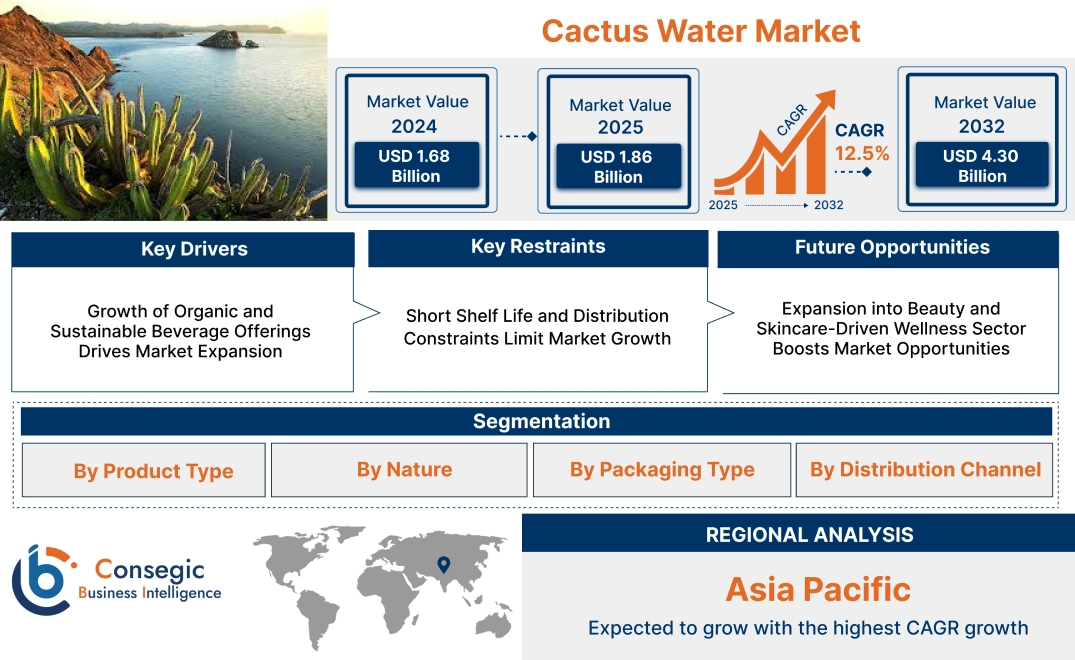
Cactus water market size is estimated to reach over USD 4.30 Billion by 2032 from a value of USD 1.68 Billion in 2024 and is projected to grow by USD 1.86 Billion in 2025, growing at a CAGR of 12.5% from 2025 to 2032.
Cactus Water Market Scope & Overview:
Cactus water is a plant-based beverage derived from prickly pear cactus, known for its hydrating and nutrient-rich properties. It contains natural electrolytes, antioxidants, and essential minerals that support hydration and overall wellness. The slightly sweet flavor and low-calorie content make it a refreshing alternative to traditional sports drinks and flavored waters.
Key features include natural hydration, anti-inflammatory properties, and a rich composition of vitamins and amino acids. The presence of antioxidants helps combat oxidative stress, while electrolytes aid in replenishing lost fluids, making it suitable for active lifestyles. Its organic and plant-based formulation appeals to health-conscious consumers seeking functional beverages.
Food and beverage companies, wellness brands, and retailers incorporate cactus water into product offerings to cater to evolving consumer preferences. Continuous innovations in packaging and flavor profiles further enhance its market presence, supporting its role in the expanding functional beverage segment.
Cactus Water Market Dynamics - (DRO):
Key Drivers:
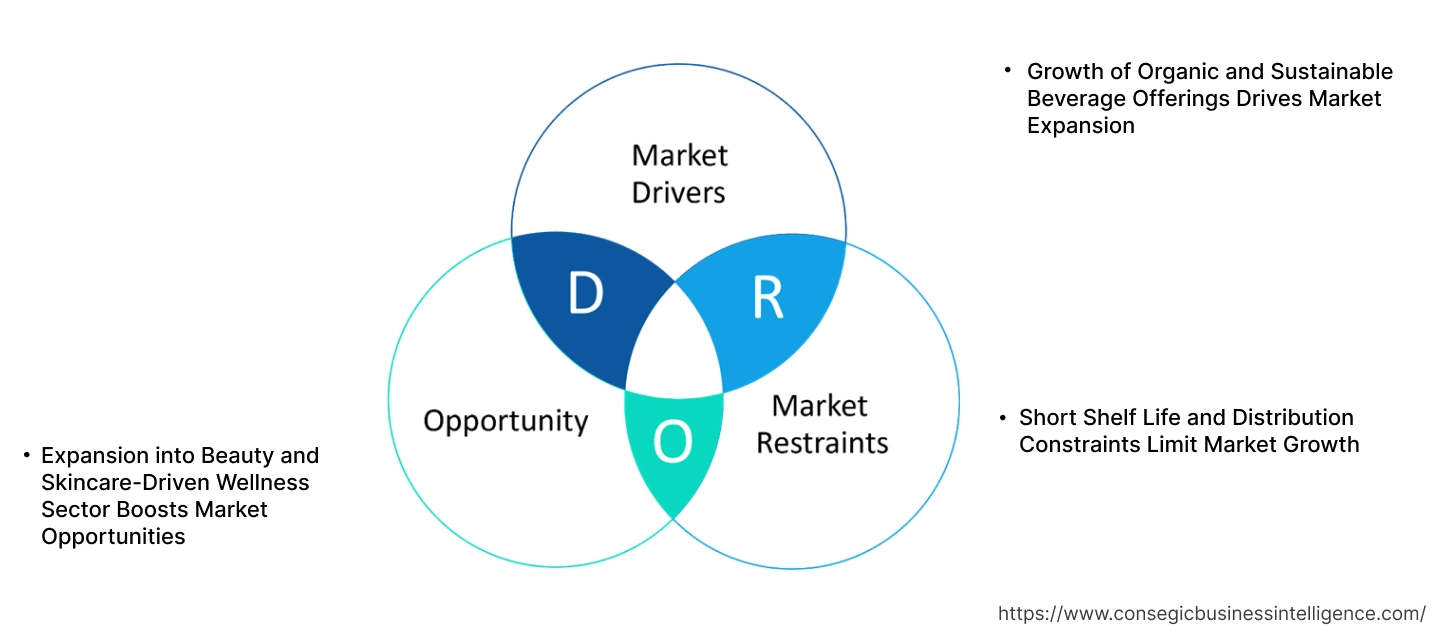
Growth of Organic and Sustainable Beverage Offerings Drives Market Expansion
Unlike traditional hydration drinks, cactus water is derived from drought-resistant prickly pear cacti, requiring significantly less water and fewer resources for cultivation. This aligns with the rising demand for beverages that promote sustainability and biodiversity, with minimal environmental impact. Health-conscious consumers are increasingly choosing non-GMO, preservative-free, and naturally fortified drinks, contributing to the expansion of organic beverage markets. As brands emphasize sustainability certifications, recyclable packaging, and zero-waste production, the market appeal of plant-based hydration products continues to grow. Retailers and specialty health stores are expanding their organic beverage selections, increasing accessibility for eco-conscious buyers. As awareness of low-impact agriculture and sustainable hydration rises, the industry is expected to experience continued cactus water market growth, solidifying its position as a mainstream alternative to traditional functional beverages.
Key Restraints:
Short Shelf Life and Distribution Constraints Limit Market Growth
Due to minimal processing and the absence of artificial preservatives, cactus water has limited shelf stability, requiring cold-chain logistics and specialized packaging to maintain freshness. Retailers face difficulties in stocking and rotating inventory efficiently, leading to potential losses due to spoilage. The demand for natural hydration drinks is increasing, but many distributors hesitate to invest in temperature-controlled storage and transportation, particularly for mass-market retail. Additionally, expanding into mainstream grocery chains, convenience stores, and international markets requires overcoming supply chain inefficiencies and high transportation costs. Brands must focus on innovative preservation techniques, extended shelf-life formulations, and efficient distribution networks to improve availability. Addressing these logistical barriers will be essential for ensuring cactus water market expansion, enabling broader consumer access and market penetration.
Future Opportunities:
Expansion into Beauty and Skincare-Driven Wellness Sector Boosts Market Opportunities
Rich in antioxidants, hydrating compounds, and anti-inflammatory properties, cactus water is gaining traction among consumers seeking radiant skin, improved digestion, and detoxification benefits. The demand for wellness beverages that promote skin hydration, collagen production, and anti-aging effects is increasing, positioning these products as a functional beauty supplement. With the rise of skincare-conscious consumers, brands are introducing collagen-infused, vitamin-enriched, and adaptogen-enhanced formulations to cater to the growing market. Partnerships with skincare brands, beauty influencers, and wellness retailers are further driving product awareness and accessibility.
- For instance, in November 2021, Tree Hut, a personal care brand, launched the new Sugar Face Scrubs consisting of four different formulations containing pineapple and papaya, watermelon and cactus water, nourishing banana and oat, and purifying blueberry and turmeric.
As the clean beauty movement expands, the integration of natural hydration solutions in skincare regimens is expected to fuel growth in the functional beverage sector. The cactus water market opportunities in cosmetic and wellness industries present a significant avenue for long-term market growth.
Cactus Water Market Segmental Analysis :
By Product Type:
By product type, the cactus water market is divided into flavored and unflavored product.
The flavored segment held the largest share in 2024.
- Flavored type is gaining popularity among health-conscious consumers, offering natural hydration with enhanced taste options.
- The need for plant-based beverages with functional benefits is driving increased interest in flavored variants.
- Segmental analysis indicates that the fruit-infused beverage, including flavors like watermelon, lime, and berry, is appealing to a broader audience.
- Cactus water market trends suggest that beverage companies are expanding their flavor portfolios, catering to evolving consumer preferences for refreshing, low-calorie drinks.
The unflavored segment is expected to experience the fastest CAGR during the forecast period.
- Health-conscious consumers seeking pure, unsweetened hydration options are driving the adoption of the unflavored version.
- The need for natural electrolyte-rich beverages is increasing, particularly among fitness enthusiasts and wellness-focused consumers.
- Market trends highlight that the unsweetened option is positioned as an alternative to coconut water, appealing to clean-label product buyers.
- With growing awareness of natural hydration benefits, the unflavored segment is contributing significantly to cactus water market growth.
By Nature:
Based on nature, the market is categorized into organic and conventional product.
The organic segment held the largest cactus water market share in 2024.
- The organic type is gaining traction among health-conscious consumers, driven by clean-label preferences and sustainable sourcing styles.
- The demand for organic, chemical-free beverages is increasing as consumers prioritize non-GMO and preservative-free hydration options.
- Cactus water market analysis suggests that the premium positioning of organic product is attracting high-end retail buyers and specialty health stores.
- Segmental trends indicate that organic certification is becoming a key differentiator for brands looking to target eco-conscious consumers.
The conventional segment is expected to have the fastest CAGR during the forecast period.
- The conventional version offers a more cost-effective alternative, making it accessible to a wider range of consumers.
- The need for plant-based hydration is growing, with the conventional alternative gaining momentum in supermarkets and mainstream retail channels.
- Market trends highlight that manufacturers are optimizing production costs for conventional variants, ensuring broader market penetration.
- With increased accessibility and affordability, the conventional option is set to drive cactus water market expansion in emerging regions.
By Packaging Type:
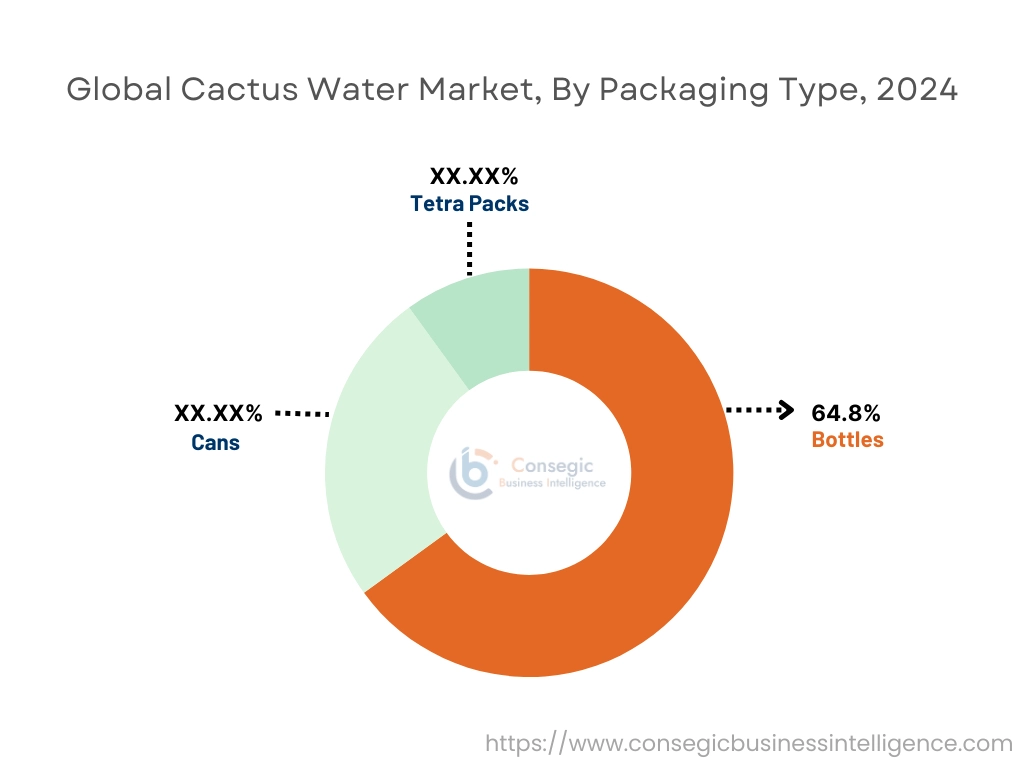
By packaging type, the cactus water market is segmented into bottles, cans, and tetra packs.
Bottles held the largest market share of 64.8% in 2024.
- Bottle remains the most widely preferred packaging format, offering portability and convenience for on-the-go hydration.
- The demand for sustainable packaging solutions is prompting brands to introduce eco-friendly, recyclable bottle options.
- Cactus water market analysis suggests that glass and BPA-free plastic bottles are gaining preference, particularly among premium brands.
- Segmental trends indicate that innovative bottle designs with resealable caps are enhancing consumer appeal and usability.
The tetra packs segment is anticipated to experience the fastest CAGR during the forecast period.
- Tetra packs offer extended shelf life and eco-friendly packaging, making them an attractive choice for sustainable beverage companies.
- The requirement of lightweight, travel-friendly packaging solutions is fueling the adoption of tetra packs in retail and e-commerce channels.
- Segmental analysis highlights that companies are leveraging plant-based and biodegradable tetra pack materials to align with sustainability goals.
- With increasing consumer awareness of environmental impact, the tetra packs segment is contributing to market growth.
By Distribution Channel:
Based on distribution channels, the market is divided into offline retail and online retail.
The offline retail segment held the largest cactus water market share in 2024.
- Supermarkets, hypermarkets, and specialty health stores remain dominant distribution channels, offering direct product visibility and in-store promotions.
- The demand for impulse purchases in beverage aisles is a key factor driving offline retail sales.
- Segmental analysis highlights that physical retail stores offer sampling opportunities, encouraging new consumer trials.
- Cactus water market trends indicate that premium health-focused retail chains are expanding their functional beverage selections, boosting sales through specialty stores.
The online retail segment is anticipated to have the fastest CAGR during the forecast period.
- The need for convenient, doorstep-delivery hydration options is accelerating online sales through e-commerce platforms and direct-to-consumer (DTC) brand websites.
- Subscription-based models and digital marketing campaigns are enhancing consumer engagement and repeat purchases.
- Market trends show a rise in e-commerce-exclusive product variations, targeting niche wellness communities and online shoppers.
- As digital retail channels continue expanding, online distribution is set to play a crucial role in market expansion.
Regional Analysis:
The regions covered are North America, Europe, Asia Pacific, the Middle East and Africa, and Latin America.
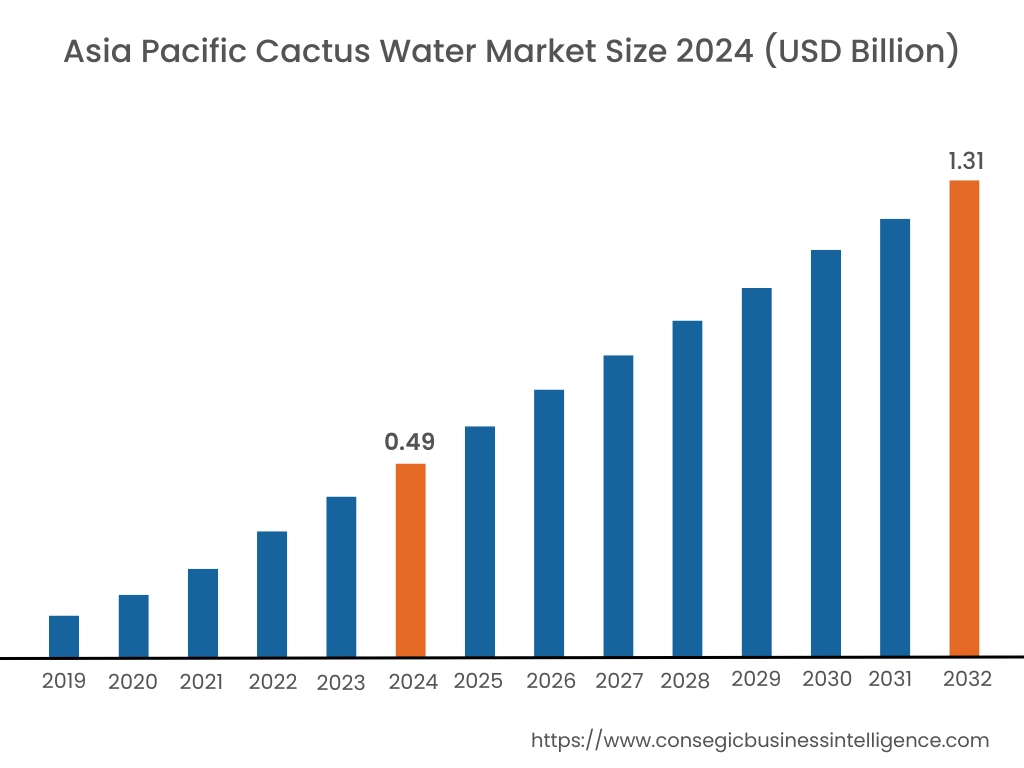
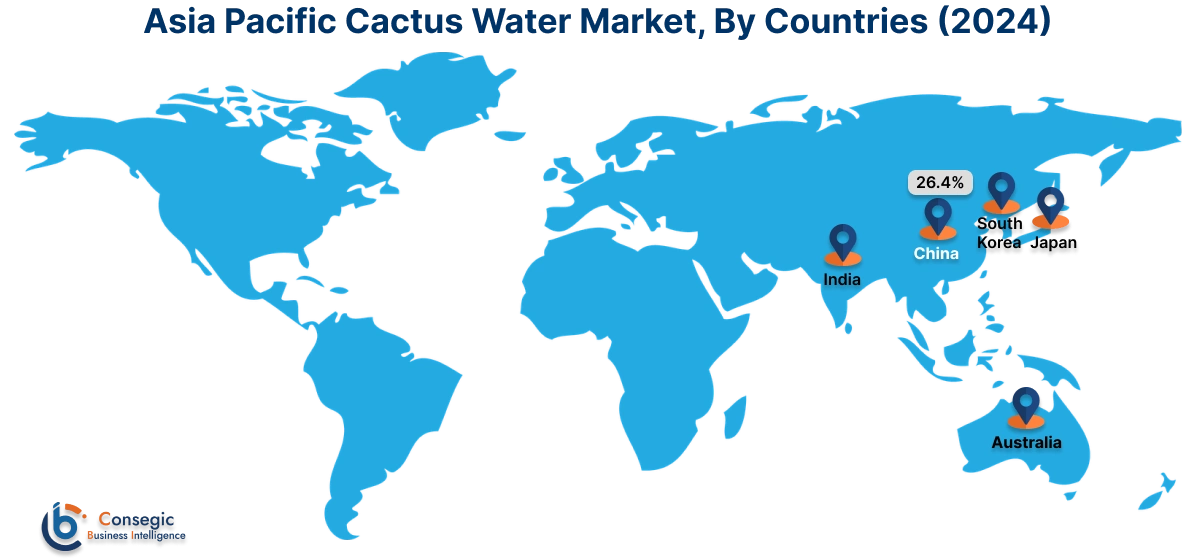
Asia Pacific is estimated to reach over USD 1.31 Billion by 2032 from a value of USD 0.49 Billion in 2024 and is projected to grow by USD 0.55 Billion in 2025. Out of this, China accounted for the maximum revenue share of 26.4%. The Asia Pacific region is witnessing rapid growth in the cactus water market, fueled by urbanization, rising disposable incomes, and a shift toward healthier lifestyles. Countries like China, India, and Japan are experiencing increased consumer awareness regarding the benefits of natural and functional beverages. The adoption of Western health trends, coupled with traditional practices valuing plant-based remedies, creates a unique market landscape. The rise of modern retail formats and e-commerce platforms enhances product reach, meeting the escalating cactus water market demand in the region.
North America region was valued at USD 0.56 Billion in 2024. Moreover, it is projected to grow by USD 0.62 Billion in 2025 and reach over USD 1.39 Billion by 2032. North America stands as a significant region for the cactus water industry, propelled by a growing health-conscious population seeking natural and functional beverages. The decline in consumption of sugary, carbonated drinks has led consumers to explore healthier alternatives, positioning it as a favorable option. The region's well-established distribution networks, including supermarkets, health food stores, and online retail platforms, facilitate easy accessibility for consumers. Additionally, the presence of key industry players and continuous product innovation contribute to meeting the rising cactus water market demand in this region.
Europe exhibits a burgeoning interest in the cactus water market, driven by trends toward health, wellness, and sustainability. Consumers in countries such as the United Kingdom, Germany, and France are increasingly seeking beverages that offer hydration and nutritional benefits without added sugars or artificial ingredients. The market is in its early stages, presenting a substantial cactus water market opportunity for new entrants and existing beverage companies aiming to diversify their product lines. The rise of specialty health stores and the growth of online retail further enhance product availability, catering to the growing requirement.
Latin America, particularly Mexico, holds a traditional association with the prickly pear cactus, the primary source of this product. The region is experiencing a resurgence of interest in indigenous ingredients, driven by a growing health and wellness culture. Consumers are increasingly seeking products that are both nutritious and culturally authentic. The development of specialty and health-focused retail outlets provides an ideal platform for its introduction and distribution. This trend aligns with the global movement toward natural and functional beverages, positioning Latin America as a promising market for said products.
The Middle East and Africa are emerging markets for this beverage, with growth potential linked to increasing health awareness and the need for natural hydration solutions. The arid climate in many parts of these regions makes hydration a critical concern, and consumers are turning toward options that offer more than basic hydration. Cactus water, with its electrolyte-rich profile, appeals to health-conscious individuals seeking functional benefits. While the regional cactus water market is still developing, the expansion of modern retail infrastructure and e-commerce platforms is expected to enhance product availability, catering to the evolving consumer preferences in these regions.
Top Key Players & Market Share Insights:
The cactus water market is highly competitive with major players providing products and services to the national and international markets. key players are adopting several strategies in research and development (R&D), product innovation, and end-user launches to hold a strong position in the global cactus water market. key players in the cactus water industry include -
- True Nopal Ventures LLC (USA)
- Pricklee LLC (USA)
- The Cactus Water Co. LLC (USA)
- Green-Go (Mexico)
- Oka Products LLC (USA)
- Caliwater LLC (USA)
- Lauro Company (USA)
- Evissi USA LLC (USA)
- STEAZ (Healthy Beverage LLC) (USA)
Recent Industry Developments :
Product Launches:
- In January 2025, Caliwater launched new Pineapple Kids Pouches at the Sprouts Farmers Market. Packed with electrolytes, antioxidants, organic ingredients and lower sugar content compared to major kids’ beverages, Caliwater provides parents a healthier hydration option for their kids.
Cactus Water Market Report Insights:
| Report Attributes | Report Details |
| Study Timeline | 2019-2032 |
| Market Size in 2032 | USD 4.30 Billion |
| CAGR (2025-2032) | 12.5% |
| By Product Type |
|
| By Nature |
|
| By Packaging Type |
|
| By Distribution Channel |
|
| By Region |
|
| Key Players |
|
| North America | U.S. Canada Mexico |
| Europe | U.K. Germany France Spain Italy Russia Benelux Rest of Europe |
| APAC | China South Korea Japan India Australia ASEAN Rest of Asia-Pacific |
| Middle East and Africa | GCC Turkey South Africa Rest of MEA |
| LATAM | Brazil Argentina Chile Rest of LATAM |
| Report Coverage |
|
Key Questions Answered in the Report
How big is the Cactus Water Market? −
Cactus water market size is estimated to reach over USD 4.30 Billion by 2032 from a value of USD 1.68 Billion in 2024 and is projected to grow by USD 1.86 Billion in 2025, growing at a CAGR of 12.5% from 2025 to 2032.
What specific segmentation details are covered in the Cactus Water Market report? +
The Cactus Water market report includes specific segmentation details for product type, nature, packaging type and distribution channel.
Which is the fastest-growing region in the Cactus Water Market? +
Asia Pacific is the fastest-growing region in the Cactus Water market. These trends are encouraged by urbanization, rising disposable incomes, and a shift toward healthier lifestyles.
Who are the major players in the Cactus Water Market? +
The key participants in the cactus water market are True Nopal Ventures LLC (USA), Pricklee LLC (USA), The Cactus Water Co. LLC (USA), Caliwater LLC (USA), Lauro Company (USA), Evissi USA LLC (USA), STEAZ (Healthy Beverage LLC) (USA), Green-Go (Mexico) and Oka Products LLC (USA).
Overview
Reputation & Certifications


Our Services
- Market Intelligence & Forecasting
- Custom Research Solutions
- Market Entry Strategy
- Competitive Intelligence
- Customer Insights
- Industry Innovation Analysis
- Investment Advisory