Jump to Content
Cancer Immunotherapy Market Size & Industry Share - Growth Trends & Forecasts (2026 - 2034)
Cancer Immunotherapy Market Size:
Cancer Immunotherapy Market size is estimated to reach over 407.57 (US$B) by 2034 from a value of 155.51 (US$B) in 2025 and is projected to grow by 173.08 (US$B) in 2026, growing at a CAGR of 11.3% from 2026 to 2034, according to a recent report from Consegic Business Intelligence.
Cancer Immunotherapy Market Scope & Overview:
Cancer immunotherapy is a treatment that uses the patient's own immune system to find and destroy cancer cells. It works by boosting natural defenses or providing lab-made proteins, which help the immune system in recognizing, targeting, and eliminating tumors that would otherwise hide or block the body's response. Moreover, cancer immunotherapy targets cancer cells directly or trains white blood cells to destroy tumors, which in turn offers prolonged protection and fewer side effects than traditional chemotherapy. Additionally, the cancer immunotherapy market is experiencing considerable growth, primarily driven by rising global prevalence of cancer, a clinical shift from conventional chemotherapy toward targeted biological treatments, significant investments in immuno-oncology research, and rapid advancements in CAR-T cell therapies and checkpoint inhibitors, among others.

Cancer Immunotherapy Market Dynamics - (DRO) :

Key Drivers:
The rising global prevalence of cancer is driving the cancer immunotherapy market growth
The rapidly rising global prevalence of cancer, mainly driven by aging populations and lifestyle factors, is among the key factors driving the market. As the global population ages, the biological risk of malignancy naturally increases, which in turn creates a constant and rising demand for immunotherapies. This demographic shift, combined with lifestyle-related factors such as rising obesity rates, tobacco use, and sedentary habits, is a key factor contributing to the rising incidence of cancer. Moreover, clinicians increasingly rely on advanced biologic mechanisms, such as immune checkpoint inhibitors and CAR-T cell therapy, which leverage the body's own immune system to target and destroy tumors with greater precision and improved survival outcomes. Consequently, the rise in cancer patient volume directly drives the market demand for immunotherapies, prompting substantial investments from pharmaceutical developers into immuno-oncology pipelines, thereby propelling the market growth.
- For instance, according to the American Cancer Society, approximately 2,001,140 new cancer cases and 611,720 cancer deaths occurred in the United States in 2024.
Therefore, the rising prevalence of cancer is increasing the demand for cancer immunotherapy solutions, thereby driving the market size.
Key Restraints :
High treatment costs associated with immunotherapies are restraining the market growth
High treatment costs associated with immunotherapies, such as checkpoint inhibitors and CAR T-cell therapies, pose a substantial financial barrier that critically restrains broader adoption and market expansion. The high cost of immunotherapies is primarily driven by complex, resource-intensive manufacturing protocols, extensive research and development investments, and specialized clinical administration requirements. Consequently, affordability remains severely restricted, particularly across low and middle-income regions where personal spending is high and public healthcare reimbursement frameworks are inadequate. This lack of economic access constricts the addressable patient pool and may impede optimal market growth. Hence, the aforementioned factors are hindering the cancer immunotherapy market expansion.
Future Opportunities :
Government initiatives and funding for cancer research and treatment are expected to drive the cancer immunotherapy market opportunities
The prevalence of several government initiatives and funding regarding cancer research and treatment is expected to provide lucrative prospects for market growth. The governments in multiple regions are providing funding to cancer research foundations to facilitate research & development (R&D) and treatment of several types of cancers. Moreover, the rising investments in targeted therapies for cancer are also improving the treatment options. In addition, government-backed healthcare programs and financial subsidy schemes significantly expand patient access to advanced oncology treatments, which is directly propelling the adoption of monoclonal antibodies, checkpoint inhibitors, and CAR-T cell therapies.
- For instance, the Cancer Research Institute's 2026 report highlights major immunotherapy advancements, including 13 new FDA approvals in 2025 and the first-ever treatment for anal cancer. Key trends include a shift toward rapid subcutaneous injections for patient convenience and increased utilization of accelerated approval pathways.
Hence, according to the analysis, the prevalence of several government initiatives and funding for cancer research and treatment is projected to boost market opportunities during the forecast period.
Cancer Immunotherapy Market Segmental Analysis :
By Type:
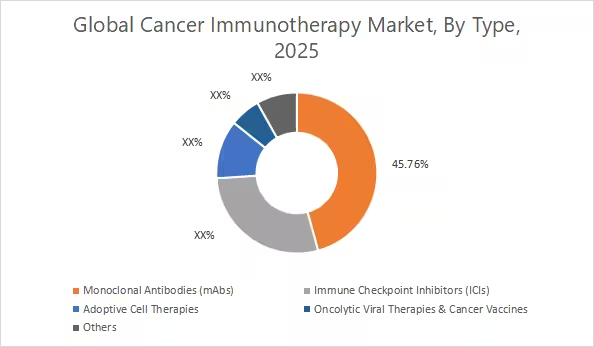
Based on type, the market is segmented into monoclonal antibodies (mAbs), immune checkpoint inhibitors (ICIs), adoptive cell therapies, oncolytic viral therapies & cancer vaccines, and others.
Trends in the type:
- Factors including the rising global incidence of cancer, significant R&D investments in advanced bio-engineering platforms, and a shift toward precision oncology are key trends driving the cancer immunotherapy market.
- The market is also driven by increasing integration of artificial intelligence for precise neoantigen discovery and biomarker profiling and a rise in strategic corporate collaborations and licensing agreements among major biopharmaceutical companies and academic research centers.
The monoclonal antibodies (mAbs) segment accounted for the largest revenue share of 45.76% in the cancer immunotherapy market share in 2025.
- Monoclonal antibodies are lab-made proteins engineered to bind to specific targets, such as antigens on cancer cells or regulatory molecules on immune cells.
- Within cancer immunotherapy, monoclonal antibodies act by precisely flagging malignant cells for destruction, blocking signals that let tumors evade the immune system, or delivering toxins directly through antibody-drug conjugates.
- Moreover, monoclonal antibodies focus heavily on malignant cells while sparing healthy tissue compared to traditional systemic chemotherapy.
- In addition, factors including the rising global incidence of cancer, expanded R&D investments in advanced bio-engineering platforms, and a shift toward precision oncology.
- The market is also driven by next-generation innovations such as bispecific antibodies, which bind dual targets simultaneously, combined with antibody-drug conjugates (ADCs), among others.
- According to the market analysis, the above factors are further expanding the cancer immunotherapy market size.
The adoptive cell therapies segment is anticipated to register a significant CAGR during the forecast period.
- Adoptive cell therapy (ACT) is a personalized cancer immunotherapy where a patient's immune cells, such as T cells or natural killer (NK) cells, are isolated, activated, and often genetically engineered outside the body to specifically target and destroy tumor cells before being reinfused back into the patient.
- The adoptive cell therapies segment is experiencing rapid development, propelled by significant clinical breakthroughs in treating refractory haematological malignancies like lymphomas and multiple myeloma using FDA-approved CAR-T platforms.
- Moreover, key driving factors for this segment include the active transition from autologous to scalable allogeneic cell formats using advanced gene-editing tools like CRISPR, rising integration of artificial intelligence for precise neoantigen discovery and biomarker profiling, and a surge in strategic corporate collaborations and licensing agreements among major biopharmaceutical companies and academic research centers.
- Consequently, the above factors are projected to drive the market during the forecast period.
By Administration Route:
Based on administration route, the market is segmented into intravenous (IV), subcutaneous (SC), intratumoral, intramuscular, and others.
Trends in the administration route:
- Factors including the rising cancer prevalence, constant approvals of novel monoclonal antibodies, and widespread clinical reliance on established infusion infrastructure are key prospects driving the intravenous (IV) segment.
- The subcutaneous (SC) segment is primarily driven by the rising patient and provider preference for streamlined, less invasive care that minimizes repetitive needle sticks and long clinic visits.
The intravenous (IV) segment accounted for the largest revenue share in the market in 2025, and it is anticipated to register a substantial CAGR during the forecast period.
- Intravenous (IV) administration in immunotherapy involves delivering biologic agents, monoclonal antibodies, or checkpoint inhibitors directly into a patient's bloodstream through a vein through an infusion or drip.
- The intravenous (IV) administration route bypasses the digestive tract and tissue absorption barriers, allowing large therapeutic molecules to reach peak concentrations instantly throughout the circulatory system.
- Hospitals and specialized infusion centers significantly rely on IV administration for complex oncology protocols, ensuring precise dose titration and immediate medical oversight during treatment.
- Moreover, factors such as the rising cancer prevalence, constant approvals of novel monoclonal antibodies, and widespread clinical reliance on established infusion infrastructure are key prospects driving the segment.
- Consequently, the above factors are further propelling the market.
By Cancer Type:
Based on cancer type, the market is segmented into lung cancer, breast cancer, colorectal cancer, prostate cancer, liver cancer, skin cancer, and others.
Trends in the cancer type:
- Factors including the growing aging population, increasing adoption of sedentary, unhealthy lifestyles, rising incidence of cancer, and growing need for advanced cancer treatment solutions are among the key trends driving the market.
- The market is also driven by increased regulatory approvals for front-line combination therapies, a shift toward precision medicine through advanced biomarker testing, and significant research investments in cancer treatment.
The lung cancer segment accounted for the largest revenue share in the market in 2025.
- In lung cancer, immunotherapy involves the use of biological treatments like immune checkpoint inhibitors (PD-1/PD-L1 blockers) to help a patient's natural immune cells detect and destroy malignant lung tumor cells.
- The use of immunotherapy offers several benefits such as prolonged tumor control, fewer severe side effects compared to standard chemotherapy, and improved survival rates for patients with advanced non-small cell or small cell lung cancer.
- Moreover, factors including rising tobacco use, increasing environmental pollutants, and growing elderly population are leading to a higher incidence rate for lung cancer.
- For instance, according to the National Center for Biotechnology Information, lung cancer is a major health crisis in India, representing 5.9% of all cancer cases and around 8.1% of all cancer-related deaths in India.
- According to the analysis, the rising cases of lung cancerare further driving the market.
The breast cancer segment is anticipated to register a significant CAGR during the forecast period.
- In breast cancer, immunotherapy involves using biological agents like immune checkpoint inhibitors and monoclonal antibodies to stimulate a patient’s immune system against aggressive subtypes like triple-negative breast cancer (TNBC). It represents a precision-driven market area focused on tumors expressing specific biomarkers such as PD-L1 or HER2.
- Moreover, factors including the rising prevalence of breast cancer, growing aging population, and increasing adoption of sedentary, unhealthy lifestyles are among the key aspects driving the segment.
- For instance, according to the American Cancer Society, an estimated 310,720 new cases of invasive breast cancer were diagnosed among women in the United States in 2024.
- According to the market analysis, the rising incidence of breast cancer is projected to drive the adoption of advanced immunotherapies, thereby boosting the market during the forecast period.
By End User:
Based on end user, the market is segmented into hospitals & specialty clinics, cancer research centers, and others.
Trends in the end user:
- Hospitals are increasingly adopting advanced diagnostic and specialized treatment options for offering comprehensive care to cancer patients, which is further driving the market.
- Rising research & development activities in cancer research institutes for providing effective cancer treatment options, such as novel therapies and personalized medicines, are boosting market development.
The hospitals & specialty clinics segment accounted for the largest revenue share in the market in 2025, and it is anticipated to register a substantial CAGR during the forecast period.
- Hospitals & specialty clinics play a vital role in cancer treatment by providing several advanced diagnostic methods and treatment options.
- In hospitals & specialty clinics, complex oncology and immuno-oncology drugs, such as immune checkpoint inhibitors, monoclonal antibodies, and adoptive cell therapies like CAR-T, are prescribed, managed, and administered.
- Moreover, the hospitals & specialty clinics segment is primarily driven by the escalating global prevalence of cancer, combined with rising patient preference for institutional care settings that ensure safety and insurance coverage.
- In addition, the market is also driven by the rapid adoption of combination immunotherapy regimens, institutional investments in advanced infusion settings to support outpatient biological delivery, and rising integration of precision biomarker testing that enables oncologists to tailor targeted treatments directly within a hospital network.
- Therefore, the aforementioned factors are further driving the market.
Regional Analysis:
The regions covered are North America, Europe, Asia Pacific, Middle East and Africa, and Latin America.
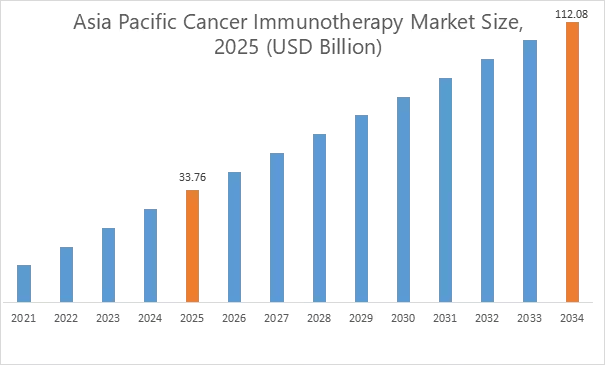
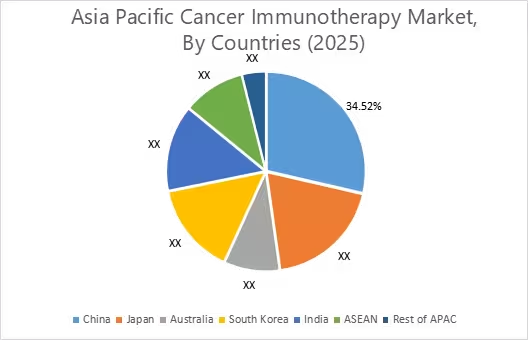
Asia Pacific region was valued at USD 33.76 Billion in 2025. Moreover, it is projected to grow to USD 37.97 Billion in 2026 and reach over USD 112.08 Billion by 2034. Out of this, China accounted for the maximum revenue share of 34.52%. As per the cancer immunotherapy market analysis, the adoption of immunotherapies in the Asia-Pacific region is primarily driven by the growing healthcare industry, increasing prevalence of cancer, along with the rising R&D investments in cancer therapies in the region. Moreover, the increasing development of cancer hospitals and cancer centers is further accelerating the market expansion.
- For instance, in 2023, Mount Alvernia Hospital, in collaboration with Icon Cancer Centre launched the first integrated private cancer treatment center in Singapore. The collaboration and the launch of the new center aimed at advancing the development of an ecosystem for healthcare professionals, institutions, and patients by adopting a personalized approach to patient care with precision diagnosis while offering individuals with various cancer treatment options. The above factors are increasing the demand for immunotherapies, in turn driving the market in the Asia-Pacific region.
North America is estimated to reach over USD 201.88 Billion by 2034 from a value of USD 64.28 Billion in 2025 and is projected to grow to USD 71.84 Billion in 2026. In North America, the market growth is driven by the favorable government initiatives for cancer prevention and treatment. The governments in the North America region are collaborating with research institutes to facilitate effective research & development activities for deriving efficient treatment options for cancer. Moreover, rising investments in R&D activities associated with cancer therapy are further contributing to the cancer immunotherapy market demand.
- For instance, according to the American Cancer Society, an estimated 226,650 new cases of lung and bronchus cancer were diagnosed in the United States in 2025.The above factors are expected to propel the cancer immunotherapy market trends in North America during the forecast period.
Meanwhile, according to the regional analysis, factors including rising investments in R&D activities for cancer treatment, along with the prevalence of advanced cancer treatment hospitals & centers equipped with modern diagnostic technology and skilled healthcare professionals, are key prospects driving the market demand in Europe. Furthermore, according to the market analysis, the industry in Latin America, Middle East, and African regions is expected to grow at a considerable rate due to factors such as growing healthcare industry, development of healthcare facilities including hospitals and cancer treatment centers, along with rising government measures for providing access to advanced treatments, including immunotherapies for cancer, among others.
Top Key Players & Market Share Insights:
The global cancer immunotherapy market is highly competitive with major players providing solutions to the national and international markets. Key players are adopting several strategies in research and development (R&D), product innovation, and end-user launches to hold a strong position in the cancer immunotherapy market. Key players in the cancer immunotherapy industry include-
- Bristol Myers Squibb(United States)
- AstraZeneca PLC(United Kingdom)
- Hoffmann-La Roche AG(Switzerland)
- Merck & Co., Inc.(United States)
- Johnson & Johnson(United States)
- Pfizer Inc.(United States)
- Novartis AG(Switzerland)
- GSK Plc (United Kingdom)
- Amgen Inc.(United States)
- Sanofi S.A.(France)
- Gilead Sciences Inc.(United States)
- BioNTech SE(Germany)
Recent Industry Developments :
Product Launches:
- In June 2026, the European Commission authorized Bristol Myers Squibb's Opdivo (nivolumab) combined with AVD chemotherapy as a first-line treatment for adults and adolescents (12+) with advanced, previously untreated classical Hodgkin lymphoma. Based on Phase 3 SWOG 1826 trial data, this regimen demonstrated a 58% reduction in the risk of disease progression or death compared to standard treatment, marking the first immunotherapy-inclusive option approved for this condition in the EU.
- In May 2026, Roche Pharma India launched Tecentriq SC (atezolizumab) as India's first subcutaneous cancer immunotherapy for non-small cell lung cancer (NSCLC). It reduces administration time through traditional intravenous drips from hours to roughly 7 minutes per injection, lowering hospital stay times by about 80%.
Cancer Immunotherapy Market Report Insights :
| Report Attributes | Report Details |
| Study Timeline | 2021-2034 |
| Market Size in 2034 | USD 407.57 Billion |
| CAGR (2026-2034) | 11.30% |
| Base Year | 2025 |
| By Type |
|
| By Administration Route |
|
| By Cancer Type |
|
| By End User |
|
| By Region |
|
| Key Players |
|
| North America | U.S. Canada Mexico |
| Europe | U.K. Germany France Spain Italy Russia Benelux Rest of Europe |
| APAC | China South Korea Japan India Australia ASEAN Rest of Asia-Pacific |
| Middle East and Africa | GCC Turkey South Africa Rest of MEA |
| LATAM | Brazil Argentina Chile Rest of LATAM |
| Report Coverage |
|
Key Questions Answered in the Report
How big is the cancer immunotherapy market? −
The cancer immunotherapy market was valued at USD 150.38 Billion in 2025 and is projected to grow to USD 473.90 Billion by 2034.
Which is the fastest-growing region in the market? +
Asia-Pacific is the region experiencing the most rapid growth in the market.
What specific segmentation details are covered in the cancer immunotherapy report? +
The report includes specific segmentation details for type, administration route, cancer type, end user, and region.
Who are the major players in the market? +
The key participants in the market are Bristol Myers Squibb (United States), AstraZeneca PLC (United Kingdom), F. Hoffmann-La Roche AG (Switzerland), Merck & Co., Inc. (United States), Johnson & Johnson (United States), Pfizer Inc. (United States), Novartis AG (Switzerland), GSK Plc (United Kingdom), Amgen Inc. (United States), Sanofi S.A. (France), Gilead Sciences Inc. (United States), BioNTech SE (Germany), and others.
Overview
Reputation & Certifications


Our Services
- Market Intelligence & Forecasting
- Custom Research Solutions
- Market Entry Strategy
- Competitive Intelligence
- Customer Insights
- Industry Innovation Analysis
- Investment Advisory