Jump to Content
Leuprolide Acetate Market - Size, Share, Industry Trends, and Forecasts (2025-2032)
Leuprolide Acetate Market Size:
Leuprolide Acetate Market size is growing with a CAGR of 5.7% during the forecast period (2025-2032), and the market is projected to be valued at USD 4,861.88 Million by 2032 from USD 3,128.00 Million in 2024.
Leuprolide Acetate Market Scope & Overview:
Leuprolide acetate is a synthetic nonapeptide that is a gonadotropin-releasing hormone receptor (GnRHR) agonist. This nonapeptide suppresses gonadotrope secretion of luteinizing hormone and follicle-stimulating hormone that subsequently suppresses gonadal sex steroid production. It is used for diverse clinical applications, including the treatment of prostate cancer, endometriosis, uterine fibroids, central precocious puberty, and in vitro fertilization techniques. This nonapeptide is available in several product formulations including pre-filled syringes, injectable suspension, and lyophilized powder which are administered through subcutaneous and intramuscular routes of administration. Additionally, it is available through various distribution channels including hospital pharmacy, retail pharmacy, and online pharmacy. The growing prevalence of conditions treated with leuprolide acetate such as prostate cancer, the development of slow-release formulations, and emerging applications are the prominent factors supporting the market trajectory.
How is AI Impacting the Leuprolide Acetate Market?
AI is significantly impacting the leuprolide acetate market through various applications in drug discovery, development, and patient care, ultimately leading to more efficient research, personalized treatments, and optimized market strategies. Additionally, AI-powered tools are accelerating the identification of potential drug candidates, optimizing clinical trial designs, and predicting patient responses, which speed up the development process and improve treatment outcomes.

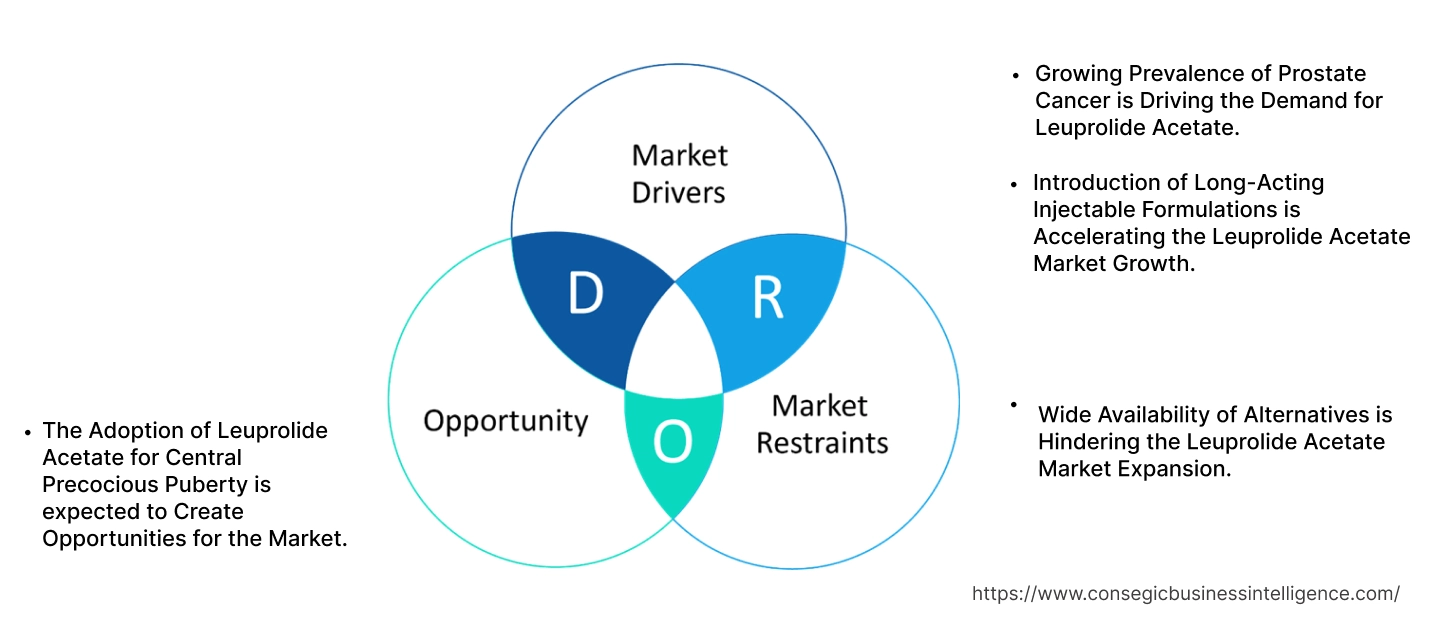
Leuprolide Acetate Market Dynamics - (DRO) :
Key Drivers:
Growing Prevalence of Prostate Cancer is Driving the Demand for Leuprolide Acetate.
Prostate cancer is a type of cancer characterized by the uncontrollable growth of cells in the prostate gland. The rising prevalence of prostate cancer among men is influenced by a confluence of demographic, lifestyle, and healthcare-related factors. Several factors increase an individual's risk of developing prostate cancer. Age is a significant risk factor, with the risk rising substantially after the age of 50. Family history is another important factor, with genetic predisposition increasing the risk. Additionally, being obese and overweight increases the risk of metastatic or advanced prostate cancer. These factors are significantly contributing to the high prevalence of prostate cancer.
- For instance, according to the data published by the S. Centers for Disease Control and Prevention, in December 2024, prostate cancer was the most common cancer among men in 2021. 236,659 new cases of prostate cancer were reported in the United States in 2021. 6% of prostate cancer cases were diagnosed among men aged 45 to 54 years, 52% among men aged 55 to 69 years, and 42% among men aged 70 years or older.
As prostate cancer is one of the most common cancers in men worldwide, the increasing number of diagnoses directly translates to a higher requirement for effective treatment options, including leuprolide acetate. As a GnRH agonist, it plays a crucial role in the management of advanced prostate cancer. By suppressing the production of testosterone, it contributes to the reduction of existing prostate tumor size, inhibits further tumor growth, and alleviates symptoms associated with advanced prostate cancer, such as bone pain and urinary obstruction.
Overall, the escalating prevalence of prostate cancer, driven by factors such as aging demographics and lifestyle factors, significantly fuels the requirement for effective treatment options such as leuprolide acetate.
Introduction of Long-Acting Injectable Formulations is Accelerating the Leuprolide Acetate Market Growth.
The introduction of long-acting injectable formulations is transforming the leuprolide acetate market growth by significantly improving the therapeutic benefits of this nonapeptide. Long-acting injectable formulations require less frequent administration compared to daily or weekly injections. This significantly improves patient adherence to treatment regimens, ensuring consistent drug levels and maximizing therapeutic benefits. This reduced injection frequency also enhances patient convenience.
Moreover, the consistent drug levels achieved with long-acting formulations result in more predictable and effective treatment outcomes, including better tumor control and symptom management. These advantages have led to a growing preference for long-acting injectable formulations among healthcare providers and patients, driving increased need for this nonapeptide.
- For instance, in December 2023, Zydus Worldwide DMCC and Daewoong Pharmaceutical had an exclusive licensing agreement to co-develop and commercialise Leuprolide Acetate for Depot Suspension in six dosage strengths for the US market. Daewoong, utilizing its proprietary technology, produces Leuprolide Acetate for Depot Suspension in its manufacturing facilities located in Osong, South Korea.
Overall, the introduction of long-acting injectable formulations is accelerating market growth by enhancing patient adherence, improving treatment outcomes, and driving increased requirement due to their convenience and efficacy.
Key Restraints:
Wide Availability of Alternatives is Hindering the Leuprolide Acetate Market Expansion.
The presence of a wide range of alternative therapies for conditions treated with leuprolide acetate poses a significant constraint to market growth. The market faces competition from other GnRH agonists such as Goserelin and Buserelin, offering similar mechanisms of action and therapeutic benefits, potentially limiting leuprolide acetate market share. Additionally, antiandrogens such as Bicalutamide, Enzalutamide, and Abiraterone provide alternative treatment options for conditions such as prostate cancer, offering distinct therapeutic profiles and influencing treatment decisions.
Furthermore, the emergence of novel therapies like immunotherapy and targeted therapies for conditions including prostate cancer and endometriosis is creating new competitive landscapes. These emerging therapies offer improved efficacy or reduced side effect profiles, further limiting the adoption of this nonapeptide. Competition from alternative medications exerts pressure on prices, impacting the profitability. Overall, the presence of numerous competitive alternatives, including other GnRH agonists, antiandrogens, and emerging therapies, significantly hinders leuprolide acetate market expansion due to increased competition, price pressure, and shifts in treatment paradigms.
Future Opportunities :
The Adoption of Leuprolide Acetate for Central Precocious Puberty is expected to Create Opportunities for the Market.
Central precocious puberty (CPP) is a condition where puberty begins much earlier than normal. In girls, this typically manifests before age 8, and in boys, before age 9. Leuprolide Acetate, a synthetic hormone, plays a crucial role in managing CPP by effectively suppressing the release of hormones that trigger puberty. As awareness of CPP and its potential long-term consequences increases, it is creating the need for appropriate treatment. The increased diagnosis and treatment rate will directly translate into a higher requirement for this synthetic nonapeptide.
CPP typically requires long-term treatment to effectively manage the condition and prevent the potential negative consequences of early puberty, such as short stature in adulthood. This ongoing treatment requirement ensures a sustained need for the medication within the market. As a result, there is a growing focus on the adoption of this synthetic nonapeptide for the management of CPP.
- For instance, in April 2024, the Independent Data and Safety Monitoring Board (DSMB) gave a positive safety review to Foresee Pharmaceuticals for the Casppian phase 3 registration study (NCTNCT05493709) evaluating efficacy, safety, and pharmacokinetics of Leuprolide in patients with central precocious CPP. This trial creates a positive impact on the adoption of leuprolide acetate for CPP.
Thus, increasing adoption of leuprolide acetate for the treatment of central precocious puberty, coupled with ongoing research and development efforts, is expected to create significant leuprolide acetate market opportunities.
Leuprolide Acetate Market Segmental Analysis :
By Product Form:
Based on product form, the market is categorized into pre-filled syringes, injectable suspensions, and lyophilized powder.
Trends in the Product Form:
- Growing focus on patient-centric formulations such as auto-injectors or other self-administration devices, to improve patient adherence and convenience.
- There is a growing trend towards integrating digital technologies with delivery systems including the development of smart injectors that track medication usage, monitor patient adherence, and transmit data to healthcare providers.
The injectable suspension segment accounted for the largest market share in 2024.
- Injectable suspensions are suspension products for parenteral routes of administration. They are the liquid preparations of solids suspended in a suitable liquid medium.
- The injectable suspension segment of the holds significant importance. These formulations offer flexibility in terms of dosage and administration, allowing healthcare professionals to adjust the dosage based on individual patient needs, and enabling greater customization of treatment regimens.
- Additionally, injectable suspensions offer a more cost-effective option compared to pre-filled syringes, particularly in resource-constrained settings. Furthermore, injectable suspensions have been used for many years and have a well-established safety and efficacy profile.
- These factors contribute to the continued necessity for injectable suspensions of this synthetic nonapeptide within the market.
The lyophilized powder segment is expected to grow at the fastest CAGR over the forecast period.
- Lyophilized powder is a freeze-dried powder developed from lyophilization, a freeze-drying process, that removes water from the product.
- The lyophilized powder segment holds significant importance due to its unique advantages. Lyophilization significantly enhances its stability and results in a longer shelf life compared to liquid formulations, making them easier to store and transport. This process also helps maintain the integrity and potency of the medication, minimizing degradation and ensuring consistent drug delivery while minimizing the risk of microbial contamination.
- Lyophilized powders offer versatility in formulation as they present the capability to be easily reconstituted with appropriate diluents, allowing for flexibility in dosage and administration routes.
- The requirement for stable and long-lasting formulations is driving the growth of the lyophilized powder segment, further fueled by continuous advancements in lyophilization technology leading to improved product quality, and increased production efficiency.
- For instance, in November 2022, Cipla announced the launch of Leuprolide Acetate Injection Depot 22.5mg. The product was approved by the United States Food and Drug Administration based on a New Drug Application submitted under the 505(b)(2) regulatory pathway. It is supplied as a lyophilized powder for a single dose injection indicated for the palliative treatment of advanced prostate cancer.
- Overall, lyophilized powder formulations offer several advantages, including enhanced stability, improved product quality, and reduced risk of contamination driving the growth of this segment within the leuprolide acetate market demand.
By Application:
Based on application, the market is categorized into endometriosis, uterine fibroids, prostate cancer, central precocious puberty, and others.
Trends in Application:
- The increasing focus is on exploring the potential of leuprolide acetate in other conditions, such as certain types of breast cancer and acromegaly.
The prostate cancer segment accounted for the largest market share in the year 2024.
- Prostate cancer is a form of cancer that begins in the gland cells of the prostate. It works by reducing testosterone levels in the body, slowing cancer growth.
- The use of leuprolide acetate in the treatment of prostate cancer constitutes a significant segment of the overall market. As a crucial component of androgen deprivation therapy (ADT), a treatment for advanced prostate cancer, it initially stimulates hormone release before subsequently suppressing it, leading to a significant reduction in testicular testosterone production.
- The reduction in testosterone levels contributes to the shrinkage of existing prostate tumors, control of tumor growth, and alleviation of symptoms associated with advanced prostate cancer.
- The high prevalence of prostate cancer, particularly among the aging male population, drives the demand for effective treatment options. Furthermore, ongoing research and development are exploring the use of this nonapeptide in combination with other therapies, to further enhance treatment outcomes for prostate cancer patients.
- For instance, in April 2023, Astellas Pharma Inc. and Pfizer Inc. announced that in phase 3 trial for the adoption of combination therapy for prostate cancer, enzalutamide plus leuprolide significantly reduced the risk of metastasis or death by 58% versus placebo plus leuprolide in men with non-metastatic hormone-sensitive prostate cancer.
- Overall, as per analysis, the use of leuprolide acetate in the treatment of prostate cancer is a significant driver of the market. Its role as a key component of ADT for advanced prostate cancer, coupled with the increasing prevalence of the disease, ensures continued demand for this medication.
The central precocious puberty segment is expected to grow at the fastest CAGR over the forecast period.
- Central precocious puberty (CPP) is a condition where the hypothalamic-pituitary-gonadal (HPG) axis is activated prematurely, causing physical and hormonal signs of puberty to appear before the normal age.
- Leuprolide acetate serves as the first-line treatment for CPP. By suppressing the release of gonadotropin-releasing hormone from the hypothalamus, it effectively halts the premature activation of the hypothalamic-pituitary-gonadal axis.
- By delaying the onset of puberty and its associated physical and psychological changes, this synthetic nonapeptide aims to promote normal growth and development, potentially minimizing the impact of early puberty on adult height.
- The adoption of this compound in CPP is driven by several factors, including increasing awareness among healthcare professionals and the general public about CPP and its potential long-term consequences.
- Additionally, the strong emphasis on improving long-term outcomes for children with CPP, such as final adult height and psychosocial well-being, is driving the demand for effective and well-tolerated treatment options.
- Overall, as per analysis, leuprolide acetate plays a critical role in the treatment of central precocious puberty, offering a valuable option for delaying pubertal development and improving long-term outcomes for affected children.
By Distribution Channel:
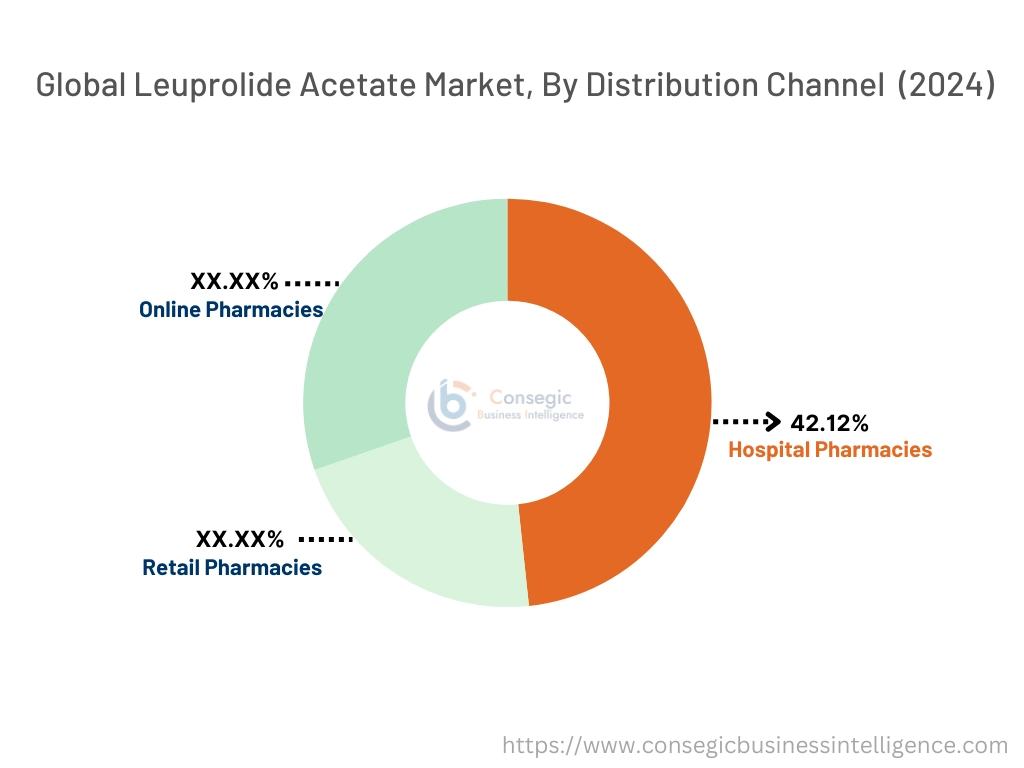
Based on distribution channel, the market is categorized into hospital pharmacies, retail pharmacies, and online pharmacies.
Trends in the Distribution Channel:
- Growing focus on the purchasing of prescription medicines through online pharmacies.
The hospital pharmacies segment accounted for the largest leuprolide acetate market share of 42.12% in the year 2024.
- A hospital pharmacy refers to the department within a hospital that is responsible for purchasing, distributing, and dispensing medicines to both inpatients and outpatients. The primary aim of hospital pharmacy is to manage the use of medications in hospitals and other medical centers.
- The hospital pharmacy segment dominates the market. Hospitals serve as the primary point of care for the administration of leuprolide acetate across various indications, including prostate cancer, endometriosis, and central precocious puberty.
- Given the frequent use of intravenous administration, hospital pharmacies are indispensable, and responsible for the procurement, storage, preparation, and dispensing of medications for hospitalized patients.
- Hospital pharmacists play a crucial role in ensuring medication safety and efficacy, collaborating with physicians to optimize treatment plans for patients receiving this synthetic nonapeptide.
- Furthermore, hospitals often serve as centers for clinical trials and research studies related to leuprolide acetate, driving demand for the medication within the hospital pharmacy setting.
- Overall, as per analysis, the hospital pharmacy segment plays a pivotal role in this market due to its central role in patient care, its expertise in medication management, and its active involvement in research and development activities.
The online pharmacies segment is expected to grow at the fastest CAGR over the forecast period.
- The online pharmacies segment has emerged as the fastest-growing within the market. Online pharmacies offer a convenient and accessible way for patients to obtain this synthetic nonapeptide. By allowing patients to shop from the comfort of their homes, online platforms eliminate the need for in-person visits to dispensaries.
- Additionally, these platforms often offer a wide range of products and brands, providing patients with more choices and options to suit their individual needs.
- Moreover, online pharmacies often offer competitive pricing and discounts, making them an attractive option for cost-conscious patients. The rapid growth of e-commerce within the healthcare sector, coupled with advancements in logistics and delivery services that facilitate efficient and timely medication delivery to patients' homes, further fuels this segment's trajectory.
- For instance, in October 2024, Amazon Pharmacy, a digital-first pharmacy, announced plans to open pharmacies across the U.S. in 2025, providing same-day delivery of prescription medications. Amazon is leveraging its vast logistics network and advanced automation technology providing affordable access to medications. This creates the potential for the distribution of prescription leuprolide acetate through online pharmacies.
- Thus, as per analysis, the increasing convenience, accessibility, and competitive pricing offered by online pharmacies, coupled with advancements in technology and logistics, are driving the rapid growth of this segment within the leuprolide acetate market trend.
Regional Analysis:
The regional segment includes North America, Europe, Asia Pacific, the Middle East and Africa, and Latin America.
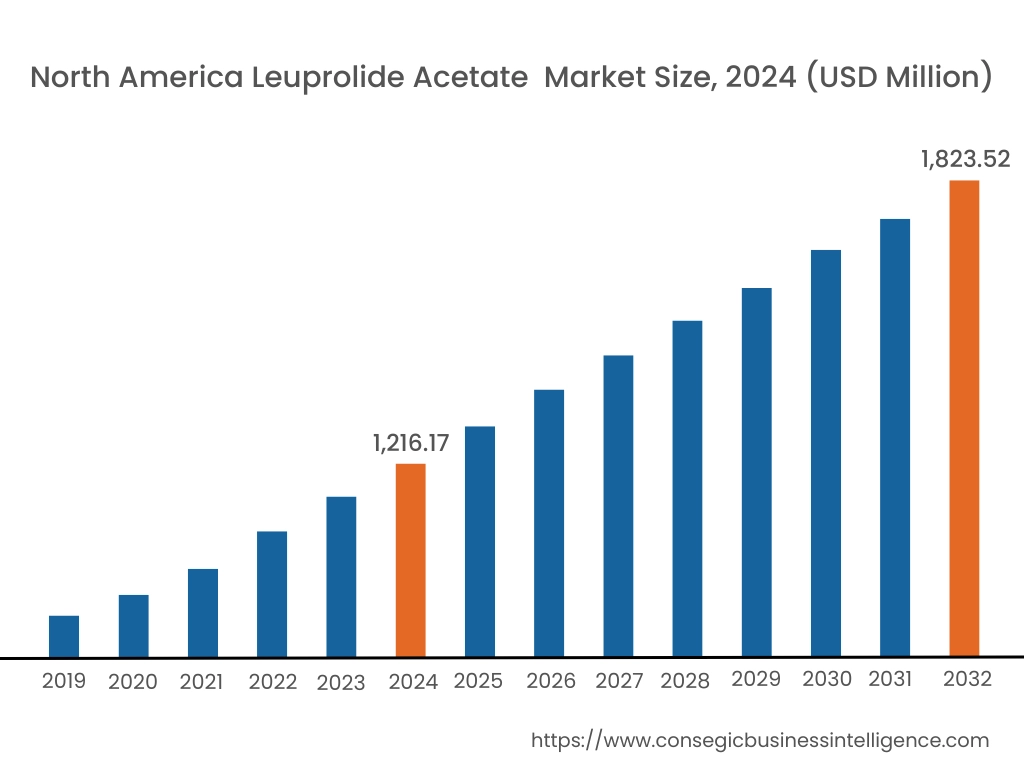
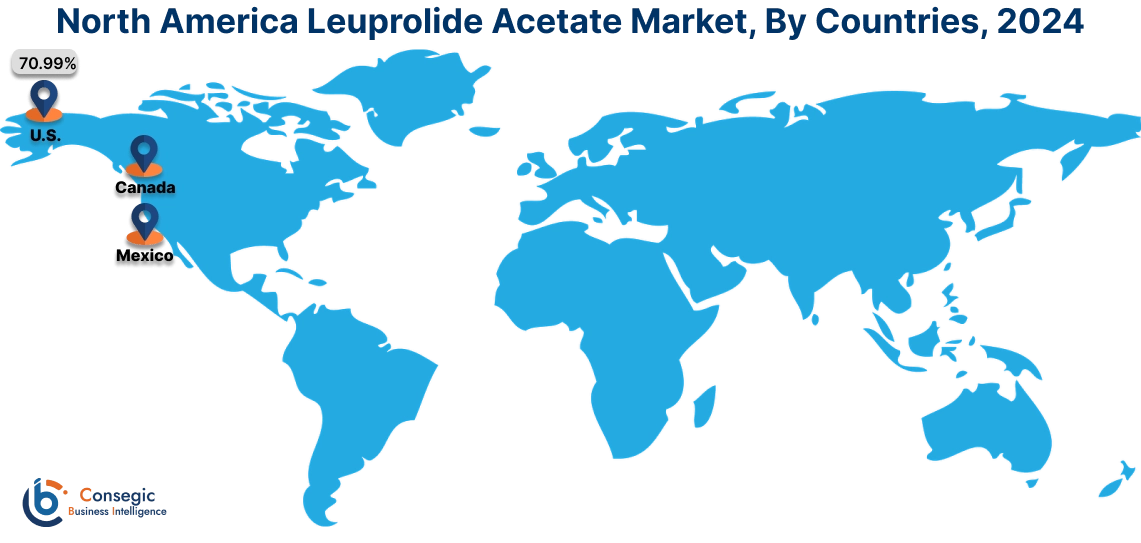
In 2024, North America accounted for the highest market share at 38.88% and was valued at USD 1,216.17 Million and is expected to reach USD 1,823.52 Million in 2032. In North America, the U.S. accounted for the highest market share of 70.99% during the base year of 2024. North America dominates the global leuprolide acetate market. This dominance is attributed to several key factors. The region boasts a well-developed healthcare industry & system with cutting-edge medical facilities, advanced diagnostic technologies, and access to specialized healthcare professionals. This robust infrastructure facilitates early diagnosis, timely intervention, and the provision of comprehensive care for conditions treated with this synthetic nonapeptide. North America presents numerous renowned research institutions, universities, and pharmaceutical companies actively involved in research and development. Significant investments are made in research areas such as developing novel formulations, exploring new therapeutic applications, and improving treatment outcomes.
- For instance, in September 2024, the American Cancer Society announced the launch of the National Prostate Cancer Roundtable to address the alarming rise in prostate cancer diagnoses. The roundtable is poised to advance national priorities, promote evidence-based strategies, and catalyze policy and patient care solutions. The establishment of the National Prostate Cancer Roundtable has the potential to significantly impact the leuprolide acetate market by driving advancements in prostate cancer research further supporting the adoption of this nonapeptide.
Additionally, the high healthcare expenditure in North America allows for greater access to advanced diagnostic and treatment options, further driving market growth. Furthermore, strong government support through funding and initiatives dedicated to research and patient care significantly contributes to market growth in this region. The combination of the aforementioned factors and trends is driving a substantial trajectory in the North American market.
Asia Pacific is experiencing the fastest growth with a CAGR of 6.4% over the forecast period. The leuprolide acetate market trend across the region is attributed to several key factors. The region is experiencing a significant and rapid demographic shift with a rapidly aging population, which significantly increases the prevalence of age-related conditions, such as prostate cancer, a major indication for leuprolide acetate. There's a general increase in healthcare spending, driving improvements in healthcare infrastructure and access to healthcare services, including those related to the treatment of conditions such as prostate cancer and endometriosis. The presence of rapidly growing economies in the region is also contributing to the expansion of the healthcare industry, driving investments in healthcare infrastructure, research and development, and the development of new healthcare technologies.
Europe presents a significant contribution to the leuprolide acetate market analysis. Europe boasts well-developed healthcare systems with high-quality infrastructure, including advanced hospitals, specialized clinics, and skilled healthcare professionals, facilitating early diagnosis, timely intervention, and comprehensive care for conditions treated with this synthetic nonapeptide. Furthermore, Europe presents numerous research institutions actively engaged in research related to nonapeptide, with significant investments made in areas such as developing novel formulations and exploring new therapeutic applications. A strong emphasis on patient-centered care across many European countries drives the development and implementation of best practices in diagnosis, treatment, and patient care. Additionally, many European countries have implemented government initiatives and policies to address healthcare challenges, including the development and implementation of innovative treatment options for various conditions, which positively impact the market.
The Middle East and Africa (MEA) region is witnessing a notable leuprolide acetate market. The growing healthcare sector in the Middle East is playing a pivotal role in the market. Many countries in the MEA region are investing in developing their healthcare infrastructure with advanced diagnostic and treatment facilities. This includes building hospitals, and clinics and improving access to diagnostic tools which are essential for detecting conditions treated with this medication. Additionally, the region is witnessing the development of research and development centers. Economic growth across the countries within the region is driving improvements in healthcare access and quality of care creating a favorable environment for the trajectory of the leuprolide acetate market opportunities in the MEA region.
Latin America is an emerging region in the leuprolide acetate market analysis, with significant potential for innovation. The combination of the increasing prevalence of several diseases, government support, and rising disposable income is driving the significant growth of the leuprolide acetate market demand in Latin America. The region encompasses a mix of public and private healthcare systems, with varying levels of access and affordability. This diversity impacts the availability and utilization of leuprolide acetate. The growing middle class in several Latin American countries has led to increased healthcare spending and the need for quality treatments, including the adoption of leuprolide acetate. These factors collectively present a promising factor for healthcare providers and pharmaceutical companies’ manufacturers to develop leuprolide acetate to address the needs of individuals with prostate cancer, endometriosis, and central precocious puberty among others in Latin America.
Top Key Players and Market Share Insights:
The Leuprolide Acetate market is highly competitive with major players providing precise products to the national and international markets. Key players are adopting several strategies in research and development (R&D) and product innovation to hold a strong position in the global Leuprolide Acetate market. Key players in the Leuprolide Acetate industry include-
- Amneal Pharmaceuticals LLC. (U.S.)
- Tolmar, Inc. (U.S.)
- Takeda Pharmaceutical Company Limited (Japan)
- Zydus Group (India)
- AbbVie Inc. (U.S.)
- Foresee Pharmaceuticals, Co LTD. (Taiwan)
- Cipla (India)
- Meitheal Pharmaceuticals (U.S.)
Recent Industry Developments :
Agreement:
- In December 2023, in Zydus Worldwide DMCC and Daewoong Pharmaceutical an exclusive licensing agreement to co-develop and commercialize Leuprolide Acetate for Depot Suspension in six dosage strengths for the US market. Daewoong, utilising its proprietary technology, produces Depot Suspension in its manufacturing facilities located in Osong, South Korea.
Product Launch:
- In November 2022, Cipla announced the launch of Leuprolide Acetate Injection Depot 22.5mg. The product was approved by the United States Food and Drug Administration based on a New Drug Application submitted under the 505(b)(2) regulatory pathway. It is supplied as lyophilized microspheres for a single dose injection indicated for palliative treatment of advanced prostate cancer.
Leuprolide Acetate Market Report Insights :
| Report Attributes | Report Details |
| Study Timeline | 2019-2032 |
| Market Size in 2032 | USD 4,861.88 Million |
| CAGR (2025-2032) | 5.7% |
| By Product Form |
|
| By Application |
|
| By Distribution Channel |
|
| By Region |
|
| Key Players |
|
| North America | U.S. Canada Mexico |
| Europe | U.K. Germany France Spain Italy Russia Benelux Rest of Europe |
| APAC | China South Korea Japan India Australia ASEAN Rest of Asia-Pacific |
| Middle East and Africa | GCC Turkey South Africa Rest of MEA |
| LATAM | Brazil Argentina Chile Rest of LATAM |
| Report Coverage |
|
Key Questions Answered in the Report
How big is the Leuprolide Acetate market? −
In 2024, the Leuprolide Acetate market is USD 3,128.00 Million.
Which is the fastest-growing region in the Leuprolide Acetate market? +
Asia Pacific is the fastest-growing region in the Leuprolide Acetate market.
What specific segmentation details are covered in the Leuprolide Acetate market? +
Product Form, Application, and Distribution Channel segmentation details are covered in the Leuprolide Acetate market.
Who are the major players in the Leuprolide Acetate market? +
Amneal Pharmaceuticals LLC., Tolmar, Inc., and AbbVie Inc. are some of the major players in the market.
Overview
Reputation & Certifications


Our Services
- Market Intelligence & Forecasting
- Custom Research Solutions
- Market Entry Strategy
- Competitive Intelligence
- Customer Insights
- Industry Innovation Analysis
- Investment Advisory