Jump to Content
Acute Pancreatitis Market Size & Industry Share - Growth Trends & Forecasts (2026 - 2034)
Acute Pancreatitis Market Size:
The Acute Pancreatitis market size was valued at 4,745.82 (US$M) in 2025 and is projected to grow from 4,997.35 (US$M) in 2026 to 7,553.82 (US$M) by 2034, at a CAGR of 5.3% from 2026 to 2034, according to a recent report from Consegic Business Intelligence.
Acute Pancreatitis Market Scope & Overview:
Acute pancreatitis refers to sudden inflammation of pancreas, which can usually range from mild to life-threatening conditions. It mostly occurs when digestive enzymes activate prematurely inside the pancreas, which in turn causes the gland and surrounding tissues to digest themselves. The condition often requires hospitalization and supportive care for recovery. Moreover, pancreatitis is commonly caused by gallstones or heavy alcohol use, while its symptoms include severe upper abdominal pain, nausea, and vomiting, among others. Additonally, the acute pancreatitis market involves the diagnosis, treatment, along with management of pancreatitis. Further, the market is mainly driven by rising prevalence of the disease, along with advancements in diagnostics and new treatment options, among others.
How is AI Transforming the Acute Pancreatitis Market?
The integration of AI is significantly transforming the pancreatitis market. AI integration helps in improving diagnosis, risk stratification, along with treatment through applications such as image analysis and drug discovery, among others. Moreover, AI tools also help predicting disease severity, potential complications, as well as recurrence risk, which in turn assist in more accurate and earlier diagnoses using imaging data, along with accelerating the discovery of new therapies.
Additionally, AI-driven systems help in evaluating CT scans, MRIs, and endoscopic ultrasound (EUS) images with high precision for detecting subtle signs of pancreatic inflammation, necrosis or fluid collections that might be missed by human sight. This includes automated segmentation of lesions for quantifying disease burden along with improving the consistency and objectivity of severity grading. Hence, the above factors are expected to positively impact the market growth in the upcoming years.

Acute Pancreatitis Market Dynamics - (DRO) :
Key Drivers:
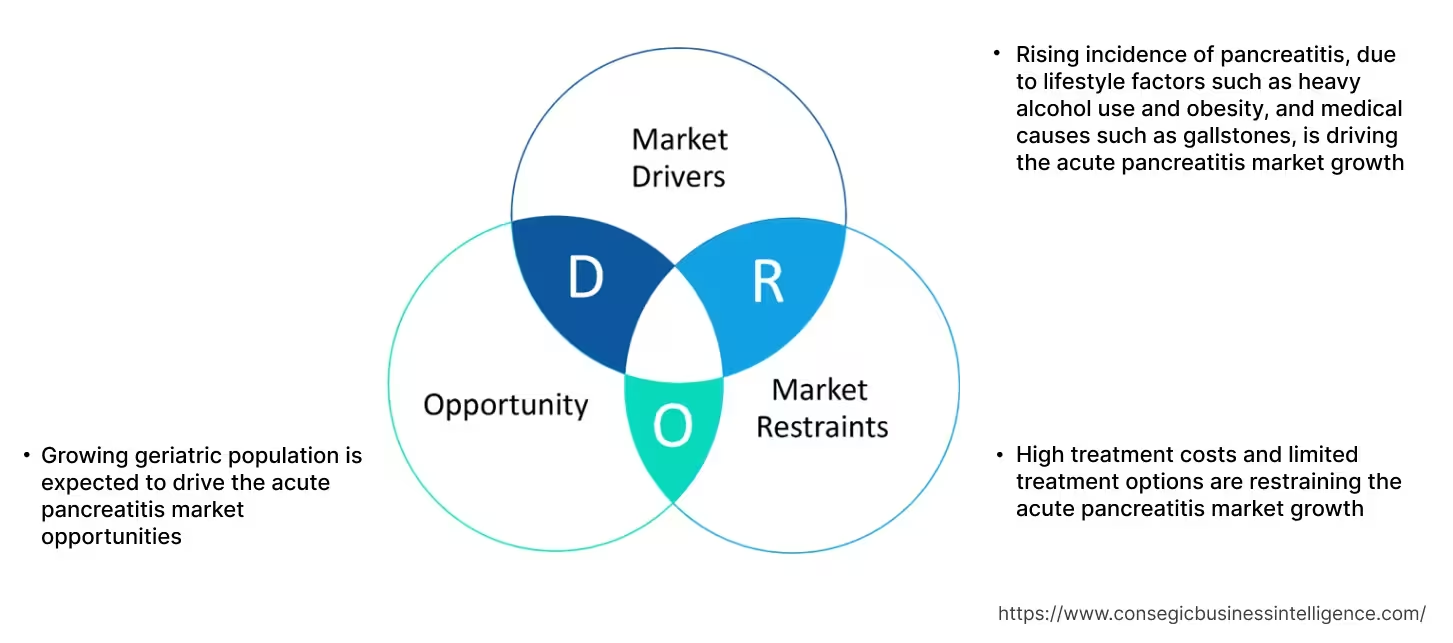
Rising incidence of pancreatitis, due to lifestyle factors such as heavy alcohol use and obesity, and medical causes such as gallstones, is driving the acute pancreatitis market growth
The growing rates of heavy alcohol consumption, smoking, and obesity are among the key factors contributing to the rise in severe pancreatitis cases. Moreover, an increase in gallstone cases is also known to be a common cause of obstruction, in turn leading to pancreatitis. Changing dietary habits along with inactive lifestyles further contribute to these conditions. Additionally, these risk factors are becoming more common globally due to changing dietary patterns and inactive lifestyles, thereby leading to new cases and subsequent hospitalizations. The above factors are driving the demand for advanced diagnostic solutions and innovative therapeutic interventions for effective management and treatment of pancreatitis and its complications, in turn propelling the market growth.
- For instance, according to the National Library of Medicine, acute pancreatitis is a leading cause of gastrointestinal hospitalizations in the United States, with nearly 275,000 to 300,000 admissions annually.
Consequently, the rising incidence of pancreatitis due to lifestyle factors and medical causes is driving the acute pancreatitis market size.
Key Restraints :
High treatment costs and limited treatment options are restraining the acute pancreatitis market growth
The high costs associated with severe pancreatitis treatment, along with the current lack of specific, internationally licensed drug therapies, are among the key apsects limiting the market growth. Managing severe pancreatitis usually requires intensive hospitalization, advanced imaging, along with potentially prolonged intensive care unit (ICU) stays, which in turn result in a substantial financial burden on patients.
Moreover, there are currently no approved targeted drug treatments dedicated solely to severe pancreatitis. Treatment for severe pancreatitis is mainly supportive, focusing mostly on pain management, intravenous fluid resuscitation, while addressing complications with generic treatments such as antibiotics in case any infections occur. Additionally, high costs related to research & development along with stringent regulations for new drug approvals, further contribute to limited novel treatment options, in turn limiting the market development. Thus, the aforementioned factors are hindering the pancreatitis market expansion.
Future Opportunities :
Growing geriatric population is expected to drive the acute pancreatitis market opportunities
The growing geriatric population worldwide is expected to offer lucrative aspects for market growth, as elderly patients usually have a higher incidence of this condition, more severe disease courses, along with increased mortality rates. Moreover, geriatric population is also more susceptible to age-related risk factors, such as gallstone disease, polypharmacy (medication-induced pancreatitis), along with multiple conditions such as diabetes, hypertension, and cardiovascular disease, among others. In case of severe pancreatitis, these patients usually face frequent and severe complications such as persistent organ failure and infection, which in turn results in longer hospital stays and more intensive, complex treatments. This creates a substantial need for improved diagnostic tools and treatment, thereby driving the market.
- For instance, according to the U.S. Census Bureau, the total number of Americans aged 65 and older is estimated to increase from 58 million in 2022 to 82 million by 2050. Likewise, the share of 65 and older age group in the U.S. is anticipated to increase from 17% to 23% of the total population.
Hence, according to the analysis, the growing geriatric population is projected to boost the acute pancreatitis market opportunities during the forecast period.
Acute Pancreatitis Market Segmental Analysis :
By Offerings:
Based on offerings, the market is segmented into medications and diagnosis.
Trends in the Offerings:
- Increasing trend in adoption of Endoscopic Ultrasound (EUS), which helps in confirming the cause of pancreatitis and subsequently guides in interventional procedures.
- Rising focus on Point-of-Care (POC) testing for quickly measuring critical enzymes and inflammatory markers, is propelling the market.
The diagnosis segment accounted for the largest revenue share in the acute pancreatitis market share in 2024.
- There is increasing integration of Artificial Intelligence (AI) and Machine Learning tools into diagnostic platforms to rapidly analyze clinical and radiological data for early prediction.
- Moreover, there is an increased reliance on high-resolution CT scans and MRI with MRCP for detailed early assessment.
- Additionally, growing introduction and validation of new blood-based biomarkers which are aimed at predicting specific patient outcomes, such as the development of necrosis or organ failure.
- According to the acute pancreatitis market analysis, AI-powered severity prediction, advanced cross-sectional imaging, and development of novel biomarkers are driving the acute pancreatitis market size.
The medications segment is anticipated to register the fastest CAGR during the forecast period.
- Companies are transitioning their focus in pancreatitis treatment from symptomatic relief to developing specific drugs, such as enzyme inhibitors and immunomodulators, designed to halt the systemic inflammatory cascade.
- Moreover, there is a global clinical shift toward strictly limiting prophylactic antibiotic use and reserving them only for confirmed cases of infected pancreatic necrosis.
- Additionally, growing attention to the long-term management of complications like Pancreatogenic Diabetes and Recurrent Acute Pancreatitis (RAP), driving demand for chronic enzyme replacement and endocrine therapies.
- For instance, October 2025, CalciMedica and Telperian announced a collaboration to use Telperian's innovative Artificial Intelligence (AI) engine to analyze CalciMedica's clinical trial data for its drug, Auxora. CalciMedica is developing Auxora for acute and chronic inflammatory and immunologic illnesses.
- Hence, the shift to targeted, anti-inflammatory therapies and restricted antibiotic usage is projected to boost the market during the forecast period.
By Causes:
Based on causes, the market is segmented into gallstones, alcoholism, and others.
Trends in the Causes:
- Increased use of genetic testing, greater awareness, and better medical vigilance, and others are driving the market.
- A growing trend to integrate substance abuse counselling and rehabilitation services into the standard treatment is propelling the market.
Gallstones accounted for the largest revenue in the overall acute pancreatitis market share in 2024 and it is anticipated to register a substantial CAGR during the forecast period.
- There is an increasing focus on timely use of Endoscopic Retrograde Cholangiopancreatography (ERCP) within 24 hours of admission, specifically for patients with GIP complicated by cholangitis or persistent biliary obstruction, to reduce morbidity.
- There is an increased utilization of Endoscopic Ultrasound (EUS) and Magnetic Resonance Cholangiopancreatography (MRCP) to identify occult (hidden) gallstones or biliary sludge, improving diagnostic precision for the cause.
- Further, the overall prevalence of GIP is increasing globally, particularly in Western markets, driven by the rising rates of obesity and associated metabolic syndrome, which fuel gallstone formation.
- Therefore, increased focus on early endoscopic intervention, advanced biliary imaging, and rising incidence due to lifestyle factors are driving the acute pancreatitis market trends.
By End User:
Based on the end user, the market is segmented into hospitals, specialty clinics, diagnostic laboratories/centers, and others.
Trends in the End User:
- There is a rising trend in bringing diagnostic testing closer to the patient using portable devices, which subsequently propels the market.
- Clinics are expanding their service offerings to provide comprehensive care under one roof, often leading to the creation of multi-specialty or super-specialty facilities, which in turn drives the market.
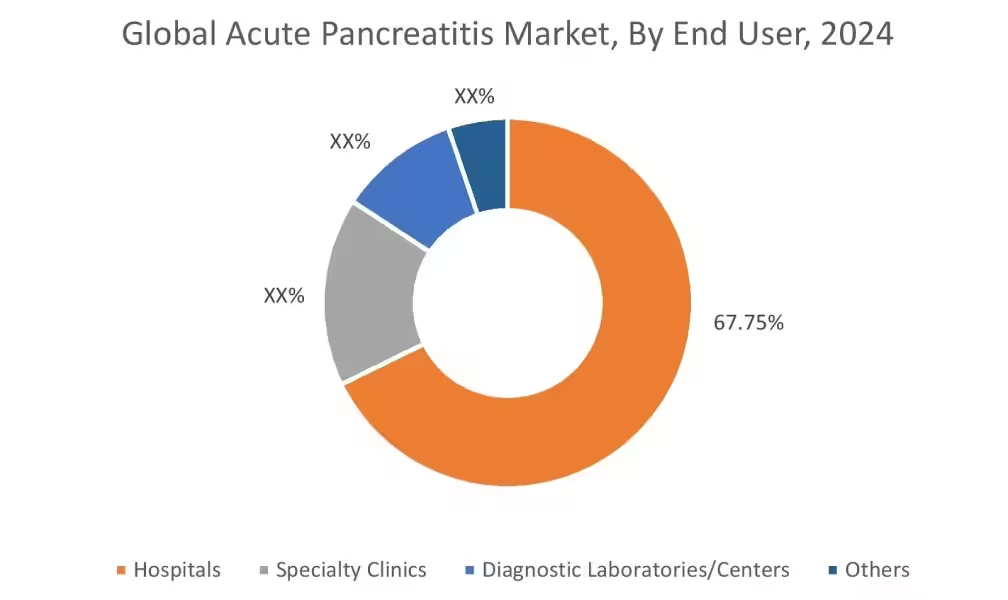
The hospitals segment accounted for the largest revenue share of 67.75% in the market in 2024, and it is anticipated to register a substantial CAGR during the forecast period.
- There is a growing emphasis by hospitals to move less critical procedures and follow-ups to lower-cost outpatient facilities and Ambulatory Surgery Centers (ASCs).
- Moreover, hospitals are heavily investing in AI-powered diagnostics analysis and predictive analytics for patient flow, readmission risk, and supply chain.
- In addition, persistent clinical labor shortages are driving the adoption of automation in non-clinical tasks, virtual nursing/monitoring, and new staffing models which are key prospects driving the market.
- Hence, shift to outpatient and ambulatory care, focus on AI, and automation are driving the market growth.
Regional Analysis:
The regions covered are North America, Europe, Asia Pacific, the Middle East and Africa, and Latin America.
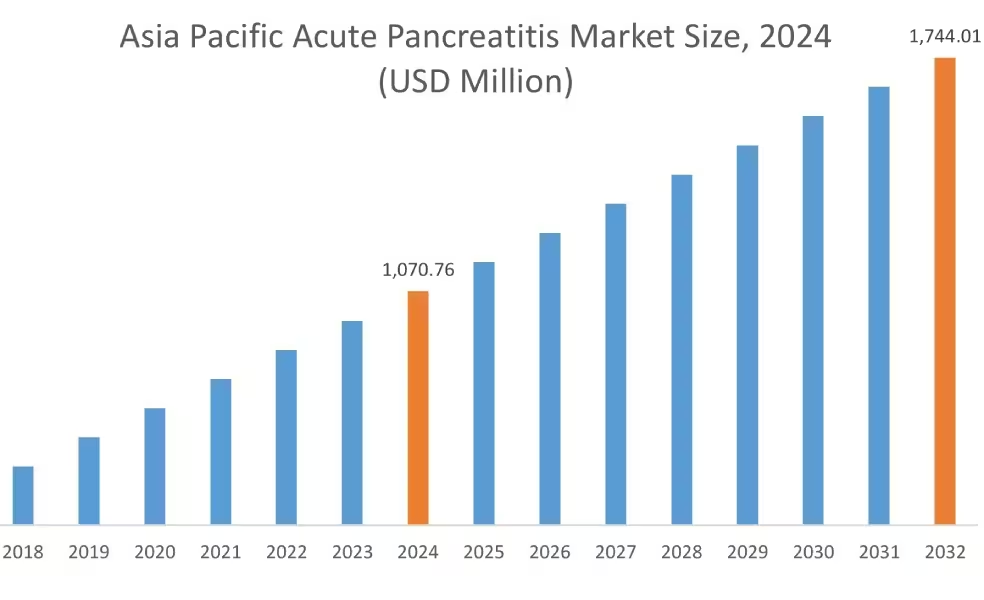
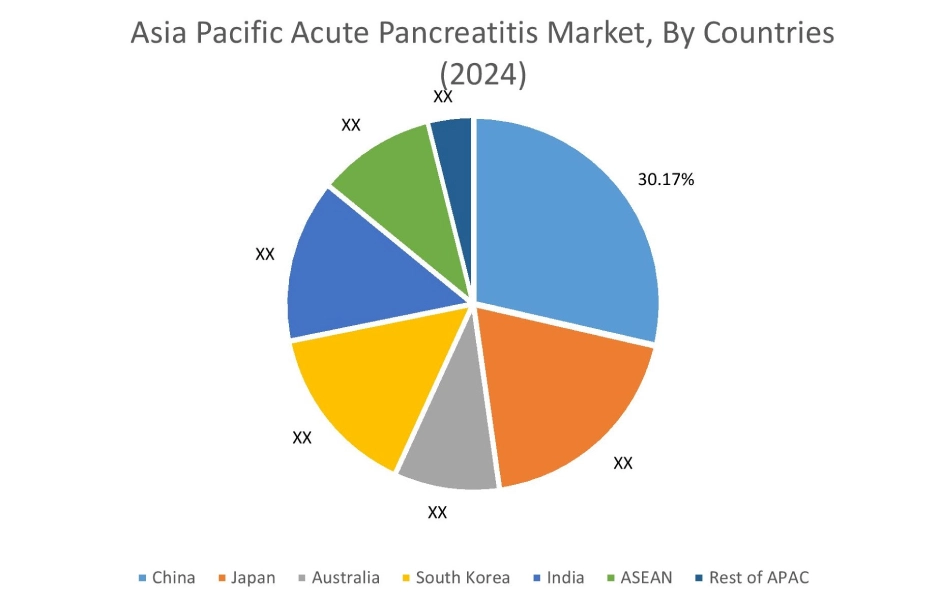
Asia Pacific region was valued at USD 1,070.76 Million in 2024. Moreover, it is projected to grow by USD 1,113.91 Million in 2025 and reach over USD 1,744.01 Million by 2032. Out of this, China accounted for the maximum revenue share of 30.17%. As per the acute pancreatitis market analysis, the adoption of pancreatitis in the Asia-Pacific region is primarily driven by the rising prevalence of chronic diseases, including pancreatitis, along with increasing investments in healthcare facilities, among others. Similarly, the rising development of hospitals, growing geriatric population, and advancements in diagnostics and treatment solutions for severe pancreatitis are further accelerating the acute pancreatitis market expansion.
- For instance, the incidence of acute pancreatitis in India is estimated to range from 12 to 20 cases per 100,000 individuals per year, with common causes of pancreatitis including gallstones, idiopathic factors, and biliary ascariasis. The above factors are increasing the need for advanced diagnostics and treatment options for pancreatitis, in turn driving the market in the Asia-Pacific region.
North America is estimated to reach over USD 2,401.42 Million by 2032 from a value of USD 1,528.83 Million in 2024 and is projected to grow by USD 1,585.55 Million in 2025. In North America, the growth of the acute pancreatitis industry is driven by the increasing prevalence of chronic diseases, along with rising cases of severe pancreatitis, caused by factors such as changing lifestyles and rising obesity rates, among others. Additionally, the increasing government expenditure on improving healthcare infrastructure and services is further contributing to the acute pancreatitis market demand.
- For instance, according to the American Hospital Association, there are approximately 6,093 hospitals across the United States, which mainly include community hospitals, federal government hospitals, and others. The above factors are expected to propel the acute pancreatitis market trends in North America during the forecast period.
Meanwhile, according to the regional analysis, factors including the prevalence of elderly population, growing healthcare industry, and robust healthcare infrastructure are driving the acute pancreatitis market demand in Europe. Furthermore, according to the market analysis, the market demand in Latin America, Middle East, and African regions is expected to grow at a considerable rate due to factors such as increasing prevalence of pancreatitis and other chronic conditions, combined with the increasing development of healthcare facilities including hospitals and clinics, and expanding access to improved healthcare services, among others.
Top Key Players & Market Share Insights:
The global acute pancreatitis market is highly competitive with major players providing solutions to the national and international markets. Key players are adopting several strategies in research and development (R&D), product innovation, and end-user launches to hold a strong position in the acute pancreatitis market. Key players in the acute pancreatitis industry include-
- CalciMedica Inc. (U.S)
- Hikma Pharmaceuticals (UK)
- Merck & Co., Inc. (U.S)
- Olympus Corporation (Japan)
- Takeda Pharmaceutical Company Limited (Japan)
- Ionis Pharmaceuticals, Inc. (U.S)
- Baxter International Inc. (U.S)
- Amgen Inc. (U.S)
- Boehringer Ingelheim International GmbH (Germany)
- Lilly USA LLC (U.S)
Recent Industry Developments :
- In September 2025, Ionis Pharmaceuticals Inc. announced positive results from its pivotal Phase 3 CORE and CORE2 studies related to olezarsen in individuals suffering from severe hypertriglyceridemia. In the studies, olezarsen showcased a statistically substantial placebo-adjusted mean reduction of up to 72% in fasting triglycerides along with a considerable decrease in acute pancreatitis events of 85% with favorable safety as well as tolerability.
- In July 2024, Arrivo BioVentures announced that the U.S. Food and Drug Administration (FDA) approved Fast Track Designation for its new trial drug, RABI-767, which is specifically developed for treatment of patients suffering from severe pancreatitis. The designation will further progress the review of the novel therapy, while aiming to bring it to patients as soon as possible.
Acute Pancreatitis Market Report Insights :
| Report Attributes | Report Details |
| Study Timeline | 2021-2034 |
| Market Size in 2034 | USD 7,553.82 Million |
| CAGR (2026-2034) | 5.30% |
| Base Year | 2025 |
| By Offerings |
|
| By Causes |
|
| By End-User |
|
| By Region |
|
| Key Players |
|
| North America | U.S. Canada Mexico |
| Europe | U.K. Germany France Spain Italy Russia Benelux Rest of Europe |
| APAC | China South Korea Japan India Australia ASEAN Rest of Asia-Pacific |
| Middle East and Africa | GCC Turkey South Africa Rest of MEA |
| LATAM | Brazil Argentina Chile Rest of LATAM |
| Report Coverage |
|
Key Questions Answered in the Report
How big is the acute pancreatitis market? −
The acute pancreatitis market was valued at USD 4,342.28 Million in 2024 and is projected to grow to USD 6,812.55 Million by 2032.
Which is the fastest-growing region in the acute pancreatitis market? +
Asia-Pacific is the region experiencing the most rapid growth in the acute pancreatitis market.
What specific segmentation details are covered in the acute pancreatitis report? +
The acute pancreatitis report includes specific segmentation details for offerings, causes, end user, and region.
Who are the major players in the acute pancreatitis market? +
The key participants in the acute pancreatitis market are CalciMedica Inc. (U.S), Ionis Pharmaceuticals, Inc. (U.S), Baxter International Inc. (U.S), Amgen Inc. (U.S), Boehringer Ingelheim International GmbH (Germany), Lilly USA LLC (U.S), Hikma Pharmaceuticals (UK), Merck & Co., Inc. (U.S), Olympus Corporation (Japan), Takeda Pharmaceutical Company Limited (Japan), and others.
Overview
Reputation & Certifications


Our Services
- Market Intelligence & Forecasting
- Custom Research Solutions
- Market Entry Strategy
- Competitive Intelligence
- Customer Insights
- Industry Innovation Analysis
- Investment Advisory