Jump to Content
Cannabis Edibles Market - Size, Share, Industry Trends, and Forecasts (2025-2032)
Cannabis Edibles Market Size:
Cannabis Edibles Market size is estimated to reach over USD 31.74 Billion by 2032 from a value of USD 11.95 Billion in 2024 and is projected to grow by USD 13.29 Billion in 2025, growing at a CAGR of 14.6% from 2025 to 2032.
Cannabis Edibles Market Scope & Overview:
Cannabis edibles are food and beverage products infused with cannabinoids, including tetrahydrocannabinol (THC) and cannabidiol (CBD). These products provide an alternative method of cannabis consumption without inhalation. They are available in various forms, including gummies, chocolates, baked goods, and beverages.
Key features include controlled dosage, extended effects, and discreet consumption. These products offer convenience, precise cannabinoid intake, and reduced respiratory risks. The effects are typically longer-lasting compared to inhaled cannabis. They are formulated with natural ingredients, flavor enhancements, and standardized potency levels.
Cannabis edibles are widely used in medical, wellness, and recreational applications. They are consumed for pain relief, stress management, relaxation, and therapeutic benefits. The end-use industries include pharmaceuticals, food and beverage, and retail. Businesses leverage these products to expand consumer options and enhance market reach.

Cannabis Edibles Market Dynamics - (DRO):
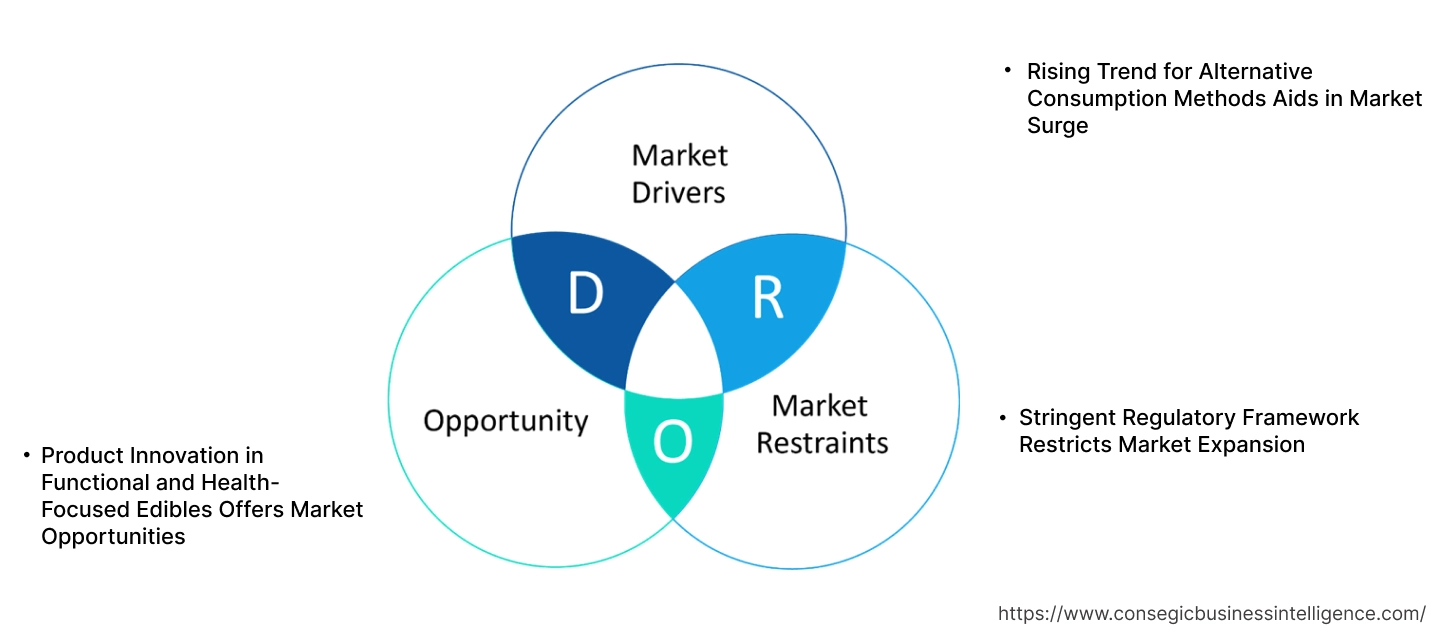
Key Drivers:
Rising Trend for Alternative Consumption Methods Aids in Market Surge
Consumers are increasingly shifting towards cannabis edibles as an alternative to traditional smoking and vaping methods. Edibles provide a discrete, smoke-free option that appeals to both medical and recreational users. Additionally, they offer a controlled dosage, reducing the risks associated with inhalation methods. Cannabis-infused products such as gummies, chocolates, and baked goods provide long-lasting effects compared to smoking, making them a preferred choice for individuals seeking sustained relief from pain, anxiety, and sleep disorders. Furthermore, with growing concerns about lung health, many consumers are turning to edibles as a safer and more socially acceptable method of cannabis consumption. For instance, cannabis-infused gummies and chocolates are gaining traction among users who prioritize convenience and taste. This shift in consumer preference, combined with increasing product variety, is fueling the expansion of the cannabis edibles market.
Key Restraints:
Stringent Regulatory Framework Restricts Market Expansion
The cannabis edibles market faces significant challenges due to the complex and varying regulatory landscape across different regions. Many countries and states impose strict guidelines on THC content, packaging, and advertising, limiting market penetration. In addition, obtaining regulatory approvals for new cannabis-infused products is a lengthy process that delays product launches. Regulatory bodies enforce rigorous testing and labeling requirements to ensure consumer safety, which increases production costs for manufacturers. Moreover, inconsistencies in cannabis regulations across international markets create additional barriers for global expansion. For example, in the United States, FDA regulations and state-specific laws create barriers for new entrants, requiring companies to navigate a patchwork of legal restrictions. The European Union also enforces strict THC limits on edibles, further complicating market entry. These stringent regulations significantly hinder the cannabis edibles market growth by increasing compliance costs and restricting product innovation.
Future Opportunities:
Product Innovation in Functional and Health-Focused Edibles Offers Market Opportunities
The introduction of cannabis-infused functional foods and beverages is expected to create new cannabis edibles market opportunities. With rising consumer interest in wellness products, companies are developing edibles infused with CBD and other beneficial compounds to offer relaxation, pain relief, and sleep support. Functional cannabis edibles with added vitamins, adaptogens, and herbal extracts are gaining popularity among health-conscious consumers. Additionally, the increasing adoption of nanoemulsion technology is enhancing the bioavailability of cannabis edibles, allowing for faster onset times and more predictable effects. For instance, CBD-infused protein bars and herbal teas are being positioned as health-conscious alternatives to traditional edibles. Beverage companies are also entering the market with THC- and CBD-infused drinks, catering to consumers looking for an alcohol-free yet relaxing experience. As demand for personalized and health-oriented cannabis products grows, innovation in formulations and delivery methods is expected to drive the cannabis edibles market in the coming years.
Cannabis Edibles Market Segmental Analysis :
By Product Type:
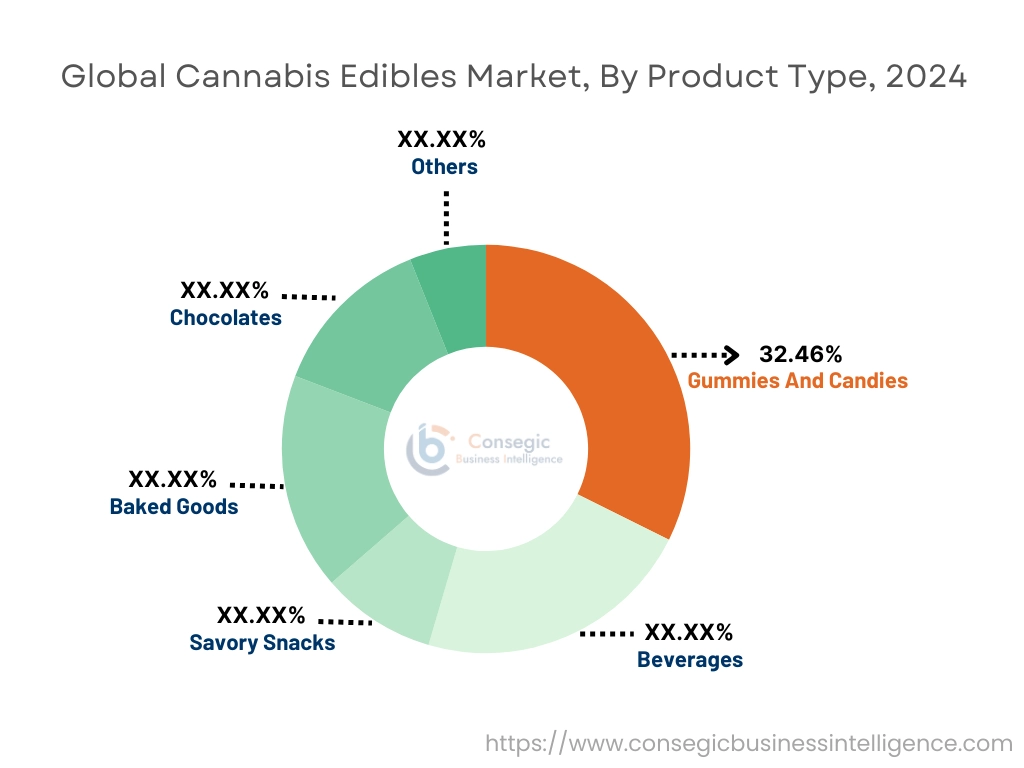
Based on product type, the cannabis edibles market is segmented into baked goods, chocolates, gummies and candies, beverages, savory snacks, and others.
The gummies and candies segment accounted for the largest revenue cannabis edibles market share of 32.46% in 2024.
- Gummies and candies are widely consumed due to their discreet nature, ease of dosing, and diverse flavor options.
- These products offer precise THC and CBD content, making them a preferred choice among both recreational and medical consumers.
- Technological advancements in cannabis extraction have led to improved product formulations, enhancing taste and effectiveness.
- The rising acceptance of cannabis-infused edibles as an alternative to smoking is increasing trend for gummies and candies.
- Regulatory approvals and product standardization are further contributing to their widespread availability in licensed dispensaries.
- Therefore, according to cannabis edibles market analysis, the growing consumer preference for gummies and candies, coupled with regulatory support and product innovations, will continue to drive segment growth.
The beverages segment is anticipated to register the fastest CAGR during the forecast period.
- Cannabis-infused beverages offer a socially acceptable and convenient consumption method, appealing to both new and experienced users.
- Innovations in water-soluble cannabinoids have improved bioavailability, ensuring faster onset of effects compared to traditional edibles.
- The entry of major beverage companies into the cannabis market is increasing investment in research and development.
- The availability of various product types, including teas, sodas, and energy drinks, is expanding consumer choices.
- Thus, according to cannabis edibles market analysis, the increasing presence of cannabis beverages in mainstream retail and advancements in formulation technology will support rapid cannabis edibles market expansion.
By Source Type:
Based on source type, the market is segmented into hemp-derived and marijuana-derived edibles.
The marijuana-derived segment accounted for the largest revenue in cannabis edibles market share in 2024.
- Marijuana-derived edibles contain higher THC concentrations, making them popular among recreational users.
- The legalization of recreational cannabis in various regions is increasing accessibility and consumption of marijuana-based products.
- These products provide longer-lasting effects compared to smoking or vaping, leading to higher consumer preference.
- The expanding product portfolio, including high-potency chocolates, gummies, and beverages, is strengthening cannabis edibles market growth.
- Therefore, according to the market analysis, the rising demand for high-THC edibles and expanding legalization will continue to sustain the dominance of the marijuana-derived segment.
The hemp-derived segment is anticipated to register the fastest CAGR during the forecast period.
- Hemp-derived edibles are legally available in several markets due to their low THC content.
- Increasing awareness of the potential health benefits of CBD is driving demand for hemp-based products.
- Consumers seeking non-intoxicating cannabis options are opting for hemp-derived edibles.
- The availability of CBD-infused wellness products in mainstream retail stores is supporting cannabis edibles market expansion.
- Thus, according to the market analysis, the increasing acceptance of CBD products for wellness and relaxation purposes will continue to drive trend in the hemp-derived segment.
By Distribution Channel:
Based on distribution channel, the market is segmented into offline retail and online retail.
The offline retail segment accounted for the largest revenue share in 2024.
- Dispensaries and licensed retail stores offer a controlled and legal avenue for cannabis product purchases.
- Consumers prefer in-store purchases due to expert guidance, immediate product availability, and regulatory compliance.
- The expansion of brick-and-mortar dispensaries in legalized regions is increasing its accessibility.
- Retailers are focusing on product variety and customer experience, further enhancing offline sales.
- Therefore, according to the market analysis, the continued expansion of dispensaries and physical retail stores will support the sustained dominance of offline retail sales.
The online retail segment is anticipated to register the fastest CAGR during the forecast period.
- E-commerce platforms provide convenience, discretion, and a wider product selection for consumers.
- The integration of digital payment solutions and streamlined delivery services is improving online shopping experiences.
- COVID-19 accelerated the shift toward online cannabis sales, leading to increased investments in digital distribution channels.
- Regulatory changes permitting online cannabis sales in new regions are further driving cannabis edibles market trend.
- Thus, according to the market analysis, the growing acceptance of e-commerce and advancements in digital infrastructure will drive the rapid expansion of online cannabis sales.
By Application:
Based on application, the market is segmented into medical and recreational use.
The recreational segment accounted for the largest revenue share in 2024.
- Increasing legalization of recreational cannabis in several regions is boosting demand for edibles.
- Edibles offer a smoke-free consumption method, appealing to a broader audience.
- The availability of diverse flavors, formulations, and strengths enhances the appeal of cannabis-infused edibles.
- Social consumption trends and experiential cannabis products are further driving market expansion.
- Therefore, according to the market analysis, the growing legalization of recreational cannabis and evolving consumer preferences will continue to drive market demand in this segment.
The medical segment is anticipated to register the fastest CAGR during the forecast period.
- Growing research supporting the therapeutic benefits of cannabis is increasing medical adoption.
- Patients seeking alternative treatments for chronic pain, anxiety, and neurological disorders prefer cannabis-infused edibles.
- The expansion of medical cannabis programs and prescription-based access is supporting cannabis edibles market trend.
- Improved dosing precision and standardization in medical edibles enhance patient confidence in these products.
- Thus, according to the market analysis, the increasing acceptance of cannabis as a medical treatment, along with regulatory support, will drive sustained growth in the medical segment.
Regional Analysis:
The regional segment includes North America, Europe, Asia Pacific, Middle East and Africa, and Latin America.
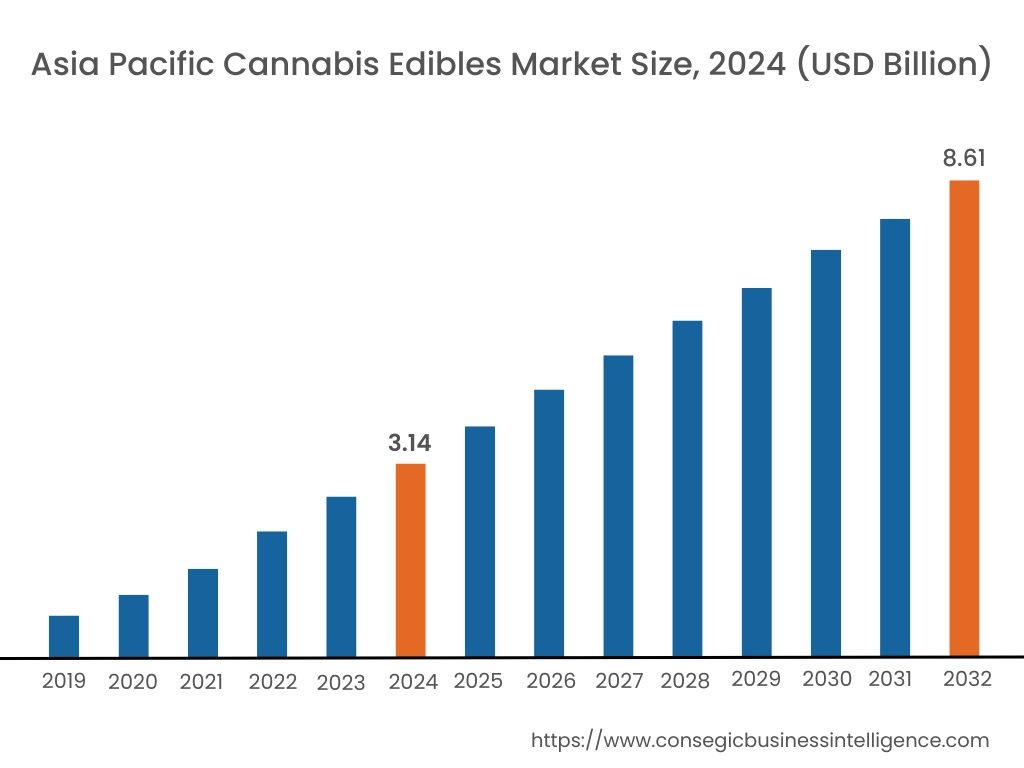
In 2024, Asia Pacific was valued at USD 3.14 Billion and is expected to reach USD 8.61 Billion in 2032. In Asia Pacific, China accounted for the highest share of 26.38% during the base year of 2024. Asia-Pacific has a limited cannabis edibles market due to strict regulations on cannabis use. Some countries, including Thailand and Australia, have legalized medical cannabis, creating opportunities for market development. Increasing discussions on cannabis legalization influence future market potential. Consumer awareness of cannabis-infused products is gradually expanding through regulatory reforms and international influence.

North America is estimated to reach over USD 11.16 Billion by 2032 from a value of USD 4.23 Billion in 2024 and is projected to grow by USD 4.70 Billion in 2025. North America holds a significant share of the market due to the legalization of cannabis in the United States and Canada. The presence of established cannabis brands and retail distribution networks influences market performance. Consumer preference for alternative cannabis consumption methods impacts product innovation. Regulatory frameworks at the federal and state levels shape market expansion.
Europe's cannabis edibles market demand is expanding due to the legalization of medical cannabis in several countries. Germany, the Netherlands, and Switzerland have established regulatory frameworks supporting market trend. The rising demand for wellness products influences product diversification. The evolving legal landscape and strict quality control regulations impact market entry for cannabis edibles manufacturers.
The cannabis edibles market in the Middle East and Africa remains restricted due to stringent laws prohibiting cannabis use. However, South Africa has legalized private cannabis consumption, influencing product availability. Discussions on medical cannabis legalization in some countries shape future cannabis edibles market opportunities. Regulatory uncertainty affects investment in the cannabis edibles sector.
Latin America is witnessing trend in the market due to cannabis legalization in countries like Uruguay and Mexico. The presence of cannabis cultivation hubs supports the regional supply chain. Regulatory developments influence product availability in both medical and recreational segments. Consumer interest in cannabis-infused wellness products contributes to market expansion.
Top Key Players & Market Share Insights:
The global cannabis edibles market is highly competitive with major players providing products and services to the national and international markets. Key players are adopting several strategies in research and development (r&d), product innovation, and end-user launches to hold a strong position in the global cannabis edibles market. Key players in the cannabis edibles industry include-
- Canopy Growth Corporation (Canada)
- Aurora Cannabis Inc. (Canada)
- Dixie Brands Inc. (United States)
- Bhang Corporation (United States)
- MedMen Enterprises Inc. (United States)
- Tilray Brands, Inc. (Canada)
- Curaleaf Holdings, Inc. (United States)
- Green Thumb Industries Inc. (United States)
- Trulieve Cannabis Corp. (United States)
- Charlotte's Web Holdings, Inc. (United States)
Recent Industry Developments :
Product Launches:
- In February 2025, lifestyle brand Edie Parker expanded its cannabis accessories line with the introduction of Seedies THC gummies. Launched during New York Fashion Week, these edibles align with the brand's playful and stylish aesthetic, appealing to fashion-forward consumers.
- In November 2024, Illinois-based J.P. Graziano partnered with cannabis company nuEra to launch GiardinuEra, a limited-edition cannabis-infused giardiniera. This Italian-style spicy pickled condiment, infused with THC, provides a novel culinary experience for consumers seeking to incorporate cannabis into their meals.
Mergers and Acquisitions:
- In December 2024, OrganiGram announced its intention to acquire Motif Labs, a prominent cannabis extractor and brand curator, for up to CAD 100 Billion. This acquisition aims to position OrganiGram as Canada's largest cannabis company by market share.
- In March 2024, Curaleaf expanded its international footprint by acquiring Northern Green Canada, signaling its commitment to growth in the European market.
- In March 2024, High Tide acquired Queen of Bud, a premium Cannadian Cannabis brand, enhancing its product portfolio and retail presence.
- In March 2024, SOMAÍ Pharmaceuticals acquired RPK Biopharma, reinforcing its position in the global medicinal cannabis sector.
- In February 2023, TPCO Holding Corp. announced an all-stock merger with Gold Flora, focusing on strengthening their position in the California market.
Cannabis Edibles Market Report Insights:
| Report Attributes | Report Details |
| Study Timeline | 2019-2032 |
| Market Size in 2032 | USD 31.74 Billion |
| CAGR (2025-2032) | 14.6% |
| By Product Type |
|
| By Source Type |
|
| By Distribution Channel |
|
| By Application |
|
| By Region |
|
| Key Players |
|
| North America | U.S. Canada Mexico |
| Europe | U.K. Germany France Spain Italy Russia Benelux Rest of Europe |
| APAC | China South Korea Japan India Australia ASEAN Rest of Asia-Pacific |
| Middle East and Africa | GCC Turkey South Africa Rest of MEA |
| LATAM | Brazil Argentina Chile Rest of LATAM |
| Report Coverage |
|
Key Questions Answered in the Report
How big is the Cannabis Edibles Market? −
In 2024, the Cannabis Edibles Market was USD 11.95 Billion.
What will be the potential market valuation for the Cannabis Edibles Market by 2032? +
In 2032, the market size of Cannabis Edibles Market is expected to reach USD 31.74 Billion.
What are the segments covered in the Cannabis Edibles Market report? +
The product type, source type, distribution channel and application are the segments covered in this report.
Who are the major players in the Cannabis Edibles Market? +
Canopy Growth Corporation (Canada), Aurora Cannabis Inc. (Canada), Tilray Brands, Inc. (Canada), Curaleaf Holdings, Inc. (United States), Green Thumb Industries Inc. (United States), Trulieve Cannabis Corp. (United States), Charlotte's Web Holdings, Inc. (United States), Dixie Brands Inc. (United States), Bhang Corporation (United States), MedMen Enterprises Inc. (United States) are the major players in the Cannabis Edibles market.
Overview
Reputation & Certifications


Our Services
- Market Intelligence & Forecasting
- Custom Research Solutions
- Market Entry Strategy
- Competitive Intelligence
- Customer Insights
- Industry Innovation Analysis
- Investment Advisory