Jump to Content
Chemical Packaging Market - Size, Share, Industry Trends, and Forecasts (2026-2034)
Chemical Packaging Market Size & Insights
According to Consegic Business Intelligence, the chemical packaging market size was valued at USD 16.32 billion in 2025 and is projected to grow from USD 16.60 billion in 2026 to USD 22.25 billion by 2034, at a CAGR of 3.7% from 2026 to 2034.
The chemical packaging market is driven by several factors such as rising chemical production across industrial and emerging economies, stringent safety and environmental regulations governing hazardous materials, expanding cross-border trade, and increasing demand for sustainable, high-barrier, and smart packaging technologies, among others.
Chemical Packaging Market Statistics:
- Current Market Size: USD 16.32 Billion
- Forecast Market Size: USD 22.25 Billion
- CAGR: 3.7%
- Largest Segment:Intermediate Bulk Containers (IBCs) accounted for the largest revenue share in the market in 2025.
- Fastest-Growing Segment: The flexitanks segment is anticipated to register the fastest CAGR during the forecast period.
- Largest Geographic Market: Asia Pacific
- Fastest-Growing Geography: Asia Pacific
- Major Companies:Greif Inc. (United States), Mauser Packaging Solutions (United States), Schütz GmbH & Co. KGaA (Germany), Mondi Group (United Kingdom), Berry Global Inc. (United States), Hoover CS (United States), Amcor Plc (Switzerland), ALPLA Group (Austria), LC Packaging (Netherlands), Silgan Holdings (United States), and others.
- Key Technological/Commercial Development: Shift Toward Sustainable & Circular Packaging (Post-Consumer Recycled Resins and Biopolymers), Expansion of E-commerce and Specialized Chemical Logistics, Integration of Smart & Connected Packaging Technologies, and Advancements in Polymer Science & Lightweighting.

Recent Events and Their Impact on the Chemical Packaging Market
The chemical packaging market is being influenced by evolving consumer preferences, regulatory developments, research, and increasing advancements. The following developments highlight key factors shaping market growth and competitive dynamics.
|
Recent Development |
Impact on the Chemical Packaging Market |
|
Strict Regulatory and Environmental Compliance |
Compels manufacturers to adopt certified, high-performance packaging that prevents leakage, withstands transit stresses, and features standardized hazard communication labels. |
|
Shift Toward Sustainable & Circular Packaging (Post-Consumer Recycled Resins and Biopolymers) |
Drives material innovation to meet corporate ESG goals and Extended Producer Responsibility (EPR) mandates, increasing the adoption of eco-friendly, recyclable, and bio-based alternatives. |
|
Expansion of E-commerce and Specialized Chemical Logistics |
Increases the demand for durable, leak-proof, and parcel-compliant packaging formats (such as specialized pails, jerrycans, and secure pouches) tailored for safe small-quantity distribution. |
|
Growing Demand for Specialty and Agrochemicals |
Accelerates the usage of high-performance intermediate bulk containers (IBCs), drums, and multilayered barrier films designed to maintain chemical stability and product integrity. |
|
Integration of Smart & Connected Packaging Technologies |
Introduces tamper-evident features, security seals, specialized barcodes, and sensor-enabled traceability to enhance supply chain visibility and prevent counterfeiting. |
|
Advancements in Polymer Science & Lightweighting |
Enables the production of stronger, corrosion-resistant plastic containers that reduce overall material weight, lower freight costs, and optimize storage space. |
What is Chemical Packaging?
Chemical packaging is the specialized process of containing, storing, and protecting chemical substances using durable, non-reactive materials to prevent leaks, contamination, and hazardous exposure during handling, storage, and transport. It helps prevent leaks, blocks environmental degradation factors such as moisture and UV light, and ensures regulatory compliance during logistics.
For market analysis, chemical packaging primarily includes intermediate bulk containers (IBCs), drums and pails, bags and sacks, flexitanks, cans and carboys, and others. It can be used for commodity/basic chemicals, specialty chemicals, petrochemicals, agrochemicals, and other related applications.
Key Growth Drivers in the Chemical Packaging Market
Regulatory & Sustainability Pressures
- Circular Economy Compliance: Strict enforcement of regional regulations like the EU's PPWR and global Extended Producer Responsibility (EPR) mandates forces chemical companies to adopt recyclable, mono-material, and high-PCR container designs.
- PFAS Restriction Timelines: Expanding global restrictions on per- and polyfluoroalkyl substances push manufacturers away from traditional fluorination, driving the rapid adoption of alternative, eco-friendly high-barrier coatings.
- UN Hazard Certification Updates: Evolving international transport safety standards require continuous innovation in the drop-test and pressure resistance profiles of industrial containers carrying volatile or hazardous materials.
- Carbon Footprint Mandates: Corporate net-zero carbon initiatives heavily incentivize chemical logistics firms to swap heavy glass or virgin steel packaging for lightweight, carbon-efficient, and reconditioned plastic composites.
Rising Industrial & Agricultural Demand
- Agrochemical Volume Surges: Rising global food production requirements accelerate the demand for high-performance fluorinated-alternative plastic drums and jerrycans that safely contain volatile pesticides and fertilizers, thereby driving the chemical packaging market growth.
- Construction Chemical Boom: Escalating infrastructure and urban development projects worldwide trigger massive volume requirements for bulk packaging formats like intermediate bulk containers (IBCs) and heavy-duty bags.
- Specialty Chemical Proliferation: The fast-paced expansion of electronic-grade, pharmaceutical, and high-purity chemicals necessitates specialized ultra-clean packaging formats that absolutely prevent contamination.
- Global Trade Expansion: Lengthening international supply chains demand chemical containers with enhanced thermal stability, long-term structural integrity, and robust defense against ocean transit environments.
Technological & Design Innovations
- Smart Tracking Integration: The widespread adoption of IoT sensors, RFID tags, and standardized QR codes directly onto chemical containers enhances real-time lifecycle tracking and automates leak detection.
- Advanced Material Science: Advancements in high-barrier performance additives allow packaging to resist harsh solvents while using significantly thinner container walls, optimizing plastic resin consumption.
- Ergonomic & Safety Redesigns: The development of integrated closed-loop dispensing valves and anti-glug features minimizes human exposure risks during chemical decanting and mixing operations.
- Advanced Reconditioning Infrastructure: Innovations in automated cleaning and industrial container wash systems drastically boost the lifecycle loop and economic viability of multi-trip composite IBCs.
E-Commerce & Supply Chain Shifts
- Direct-to-Consumer (D2C) Transitions: The rapid growth of online chemical marketplaces requires highly durable, leak-proof, parcel-compliant packaging designed to survive individual courier transit networks, which is further driving the chemical packaging market trends.
- Just-In-Time (JIT) Manufacturing: The chemical sector's shift toward lean inventory models drives the demand for modular, flexible, and variable-sized packaging that matches fluctuating batch sizes.
- Logistics Footprint Optimization: The growing adoption of space-efficient cubical container designs maximizes shipping container utilization and significantly reduces cross-border freight costs.
- Consolidation of Custom Labeling: Increasing push toward inline digital printing allows chemical manufacturers to easily update safety GHS labels across multi-destination shipments dynamically.
Chemical Packaging Market Opportunities
Sustainable and Circular Material Innovation
- Post-Consumer Recycled (PCR) Resins: Developing high-purity PCR-integrated plastics that maintain chemical compatibility while helping brands meet stringent environmental targets.
- Bio-Based and Degradable Polymers: Investing in renewable raw materials and biopolymers to substitute traditional petrochemical packaging, lowering overall lifecycle carbon footprints.
- Closed-Loop and Reusable Systems: Expanding industrial container rental, retrieval, and reconditioning programs (particularly for heavy-duty drums and IBCs) to align with circular economy mandates.
- Material Lightweighting: Engineering innovative structural profiles that reduce total resin usage per container without compromising drop-test performance or stacking strength.
Smart and Digital Packaging Integration
- IoT-Enabled Traceability: Embedding sensors, RFID tags, and active tracking indicators into high-value chemical shipments to monitor real-time temperature, pressure, and location.
- Anti-Counterfeiting and Tamper-Evidence: Leveraging advanced digital seals, holographic labeling, and unique serialization to secure complex supply chains against illicit trade.
- Interactive Hazard Communication: Integrating dynamic QR codes and NFC chips that grant logistics and handling personnel instant access to digital Safety Data Sheets (SDS).
- Automated Quality Verification: Adopting smart manufacturing vision systems and automated leak-detection technology to guarantee zero-defect production standards.
E-Commerce and Small-Format Logistics Expansion
- Parcel-Certified Small Packaging: Designing specialized, drop-resistant bottles, pouches, and container systems optimized for direct-to-site and online chemical retail delivery.
- Leak-Proof Flexible Formulations: Scaling up multi-layer stand-up pouches and bag-in-box systems for consumer and institutional chemicals to minimize shipping weight and storage space.
- Spill-Resistant Secondary Packaging: Innovating internal cushioning and absorption layers tailored specifically for hazardous liquids transported through standard parcel networks.
- Customized Regional Fulfillment Hubs: Establishing localized packaging customization centers to serve decentralized industrial and laboratory e-commerce demands rapidly.
Emerging Geographic and End-User Verticals
- High-Growth Developing Economies: Capitalizing on rapid industrialization and expanding chemical processing hubs across the Asia-Pacific region and Latin America.
- Advanced Electronics and Semiconductor Sectors: Providing ultra-clean, high-purity chemical packaging solutions required for the production of microchips and electronic components.
- Agrochemical Customization: Creating weather-resistant, UV-stabilized barrier containers designed to safely store and distribute concentrated crop protection formulations.
- Pharmaceutical and Specialty Chemical Grade Solutions: Supplying specialized, tamper-evident containment units that protect sensitive active pharmaceutical ingredients (APIs) during transit.
Chemical Packaging Market Restraining Factors
Strict Regulatory & Compliance Hurdles
- Rigid Compliance Mandates: Adhering to evolving UN, GHS, and REACH standards involves expensive certification processes and extensive third-party testing.
- Complex Cross-Border Documentation: Navigating fragmented international transport laws and differing regional safety protocols slows down global supply chain execution.
- High Penalties for Non-Compliance: Strict liabilities regarding hazardous material leaks mean that any design failure results in steep legal fines and severe brand damage.
- Lengthy Approval Timelines: Extended certification schedules for new or alternative packaging configurations delay product commercialization and market entry.
Material & Supply Chain Volatility
- Unstable Resin Price Fluctuations: Heavy reliance on crude oil derivatives exposes packaging manufacturers to unpredictable profit margins due to sudden spikes in polymer raw material costs.
- Scarce High-Quality Recycled Resins: Severe shortages of post-consumer recycled (PCR) plastics that possess the structural purity required to safely hold hazardous materials restrict sustainable scaling efforts.
- Geopolitical Trade Disruptions: Escalating trade tariffs, port congestion, and shipping lane bottlenecks delay the cross-border movement of critical specialized packaging components and raw materials.
- Alternative Material Durability Limits: Eco-friendly bioplastics and specific mono-materials often struggle to match the long-term chemical resistance and shelf-life performance of legacy multi-layer containers.
High Cost & Capital Investment Barriers
- Expensive Production Line Retrofitting: Transitioning from traditional multi-layer molding to advanced non-PFAS alternative barrier technologies requires massive upfront capital expenditure for new equipment.
- Premium Cost of Sustainable Materials: High-performance PCR resins and advanced barrier additives carry a premium price, compressing margins for chemical producers unable to pass costs to end-users.
- Complex Reverse Logistics Expenses: Setting up the tracking, collection, and industrial cleaning infrastructure required for circular, multi-trip IBC asset recovery networks demands ongoing capital injection.
- Surging Operational Testing Costs: Regular, rigorous quality control testing required to guarantee container integrity against aggressive solvents raises day-to-day administrative and operational overhead.
Technical Limitations and Material Compatibility Challenges
- Aggressive Chemical Reactivity: Strong acids, solvents, and corrosive compounds can degrade standard packaging, limiting the universal applicability of green polymers.
- Barrier Property Deficits: Certain sustainable or recycled materials exhibit inferior moisture and oxygen barrier properties, potentially compromising chemical shelf life.
- Trade-offs in Lightweighting: Reducing material thickness to meet sustainability targets can unintentionally diminish drop resistance, stackability, and structural durability.
- Risk Aversion in Material Switching: Procurement teams often hesitate to adopt novel packaging substrates due to a lack of long-term real-world performance data.
Chemical Packaging Market Segmentation Analysis
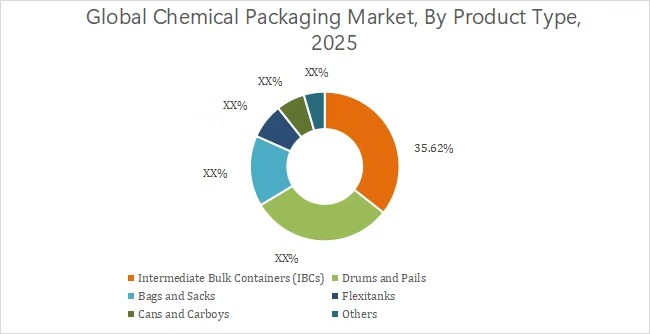
By Product Type: Intermediate Bulk Containers (IBCs) Lead Due to Superior Efficiency, Reusability, and Spatial Optimization
Intermediate Bulk Containers (IBCs): The intermediate bulk containers (IBCs) segment accounted for the largest revenue share of 35.62% in the market in 2025.
Intermediate bulk containers (IBCs) dominate the chemical packaging market since they offer the most efficient spatial footprint for liquid chemicals during transport and storage. Their cubical geometry enables maximum volumetric efficiency inside shipping containers, reducing freight costs compared to traditional round drums.
Furthermore, the industry-wide push toward circular economy frameworks has heavily benefited the IBC segment, as composite IBCs feature durable, multi-trip galvanized steel cages and reconditionable plastic inner bottles. Their integrated bottom-discharge valves minimize worker exposure to hazardous materials, making them the preferred choice for bulk agrochemicals, industrial solvents, and specialty chemicals.
Drums and Pails
Drums and pails remain a key segment of the market, offering exceptional durability and high-pressure resistance for transporting hazardous and high-density liquid chemicals. Available in plastic (HDPE), steel, and fiber compositions, open-head and tight-head drums cater to a vast array of chemical compatibility requirements. Tight-head steel drums are preferred for highly volatile, flammable solvents due to their superior fire resistance and structural integrity under high temperatures. Pails serve as the primary format for smaller-batch construction chemicals, adhesives, and specialty coatings, where manual handling, easy resealing, and frequent on-site dispensing are required.
Bags and Sacks
Bags and sacks serve as a primary packaging type for dry, solid, and particulate chemicals, such as polymer beads, chemical fertilizers, powdered additives, and concrete mixes. This segment is driven by innovations in anti-static and electrostatic-dissipative materials that safely eliminate static hazards during the high-speed filling and discharging of combustible powders. Their low tare weight significantly optimizes freight costs, and their flexible nature enables efficient space utilization when empty.
Flexitanks: The flexitanks segment is anticipated to register the fastest CAGR during the forecast period.
Flexitanks represent a rapidly expanding niche opportunity, offering a cost-effective alternative to ISO tanks for non-hazardous and certain approved hazardous fluid chemicals. Typically manufactured from multi-layered polyethylene with a woven polypropylene outer jacket, they are designed exclusively for non-hazardous liquid chemicals, such as industrial oils, liquid latex, and water-soluble additives. They completely eliminate the high capital investment and expensive return logistics associated with ISO tank containers, as they are single-use systems that require zero cleaning overhead. Flexitanks maximize container payload capacities, enabling chemical producers to ship more volume per container than traditional drum layouts.
Cans and Carboys
Cans and carboys are designed to bridge the gap between large-scale bulk logistics and precise, lower-volume distribution networks. Carboys are extensively used to transport corrosive acids, lab reagents, and high-purity cleaning chemicals since their heavy wall thickness provides robust protection against chemical permeation and physical drops. Metal and plastic cans are mostly used for solvent-based paints, automotive fluids, and fuel additives. These formats are increasingly engineered with integrated anti-glug pour spouts and child-resistant closures to optimize end-user pouring safety.
By Material: Plastic/Polymers Lead Due to Lightweight Properties, Chemical Inertness, Design Versatility, and Cost-Effectiveness
Plastic/Polymers: The plastic/polymers segment accounted for the largest revenue share in the market in 2025, and it is anticipated to register a significant CAGR during the forecast period.
Plastic/polymers dominate the chemical packaging market due to their exceptional versatility, low cost, and inherent resistance to a vast spectrum of corrosive chemicals, acids, and industrial solvents. High-Density Polyethylene (HDPE), Polypropylene (PP), and fluoropolymers are the primary resins utilized to manufacture jerrycans, drums, and intermediate bulk containers (IBC), among others. They considerably minimize freight costs compared to heavier alternatives due to their light tare weight.
Furthermore, innovations in multi-layer blow molding and non-PFAS barrier additives have allowed plastics to match the performance of metal for volatile compounds, while corporate shifts toward circularity are accelerating the adoption of certified post-consumer recycled (PCR) resins within this segment.
Metal
Metal packaging, primarily consisting of high-grade carbon steel, stainless steel, and aluminum, is an essential segment for transporting highly volatile, flammable, or hazardous chemicals. Steel drums and ISO tanks offer superior structural integrity, puncture resistance, and fire safety, making them the strict global standard for transporting explosive solvents and hazardous materials under extreme pressure or temperature fluctuations. Stainless steel containers are also widely preferred in high-purity sectors like pharmaceuticals and electronics since they eliminate the risk of chemical leaching or permeation. While metal carries a higher tare weight and initial capital cost, its exceptionally long operational lifecycle and infinite recyclability offer strong long-term economic value.
Glass
Glass is the ideal material option for niche applications requiring absolute chemical inertness, zero permeability, and ultimate purity preservation. It is primarily used for packaging high-purity laboratory reagents, analytical standards, sensitive pharmaceutical compounds, and specialized electronic acids. Since glass does not interact with aggressive chemical formulations or leach organic compounds, it prevents contamination, though its weight and brittleness restrict its use primarily to smaller container formats like bottles and carboys.
By Packaging Type: Rigid Packaging Lead Due to Superior Structural Integrity, Enhanced Impact Resistance, and Long-Term Reusability in Industrial Transport
Rigid Packaging: The rigid packaging segment accounted for the largest revenue share in the chemical packaging market share in 2025.
Rigid packaging dominates the market since it provides the vital structural strength required to safely store and transport heavy, volatile, and hazardous substances. This segment, which includes intermediate bulk containers (IBCs), plastic and steel drums, jerrycans, and pails, offers maximum resistance against punctures, high-stress impacts, and extreme stack-loading pressure in warehouses. Since hazardous chemicals must comply with strict international transport laws, rigid containers are the industry standard for passing demanding UN drop tests, pressure tests, and leak-proof evaluations. Furthermore, their solid structures enabler the integration of safe closed-loop dispensing valves and heavy-duty reconditioning processes, ensuring long-term multi-trip reusability.
Flexible Packaging: The flexible packaging segment is anticipated to register the fastest CAGR during the forecast period.
Flexible packaging is a rapidly growing segment that excels in cost-effectiveness, weight reduction, and spatial efficiency for both dry particulates and non-hazardous liquids. This segment includes FIBC bulk bags, multi-wall sacks, lined pouches, and flexitanks, which significantly lower freight costs due to their minimal tare weight. When empty, flexible packaging flat-packs to take up very little warehouse space, considerably reducing inbound logistics costs. Innovations in anti-static materials and multi-layer high-barrier films have allowed flexible formats to expand heavily into dry powdered chemical distribution, protective unit-dose agrochemical pouches, and high-volume, single-use bulk liquid shipping.
By End Use: Commodity/Basic Chemicals Lead Due to Massive Production Volumes, Widespread Industrial Consumption, and Global Supply Chain Scales
Commodity/Basic Chemicals: The commodity/basic chemicals segment accounted for the largest revenue share in the market in 2025.
Commodity and basic chemicals lead the end-use segment due to the very high global production volumes of commodity substances like acids, alcohols, alkalis, and industrial salts. These chemicals serve as the primary raw materials for almost every manufacturing sector, requiring a continuous and massive supply of heavy-duty industrial packaging. Since these substances are transported in bulk across long distances, this segment is the primary consumer of high-capacity formats like intermediate bulk containers (IBCs), plastic drums, and Flexitanks. Chemical packaging for this segment focuses heavily on cost efficiency, heavy-duty stackability, and reliable chemical resistance to withstand high-volume logistics.
Specialty Chemicals: The specialty chemicals segment is anticipated to register the fastest CAGR during the forecast period.
Specialty chemicals represent a fast-growing segment that includes performance-enhancing formulations such as polymers, electronic-grade chemicals, adhesives, and coatings. Unlike basic chemicals, specialty chemicals are produced in lower volumes but require highly customized packaging to maintain absolute purity and prevent contamination. This segment relies significantly on ultra-clean containers, stainless steel containers, and specialized lined drums that prevent chemical leaching. The packaging must often feature advanced barrier coatings to protect highly sensitive formulations from moisture, oxygen, or UV exposure, which could ruin their performance characteristics.
Petrochemicals
Petrochemicals, including downstream derivatives of crude oil and natural gas such as ethylene, propylene, industrial oils, lubricants, and solvents, demand robust, heavy-duty packaging capable of handling highly flammable and volatile hydrocarbons. This segment relies extensively on metal packaging, particularly carbon steel drums and heavy-duty ISO tanks, since they offer the vital structural integrity, puncture resistance, and fire-retardant safety profiles needed for dangerous goods. Packaging innovation in this segment is heavily focused on integrated grounding or anti-static mechanisms to completely eliminate sparking hazards during high-speed filling and decanting operations.
Agrochemicals
The agrochemical sector, including crop protection formulas, herbicides, insecticides, and fertilizers, relies heavily on specialized packaging to ensure safe distribution across agricultural supply chains. Packaging formats for this segment must strictly comply with hazardous material regulations while protecting active ingredients from environmental degradation and moisture.
Chemical Packaging Market Regional Breakdown
North America:
North America is estimated to reach over USD 6.65 billion by 2034 from a value of USD 4.91 billion in 2025, and it is projected to grow to USD 4.99 billion in 2026.
The chemical packaging market demand in North America is driven by a highly mature chemical processing sector, advanced industrial manufacturing, and strict safety and environmental standards, such as OSHA, DOT, and EPA regulations. The region exhibits high demand for certified, high-performance rigid packaging, smart tracking solutions, and eco-friendly post-consumer recycled (PCR) containers.
United States
The United States is the primary country in the North American market, with the presence of a massive chemical manufacturing sector spanning petrochemicals, agriscience, and advanced electronics-grade chemicals. The domestic market is experiencing high demand for rigid industrial packaging, particularly IBCs and steel drums, to support bulk interstate transport along major manufacturing corridors. Market dynamics are heavily influenced by state-level extended producer responsibility (EPR) mandates and widespread corporate net-zero initiatives, driving rapid innovation in multi-trip reconditioning networks and non-PFAS fluorination container alternatives.
Canada
Canada is characterized by steady growth centered around natural resource extraction, heavy mining operations, extensive agricultural sectors, and petroleum refining. This creates consistent, specialized demand for heavy-duty intermediate bulk containers (IBCs), weather-resistant drums, and rugged export-compliant packaging.
Europe:
Europe stands as a key region in sustainability, circular economy integration, and strict environmental regulations for the chemical packaging industry. The European market is heavily shaped by the Packaging and Packaging Waste Regulation (PPWR), which penalizes non-recyclable multi-layer containers and enforces high minimum quotas for recycled material content. This has triggered a rising regional shift toward mono-material plastics and advanced, closed-loop industrial container reconditioning networks. Safety compliance under the Registration, Evaluation, Authorisation and Restriction of Chemicals (REACH) protocol further ensures that all packaging raw materials meet precise non-toxic standards.
Germany
As the primary industrial hub of Europe, Germany drives the chemical packaging demand through its globally dominant specialty chemical, automotive fluid, and pharmaceutical manufacturing sectors. German engineering firms lead the development of highly automated filling line packaging, advanced plasma-treated barrier layers, and cleanroom-certified carboys for high-purity chemical lines.
United Kingdom
The United Kingdom chemical packaging market is defined by stringent compliance, supply chain traceability, sustainable packaging shifts, and a strong domestic focus on consumer chemical, household care, and agrochemical packaging. Flexible packaging, including lined pouches and small-format pails, is expanding rapidly to satisfy local distribution networks.
Asia Pacific: Most Dominant and Fastest Growing Region
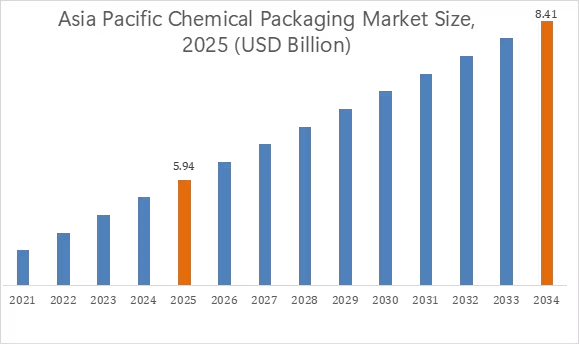
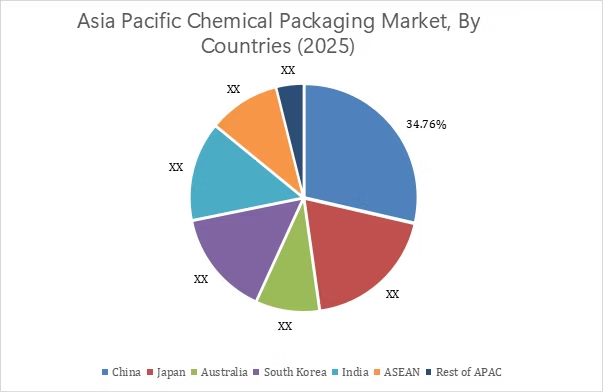
The Asia Pacific region was valued at USD 5.94 billion in 2025. Moreover, it is projected to grow to USD 6.06 Billion in 2026 and reach over USD 8.41 Billion by 2034. Out of this, China accounted for the maximum revenue share of 34.76%
.According to the chemical packaging market analysis, the Asia Pacific region is both the largest and the fastest-growing market for chemical packaging globally, driven by rapid industrialization, massive chemical production capacities, and expanding domestic consumer markets. The region benefits from lower manufacturing costs and substantial infrastructure investments, establishing it as the global manufacturing hub for basic commodity chemicals and polymer resins. The proliferation of low-cost manufacturing feedstock, combined with massive export volumes, drives significant consumption of both bulk and flexible chemical packaging formats.
China
China dominates the Asia Pacific chemical packaging industry as the world’s largest producer and exporter of bulk chemicals, active pharmaceutical ingredients (APIs), and agrochemicals. The domestic market generates immense volume demand for heavy-duty plastic drums, high-capacity intermediate bulk containers, and bulk flexitanks for cross-border maritime shipping. Massive output across basic chemicals, agrochemicals, and industrial polymers generates high domestic demand for high-capacity drums, flexitanks, and bulk chemical packaging.
India
India represents one of the fastest-growing markets, propelled by its growing chemical, pharmaceutical, and agrochemical export markets. The country's expanding domestic specialty chemical sector has increased the demand for premium rigid packaging formats, such as high-density polyethylene (HDPE) jerrycans and specialized anti-static FIBC bags. Government initiatives like Make in India continue to attract heavy capital investments into local packaging factories, ensuring rapid technological upgrading to meet stringent global UN hazard transport standards, further driving;chemical packaging market expansion.
Japan
Japan's chemical packaging market focuses on ultra-clean, high-purity packaging solutions for microelectronics, semiconductors, and precision specialty chemicals, along with advanced developments in eco-friendly polymer formulations. Moreover, the market demand is heavily concentrated on high-value specialty chemicals, microelectronics-grade etching solutions, and high-purity lab reagents.
South Korea
South Korea maintains a robust position, driven by advanced petrochemical complexes, advanced electronics manufacturing, and strict compliance with automated, high-safety containment standards for hazardous industrial transport.
Latin America:
Latin America demonstrates steady expansion propelled by expanding agrochemical requirements for crop protection, localized mining activities, and increasing cross-border trade. Brazil stands a key hub, where multinational chemical entities are slowly introducing global sustainability metrics, expanding the regional adoption of lightweight containers and high-volume flexible bulk bags (FIBCs) to optimize shipping overhead.
Middle East and Africa:
The market growth is driven by massive state-backed petrochemical refining capacities and large-scale basic chemical production, primarily concentrated in the GCC region. This contributes to heavy demand for industrial-grade export packaging, heavy-duty steel and plastic drums, and robust intermediate bulk containers built to endure harsh transport conditions.
Leading Companies in the Chemical Packaging Market
- Greif Inc. (United States)
- Mauser Packaging Solutions (United States)
- Schütz GmbH & Co. KGaA (Germany)
- Mondi Group (United Kingdom)
- Berry Global Inc. (United States)
- Hoover CS (United States)
- Amcor Plc (Switzerland)
- ALPLA Group (Austria)
- LC Packaging (Netherlands)
- Silgan Holdings (United States)
Recent Developments Among Companies in the Chemical Packaging Market
Partnerships & Collaborations
- In September 2025, Charter Next Generation (CNG) and NOVA Chemicalsannounced a strategic partnership to scale the commercial use of recycled polyethylene in sustainable flexible packaging. Utilizing a Midwest-based supply chain and a high-volume recycling facility, the collaboration integrates NOVA’s SYNDIGO post-consumer resin into CNG’s GreenArrow film products to create sustainable, high-performance packaging solutions.
Acquisitions
- In April 2024, Greif Inc.acquired IPACKCHEM, incorporating the company's 35-year track record into its expanded selection of advanced packaging designs. This acquisition expanded Greif's established catalog of tight-head containers, jerrycans, and bottles by incorporating 13 production facilities across 8 different countries.
Chemical Packaging Market Report Insights:
| Report Attributes | Report Details |
| Study Timeline | 2021-2034 |
| Market Size in 2034 | USD 22.25 Billion |
| CAGR (2026-2034) | 3.7% |
| By Product Type |
|
| By Material |
|
| By Packaging Type |
|
| By End-Use |
|
| By Region |
|
| Key Players |
|
Key Questions Answered in the Report
How big is the chemical packaging market? −
The chemical packaging market was valued at USD 16.32 Billion in 2025 and is projected to grow to USD 22.25 Billion by 2034.
Which is the fastest-growing region in the market? +
Asia-Pacific is the region experiencing the most rapid growth in the market.
What specific segmentation details are covered in the chemical packaging report? +
The chemical packaging report includes specific segmentation details for product type, material, packaging type, end use, and region.
Who are the major players in the market? +
The key participants in the market are Greif Inc. (United States), Mauser Packaging Solutions (United States), Schütz GmbH & Co. KGaA (Germany), Mondi Group (United Kingdom), Berry Global Inc. (United States), Hoover CS (United States), Amcor Plc (Switzerland), ALPLA Group (Austria), LC Packaging (Netherlands), Silgan Holdings (United States), and others.
Overview
Reputation & Certifications


Our Services
- Market Intelligence & Forecasting
- Custom Research Solutions
- Market Entry Strategy
- Competitive Intelligence
- Customer Insights
- Industry Innovation Analysis
- Investment Advisory