Jump to Content
Clinical Communication and Collaboration Market - Size, Share, Industry Trends, and Forecasts (2026-2034)
Clinical Communication and Collaboration Market Size:
Clinical Communication and Collaboration Market size is estimated to reach over USD 11,263.21 Million by 2034 from a value of USD 3,151.36 Million in 2025 and is projected to grow by USD 3,573.83 Million in 2026, growing at a CAGR of 13.6% from 2026 to 2034.
Clinical Communication and Collaboration Market Key Takeaways
- Rising healthcare digitalization and telemedicine adoption are driving market growth.
- Asia Pacific led the market due to expanding healthcare infrastructure.
- Solutions & platforms dominated the market.
- Hospitals & clinics accounted for the largest market share.
- Cloud-based and AI-powered communication solutions are accelerating adoption.
- TigerConnect, Cisco, Oracle, Epic Systems, and Microsoft were key market players.
Clinical Communication and Collaboration Market Scope & Overview:
Clinical communication and collaboration (CC&C) refers to secure, digital platforms used by medical professionals, which allow doctors, nurses, and staff to instantly share patient data, critical lab results, and care instructions. Moreover, clinical communication and collaboration offers several benefits, including faster response times, better patient safety, improved teamwork, increased workflow efficiency, and others. Additionally, the clinical communication and collaboration market is experiencing considerable growth, primarily driven by rising digital transformation, growing need to reduce clinician burnout, prevent medical errors, and replace outdated pagers, combined with the rising shift toward value-based care and expanding telemedicine services.

Clinical Communication and Collaboration Market Dynamics - (DRO):
Market Drivers:
Rising digital transformation across healthcare facilities and expanding telemedicine services are driving the clinical communication and collaboration market growth
The global rise in healthcare digital transformation, combined with the significant expansion of telemedicine, are among the key factors driving the clinical communication and collaboration market. Historically, healthcare environments relied on fragmented legacy systems such as pagers, landlines, and overhead announcements, which frequently created data silos and communication bottlenecks. Modern healthcare facilities are increasingly adopting unified, cloud-based digital ecosystems for streamlining operations and enhancing patient safety. As hospitals transition away from paper-based protocols, CC&C platforms play an essential role in connecting different technologies used in healthcare facilities, such as Electronic Health Records (EHRs), patient monitoring devices, and laboratories. CC&C platforms ensure that critical patient data, diagnostic alerts, and lab results are automatically routed to the right care team member's smartphone in real time, which in turn helps in reducing clinical fatigue and response latency.
In addition, the rapid integration of telemedicine and remote patient monitoring (RPM) requires effective communication & collaboration solutions that can securely transmit video, voice, and text across decentralized networks while maintaining strict data privacy compliance, such as HIPAA and GDPR, for coordinating care for virtual patients. CC&C platforms can support this shift by enabling on-site specialists, remote nurses, and off-duty physicians to collaborate seamlessly on a single, synchronized platform. By eliminating communication friction, CC&C solutions help prevent costly medical errors, while lowering hospital readmission rates and optimizing bed management.
- For instance, data from the Organisation for Economic Co-operation and Development (OECD) indicates that its member nations are broadening electronic health record (EHR) accessibility. For countries with tracking data, the average availability of online digital health services reached up to 82% in 2024, representing an increase from 79% in the previous year.
Hence, the rising digital transformation across healthcare facilities and expanding telemedicine services are increasing the need for clinical communication and collaboration solutions, thereby driving the market.
Market Restraints:
Data security and privacy concerns are restraining the market growth
Data security and privacy concerns associated with cloud-based clinical communication and collaboration solutions are among the primary factors limiting the market growth. Moreover, the deployment of cloud-based communication and collaboration solutions can generate a higher risk of security threats such as cyberattacks, data breaches, along with privacy disclosures, as most of the data, including sensitive information, is stored and processed on the cloud, which in turn makes the system highly susceptible to cyber attackers as well as hackers.
In addition, cloud-based deployment models are more prone to data loss or leakage, and accidental exposure of credentials, along with legal and regulatory compliance. Hence, the aforementioned factors are hindering the clinical communication and collaboration market expansion.
Market Opportunities:
Technological advancements, including AI (artificial intelligence) integration, are expected to drive the clinical communication and collaboration market opportunities
Communication and collaboration solution providers are frequently investing in the development of new technologies associated with CC&C solutions to ensure its safe and effective use in various clinical applications in healthcare settings. As a result, CC&C solution providers are launching new solutions integrated with advanced technologies and features such as artificial intelligence and others, thereby offering lucrative aspects for market development. Moreover, AI-powered systems are capable of evaluating patient data to predict clinical decline and automate routine tasks, such as charting and secure messaging, which in turn reduces physician burnout. In addition, AI-driven alerts help in delivering vital information to the right caregiver instantly, thereby minimizing response times and improving patient safety. AI incorporation with CC&C solutions enables hospitals to replace fragmented workflows with unified, cloud-based ecosystems.
- For instance, in June 2026, HealthLynked introduced an AI-driven healthcare communication platform, which features 24/7 appointment scheduling and automated medical office AI agents. The platform aims to transform patient-provider connectivity and streamline communication management for medical practices. The AI-powered system implements conversational AI capable of independently managing live voice interactions. By blending conversational voice AI with healthcare workflow automation and HealthLynked’s existing care coordination infrastructure, the platform manages both inbound and outbound patient interactions, offering clinics a continuous, automated scheduling and answering service.
Hence, according to the analysis, technological advancements such as AI integration with communication and collaboration solutions are projected to boost market opportunities during the forecast period.
Clinical Communication and Collaboration Market Segmental Analysis:
By Offering:
Based on offering, the market is segmented into solutions/platforms and services.
Trends in the offering:
- Rising adoption of CC&C solutions in healthcare facilities to securely share patient updates, manage on-call schedules, and route urgent medical alerts is driving the market.
- Increasing adoption of cloud-based communication & collaboration solutions for helping healthcare organizations facilitate unified communication among teams from any device and any location is boosting the market.
The solutions/platforms segment accounted for the largest revenue share in the clinical communication and collaboration market share in 2025, and it is anticipated to register a significant CAGR during the forecast period.
- Clinical communication and collaboration (CC&C) platforms are secure, all-in-one messaging and workflow tools built for healthcare facilities.
- CC&C solutions/platforms unite doctors, nurses, and staff through mobile apps and desktops to securely share patient updates, manage on-call schedules, and route urgent medical alerts.
- Moreover, CC&C solutions offer several benefits, such as faster team communication, less waiting time for care, fewer hospital errors, and a safer way to share important medical files.
- Also, factors including rising digital transformation among healthcare organizations, combined with growing need for reliable and scalable communication solutions for facilitating telemedicine, secure data management, and enhanced collaboration, are key trends driving the segment growth.
- According to the market analysis, the above factors are further expanding the clinical communication and collaboration market size.
By Deployment Mode:
Based on deployment mode, the market is segmented into on-premise, cloud, and hybrid.
Trends in the deployment mode:
- The adoption of on-premise deployment is primarily driven by higher security and privacy, lower network bandwidth costs, and more control over server hardware.
- Factors including the ease of integration, rapid deployment, minimal capital expense, and increasing consumer preference for flexible, scalable, reliable, and cost-effective communication & collaboration solutions are driving the cloud deployment segment.
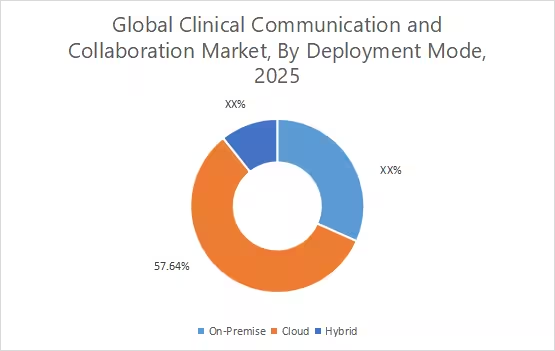
The cloud segment accounted for the largest revenue share of 57.64% in the market in 2025, and it is anticipated to register the fastest CAGR during the forecast period.
- Communication and collaboration platforms with cloud deployment include an architecture where software and data are stored on the internet (the cloud) instead of on a hospital's physical local servers. Cloud-based deployment enables users to connect to systems from any location.
- Moreover, cloud-based deployment offers several benefits such as increased cost savings on physical hardware, easier software updates, and simple setup. It also provides high-powered scalability so hospitals can quickly grow their systems to handle changing needs and support remote clinical collaboration.
- In addition, the primary benefits of cloud-based deployment include minimal capital expense, rapid implementation, ease of utilization and integration, faster processing, higher scalability, and relatively lower costs in comparison to other types of deployment models.
- Consequently, the above benefits of cloud deployment are further driving its adoption among healthcare organizations, thereby propelling the market.
By Enterprise Type:
Based on enterprise type, the market is segmented into large enterprises and small & medium enterprises (SMEs).
Trends in the enterprise type:
- Increasing trend in deployment of CC&C solutions in large healthcare enterprises for facilitating improved communication and collaboration among healthcare providers and consolidating diverse clinical workflows into unified, integrated platforms.
- The market is also driven by factors including the growing need for affordable cloud-based communication solutions and increasing demand for secure telemedicine channels.
The large enterprises segment accounted for the largest revenue in the market in 2025.
- CC&C refers to digital platforms that enable healthcare workers to share patient data instantly.
- In large hospitals, CC&C platforms replace old pagers with secure, smart messaging. They are used for connecting medical devices and electronic health records to ensure that the right doctor gets the relevant data quickly, which in turn helps in reducing delays, lowering costly errors, and boosting staff safety.
- Additionally, the large enterprise segment is growing rapidly due to extensive digital transformations, increasing need to replace fragmented legacy tools such as pagers, push for secure mobile-first communication, and the growing necessity to consolidate diverse clinical workflows into unified, integrated platforms.
- According to the analysis, the aforementioned factors are further propelling the market.
The small & medium enterprises (SMEs) segment is anticipated to register the fastest CAGR during the forecast period.
- Clinical communication & collaboration (CC&C) is a digital framework that connects medical teams to share patient data, coordinate care, and make fast decisions.
- In small and medium enterprises (SMEs) like local clinics or practices, these platforms help in reducing medical errors, preventing miscommunication, and saving time by giving staff instant access to critical health records.
- By streamlining the manner in which teams exchange information, CC&C platforms allow healthcare providers to respond to changes in a patient's status instantly.
- For smaller medical businesses, this directly lowers operating costs, prevents redundant workflows, and boosts overall efficiency. It also helps in keeping team members connected, which helps them focus on patient care.
- Moreover, factors including the growing need for affordable cloud-based communication solutions and increasing demand for secure telemedicine channels are further driving the segment.
- According to the market analysis, the above factors are expected to boost the market during the forecast period.
By End User:
Based on end user, the market is segmented into hospitals & clinics, clinical laboratories, ambulatory surgical centers (ASCs), long-term care & nursing facilities, and others.
Trends in the end user:
- Factors including rising digital transformation among healthcare organizations, combined with growing demand for reliable and scalable communication solutions for facilitating telemedicine, secure data management, and improved collaboration, are key trends driving the market.
- The market is also driven by the rising need for real-time patient data sharing, pager replacement mandates, mobile-first platforms, and the growing urgency to reduce clinician burnout, among others.
The hospitals & clinics segment accounted for the largest revenue share in the market in 2025, and it is anticipated to register a significant CAGR during the forecast period.
- CC&C platforms are primarily used in hospitals and clinics to allow healthcare teams to securely exchange real-time patient data.
- In hospitals and clinics, the use of CC&C platforms helps in improving care coordination by connecting doctors, nurses, and staff. This constant connection also helps in improving patient safety and reducing treatment errors.
- Also, the hospitals & clinics segment growth is mainly driven by the rising need for real-time patient data sharing, pager replacement mandates, mobile-first platforms, and the urgency to reduce clinician burnout.
- Consequently, the aforementioned factors are further driving the market.
Clinical Communication and Collaboration Market Regional Analysis:
The regions covered are North America, Europe, Asia Pacific, Middle East and Africa, and Latin America.
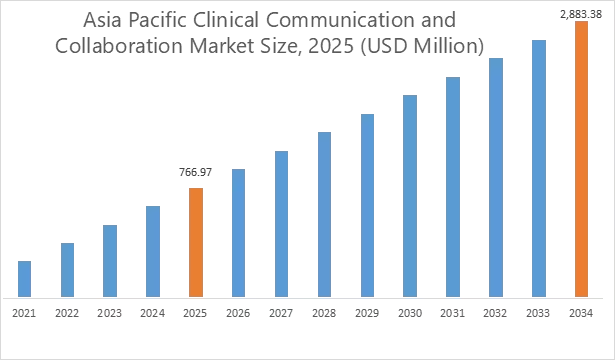
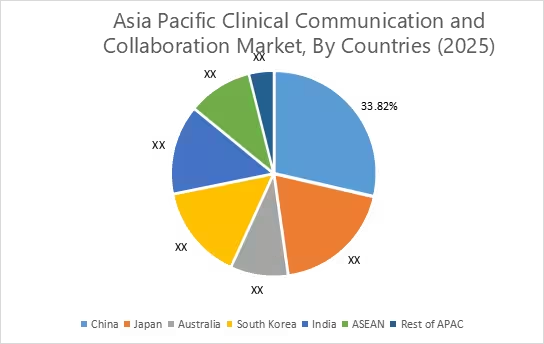
Asia Pacific region was valued at USD 766.97 Million in 2025. Moreover, it is projected to grow by USD 874.80 Million in 2026 and reach over USD 2,883.38 Million by 2034. Out of this, China accounted for the maximum revenue share of 33.82%. As per the clinical communication and collaboration market analysis, the adoption of CC&C solutions in the Asia-Pacific region is primarily driven by factors such as rising healthcare digitalization, expanding hospital infrastructure, and government-backed telehealth initiatives, among others. Moreover, several countries in the Asia Pacific region are adopting secure messaging and mobile health tools for reducing workflow bottlenecks, lowering costs, and improving patient safety during care transitions, which are further accelerating the market expansion.
- For instance, in February 2023, Mount Alvernia Hospital, in collaboration with Icon Cancer Centre, launched the first integrated private cancer treatment center in Singapore. The collaboration and the launch of the new center aimed at advancing the development of an ecosystem for healthcare professionals, institutions, and patients by adopting a personalized approach to patient care while offering individuals with various cancer treatment options. The above factors are increasing the need for efficient communication and collaboration solutions among healthcare settings, in turn driving the market in the Asia-Pacific region.
North America is estimated to reach over USD 4,184.28 Million by 2034 from a value of USD 1,174.37 Million in 2025 and is projected to grow by USD 1,331.35 Million in 2026. In North America, the market growth is mostly driven by the prevalence of advanced healthcare infrastructure, along with rapid adoption of telehealth and mobile-first clinical tools, among others. Moreover, rising transition to cloud-native architectures, along with increasing need to reduce clinician burnout and replace outdated pagers, are further contributing to the clinical communication and collaboration market demand.
- For instance, according to the American Hospital Association, there are approximately 6,100 hospitals across the United States, which mainly include community hospitals, federal government hospitals, and others. The above factors are expected to propel the clinical communication and collaboration market trends in North America during the forecast period.
Meanwhile, according to the regional analysis, factors including rapid digitalization of healthcare industry, strict patient safety laws, and government efforts to modernize medical centers are driving the market demand in Europe. Furthermore, according to the market analysis, the industry in Latin America, Middle East, and African regions is expected to grow at a considerable rate due to factors such as expanding healthcare infrastructure, rising government investments in digital healthcare and improved networks, combined with the growing adoption of telehealth and telemedicine.
Top Key Players & Market Share Insights:
The global clinical communication and collaboration market is highly competitive with major players providing solutions to the national and international markets. Key players are adopting several strategies in research and development (R&D), product innovation, and end-user launches to hold a strong position in the clinical communication and collaboration market. Key players in the clinical communication and collaboration industry include-
- TigerConnect (United States)
- Ascom Holding AG (Switzerland)
- Stryker Corporation (United States)
- Baxter (United States)
- Cisco Systems Inc. (United States)
- PerfectServe Inc. (United States)
- Spok Holdings Inc. (United States)
- Oracle (United States)
- Epic Systems Corporation (United States)
- Avaya LLC (United States)
- Microsoft Corporation (United States)
Industry Developments:
Product Launch:
- In June 2026,TigerConnect enhanced its AI-driven clinical communication platform with advanced scheduling intelligence for automating hospital staffing and care coordination. The update introduces real-time, AI-powered schedule management along with a new touch-enabled digital whiteboard for the Tiger Connect Smart Room to facilitate direct patient-team collaboration.
Clinical Communication and Collaboration Market Report Insights::
| Report Attributes | Report Details |
| Study Timeline | 2021-2034 |
| Market Size in 2034 | USD 11,263.21 Million |
| CAGR (2026-2034) | 13.6% |
| By Offering |
|
| By Deployment Mode |
|
| By Enterprise Type |
|
| By End User |
|
| By Region |
|
| Key Players |
|
| Report Coverage |
|
Key Questions Answered in the Report
How big is the clinical communication and collaboration market? −
The clinical communication and collaboration market was valued at USD 3,151.36 Million in 2025 and is projected to grow to USD 11,263.21 Million by 2034.
Which is the fastest-growing region in the market? +
Asia-Pacific is the region experiencing the most rapid growth in the market.
What specific segmentation details are covered in the clinical communication and collaboration report? +
The report includes specific segmentation details for offering, deployment mode, enterprise type, end user, and region.
Who are the major players in the market? +
The key participants in the market are Tiger Connect (United States), Ascom Holding AG (Switzerland), Stryker Corporation (United States), Baxter (United States), Cisco Systems Inc. (United States), Perfect Serve Inc. (United States), Spok Holdings Inc. (United States), Oracle (United States), Epic Systems Corporation (United States), Avaya LLC (United States), Microsoft Corporation (United States), and others.
Overview
Reputation & Certifications


Our Services
- Market Intelligence & Forecasting
- Custom Research Solutions
- Market Entry Strategy
- Competitive Intelligence
- Customer Insights
- Industry Innovation Analysis
- Investment Advisory