Jump to Content
Co-Fired Ceramic Market - Size, Share, Industry Trends, and Forecasts (2025 - 2032)
Co-Fired Ceramic Market Size:
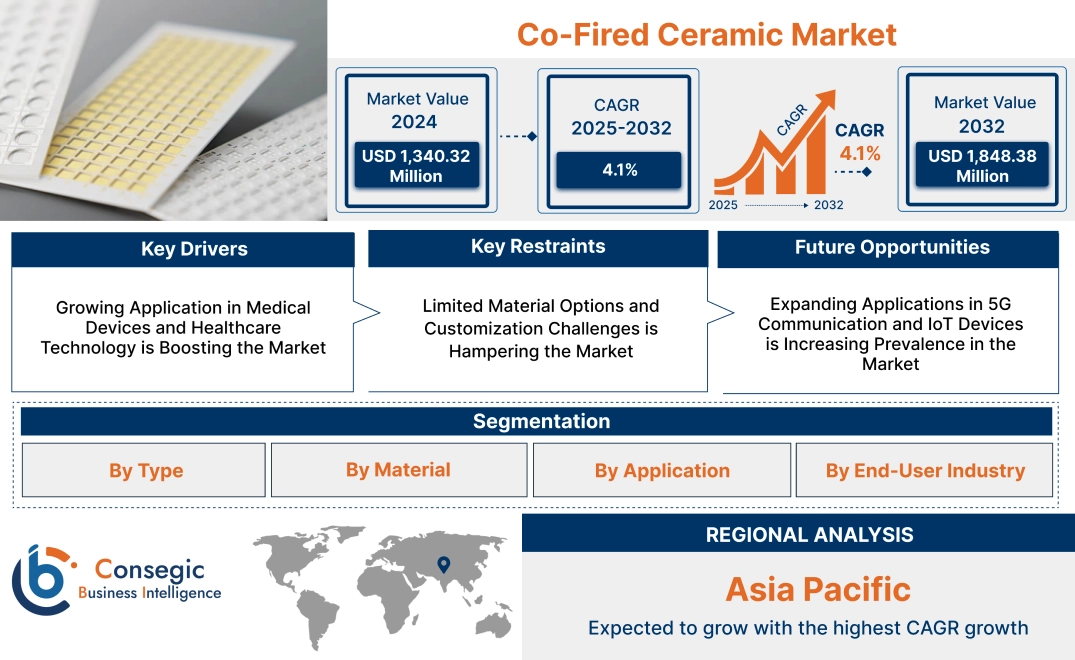
Co-Fired Ceramic Market size is estimated to reach over USD 1,848.38 Million by 2032 from a value of USD 1,340.32 Million in 2024 and is projected to grow by USD 1,371.39 Million in 2025, growing at a CAGR of 4.1% from 2025 to 2032.
Co-Fired Ceramic Market Scope & Overview:
The co-fired ceramic is created through high-temperature sintering processes. Co-fired ceramics, including low-temperature co-fired ceramics (LTCC) and high-temperature co-fired ceramics (HTCC), are widely used in electronics for their exceptional thermal, electrical, and mechanical properties. Key characteristics include high dimensional stability, excellent electrical insulation, and compatibility with miniaturized electronic components. The benefits of co-fired ceramics include reduced circuit size, enhanced performance, and improved reliability in harsh operating conditions. Applications span microelectronics, automotive electronics, aerospace systems, and telecommunications, where precise and durable materials are critical. End-users include electronic component manufacturers, automotive OEMs, and aerospace companies, driven by increasing trends for compact and efficient electronic devices, advancements in 5G and IoT technologies, and the growing adoption of lightweight materials in high-performance industries.
Co-Fired Ceramic Market Dynamics - (DRO) :
Key Drivers:
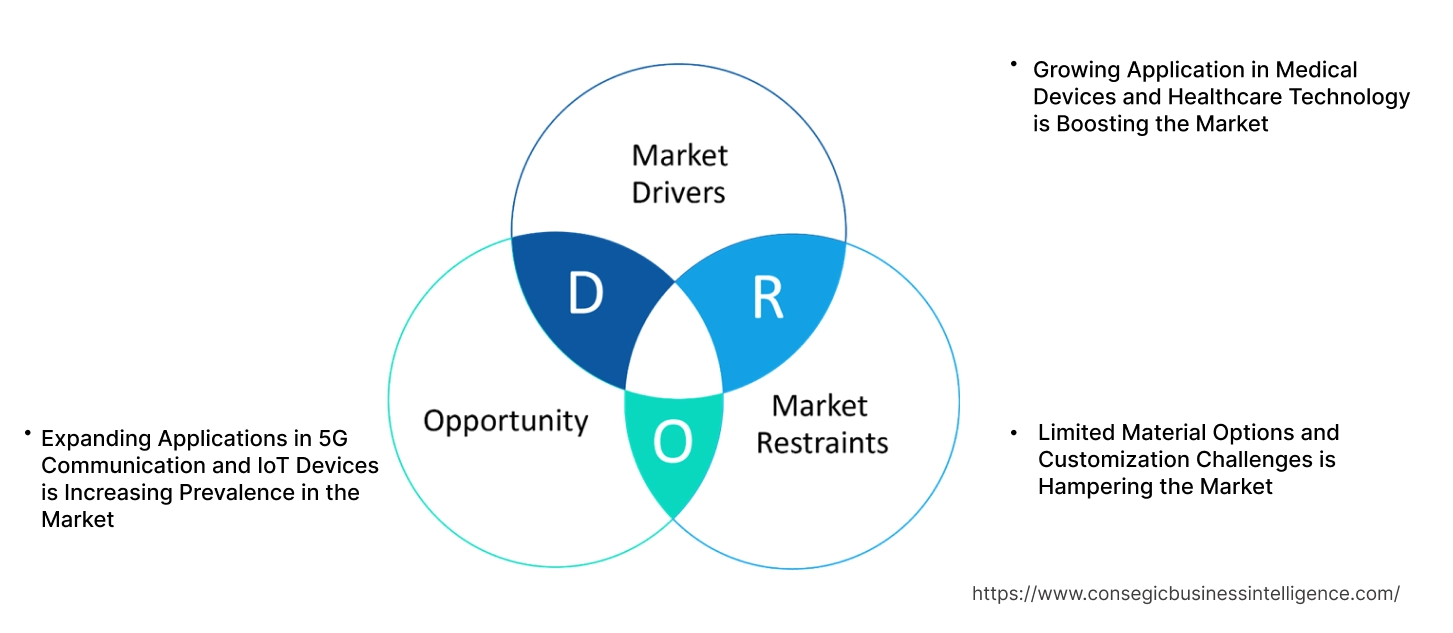
Growing Application in Medical Devices and Healthcare Technology is Boosting the Market
Co-fired ceramics are increasingly being utilized in the medical devices and healthcare sectors due to their unmatched reliability, biocompatibility, and ability to operate under extreme conditions. These ceramics are critical in diagnostic sensors, implants, and therapeutic equipment, offering precise performance and durability essential for advanced medical technologies. Their thermal and chemical stability ensures consistent functionality in devices such as pacemakers, imaging systems, and minimally invasive surgical tools.
Trends in personalized medicine and next-generation diagnostics are driving the integration of co-fired ceramics in healthcare technologies. The analysis highlights their role in enabling high-precision and compact medical devices, aligning with the growing focus on innovative solutions for improved patient outcomes. This makes co-fired ceramics indispensable in modern medical engineering.
Key Restraints:
Limited Material Options and Customization Challenges is Hampering the Market
One of the primary challenges in the co-fired ceramic market is the limited range of compatible materials and design flexibility compared to other advanced materials. These limitations can restrict their adoption in applications requiring highly specific performance characteristics or complex geometries. For example, industries needing extensive customization may find co-fired ceramics less adaptable to unique or niche requirements.
Trends in material diversification underscore the importance of expanding the range of available formulations and improving adaptability. Manufacturers face challenges in meeting diverse industrial needs, particularly in sectors like electronics and aerospace, where tailored material properties are critical. Addressing these customization constraints is essential for broader market penetration and acceptance.
Future Opportunities :
Expanding Applications in 5G Communication and IoT Devices is Increasing Prevalence in the Market
The emergence of 5G networks and the rapid expansion of Internet of Things (IoT) devices have created significant opportunities for co-fired ceramics in high-frequency electronic components. These ceramics are ideal for producing RF filters, antennas, and other compact, high-performance components necessary for next-generation communication technologies. Their excellent electrical and thermal properties ensure reliable operation in demanding applications where precision and miniaturization are key.
Trends in connected devices and high-speed communication systems are positioning co-fired ceramics as a critical enabler of advanced infrastructure. Analysis suggests that their expanding role in supporting faster data transfer, improved connectivity, and efficient device performance will solidify their importance in 5G and IoT ecosystems. Manufacturers focusing on innovations tailored for these applications are well-positioned to capture emerging co-fired ceramic market opportunities in this dynamic sector.
Co-Fired Ceramic Market Segmental Analysis :
By Type:
Based on type, the co-fired ceramics market is segmented into low-temperature co-fired ceramics (LTCC) and high-temperature co-fired ceramics (HTCC).
The low-temperature co-fired ceramics (LTCC) segment accounted for the largest revenue in the co-fired ceramic market share in 2024.
- LTCC is a widely used technology due to its ability to integrate multiple layers of electronic components into a single, compact module.
- These ceramics offer excellent thermal and electrical properties, making them indispensable in applications such as RF modules, sensors, and LED packaging.
- The growing co-fired ceramic market trends for smaller, lightweight, and high-performance devices in industries such as consumer electronics, automotive, and telecommunications have driven the adoption of LTCC.
- Furthermore, LTCC substrates are highly favored in 5G infrastructure, where their ability to operate at high frequencies while maintaining thermal stability plays a crucial role.
- With advancements in manufacturing processes, LTCC has also found applications in automotive radar systems, satellite communication modules, and IoT devices.
The high-temperature co-fired ceramics (HTCC) segment is anticipated to register the fastest CAGR during the forecast period.
- HTCC technology is rapidly growing due to its exceptional performance under high temperatures and harsh environmental conditions.
- These ceramics are increasingly used in power electronics, industrial sensors, and aerospace applications, where durability and reliability are paramount.
- HTCC substrates support higher power densities and offer better thermal conductivity compared to LTCC, making them suitable for critical components in electric vehicles (EVs) and renewable energy systems.
- Additionally, the co-fired ceramic market expansion of advanced manufacturing techniques, such as 3D printing of HTCC structures, has broadened their applicability in emerging fields like energy storage systems and industrial automation.
By Material:
Based on material, the co-fired ceramics market is segmented into alumina, zirconia, aluminum nitride (AlN), and others.
The alumina segment accounted for the largest revenue share in 2024.
- Alumina is the most commonly used material in co-fired ceramics due to its excellent combination of thermal conductivity, mechanical strength, and cost-effectiveness.
- It is extensively applied in RF modules, power electronics, and LED packaging, where thermal management and reliability are critical.
- Alumina-based LTCC substrates are particularly favored in consumer electronics, telecommunication devices, and industrial sensors due to their affordability and ease of production.
- Moreover, the material's ability to withstand high temperatures and provide superior electrical insulation has driven its adoption in automotive and aerospace components.
The aluminum nitride (AlN) segment is anticipated to register the fastest CAGR during the forecast period.
- AlN is gaining significant traction due to its superior thermal conductivity, making it ideal for high-performance applications such as power electronics, LED lighting, and advanced sensors.
- The increasing focus on energy-efficient solutions in the electronics and automotive industries has bolstered trends for AlN-based ceramics.
- These materials are also being utilized in electric vehicle powertrains and advanced communication systems, where heat dissipation and electrical stability are critical.
- Additionally, advancements in AlN processing techniques are expected to lower production costs, further expanding its market penetration in the coming years.
By Application:
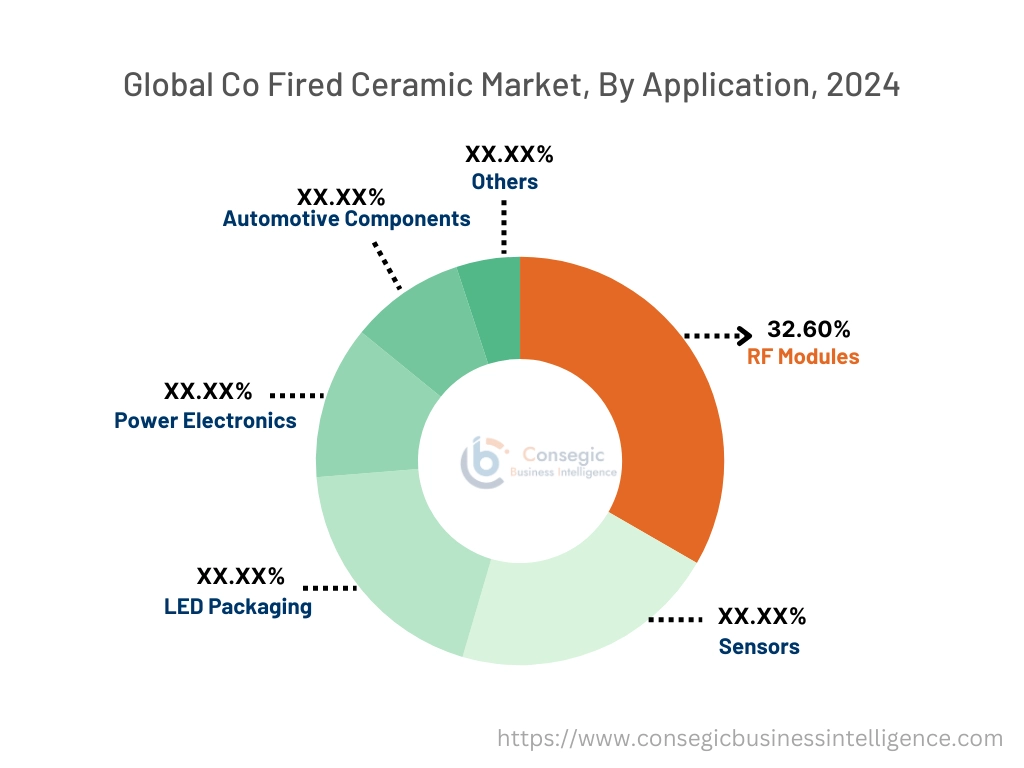
Based on application, the co-fired ceramics market is segmented into RF modules, sensors, LED packaging, power electronics, automotive components, and others.
The RF modules segment accounted for the largest revenue of 32.60% in the co-fired ceramic market share in 2024.
- Co-fired ceramics are integral to RF modules, enabling compact designs with high-frequency performance and excellent thermal stability.
- These modules are widely used in telecommunication devices, satellite communication systems, and IoT applications.
- The rapid adoption of 5G technology and the growing co-fired ceramic market demand for high-performance wireless communication devices have significantly increased the deployment of co-fired ceramics in RF modules.
- Furthermore, advancements in LTCC technology for miniaturized RF components in automotive radar systems and military communication equipment are driving the co-fired ceramic market growth of this segment.
The LED packaging segment is anticipated to register the fastest CAGR during the forecast period.
- LED packaging relies heavily on co-fired ceramics to enhance thermal management, durability, and overall performance.
- The use of these materials in LED lighting systems for automotive, industrial, and residential applications has surged, driven by the global shift toward energy-efficient lighting solutions.
- Co-fired ceramics also play a crucial role in high-power LED applications, where efficient heat dissipation is essential for maintaining performance and longevity.
- The rising adoption of LED technology in advanced displays, smart lighting systems, and outdoor illumination is expected to propel the growth of this segment.
By End-Use Industry:
Based on the end-use industry, the co-fired ceramics market is segmented into electronics, automotive, aerospace & defense, industrial manufacturing, telecommunication, and others.
The electronics segment accounted for the largest revenue share in 2024.
- The electronics sector is the largest consumer of co-fired ceramics due to their extensive use in miniaturized and high-performance devices.
- RF modules, sensors, and power electronics components in consumer electronics and telecommunications rely on the unique properties of co-fired ceramics.
- The increasing co-fired ceramic market trends for advanced devices, such as smartphones, wearable gadgets, and smart home systems, have driven the co-fired ceramic market growth of this segment.
- Furthermore, the integration of co-fired ceramics in telecommunication infrastructure for 5G networks and IoT devices has further bolstered their adoption in the electronics sector.
The automotive segment is anticipated to register the fastest CAGR during the forecast period.
- The automotive sector is rapidly adopting co-fired ceramics for advanced electronic systems, including sensors, LED lighting, and power modules.
- The increasing production of electric vehicles (EVs) has heightened the co-fired ceramic market demand for energy-efficient and heat-resistant components, where co-fired ceramics play a pivotal role.
- These materials are also integral to safety and infotainment systems, such as radar sensors and digital displays, enhancing overall vehicle performance and user experience.
- The growing focus on autonomous and connected vehicles is expected to further drive the adoption of co-fired ceramics in this sector.
Regional Analysis:
The regions covered are North America, Europe, Asia Pacific, the Middle East and Africa, and Latin America.
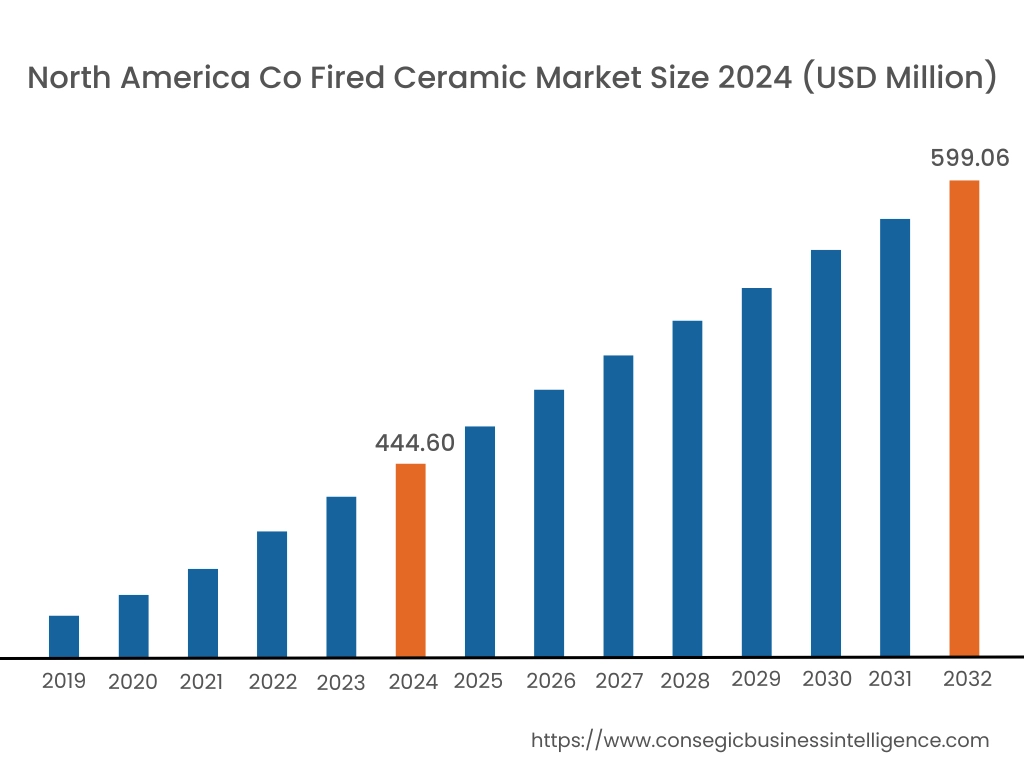
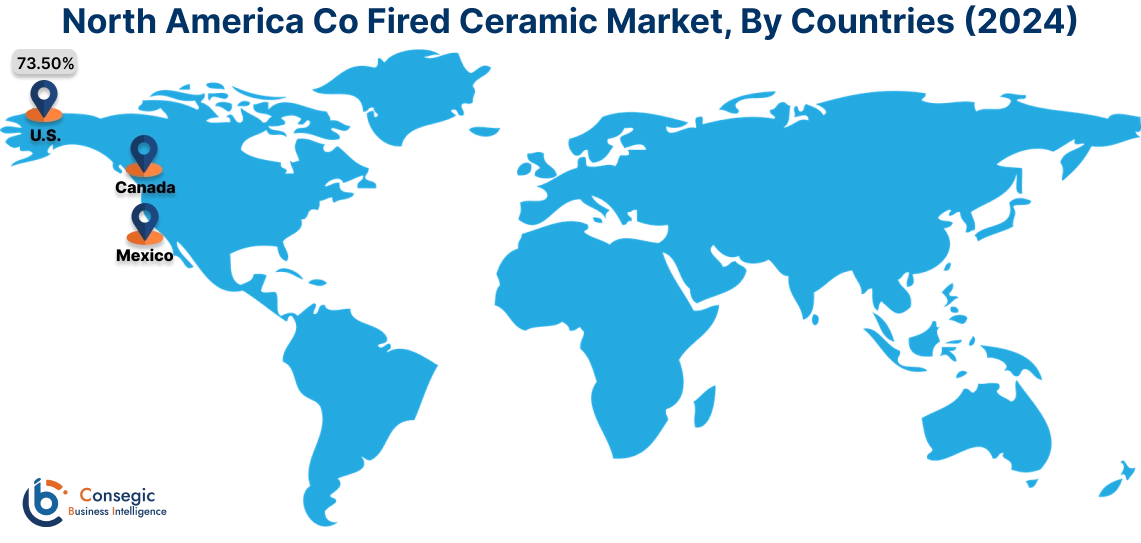
In 2024, North was valued at USD 444.60 Million and is expected to reach USD 599.06 Million in 2032. In North America, the U.S. accounted for the highest share of 73.50% during the base year of 2024. North America holds a significant share in the co-fired ceramic market analysis, driven by its advanced aerospace, defense, and telecommunication sectors. The U.S. dominates the region with strong trends for co-fired ceramic substrates in applications such as RF modules, radar systems, and satellite communications. The growing adoption of high-performance electronic components in defense and aerospace industries supports the market. Canada contributes with increasing use of co-fired ceramics in automotive electronics and industrial applications. However, high production costs and competition from alternative materials may pose challenges in the region.
In Asia Pacific, the market is experiencing the fastest growth with a CAGR of 4.5% over the forecast period. In the co-fired ceramic market analysis, fueled by rapid industrialization, urbanization, and increasing adoption of advanced electronics in China, Japan, and South Korea. China dominates the market with extensive use of co-fired ceramics in consumer electronics, telecommunications, and automotive applications. Japan focuses on high-precision applications in electronics and medical devices, leveraging co-fired ceramics for their superior thermal and electrical properties. South Korea emphasizes its use of 5G communication systems and semiconductors. India is also emerging as a key market, driven by its growing electronics manufacturing sector. However, high initial investment costs in manufacturing technologies may hinder growth in some areas.
Europe is a prominent market, supported by its robust automotive, industrial, and telecommunication industries. Countries like Germany, France, and the UK are key contributors. As per the analysis, Germany leads the market with significant demand for co-fired ceramics in automotive sensors, power electronics, and industrial automation systems. France emphasizes their use in aerospace and defense applications, particularly for radar and communication systems. The UK focuses on innovative applications in renewable energy systems and advanced telecommunications. However, stringent EU regulations on electronic component manufacturing and environmental compliance may increase production costs for manufacturers.
The Middle East & Africa region is witnessing steady growth in the global co-fired ceramic market, driven by increasing investments in telecommunication and industrial automation. Countries like Saudi Arabia and the UAE are adopting co-fired ceramics in advanced telecommunication systems and energy-efficient industrial equipment. In Africa, South Africa is emerging as a market, leveraging co-fired ceramics in automotive and renewable energy applications. However, limited local production capabilities and dependence on imports may restrict broader market expansion portrayed in the region analysis.
Latin America is an emerging market for co-fired ceramics, with Brazil and Mexico leading the region. Brazil’s expanding automotive and telecommunication sectors drive demand for co-fired ceramics in sensors, antennas, and power modules. Mexico focuses on the use of these ceramics in electronics and industrial automation systems, supported by growing investments in manufacturing technologies. The region is also exploring applications in renewable energy systems and healthcare devices. However, economic instability and lack of advanced manufacturing infrastructure may pose challenges to market growth in smaller economies.
Top Key Players and Market Share Insights:
The co-fired ceramic market is highly competitive with major players providing products to the national and international markets. Key players are adopting several strategies in research and development (R&D), product innovation, and end-user launches to hold a strong position in the co-fired ceramic market. Key players in the co-fired ceramic industry include -
- Kyocera Corporation (Japan)
- Murata Manufacturing Co., Ltd. (Japan)
- CeramTec GmbH (Germany)
- CoorsTek, Inc. (USA)
- Yokowo Co., Ltd. (Japan)
- TDK Corporation (Japan)
- Taiyo Yuden Co., Ltd. (Japan)
- DuPont (USA)
- KOA Corporation (Japan)
- Hitachi Metals, Ltd. (Japan)
Recent Industry Developments :
Industrial Applications:
- In September 2024, the RECERCO Project, a collaboration between the Institute of Ceramic Technology (ITC) and the Plastics Technology Centre (AIMPLAS), demonstrated the feasibility of repurposing fired ceramic waste, which typically ends up in landfills, into new ceramic tiles and composite materials for the construction industry.
Co-Fired Ceramic Market Report Insights :
| Report Attributes | Report Details |
| Study Timeline | 2019-2032 |
| Market Size in 2032 | USD 1,848.38 Million |
| CAGR (2025-2032) | 4.1% |
| By Type |
|
| By Material |
|
| By Application |
|
| By End-Use Industry |
|
| By Region |
|
| Key Players |
|
| North America | U.S. Canada Mexico |
| Europe | U.K. Germany France Spain Italy Russia Benelux Rest of Europe |
| APAC | China South Korea Japan India Australia ASEAN Rest of Asia-Pacific |
| Middle East and Africa | GCC Turkey South Africa Rest of MEA |
| LATAM | Brazil Argentina Chile Rest of LATAM |
| Report Coverage |
|
Key Questions Answered in the Report
What is the projected size of the Co Fired Ceramic Market by 2032? −
Co Fired Ceramic Market size is estimated to reach over USD 1,848.38 Million by 2032 from a value of USD 1,340.32 Million in 2024 and is projected to grow by USD 1,371.39 Million in 2025, growing at a CAGR of 4.1% from 2025 to 2032.
What are the key drivers for market growth? +
The market is driven by the growing use of co-fired ceramics in medical devices and healthcare technologies due to their reliability and biocompatibility.
What challenges does the market face? +
One significant challenge is the limited range of compatible materials and customization options, which restrict their application in highly specific or complex industrial needs.
Which type of co-fired ceramics holds the largest market share, and why? +
Low-Temperature Co-Fired Ceramics (LTCC) hold the largest market share due to their versatility and ability to integrate multiple layers of electronic components into compact modules.
Overview
Reputation & Certifications


Our Services
- Market Intelligence & Forecasting
- Custom Research Solutions
- Market Entry Strategy
- Competitive Intelligence
- Customer Insights
- Industry Innovation Analysis
- Investment Advisory