Jump to Content
Commercial Printing Market Size & Industry Share - Growth Trends & Forecasts (2026 - 2034)
Commercial Printing Market Size:
The Commercial Printing Market is expected to expand from 510.62 (US$B) in 2025 to 526.45 (US$B) in 2026, and is forecast to surpass 672.09 (US$B) by 2034, growing at a CAGR of 3.1% between 2026 and 2034, according to a recent report from Consegic Business Intelligence.
Commercial Printing Market Scope & Overview:
Commercial printing is a specialized field that caters to business needs by producing a wide range of printed materials for businesses, organizations, and individuals. Printed materials include direct mail marketing materials, books, posters, catalogs, magazines, transactional statements, and packaging. Commercial printing involves the use of professional-grade printing technology to create high-quality, large-volume print runs that are essential for various business operations and marketing efforts. Commercial printing serves as a critical component for branding, communication, and promotional activities, and enables businesses to circulate information effectively through tangible materials like brochures, business cards, flyers, and posters. The above benefits of commercial printing are primary determinants for increasing their deployment in packaging, advertising, and publishing applications among others.
Commercial Printing Market Insights:

Commercial Printing Market Dynamics - (DRO) :
Key Drivers:
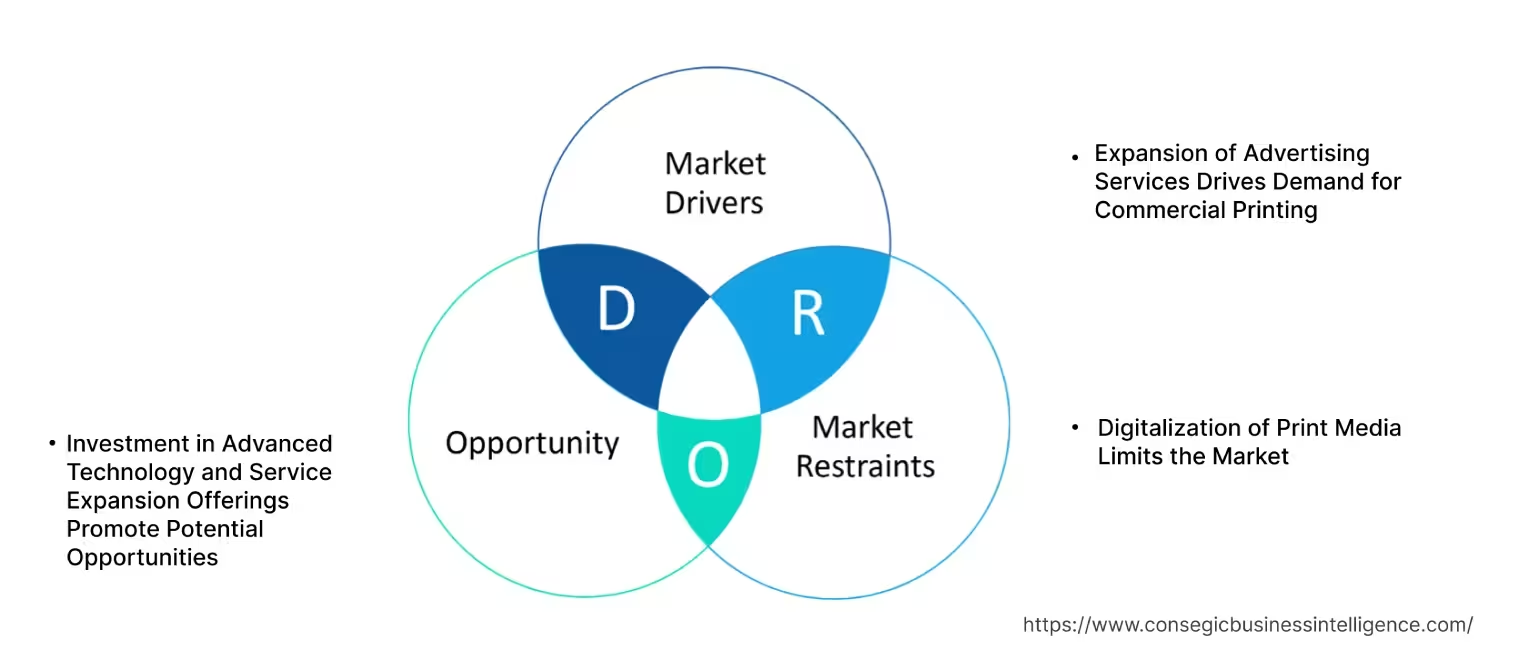
Expansion of Advertising Services Drives Demand for Commercial Printing
The expansion of advertising requirements in commercial printing is a significant trend that reflects the growing need for businesses to communicate their brand message effectively. As companies worldwide strive to stand out in a competitive market, the adoption of high-quality printed advertising materials has surged. Commercial printing involves benefits such as cost-effectiveness, quick turnaround, customization, high-quality output, and others.
Moreover, factors including demand for high-resolution print, design, increased brand competition, technological advancement, diverse advertising needs, customization, personalization, and others are among the key prospects driving the market.
Therefore, market trends analysis portrays that the aforementioned factors are increasing the adoption of commercial printing, in turn driving the commercial printing market demand.
Key Restraints :
Digitalization of Print Media Limits the Market
The digitalization of print media is indeed influencing the commercial printing market, with varying impacts. There are multiple alternatives to commercial printing including Google AdWords, Facebook ads, digital hoardings, YouTube videos, and others, which is a prime factor limiting the market.
- For instance, in May 2023, Kroger, the grocery chain in the United States announced that it ceased sending out weekly digital mailers and moved instead toward digital advertisements. Many other brands such as Cadbury, Lego, Nike, Volkswagen, and others have moved from traditional print media to digital media.
Therefore, analysis of market trends depicts that the transition from traditional print media to digital print media is restraining the commercial printing market growth.
Future Opportunities :
Investment in Advanced Technology and Service Expansion Offerings Promote Potential Opportunities
To tackle the obstacles in the commercial print industry, businesses should adopt innovative strategies. This includes diversifying their services beyond just traditional printing, by incorporating additional offerings like graphic design, website development, and digital marketing. This transformation into a comprehensive solution for all marketing requirements allows them to stand out from their competition and provide extra value to their clients. Furthermore, investing in the latest printing technologies is another innovative approach. Keeping up with cutting-edge equipment and software not only enhances the quality of print but also improves efficiency and reduces costs.
- For instance, in March 2024, HP launched the new HP Indigo 120K Digital Press, offering unparalleled productivity, and the 18K Digital Press, capable of handling an unprecedented range of print applications with a single B2 digital press. An innovative approach to digital security printing has been unveiled with the new HP Indigo 7K Secure Digital Press.
Hence, as per the market trends analysis, investment in advanced technology and expansion of service offerings will scale the market and are expected to promote commercial printing market opportunities during the forecast period.
Commercial Printing Market Segmental Analysis :
By Type:
Based on the type, the market is segmented into offset lithography, inkjet, flexographic, screen, and gravure.
The offset lithography segment accounted for the largest revenue share of the total commercial printing market share in the year 2023.
- The offset lithography refers to the use of a printing plate that holds an inked image of the content to be printed.
- This inked image is subsequently transferred, or offset, from the plate to a rubber blanket, and finally to the printing surface.
- Moreover, offset lithography offers a range of benefits including its versatility, allowing businesses to print on virtually any flat surface, including paper, cardboard, and even plastic.
- For instance, in March 2023, Offset Print & Packaging, a printing company based in Kent, utilized funding from HSBC to install one of the first Koenig & Bauer Rapida 145 printing presses in the UK. The company received a seven-figure funding package from HSBC, a consistent supporter of the business. This new addition will enable Offset to print 16,000 sheets of 1450x1060mm carton board per hour, thereby enhancing the quality of their output.
- Thus, rising development associated with offset lithography is driving the commercial printing market expansion.
The inkjet segment is anticipated to register the fastest CAGR during the forecast period.
- Inkjet printing technology is experiencing a rapid rise as it allows for on-demand, digital, and variable-data printing.
- Inkjet printers are gaining traction in sectors like advertising and packaging, where customization, short-run flexibility, and high-resolution output are increasingly valued.
- The ability to print on various substrates, including textiles, ceramics, and flexible packaging, expands its application scope.
- Additionally, advancements in inkjet technology, such as higher print speeds and improved printhead durability, are contributing to its rising adoption in commercial printing.
- Inkjet's versatility, combined with its efficiency in digital printing, makes it the fastest-growing segment.
- Thus, inkjet printing is set to grow rapidly due to its flexibility, suitability for on-demand and customized printing, and increasing demand in advertising and packaging, boosting the commercial printing market trends.
By Application:
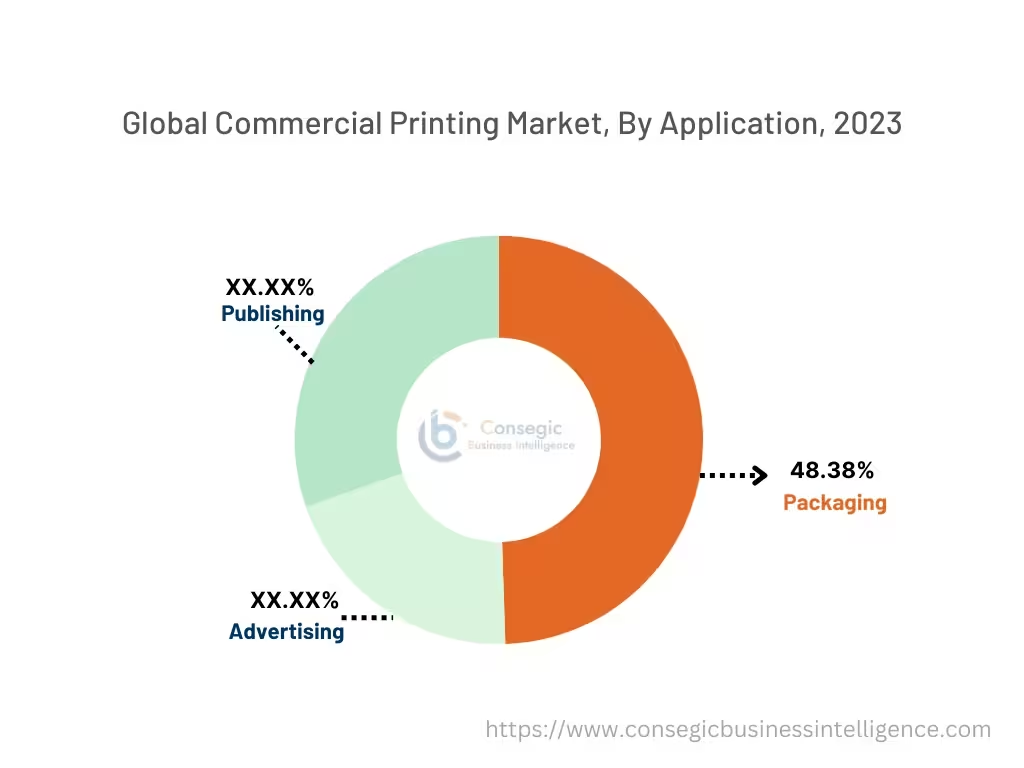
Based on the application, the market is segmented into packaging, advertising, and publishing.
The packaging segment accounted for the largest revenue share of 49.37% in the year 2023.
- Commercial printing for packaging is in high usage due to the rise of e-commerce, consumer goods, and premium packaging trends.
- Printing for packaging involves labels, boxes, and flexible packaging, where high-quality and durable prints are essential for brand visibility and product differentiation.
- As consumer brands seek attractive and sustainable packaging options, demand for specialized printing, particularly in offset and flexographic processes, has increased.
- The need for unique, branded packaging, particularly for products in retail and e-commerce, solidifies the packaging segment's leading market position.
- For instance, in June 2023, Constantia Flexibles, globally the third largest flexible packaging producer, confirmed the successful acquisition of Drukpol Flexo, a distinguished packaging firm in Poland. Drukpol Flexo, recognized for its superior printing and converting capabilities, has earned a robust reputation for providing top-tier packaging solutions in the food and HPC markets to both local and international clientele.
- Thus, analysis of segmental trends depicts that the packaging segment dominates the market, driven by the growing e-commerce and the increasing importance of visually appealing, branded packaging in consumer goods., driving the commercial printing market growth.
The publishing segment is anticipated to register a significant CAGR during the forecast period.
- The publishing segment refers to the creation of printed materials designed for distribution, such as books, newspapers, and periodicals like magazines or directories.
- Moreover, the primary benefits of publishing include high-quality marketing and advertising documents, ample color options, cost-effectiveness, unique experience, cross-platform engagement, technological proliferation, and others.
- For instance, in February 2022, Minuteman Press stated that despite the emergence of digital literature, the book printing industry is on an upward trajectory, with its valuation anticipated to reach USD 49 billion.
- Therefore, the segmental trends analysis, the rising application of commercial printing for publishing applications is anticipated to boost the commercial printing market trends during the forecast period.
Regional Analysis:
The regions covered are North America, Europe, Asia Pacific, the Middle East and Africa, and Latin America.
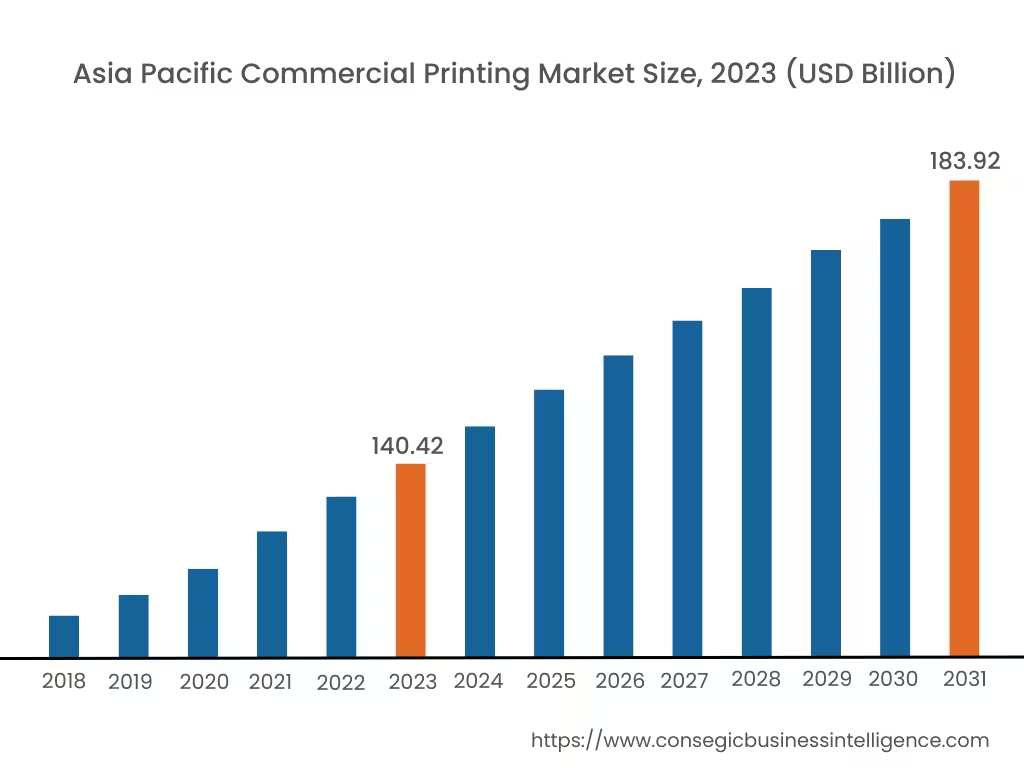
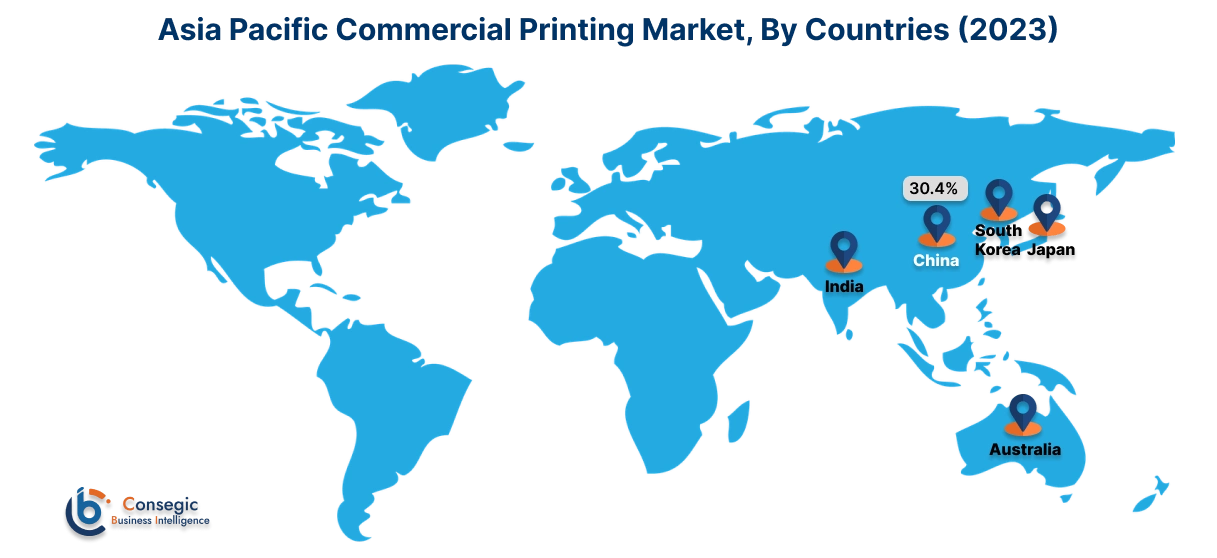
Asia-Pacific region was valued at USD 140.42 Billion in 2023. Out of this, China accounted for the maximum revenue share of 30.4%. Moreover, it is projected to grow by USD 142.60 Billion in 2024 and reach over USD 183.92 Billion by 2031. As per the commercial printing market analysis, the growing pace of urbanization, digitalization, and development is providing lucrative growth prospects for the market in the region. In addition, factors including population, urbanization, growing economy, investment in advanced printing technology, and others are driving the commercial printing market expansion Asia-Pacific region.
- For instance, according to the Indian Printing, Packaging & Allied Machinery Manufacturing Association, packaging is integral to product shipment, with its importance growing as consumers increasingly switch between shopping channels. It plays a crucial role in ensuring product safety, a belief held by 90% of global consumers. The packaging industry is experiencing growth due to a heightened focus on hygiene and packaged products, especially after the COVID-19 pandemic.
North America is estimated to reach over USD 210.60 Billion by 2031 from a value of USD 163.03 Billion in 2023 and is projected to grow by USD 165.36 Billion in 2024. The market in North America is mainly driven by the high usage of commercial printing for marketing, packaging, labeling, and advertising purposes.
- For instance, in June 2023, TC Transcontinental Printing, a sector of Transcontinental Inc. announced a USD 15 million investment in its book printing platform at its Transcontinental Beauceville (Interglobe) plant in Quebec, to meet the growing demand in the North American market. This investment is an addition to a USD 10 million investment in 2019-2020.
Europe is a key player in the market, with Germany, the UK, and France at the forefront. The region benefits from strong demand in packaging, advertising, and publishing, particularly with the rise of customized packaging and sustainable printing solutions. The European Union's environmental regulations encourage the adoption of recycled materials and low-VOC inks, which positively influence market dynamics. However, the decline in demand for traditional publishing and high operational costs impact commercial printing market demand in certain segments.
The Middle East & Africa region is experiencing moderate growth in the market, particularly in Saudi Arabia, the UAE, and South Africa. Increasing investments in infrastructure, retail, and tourism contribute to the demand for printed promotional and packaging materials. The UAE's growth in the luxury goods market has spurred demand for high-quality printing services. However, high costs of raw materials and limited local production capabilities can restrict market potential in certain areas.
Latin America is an emerging market, with Brazil and Mexico leading growth. Demand is fueled by the retail and packaging sectors, especially for printed packaging materials for consumer goods. Government initiatives to promote domestic manufacturing and support local businesses boost demand for printed promotional materials. However, economic instability and fluctuations in raw material prices can challenge the growth of the market in the region.
Top Key Players & Market Share Insights:
The commercial printing market is highly competitive with major players providing commercial printing solutions to the national and international markets. Key players are adopting several strategies in research and development (R&D), product innovation, and end-user launches to hold a strong position in the global commercial printing market. Key players in the commercial printing industry include-
- Xerox Corporation (United States)
- Canon Inc. (Japan)
- HP Inc. (United States)
- Seiko Epson Corporation (Japan)
- Ricoh Company, Ltd. (Japan)
- Toppan Printing Co., Ltd. (Japan)
- Roland DG Corporation (Japan)
- Cimpress plc (Ireland)
- Taylor Label (United States)
- Dai Nippon Printing Co., Ltd. (Japan)
Recent Industry Developments :
Partnerships, Mergers & Acquisitions:
- In January 2024, the global strategic partnership between Afga and EFI leveraged each other's cutting-edge technologies. The wide-format inkjet printing arena has marked a significant milestone after the collaboration of Agfa and EFI.
Commercial Printing Market Report Insights :
| Report Attributes | Report Details |
| Study Timeline | 2021-2034 |
| Market Size in 2034 | USD 672.09 Billion |
| CAGR (2026-2034) | 3.10% |
| Base Year | 2025 |
| By Type |
|
| By Application |
|
| By Region |
|
| Key Players |
|
| North America | U.S. Canada Mexico |
| Europe | U.K. Germany France Spain Italy Russia Benelux Rest of Europe |
| APAC | China South Korea Japan India Australia ASEAN Rest of Asia-Pacific |
| Middle East and Africa | GCC Turkey South Africa Rest of MEA |
| LATAM | Brazil Argentina Chile Rest of LATAM |
| Report Coverage |
|
Key Questions Answered in the Report
How big is the Commercial Printing Market? −
In 2023, the Commercial Printing market was USD 479.37 billion.
What will be the potential market valuation for the Commercial Printing by 2031? +
In 2031, the market size of the Commercial Printing market is expected to reach USD 613.27 billion.
What are the segments covered in the Commercial Printing market report? +
Their types and applications are the segments covered in this report.
Who are the major players in the Commercial Printing market? +
Xerox Corporation (United States), Canon Inc. (Japan), HP Inc. (United States), Seiko Epson Corporation (Japan), Ricoh Company, Ltd. (Japan), Toppan Printing Co., Ltd. (Japan), Roland DG Corporation (Japan), Cimpress plc (Ireland), Taylor Label (United States), Dai Nippon Printing Co., Ltd. (Japan) are the major players in the Commercial Printing market.
Overview
Reputation & Certifications


Our Services
- Market Intelligence & Forecasting
- Custom Research Solutions
- Market Entry Strategy
- Competitive Intelligence
- Customer Insights
- Industry Innovation Analysis
- Investment Advisory