Jump to Content
Connected Healthcare Platform Market - Size, Share, Industry Trends, and Forecasts (2025-2035)
Connected Healthcare Platform Market Scope & Overview
The global connected healthcare platform market is an innovative and fast-growing component of the digital health ecosystem, which represents integrated cloud-based technology solutions integrating Internet of Medical Things (IoMT), artificial intelligence, big data analytics, and interoperability standards connecting patients, healthcare providers, payers, pharmaceutical companies, and medical device manufacturers to each other and other care settings via cohesive digital platforms that enable remote patient monitoring (RPM), telemedicine consultations, chronic disease management, medication adherence monitoring, real-time health data exchange, predictive analytics, and population health management across a variety of care It is projected to have a market of USD 35,800 Million in 2024 and USD 39,500 Million in 2025 (base year), and is expected to continue growing by huge proportions of USD 118,500 Million in 2035. It is that growth trajectory that reflects a 11.6% compound annual growth rate (CAGR) over the forecast period of 2026-2035 because of accelerating healthcare systems digital transformation, regulatory encouragement of virtual care reimbursement, such as permanent Medicare coverage of telehealth and remote patient monitoring, rising chronic disease prevalence in 133 million Americans requiring ongoing monitoring, technological convergence that allows seamless data integration across the disparate systems through HL7 FHIR standards, increasing consumer demand of convenient healthcare access, and post-pandemic normalization.
Regional Trends and Insights
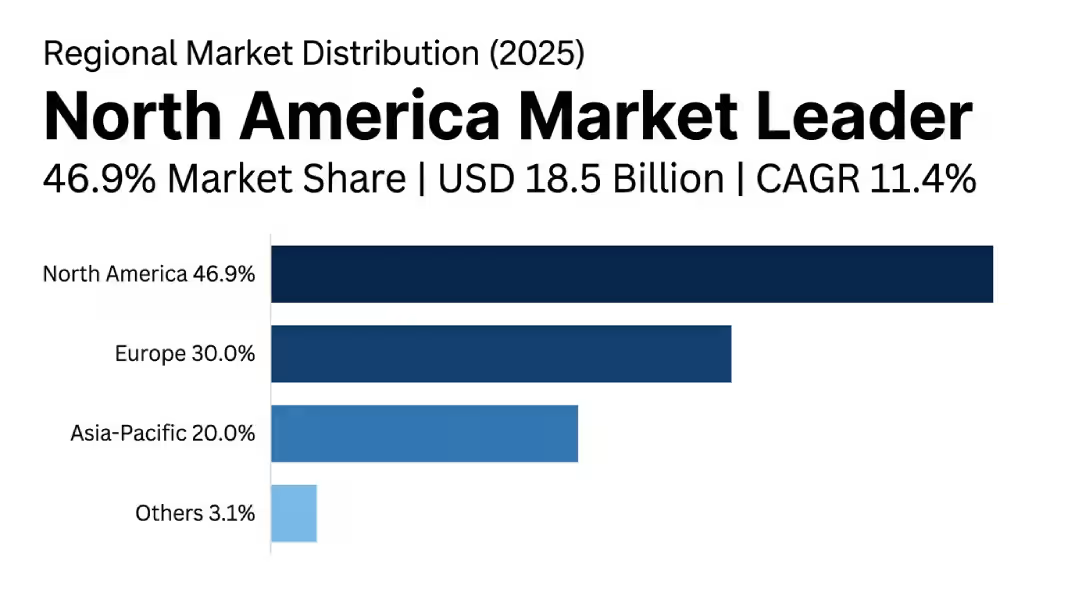
- In 2025, the North American healthcare connected platform market is USD 18,525 million, accounting for 46.9% of the global market, and is projected to reach USD 54,315 million by 2035 at a 11.4% CAGR.
- In 2025, the European connected healthcare platform market is USD 11,850 million (30% of the global market) and is projected to reach USD 35,550 million by 2035 at a 11.6% CAGR.
- In 2025, the Asia-Pacific connected healthcare platform market is USD 7,900 million (20% of global market) and is projected to reach USD 26,625 million by 2035 at the fastest CAGR of 13%.
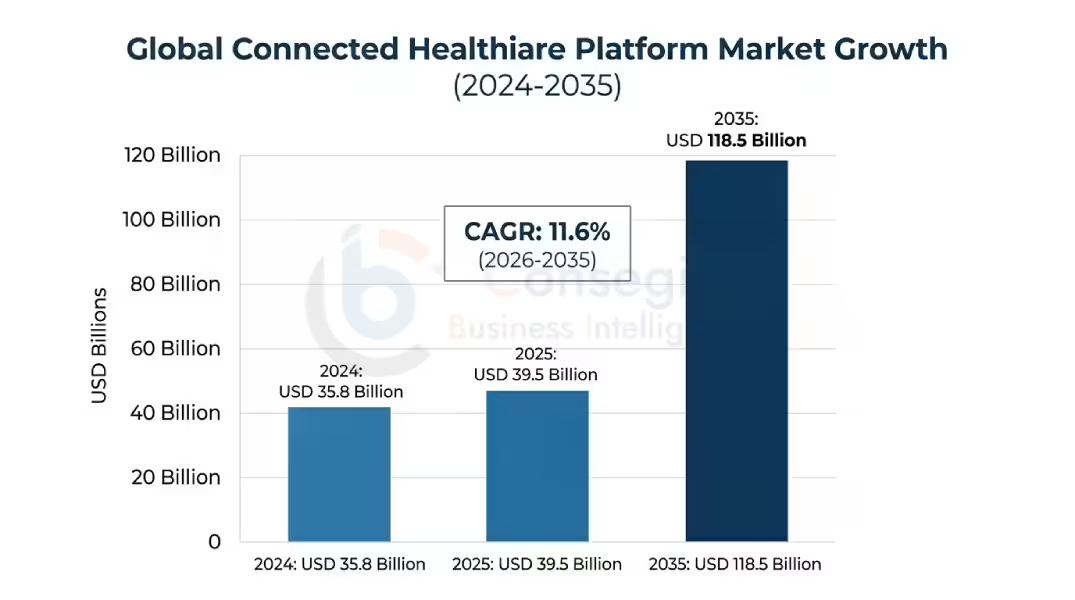
Value-based care models are based on the technological foundation of the so-called connected healthcare platforms, which allow healthcare organizations to shift their conventional fee-for-service reimbursement models to an outcomes-based reimbursement model with a strong emphasis on extensive patient engagement, proactive intervention, and longitudinal health tracking. These advanced platforms combine numerous functional features such as the inclusion of electronic health record (EHR) integration via HL7 FHIR and other interoperability tools, wearable device integration that sustains continuous physiological monitoring, secure messaging and video consultation, clinical decision support system that is run by artificial intelligence, patient engagement portals and mobile applications, and sophisticated analytics dashboards that can provide real-time insights into patient populations, care quality indicators, and operational efficiency indicators.
The international healthcare IT market involves total spending in the excess of USD 350,000 Million in 2024, and the connected healthcare platforms constitute a high-growth niche offering significantly accelerating development curves than the old healthcare IT sectors. The opportunities market has a population of around 6,500 hospitals, 35,000 ambulatory care centers, 165,000 physician practices, and 750 million patients worldwide who access digital health solutions, and the healthcare market is generating around 30% of the global data, which makes platform vendors that provide a complete solution to clinical, operational, and financial needs across the healthcare spectrum a significant opportunity.
Market Channel Distribution Analysis
The integrated healthcare platform market (implementation) works based on four different deployment models that cater to the needs of certain classes of healthcare organizations with specialized needs and demands, implementation strategies, and value propositions. The entire market revenue allocation shows an extreme customer and organizational complexity:
Deployment Model Breakdown (2025):
- USD 16,605 Million (42.0% of total market value) Hospital and Health System Implementations.
- Ambulatory Care, Physician Practice Solutions: USD 10,665 Million (27.0% market revenue)
- Payer and Health Plan Platforms: USD 7,110 Million (18.0% of market share)
- Other Segments (Pharmaceutical, Home Health, Government Programs): USD 5,120 Million (13.0% of the total market value)
By 2024, global investment in linked healthcare platforms development, including artificial intelligence integration, interoperability improvements, cybersecurity platform, and regulatory compliance functionalities had reached USD 7,200 Million with large technology vendors, healthcare organization, and venture capital investors allocating about 15-18% of their revenue to platform functionality expansion, including real-time clinical decision support, population health management through predictive analytics, blockchain-based health information exchange, edge computing integration of medical devices and federated learning techniques which enables AI models development in distributed healthcare networks and preserves data privacy and regulatory compliance.
The industry is undergoing the fundamental consolidation where the healthcare organizations are pursuing total platform solutions instead of point solutions that need complex integration processes. Major platform suppliers, such as Epic Systems, Oracle Health (Cerner), Philips Healthcare, GE Healthcare, and Teladoc Health, have developed end-to-end platforms in their unified technology platforms through organic growth and strategic acquisitions, including remote monitoring, virtual care, analytics, and patient engagement in clinical documentation.
Connected Healthcare Platform Market Dynamics (DRO)
Key Drivers:
Personalized Medicine and Digital Twins.
More sophisticated platforms are starting to make "Digital Twins" of patients virtual models that predict the way the physiology of a patient would respond to a certain treatment or lifestyle change. This can enable hyper-personalized medicine and an early warning system capable of forecasting cardiac events or diabetic episodes hours or days before they happen, which is the next stage of predictive health care.
Key Restraints:
Interoperability Dilemma and Data Integration Complexity.
The greatest technical challenge has been the division of healthcare IT systems and inadequate interoperability of dissimilar systems, which pose tremendous challenges in its integration of forms of comprehensive data necessary to provide connected care. Average healthcare organizations have 15-25 various clinical and administrative systems such as EHRs, laboratory information systems, radiology PACS, pharmacy system, billing systems, and department-specific applications, with minimal standardization in both data formats, communication protocols and semantics.
Although regulatory requirements have some provisions on information blocking of the 21st Century Cures Act and United States Core Data for Interoperability (USCDI) standards by ONC, the feasibility of seamless data exchange is still a challenge. Research has shown that 35-42 percent of health care organizations report a high degree of confidence regarding their capability to share patient data electronically with other organizations and data quality problems, such as duplicate records, inconsistent patient matching, as well as missing data impact an estimated 18-25 percent of health information exchange transactions.
Risks to Cybersecurity and Data Privacy.
Integrated healthcare systems offer large attack surfaces to cyber-attacks and the industry reports indicated more than 25% of all data breaches in 2023-2024 in healthcare organizations. The decentralization of the connected care system that includes patient smartphones, home health sensors, cloud computing services and a range of organizational systems offers a myriad of potential vulnerability points that must have detailed security designs and constant vigilance.
There were record higher healthcare data breaches in 2024, with the industry spending billions of dollars and making some providers and patients hesitant to provide or request healthcare services. Relevant compliance laws in relation to GDPR (Europe), HIPAA (USA), and other data sovereignty regulations are another barrier to implementation as one attack can destroy trust and lead to huge regulatory fines of USD 100-50,000 per violation and criminal penalties due to willful negligence.
Reimbursement Ambiguities and Implementation Costs
While reimbursement for telehealth and RPM has improved post-pandemic, inconsistencies remain across different payers and geographic regions. In many areas, there is a lack of clear payment codes for asynchronous monitoring or AI-driven preventative alerts. Enterprise implementations typically require 12-36 months with costs ranging USD 2.5-25 million depending on organizational size, complexity, and customization requirements, creating significant barriers for smaller healthcare organizations.
Future Opportunities:
Predictive Analytics Integration and Artificial Intelligence.
The integration of linked healthcare services with the development of advanced algorithms of artificial intelligence and machine learning offers revolutionary possibilities of predictive risk stratification, early illness identification, optimization of personalized treatment and automated clinical decision support. AI-based systems are able to process extensive patient information and determine high-risk patients who need to be actively attended to before acute decompensation sets in.
Premature commercial applications prove to be highly clinically and economically beneficial, where AI-based sepsis prediction models detect vulnerable patients 6-12 hours prior to conventional recognition, allowing timely intervention to save lives by 15-25%. Likewise, algorithm-based prediction of heart failure using continuous remote monitoring data is found to have 70-85% accuracy to predict decompensation events 5-14 days ahead, and outpatient intervention to prevent hospitalization can be applied in 40-55% of predicted events.
International Market Development and adoption of the emerging economies.
Medical professionals are in dire short supply in emerging economies in Asia-Pacific, Latin America and Africa. Linked healthcare systems provide a leapfrog opportunity, which means that these areas will not need to build the physical infrastructure, which is costly but instead deploy mobile-first, digital health delivery models that will allow rural patients to access urban experts. Mobile-first connected health platforms are especially successful in the high penetration of smartphones in areas such as Asia-Pacific.
Market Segmentation Analysis
By Component: Technology Architecture Analysis
Software Platforms: Major Dominant Market Segment.
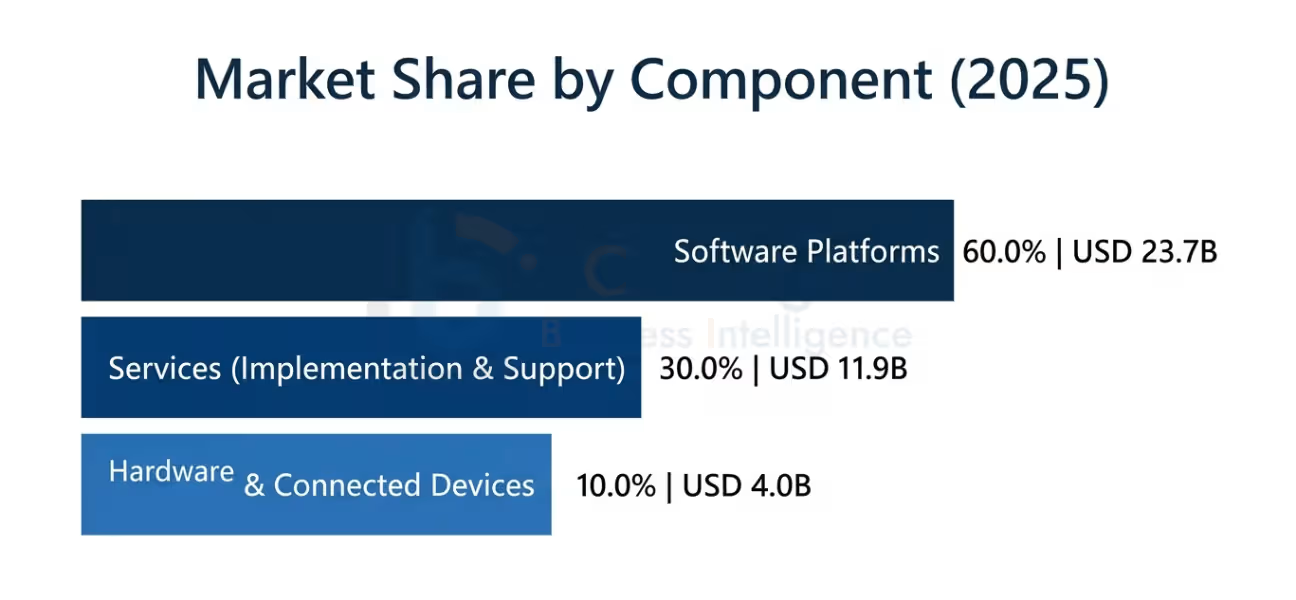
The software platforms will continue to hold commanding market leadership of USD 23,700 Million or 60.0% of total market value in 2025 projected to reach USD 71,100 Million in 2035 at a 11.6% CAGR. This category includes cloud and on-premise software products offering fundamental platform capability such as patient data management, care coordination processes, clinical decision support, analytics and reporting, and integration middleware between differing healthcare IT systems.
The major enterprise platforms such as Epic MyChart Bedside, Oracle HealtheIntent, Philips HealthSuite and GE Healthcare Edison offer all-encompassing features across inpatient, ambulatory, and home care environments with advanced interoperability platforms supporting HL7 FHIR, DICOM and proprietary API integrations with third-party applications and medical devices.
Services: Implementation and Support.
Such services as implementation, consulting, training, and managed services amount USD 11,850 Million (30.0% of market value) which indicates the high professional services needed to ensure successful implementation of the platform. The uniqueness of healthcare IT integration will require dedicated skills to configure the system, optimize work processes, educate staff and provide technical support.
Hardware and Linked devices.
Hardware such as remote monitoring devices, medical IoT sensors and connectivity infrastructure USD 3,950 Million (10.0% of market value) includes wearable biosensors, home monitoring devices, connected medical devices and edge computing infrastructure that enables real-time data capture and processing.
By Application: Use Case Analysis
Remote Patient Monitoring: Biggest Application Segment.
Remote patient monitoring stands at USD 15,405 Million (39.0% of the total market value), which consists of continuous or intermittent monitoring of patient physiological parameters such as vital signs, blood glucose, weight, blood pressure, oxygen saturation, and ECG along with connected devices that send data to clinical monitoring centers or automated analytics systems that detect trends that are concerning and require intervention.
The remote patient monitoring has reached significant growth in Medicare reimbursement, and CPT codes 99453-99458 allow the billing of remote patient monitoring equipment arrangement, monitoring data transmission, and clinical review, which establishes permanent payment systems to endorse program growth.
Virtual Consultations and Telemedicine.
The USD 10,665 Million (27.0% of market value) of telemedicine applications offers synchronous video-based consultations, asynchronous store-and-forward consultations and hybrid applications of virtual and in-person care. Telemedicine applicability has stabilized the market at about 38-45x of pre-pandemic usage with a permanent role in care delivery processes.
Chronic Disease Management Programs.
Chronic disease management platforms are USD 7,900 Million (20.0% of market value) platforms that offer full care coordination, education, and adherence of patients, and outcomes tracking of such conditions like diabetes, heart failure, COPD, hypertension and behavioral conditions requiring continuous engagement and monitoring.
Other Applications
The remainder of applications in the US such as patient engagement platforms, clinical information systems and wellness programs make USD 5,530 Million (14.0% of market value).
By Deployment Mode
Cloud/SaaS: Swiftly Developing Division.
Cloud-based deployment considers USD 27,650 Million (70.0% of market value) which is the most rapidly expanding area because of scalability, accelerated implementation cycles, and OPEX-based price schemes that decrease the initial requirements of capital by healthcare organizations.
On-Premise/Hybrid
On-premise and hybrid solutions, which represent USD 11,850 Million (30.0% of market value) are sustained where there is a strong data residency, latency, or control concern especially among large hospital systems, and where there is significant investment in IT infrastructure already in place.
Regional Market Analysis
North America: Market Leadership and Innovation Hub
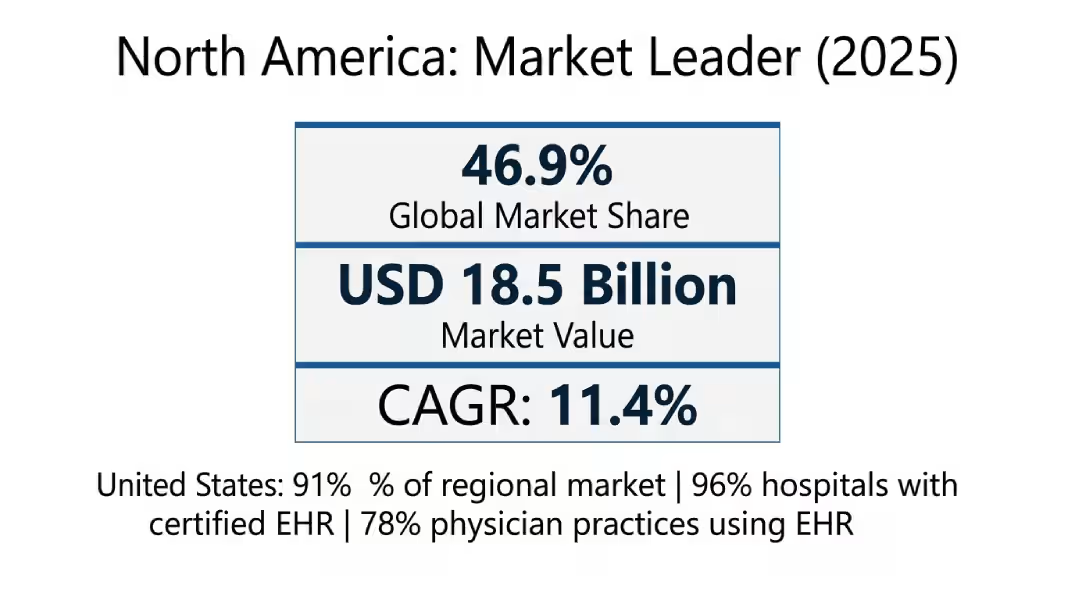
In 2025, the market value in USD of healthcare connected platform in the North American region is USD 18,525 Million which is 46.9 percent of the global market value, and has been projected to increase to USD 54,315 Million at a CAGR of 11.4 percent by 2035. Increased demand of the region including the United States makes 91.0 percent of market value with advanced healthcare delivery systems, advantageous reimbursement policies that favor virtual care, significant venture capital investments over USD 29,000 Million in digital health funding in 2021, and regulatory demands such as 21st Century Cures Act and ONC interoperability standards that require data exchange integration.
The industry is advantaged by effective reimbursement schemes such as Medicare coverage of telehealth services, remote patient monitoring services, chronic care management services, and principal care management services are able to establish sustainable payment models that support the adoption of the platform, and current technology adoption rates with 96% of hospitals having certified EHR systems and 78% of physician practices using electronic health records.
Europe: Regulatory Harmonization and Public Health Integration
By 2025, the European connected healthcare platform market value of USD 11,850 Million, equivalent to 30.0% of the global market value and projected to 11.6% CAGR grew to USD 35,550 Million in 2035. Germany is a 24.0 per cent regional market worth, with United Kingdom taken at 22.0 per cent, France at 19.0 per cent, and other European countries with 35.0 per cent regional market demand.
European market is also marked with some unique features such as the greater focus on the integration of the public health systems, holistic data privacy regulations within the frame of the GDPR that introduce the strict health data management standards and the European Health Data Space project that facilitates the cross-border health information exchange. The region is at the forefront of national digital health strategies with nations such as Estonia, Denmark and Netherlands having a fully developed population-wide digital health infrastructure.
Asia-Pacific: The Rapidest growing market.
The Asia-Pacific related healthcare platform market has USD 7,900 Million in 2025, which comprises 20.0% of global market value and a strong growth rate projected to USD 26,625 Million by 2035 at 13.0% CAGR which is the fastest rate of regional growth. China constitutes 40.0% of the regional market value and this is due to government programs such as strategy on Healthy China 2030 and large investments in digital health infrastructure whereas Japan has 26.0% where aging population spurs demand of remote monitoring systems.
The territory enjoys the advantages of massive digital health efforts, rising smartphone adoption of over 65-75, and the necessity of filling the gap between rural communities and urban health experts using technology. India has proven to be an outstanding growth potential of 18.0% of the regional value, with the increasing middle class, state aid in the form of National Digital Health Mission, and significant technology sector resources to build the domestic platforms.
Other Regions
Latin America is USD 790 Million (2.0% of global market) and Middle East & Africa is USD 435 Million (1.1%), both have demonstrations of potential growth as a result of both mobile-first healthcare delivery models and government programs to address healthcare access issues among underserved communities.
Competitive Landscape and Key Market Players
Market Leadership and Strategic Positioning
Epic Systems Corporation (United States)- Leader in Enterprise Systems.
Epic continues to lead in hospital and health system segment with projected USD 2,600-3,000 Million connected health revenue in 2024 and supporting more than 305 million patients worldwide on its integrated EHR platform with remote monitoring and telehealth features and capabilities to engage with patients. MyChart patient portal provides the company with more than 200 million active users, and MyChart Bedside offers the platform functionality in the home care environment.
Oracle Health (Cerner) (United States) - Health System Provider around the world.
The market share of Oracle Health is estimated to be 12-14% after the acquisition of Cerner by Oracle, with its connected health revenue growing to USD 2,000-2,400 Million in 2024. The HealtheIntent population health platform of the company caters more than 100 million patients with a highly developed analytics and care coordination features as interoperability and extensive EHR integration are prioritized.
Philips Healthcare (Netherlands) - Medical Device Integration Leader.
Philips has about 8-10% of the market share and connected health revenue projected to USD 1,600-2,000 Million by 2024 through its established medical device manufacturing heritage, which offers integrated monitoring solutions through the HealthSuite digital platform which interconnects medical devices, clinical systems, and care coordination processes.
Other Major Market players:
- Teladoc Health (United States) - 7-8 percent market share, virtual care platform to 56 million members across the world.
- GE Healthcare (United States) - 6-7 market share, Edison digital platform including AI-driven clinical applications.
- Siemens Healthineers (Germany) - enterprise imaging and analytics, 4-5% market share.
- Microsoft (United States) - AI-powered clinical documentation and cloud infrastructure (Azure) acquisition by Nuance.
- Medtronic (United States/Ireland) - 5-6% market share, remote monitoring platforms that are integrated into the device.
The latest Industry Trends.
Clinical Decision Support Enhancement and Artificial Intelligence Integration (2024-2025).
Some key platform providers incorporated sophisticated AI functions of predictive risk stratification, automated clinical documentation, and individualized treatment suggestions. Epic Systems also introduced Epic Cosmos AI that uses de-identified data on 225 million patients to train machine learning models to support clinical prediction, and Oracle Health made its first steps toward generative AI use in clinical note generation and care plan optimization.
Interoperability Standards Implementation and Data Exchange Expansion (2024-2025).
Regulatory mandates and the need to act faster on HL7 FHIR standards and USCDI data elements prompted healthcare organizations to accelerate adoption of HL7 FHIR standards and USCDI v3 certification of major EHR vendors and the growth of API capabilities to support integration of third-party applications. The Carequality and CommonWell Health Alliance interoperability networks had gone beyond 750 million patient records that could be exchanged throughout the country.
5G and Edge Computing Implementation (2024).
Major platforms started adopting 5G connectivity and edge computing services that allow medical devices to real-time process medical data with less than 50 milliseconds of latency to support critical applications, allowing telemedicine and remote monitoring situations in which urgent clinical action is necessary.
Strategic Acquisitions and Platform Consolidation (2425)
Significant technology suppliers made strategic acquisitions to consolidate platform features, and the market has been continuing to consolidate with organizations looking to have an end to end solution as opposed to point solutions demanding complex integration work.
Connected Healthcare Platform Market Report Insights
| Report Attributes | Report Details |
|---|---|
| Study Timeline | 2022–2035 |
| Base Year | 2025 |
| Forecast Period | 2026–2035 |
| Market Size in 2025 | USD 39,500 Million |
| Market Size in 2035 | USD 118,500 Million |
| CAGR (2026–2035) | 11.6% |
| By Component | Software Platforms (60.0%), Services (30.0%), Hardware & Devices (10.0%) |
| By Application | Remote Patient Monitoring (39.0%), Telemedicine (27.0%), Chronic Disease Management (20.0%), Others (14.0%) |
| By Deployment | Cloud/SaaS (70.0%), On-Premise/Hybrid (30.0%) |
| By End-User | Hospitals & Health Systems (42.0%), Ambulatory Care (27.0%), Payers (18.0%), Others (13.0%) |
| By Region | Asia-Pacific, Europe, North America, Latin America, Middle East & Africa |
| Key Players | Epic Systems, Oracle Health (Cerner), Philips Healthcare, Teladoc Health, GE Healthcare, Siemens Healthineers, Microsoft, Medtronic |
| Report Coverage |
|
Key Questions Answered in the Report
What is the size of the Connected Healthcare Platform sales market? −
The connected healthcare platform market globally is showing very high growth rates with the market worth USD 39,500 Million in 2025 and USD 118,500 Million in 2035 at 11.6% CAGR indicating fundamental change in healthcare delivery associated with value-based care transition with 100% Medicare beneficiaries being targeted in accountable care arrangements by 2030, the epidemic of chronic diseases impacting 133 million Americans in need of systematic monitoring, regulatory support in the form of permanent Medicare.
What is the fastest growing part of the Connected Healthcare Platform market? +
Asia-Pacific is the fastest-growing regional market with 13.0% CAGR due to China having Healthy China 2030 strategy and significant government spending on digital health infrastructure, the region has large-scale digital health projects, and aging populations in Japan and South Korea to spur demand to remote monitoring solutions, expanding middle-class populations demanding more access to healthcare, and mobile-first healthcare delivery models exploiting 65-75% of smartphone penetration, and the prospect of bypassing the conventional healthcare infrastructure through connected care solutions. Nevertheless, North America is leading the market with 46.9% market share because of advanced healthcare delivery models, positive reimbursement models, and massive technology innovation platforms.
What are the key market development forces till 2035? +
Key drivers of growth encompass basic shift to value-based care models that tie reimbursement to outcomes and organizations using advanced platforms that achieve 15-25% hospital readmission reductions, epidemic of chronic diseases that will make 74 of the world die of chronic illness requiring constant monitoring beyond episodic office visits, regulatory encouragement through 21st Century Cures Act and ONC interoperability rules, aging population with 1 in 6 persons worldwide over 60 years of age in 2030, technology through AI-based predictive analytics that allow early intervention.
What are the technical and operational barriers to adoption? +
Among these are challenges of interoperability where only 35-42% of healthcare organizations report high confidence with external data exchange capabilities despite regulatory requirements, cybersecurity risks where healthcare organizations reported more than 25% of all data breaches as a source of significant financial and reputation risk, complexity in implementation that takes 12-36 months and USD 2.5-25 million to deploy the platform enterprise-wide, affective digital divide where 21 million Americans have no access to broadband potentially increasing health inequities, issues with physician workflow integration, problems in data quality such as duplicate records.
What are the new opportunities up until 2035? +
Key opportunities are AI-powered predictive analytics where sepsis prediction models predict at-risk patients 6-12 hours earlier and heart failure algorithms predict decompensation 5-14 days ahead of time so that proactive interventions can be delivered, digital twin technology which is used to create virtual patient models to optimize treatment which can be used to provide personalized care, global markets in emerging economies powered by mobile-first delivery models, ambient clinical intelligence that reduces documentation in 60-75% of cases with automated note generation, 5G and edge computing is used to enable real-time data transmission, remote patient monitoring, and faster clinical decision-making, which significantly enhances the efficiency of connected healthcare ecosystems.
Overview
Reputation & Certifications


Our Services
- Market Intelligence & Forecasting
- Custom Research Solutions
- Market Entry Strategy
- Competitive Intelligence
- Customer Insights
- Industry Innovation Analysis
- Investment Advisory