Jump to Content
Cord Blood Banking Services Market - Size, Industry Share, Growth Trends and Forecasts (2025 - 2032)
Cord Blood Banking Services Market Size:
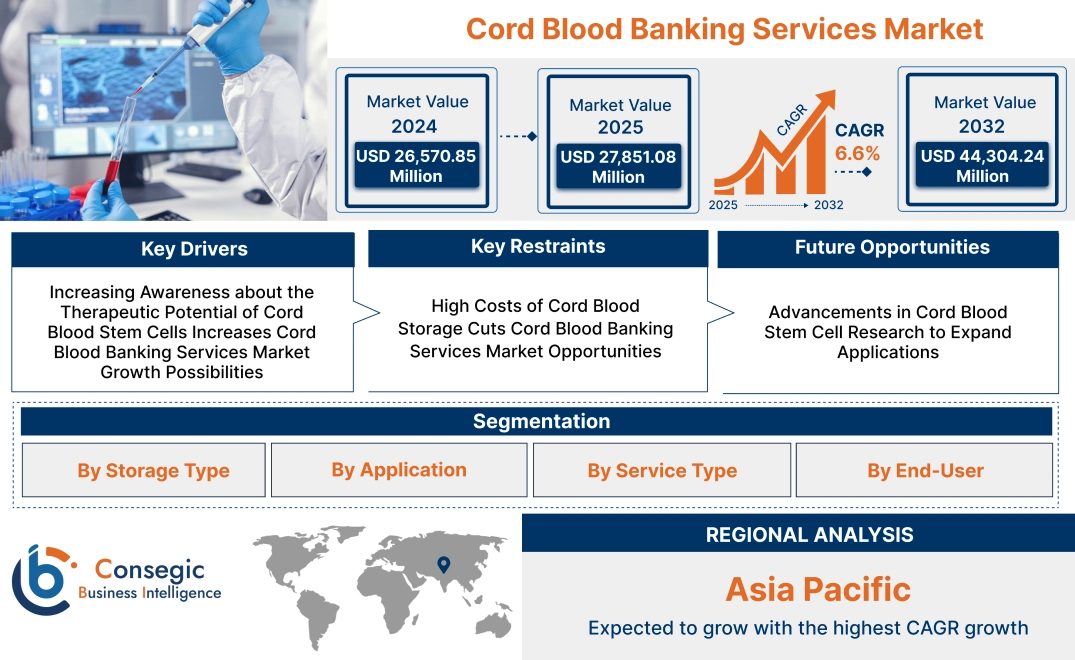
Cord Blood Banking Services Market size is estimated to reach over USD 44,304.24 Million by 2032 from a value of USD 26,570.85 Million in 2024 and is projected to grow by USD 27,851.08 Million in 2025, growing at a CAGR of 6.6 % from 2025 to 2032.
Cord Blood Banking Services Market Scope & Overview:
Cord blood banking services involve the collection, preservation, and storage of umbilical cord blood, rich in stem cells, for potential medical use. These services offer long-term storage solutions to preserve cord blood for future therapeutic applications. Key features include the collection of cord blood immediately after birth, followed by cryogenic preservation to maintain stem cell viability. This method ensures the blood remains usable for transplants and regenerative medicine.
Benefits of cord blood banking include access to stem cells for treating blood disorders, immune system deficiencies, and genetic conditions. It provides an alternative to bone marrow transplants. Applications span across medical research, hematopoietic stem cell therapy, and regenerative treatments. End-use industries include healthcare providers, hospitals, research institutes, and fertility clinics.
How is AI Impacting the Cord Blood Banking Services Market?
AI is transforming the cord blood banking services market by enhancing precision and efficiency at every stage. AI algorithms analyze vast datasets to optimize the processing and storage of cord blood units, ensuring maximum stem cell viability. This predictive modeling also helps in selecting the most compatible units for transplantation, improving patient outcomes. Furthermore, AI-powered systems automate quality control and inventory management, reducing human error and operational costs. By leveraging AI, cord blood banks can provide more personalized services, from tailoring donor engagement to developing predictive models for disease risk, ultimately making the service more effective and reliable for families and medical professionals.
Cord Blood Banking Services Market Dynamics - (DRO) :
Key Drivers:
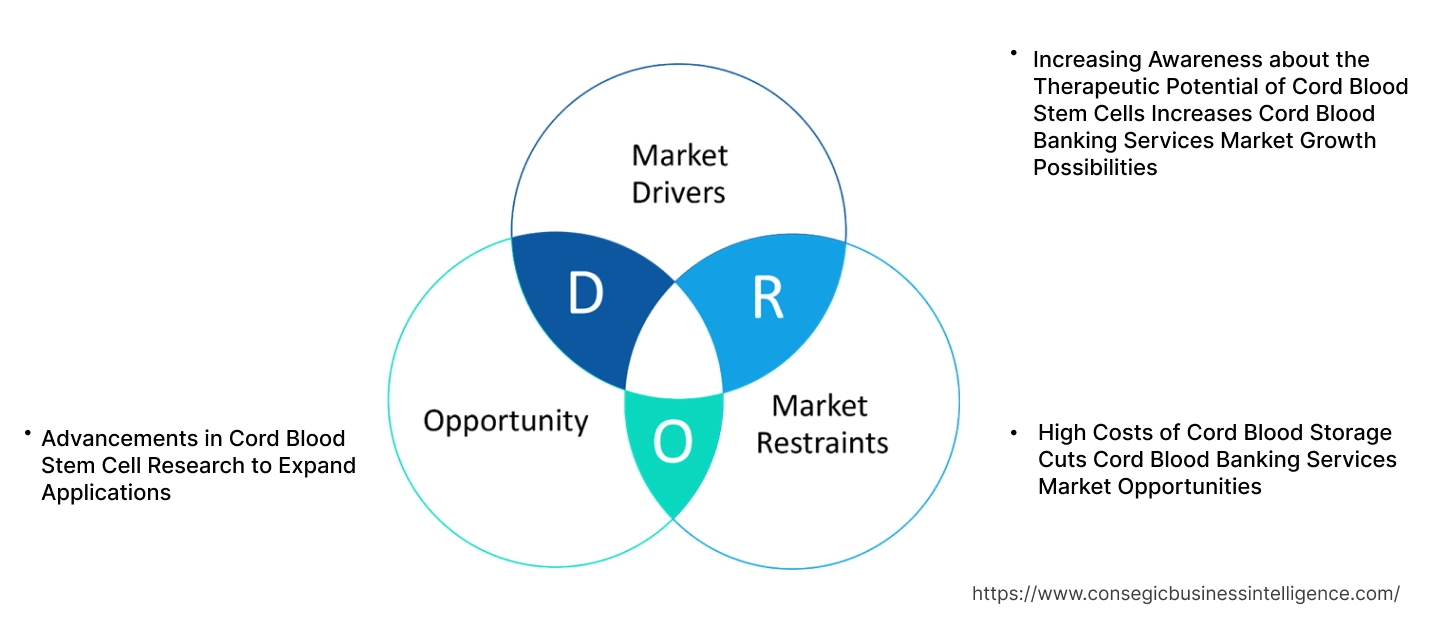
Increasing Awareness about the Therapeutic Potential of Cord Blood Stem Cells Increases Cord Blood Banking Services Market Growth Possibilities
Cord blood is rich in hematopoietic stem cells, which have demonstrated potential in treating various diseases, including leukemia, lymphoma, and certain genetic disorders. As more research validates its therapeutic potential, awareness around cord blood banking is rising. Public and private institutions are increasingly emphasizing its role in regenerative medicine.
For instance, recent studies have shown that stem cells derived from cord blood can be used for treatments beyond blood-related diseases, including autoimmune disorders and neurological conditions. As awareness increases about its medical benefits, more parents are opting to bank their newborns' cord blood.
Thus, the growing understanding of the medical advantages of cord blood stem cells significantly contributes to the cord blood banking services market expansion.
Key Restraints:
High Costs of Cord Blood Storage Cuts Cord Blood Banking Services Market Opportunities
One major obstacle to the widespread adoption of cord blood banking services is the high cost of storage. Both private and public banks charge substantial fees for the initial collection, processing, and long-term storage of cord blood. For many families, these costs are a significant barrier, particularly when the potential use of the cord blood may not be immediate.
This financial challenge is more pronounced in developing regions, where affordability remains a primary concern. As a result, despite the rising awareness of the benefits, the market faces a substantial hurdle in achieving universal accessibility and adoption.
Consequently, the high cost of cord blood storage hampers the cord blood banking services market trend, especially in price-sensitive regions.
Future Opportunities :
Advancements in Cord Blood Stem Cell Research to Expand Applications
Ongoing advancements in stem cell research are expected to unlock new therapeutic applications for cord blood, which presents a promising cord blood banking services market opportunity. Researchers are exploring the use of cord blood stem cells in tissue regeneration, organ repair, and the treatment of chronic diseases.
For example, recent developments have shown the potential of cord blood in treating brain injuries, diabetes, and heart diseases. As these applications progress, the cord blood banking services market demand is expected to grow. Thus, with continuous research breakthroughs, the market for cord blood banking services is poised to experience substantial expansion in the near future.
These dynamics—growing awareness of the therapeutic potential of cord blood, the financial barriers to its storage, and the expanding scope of stem cell applications—play a vital role in shaping the future of the cord blood banking services market.
Cord Blood Banking Services Market Segmental Analysis :
By Storage Type:
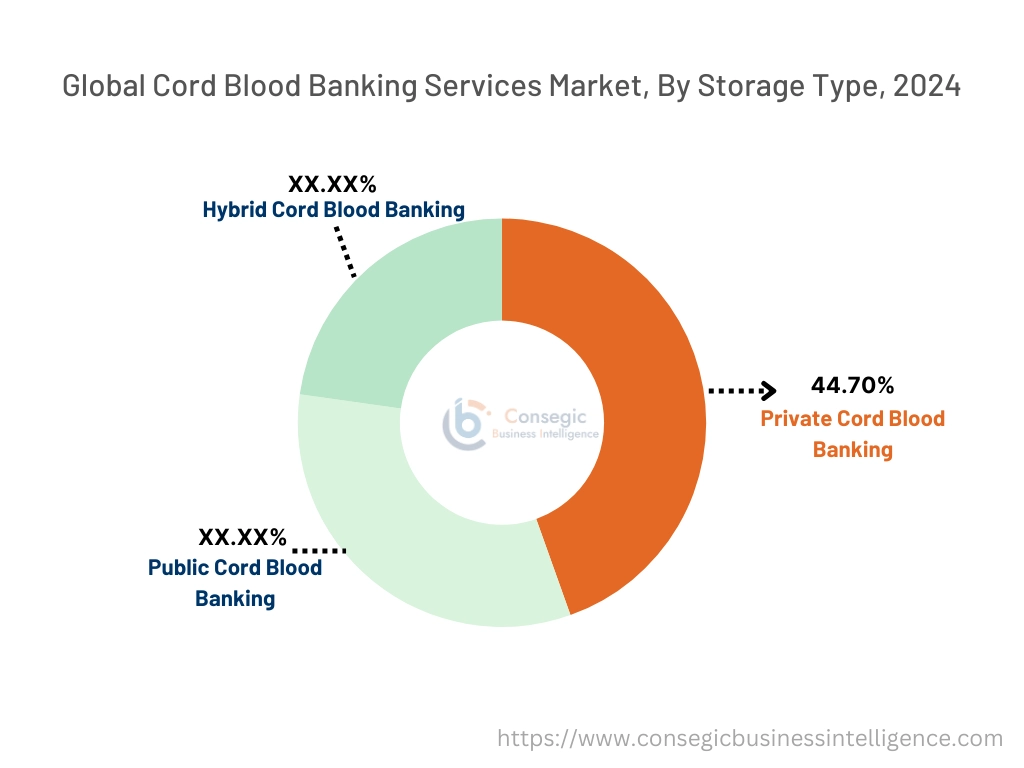
Based on storage type, the market is segmented into private cord blood banking, public cord blood banking, and hybrid cord blood banking.
The private cord blood banking segment accounted for the largest revenue in cord blood banking services market share by 44.70% in 2024.
- Private cord blood banking involves the collection, processing, and storage of cord blood for individual families.
- This service ensures that the stored cord blood is readily available for use in the treatment of family members in need of stem cell transplants or other medical treatments.
- The private banking model provides security and exclusivity, allowing families to have access to the stored stem cells in case of future medical conditions, offering peace of mind to parents.
- Additionally, private banking has seen trend due to increasing awareness about the potential benefits of cord blood for treating diseases like leukemia, anemia, and other genetic disorders.
- The rising trend of personalized medicine and family-oriented healthcare further supports the cord blood banking services market demand.
- Therefore, according to cord blood banking services market analysis, the private cord blood banking sector is leading in revenue, driven by its exclusivity and security for families.
The public cord blood banking segment is anticipated to register the fastest CAGR during the forecast period.
- Public cord blood banking involves the donation of cord blood to a public bank, where it can be made available for individuals in need of stem cell treatments.
- The fast-growing demand for cord blood for therapeutic applications, along with expanding initiatives to promote public cord blood banking, is expected to drive the sector's trend.
- Public banks make the stored cord blood available for unrelated individuals, increasing the availability of a wide range of stem cell units.
- The increasing awareness regarding public banking’s role in addressing stem cell shortages in hospitals and medical facilities is likely to contribute to the rapid trend of this segment.
- Thus, according to cord blood banking services market analysis, the public cord blood banking sector is poised for the fastest growth due to the increasing demand for shared stem cell resources and the global push for more accessible therapeutic treatments.
By Application:
Based on application, the market is segmented into cancer treatment, genetic disorders, blood disorders, immune disorders, and others, including metabolic disorders and regenerative medicine.
The cancer treatment segment accounted for the largest revenue in cord blood banking services market share in 2024.
- Cord blood stem cells are increasingly being used in the treatment of various cancers, particularly in patients with leukemia, lymphoma, and other blood-related cancers.
- The high efficiency of cord blood transplants in treating cancers, alongside the lower incidence of graft-versus-host disease compared to bone marrow transplants, has bolstered its use in cancer treatments.
- Furthermore, ongoing research and clinical trials continue to demonstrate the potential of cord blood cells in treating cancers, fueling demand.
- As cancer rates rise globally, the application of cord blood banking services for cancer treatment is expected to remain a major contributor to market revenue.
- Therefore, according to market analysis, cancer treatment remains the largest application for cord blood banking services.
The genetic disorders segment is anticipated to register the fastest CAGR during the forecast period.
- Cord blood is increasingly being explored for its therapeutic potential in treating genetic disorders, such as sickle cell anemia, thalassemia, and cystic fibrosis.
- Advances in gene therapy and stem cell research are leading to an expansion of the clinical applications of cord blood for genetic conditions.
- As the success of stem cell treatments for genetic disorders grows, so does the awareness of its potential, thereby driving demand for cord blood storage and banking services.
- Moreover, the growing number of stem cell research programs aimed at treating genetic disorders is likely to accelerate cord blood banking services market growth in this segment.
- Thus, according to market analysis, genetic disorders are expected to register the fastest trend due to advancements in gene therapy and increased research into stem cell treatments.
By Service Type:
Based on service type, the market is segmented into collection and transportation, processing, testing, and storage and preservation.
The storage and preservation segment accounted for the largest revenue share in 2024.
- The storage and preservation of cord blood is a critical component of the cord blood banking process, ensuring that stem cells remain viable for future use.
- Innovations in cryopreservation techniques, which maintain the stem cells in a frozen state, have made this service indispensable in cord blood banking.
- As more parents opt for cord blood banking services, the demand for long-term storage solutions continues to rise.
- The emphasis on quality and safety in the preservation process is driving the growth of this service segment.
- Therefore, according to market analysis, storage and preservation services dominate the market due to their essential role in maintaining the viability of cord blood.
The processing segment is anticipated to register the fastest CAGR during the forecast period.
- Processing involves the isolation, purification, and preparation of stem cells from the collected cord blood.
- The growing emphasis on stem cell research and therapeutic applications is fueling demand for high-quality processing services.
- With technological advancements in processing techniques and an increased understanding of stem cell therapies, this segment is expected to expand rapidly.
- Efficient processing ensures that the cord blood is ready for clinical applications, further contributing to its increasing demand.
- Thus, according to market analysis, processing services are anticipated to grow the fastest due to technological advancements and the increasing use of stem cells in clinical treatments.
By End User:
Based on end-users, the market is segmented into hospitals, research institutes, specialty clinics, and home healthcare.
The hospital sector accounted for the largest revenue share in 2024.
- Hospitals are the primary end-users of cord blood banking services, as they are the institutions most likely to utilize cord blood for stem cell transplants in cancer treatments, genetic disorders, and other medical conditions.
- Hospitals with hematology, oncology, and regenerative medicine departments require a steady supply of stem cells, and thus, they are the largest consumers of stored cord blood.
- The increased use of cord blood in medical treatments and transplantations is expected to keep hospitals as the dominant end-user segment in the coming years.
- Therefore, according to market analysis, hospitals remain the largest end-user segment for cord blood banking services, driven by their need for stem cells in patient treatments.
The research institutes segment is anticipated to register the fastest CAGR during the forecast period.
- Research institutes are crucial in the ongoing studies and development of new therapies using cord blood.
- With stem cell research advancing rapidly, these institutes rely on cord blood samples for experimentation and clinical trials.
- The demand for cord blood for research purposes, especially in genetic disorders, immune system diseases, and regenerative medicine, is expected to grow at a faster rate compared to other end-user segments.
- Increased funding and collaboration between research institutes and healthcare organizations are also likely to support this trend.
- Thus, according to market analysis, research institutes are expected to register the fastest growth as they continue to explore the therapeutic potential of cord blood in medical research and clinical trials.
Regional Analysis:
The regional segment includes North America, Europe, Asia Pacific, Middle East and Africa, and Latin America.
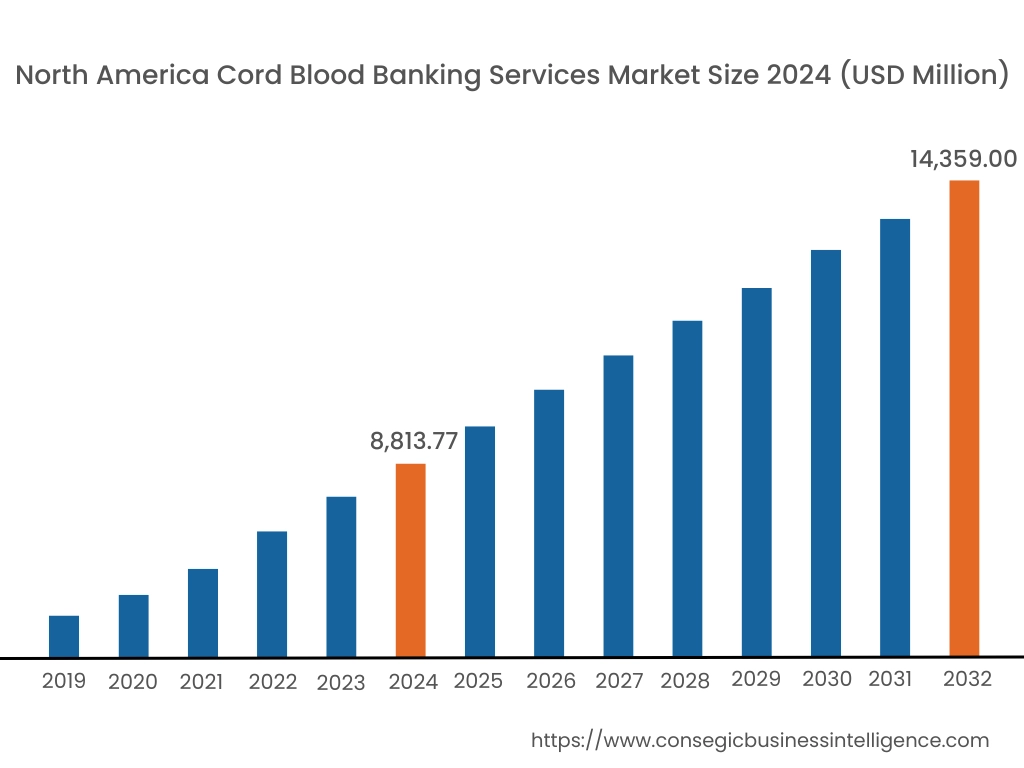
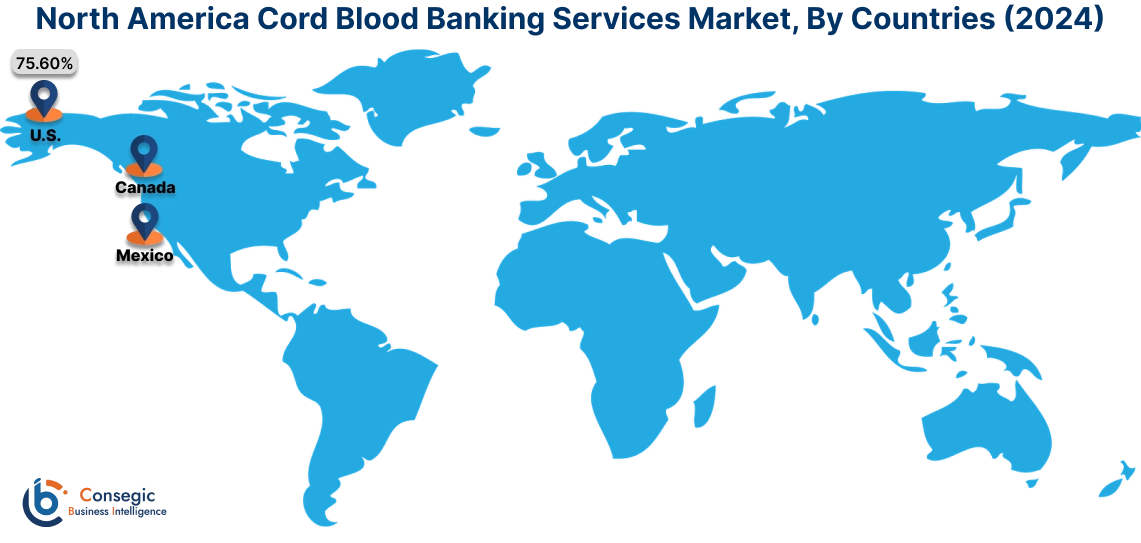
In 2024, North America was valued at USD 8,813.77 Million and is expected to reach USD 14,359.00 Million in 2032. In North America, the U.S. accounted for the highest share of 75.60% during the base year of 2024. North America dominates the cord blood banking services market, primarily due to high awareness levels and robust healthcare infrastructure. The United States leads the region with a significant number of private and public cord blood banks. Government initiatives and growing interest in stem cell therapies further contribute to the cord blood banking services market expansion. The presence of leading market players and advanced technological developments in the region enhances the overall market outlook. Additionally, the increasing number of expectant parents opting for cord blood banking services is a major factor influencing the market in North America.
In Asia Pacific, the market is experiencing the fastest growth with a CAGR of 7.0% over the forecast period. Asia-Pacific is experiencing rapid development in the cord blood banking services market, particularly in countries like China, Japan, and India. China is witnessing a surge in demand for both private and public cord blood banking, driven by government support for stem cell research and improved healthcare access. In Japan and South Korea, advanced healthcare systems and rising awareness of the benefits of cord blood stem cells contribute to cord blood banking services market growth. However, limited public cord blood banks in many regions and high service costs hinder market development in certain areas.
Europe has a well-established cord blood banking services market, with countries such as Spain, the UK, and Germany leading the way. The region benefits from well-regulated healthcare systems and increasing consumer awareness of stem cell therapies. Public cord blood banks are more prevalent in European countries, which helps improve access to services. National health programs and increasing research activities focused on stem cells also boost the market. However, the high cost of private cord blood banking remains a barrier for many families, limiting market potential in certain European regions.
The Middle East and Africa (MEA) region is at an early stage in terms of cord blood banking services. While there is increasing interest in countries like the UAE and Saudi Arabia, the market remains underdeveloped due to limited awareness and healthcare infrastructure. The presence of a few private cord blood banks in more affluent nations like the UAE is gradually expanding the market. However, in many African countries, the lack of proper healthcare facilities and awareness about the benefits of cord blood banking restricts growth. Governments and healthcare providers are beginning to invest in education and infrastructure, which may improve market conditions over time.
Latin America’s cord blood banking services market is steadily expanding, with countries such as Brazil, Mexico, and Argentina seeing increased demand for both private and public cord blood banks. Brazil leads the region with several private and public banks offering cord blood storage services. The rising middle-class population and improving healthcare systems in Latin America contribute to market development. However, the high cost of private cord blood banking and limited public storage options in some countries act as barriers to wider adoption. Despite this, increasing awareness of stem cell therapies and their potential benefits is likely to boost cord blood banking services market trend in the region.
Top Key Players and Market Share Insights:
The Global Cord Blood Banking Services Market is highly competitive with major players providing products and services to the national and international markets. Key players are adopting several strategies in research and development (R&D), product innovation, and end-user launches to hold a strong position in the Global Cord Blood Banking Services Market. Key players in the Cord Blood Banking Services industry include-
- Cord Blood Registry (CBR) (United States)
- Viacord, Inc. (United States)
- Cells for Life (Canada)
- China Cord Blood Corporation (China)
- Biovault Family (United Kingdom)
- Cryo-Cell International, Inc. (United States)
- StemCyte, Inc. (United States)
- NetCord (Belgium)
- Public Cord Blood Bank of New York (United States)
- LifebankUSA (United States)
Recent Industry Developments:
Product launches:
- In August 2024, Future Health GCC launched a state-of-the-art cord blood banking facility in Dubai Healthcare City, providing families with advanced options for storing their newborns' umbilical cord blood.
Cord Blood Banking Services Market Report Insights :
| Report Attributes | Report Details |
| Study Timeline | 2019-2032 |
| Market Size in 2032 | USD 44,304.24 Million |
| CAGR (2025-2032) | 6.6% |
| By Storage Type |
|
| By Application |
|
| By Service Type |
|
| By End User |
|
| By Region |
|
| Key Players |
|
| North America | U.S. Canada Mexico |
| Europe | U.K. Germany France Spain Italy Russia Benelux Rest of Europe |
| APAC | China South Korea Japan India Australia ASEAN Rest of Asia-Pacific |
| Middle East and Africa | GCC Turkey South Africa Rest of MEA |
| LATAM | Brazil Argentina Chile Rest of LATAM |
| Report Coverage |
|
Key Questions Answered in the Report
How big is the Cord Blood Banking Services Market? −
In 2024, the Cord Blood Banking Services Market was USD 26,570.85 million.
What will be the potential market valuation for the Cord Blood Banking Services Market by 2032? +
In 2032, the market size of Cord Blood Banking Services Market is expected to reach USD 44,304.24 million.
What are the segments covered in the Cord Blood Banking Services Market report? +
The storage type, application, service type, and end-user industry are the segments covered in this report.
Who are the major players in the Cord Blood Banking Services Market? +
Cord Blood Registry (CBR) (United States), Viacord, Inc. (United States), Cryo-Cell International, Inc. (United States), StemCyte, Inc. (United States), NetCord (Belgium), Public Cord Blood Bank of New York (United States), LifebankUSA (United States), Cells for Life (Canada), China Cord Blood Corporation (China), Biovault Family (United Kingdom) are the major players in the Cord Blood Banking Services market.
Overview
Reputation & Certifications


Our Services
- Market Intelligence & Forecasting
- Custom Research Solutions
- Market Entry Strategy
- Competitive Intelligence
- Customer Insights
- Industry Innovation Analysis
- Investment Advisory