Jump to Content
Growth Hormone Deficiency Market - Size, Share, Industry Trends, and Forecasts (2025-2032)
Growth Hormone Deficiency Market Size:
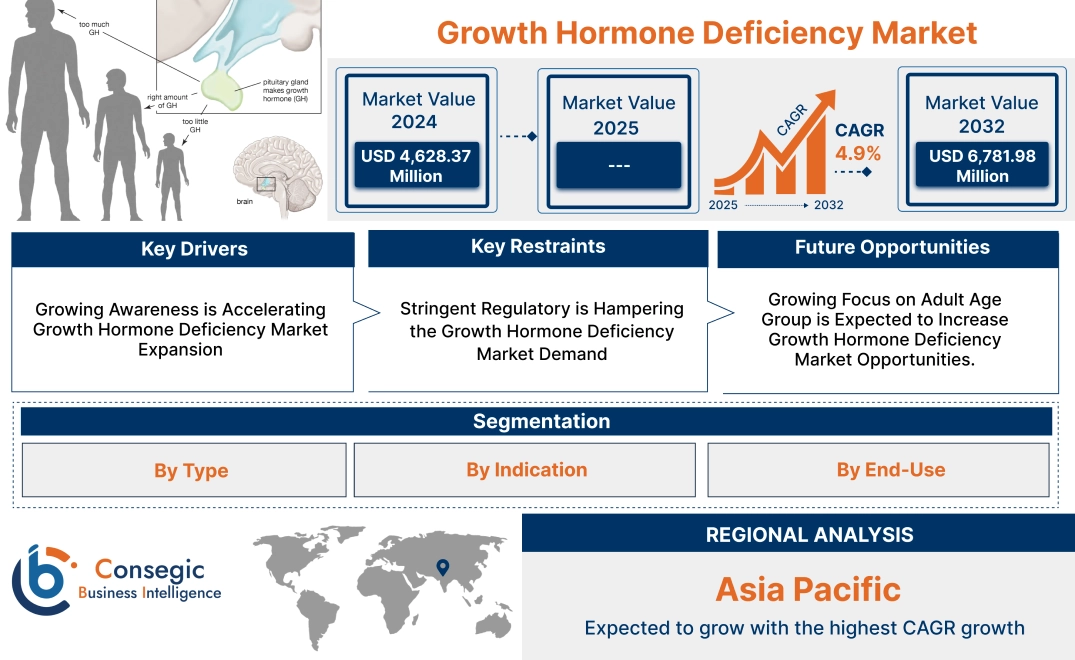
Growth Hormone Deficiency Market size is growing with a CAGR of 4.9% during the forecast period (2025-2032), and the market is projected to be valued at USD 6,781.98 Million by 2032 from USD 4,628.37 Million in 2024.
Growth Hormone Deficiency Market Scope & Overview:
Growth hormone deficiency (GHD) is a medical condition in which the pituitary gland produces insufficient growth hormone. This hormone is essential for normal growth, cell repair, and metabolism. GHD is congenital (present at birth) or acquired later in life. Congenital causes include genetic disorders or problems during fetal development. Acquired GHD results from conditions such as brain tumors, head injuries, infections, or certain medications. GHD in children leads to short stature, delayed puberty, and slow bone growth. In adults, it causes decreased muscle mass, increased body fat, fatigue, and low bone density. The primary treatment for GHD is growth hormone therapy, which involves daily subcutaneous injections of synthetic growth hormone (recombinant human growth hormone). Early diagnosis and consistent treatment significantly improve physical development, energy levels, and overall quality of life. Regular monitoring is essential to ensure optimal outcomes and avoid potential side effects.
Growth Hormone Deficiency Market Dynamics - (DRO) :
Key Drivers:
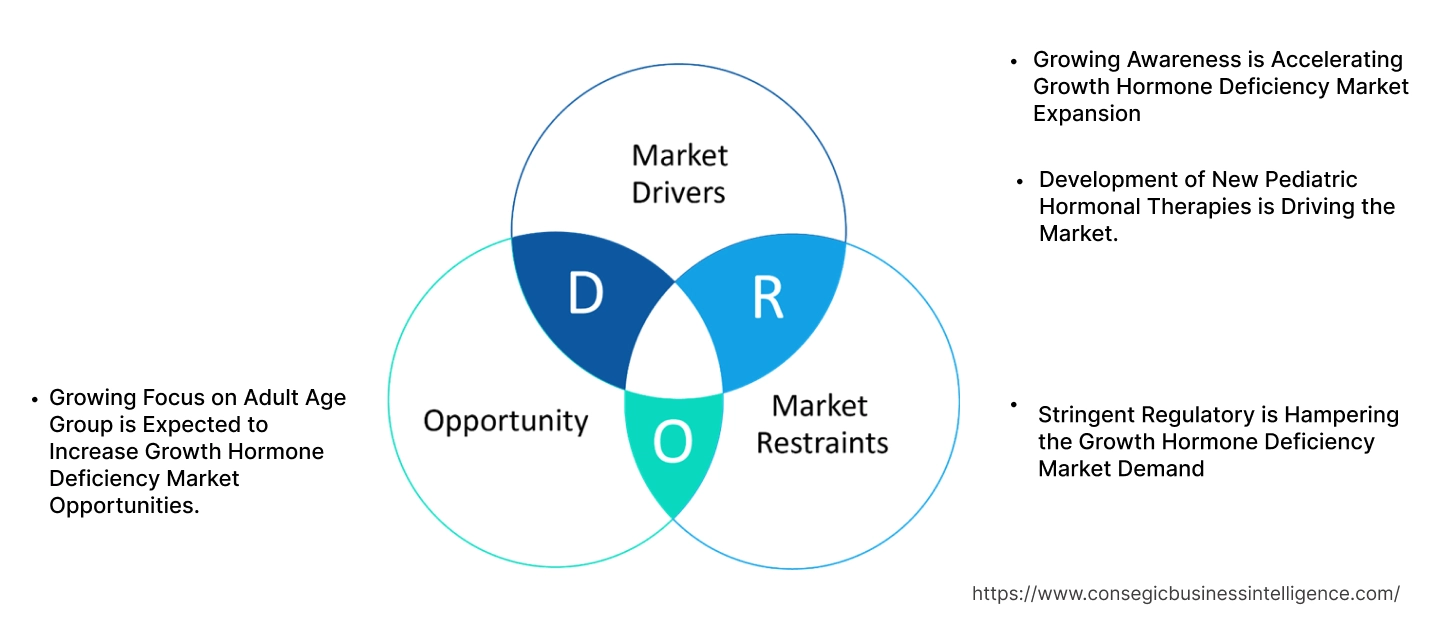
Growing Awareness is Accelerating Growth Hormone Deficiency Market Expansion
Increasing awareness about GHD is a significant driver in the market, leading to earlier diagnoses and greater adoption of treatments. There has been a concerted effort by healthcare professionals, advocacy groups, and pharmaceutical companies to educate the public about GHD.
- In 2024, Merck published an article addressing what is GHD in children. It outlined the condition, detailing its symptoms, diagnostic approaches, available treatment options, and their appropriate timing for administration. This has increased visits regarding GHD, positively influencing the growth hormone deficiency market trends.
Moreover, social media platforms have played a critical role in disseminating information about GHD. These efforts help people recognize symptoms such as delayed puberty, and low energy levels, prompting them to seek medical advice. Additionally, healthcare providers are becoming more informed about the latest advancements in diagnostic techniques and treatment options, which further aid in timely diagnosis and effective treatment planning.
Overall, the growing awareness is significantly boosting the growth hormone deficiency market expansion.
Development of New Pediatric Hormonal Therapies is Driving the Market.
As medical research and technology advance, more effective and specialized treatments are being developed to address the diverse needs of pe with GHD. The introduction of innovative therapies, such as long-acting hormones, is revolutionizing the treatment landscape.
- In 2023, Pfizer and OPKO Health announced that the FDA approved long-acting NGENLA, a once-weekly treatment for children aged 3 and older with GHD. These new launches are positively influencing the growth hormone deficiency market trends.
These long-acting hormonal therapies reduce the frequency of injections, significantly improving patient convenience and adherence to treatment. This is particularly beneficial for children, who experience discomfort or anxiety associated with frequent injections.
Moreover, long-acting therapies lead to more consistent and sustained hormone levels in the body. This improves treatment efficacy and potentially minimizes the risk of side effects associated with fluctuating hormone levels. Additionally, long-acting therapies improve the overall quality of life for patients with GHD by increasing treatment satisfaction.
Overall, the development of new hormonal therapies is accelerating the global growth hormone deficiency market growth.
Key Restraints:
Stringent Regulatory is Hampering the Growth Hormone Deficiency Market Demand
Regulatory hurdles are one of the significant barriers to market. The hormonal therapies are subject to strict regulations by authorities such as the U.S. FDA, the European Medicines Agency (EMA), and other national regulatory bodies. These regulations ensure the safety, efficacy, and quality of products, but this process is time-consuming and expensive, requiring significant investment from vaccine manufacturers.
The approval process for these therapies is lengthy and costly. Manufacturers must conduct extensive trials, including preclinical studies, phase 1, 2, and 3 clinical trials which demonstrate compliance with safety standards of their products before they receive approval. This process not only delays the availability but also increases the cost of development, which is ultimately passed on to consumers and healthcare providers.
Furthermore, variations in regulatory standards across different regions further complicate market entry for companies. What is approved in one country takes additional time in another, making it difficult for global companies to maintain a seamless product launch strategy.
Overall, analysis shows that the stringent regulatory requirements along with lengthy approval processes and varying regulatory standards across different regions are hampering the growth hormone deficiency market demand.
Future Opportunities :
Growing Focus on Adult Age Group is Expected to Increase Growth Hormone Deficiency Market Opportunities.
The increasing focus on adult GHD creates potential for the market. Historically, GHD was primarily associated with children, but growing awareness of its impact on adults, particularly those with conditions such as pituitary disorders or previous childhood GHD, is driving demand for treatment options. Adult GHD is linked to a range of metabolic issues such as obesity, low bone density, reduced muscle mass, and poor cardiovascular health. As more adults are diagnosed, there is an expanding need for tailored treatment solutions that address these health concerns. Owing to this, manufacturers are also focusing on working on medication specific to the adult segment.
- In October 2024, Ascendis Pharma submitted an application to the FDA seeking approval to use TransCon hGH, their long-acting growth hormone therapy, for the treatment of adult patients with GHD. This expanding application for the adult segment creates the potential for the market.
Additionally, healthcare professionals are becoming more adept at recognizing the symptoms of adult GHD, contributing to earlier and more accurate diagnoses. This has led to an increased interest in growth hormone replacement therapies for adults, including recombinant growth hormones and long-acting formulations that offer greater convenience.
Overall, the growing focus on the adult age group is expected to increase growth hormone deficiency market opportunities.
Growth Hormone Deficiency Market Segmental Analysis :
By Type:
Based on type, the market is categorized into diagnosis and treatment.
Trends in Type:
- Rising prevalence has led to increased demand for genetic testing in diagnosing GHD.
- The emergence of novel treatment modalities beyond recombinant human growth hormone (rhGH).
The treatment segment accounted for the largest market share in 2024 and is expected to grow at the fastest CAGR over the forecast period.
- Treatment dominates due to its direct impact on patient outcomes and the growing need for effective solutions. Once a diagnosis is made, the primary goal is to manage the condition and improve the quality of life, which makes treatment central to the growth hormone deficiency market growth.
- The most approved hormones for GHD treatment are recombinant human growth hormones (rhGH), which are manufactured through biotechnology to mimic the naturally occurring growth hormone. These include well-known brands such as Somatropin and Somatrem. Advancements in treatment options are driving the segment.
- For instance, according to a study published by the National Center for Biotechnology Information, in 2023, long-acting hormone therapies involve altering the hormone's molecular structure (weight, charge, binding). These modifications influence how the hormone interacts with target tissues, potentially reducing side effects and improving treatment efficacy. This has expanded the reach for more patients, positively driving the segment.
- This, combined with the rising awareness of GHD, contributes to treatment being the dominant and fastest-growing segment of the market.
- Overall, as per the market analysis, advancements in treatment options are driving the segment in the market.
By Indication:
The indication segment is categorized into pediatric growth hormone deficiency and adult growth hormone deficiency.
Trends in the Indication
- Investigating GHD treatment in children with short stature born small for gestational age (SGA).
- Growing focus on improving diagnostic and treatment criteria for GHD in adults.
The pediatric growth hormone deficiency segment accounted for the largest market share in 2024.
- The pediatric segment dominates the market primarily due to the critical role growth hormones play during childhood. The early onset of disease in childhood leads to visible symptoms such as impaired linear development, short stature, and delayed skeletal maturation.
- These symptoms are usually identified during routine pediatric checkups or through parental concern, leading to earlier diagnosis and a higher demand for treatment in this age group.
- Moreover, pediatric medications require specific formulations and dosages tailored to the physiological and developmental characteristics of children. This necessitates dedicated research and development efforts, driving the market for pediatric-specific drugs. The rising prevalence amongst children is the driving segment in the market.
- For instance, according to an article published by Endocrine Society, in children GHD is prevalent in 1:4,000 to 1:10,000 cases. This has led to increased diagnosis and treatment options, driving segment.
- Additionally, rising awareness among parents through healthcare providers, social media, and traditional media channels highlighting the importance of early diagnosis and treatment, and providing accessible information about the condition and treatment options further drives the segment.
- As per the market analysis, the increasing prevalence, critical role of growth hormones in childhood, early symptom identification, the need for specialized formulations, and increasing parental awareness is driving segmental growth in the growth hormone deficiency industry.
The adult segment is expected to grow at the fastest CAGR over the forecast period.
- The adult segment is emerging due to increased awareness and improved understanding of the condition’s long-term health implications. Adult GHD is associated with metabolic, cardiovascular, and psychological health issues.
- Treatment for GHD typically includes recombinant human growth hormone (rhGH) therapies.Treatment in adults offers several benefits, including increased muscle mass and strength, reduced body fat, improved bone density, enhanced energy levels, and improved mood.
- By counteracting the age-related decline in natural growth hormone production, treatment helps maintain overall health, improve quality of life, and potentially reduce the risk of age-related health issues such as osteoporosis and cardiovascular disease.
- Overall, the rising prevalence of conditions such as pituitary gland dysfunction and tumors will drive the segment for the upcoming years.
By End User:
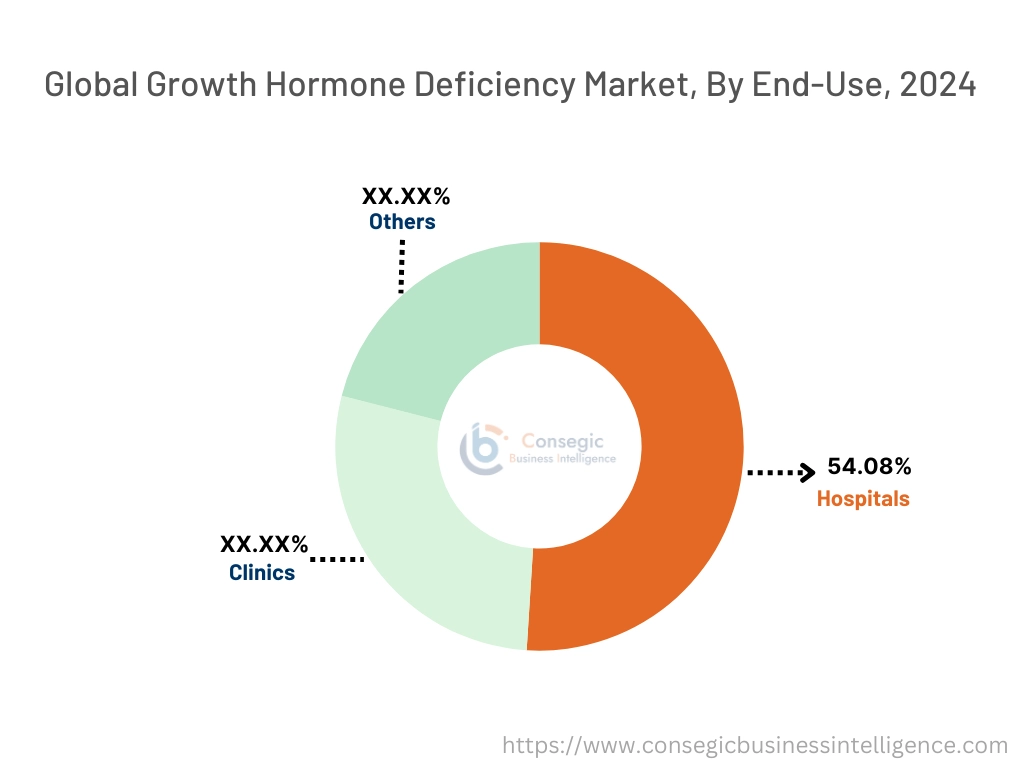
The end-user segment is categorized into hospitals, clinics, and others.
Trends in End-User:
- Emergence of telemedicine in hospitals for patient monitoring and consultations.
- The growing role of community health centers in providing access to GHD diagnosis and treatment.
The hospitals segment accounted for the largest market share of 54.08% in 2024.
- Hospitals dominate the market due to their advanced infrastructure, specialized medical expertise, and ability to handle complex cases. Diagnosis requires sophisticated tests such as stimulation tests, MRI scans, and biochemical assays, which are typically available in hospitals.
- These facilities house multidisciplinary teams, including endocrinologists, pediatricians, and radiologists, who work collaboratively to ensure accurate diagnosis and effective treatment plans for both pediatric and adult patients.
- Their dominance is further driven by the high influx of patients due to referral systems, insurance coverage, and the trust associated with hospital-based treatments.
- The rising healthcare industry in terms of increased investment, technological advancements, growing diseases, and government regulations has led to increases in the number of hospitals.
- For instance, according toCEIC, the number of hospitals in China increased by 3.85% from 2022 to 2023, rising from 36 million units to 38 million units. Consequently, this surge in hospitals has contributed to increased accessibility to various patient populations, positively driving the segment in the market.
- Overall, according to market analysis, advanced infrastructure, specialized expertise, strong referral networks, and the growing number of hospitals are driving the segment.
The clinics segment is expected to grow at the fastest CAGR over the forecast period.
- Clinics are emerging in the market due to their accessibility and focus on outpatient care. Clinics offer a more personalized and convenient environment for patients seeking routine management of GHD.
- As awareness of GHD increases, clinics are becoming the first point of contact for patients with mild symptoms or those seeking follow-up care after a hospital diagnosis.
- The availability of endocrinologists and other specialists in clinics ensures that patients access high-quality care without the need for hospital visits.
- Additionally, clinics are expanding their capabilities by incorporating diagnostic tools, such as blood tests and imaging services, enabling them to cater to both pediatric and adult patients.
- Their cost-effectiveness, especially in emerging economies, are key factor driving the segment.
- Advancements in medical imaging, increased availability of hormonal assays, and increasing genetic testing clinics for accurate diagnosis of diseases and treatment will drive the segment for the forecasted years.
Regional Analysis:
The regional segment includes North America, Europe, Asia Pacific, the Middle East and Africa, and Latin America.
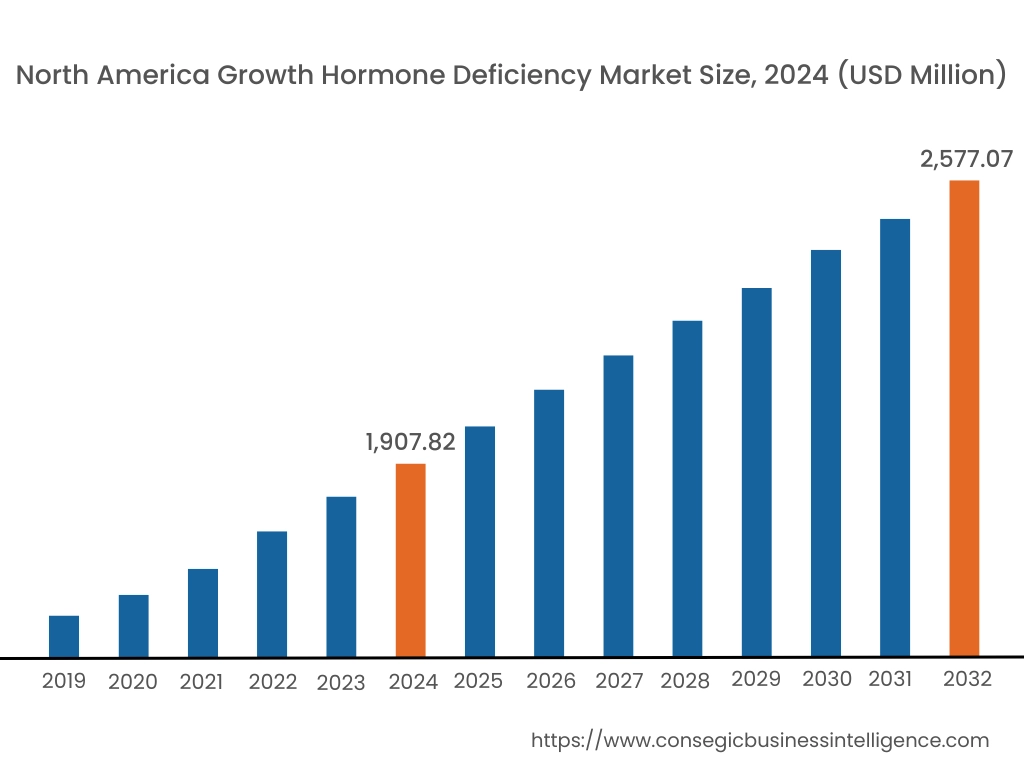
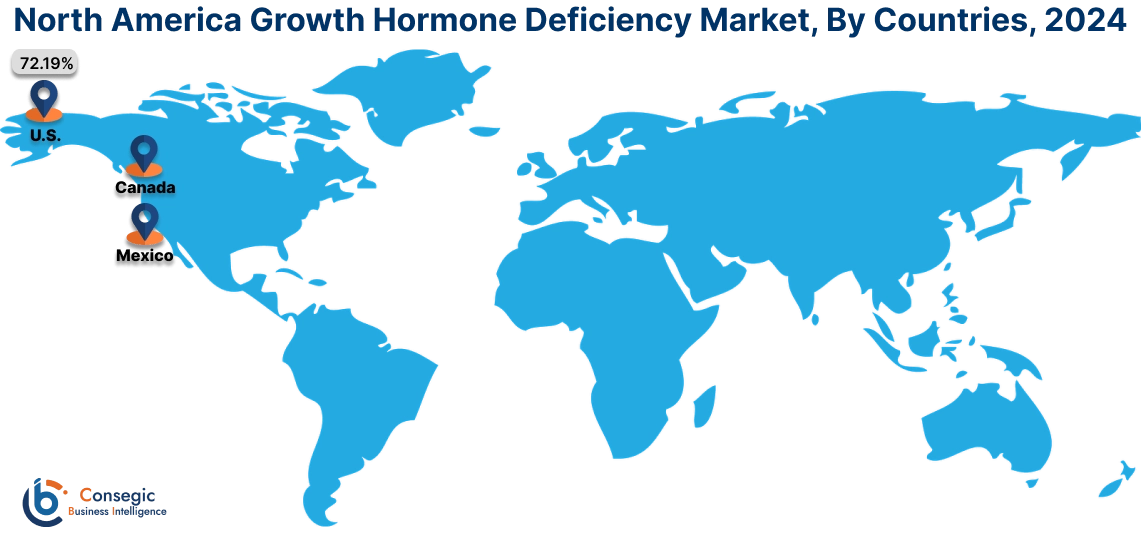
In 2024, North America accounted for the highest growth hormone deficiency market share at 41.22% and was valued at USD 1,907.82 Million and is expected to reach USD 2,577.07 Million in 2032. In North America, the U.S. accounted for the highest growth hormone deficiency market share of 72.19% during the base year of 2024. The market is driven by its advanced healthcare infrastructure, high prevalence of GHD, and robust R&D activities. The region is home to several leading biotechnology and pharmaceutical companies that invest heavily in developing innovative therapies, including long-acting growth hormones and biosimilars. This ensures the availability of cutting-edge treatment options, driving the market in the region.
- For instance, in 2021, Ascendis Pharma received FDA approval for Lonapegsomatropin, which is a long-acting hormone therapy, to treat children with GHD. This has increased the availability of medications, positively influencing the market.
Moreover, the prevalence both in pediatric and adult populations is well-documented in North America. Early diagnosis is facilitated by widespread awareness programs, routine pediatric screenings, and advanced diagnostic tools, such as growth hormone stimulation tests and imaging technologies. Additionally, healthcare professionals are well-trained to recognize and treat the condition, contributing to high treatment adoption rates. Furthermore, another key driver is strong healthcare spending and favorable reimbursement policies. Patients in North America benefit from insurance coverage for expensive treatments. These policies reduce the financial burden on patients, making treatment more accessible. Overall, North America dominates the market due to robust R&D, high prevalence, advanced diagnostics, skilled healthcare professionals, and favorable reimbursement policies.
In Asia Pacific, the growth hormone deficiency market is experiencing the fastest growth with a CAGR of 6.8% over the forecast period. The market is driven by its growing population, increasing healthcare access, and rising awareness about endocrine disorders. Countries such as China, India, and Japan have a large pediatric population, where the prevalence is driving the demand for early diagnosis and treatment. Moreover, improved healthcare infrastructure and government initiatives in these countries have made advanced treatments more accessible to patients. Additionally, economic increase in the region has significantly increased healthcare expenditure, enabling more people to afford therapies. Furthermore, the penetration of biosimilars in APAC markets has also made cost-effective treatment options available, further expanding the market. Also, APAC is a hub for pharmaceutical manufacturing, with many companies actively investing in research and development of novel therapies. This has led to the introduction of innovative and affordable treatments, making the region highly competitive.
Europe's growth hormone deficiency market analysis states that several trends are responsible for the progress of the market in the region. The market is driven by well-established healthcare systems, increasing awareness, and supportive reimbursement policies. Countries such as Germany, the UK, and France have advanced diagnostic capabilities, facilitating early detection of this deficiency in both children and adults. Moreover, pediatric healthcare programs in Europe are highly prioritized, ensuring widespread access to treatments. Additionally, the region is a hub for clinical trials and research into innovative therapies, including long-acting hormones. Furthermore, the rising prevalence of adult GHD is boosting demand. Challenges such as strict regulatory requirements and cost-containment policies in certain countries slightly hinder the market.
The Middle East and Africa (MEA) growth hormone deficiency market analysis states that the region is also witnessing a notable surge. The market is driven by trends such as increasing healthcare investments and growing awareness. Countries such as Saudi Arabia, the UAE, and South Africa are seeing improvements in healthcare infrastructure, enabling better access to diagnosis and treatments for this deficiency. Moreover, government-led initiatives to enhance pediatric care and address malnutrition are key drivers in this region. Additionally, partnerships between global pharmaceutical companies and regional healthcare providers are helping expand the reach of therapies. However, the limited availability of advanced diagnostic tools and high treatment costs remain challenges, especially in low-income countries. The introduction of cost-effective biosimilars is expected to alleviate this issue.
Latin America's growth hormone deficiency market size is also emerging. The market is driven by trends such as increasing awareness and improving healthcare systems in countries such as Brazil, Mexico, and Argentina. Pediatric development is a significant focus, with governments and healthcare organizations promoting early diagnosis and treatment. Economic increase in the region is enabling higher healthcare spending, allowing more patients to afford deficiency therapies. Additionally, urban centers with advanced medical facilities are driving the market. Rising partnerships also contribute to the availability of innovative therapies. However, disparities in healthcare access and quality exist across the region, with limited access to diagnosis and treatment in rural and underserved communities. Economic constraints and limited insurance coverage pose barriers to accessing expensive therapies.
Top Key Players and Market Share Insights:
The Growth Hormone Deficiency market is highly competitive with major players providing products to the national and international markets. Key players are adopting several strategies in research and development (R&D) and product innovation to hold a strong position in the global Growth Hormone Deficiency market. Key players in The Growth Hormone Deficiency industry include-
- Genentech (United States)
- Omicron Pharma (India)
- Eli Lilly and company (United States)
- Biocon (India)
- Cooper Pharma (India)
- Ascendis Pharma A/S (Denmark)
- LEXICARE PHARMA PVT. LTD (India)
- Novo Nordisk Inc (Denmark)
- Pfizer (United States)
- Reliance Life Sciences (India)
- Aark Pharmaceuticals (India)
Recent Industry Developments :
Product Launch:
- In April 2023, the FDA approved a new indication for Novo Nordisk's Sogroya (somapacitan-beco), a once-weekly growth hormone treatment, for children aged 2.5 years and older with growth hormone deficiency. This approval makes Sogroya the first and only once-weekly growth hormone therapy for both children and adults.
Growth Hormone Deficiency Market Report Insights :
| Report Attributes | Report Details |
| Study Timeline | 2019-2032 |
| Market Size in 2032 | USD 6,781.98 Million |
| CAGR (2025-2032) | 4.9% |
| By Type |
|
| By Indication |
|
| By End-User |
|
| By Region |
|
| Key Players |
|
| North America | U.S. Canada Mexico |
| Europe | U.K. Germany France Spain Italy Russia Benelux Rest of Europe |
| APAC | China South Korea Japan India Australia ASEAN Rest of Asia-Pacific |
| Middle East and Africa | GCC Turkey South Africa Rest of MEA |
| LATAM | Brazil Argentina Chile Rest of LATAM |
| Report Coverage |
|
Key Questions Answered in the Report
How big is the Growth Hormone Deficiency market? −
In 2024, the Growth Hormone Deficiency market is USD 4,628.37 Million.
Which is the fastest-growing region in the Growth Hormone Deficiency market? +
Asia Pacific is the fastest-growing region in the Growth Hormone Deficiency market.
What specific segmentation details are covered in the Growth Hormone Deficiency market? +
Type and End-Use segmentation details are covered in the Growth Hormone Deficiency market
Who are the major players in the Growth Hormone Deficiency market? +
Genentech (United States), Omicron Pharma (India), LEXICARE PHARMA PVT. LTD (India), Novo Nordisk Inc (Denmark), Pfizer (United States), Reliance Life Sciences (India), Aark Pharmaceuticals (India), Eli lilly and company (United States), Biocon (India), Cooper Pharma (India), and Tonix Pharmaceuticals (U.S.).
Overview
Reputation & Certifications


Our Services
- Market Intelligence & Forecasting
- Custom Research Solutions
- Market Entry Strategy
- Competitive Intelligence
- Customer Insights
- Industry Innovation Analysis
- Investment Advisory