Jump to Content
Creutzfeldt-Jakob Disease Market - Size, Share, Industry Trends, and Forecasts (2025-2032)
Creutzfeldt-Jakob Disease Market Size:
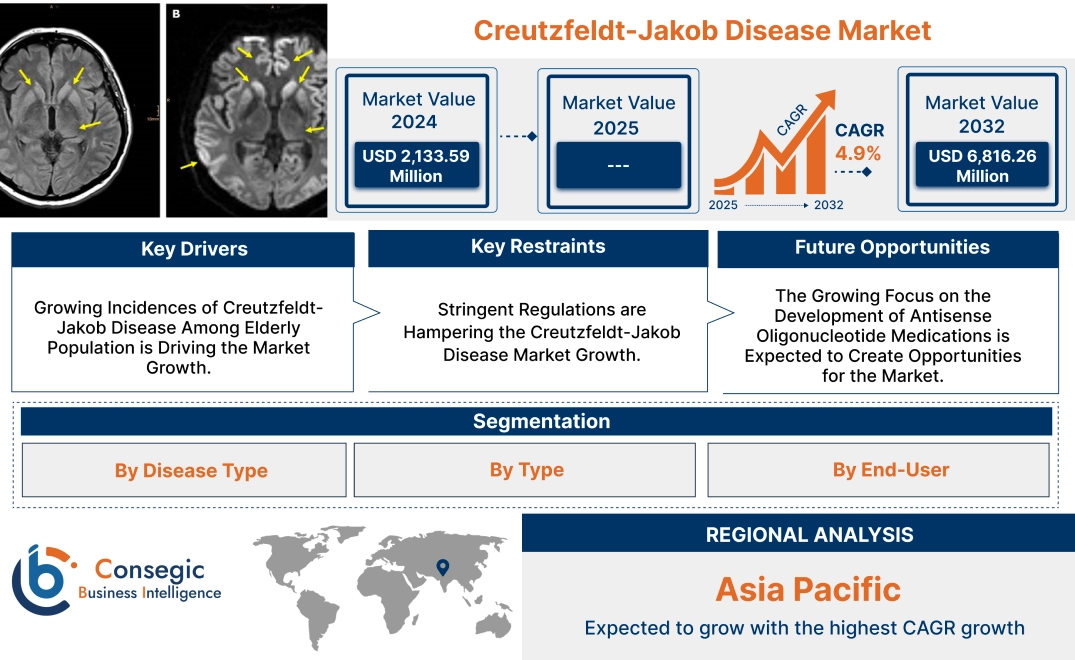
Creutzfeldt-Jakob Disease Market size is growing with a CAGR of 4.9% during the forecast period (2025-2032), and the market is projected to be valued at USD 6,816.26 Million by 2032 from USD 2,133.59 Million in 2024.
Creutzfeldt-Jakob Disease Market Scope & Overview:
Creutzfeldt-Jakob disease (CJD) is a rare, rapidly worsening, fatal brain disorder marked by changes in brain tissue and affects muscle coordination thinking, and memory. It belongs to a group of human and animal diseases known as prion disorders caused by abnormal forms of proteins called prions. The disease leads to severe mental deterioration, dementia, and involuntary muscle jerks. Early symptoms of this disease include coordination problems, difficulty walking and maintaining balance, impaired thinking and memory, behavioral changes, and unusual sensations. As the disease progresses, individuals experience weakness in limbs, blindness, loss of speech and movement, and ultimately, complications such as pneumonia.
This disease is classified into four major categories. Sporadic CJD, the most common form, arises without a known cause. Hereditary CJD is associated with inherited genetic mutations. Acquired type of creutzfeldt-jakob disease is extremely rare and results from exposure to infected brain or nervous system tissue through medical procedures. Variant CJD is linked to the consumption of contaminated beef products. The disease is diagnosed through brain imaging techniques and cerebrospinal fluid-based tests. Currently, there is no cure for this disease, and treatments are aimed at the management of symptoms. Incidences of the disease in the elderly population, focus on early disease detection & diagnosis, and increasing research & development for the development of effective treatment solutions are the prominent factors supporting the creutzfeldt-Jakob disease market size.
Creutzfeldt-Jakob Disease Market Dynamics - (DRO) :
Key Drivers:
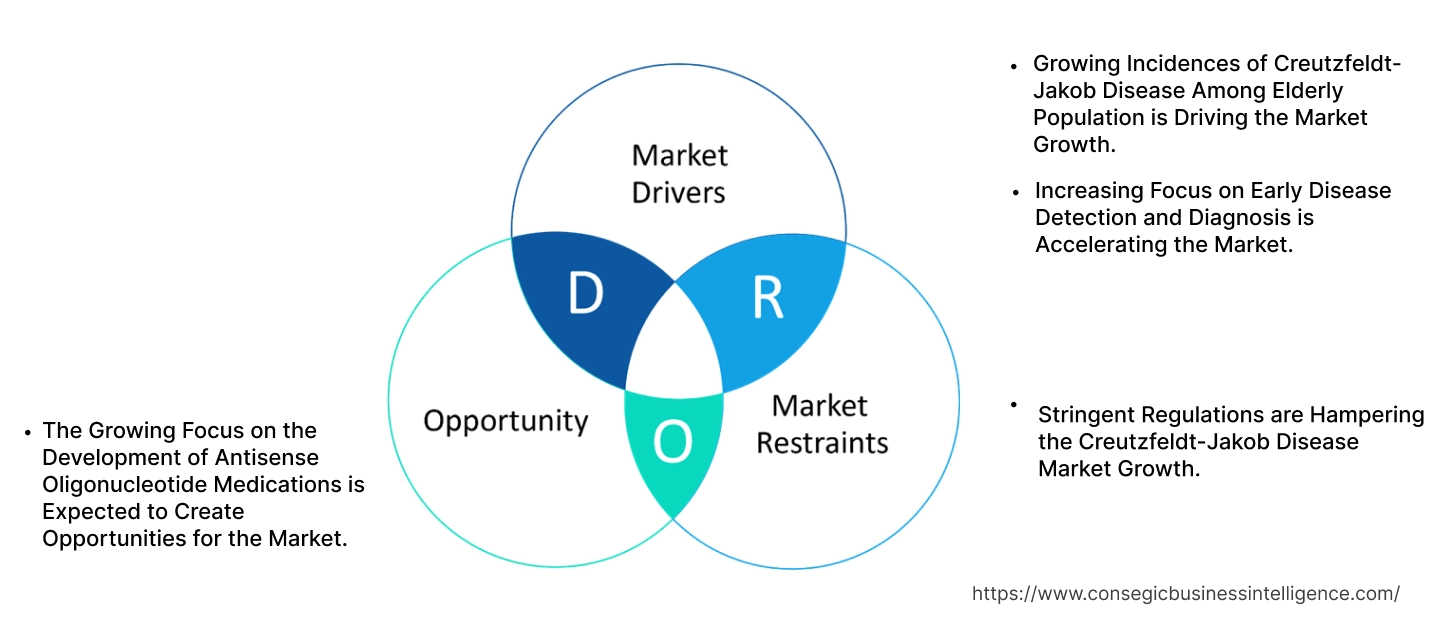
Growing Incidences of Creutzfeldt-Jakob Disease Among Elderly Population is Driving the Market Growth.
Adults above the age of 50 are more susceptible to creutzfeldt-jakob disease. This disease exhibits a higher incidence among the elderly population primarily due to the nature of the disease. It is caused by age-related errors in the cellular protein-making system, leading to the misfolding of proteins that characterize the disease. Consequently, the risk of developing this disease increases significantly with advancing age. As the global population ages, the number of individuals susceptible to age-related neurodegenerative diseases, including creutzfeldt-Jakob disease, increases. This elderly population translates into a larger patient status for products such as diagnostic tests, therapeutic interventions, and supportive care.
- For instance, according to the data provided by the National Institute of Neurological Disorders and Stroke, it is stated that creutzfeldt-Jakob disease occurs worldwide in older adults, with the average age in the late 60s. There are about 350 cases per year in the U.S.
Overall, the elderly population experiences an increased risk due to age-related protein misfolding. This drives the market for products, such as diagnostics and disease management.
Increasing Focus on Early Disease Detection and Diagnosis is Accelerating the Market.
Early detection and diagnosis of creutzfeldt-jakob disease are crucial for improving patient care, facilitating access to potential therapies, advancing research, and informing public health strategies. Early disease detection and diagnosis allow for the initiation of disease management measures sooner, potentially improving the quality of life for patients. Additionally, the symptoms of the disease get severe quickly, often within weeks to months. This results in the availability of limited time for the management of disease.
- For instance, according to the data published by the Dementias Platform UK, a partnership between 27 public, industry, and third-sector organizations in February 2022, it is stated that creutzfeldt-Jakob disease symptoms get worse very quickly, with 90% of patients dying within a year of their diagnosis. Early identification allows for the implementation of supportive care measures and maximizes the potential benefits of available treatments aimed at improving patient outcomes.
Overall, the rapid disease progression characteristic highlighted by the Dementias Platform UK creates the critical importance of early disease detection and diagnosis further fuelling the market growth,
Key Restraints:
Stringent Regulations are Hampering the Creutzfeldt-Jakob Disease Market Growth.
The market is subject to stringent regulations aimed at ensuring patient safety. The unique nature of prion diseases and the complex mechanisms involved in prion protein misfolding pose significant hurdles to drug discovery and development. Additionally, the regulations present significant constraints for pharmaceutical companies. One major factor is the lengthy and complex drug development process. Clinical trials are rigorous and time-consuming, requiring substantial investment and resources. This, coupled with stringent regulatory hurdles, delays the approval process, hindering the timely introduction of new medications.
Furthermore, post-market survey and safety monitoring requirements add to the regulatory burden. Companies must continuously monitor the safety and efficacy of their products, which becomes costly and resource-intensive, especially for smaller players. The rigorous regulatory environment also hinders innovation within the industry, as companies are hesitant to invest in risky or unconventional approaches due to the high cost of failure. Overall, the regulations delay product approvals, increase costs, and limit profitability, especially for smaller companies further hampering the creutzfeldt-jakob disease market growth.
Future Opportunities :
The Growing Focus on the Development of Antisense Oligonucleotide Medications is Expected to Create Opportunities for the Market.
An antisense oligonucleotide (ASO) is a short, synthetic DNA or RNA sequence that binds to messenger RNA (mRNA) to alter protein expression. ASOs are a type of RNA-based therapeutic that is being studied widely to treat neurogenetic disorders including creutzfeldt-jakob disease. ASOs offer a promising therapeutic approach for prion diseases by targeting the prion protein (PrP), a key factor in disease pathogenesis. ASOs support effectively lowering PrP levels by targeting the mRNA that encodes PrPC. This reduction in PrP levels has been shown to delay disease progression and extend survival in preclinical models. By preventing the production of PrPC, ASOs aim to inhibit the formation of the misfolded PrPSc and, consequently, prevent neurodegeneration. As a result, there is a growing preference for the development of ASO medications for the treatment of this disease.
- For instance, in December 2024, University Hospitals Cleveland Medical Center and Case Western Reserve University enrolled the world’s first participant in the first-in-human study of a prion protein-lowering treatment approach utilizing antisense oligonucleotide to reduce the amount of the normal prion protein. The double-blind, placebo-controlled trial aims to evaluate the safety and tolerability of the treatment in 56 adult patients with symptomatic prion disease including creutzfeldt-jakob disease. This influences pharmaceutical companies to develop ASO-based treatment solutions for this disease.
Overall, this growing focus on aso-based treatments is expected to significantly impact the creutzfeldt-jakob disease market expansion by supporting innovation and offering new avenues for improving patient outcomes.
Creutzfeldt-Jakob Disease Market Segmental Analysis :
By Disease Type:
Based on disease type, the market is categorized into sporadic, hereditary, acquired, and variant.
Trends in Disease Type:
- Growing focus on the early diagnosis of disease type leads to demand for developing more sensitive and specific diagnostic tools for all disease
The sporadic segment accounted for the largest market share in 2024.
- Sporadic CJD is the most common disease type. It is generally regarded as a spontaneous neurodegenerative illness, arising from a spontaneous prion protein gene somatic mutation or a stochastic PrP structural change.
- It is clinically characterized by rapidly progressive dementia with ataxia, myoclonus, or other neurologic signs and, neuropathologically, by the presence of aggregates of abnormal prion protein, spongiform change, neuronal loss, and gliosis.
- Moreover, the development of innovative epoxy coatings is driving the segment trajectory. This type of disease is the most common form, accounting for the majority of cases driving the segment growth.
- For instance, according to the data provided by the S. Centers for Disease Control and Prevention in December 2024, it is stated that sporadic creutzfeldt-Jakob disease accounted for the most number of cases examined with a total of 216 cases out of 327 cases in 2023. This large patient population creates a significant market demand for diagnostic tools, supportive care, and potential future therapies.
- Overall, this disease type’s high prevalence and the unmet medical need for effective treatments drive significant creutzfeldt-jakob disease market demand for diagnostics, supportive care, and innovative therapies, propelling segment trajectory.
The hereditary segment is expected to grow at the fastest CAGR over the forecast period.
- Hereditary CJD is caused when a mutation in the prion protein gene (PRNP) is inherited from a parent, causing prions to form in the brain.
- According to the data provided by the National Health Service in September 2021, it is stated that inherited creutzfeldt-Jakob disease affects about 1 in every 9 million people in the UK. In 2020, there were 6 deaths from familial creutzfeldt-Jakob disease and similar inherited prion diseases in the UK.
- The development and refinement of sensitive and specific diagnostic tests such as advanced neuroimaging and biomarker analysis will drive segment by enabling earlier and more accurate diagnosis.
By Type:
Based on type, the market is bifurcated into diagnosis and treatment.
Trends in Type:
- Growing focus on genetic counseling and testing for at-risk individuals and families with a genetic predisposition to creutzfeldt-jakob disease.
- The increasing focus is on the development of treatment solutions to address the unmet medical need for effective treatments.
The diagnosis segment accounted for the largest creutzfeldt-jakob disease market share in the year 2024.
- The diagnosis segment within the creutzfeldt-jakob disease encompasses all the tests related to diagnosing the condition. It involves several tests including imaging such as electroencephalography (EEG) & magnetic resonance imaging (MRI) and Cerebrospinal fluid-based tests.
- EEG records the brain's electrical activity and finds specific abnormalities observed in this disease. Cerebrospinal fluid-based tests look for the 14-3-3 protein, a marker for some prion diseases, by detecting the abnormal prion protein in the fluid surrounding the brain and spinal cord. MRI is a type of brain imaging that provides highly accurate results.
- Definitive confirmation of this disease requires examination of brain tissue. This is achieved through a brain biopsy, a surgical procedure where a small tissue sample is removed from the living patient's brain for analysis.
- Diagnosis holds critical importance due to the significant benefits of early and accurate diagnosis. Early diagnosis enables the provision of appropriate supportive care, which significantly improves the quality of life for patients and their families. Furthermore, early diagnosis allows patients to potentially benefit from emerging therapies by facilitating their enrollment in clinical trials.
- Moreover, accurate diagnosis data is essential for understanding the epidemiology and monitoring disease trends, which aids in public health surveillance and research efforts.
- Overall,early and accurate diagnosis is crucial for optimizing patient care, facilitating clinical trial participation, and informing public health strategies, driving the significance of the diagnosis segment within the market.
The treatment segment is expected to grow at the fastest CAGR over the forecast period.
- Treatment of this disease mainly focuses on symptom management as currently there is no definitive treatment available.
- The primary focus of current treatment is to provide supportive care, aiming to enhance patient comfort and alleviate symptoms. Medications are administered to manage pain and muscle spasms.Antidepressants and sedatives support the management of psychological symptoms like anxiety and depression. In the later stages of the disease, intravenous fluids and artificial nutrition support overall care.
- Additionally, some medications are undergoing clinical trials to potentially control its progression. Further growing research into the development of treatment solutions is expected to propel the segment trajectory.
- For instance, results published in Lancet Neurology in March 2022, show the treatment is safe and able to access the brain. In three patients, disease progression appeared to stabilize when dosing levels were in the target range. Researchers at the NIHR UCLH Biomedical Research Centre (BRC) developed a monoclonal antibody, called PRN100, that was given to six patients with creutzfeldt-Jakob disease between October 2018 and July 2019.
- Overall, as per analysis, ongoing research and development of novel therapies, such as the promising monoclonal antibody PRN100, are expected to boost creutzfeldt-jakob disease market expansion.
By End-User:
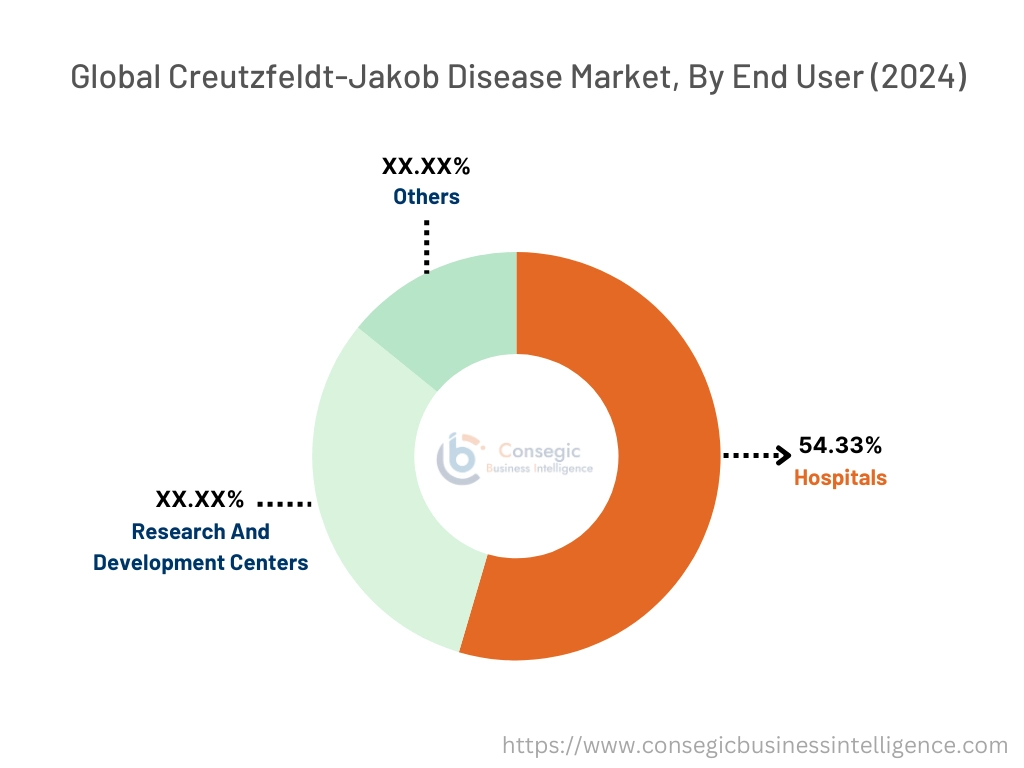
Based on end user, the market is categorized into hospitals, research and development centers, and others.
Trends in the End User:
- Provision of personalized treatment approaches to improve patient outcomes.
The hospital segment accounted for the largest market share of 54.33% in the year 2024.
- Hospitals constitute a prominent segment within the creutzfeldt-jakob disease market analysis. Hospitals serve as primary centers for the comprehensive diagnosis and treatment of the disease, offering a sophisticated ecosystem of medical expertise.
- They are equipped with state-of-the-art diagnostic techniques enabling early detection and precise diagnosis of the condition.
- As primary end-users, hospitals are heavily involved in various aspects of disease care including patient diagnosis and treatment, encompassing the provision of supportive care and symptom management.
- Moreover, hospitals often establish specialized care units to provide dedicated care for patients. Furthermore, hospitals play a crucial role in advancing research by actively participating in and conducting clinical trials for novel therapies.
- Hospitals serve as critical centers for diagnosis and treatment driving the market through their role in patient care, clinical trials, and the advancement of medical knowledge.
The research and development centers segment is expected to grow at the fastest CAGR over the forecast period.
- Research and Development centers play a crucial role in driving market within the this disease domain. These centers actively conduct research on various aspects of the disease, including its pathogenesis, diagnosis, and treatment.
- Their core activities encompass a multifaceted approach, including investigating the intricate mechanisms underlying prion protein misfolding and aggregation, examining the cellular and molecular pathways implicated in development, and comprehensively exploring the genetic and environmental factors that contribute to disease risk.
- For instance, in May 2024, researchers from Boston University Chobanian & Avedisian School of Medicine identified 10 compounds that are able to reduce PrPSc levels in prion diseases including creutzfeldt-jakob disease.
- Additionally, R&D centers are actively engaged in designing and testing innovative approaches, such as prion protein inhibitors, immunotherapy, and gene therapy. These efforts are complemented by rigorous preclinical and clinical trials to meticulously evaluate the safety and efficacy of these novel therapeutic interventions.
- Furthermore, R&D centers are instrumental in developing innovative diagnostic tools and therapeutic interventions. By contributing significantly to the advancement of knowledge, these centers support improved patient outcomes and drive the overall creutzfeldt-jakob disease market trend.
Regional Analysis:
The regional segment includes North America, Europe, Asia Pacific, the Middle East and Africa, and Latin America.
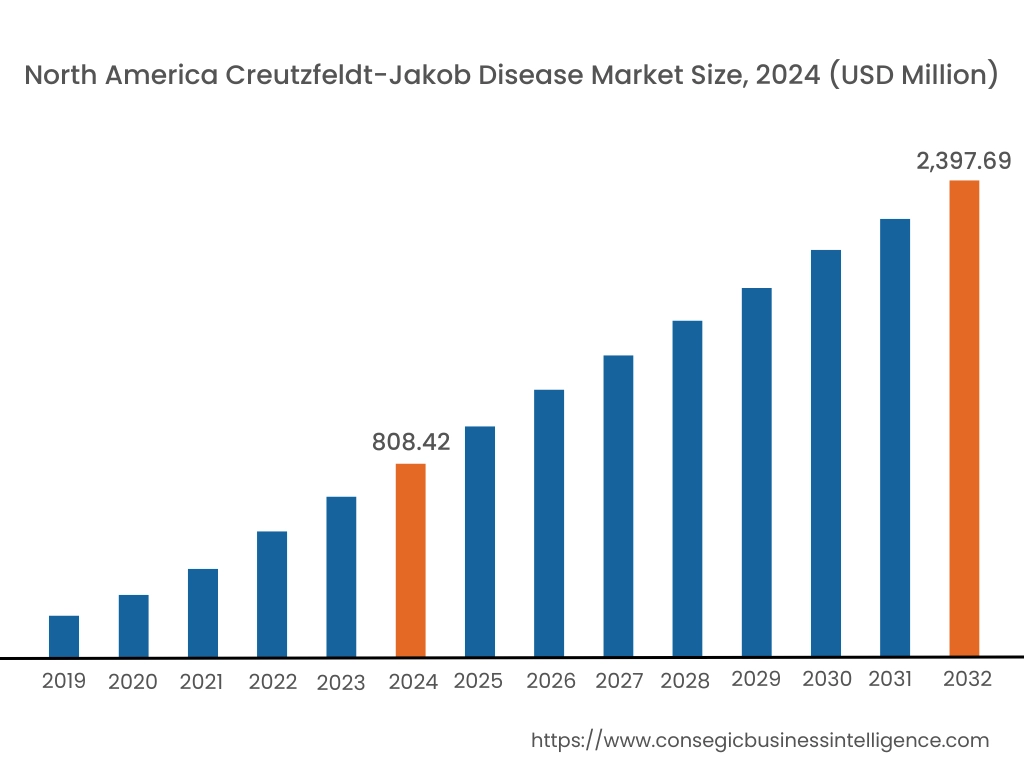
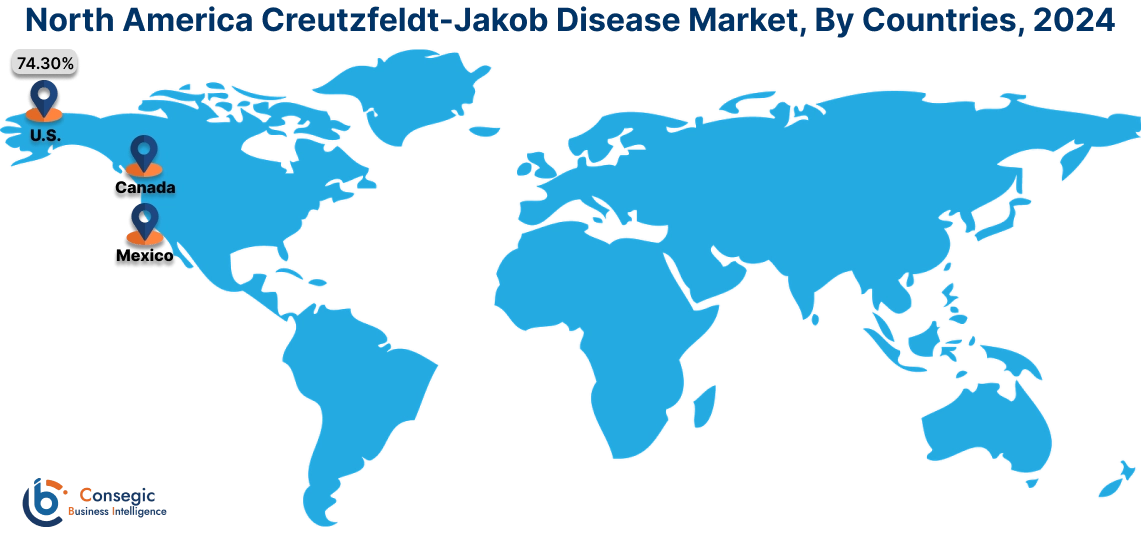
In 2024, North America accounted for the highest market share at 37.89% and was valued at USD 808.42 Million and is expected to reach USD 2,397.69 Million in 2032. In North America, the U.S. accounted for the highest market share of 74.30% during the base year of 2024.
North America dominates the global creutzfeldt-jakob disease market. This dominance is attributed to several key factors. The region boasts a well-developed healthcare system with cutting-edge medical facilities, advanced diagnostic technologies, and readily available access to specialized neurologists and neurosurgeons. This robust infrastructure facilitates early diagnosis, timely intervention, and the provision of comprehensive patient care. Furthermore, North America presents numerous renowned research institutions, universities, and pharmaceutical companies actively engaged in disease research. Significant investments are made in research and development of novel diagnostics, therapies, and supportive care strategies. The aging population in North America contributes to an increased incidence of age-related neurodegenerative diseases, including creutzfeldt-Jakob disease, driving demand disease related products.
- For instance, according to the research data published in the Journal Frontiers in Public Health in June 2024, it is stated that among the global epidemiology, the U.S. accounted for the highest number of human prion diseases including creutzfeldt-Jakob disease with a total of 5,156 cases by the year 2020.
Additionally, the high healthcare expenditure in North America allows for greater access to advanced diagnostic and treatment options, further driving the market. Furthermore, strong government support through funding and initiatives dedicated to research and patient care significantly contributes to market growth in this region. The combination of the aforementioned factors and trends is driving a substantial trajectory in the North America market.
Aisa Pacific is experiencing the fastest growth with a CAGR of 17.7% over the forecast period. The creutzfeldt-jakob disease market opportunities across the region are attributed to a rapidly growing population, creating a larger patient population susceptible to the infection. Countries such as China and Japan have reported more cases of the disease. Ongoing advancements in healthcare infrastructure, including enhanced access to healthcare facilities and improved diagnostic capabilities, are contributing to better disease detection and management. Additionally, increasing healthcare spending across many Asian countries is improving access to diagnostic tools and supportive care further boosting the Asia Pacific market.
Europe presents a significant contribution to the creutzfeldt-jakob disease market analysis. Europe boasts a robust healthcare system with advanced infrastructure, including well-equipped hospitals with skilled neurologists, ensuring timely diagnosis and management of this disease. Additionally, many European countries have strong public healthcare systems that provide access to quality healthcare services, and government initiatives that support research, surveillance, and patient care for rare diseases further propelling the market. Moreover, Europe presents a strong pharmaceutical industry with a robust research and development pipeline, leading to advancements in medications and diagnostic tools. Overall, as per analysis, the combination of strong public healthcare systems and a relatively high incidence rate of this disease in some European countries ultimately drive the market trend.
The Middle East and Africa (MEA) region is witnessing notable creutzfeldt-jakob disease market trends. The growing healthcare sector in the Middle East is playing a pivotal role in demand. Many countries in the MEA region are investing in developing their healthcare infrastructure with advanced diagnostic and treatment facilities. This includes building hospitals, and clinics and improving access to diagnostic tools which are essential for detecting this brain disease. Additionally, the region is witnessing the development of research and development centers. The combined impact of these factors is creating a favorable environment for the trajectory of the creutzfeldt-jakob disease market opportunities in the MEA region.
Latin America is an emerging region in the creutzfeldt-jakob disease market share, with significant potential for innovation. The combination of the increasing prevalence, government support, and rising disposable income is driving the significant growth of the creutzfeldt-jakob disease market demand in Latin America. The region encompasses a mix of public and private healthcare systems, with varying levels of access and affordability. This diversity impacts the availability and utilization of diagnostic and treatment options. The growing middle class in several Latin American countries has led to increased healthcare spending and demand for quality treatments, including those with this disease. These factors collectively present a promising factor for healthcare providers and pharmaceutical companies’ manufacturers to develop and deliver innovative solutions to address the needs of individuals with this condition in Latin America.
Top Key Players and Market Share Insights:
The Creutzfeldt-Jakob Disease market is highly competitive with major players providing precise products to the national and international markets. Key players are adopting several strategies in research and development (R&D) and product innovation to hold a strong position in the global Creutzfeldt-Jakob Disease market. Key players in the Creutzfeldt-Jakob Disease industry include-
- Ionis Pharmaceuticals, Inc. (U.S.)
- Pfizer Inc. (U.S.)
- GE Healthcare (U.S.)
- Compumedics Neuroscan ·(U.S.)
- Teva Pharmaceuticals (Israel)
- Sanofi (France)
- Lupin Pharmaceuticals, Inc. (India)
- Hoffmann-La Roche Ltd (Switzerland)
Creutzfeldt-Jakob Disease Market Report Insights :
| Report Attributes | Report Details |
| Study Timeline | 2019-2032 |
| Market Size in 2032 | USD 6,816.26 Million |
| CAGR (2025-2032) | 4.9% |
| By Disease Type |
|
| By Type |
|
| By End-User |
|
| By Region |
|
| Key Players |
|
| North America | U.S. Canada Mexico |
| Europe | U.K. Germany France Spain Italy Russia Benelux Rest of Europe |
| APAC | China South Korea Japan India Australia ASEAN Rest of Asia-Pacific |
| Middle East and Africa | GCC Turkey South Africa Rest of MEA |
| LATAM | Brazil Argentina Chile Rest of LATAM |
| Report Coverage |
|
Key Questions Answered in the Report
How big is the Creutzfeldt-Jakob Disease market? −
In 2024, the Creutzfeldt-Jakob Disease market is USD 2,133.59 Million.
Which is the fastest-growing region in the Creutzfeldt-Jakob Disease market? +
Asia Pacific is the fastest-growing region in the Creutzfeldt-Jakob Disease market.
What specific segmentation details are covered in the Creutzfeldt-Jakob Disease market? +
Disease Type, Type, and End User segmentation details are covered in the Creutzfeldt-Jakob Disease market.
Who are the major players in the Creutzfeldt-Jakob Disease market? +
Ionis Pharmaceuticals, Inc. (U.S.), Pfizer Inc. (U.S.), and Teva Pharmaceuticals (Israel) are some of the major players in the market.
Overview
Reputation & Certifications


Our Services
- Market Intelligence & Forecasting
- Custom Research Solutions
- Market Entry Strategy
- Competitive Intelligence
- Customer Insights
- Industry Innovation Analysis
- Investment Advisory