Jump to Content
Dental Amalgam Market - Size, Share, Industry Trends, and Forecasts (2025-2032)
Dental Amalgam Market Size:
Dental Amalgam Market size is growing with a CAGR of 5.1% during the forecast period (2025-2032), and the market is projected to be valued at USD 595.65 Million by 2032 from USD 401.45 Million in 2024.
Dental Amalgam Market Scope & Overview:
Dental amalgam is a widely used restorative material in dentistry for filling cavities caused by tooth decay. It is a cost-effective material that has been used for over a century, offering excellent strength and longevity, particularly for posterior restorations. It is categorized into low-copper (less than 5% copper) and high-copper types. These amalgam alloys are produced in three forms, spherical, lathe-cut, and admixed. Spherical particles provide faster setting and improved handling. Lathe-cut particles, made by milling, offer better condensation. Admixed alloys combine spherical and lathe-cut particles for enhanced performance and ease of use. It typically contains mercury (40-50%), silver (22-32%), tin (14%), and copper, with trace amounts of zinc or palladium. Moreover, it has strong durability as well, as the amalgam restorations typically last for 10-12 years. Apart from restorations, it is also used in repairing fractured teeth and core build-ups in preparation for crowns due to their strength and durability.
How is AI Transforming the Dental Amalgam Market?
There is a rising adoption of AI in the dental amalgam market. AI is being used to optimize the performance of amalgam separators, improve treatment planning, and other related applications. Moreover, AI integration in amalgam separators helps in monitoring performance, predicting maintenance needs, and automating processes, which further leads to increased efficiency and reduced costs for dental practices. Consequently, the above factors are expected to propel the market growth during the forecast period.

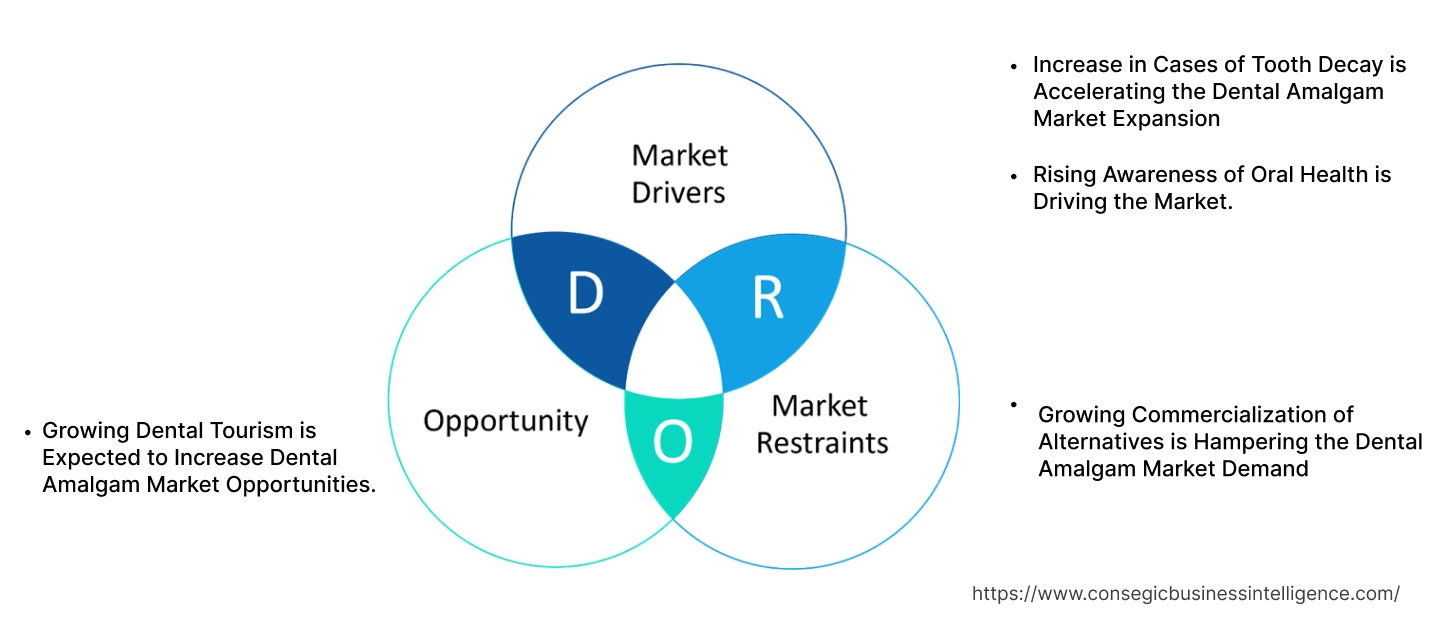
Dental Amalgam Market Dynamics - (DRO) :
Key Drivers:
Increase in Cases of Tooth Decay is Accelerating the Dental Amalgam Market Expansion
Tooth decay, also known as dental caries, is the gradual destruction of tooth enamel and underlying dentin caused by bacterial activity. Bacteria in the mouth produce acids from sugars in food, which erode the enamel, forming cavities. If untreated, decay progresses to deeper layers, causing pain, infection, and tooth loss.
These amalgams play a vital role in treating tooth decay. It is a durable restorative material used to fill cavities after decayed tooth tissue is removed. Its strength and resistance to chewing forces make it ideal for posterior teeth. Amalgam effectively restores tooth function and prevents further decay by sealing the cavity and protecting the remaining tooth structure. Changes in dietary habits and inadequate oral hygiene practices have led to a rise in cases of dental caries.
- According to Clinical Trials Arena, in 2021-22, a staggering 31% of the adult population required treatment for tooth decay, marking a substantial rise jump compared to previous years. This has led to an increased need for amalgams for treating extensive decay, positively influencing dental amalgam market trends.
Overall, the high increase in cases of tooth decay is significantly boosting the dental amalgam market expansion.
Rising Awareness of Oral Health is Driving the Market.
Rising awareness about dental health is a significant driver of the market. Patients are increasingly educated about the importance of early diagnosis and treatment of dental issues, including tooth decay. Public health campaigns, dental awareness programs, and the proliferation of online resources have played a crucial role in improving knowledge about oral health.
- Northwest Natural Dentistry published an article in 2024, discussing what amalgam fillings are, their various compositions, their properties, and the advantages they offer. This has increased dental visits, positively influencing the dental amalgam market trends.
Moreover, the widespread availability of information through digital platforms has empowered patients to recognize symptoms such as tooth decay, sensitivity, and pain, prompting them to seek timely professional care. Additionally, dental practitioners and organizations highlight preventive care, encouraging regular check-ups that aid in the early detection of conditions such as dental caries. Many patients visit dentists for aesthetic treatments and inadvertently discover underlying dental conditions, including caries, positively impacting the market.
Overall, growing awareness of oral health is accelerating the global dental amalgam market growth.
Key Restraints:
Growing Commercialization of Alternatives is Hampering the Dental Amalgam Market Demand
One of the significant restraints impacting the market is the growing commercialization of alternative restorative materials. Over the years, composite resins, glass ionomer cement, and ceramic materials have gained immense popularity due to their superior aesthetics and biocompatibility. Patients increasingly prefer tooth-colored fillings that blend seamlessly with their natural teeth, making amalgam’s metallic appearance less desirable.
In addition to aesthetics, composite fillings are considered safer due to the absence of mercury, addressing the health and environmental concerns associated with amalgam. Regulatory initiatives, such as the Minamata Convention on Mercury, have further propelled the adoption of mercury-free alternatives. Dental practitioners, too, are shifting towards these materials due to advancements in their durability and ease of application, which rival or surpass those of amalgam. Furthermore, ongoing research and development in restorative materials continue to expand the range of high-performance alternatives, challenging market share.
Overall, analysis shows that the growing commercialization of aesthetically pleasing, biocompatible, and mercury-free alternatives is hampering the dental amalgam market demand.
Future Opportunities :
Growing Dental Tourism is Expected to Increase Dental Amalgam Market Opportunities.
Dental tourism, where patients travel abroad to seek affordable dental treatments, creates potential for the market. The rising costs of dental care in developed countries such as the U.S., Canada, and Europe have led many patients to seek more affordable alternatives in countries where dental services are less expensive.
- According to an article published by Goodness Dental, in 2024, visiting countries such as Costa Rica for dental procedures results in savings of up to 70% compared to the prices in the U.S. Numerous clinics provide all-inclusive packages that cover transportation, lodging, and dental services.
Moreover, countries such as Mexico, Thailand, India, and Turkey have become popular dental tourism destinations, offering high-quality dental care at a fraction of the cost. Additionally, many patients opting for dental treatments abroad still require cost-effective and durable restorative options. This amalgam, being affordable, long-lasting, and effective, remains a viable choice for patients looking for economical dental fillings, especially in large-scale restorations. Furthermore, dental tourism involves patients receiving treatments for a variety of dental issues, including fillings, crowns, and bridges, all of which require amalgam. Overall, growing dental tourism is expected to increase dental amalgam market opportunities.
Dental Amalgam Market Segmental Analysis :
By Product Type:
Based on product type, the market is categorized into spherical, lathe-cut, and admixed.
Trends in Product Type:
- Growing focus on developing amalgam formulations with optimized particle range distribution.
- Manufacturers are focusing on developing amalgams with reduced mercury content to minimize environmental impact.
The spherical segment accounted for the largest market share in 2024.
- Spherical amalgams are produced by atomizing molten alloy into small, round particles. This process creates smooth, uniform spheres that offer superior handling and compaction properties.
- Moreover, these spherical amalgams are easier for dental professionals to work with during restorations due to multiple benefits.
- For instance, according to an article published by the American Dental Association, in 2023, spherical particles typically demonstrate a reduced working time, lower mercury levels, minimal dimensional alteration, and decreased creep, in contrast to irregularly shaped particles.
- Additionally, spherical amalgams are primarily used in large dental restorations, such as fillings for posterior teeth. It is ideal for high-stress areas due to its durability and strength.
- Furthermore, spherical amalgams are resistant to fracture and ditching and are the strongest type of alloy available. Also, they generally result in fewer marginal failures.
- Its cost-effectiveness compared to alternative materials, its proven durability and longevity in restoring decayed teeth, and its relatively straightforward placement and handling for dentists are driving the segment.
- Overall, as per the market analysis, the segment in the global dental amalgam market growth is driven by its superior handling, improved clinical performance, and cost-effectiveness compared to alternative materials.
The admixed segment is expected to grow at the fastest CAGR over the forecast period.
- Admixed amalgams are gaining attention as an emerging product type in the market. This type of amalgam combines the benefits of both spherical and lathe-cut particles, creating a more versatile material.
- The mixture of particle shapes enhances the handling properties, providing a balance between strength, workability, and ease of condensation.
- As dental practitioners continue to seek restorative materials that offer optimal performance across different types of procedures, admixed amalgam is becoming an attractive option.
- The material is ideal for a variety of applications, including large and small restorations, as well as high-stress areas like molars. Its balanced composition provides durable, long-lasting fillings with minimal risk of failure.
- Increased research and development activities on admixed amalgam to make it more advantageous will drive segmental growth for the foreseeable years.
By Material Type:
The material type segment is categorized into low-copper and high-copper.
Trends in the Material Type
- High-copper amalgams are increasingly favored over low-copper due to their superior strength, durability, and corrosion resistance.
- Ongoing research and development aim to refine high-copper amalgam compositions to enhance their clinical performance.
The high-copper segment accounted for the largest market share of 2024 and is expected to grow at the fastest CAGR over the forecast period.
- High-copper amalgam typically contains 40-60% silver, 27-30% tin, and 12-30% copper, along with trace amounts of zinc and mercury. The key difference from low-copper amalgam is its higher copper content, which eliminates the formation of the weaker gamma-2 phase (tin-mercury compound) during the setting reaction.
- It offers several advantages over low-copper amalgam. Its most significant benefit is improved mechanical strength, resulting in more durable and long-lasting restorations.
- The absence of the gamma-2 phase minimizes corrosion, which reduces the risk of marginal breakdown and secondary caries.
- Excessive sugar consumption (from snacks, candies, sodas, etc.) and poor oral hygiene (inadequate brushing and flossing) have significantly impacted children’s oral health.
- For instance, according to an article published by Global Environment Facility, in 2023, tooth decay impacts 514 million children of school age around the world. This has led to increased need and positively affected the segment as high-copper amalgams are recommended for children due to their exceptional durability and resistance to wear and tear.
- Overall, as per the market analysis, the increased demand for restorative dental treatments due to the rising prevalence of tooth decay among children globally is driving segmental growth in the dental amalgam industry.
By End-User:
The end-user segment is categorized into hospitals, dental clinics, and others.
Trends in End-User
- Increased demand from private dental clinicsdue to high patient volume and accessibility.
- Growing adoption in community health centers.
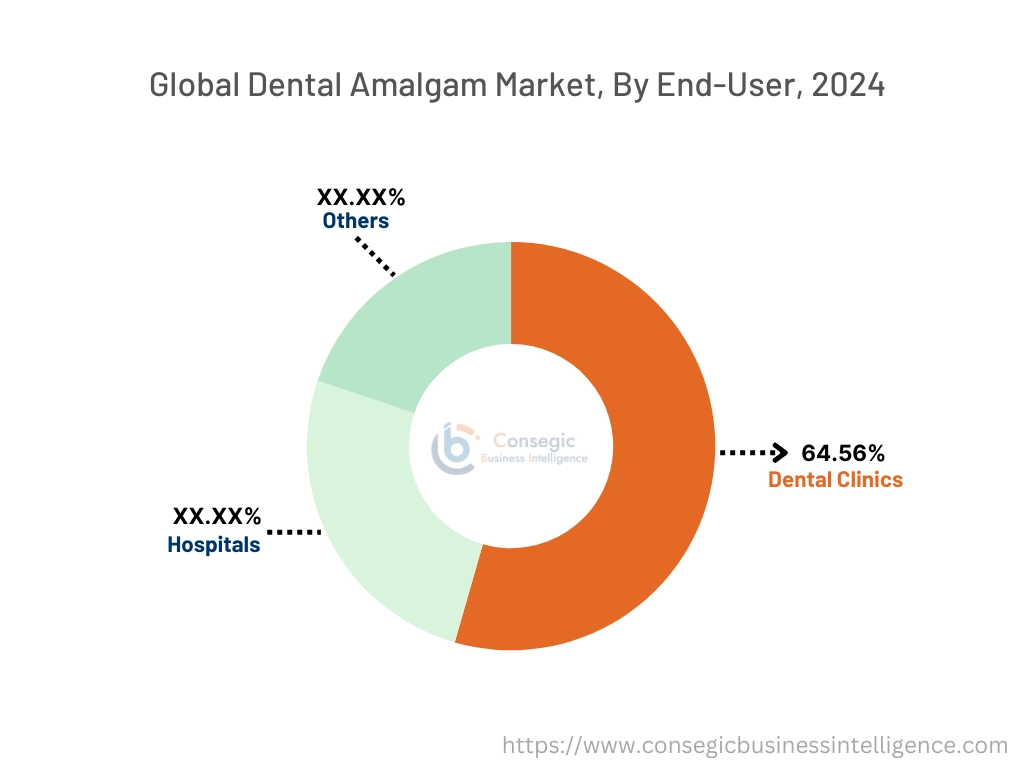
The dental clinics segment accounted for the largest market share of 64.56% in 2024.
- Dental clinics dominate the market due to multiple factors. These clinics are specifically equipped to diagnose and treat dental issues, including tooth decay, with a range of specialized tools and technologies such as X-rays, and CAD/CAM systems for creating crowns and restorations. This specialization attracts many patients seeking efficient and accurate treatment for dental carries, impacting the market.
- Moreover, dental clinics are more accessible than hospitals, with a widespread presence in urban and suburban areas. They typically offer shorter waiting times and flexible hours, making it easier for patients to seek prompt treatment.
- Additionally, dental clinics offer competitive pricing compared to hospitals, making them a more affordable option for many patients. The increased number of dental professionals, especially in emerging economies, is driving the segment.
- For instance, according to a study published in the National Center for Biotechnology Information, in January 2023, the number of active dentists in Taiwan rose to 16,533, which is a significant increase from the previous year. This surge in dental professionals has directly contributed to a rise in registered dental clinics, leading to enhanced diagnostic capabilities and treatment options for conditions such as tooth decay, positively influencing the market.
- Overall, accessibility, affordability, and a growing pool of dental professionals are driving the segmental growth.
The hospitals segment is expected to grow at the fastest CAGR over the forecast period.
- Hospitals are emerging due to several key trends. They are at the forefront of adopting and integrating new diagnostic technologies, such as AI-powered imaging, robotic surgery, and precision medicine. These advancements enable more accurate diagnoses and personalized treatment plans, leading to improved patient outcomes.
- Moreover, many hospitals are expanding their dental departments to offer more advanced dental care. Additionally, hospitals in rural or underserved regions are becoming primary sources of dental care, helping to increase their role in the market.
- Also, hospitals are particularly crucial for patients with underlying medical conditions, such as diabetes or cardiovascular issues, who need dental care in a controlled environment. This also contributes to their growing role in the market.
- The rising adoption of health insurance and government-supported healthcare systems in many countries further boosts hospital visits for dental care.
- According to market analysis, increased healthcare needs, technological advancements in medical care, rising healthcare industry expenditures, and government initiatives to improve healthcare access and quality will drive the segment for the upcoming years.
Regional Analysis:
The regional segment includes North America, Europe, Asia Pacific, the Middle East and Africa, and Latin America.
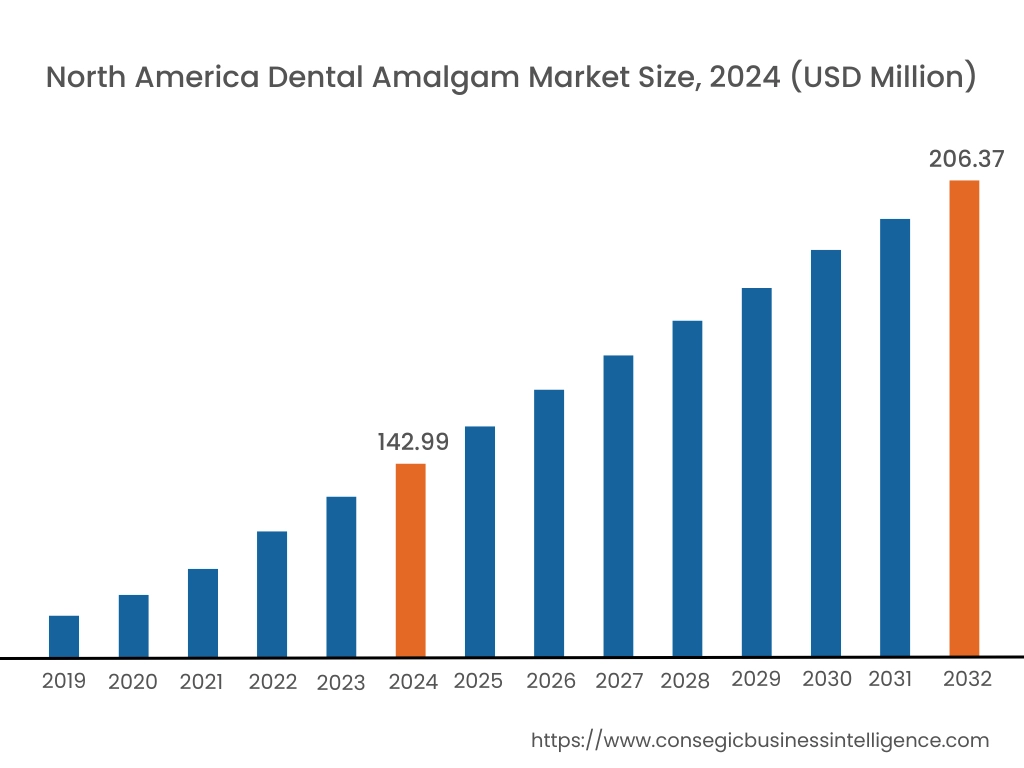
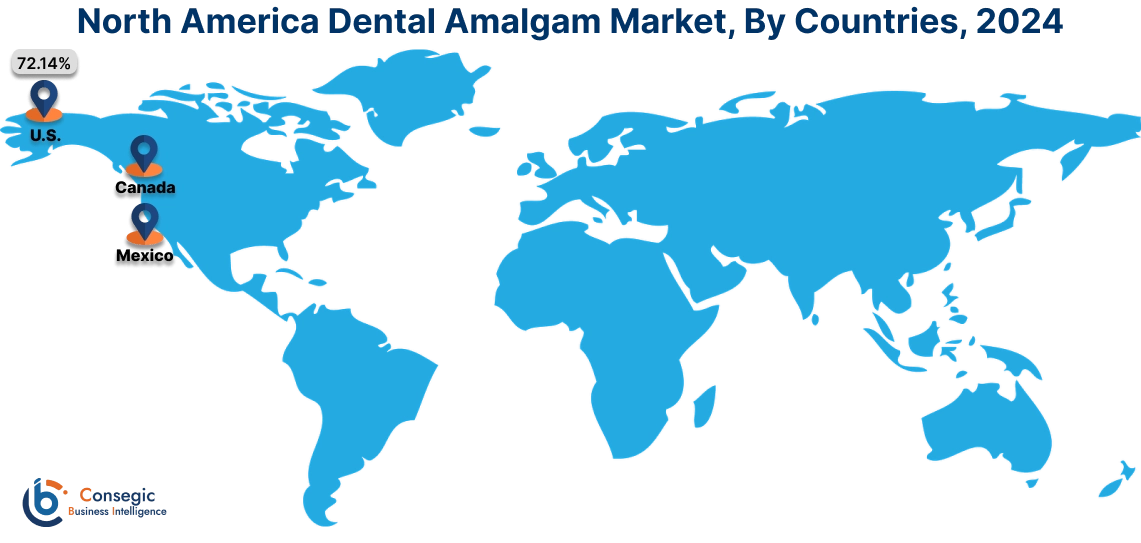
In 2024, North America accounted for the highest dental amalgam market share at 35.62% and was valued at USD 142.99 Million and is expected to reach USD 206.37 Million in 2032. In North America, the U.S. accounted for the highest dental amalgam market share of 72.14% during the base year of 2024. The region has a large number of licensed dentists and advanced dental clinics that cater to a significant patient population. Amalgam used in dental, being durable, remains a preferred choice for restorative treatments, particularly in rural and economically constrained areas. Moreover, the United States, in particular, drives the market with its extensive dental insurance coverage, making treatments more accessible to the population. Additionally, the high prevalence of dental issues, such as cavities and tooth decay, further supports the market's growth in North America.
- According to the Oral Health in America Report of 2022, nearly 90% of adults aged 20 to 64 in the U.S. have experienced cavities. This has created steady demand for restorative materials such as amalgams.
The region also benefits from stringent quality standards and technological advancements in amalgam formulations, ensuring reliable and long-lasting restorations. These factors, combined with increasing awareness about oral health, continue to make North America the dominant region in the global dental amalgam market. Overall, the high prevalence of dental issues, extensive dental insurance coverage, and a well-established dental infrastructure are the factors for the region's dominance.
In Asia Pacific, the dental amalgam market is experiencing the fastest growth with a CAGR of 5.8% over the forecast period. The rapid increase in the APAC population and urbanization, particularly in countries such as China, India, and Japan, is contributing to an increase in dental care demand. Moreover, as healthcare infrastructure improves, dental clinics in APAC are becoming more accessible, especially in rural areas. Additionally, the region accounts for the high prevalence of dental caries and untreated cavities. For example, the World Health Organization (WHO) estimates that nearly 70% of children in Southeast Asia experience dental decay, driving the need for cost-effective restorative materials such as amalgam. Furthermore, with rising disposable incomes and government initiatives to improve healthcare accessibility, the region is seeing increased dental service adoption.
Europe's dental amalgam market analysis states that several trends are responsible for the progress of the market in the region. The presence of advanced healthcare systems across countries such as Germany, France, and the UK ensures that patients have access to a wide range of dental treatments, including amalgam restorations. Moreover, Europe’s aging population increases the need for restorative dental care, including fillings for older adults. As the elderly require more extensive dental procedures, dental amalgam remains a practical and durable option. Additionally, Certain European countries, such as Hungary and Poland, are growing as dental tourism hubs, where affordable amalgam treatments attract international patients. However, many countries, especially in Western Europe, are moving towards alternative materials such as composite resins due to stricter environmental regulations surrounding mercury.
The Middle East and Africa (MEA) dental amalgam market analysis states that the region is also witnessing a notable surge. In many African countries, where healthcare access is still developing, dental care services remain underutilized. However, the rise in dental awareness and improvements in oral health education are slowly changing this trend, especially in urban areas. In the Middle East, countries have more developed dental care sectors and increasingly modern healthcare systems. These regions are witnessing a higher need for restorative materials, including dental amalgam, due to their accessibility and affordability. The dental tourism industry in countries such as Turkey and South Africa further supports the need for cost-effective solutions such as dental amalgam.
Latin America's dental amalgam market size is also emerging. Dental amalgam remains widely used due to its cost-effectiveness compared to more expensive alternatives, such as composites and ceramics. In many areas, especially rural regions, this amalgam is the primary choice for filling cavities because of its low cost and long-lasting durability. Moreover, with an expanding network of dental clinics and healthcare access, more individuals in Latin America are seeking dental treatments, driving the need for materials such as amalgams. Additionally, in countries such as Brazil, dental clinics and private practices are booming, creating an increased need for this amalgam. However, challenges in Latin America include regional disparities in healthcare access, where some areas still face significant barriers to oral care.
Top Key Players and Market Share Insights:
The Dental Amalgam market is highly competitive with major players providing products to the national and international markets. Key players are adopting several strategies in research and development (R&D) and product innovation to hold a strong position in the global Dental Amalgam market. Key players in The Dental Amalgam industry include-
- SDI Limited (Australia)
- Dentsply Sirona (U.S.)
- Prima Dental (UK)
- Nordiska Dental (Sweden)
- Shanghai Smedent (China)
- Ivoclar Vivadent (Liechtenstein)
- Ardent (Sweden)
- Cavex Avalloy (Netherlands)
- DMG America (U.S.)
- Kerr Dental (U.S.)
Dental Amalgam Market Report Insights :
| Report Attributes | Report Details |
| Study Timeline | 2019-2032 |
| Market Size in 2032 | USD 595.65 Million |
| CAGR (2025-2032) | 5.1% |
| By Product Type |
|
| By Type |
|
| By End-User |
|
| By Region |
|
| Key Players |
|
| North America | U.S. Canada Mexico |
| Europe | U.K. Germany France Spain Italy Russia Benelux Rest of Europe |
| APAC | China South Korea Japan India Australia ASEAN Rest of Asia-Pacific |
| Middle East and Africa | GCC Turkey South Africa Rest of MEA |
| LATAM | Brazil Argentina Chile Rest of LATAM |
| Report Coverage |
|
Key Questions Answered in the Report
How big is the Dental Amalgam market? −
In 2024, the Dental Amalgam market is USD 401.45 Million.
Which is the fastest-growing region in the Dental Amalgam market? +
Asia Pacific is the fastest-growing region in the Dental Amalgam market.
What specific segmentation details are covered in the Dental Amalgam market? +
Product Type and Type segmentation details are covered in the Dental Amalgam market.
Who are the major players in the Dental Amalgam market? +
SDI Limited (Australia), Dentsply Sirona (U.S.), Ivoclar Vivadent (Liechtenstein), Ardent (Sweden), Cavex Avalloy (Netherlands), DMG America (U.S.), Kerr Dental (U.S.), Prima Dental (UK), Nordiska Dental (Sweden), and Shanghai Smedent (China).
Overview
Reputation & Certifications


Our Services
- Market Intelligence & Forecasting
- Custom Research Solutions
- Market Entry Strategy
- Competitive Intelligence
- Customer Insights
- Industry Innovation Analysis
- Investment Advisory